
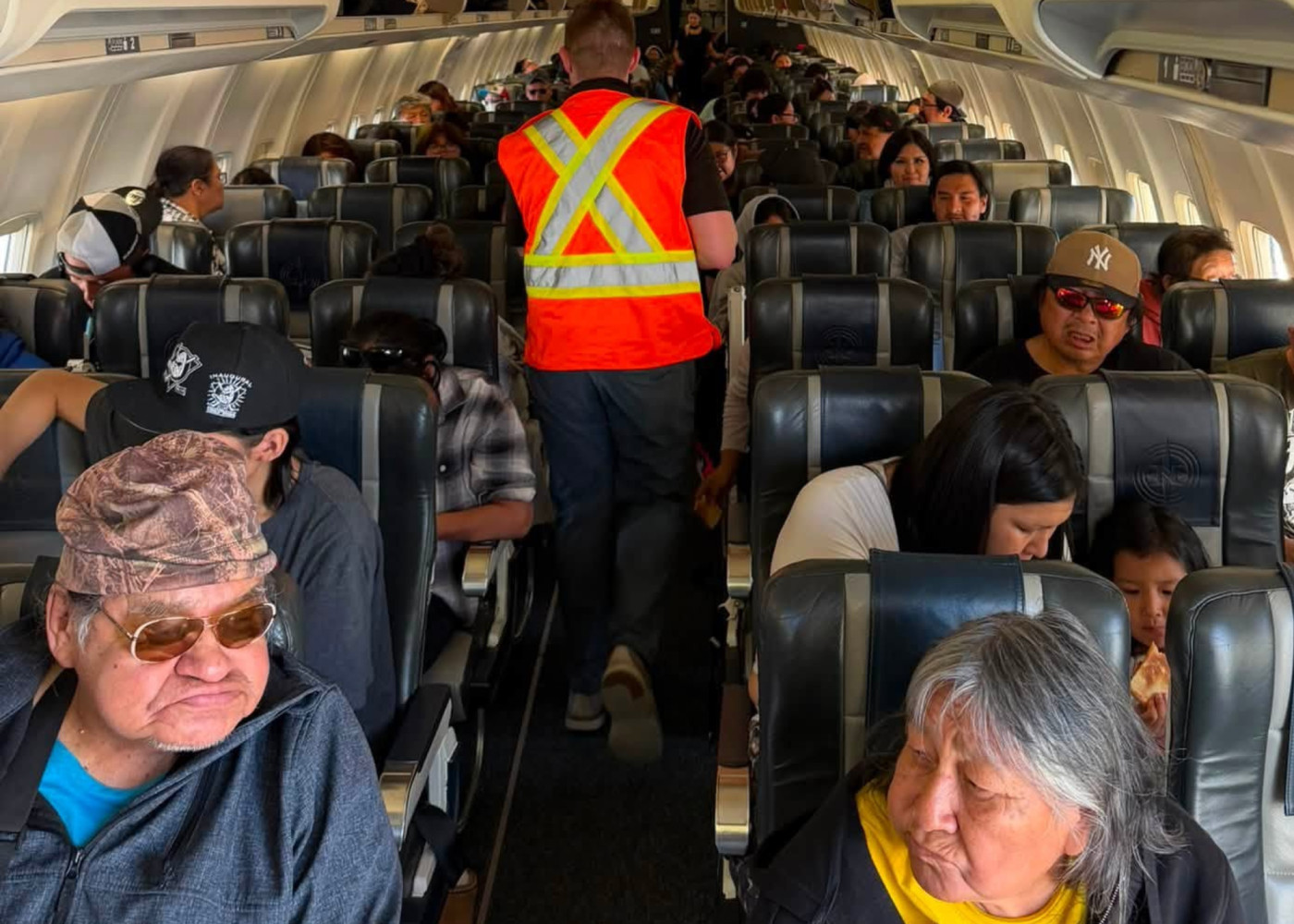
‘Our community was in panic’: Neskantaga First Nation tells the tale of hidden supply chain crisis behind Ontario's wildfire emergency
“We have to figure out how to get the kids to eat. The food here is not what they are used to eating. Most of them are on the [autism] spectrum.”
“We need someone for translation. It’s a big gap at a time when people are already in a new place.”
“The groceries back home are expired.”
“Did we get the medicines one of our elders needed? Where is the prescription?”
“I can never say no to Tim Hortons.”
“We have to have a sense of humour to deal with this…otherwise, it will just make us sad, it is depressing.”
Neskantaga First Nation band members and volunteers with Indigenous-led emergency management organization ISN Maskwa shared raw emotions as they waited for Chief Gary Quisess in the basement of a Holiday Inn hotel, transformed into a makeshift band office to coordinate support for nearly 130 of the community members evacuated to Toronto—none of them there willingly—during Ontario’s worst wildfire season.
“Neskantaga’s most vulnerable members have been forced to leave home not because of direct fire danger,” Chief Quisess said. “But because government emergency systems failed to ensure that the community could continue receiving the basic necessities of life.”
On July 16, Chief Quisess stood in Ottawa at the Assembly of First Nations' Annual General Assembly breathing the same thick wildfire smoke that had settled over the nation's capital.
But his thoughts were hundreds of kilometres away in Neskantaga, where smoke was choking his remote community and grocery shelves were rapidly emptying.
“How am I going to get supplies for my people?” he anxiously wondered.
He had to do something, quickly.
By then, more than 180 wildfires were burning across Ontario, most of them in the northwest.
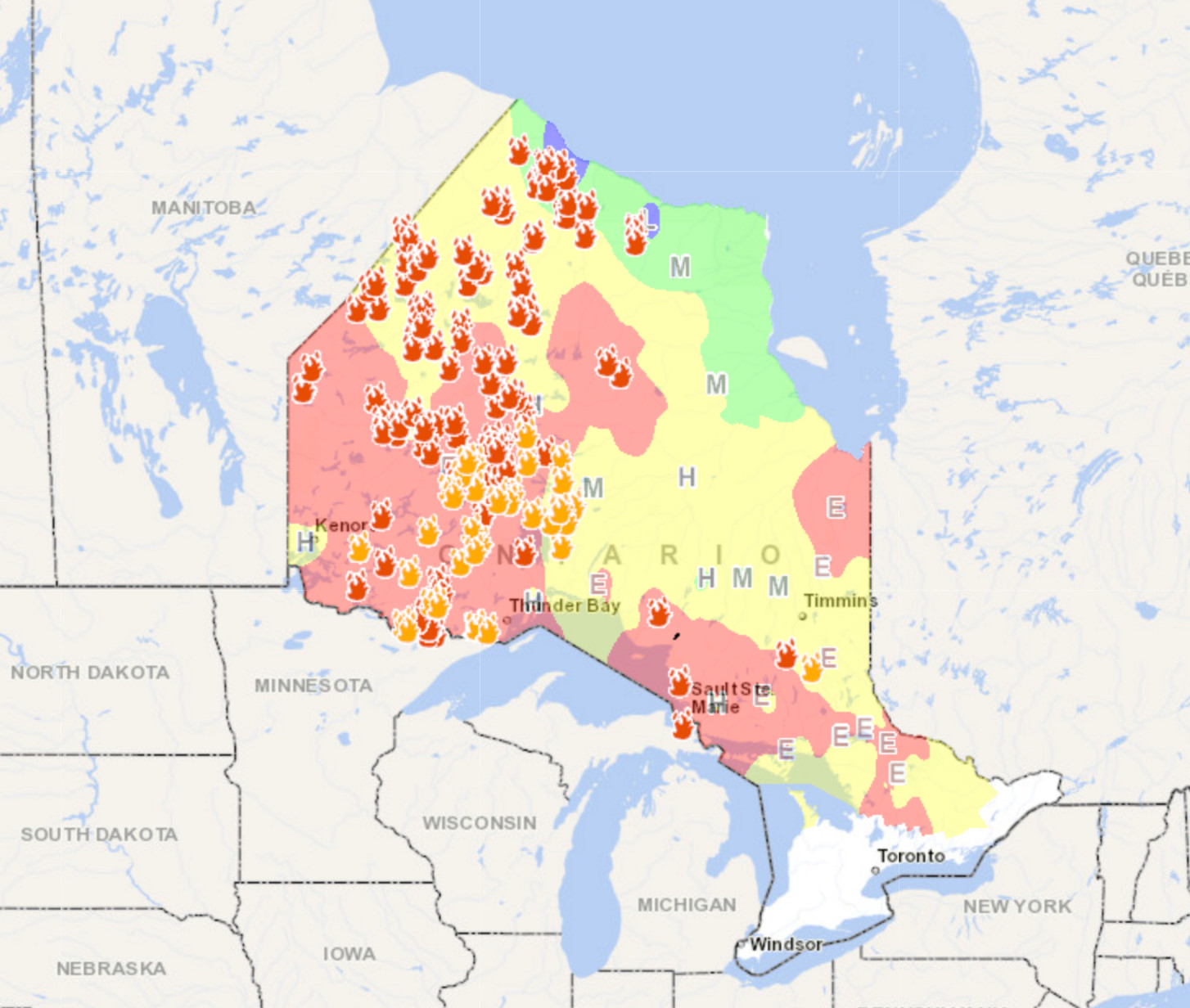
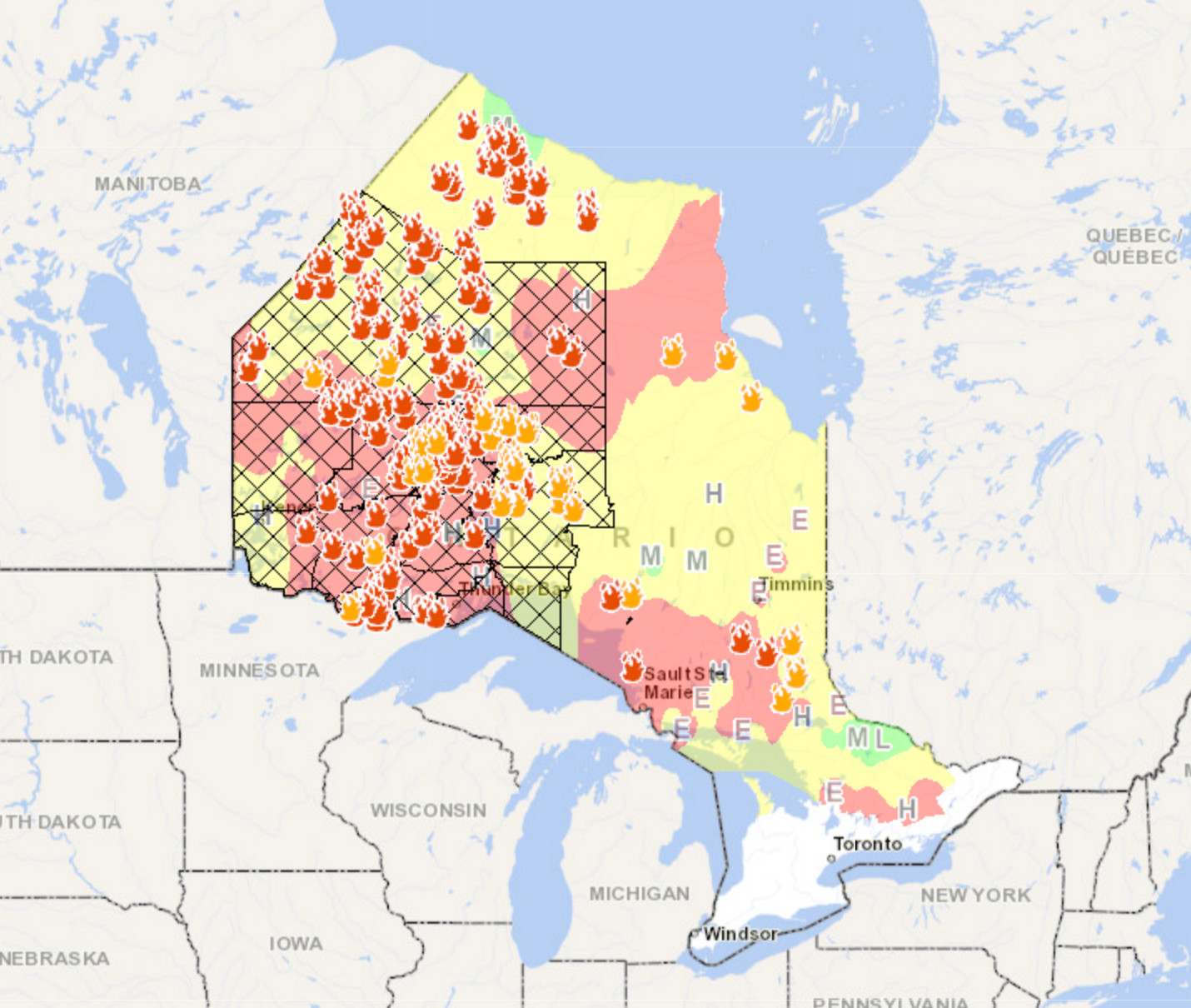
The difference between just one day: the first map is from July 14 while the second map is from July 15 — with nearly 200 wildfires burning across Ontario.
(Government of Ontario)
Although flames burned 20 kilometres away from Neskantaga, a critical means of survival was on the line already.
Accessible only by air for most of the year, the remote First Nation with a population of approximately 400 depends on a fragile supply chain that moves through Thunder Bay, Pickle Lake, Nakina and Sioux Lookout before reaching the community. Nearly every necessity ranging from food, medicine, fuel (Neskantaga is powered by diesel generators), baby formula and emergency medical transportation, relies heavily on those links.
The lack of clean, bottled drinking water paralyzes daily life for the First Nation which has already spent more than three decades living under Canada's longest-running boil water advisory, first issued in 1995.
“Living remotely is very difficult because everything's carried by air,” Chief Quisess told The Pointer.
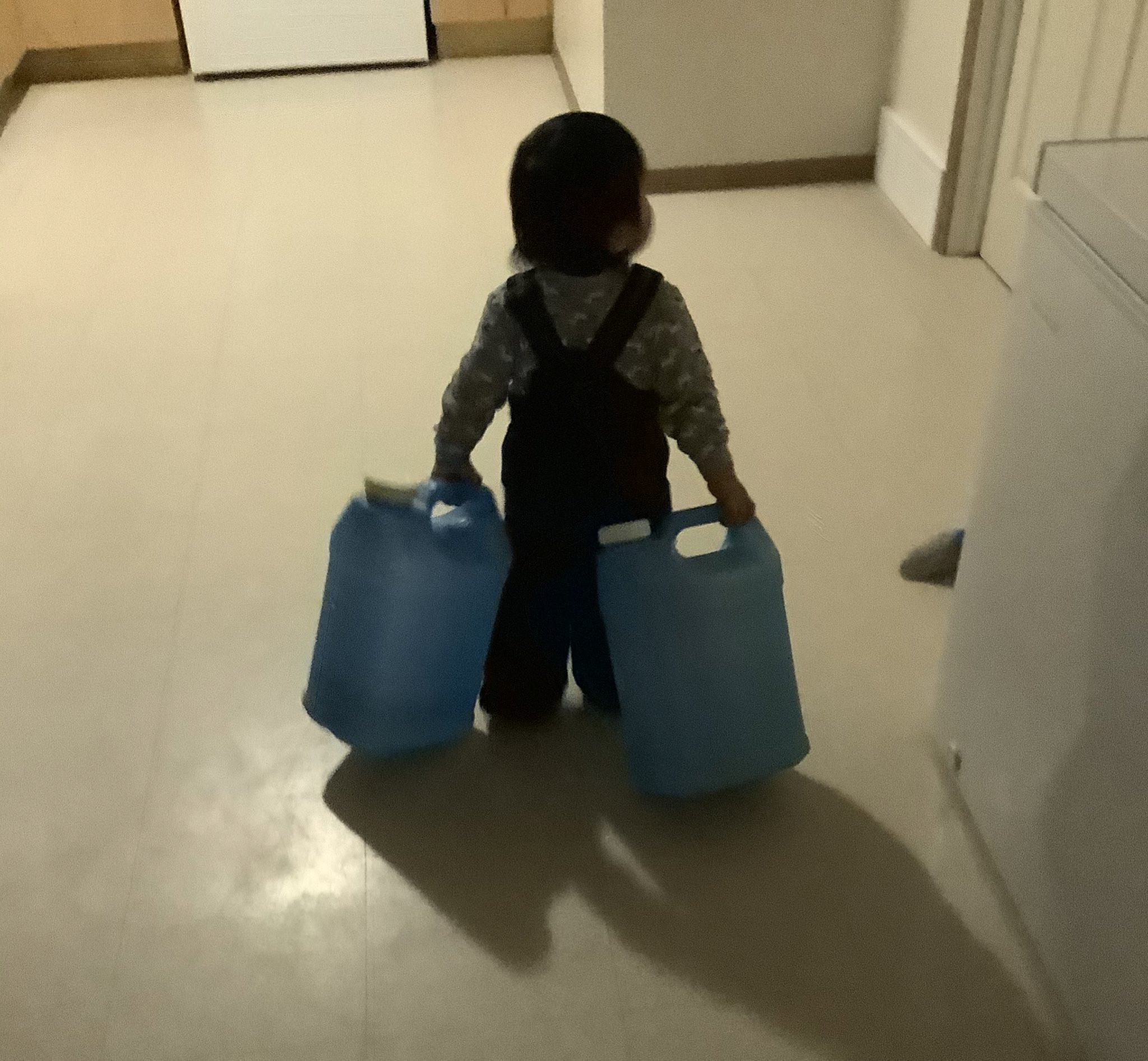
Neskantaga First Nation has been under a boil water advisory for 31 years since 1995, the longest-standing drinking water advisory in Canada.
(Neskantaga First Nation/X)
When wildfire smoke grounded aircraft and Highway 599 (the only road connecting Pickle Lake to the provincial highway network) was closed, that supply chain was blocked. In the colder months, the solution could have been accessing the temporary winter road, but with every route disrupted during one of the hottest summers on record, there was nowhere else to turn.
When the first shipment of groceries finally arrived after the highway reopened, some of the food had spoiled after trucks were delayed near wildfire zones.
By then, infants were running short of the specialized formula they relied on, elders did not have access to their medicines and those who needed urgent care were left helpless.
“Our community was pretty much in panic,” Chief Quisess said with an unbearable weight of sadness in his voice.
Young families reported children struggling to breathe and experiencing irritated eyes as air quality deteriorated inside their homes. Many lack proper sealing and air filtration systems because of years of limited funding.
With only one nurse serving the community, he was worried about how residents experiencing smoke-related health issues would receive care during an emergency.
One community member had already suffered a broken arm while helping his father prevent smoke from entering their home. With aircraft grounded and visibility conditions preventing a medevac from reaching the community, he was forced to wait for help. When he was eventually flown to Sioux Lookout, Quisess said the injury was not treated as an emergency and the man had to spend hours before receiving care.
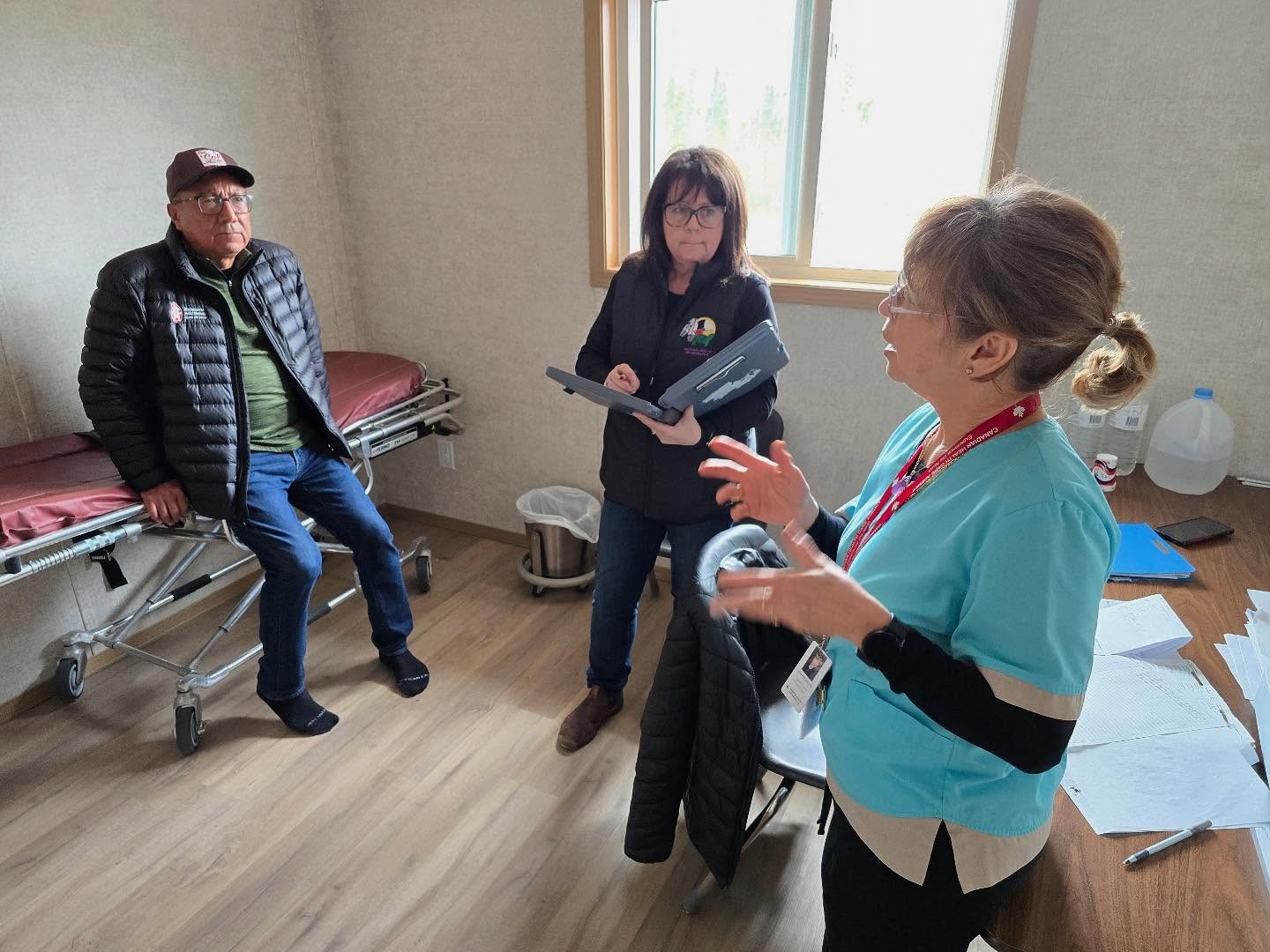
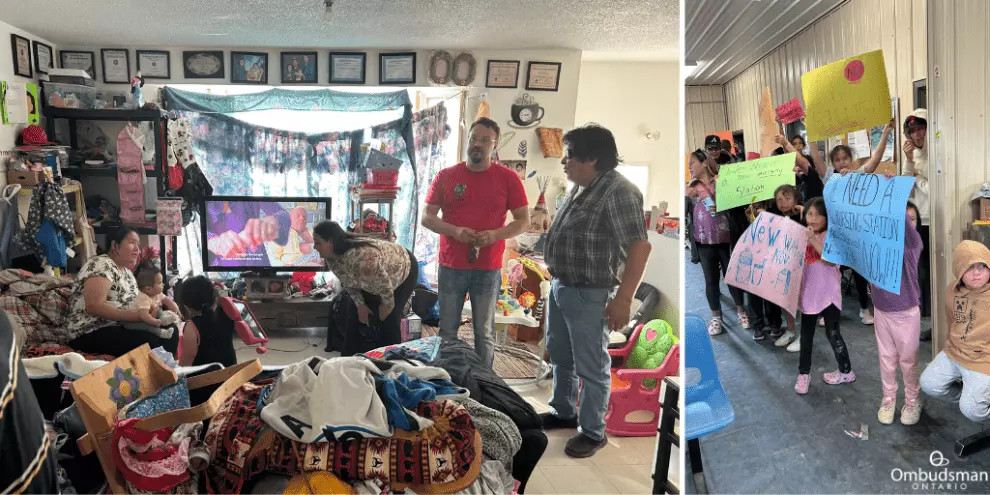
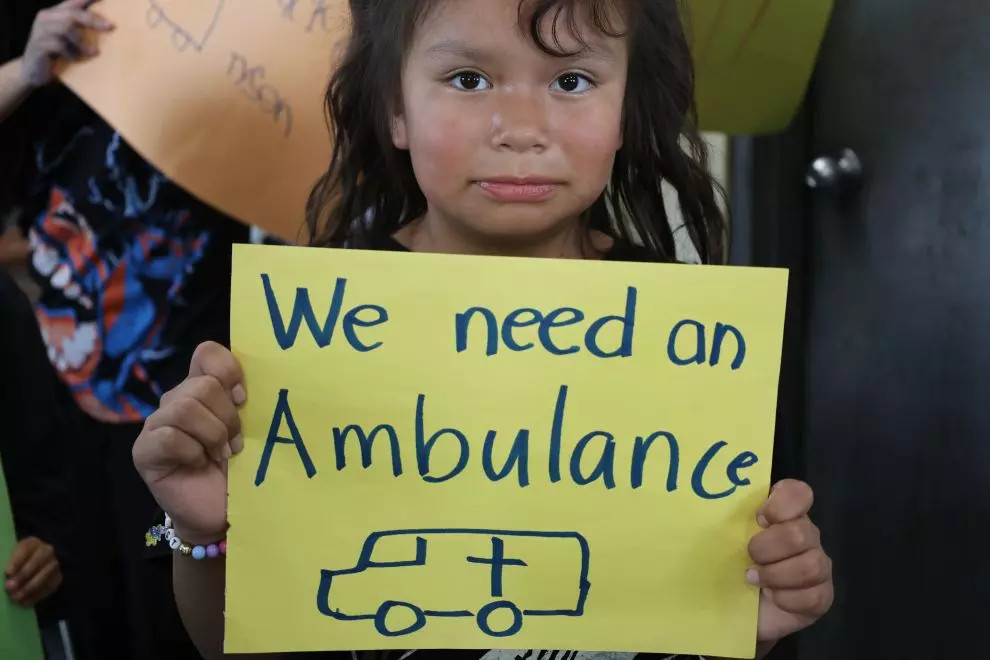
“Visiting with a local family, and meeting with community members. The signs of the community members say things like “We need a new nursing station”,” Ontario Ombudsman noted in a 2025 report.
(First photo: Nishnawbe Aski Nation/Facebook, Second & Third photo: Ontario Ombudsman)
In September last year, Ontario Ombudsman Paul Dubé spent more than two days visiting Neskantaga First Nation, touring homes, the water treatment plant, the nursing station, the arena, the airport and other critical infrastructure — much of which he found to be “in disrepair or is simply not functional”.
“The basics of drinkable water, education, health care, and mental health supports are lacking here,” Ombudsman Dubé said as he called on federal and provincial governments to take “immediate action” to address the unacceptable and unsafe conditions.
“Even in 2025, after decades of promises from federal and provincial governments, Neskantaga First Nation continues to suffer under boil-water advisories and inadequate access to health care.
“No community in a country as prosperous as Canada should have to endure what Neskantaga First Nation is facing.”
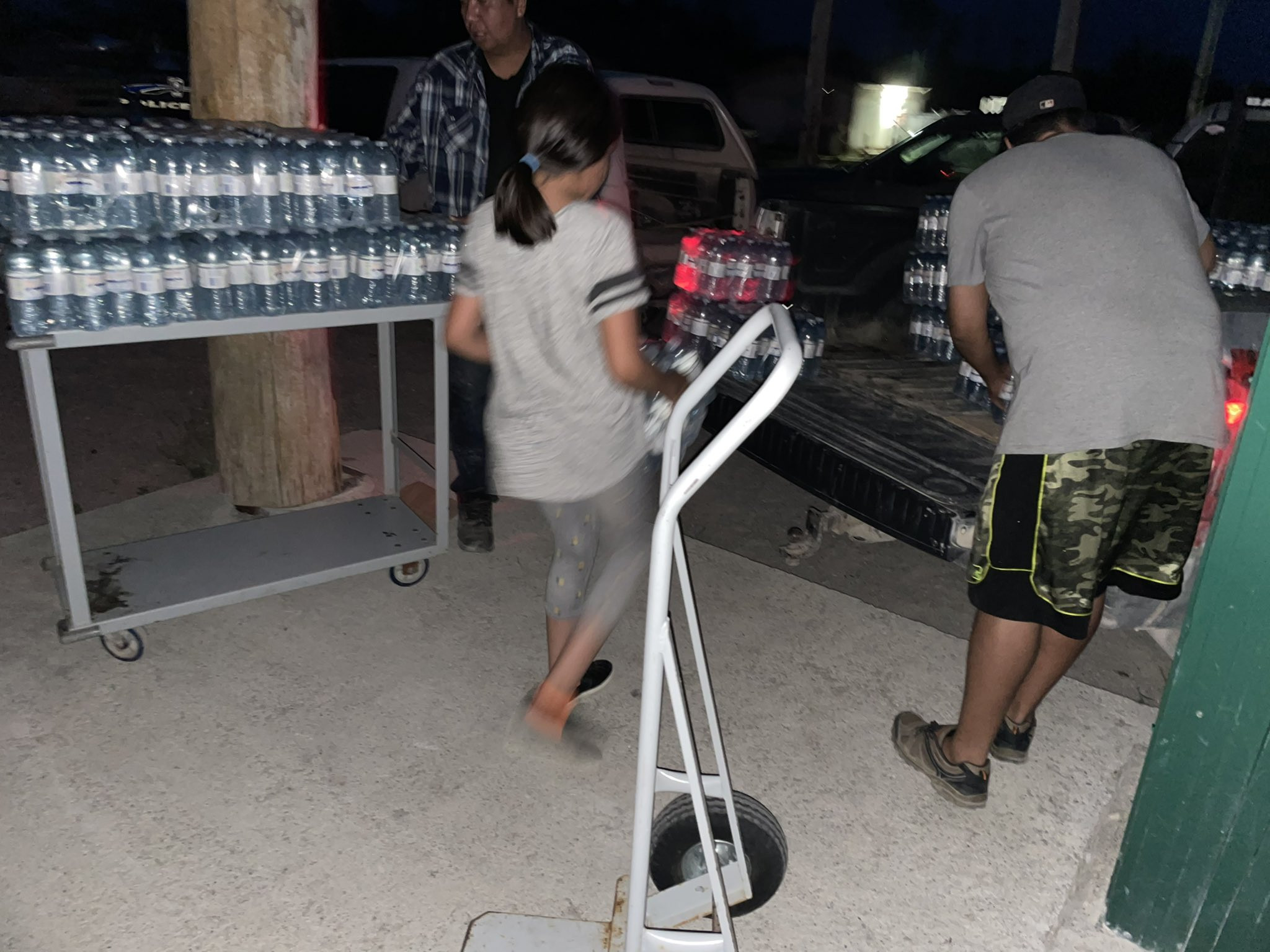
A 2021 X post from Neskantaga First Nation stated: “We are without power again due to a broken transformer at our Hydro One plant, elders and infants were moved to an isolation tent with AC. We do not have anyone to respond to emergencies. Pictured here is a little girl doing what she can to help her community.”
(Neskantaga First Nation/X)
Experience told Chief Quisess help was not coming on time. Uncertainty was mounting as violently as the wildfire across the province with a lack of coordination between Ontario, the Ministry of Natural Resources, the Provincial Emergency Operations Centre and the federal government.
“We weren't notified. There was no communication,” he emphasized.
“There's forest fire here. There's forest fire there. But what's the plan? The government kept telling us that they are monitoring the fires. But where's the action?
“I keep hearing the Premier say ‘Protect Ontario’; what is this now? It's Disaster Ontario to me.”
Chief Quisess decided to activate the first stage of Neskantaga's three-phase emergency evacuation plan.
The first phase prioritizes residents identified by the community's health staff as the most vulnerable including babies and elders. While the plan is medically driven, it brings up difficult questions for families waiting their turn.
“I still have kids in the community that are on Stage 2 and they're wondering: ‘How come we're not leaving? How come the rest of the children are leaving?’” he said.
“It's very challenging as a community.”
On the eve of July 18, Quisess hopped on a boat with community members to reach the nearest airport about 12 kilometres away from the community to avoid any delays.
When the first aircraft scheduled to transport residents developed mechanical issues, they were left waiting at the airport for nearly two hours.
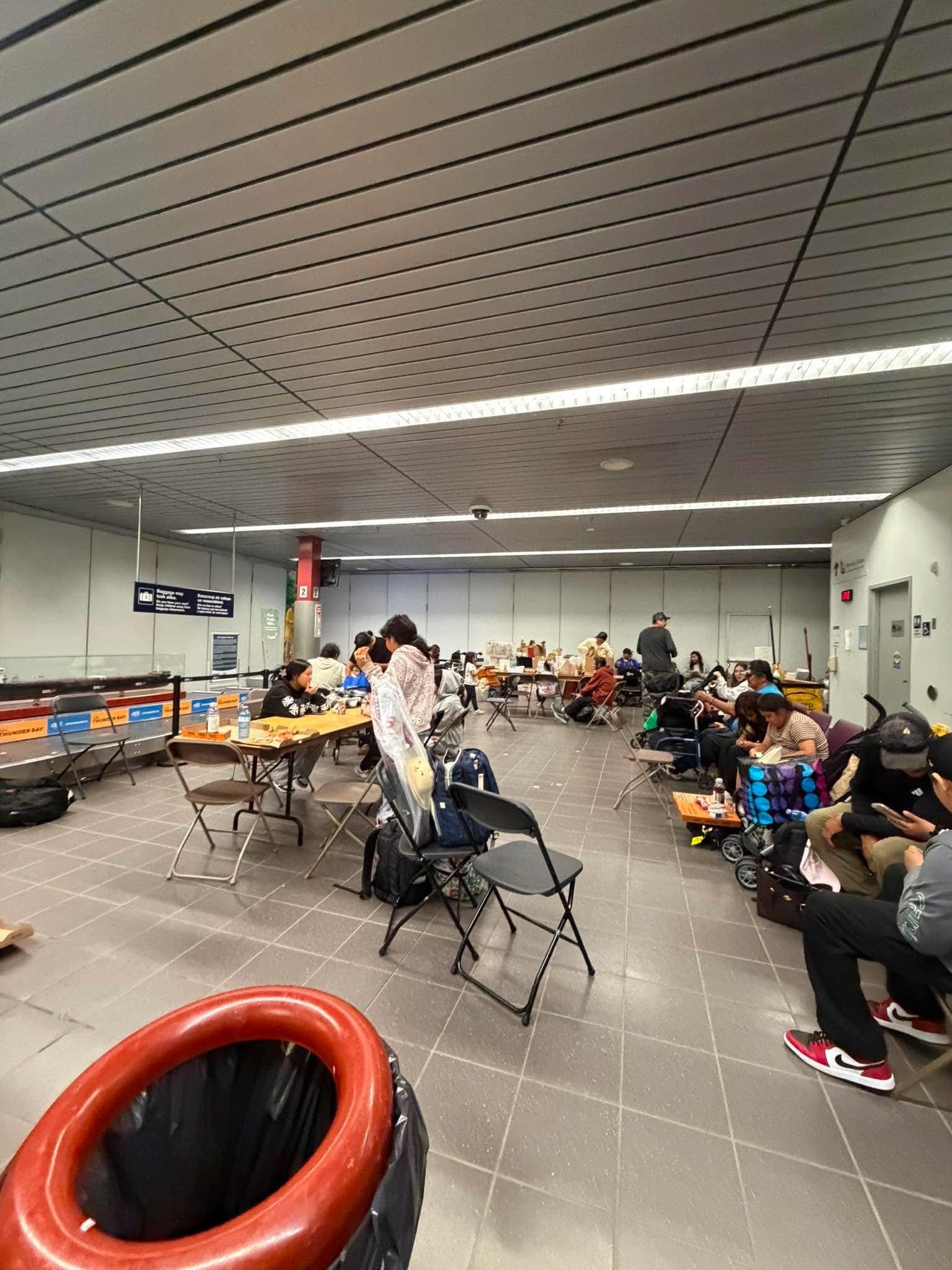
Neskantaga First Nation residents waiting at airport due to mechanical delays.
(Supplied/Marcus Moonias)
A lack of clear communication from the province and Ottawa left Quisess wondering when the aircraft would arrive and whether it was ready to fly.
The Ontario Ministry of Transportation (MTO) owns and operates 29 remote airports in the Far North that serve isolated First Nation communities. However, not one airport has a dedicated on-site emergency or aircraft rescue firefighting (ARF) vehicle like major commercial airports do.
After arriving in Toronto on the morning of July 19, one of Quisess’ first priorities was helping the community member with the broken arm access the medical attention he needed.
With a heavy white cast wrapped around his right hand, the man later sat down with families and elders, picking food from a buffet table — a meal that looked vastly different from the traditional foods many northern First Nations communities have relied on for generations including moose meat, a nutrient-rich, lean protein that also carries deep cultural significance.
Quisess still believes the issue is not a lack of knowledge about emergency response, but a lack of First Nations voices being included in decision-making.
“It’s been happening every year since the last few years. Now it is just out of hand,” he added, noting wildfire evacuations have become increasingly complex because planning often happens too late.
Before modern emergency systems were in place, First Nations relied on their own understanding of the land — moving based on wind direction, fire behaviour and changing conditions to avoid danger while also engaging in careful burning practices that were suppressed by settlers upon arrival in Canada. Quisess advocated for that knowledge to shape evacuation planning with First Nations included as partners “at the table” rather than consulted only after a crisis begins.
“All these forest fires could have been prevented if action was put in place right away,” he added. “They waited for them to be large. Now, they don't have enough resources and they're handcuffed.”
On July 21, he joined a growing number of First Nation leaders in northwestern Ontario and New Democratic Party leaders demanding the resignation of senior government officials as well as an independent public inquiry into the Doug Ford government’s handling of the wildfire crisis, alleging delayed evacuations and poor communication forced at least 12 First Nations to be displaced without adequate government support.
In the summer of 2021, as the COVID-19 pandemic exposed deep cracks in emergency preparedness, Nishnawbe Aski Nation Grand Chief Alvin Fiddler personally delivered an 82-page plan to Ford on how Ontario could better protect northern First Nations during disasters such as wildfires. No action was taken.
In its 2026 budget, the Ford PC government slashed $121 million from its Emergency Forest Firefighting Fund, reducing it to $150 million despite spending more than double the previous year’s $135-million allocation when wildfire costs reached $271 million.
“We have constant communication. We're going out to the First Nations. We've moved close to 2,000 First Nations communities on the plane. We provided them in the hotel. We provided them with food, any other expenses,” Ontario Premier Doug Ford said on July 22 in a press conference.
“On reserve, the feds have the responsibility to take care of First Nations, but we're taking care of them.”
On July 23, Chief Quisess alleged in a press release that the Provincial Emergency Operations Centre (PEOC), responsible for provincial response to emergencies like wildfires and floods, had abruptly left a meeting with Neskantaga officials midway through a situation update, informing the First Nation that staff would not be available for further meetings until July 30—a “week-long delay” he considered “unacceptable”.
Two days earlier, Minister of Emergency Preparedness and Response Jill Dunlop failed to answer questions about criticism from First Nation leaders of the Province’s wildfire plan after her staff abruptly cut a media interview short.
The Pointer reached out to Minister Dunlop’s office for a statement but did not receive a response.
On July 24, undeterred, Chief Quisess wrote a letter to Dunlop outlining his concerns, which prompted the Ministry of Emergency Preparedness and Response to re-evaluate the timelines. A meeting was held July 27 to discuss plans for returning residents to the community within the coming days.
While emergency preparedness for remote First Nations has been marked by delays, fragmented planning and slow government action, the same urgency has not been missing when it comes to resource extraction.
On March 2, the Ford government unveiled an accelerated plan to build all-season roads into the Ring of Fire, promising to complete the project up to five years ahead of schedule; the first road openings are targeted for November 2030.
On February 20, the federal government rejected Neskantaga First Nation's request to require a federal impact assessment for Wyloo Metals' proposed Eagle's Nest mine, about 100 kilometres northeast of the community, despite the community's concerns about the project's impacts on the environment.
“I haven’t heard anything from the Indigenous minister for the province: [Greg] Rickford since we evacuated,” Chief Quisess said on July 22.
“They don't understand that having photo-ops with First Nations is not consultation. This is an emergency; it has to be treated seriously. That’s where the communication fails. The urgency isn’t being recognized or discussed the way it should be. These conversations should be happening every year.”
On July 28, Neskantaga staff told The Pointer in an email that plans for repatriation are “still being finalized” but two flights were expected to fly out of Toronto Pearson International Airport on July 29 along with “a final flight on Thursday to get everyone back to Neskantaga”.
Email: [email protected]
At a time when vital public information is needed by everyone, The Pointer has taken down our paywall on all stories to ensure every resident of Brampton, Mississauga and Niagara has access to the facts. For those who are able, we encourage you to consider a subscription. This will help us report on important public interest issues the community needs to know about now more than ever. You can register for a 30-day free trial HERE. Thereafter, The Pointer will charge $10 a month and you can cancel any time right on the website. Thank you
Submit a correction about this story

