
‘No safe levels’: Former federal scientist warns Bill C-30 opens door for more pesticides in already broken regulatory system
Four months after resigning as co-chair of the science advisory committee to Canada’s national pesticide regulator in 2023, Bruce Lanphear went to a Warrior Monk Retreat on Bainbridge Island, where after a predawn meditation session, a monk asked participants to write down what they were feeling.
What emerged on the paper was a poem he titled ‘Confessions of a Toxicologist’. The monk then asked Lanphear to read it aloud:
“I am guilty.
I believed,
as many of us did,
that a little poison
would be safe—
like an aspirin,
or a glass of wine
with dinner.
I stood by
as it seeped quietly
into the soil,
the womb,
the breath of morning.
I waited for proof,
as if the earth were a courtroom,
and the rivers
could file motions.
I stayed silent,
even when I knew it was wrong,” he was sobbing as he continued.
“I listened
to the men in suits,
not to the mother,
not to the child
who coughed in her sleep.
I gave the benefit of doubt
to industry—
as if doubt
were theirs to claim.
Now I know
what I should have known:
that life doesn’t wait
for peer review.
That silence
can be poisonous too—
odorless,
weightless,
but fatal all the same.”
In 2022, the federal government created an independent science advisory committee under Health Canada's Pest Management Regulatory Agency (PMRA), rebranded to the Pesticides Regulatory Directorate (PRD) this year, after environmental groups spent years pointing out that the agency was relying on outdated science and was too closely aligned with the interests of pesticide manufacturers and industrial agriculture.
The committee was meant to restore public confidence. By June 2023, Lanphear decided to step down alongside another scientist from the committee for reasons eerily similar to recent testimonies by scientists and former members of Ottawa’s Net-Zero Advisory Body.
“They basically restricted us from asking questions,” Lanphear, who now works as a Health Sciences professor at Simon Fraser University, told The Pointer.
The constraints were “in conflict” with the committee's mandate: ensuring Canadians were being adequately protected from toxic chemicals and increasing transparency around regulatory decisions.
“I didn't feel like I could do either of those.”
But his frustrations ran deeper than procedural roadblocks. Over time, Lanphear began to suspect that the committee's presence served a mere symbolic purpose.
“I felt like I was being used to give the impression that the system was protecting Canadians, and I didn't believe that, and I didn't want to be used in that way,” he recalled.
Lanphear stepped away, convinced his voice would carry further outside the room than it ever could from a seat at the table.
Three years later, on June 18, that cause took a hit when Ottawa fast-tracked Bill C-30, officially titled the Spring Economic Update Implementation Act, without any public consultation after being introduced on April 28.
Buried in the omnibus bill, Division 8 of Part 3 of the legislation amended the mandates set out in the Pest Control Products Act and the Canadian Food Inspection Agency Act, giving Cabinet power to authorize or continue the “temporary use of certain pesticides”, even if Health Canada has found their environmental risks to be unacceptable, for national and/or regional economic or food security.
It seems like Health Canada is on board.
“Rising food costs are a major concern for Canadians and continue to place significant pressure on households… These changes maintain the primary objective of protecting the health and safety of Canadians and the environment, while strengthening our government's commitment to food sovereignty,” Minister of Health Marjorie Michel’s spokesperson, Alexandre Bergeron, said in a statement to The Pointer.“These authorities are intended to be used only in exceptional circumstances and are not exercised lightly.”
Lanphear was not surprised. He understood the longer-running policy direction shaped by efforts to strengthen Canada’s economy and reduce reliance on the United States—one increasingly at odds with long-term public health evidence.
“When you start going down this road, the tendency is short-term economic growth,” he said.
“Some of that certainly is understandable; we need to quickly try to build our economy but we've lost sight of the long-term consequences.”
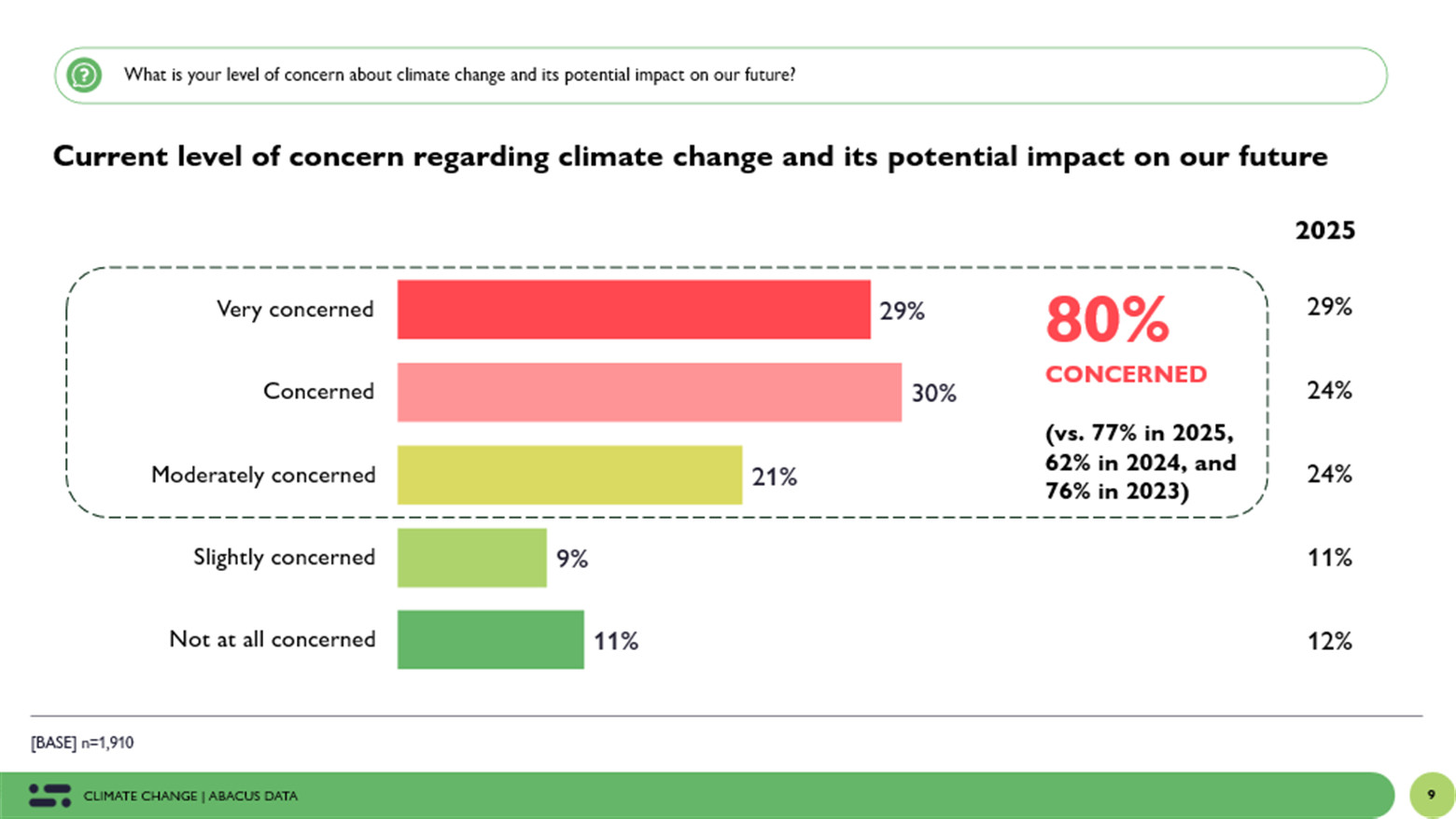
A recent poll by Abacus Data shows that climate concern remains high across the country, but “affordability still dominates Canadians’ priorities”. However, over the years, the level of concern regarding climate change and its impacts on their future has been the highest in the last three years with 77 percent itself in 2025.
(Abacus Data)
He argues the new legislation will not only continue “to allow people to be exposed to poisons that increase the risk of many of the common diseases that kill us” but it will also “relax” the obsolete standards in an “antiquated regulatory framework”.
“In almost every case where you can look, by allowing people to be exposed to these poisons, in the long term, it's always more costly to allow people to be exposed to these poisons than not,” he added.
Minister Michel shared in the House that consultations had taken place with relevant stakeholders including agricultural groups that had advocated for regulatory changes. Her office noted meetings with producers and representatives of Quebec agricultural associations during a tour of the Eastern Townships in March.
While one group advocated for regulations supporting agro-security, another spoke of the rise in chronic illnesses as a result of continued pesticide exposure.
“As more and more agricultural workers suffer from neurodegenerative diseases or cancers linked to their exposure to pesticides on the job, the Carney administration’s rush to further deregulate pesticides is unjustifiable and erodes confidence in our regulatory system,” Pascal Priori, coordinator of mobilization for the Association pour la santé publique du Québec and coordinator of Victimes des pesticides du Québec, said in a statement.
A recent study found that living in pesticide-intensive environments may increase cancer risk by as much as 150 percent, even when the individual chemicals are considered “safe” with the findings indicating that these mixtures could damage cells years before cancer develops. A 2023 research report suggested farmers are at a higher risk of lymphoma, leukemia, brain tumors and other cancers due to their profession.
“The last thing we should be doing is weakening pesticide laws in the interests of a supposed economic and food security issue, for which I've seen no evidence,” public health physician and Canadian Association of Physicians for the Environment (CAPE) co-founder Trevor Hancock told The Pointer.
He sees Bill C-30 as a policy “written by industry” and “pushed through” by the Mark Carney government—a tale repeated over and over again in history, irrespective of who holds power at Parliament Hill.
In 2016, ecotoxicologist and University of Saskatchewan professor Christy Morrissey played a key role in bringing forward scientific evidence that helped trigger federal action on neonicotinoid insecticides after her field research and unpublished water sampling from prairie wetlands revealed widespread contamination linked to imidacloprid and related compounds with concentrations shown to be toxic to aquatic insects, an essential food source for birds and other wildlife.
“Imidacloprid is the most toxic, most problematic of the three neonicotinoids. They're all bad, but that one's the worst of the worst,” Morrissey told The Pointer.
The ban was later reversed in 2021, allowing continued use of certain neonicotinoid products under revised risk assessments and mitigation measures.
In 2021, she filed a notice of objection. It took the government four years to respond, she says, only to dismiss her concerns and keep the product registered.
In November 2024, the David Suzuki Foundation joined 11 environmental and health organizations in calling on the federal health minister to launch an independent review after reports alleged Health Canada's Pest Management Regulatory Agency (PMRA) collaborated with Bayer Crop Science to reverse a proposed ban on the neonicotinoid insecticide, imidacloprid.
The request followed an investigation that alleged unpublished scientific data had been shared with Bayer, whose critiques were later incorporated into the regulator's final assessment while evidence suggesting greater environmental harm was discounted.
“The breach of scientific and regulatory principles by PMRA is both blatant and egregious,” Mary Lou McDonald of SafeFoodMatters.org, said.
“PMRA is supposed to judge the evidence, not help create it. We call for an end to this ongoing capture of PMRA.”
Morrissey was among the scientists and environmentalists who recently wrote to the federal government, calling for the Pesticide Act amendments to be removed from the recent omnibus bills.
The primary concern was pesticide approvals being based on scientific risk assessments conducted by Health Canada scientists that evaluate toxicity and exposure risks across a wide range of species from aquatic insects and pollinators to birds and humans to determine whether the environmental and health risks of a pesticide are acceptable relative to its benefits.
“These are pesticides that are used to control pests, so there is a problem, and they come with risks because they're all designed to kill things,” Morrissey said.
Under the proposed legislative changes, Cabinet would be granted the authority to override Health Canada’s science-based determinations of unacceptable risk. Morrissey fears such a shift would allow political decision-making to supersede evidence-based regulatory science, potentially without a full understanding of the underlying toxicological risks.
“That, to me, signals a very dangerous precedent…The number of chemicals that Canada actually bans is so few, because they more or less are always averse to trying to ban angles,” she said.
“We tend to be fairly lenient in Canada about pesticide use already.”
The regulatory system tends to rely on mitigation measures such as usage restrictions, seasonal limits during pollinator activity and buffer zones near water bodies rather than prohibitions.
A second key concern relates to proposed changes to pesticide re-evaluation timelines. Currently, pesticides undergo mandatory reassessment every 15 years to incorporate new scientific evidence and monitoring data. The proposed reforms would remove or weaken this fixed cycle, raising concerns that harmful effects emerging over time such as impacts on pollinators, wildlife or human health, could go undetected for longer periods.
“It hasn't been passed into law but it's one of the proposed changes,” Morrissey reminded.
“If the risks are considered acceptable, then they will register the chemical, but it's not indefinite.”
Being one of PRD’s science advisory committee members along with seven other independent scientists, she has been urging the government to move towards “continuous oversight” not less.
“We have been supportive of not waiting 15 years but to rather monitor the pesticides continuously during its life cycle, so that we don't miss problems,” she said. “If you wait 15 years, you've already caused a lot of damage.”
She believes the reason behind that legislative change might be Health Canada employees being “overworked”.
“There are thousands of pesticide products and they have to evaluate all of them every 15 years, so the workload is very high. But that's a symptom, that's not the actual problem.”
“The problem is we keep registering more and more chemicals, and never deregistering anything,” she added.
As part of Ottawa’s expenditure review to cut 28,000 public service jobs over four years, Health Canada announced it was eliminating 1,056 employees and 36 executive positions. Over 2,000 staff received workforce adjustment notices while the department is shrinking its overall target from 9,628 employees to roughly 9,056.
“The greater issue is to try to stop that runaway train,” Morrissey said, stressing that pesticide manufacturers, not taxpayers, should bear the cost of generating safety data, while independent government review remains essential to ensure scientific integrity and public trust.
“The chemical companies need to be watched because otherwise, they may be putting forward products that are not safe for humans or for the environment.”
A 2013 UN Human Rights Council report by former Special Rapporteur Olivier De Schutter observed that the notion of pesticides being essential to feed the rapidly growing global population is a myth.
The report accused the global pesticides manufacturing sector of “systematic denial of harms” and its use of “aggressive, unethical marketing tactics” and heavy lobbying of governments, obstructing reforms and paralysing global pesticide restrictions.
At the UN Biodiversity Conference (COP15), 196 nations including Canada committed under the Kunming-Montreal Global Biodiversity Framework to halve the overall environmental risks from pesticides and highly hazardous chemicals by 2030—most countries are on track to miss those targets.
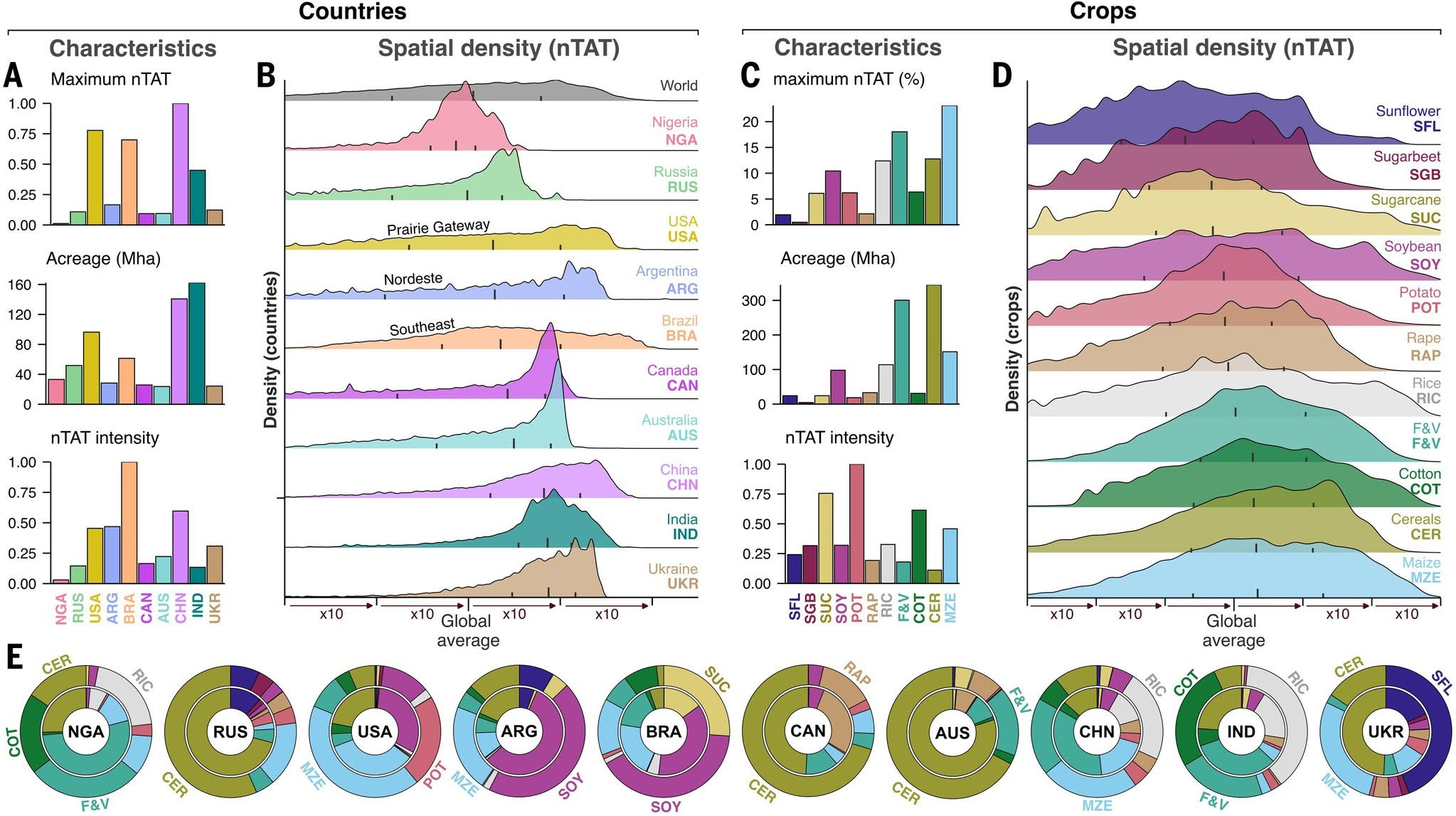
A recent study found increasing pesticide toxicity in most of the countries part of the global target to protect biodiversity. “Majority of this impact comes from the 20 or so pesticides most commonly used in agriculture and from the largest crop-producing countries,” the February research noted. “Increased adoption of organic agriculture and shifts to less toxic pesticides are required to meet global commitments.”
(Science)
“In the 51 years I’ve worked on pesticides, this is the single most regressive proposal I’ve ever seen,” Green Party leader Elizabeth May admitted during a committee meeting in June.
“I don’t see any criteria in Bill C-30 that would prevent a known carcinogen to continue to be used in dangerous and certainly risky circumstances with no economic case having to be made…trade implications, our products could be rejected again. So, even looking at just the economics of this, whoever drafted this didn’t look at the facts.”
Before the legislation was passed, May had already been pointing out that several of the federal bills were being rushed through Parliament Hill without a considerable amount of time being spent to study the details, whether it was Bill C-5 (now facing a legal challenge from First Nation communities) or Bill C-30.
“Instead of passing proposed amendments that could have blunted some of the worst impacts of the bill, the Liberal government chose to shut down debate and fast-track the passing of their omnibus bill,” NDP Member of Parliament and Critic for Health and Agriculture, Gord Johns, said.
“The Health Minister met with industry lobbyists 650 times since coming into office. The results of those meetings are now clear.”
Ecojustice Healthy Communities program director, Bronwyn Roe, reiterated that science was being “vetoed” by the government to “favour commercial interests”, calling the recent changes “unwarranted, dangerous and undemocratic”.
It is a two-layered rollback since Bill C-30 works in tandem with Bill C-31 through different legal levers.
While Bill C-30 introduces a political override mechanism that allows the Governor in Council to authorize or continue the use of pesticides, Bill C-31, Budget Implementation Act, No. 2, targets the routine system of oversight by weakening the mandatory 15-year re-evaluation cycle, replacing it with a more discretionary, narrower review process that may not require full reassessment of emerging risks over time.
“The process will be transparent: the government will be required to clearly explain its decision and justify the necessity of the measures taken,” Minister of Health Marjorie Michel’s spokesperson, Alexandre Bergeron, insisted.
On March 30, the federal government announced it would authorize a time-limited emergency registration of strychnine for use in Alberta and Saskatchewan, responding to what it described as a multi-million-dollar wave of damage from a severe Richardson’s ground squirrel infestation.


According to the Government of Saskatchewan’s own website, cultural and biological methods can help manage Richardson’s ground squirrel populations by supporting natural ecosystem balance including keeping vegetation in pastures above 15 centimetres makes the habitat less suitable for colonization, as the animals prefer short grass for spotting predators. At the same time, encouraging natural predators such as hawks, owls, badgers, and weasels through measures like nesting platforms and preserving patches of natural vegetation can help keep populations in check over the long term.
In a joint statement, the ministers of Health and Agriculture said the decision was made in coordination with provincial governments after they submitted a revised emergency-use request and additional restrictions including a reduced geographic scope and updated stewardship requirements would be applied to lower environmental risks to what regulators consider an acceptable level.
The Office of the Minister of Health noted the decision came “before any potential loss in 2026” but “it came too late to allow farmers to restock in time”.
“The scale of the infestation created serious challenges for farmers across the Prairies. In many cases, extensive burrowing damaged fields and posed risks to agricultural equipment, leading to costly repairs, operational disruptions, and reduced productivity,” Bergeron said. “The impacts extended across multiple sectors of the agricultural economy, affecting crops such as canola, cereals, and corn at a time when Canada is working to strengthen its food system and maintain its position as a reliable global agricultural exporter.”
The statement, however, did not mention that Strychnine itself is a highly toxic alkaloid that affects the central nervous system; its exposure can trigger rapid and severe muscle spasms, convulsions and without immediate treatment, can lead to respiratory failure and death within hours.
On April 22, the Alberta Wildlife Association wrote a letter to the two federal ministries in response to the emergency registration of strychnine: “AWA condemns the re-authorization of strychnine use, given the known environmental harms.
“Strychnine is a highly lethal neurotoxin, which indiscriminately kills many vertebrate species. It was used as a pesticide and predacide, but was banned for unacceptable environmental risks. The severe harm to non-target organisms, long-term effects on the ecosystem, and lack of evidence and public consultation in overturning the prior ban make this a poor solution to ground squirrel outbreaks.”
Canadians are already routinely exposed to chemicals through their daily grocery purchases that are approved by the federal government and have been linked in scientific studies to cancer, hormone disruption, reproductive problems and harm to biodiversity.
Glyphosate, the most widely used herbicide nationally, is sprayed on millions of hectares of farmland each year and has become so pervasive that it has been detected in food, soil, water, air and even rainfall.
A 2018 analysis by Environmental Defence and Équiterre found glyphosate residues in 80 percent of common food products tested including cereals, pasta, bread, hummus and foods regularly eaten by children.
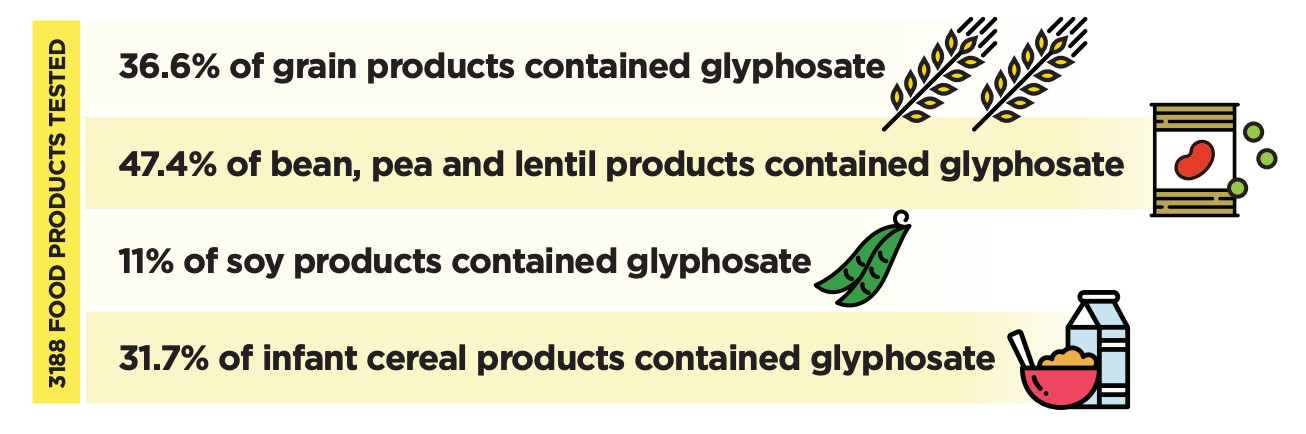
Testing conducted by the Canadian Food Inspection Agency in 2015-16 found glyphosate in several food products; some grain samples containing levels above what Health Canada considers safe.
In 1962, marine biologist Rachel Carson asserted man's war against nature is inevitably a “war against himself” as she wrote about the devastating environmental and health consequences of the indiscriminate use of synthetic pesticides, particularly DDT.
She claimed that chemicals don't just stay in the soil or water, they creep into the food chain, working their way from insects to larger predators, concentrating into lethal doses (biomagnification) impacting the planet’s biota.
In recent years, wildlife rehabilitation centres have reported a rise in birds born with congenital deformities such as missing eyes and other developmental abnormalities, suspecting exposure to pesticides and other environmental contaminants either through contaminated food consumed by parent birds or direct contact with eggs during incubation being a cause.

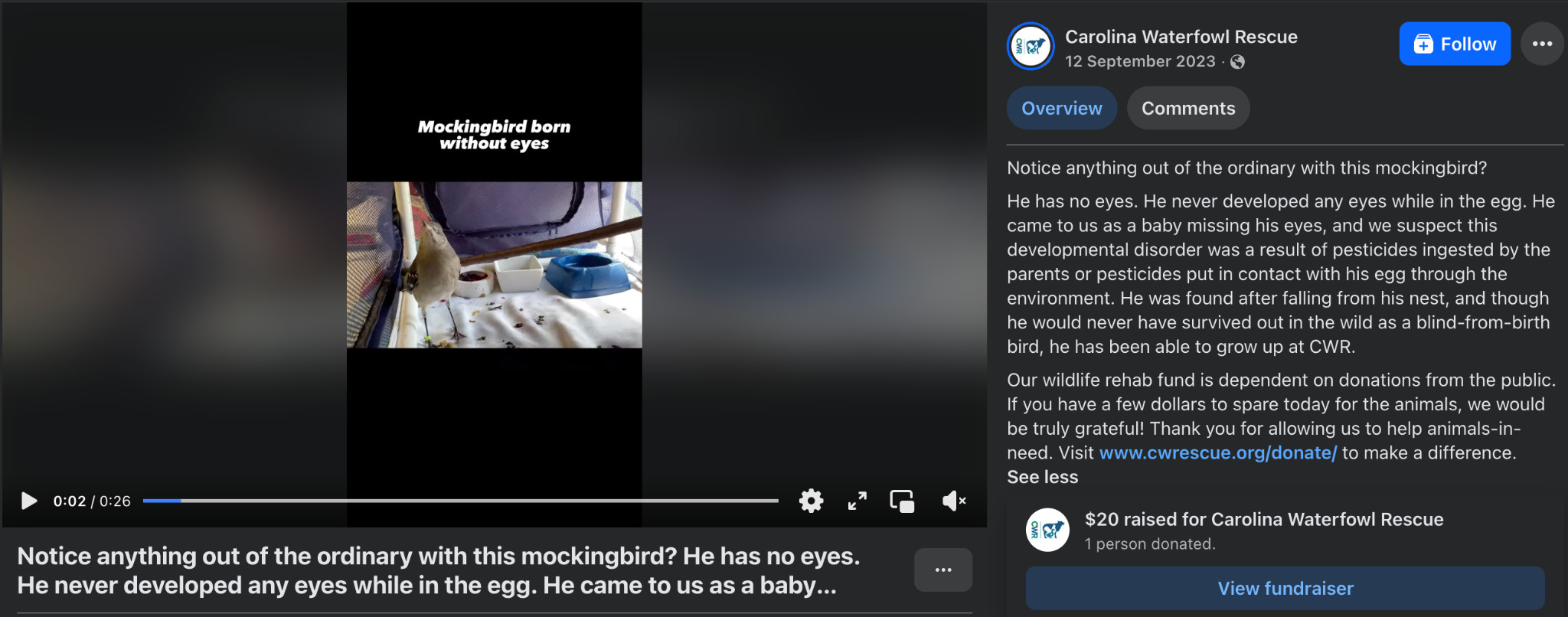
Birds being exposed to pesticides are being increasingly born with deformities.
(TOP: Congress of the Birds/Instagram, BELOW: Carolina Waterfowl Rescue/Facebook)
For Lanphear, who has read Carson’s iconic book Silent Spring “several times”, the world is “absolutely” circling back to the era she warned about, despite decades of scientific and regulatory progress.
The fight for him has been deeply personal because he believes his father’s death from ALS resulted from a combination of long-term environmental exposures accumulated over a lifetime including lead exposure beginning in childhood, pesticide exposure from living near a golf course and working as a horticulturist and repeated head trauma.
The World Health Organization has recognized that there is no safe level of lead exposure. However, both Peel school boards including the Peel District School Board (PDSB) and the Dufferin-Peel Catholic District School Board (DPCDSB) have consistently ranked among the highest in Ontario for lead levels in school drinking water exceeding provincial safety limits.
Illness is rarely the result of a single cause. Lanphear advocates for regulators to account for the cumulative impact of multiple environmental exposures rather than discounting them when no single chemical can be identified as the sole cause.
It is because the foundations of modern chemical regulation today rest on assumptions that no longer hold.
“One assumption is that there are safe levels of toxic chemicals or pollutants and for humans, I can't find any evidence that that's true,” Lanphear bluntly said. “That was an assumption made 60 or 70 years ago so as not to impede economic progress, and it doesn't appear to be true for at least the most well-studied and widely disseminated chemicals.”
Under that model, risk is distributed across entire populations rather than concentrated in a small group with high exposure. The result is widespread low-level exposure can produce more harm overall than rare, high-level exposures.
“It's because small risks spread across large populations will overshadow big risks in small populations,” he explained, comparing it to taking a dollar from every Canadian versus a million dollars from ten people.
This is the central flaw in the idea of “acceptable risk” or implicitly accepting a certain level of illness and death in exchange for continued use of industrial chemicals.
“Many of the chronic diseases and some infectious diseases are man-made,” Lanphear said.
“They're driven more by environment than by genetics. We don't have to focus most of our healthcare dollars on treating diseases if they are preventable, and many of them are.”
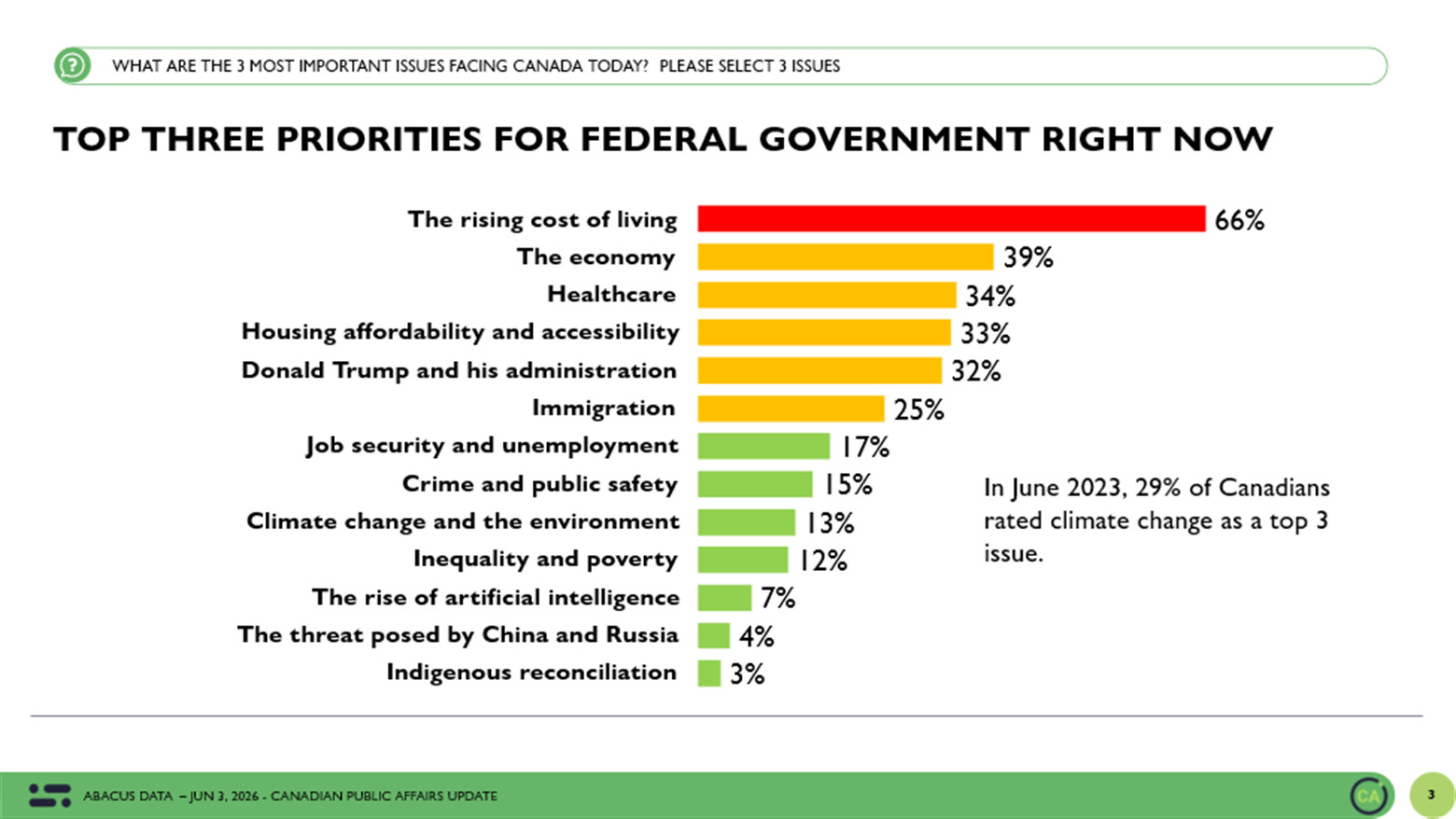
A recent Abacus Data poll showed cost of living ranks as the top concern for most respondents, with 66 percent identifying it among the country’s most pressing issues followed by the economy (39 percent), healthcare (34 percent), housing affordability (33 percent) and concerns about U.S. President Donald Trump and his administration at 32 percent. Only 13 percent of Canadians placed climate change and environmental issues among their top three national concerns today.
But many Canadians forget that climate change is impacting their top three concerns already.
In February, the Bank of Canada reported grocery prices have climbed by roughly 22 percent since 2022 while overall consumer prices increased by an average of 13 percent. Food inflation remained stubbornly high through 2025, reaching five percent in December, the highest level since late 2023.
What happened between 2022 and last year?
Canada endured years of widespread drought, fueled by persistent rainfall shortages, record-breaking temperatures linked to climate change and the effects of El Niño. At the peak of summer last year, nearly 85 percent of the country was experiencing abnormally dry conditions or active drought.
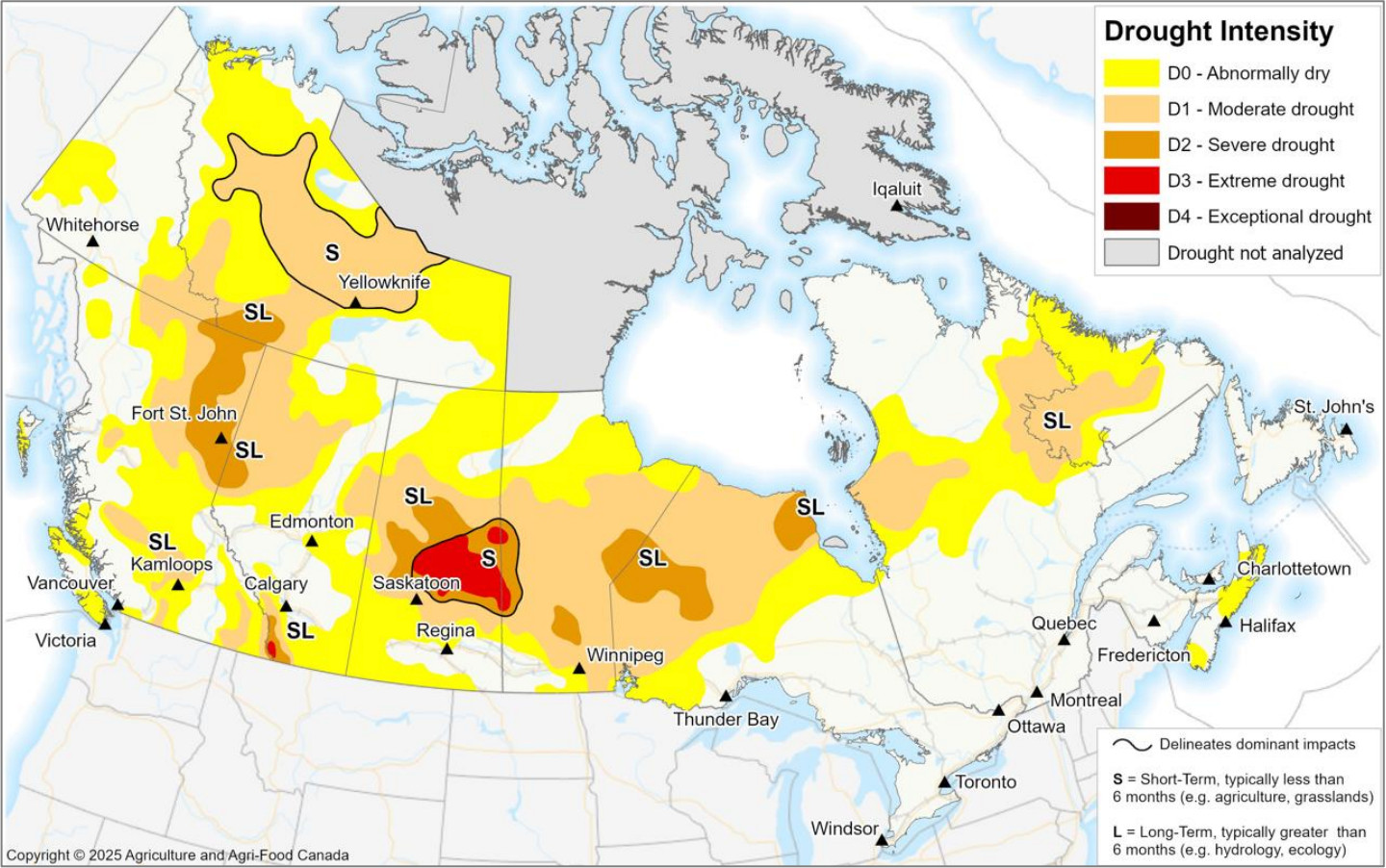
By the end of May 2025, 55 percent of Canada was experiencing conditions ranging from abnormally dry to severe drought, according to the Canadian Drought Monitor. By July, there were 491 active wildfires across the country.
(Government of Canada)
“The biggest threat to food security is climate change,” Hancock said.
The UN Food and Agriculture Organization (FAO) and the World Meteorological Organization (WMO) published a joint report in April warning that rising temperatures and more frequent heatwaves are threatening global agrifood systems and the livelihoods of more than a billion people. Climate change is making food harder to grow just as demand continues to rise.
Ironically, the global food system is also responsible for roughly one-third of greenhouse gas emissions, making it both a victim of the climate crisis and one of its biggest contributors.
“This is a government that has been weakening our laws around climate change, has been promoting fossil fuel use,” Hancock critiqued.
“They can't, on the one hand, claim a sort of vague economic and social threat, supposedly posed by tough pesticide laws, and on the other hand, completely ignore climate change and their contribution to that climate change.
“If the environment loses, since we are part of and utterly dependent on the environment, then we lose.”
When Lanphear resigned and aimed to make a bigger impact, he was certainly successful even if it was a short while. In December 2023, PMRA phased out and banned Chlorpyrifos and Paraquat.
“It took us 70 years to recognize the toxicity of these chemicals, and we based their safety on a few small laboratory studies, one of which the analysis was flawed, — it showed how broken the existing regulatory framework is even before this new bill [Bill C-30],” he noted.
But long before that, the way the world and the systems work troubled him.
“Just like priests are indoctrinated into certain beliefs, scientists are too,” he said. Scientists are trained to accept a framework without question and this institutional mindset discourages deeper scrutiny.
“It took me at least 10 or 15 years to realize how broken it was, and still is today. It hasn't changed, and I don't think most people, most Canadians, appreciate how broken it is.”
Lanphear used the analogy of what it would look like if human beings used drugs the way they used environmental chemicals.
“It's so obsolete, it's beyond belief that we would do that,” he remarked.
“The only difference really is that we can choose to take a drug or not but we don't have a choice about being exposed to these chemicals.”
Email: [email protected]
At a time when vital public information is needed by everyone, The Pointer has taken down our paywall on all stories to ensure every resident of Brampton, Mississauga and Niagara has access to the facts. For those who are able, we encourage you to consider a subscription. This will help us report on important public interest issues the community needs to know about now more than ever. You can register for a 30-day free trial HERE. Thereafter, The Pointer will charge $10 a month and you can cancel any time right on the website. Thank you
Submit a correction about this story

