

Ottawa science cuts threaten Canada’s ability to confront climate crises after hottest year on record
“Science is humanity’s best effort at uncovering the truth about our world”: Canada’s first science minister, Kirsty Duncan, lost her battle with cancer on January 26, but her words echo louder than ever as a new round of federal job cuts fuel concerns about the future of environmental and climate science.
"It is…absolutely critical that our scientists are free to undertake their work, free to collaborate with other scientists, free to speak to the media and free to speak to the public," she said in a 2018 TED Talk.
Duncan was amplifying the voices of several Canadian government scientists who were silenced by the Conservative government under former prime minister Stephen Harper.
One of them was Max Bothwell, whose research on a freshwater algae ominously nicknamed “rock snot” linked blooms of the gunky substance, known to harm fish and aquatic ecosystems, to climate change. Bothwell was the first to make that connection. When a reporter attempted to interview him in 2014, the request was intercepted and shut down by Harper’s office.
"Who the heck would want to stifle climate change information, right?," Duncan pointed out. "We know that climate change is suppressed for all sorts of reasons. I saw it first hand when I was a university professor. We see it when countries pull out of international climate agreements. And we see it when industry fails to meet its emissions reduction targets."
In 2011, the Harper government withdrew Canada from the Kyoto Protocol, cut thousands of jobs and millions in funding, and reshaped federal environmental oversight programs, protections that never fully recovered, dealing a lasting blow to the country’s environmental science infrastructure.
That already uneven road took another hard hit in January when Ottawa announced thousands of federal job cuts, part of a 15 percent departmental spending reduction as part of Prime Minister Mark Carney’s pledge to enforce greater fiscal discipline and free up roughly $9 billion to meet Canada’s North Atlantic Treaty Organization (NATO) defence spending commitments and fund other big ticket spending items.
As a result, Carney’s first budget prioritized $30 billion for defence and security while Environment and Climate Change Canada (ECCC) was asked to cut its budget.
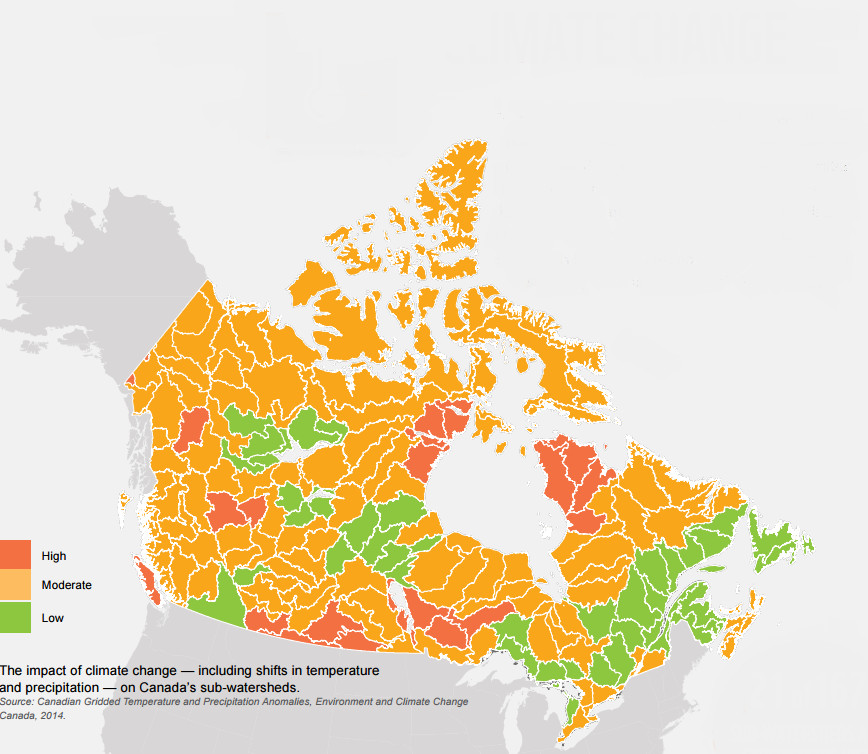
With 20 percent of the world’s freshwater, Canada holds immense responsibility for safeguarding its lakes, rivers, streams and wetlands, but the country’s water systems are in crisis. The World Wildlife Fund (WWF) warns that all 167 Canadian sub-watersheds are under threat, with nearly three-quarters showing moderate to high impacts from climate change. In a 2017 report, WWF Canada found that all but 41 sub-watersheds out of 167 have seen moderate or high impacts from climate change. The Pointer reached out to Canada’s Water Agency to inquire about the job cuts but did not receive a response by the time of publication.
In August, ECCC was tasked to reduce its budget by $43 million in 2024–25, $63 million in 2025–26, and $91 million annually starting 2026-27 or $1.3 billion by 2030, the same year Canada is aiming to reduce greenhouse gas emissions by 40 to 45 percent below 2005 levels.
The cuts were expected to roll out in three stages (7.5 percent in 2026–27, 2.5 percent the year after and five percent by 2028–29) and it seems like the first phase is underway.
On January 26, ECCC confirmed that approximately 1,000 employees, including both executives and non-executives, will be affected, with the department’s workforce set to be reduced by about 840 full-time equivalent positions, including just under 40 executive roles.
It included 446 members of the Public Service Alliance of Canada (PSAC) who received workforce adjustment letters on January 22, a PSAC statement shared with The Pointer revealed.
PSAC also shared 261 workers at Fisheries and Oceans Canada (DFO), 598 workers at Innovation, Science and Economic Development Canada (ISED), 895 workers at Health Canada and 514 workers at Agriculture and Agri-Food Canada received notices.
“It's really unfortunate,” Ontario Tech University’s Professor of Biological Science, Andrea Kirkwood, said, pointing to the lack of details making it difficult to determine whether the affected positions are high-level management roles or frontline jobs.
“These are still Canadians; people who have worked in these jobs, potentially for decades…We're hearing numbers of people that are impacted, but not what they do and how that affects the services that Canadians get.”
Wildlife biologist Marie-France Noel, who has been with the Canadian Wildlife Service for over 15 years and served nearly five years as a team leader, shared in a social media post that she has been identified as an affected employee under the workforce adjustment.
Marie-France Noel was one of the experts providing oversight for the 2020 Committee on the Status of Endangered Wildlife in Canada (COSEWIC) report on the Canada Warbler, which designated the species as Special Concern.
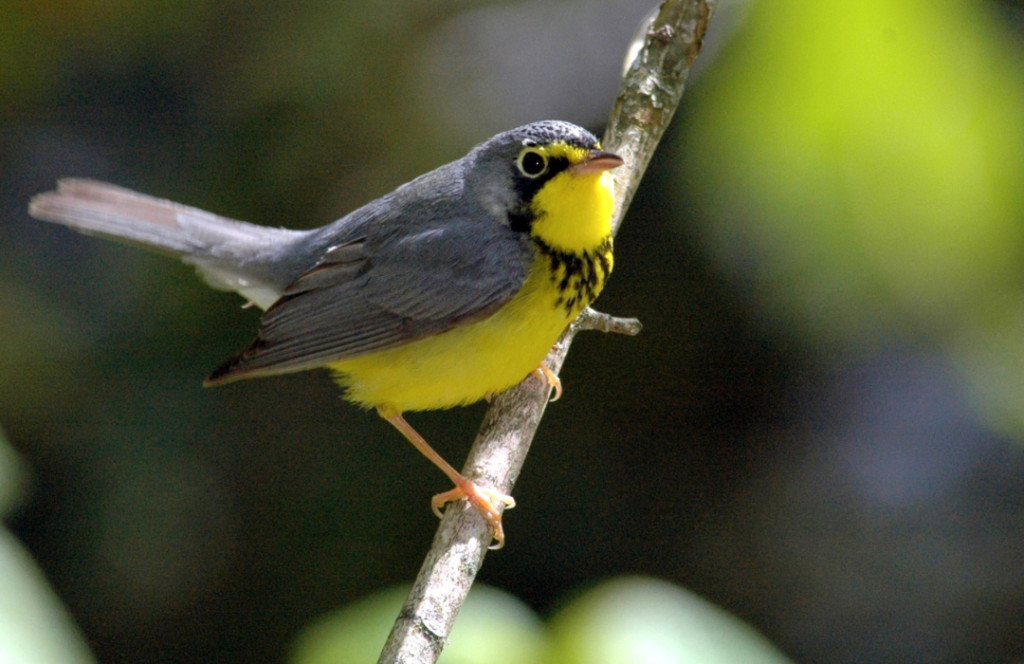
The Canada Warbler, affectionately called the "Necklace Warbler" for the black, bead-like streaks across its breast, is a tiny migratory songbird that travels over 3,000 miles from South American Andean forests to breed in Canada, where nearly 80 percent of the global population arrives late in spring and departs early in fall.
The report noted that while the Canada Warbler’s population has rebounded by 46 percent between 2009 and 2019, habitat loss on its wintering grounds in the Andes and ongoing threats during migration and in Canada mean the species remains vulnerable if protections are not maintained.
Kirkwood emphasized frontline positions are not just entry-level roles. They range from support staff and technicians to research scientists.
“Management isn’t involved in the day-to-day services, research and monitoring that these frontline roles do. Cutting them risks major gaps in how Environment and Climate Change Canada addresses climate management, mitigation, and adaptation,” she explained.
Since 2010, the costs of weather-related disasters and catastrophic events have amounted to five to six percent of Canada’s annual Gross Domestic Product (GDP) growth, a 2020 Canadian Climate Institute study reported.
In 2025, climate-related economic damages, mostly from wildfires, exceeded roughly $25 billion, equivalent to half a year’s projected growth. ECCC has now forecast 2026 to be among the hottest years on record, extending a 13-year streak of global temperatures at least 1 degrees Celsius above pre-industrial levels.
“From the Prime Minister’s Office, a 15 percent across-the-board cut might seem fair but it’s neither wise nor practical because it’s not taking into account which departments can handle the cuts and still remain resilient versus those already weakened by previous reductions,” Kirkwood added.
The recently established Canada Water Agency, tasked with safeguarding the country’s lakes and rivers, is not facing job cuts “at this time” but its funding has been reduced by $3.8 million over four years along with $1.2 million in permanent, ongoing cuts.
When leaked internal messages from Environment and Climate Change Minister Julie Dabrusin’s office last August indicated the agency may face funding cuts, prompting fears for the long-term future of freshwater protection, Kirkwood had warned cuts to the crucial agency would “directly impact freshwater restoration”, particularly for vulnerable water bodies such as Lake Winnipeg, where algal bloom research and restoration efforts could be scaled back.
She believes when it comes to the environment, further cuts only undermine protection and management, especially given the current global political instability and the gutting of environmental protections south of the border by U.S. President Donald Trump.
A decade of surveys by the Professional Institute of the Public Service of Canada (PIPSC), the union for federal scientists, researchers and professionals, revealed Canada’s federal science system has been under serious strain.
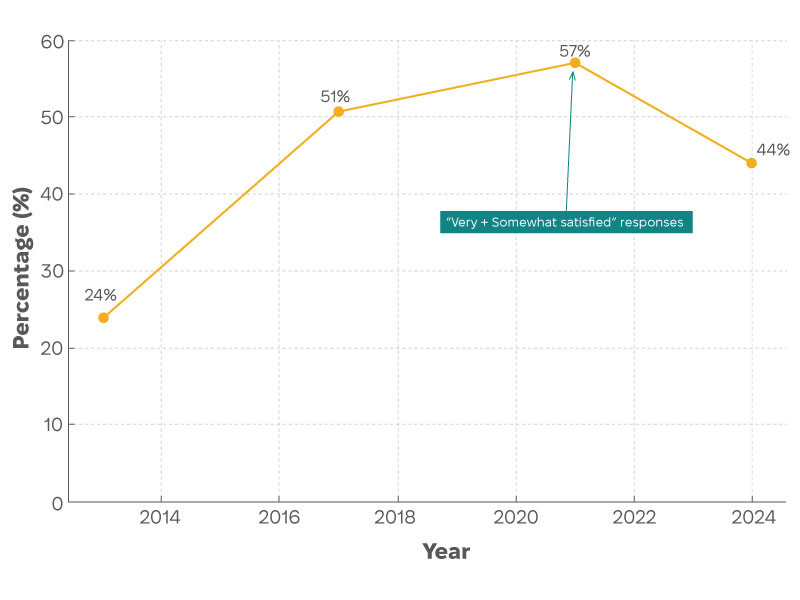
“Scientists’ confidence in evidence-based policy peaked in 2021, when over 57 percent were satisfied that policies were based on scientific evidence. The 13-point drop to 44 percent by 2024 represents more than statistical variance – it’s a trust recession that shows scientists watching their expertise get sidelined again,” a 2025 Professional Institute of the Public Service of Canada report noted.
(Professional Institute of the Public Service of Canada)
Early gains in funding, transparency and scientific integrity after 2015 have stalled or reversed with only 26 percent of scientists now willing to recommend a federal science career and just 6.5 percent saying their departments have adequate research funding, the 2025 report highlighted.
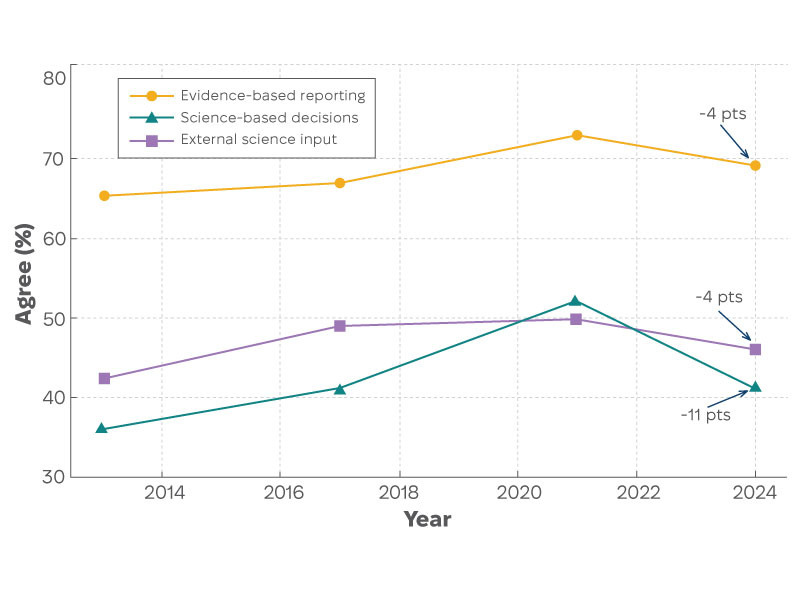
In 2021, the majority of scientists felt their evidence shaped policy, indicating that the post-2015 culture of consultation was effective. By 2024, confidence had dropped to 44 percent, signalling recent gains in transparency and consultation were being eroded. A 2025 Professional Institute of the Public Service of Canada report emphasized this decline has broader consequences: when scientists doubt that evidence informs decisions, the public loses a critical early-warning system for emerging threats.
(Professional Institute of the Public Service of Canada)
Aging labs, an increasing number of retirements and persistent internal pressures are eroding capacity while political and managerial interference threaten the independence of evidence-based policy.
The PIPSC confirmed that over 200 of its members at the department have been impacted.
“These are not abstract programs or administrative redtape,” PIPSC President Sean O’Reilly said in a statement.
“These are the experts who prevent oil spills from becoming catastrophes, who ensure dangerous goods don’t explode on our railways, who make sure Canadians can trust weather warnings, and who protect species from extinction. Cutting this scientific expertise puts public safety and the environment at risk.”
In 2022, government scientists at Fisheries and Oceans Canada (DFO) raised serious concerns about the environmental risks of the Bay du Nord offshore oil project, questioning assumptions made by the project proponent, Equinor.
Their review of the Environmental Impact Statement revealed that the company had likely underestimated the chance of a major spill; scientists estimated a 16 percent probability of an extremely large spill over the project’s 30-year lifespan. They also flagged the danger of an uncontrolled blowout, which could take weeks to contain, underscoring the potentially catastrophic consequences of offshore drilling in the region.
DFO scientists found Equinor’s submission contained "bias" and "inappropriate conclusions," including a failure to adequately consider risks to deep-sea corals, sponges, and the impact of the 2018 White Rose oil spill in the region.
Despite these warnings, the Trudeau government approved the project in April 2022, relying on 137 conditions including measures aimed at net-zero emissions to argue that the oil project would not cause significant environmental harm. Equinor anticipates pulling the first oil from the area in 2031.
With the latest moves by the Carney government including proposing the $10-billion Ksi Lisims LNG export facility in northern British Columbia to export 12 million tonnes of natural gas annually to Asian markets as a national interest project and new pipelines to tidewater under the Canada-Alberta Memorandum of Understanding, critics say the need for independent environmental oversight has never been greater.
“We're at a point in the environmental crisis that we're facing, where we need to be able to respond to them rapidly,” Sierra Club Canada’s Head of Communications, Conor Curtis, told The Pointer.
Curtis cautioned against what he sees as a renewed push toward deregulation and reliance on industry-generated data which poses risks not only to environmental protection but to economic decision-making and national sovereignty.
Questioning Ottawa’s growing emphasis on artificial intelligence (AI) as a cost-saving substitute for public-sector expertise, he admitted AI can assist with large data sets but it cannot replace frontline scientific judgment or independent monitoring.
“You can’t replace these jobs with AI systems that make mistakes, lack context and may rely on U.S.-based technology,” he said. “Because we currently don't have a sovereign grid in Canada that's being actually developed. So, if we're putting jobs now to use American AI to assess data — that is, once again a national security problem.”
Curtis noted a strong public sector exists to provide independent analysis, “outsourcing that role to AI or to private interests undermines the quality of decisions we make as a country.”
“A large part of the environmental damage we’ve seen in Canada and across the world has come from outsourcing what should be public oversight to private actors with profit motives and a motive to hide inconvenient data to mislead the government on key issues,” he explained.
“We’ve seen this over and over again in the oil and gas sector.”
He anticipates the impact of the job cuts is “surely” going to impact Canada’s “ability to weather” the environmental and political storms, particularly in regions where livelihoods depend directly on healthy ecosystems.
“Canada is a natural-resource economy, but it’s also an environmental and ecosystem economy, especially in rural and northern communities where people rely on the land and water not just economically, but for subsistence,” he noted.
“Fully staffed government departments that can monitor and deal with those impacts are vital to that resilience.”
Kirkwood underscored the importance for Canadians to question the narrative, often echoed in the media, that the federal government has become “bloated”, much of which framing originates with government itself.
“Many of the positions now being cut were created to fill major gaps left after thousands of scientists and public servants were laid off under the Harper government,” she said, warning that returning to those levels would once again leave “major gaps” in Canada’s environmental and scientific capacity.
Email: [email protected]
At a time when vital public information is needed by everyone, The Pointer has taken down our paywall on all stories to ensure every resident of Brampton, Mississauga and Niagara has access to the facts. For those who are able, we encourage you to consider a subscription. This will help us report on important public interest issues the community needs to know about now more than ever. You can register for a 30-day free trial HERE. Thereafter, The Pointer will charge $10 a month and you can cancel any time right on the website. Thank you
Submit a correction about this story

