
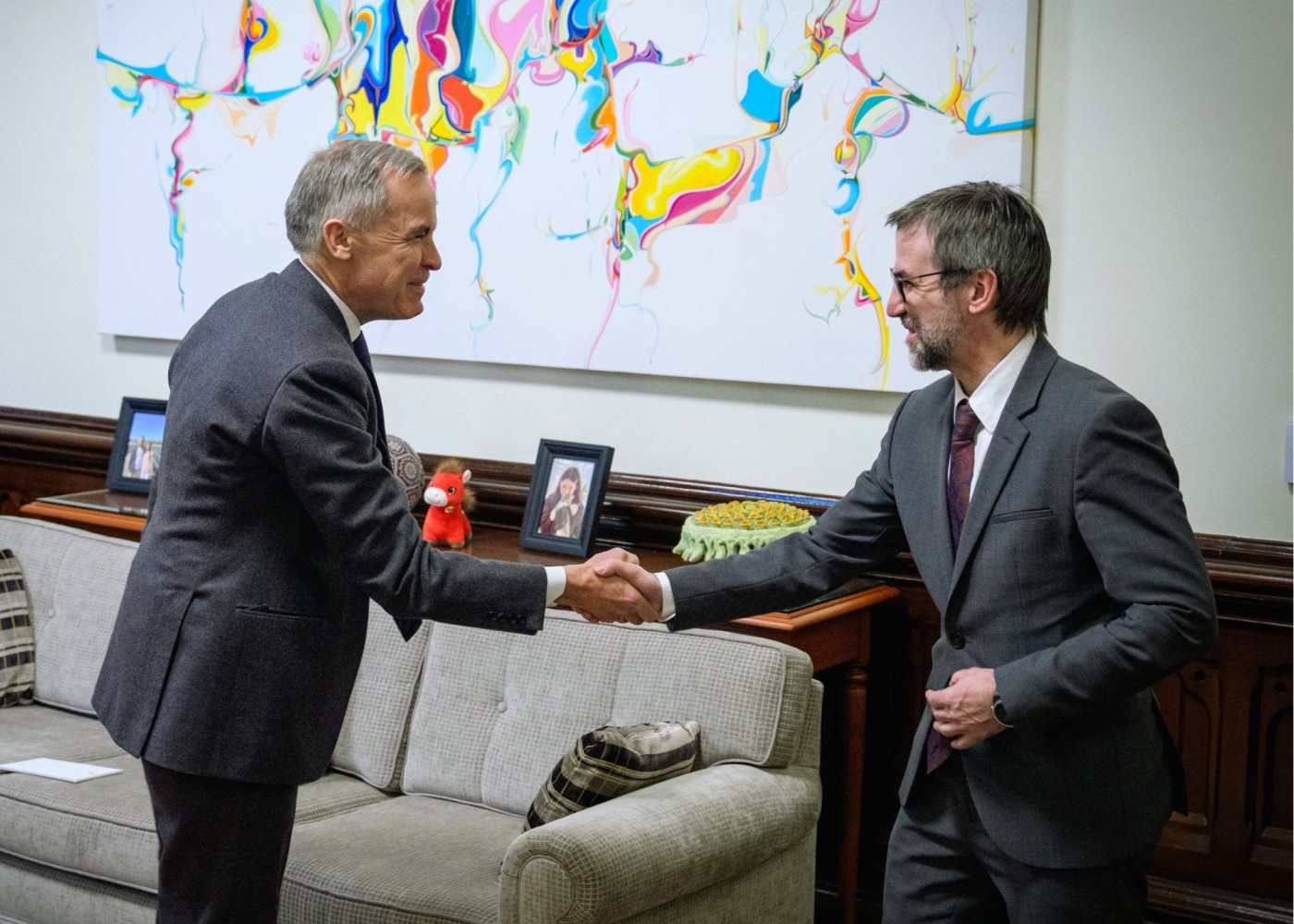
‘Many of us are disappointed’: Carney’s Liberals take hard turn during testimony by Canada’s top climate scientists
“When someone tells you who they are, you have to believe them,” Catherine Abreu said eight months after closely watching Mark Carney’s climate record as the Prime Minister, then she resigned as a member of Canada’s Net-Zero Advisory Body soon after.
“Mark Carney has been telling us who he is and what he wants since (his) election, and what he wants is to build a new oil and gas pipeline that is very obvious and clear to me.”
Abreu had not anticipated then that she would witness a 180-degree flip by the Liberal government publicly seven months after stepping down from the NZAB based on what Carney had been claiming before his election.
“The climate crisis is a crisis of values," Carney remarked in 2024, not long before becoming prime minister.
“The sooner we act, the less costly it will be.”
For centuries, philosophers and economists have wrestled with what gives something value—it’s a question Carney has also circled around.
“Why do the markets rate Amazon, the company, as one of the world's most valuable but the value of the vast region of the Amazon literally appears on no ledger until it's stripped of foliage and converted into farmland?,” Carney, then the vice-chair at Brookfield Asset Management, asked.
While addressing a room full of future leaders at the annual Coxford Lecture Series at Victoria College, he explained that modern economics has increasingly narrowed its understanding of value, equating price with worth and assuming markets naturally produce optimal outcomes. In doing so, society has drifted away from broader considerations about fairness, wellbeing and the environment.
“Because the market is also indifferent to human suffering and can be blind to our greatest needs, and that's why those governments who worship the market tend ultimately to deliver policies that hurt people,” he said.
“Markets don't have values, people do, and it's our responsibility to devise a way to close the gap between what we value as a society.”
The former governor of both the Bank of Canada and the Bank of England pointed to what economists call the “tragedy of the commons”, when individuals acting in their own interests exhaust shared resources. From the collapse of Newfoundland's cod fishery to accelerating deforestation in the Amazon rainforest, Carney argued such practices demonstrate the failure to properly value natural systems until they are pushed to the brink — this is a “product of the market”.
“The second is a product of human nature,” he said, highlighting the “tragedy of the horizon”.
“We are irrationally impatient and the catastrophic impacts of climate change will fall largely, not exclusively, but largely on future generations.”
He resolved that solving climate change requires societies to place greater value on the future and “markets are the most powerful instrument we've ever created” in achieving that, as they can help drive the transition to a low-carbon economy — but only if they are guided by public purpose.
“This is a whole-economy transition, so we need to get particularly to those industries that have heavy emissions; we can't just shut them down, get capital, and/or if we're going to shut them down, we have to shut them down in an orderly way,” he underscored.
Climate action, in his opinion, is ultimately guided by the laws of science: “net zero isn't a slogan, it's an imperative of climate physics.”
The international effort under the Paris Agreement to keep global temperatures from rising beyond dangerous thresholds is not “arbitrary” but a response to mounting scientific evidence and the worsening impacts of climate change already being felt across Canada.
“We can't just achieve this objective even with a strong consensus by fear or through some binding agreement,” Carney emphasized.
“National sovereignty is essential to develop legitimate strategies to mitigate climate change and to manage the transitions that accompany those strategies. And similarly, climate policies must deliver today for people while creating the conditions for the major structural change in the medium term.”
Those words, spoken before he stepped into the Prime Minister's Office, now read more like a roadmap to the contradictions of his leadership; or a vexing language stew with an actual plan possibly hidden somewhere inside his own mysterious mind.
On June 9, Canada's two prominent climate voices, Abreu and NZAB’s co-chair and University of British Columbia professor Simon Donner, appeared before the House of Commons environment committee to explain why they had resigned from the federal Net-Zero Advisory Body, the independent panel created to guide Canada toward its legally binding 2050 net-zero target.
“I resigned when it was clear to me that this government would let divisive politics and the interests of a wealthy few who represent a fraction of the economy wash away any progress that we had made on climate in the last decade in Canada, and with it any hope that we might end the decades of broken promises on climate in this country,” Abreu, who had stepped down on December 4, leaving the 14-member advisory body with just four remaining members, said.
“The shredding of environmental policy that this [Carney] government has undertaken means that Canada is now on track to violate its own law and to fail to attain net zero emissions by 2050.”

“Accountability for climate commitments includes willingness to course correct when necessary. Most importantly, it’s about staying the course,” International Climate Politics Hub Director Catherine Abreu said. “Tackling the climate crisis takes provinces, territories, and all sectors of the economy pulling in the same direction. Everyone, everywhere, all at once…We need stubborn climate optimists everywhere, in particular in government.”
(Catherine Abreu/Instagram)
If the treatment of climate policy on Parliament Hill, in the words of the two scientists, wasn’t jarring enough, the one-hour testimonies brought out an unforeseen twist of events. Liberal Members of Parliament tried to shift the discussion by introducing a wandering motion on home energy retrofits, while Conservative and Bloc Québécois MPs accused them of attempting to run out the clock on the witnesses.
Just after Abreu pointed out that the Carney government had not consulted the NAZB on Canada’s latest “so-called climate competitiveness strategy” which “unwound much of the policies” that the panel had advised on in previous years, Liberal MP Bruce Fanjoy abruptly pivoted the discussion toward home energy retrofits, asking what policies had proven most effective in encouraging Canadians to upgrade their homes—which only further revealed the shortcomings of recent policy decisions.
Abreu responded that she had witnessed numerous climate programs launched with promises only to be cancelled without notice, often accompanied by press statements celebrating their “great success”. This included retrofit programs that had been particularly valuable for renters and lower-income communities that often face the greatest barriers to accessing energy-efficiency initiatives.
This is where NZAB came in—members had recommended putting in place stronger industrial carbon pricing mechanisms, the adoption of British Columbia's zero-carbon building code nationwide and targeted incentives to help lower-income households install heat pumps: “This is a report that I sent to the Prime Minister's Office, that I sent to the Energy Minister's Office, that I got no feedback on,” Donner said.
The modelling, conducted with the Canadian Climate Institute, also found such measures could deliver substantial emissions reductions at relatively low cost.
Fanjoy asked whether such programs could help engage Canadians in climate action and Donner responded, putting him on the spot while reminding him that many Canadians already wanted to contribute to emissions reductions “but it's costly for them, unless government sets the incentives, right”.
Immediately after the exchange, Fanjoy introduced a lengthy motion calling for the environment committee to undertake a six-meeting study on home energy and adaptation retrofits which would examine how retrofit programs could improve affordability and resilience, reduce emissions, stimulate local job growth and address barriers faced by low-income households, renters, Indigenous communities and residents in rural and northern regions.
After months of ignoring the scientists, why the interest now?
“Parliament is ending for the session. I can't believe how gutless this is… you don't like the testimony that is happening in this place. You asked a question about the program, and it turned out that one of the witnesses went to the minister, was rejected, was rebuffed, and wouldn't even talk about it,” Conservative MP for Portage—Lisgar Branden Leslie said.
“For you to sit here, read out the entirety of the motion just to kill time is so shameless…you’re trying to muzzle our witnesses…I thought you might do something like this in camera, but to be televised doing it is just embarrassing.”
In a rare sight, Bloc québecois MP Patrick Bonin agreed with his colleague, noting it is “really lowly” of the Liberals for taking “additional time” to stop the two experts from saying “real things” on how Canada “could improve”.
“You've really reached the bottom,” Bonin said.
Elected in April 2025 as an antidote to the climate skepticism many feared would define a Conservative government under Pierre Poilievre’s leadership, Carney promised Canadians a leader fluent in both the language of markets and the mathematics of a warming planet.
But many within Parliament and outside, including some of Canada’s top climate scientists, feel the world of politics has forced a collision between the competing values Carney seems unable to balance. Unlike leaders in other parts of the world, his confidence in the supremacy of markets no longer seems to have room for solutions that will transition Canada as a frontrunner in the inevitable shift to a clean-energy economy. His critics now feel that if the country is to reach its climate goals and simultaneously be a global player in the multi-trillion-dollar new economy, it will be despite Carney’s market values, not because of them.
Within months of assuming office, he had dismantled the electric vehicle sales mandate and cancelled the consumer carbon tax as supporters waited for stronger replacements.
“If you're going to take something out, like the carbon tax, for example, if you're going to take that out transparently, and clearly put something in place that's better,” Carney said in 2024.
In November, he signed a Memorandum of Understanding with Alberta agreeing to abandon a planned emissions cap for the oil and gas sector responsible for roughly a third of national emissions, and drop clean electricity regulations in exchange for Premier Danielle Smith’s commitment to strengthen industrial carbon pricing and support highly expensive, unproven carbon capture and storage technologies tied to a new pipeline plan.
However, the final agreement locked in a lower price trajectory of $60 per tonne by 2030, rising to $110 per tonne by 2040.
Watering down the pricing system has done little to stop Smith. On May 21, she announced plans to include a question on a fall referendum ballot asking Albertans whether the province should remain in Canada or move toward an independent future. A recent Angus Reid Institute poll indicated 67 percent of Alberta respondents would not support separating from Canada, and 30 percent would vote to leave.
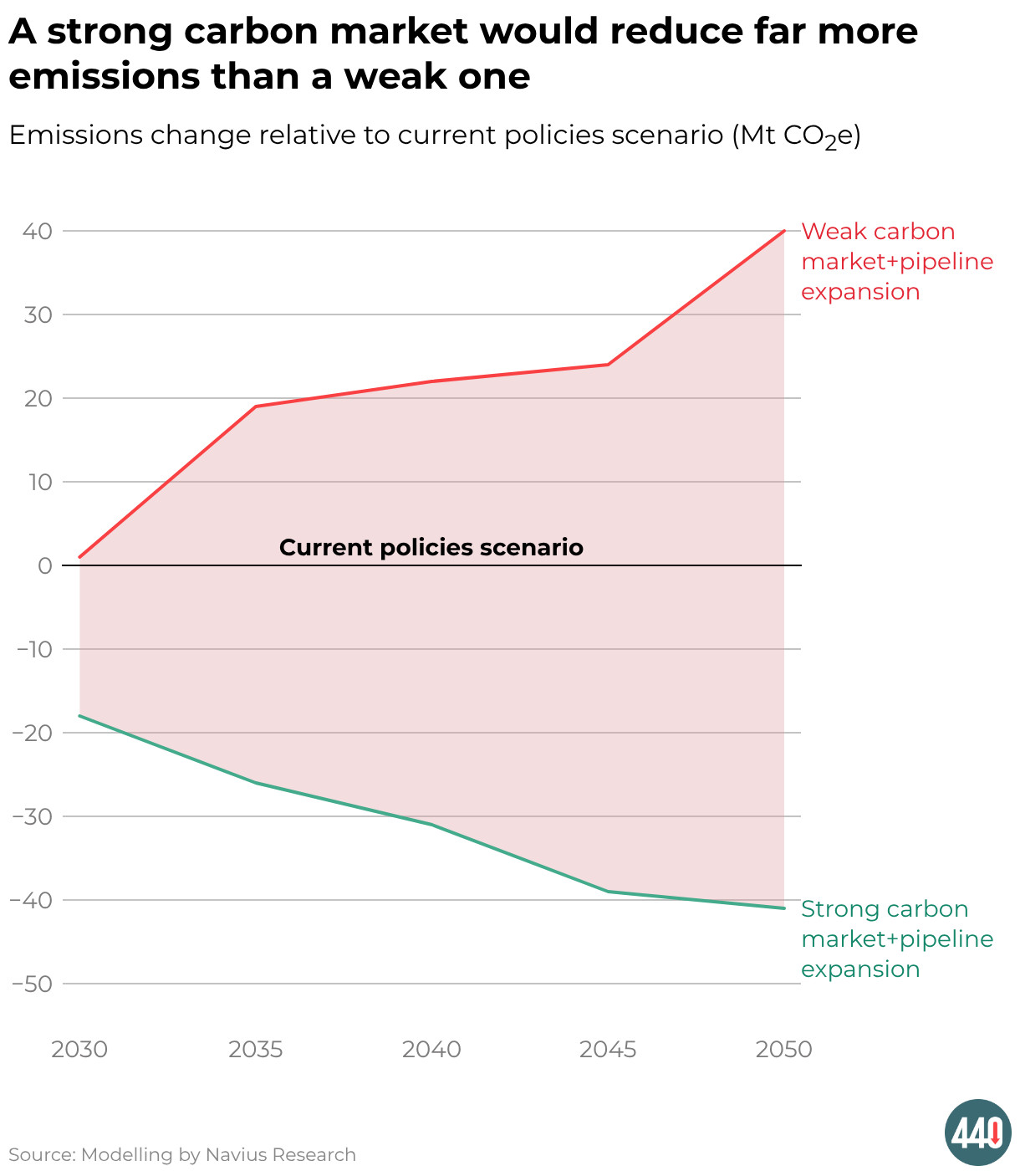
In April, the Canadian Climate Institute’s 440 Megatonnes project released an analysis that highlighted the Canada and Alberta MOU’s approach to industrial carbon pricing is the single most important determinant of its emissions impact with modelling indicating that different design choices could shift national emissions by more than 80 million tonnes by 2050. The study found a weak carbon market, characterized by surplus credits, low compliance pressure and delayed tightening of emissions limits, would produce minimal industrial emissions reductions and can even undermine gains from other policies such as methane regulation and electricity decarbonization while a stronger market with tighter credit supply, earlier price escalation and complementary policies like the Clean Electricity Regulations delivers substantially deeper cuts, particularly in heavy industry.
(Canadian Climate Institute)
Environment advocates are now finding it increasingly unsettling to read through Carney’s masquerade of greenlighting new oil and gas pipelines while proposing a rollback of environmental regulations in the name of national unity and economic stability—a move Justin Trudeau had already tried and failed.
“I have always believed in collaborating with provinces within the framework of the scientific reality of climate change,” former environment minister Steven Guilbeault said in the House of Commons on May 27 after announcing his resignation as a Member of Parliament.
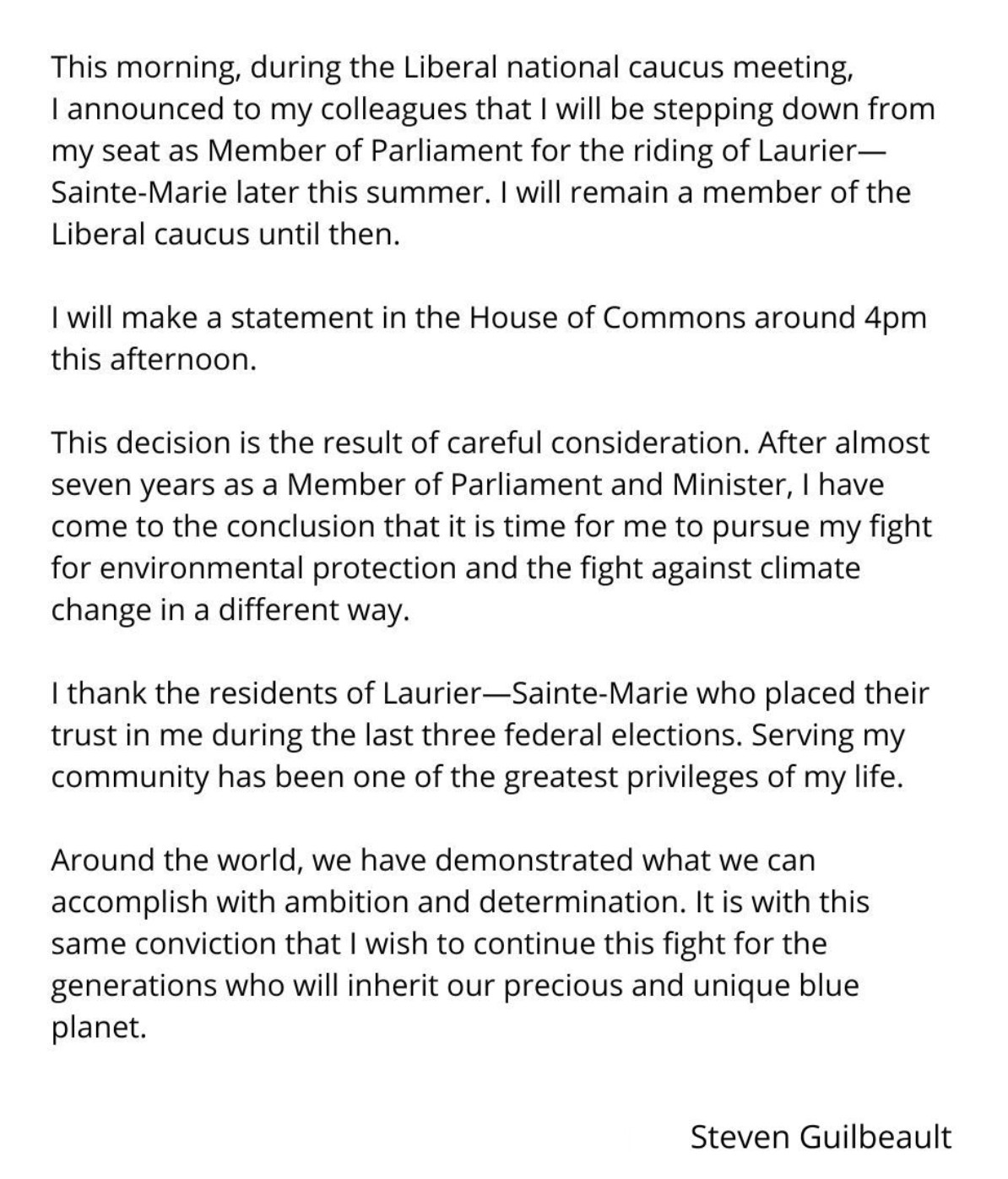
On May 27, former environment minister Steven Guilbeault, who was serving as the Member of Parliament for Laurier–Sainte-Marie, announced his resignation due to the wide environmental rollbacks under the Mark Carney government.
(Steven Guilbeault/Instagram)
Exactly six months after resigning from federal cabinet on November 27, former Guilbeault left his seat as an MP, following Ottawa’s release of discussion papers under Bill C-5 proposing drastic changes to Canada’s major projects approval system.
Launched on May 8, the proposals included “economic zones” with one-year assessments, a single federal approval process and a Crown Consultation Hub, alongside the transfer of some high-risk project reviews to the Canadian Nuclear Safety Commission—changes Guilbeault himself said would go further than policies under Stephen Harper’s tenure.
As history has borne witness, the “grand compromise” does not work, Guilbeault criticized in an open letter.
In 2018, former prime minister Justin Trudeau brokered the federal approval and the eventual purchase of the Trans Mountain (TMX) pipeline in exchange for Alberta’s commitment to climate action. The pipeline was built and diluted bitumen continues to flow to the Pacific but the emissions reductions once expected under that bargain largely failed to materialize.
In the 2019 federal election, the Liberals were shut out of Alberta and Saskatchewan while “ environmentally conscious voters” in other regions reacted with disbelief at the idea of the federal government buying a pipeline.
“I have never hidden my disagreement with the TMX agreement, but we took advantage of the space it created, at least in my view, to move forward with a series of emissions reduction measures that, for the first time, put Canada on track to meet its international commitments,” Guilbeault noted.
“It is in light of this history that I view the most recent federal-provincial energy agreement as a significant step backward in the fight against climate change, a cut-rate sale rather than a major compromise. The Canada-Alberta memorandum of understanding abandons several key, hard-won measures that were rigorously modelled, consulted on, negotiated, and implemented, or proposed, over the past decade.
“What makes the situation even more incomprehensible is that Canadians seem to receive nothing in return for all that is being sacrificed.”
For Guilbeault, the path to achieving Canada’s 2030 targets seemed full of potholes in a journey where the country’s “most polluting sector” refused to do its “fair share”.
He hasn’t been alone in those concerns.
In 2020, when Abreu was asked to join the federal advisory body, she knew despite decades of repeated commitments, Canada had never delivered on a climate promise but she wanted to change that.
By 2021, Trudeau, at 49 years old, had become the G7’s longest-serving veteran while Canada remained the only member whose emissions had risen since the Paris Agreement was signed — a fact that remains unchanged since. Although Canada’s overall compliance with G7 climate commitments is estimated at about 76 percent, slightly above the 74 percent average, it still falls short of top-tier performance due to its refusal to favour the oil and gas industry.
On June 29, 2021, Bill C-12, officially titled the Net-Zero Emissions Accountability Act, was passed, legally binding Canada to achieving net-zero greenhouse gas emissions by the year 2050, five years after the country signed the Paris Agreement in 2016. The NZAB had the vital task of advising the government on its legal obligations.
“The NZAB and its members have no vested interests, you fire the members and they all go back to their day jobs,” Donner, who resigned alongside Abreu, shared.
“[They] also have no need to curry favour to gain access to power, so they're going to be honest with you.”
But he argued the body’s structure was far from “ideal” but after the 2025 federal election “a series of structural yet manageable challenges, which had plagued the NZAB from its creation, expanded into a fullblown crises”.
Even though the NZAB’s work was inherently relevant across government, it reported only to Environment and Climate Change Canada (ECCC), which often was not the lead department on key policy files. Donner recalled research completed the previous summer on industrial carbon pricing and provincial equivalency agreements which had clear relevance beyond ECCC, yet when it was shared more broadly, it received little to no engagement across government.
“We volunteered to brief people across government and received no response from the Prime Minister's Office …nothing but an acknowledgement from the office of the Minister of Energy and Natural Resources,” Donner noted.
In well-functioning climate advisory systems, work is typically aligned with government policy timelines but that was largely absent in the NZAB’s experience. With the exception of the 2024 annual report, which addressed the 2035 emissions target and pathways toward the 2030 goal.
“This gap, however, with government policy timelines worsened under the current government,” Donner said.
“We were not informed of policy decisions underway nor asked to provide advice on those decisions.”
If they had been consulted, the NZAB’s modelling and analysis would have warned that changes to Alberta's industrial carbon pricing system including adjustments to benchmark tightening rates were unlikely to deliver the intended emissions reductions.
Persistent structural barriers including procurement rules that slowed research and the unusual arrangement of Secretariat staff being embedded within ECCC while simultaneously supporting independent critique of the department made it “very difficult” for the team of experts to produce “any work of value”.
“The member appointment process is extremely arduous, and the government simply did not plan adequately in advance,” he added, noting the NZAB had been reduced to six members and lacked a francophone co-chair for extended periods despite “repeated requests” for clarity on appointments.
“By late fall, it had become evident that, due to government inaction, I would have to continue chairing an understaffed body without a francophone counterpart for at least another six months, and I have to say this is a workload that was completely unsustainable for me last year.”
Abreu stressed that members within the body were already concerned about the MOU weakening and delaying methane regulations in Alberta despite methane being “arguably the cheapest and easiest greenhouse gas to control” particularly in the oil and gas industry.
“It really seems that all of the environmental laws and some of the human rights protections are up for grabs for the sake of building fossil fuel projects that rely on public subsidies, because no private investors are interested, and which will likely wind up as branded assets when the vague Asian markets that are often referred to inevitably fail to materialize,” she added.
But the breaking point came when a scheduled briefing on the NZAB’s annual report was cancelled during the MOU’s release.
“I was comfortable chairing an advisory body whose advice was considered but ultimately rejected by the government, because after all, we're not elected representatives like the rest of you,” Donner said.
“I was not, however, comfortable with the process becoming performative, in which we had little or no opportunity for our work to actually inform policy.”
As the NZAB's sole chair, spokesperson and liaison with the minister's office at the time, he “felt pressured to soften” his scientific assessment surrounding the MOU because of “uncertainty and lack of conversation with the minister's office”.
“Softening my assessment is incompatible with my responsibilities as a scientist and a professor at a public institution, I simply can't do that. That's not my job,” Donner said.
“Scientists like me only earn a seat at the table because of the integrity of our discipline. I felt I could no longer serve people who I felt themselves were not being honest.”
While he was never contacted by the PMO, Green Party leader Elizabeth May claimed that she has been informed that Carney has “never once met with his Prime Ministerial Science Advisor”, Dr. Mona Fortier, either.
Political developments south of the border and the pursuit of economic growth are often cited to justify decisions such as the Ottawa–Alberta MOU. But Abreu encouraged political leaders to take a moment “to look up from a narrow view of the U.S., we see the rest of the world is moving ahead on climate”.
Globally, countries are shifting to renewable energy at a record-breaking pace with clean power coming from renewables and nuclear providing 40.9 percent of electricity worldwide with solar being the largest contributor for the third consistent year, adding 474 TWh (terawatt per hour) to reach a share of close to seven per cent, according to a recent report by global energy thinktank Ember.
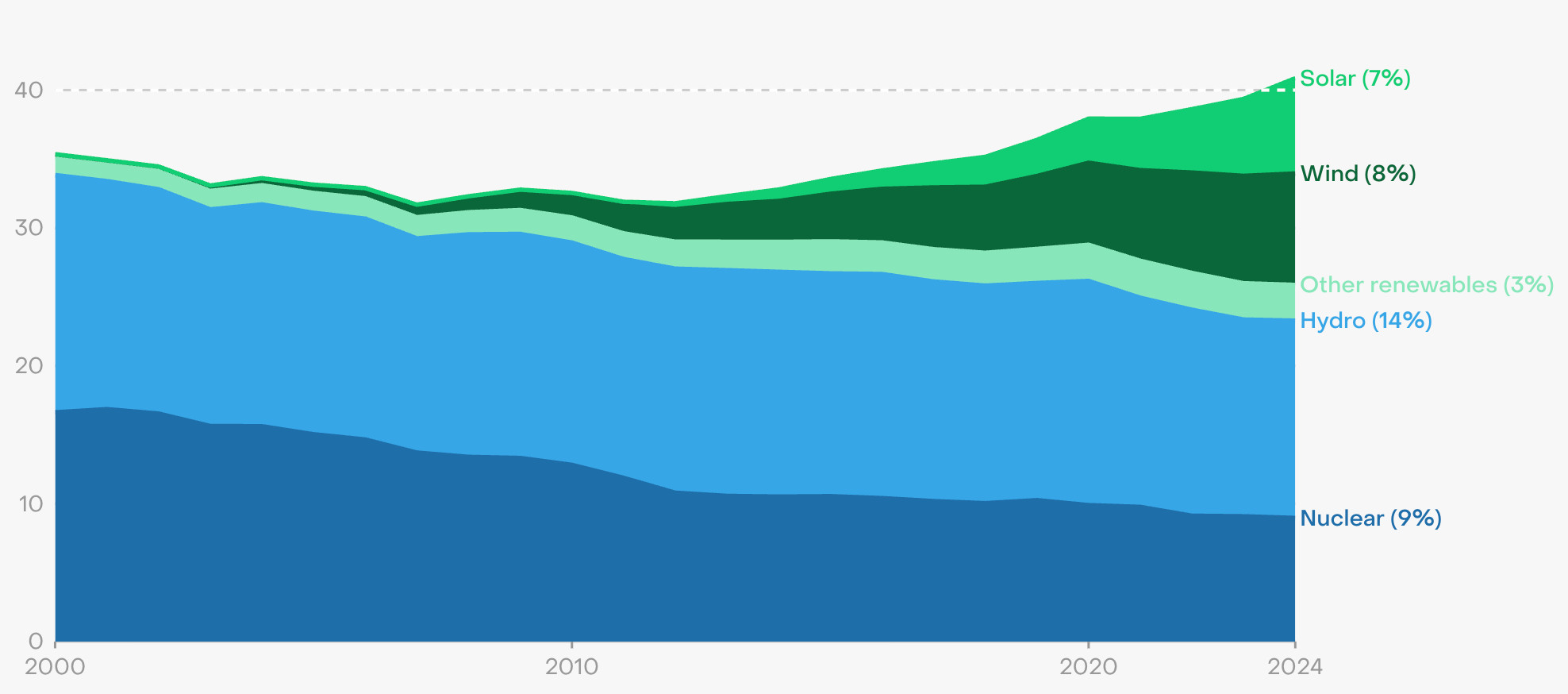
Solar and wind boom pushed the world past 40 percent clean electricity in 2024 for the first time since the 1940s.
(Ember)
Even south of the border, despite U.S. President Donald Trump’s recent environmental and anti-renewable rollbacks, the green energy transition is hard-wired into the American economy. In 2025, clean energy investments hit a record $378 billion, a 3.5 percent increase from the previous year, making it the world’s second-largest energy transition investor after China, which accounted for roughly 34 percent of global clean energy spending, according to a recent report by the Renewable Energy Institute.
This has directly translated into a decrease in GHG emissions in the U.S., which have fallen by about 20 percent between 2005 and 2023, according to the U.S. Energy Information Administration.
Meanwhile, Canada’s productivity growth has been lagging behind best-performing OECD countries including the U.S. for many years while insurance costs from natural disasters have rapidly increased, which could deepen if the country fails to accelerate investments in innovation, digital transformation and the transition to a low-carbon economy, a 2025 OECD report cautioned.
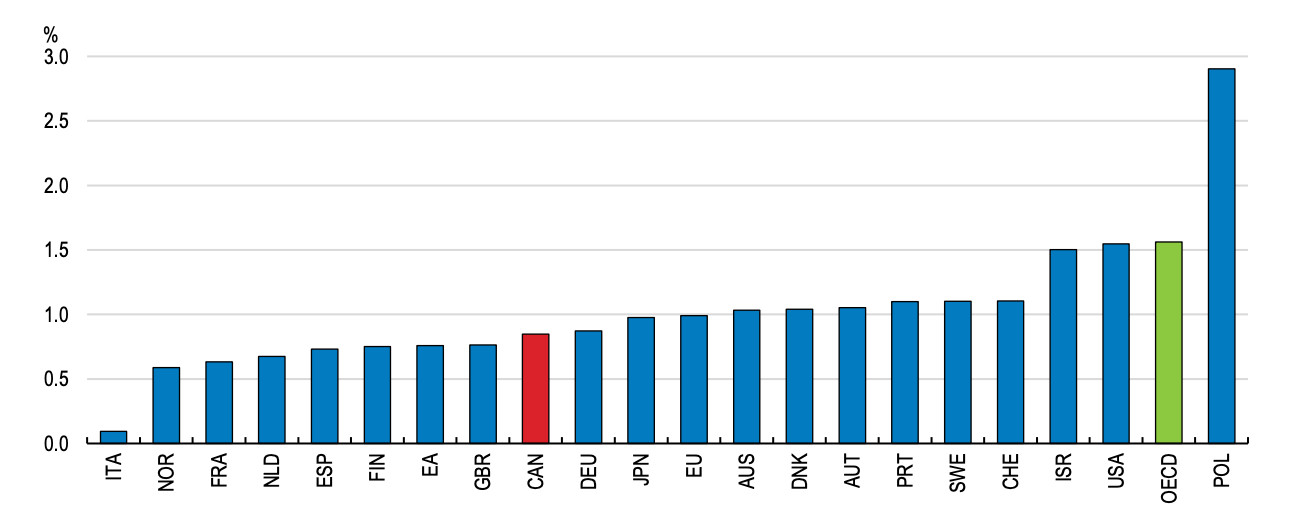
Canada’s productivity growth has been lagging best-performing OECD countries for many years due to low investment activity and low business R&D spending. The OECD recommended addressing these weaknesses and “benefiting from ongoing transformations in new technologies, notably the green transition”.
(OECD)
For the past decade, global investment in clean energy has consistently outpaced spending on fossil fuels, latest data by the World Resources Institute indicated. Although growth slowed from a 17 percent year-on-year surge in 2022 to about six percent last year, overall energy investment still reached a record $3.3 trillion in 2025 with roughly $2.2 trillion directed toward clean energy.
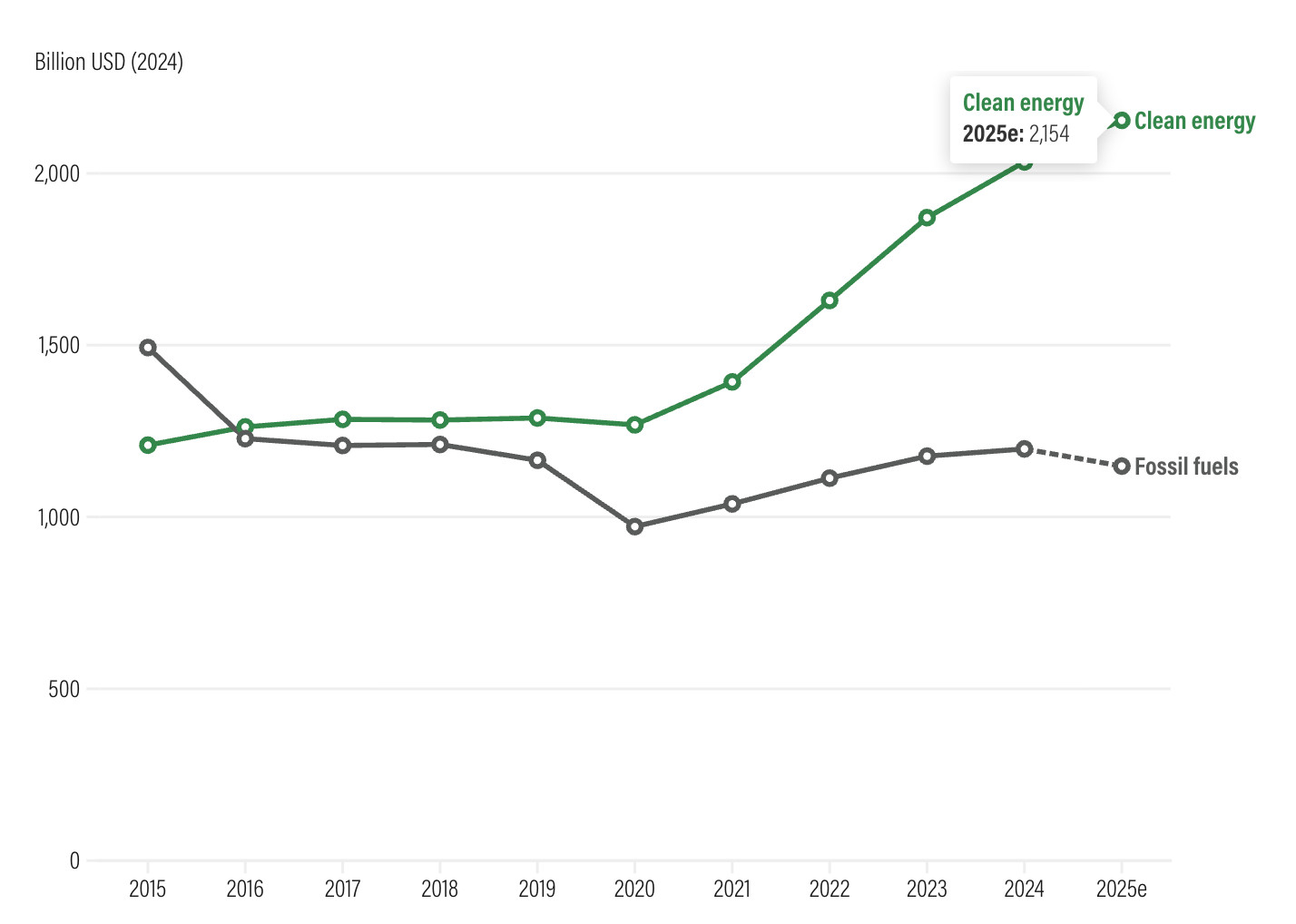
Global investment in clean energy have been outpacing fossil fuel financing consistently for the past six years.
(World Resources Institute)
On June 9, Turkish environment minister Murat Kurum, who is also the president of this year's UN Climate Change Conference (COP31) being held in Antalya from November 9 to 20, said Turkey will seek to build support for a global target to increase electricity’s share of energy demand to 35 percent by 2035 in a unified effort to reduce reliance on fossil fuels.
With an emerging global competition between petrostates (countries anchored in fossil fuels) and electrostates (countries moving toward electrified, clean energy systems), Abreu stressed that Canada’s clean energy potential should be more directly tied to electrifying homes, businesses and transportation with careful planning done in consultation with affected communities.
But there is a “need for us to be having conversations about these kinds of projects in Canada versus having the oldest, most boring conversation I can possibly imagine about how we're going to build another pipeline, which sucks up so much of the energy, the attention and the political and financial resources in this country, preventing us from having these kinds of important conversations about projects that will actually be taking us forward,” Abreu said.
In 2025, oil and gas lobbyists had at least 986 meetings with the federal government. A recent Environmental Defence report revealed Carney was “more willing to meet with Big Oil than his predecessor” with 17 meetings recorded with fossil fuel lobbyists as of March this year since his election. “For comparison, former prime minister Justin Trudeau had just two meetings with fossil fuel lobbyists since Environmental Defence began reporting on lobbying in 2023,” the report noted.
On June 9, just hours before Abreu and Donner spoke at the legislative committee, a coalition of civil society and law organizations stood alongside MPs in solidarity against new pipeline development ahead of the July 1 deadline for Alberta to submit a proposal for a new west coast oil pipeline to the Major Projects Office.
“New pipelines would endanger not only iconic wildlife such as orcas and caribou, but also Canadians’ health and pocketbooks. As oil demand destruction accelerates in Asian markets, and with no private sector proponent, a new pipeline is unlikely to be viable without large public subsidies,” a joint statement shared with The Pointer noted.
West Coast Environmental Law staff lawyer, Anna Johnston, said the political and legal landscape around a potential pipeline remains highly ambiguous but contentious.
“It sounds quite likely that it'll be proposed. It's not going through; there is a duty to consult,” Johnston said during the press conference.
She acknowledged the “extra pressure” on Ottawa from Alberta including the October 1 deadline to determine whether the pipeline project is in the “national interest” under the recent Implementation Agreement between Alberta and Ottawa, which would allow the proposed pipeline to be fast-tracked through the regulatory process and followed by a provincial referendum in Alberta with construction starting as early as September 2027.
“What I know is that the other pressure point that the federal government is under is the very high likelihood of litigation from First Nations, who will be rightfully arguing that the federal government did not hold up its obligation to meaningfully consult indigenous peoples before making that decision,” she added.
Critics note Canada cannot meaningfully address the climate crisis without directly confronting its largest source of emissions and setting clearer boundaries on which projects move forward.
While once climate experts and pro-environment Canadians, including those in the Liberal caucus, had high hopes for Carney given his reputation as the United Nations Special Envoy on Climate Action and Finance from 2019 until 2024, they are starting to question his balancing act. A recent Abacus Data poll revealed that 40 percent of Canadians believe the country is on the wrong track.
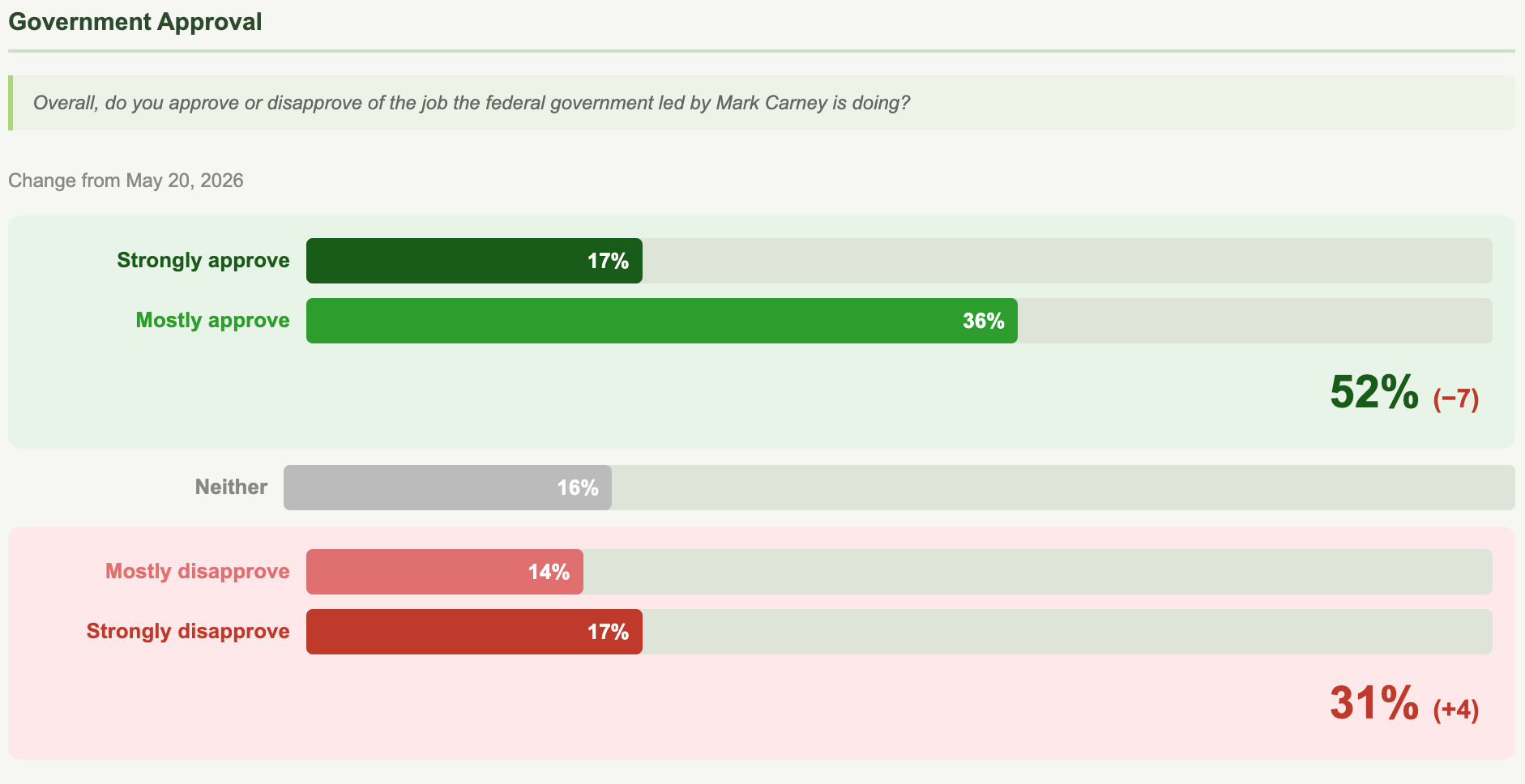
While 52 percent of Canadians approve of the Mark Carney government’s job performance, support has dropped by seven points since May 20, according to the latest Abacus Data report.
(Abacus Data)
Though few say they have been able to fully pin down the Prime Minister’s position, that mystery itself may be pushing supporters from both sides of the political spectrum away from his corner.
“It feels like we’re just stuck in the same conversation over and over again. And even if I put my concerns for climate aside, the fact that we're not actually transitioning our economy into the future really worries me,” Abreu said disheartenedly.
“Many of us are disappointed…because we felt that this Prime Minister would be the right one to think through the options at the intersection of economic potential and clean economy potential in this country and that's not what we're seeing.”
Email: [email protected]
At a time when vital public information is needed by everyone, The Pointer has taken down our paywall on all stories to ensure every resident of Brampton, Mississauga and Niagara has access to the facts. For those who are able, we encourage you to consider a subscription. This will help us report on important public interest issues the community needs to know about now more than ever. You can register for a 30-day free trial HERE. Thereafter, The Pointer will charge $10 a month and you can cancel any time right on the website. Thank you
Submit a correction about this story

