
Part II: Canada’s top climate advisors exit as Ottawa greenlights a ‘dangerous myth’
When Swedish researcher Kenneth Möllersten, known for his work on bioenergy with carbon capture and storage, first contemplated the unproven technology, he envisioned a future of “low-carbon” fossil fuels.
That was more than twenty years ago.
On January 3, America launched a military strike on Venezuela and captured President Nicolás Maduro. The White House said the operation was intended to bring Maduro to justice for corruption tied to drug trafficking. Critics have wondered if the actual motive is tied to oil.
President Donald Trump, in an interview with Fox News after Maduro was apprehended and taken to the U.S. for criminal prosecution, said his administration will be “very strongly involved” in Venezuela's oil industry, which controls roughly 17 percent (303 billion barrels) of the world’s proven oil reserves, much of it extra-heavy and heavy crude that is among the most carbon-intensive to extract and refine. These vast resources surpass even OPEC leader Saudi Arabia, according to the Energy Institute.
Days later, Prime Minister Mark Carney was asked at a news conference in Paris if Washington’s aggressive play for Venezuelan oil heightened the urgency to fast-track another bitumen pipeline from Alberta to British Columbia’s coast.
"Canadian oil will be competitive because it is low-risk, clearly low-risk, low cost—the marginal costs, there's been huge progress on getting down the costs, and low carbon, which is what the Pathways project carbon capture will bring," Carney replied.
"That makes Canadian oil competitive for the medium and long term."
Forty days had passed since Carney had signed a Canada–Alberta memorandum of understanding with Premier Danielle Smith, committing Ottawa to privately financed pipelines to carry Alberta bitumen to Asian markets.
For months, speculation has swirled around whether Carney, who was elected on a promise to shield Canada from economic volatility, trade disruptions, tariff threats and the accelerating climate crisis, is leading the federal government in a political dance with Alberta and its relentless oil industry.
Some have speculated that Carney has forced a misstep.
The MOU agreement is tied to two conditions that could dramatically decrease the production of oil in the tar sands: it includes an eventual minimum $130 per tonne carbon credit price which will make the cost of oil production more expensive; and the deal is tied to oil production that uses carbon capture and storage technology to achieve so-called reduced emissions intensity.
If carbon capture requirements contribute to the higher credit price’s effect, making Alberta oil producers far less competitive in global markets, Carney could achieve the reductions he so passionately argued for when he became the United Nations Special Envoy on Climate Action and Finance in 2020.
But there remain concerns that carbon capture will be used as a means to justify continued fossil fuel use, something Möllersten had identified long ago, and that Carney acknowledged in his own book, Value(s).
By folding Pathways Plus and new pipeline proposals into a list of so-called “national interest projects” oil transportation infrastructure could be exempted from some federal laws including the Species at Risk Act, the Fisheries Act and the Impact Assessment Act.
But was Carney skillfully navigating a political dance, attempting to reassure Smith and the oil and gas sector that he was a willing partner, while actually creating conditions that would eventually make Alberta oil production less and less economically viable for companies?
Or could he be genuinely committed to carbon capture and storage as a way to “reduce emissions intensity” in future oil production, as the MOU lays out?
“When someone tells you who they are, you have to believe them,” International Climate Politics Hub Director Catherine Abreu told The Pointer.
“And Mark Carney has been telling us who he is and what he wants since (his) election, and what he wants is to build a new oil and gas pipeline that is very obvious and clear to me.”
Abreu was one of two founding members of the federal government’s Net-Zero Advisory Body (NZAB), including University of British Columbia professor Simon Donner, to resign on December 4, leaving the advisory body with just four remaining members.
Their departures came exactly a week after Carney and Smith shook hands on the oil pipeline deal, a deal that had already prompted former environment minister and Liberal member of Parliament Steven Guilbeault to resign from Carney’s cabinet (the longtime environmental leader had already been demoted to minister of Canadian identity and culture and minister responsible for official languages) calling the government’s retreat on key climate commitments an intolerable development.
“Would I rather he [Guilbeault] had stayed in cabinet?” Carney said in a December interview with the CBC. “Yes. Would I rather he had been there to see what transpires with the Alberta MOU, to see our climate strategy…our nature strategy come out early in the new year…Yes.”
Guilbeault said he understood and shared Carney’s efforts to keep Canadians united and ensure “all regions feel they have a voice,” but the dismantling of “several elements” of the country’s climate action plan led him to make the decision.
“I remain one of those for whom environmental issues must remain front and center. That’s why I strongly oppose the memorandum of understanding between the federal government and the government of Alberta,” he wrote in a statement. His own politics have been questioned. As environment minister, Guilbeault approved the unprecedented Bay Du Nord offshore drilling project (which the Norwegian state-controlled proponent, Equinor, has since postponed indefinitely) claiming, astonishingly, that it was a “transitional” oil supply deal until alternative energy could fully replace fossil fuels. It would be online for at least 30 years, with as many as 1.3 billion barrels of oil extracted in what would be the first Canadian deep sea project.
After widespread criticism, Guilbeault has since made his opposition to eliminating the consumer carbon price clear. He has said the Zero Emissions Vehicle standard, the oil and gas emissions cap, the framework to eliminate fossil fuel subsidies and the Clean Electricity Regulation are measures “essential” to Canada’s climate action plan.
Like Guilbeault, Abreu says the Alberta MoU was the “final straw” in a string of government decisions that, in her view, threaten Canada’s ability to meet its legally mandated climate targets.

“Accountability for climate commitments includes willingness to course correct when necessary. Most importantly, it’s about staying the course,” International Climate Politics Hub Director Catherine Abreu said. “Tackling the climate crisis takes provinces, territories, and all sectors of the economy pulling in the same direction. Everyone, everywhere, all at once…We need stubborn climate optimists everywhere, in particular in government.”
(Catherine Abreu/Instagram)
“Over time, it became clear that the current trajectory through measures like the Alberta memorandum of understanding, Budget 2025 announcements, and provisions in Bill C-5 would make it impossible to meet Canada’s net-zero obligations under law or the 2030 and 2035 emission reduction goals,” she admitted.
“As someone mandated by the Net-Zero Accountability Act to provide independent advice, I could no longer justify remaining on a body whose guidance is ignored.”
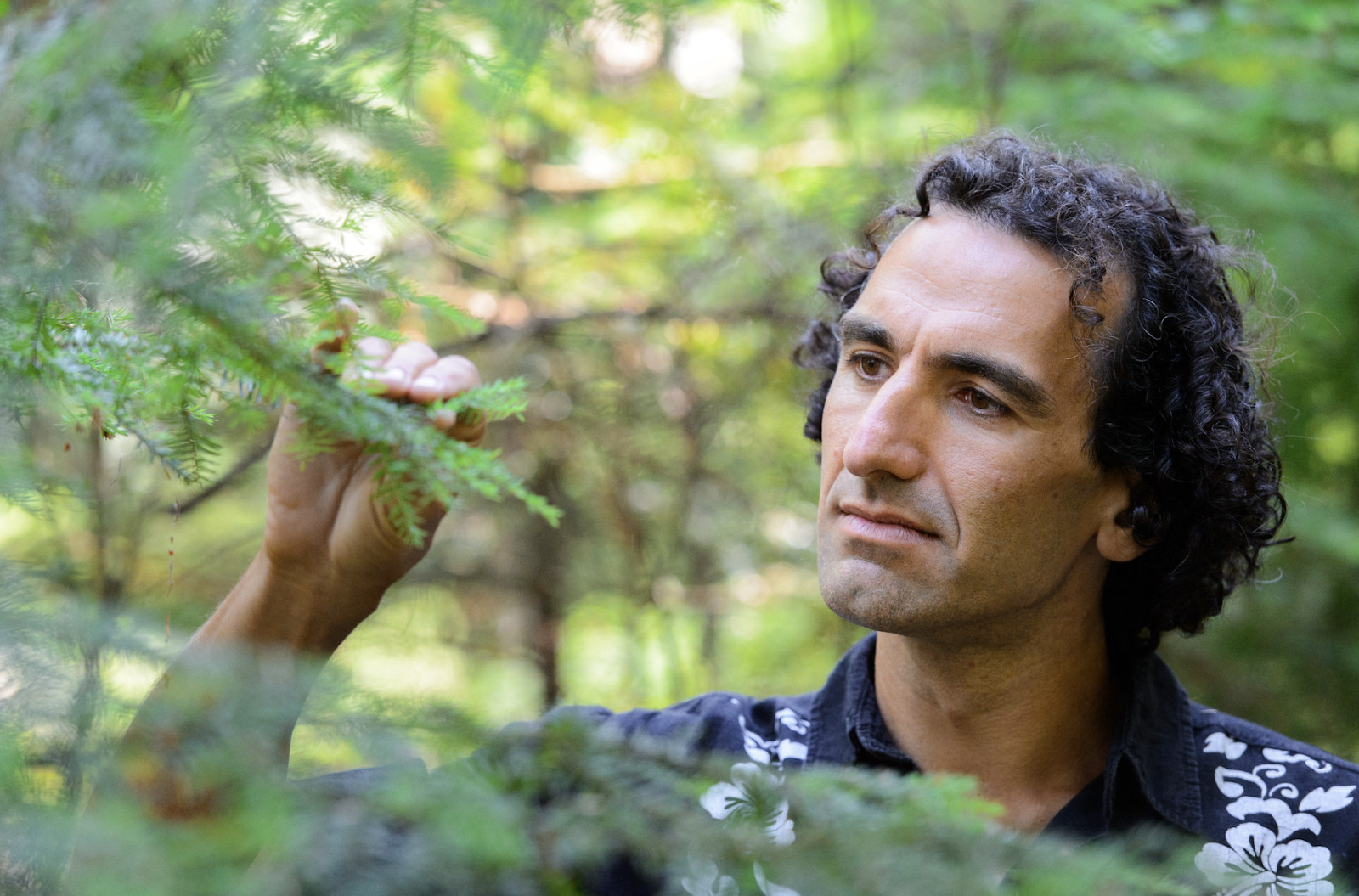
“In late 2019, the federal government asked me to be one of the inaugural members of the Net-Zero Advisory Body (NZAB) - Groupe consultatif pour la carboneutralité (GCPC),” University of British Columbia Professor Simon Donner recalled. “Surprised, I asked, why me?”. I was told it was important to have a climate scientist involved to help ensure the government receives advice based on the best available science. For the past six years, I have tried to do that, first as a member, and later as Co-Chair. It is with a heavy heart that I resigned.”
(UBC News/Flickr)
Donner added “the structure and governance of the NZAB, as set out in the legislation, was never ideal” and he was “comfortable chairing an appointed body whose advice is considered but ultimately rejected” but he was “not comfortable with the process becoming neglected or performative.”
It is “perfectly normal” for a new government to have its own approach but what Abreu kept seeing instead was a government outlining what it would abandon, “without telling us what they were going to do to deliver on those commitments set out under Canadian law.”
“The point that we made in every piece of advice that we gave to the federal government is Canada cannot hope to tackle the climate pollution crisis unless we are specifically targeting the largest source of climate pollution in the country — the oil and gas industry, which eats up so much more of the Canadian climate pollution budget,” she added.
“When we saw the removal of the oil and gas emissions cap and no clear alternative proposals being put in place to tackle Canada's largest source of climate pollution, the oil and gas sector, then that makes it clear we're not going to be able to get it anywhere near our climate goals.”
The other piece of advice given to the federal government was to modernize the economy through active industrial policy, working with workers, communities and the private sector to grow Canada’s share of the global clean economy but those recommendations were largely ignored with the country continuing its dependence on oil exports for a significant portion of its economic activity.
Abreu rejected the idea that the MOU signed with Alberta was part of some hidden strategy, calling it instead a document that gave away far more than the federal government appeared to realize.
On November 17, Carney’s first federal budget promised that public subsidies for carbon capture and storage would not be used for enhanced oil recovery, a practice that runs counter to the stated goal of reducing emissions from the oil and gas sector.
“Two weeks later, they sign an MOU that just gives that promise away,” she noted.
“Many of the decisions that have been made by this government, despite the hope that a lot of us had that Mark Carney would be the perfect person to move Canada's economy in a more modern direction, indicate they're just going to double down on a pretty narrow focus on expanding oil and gas projects.”
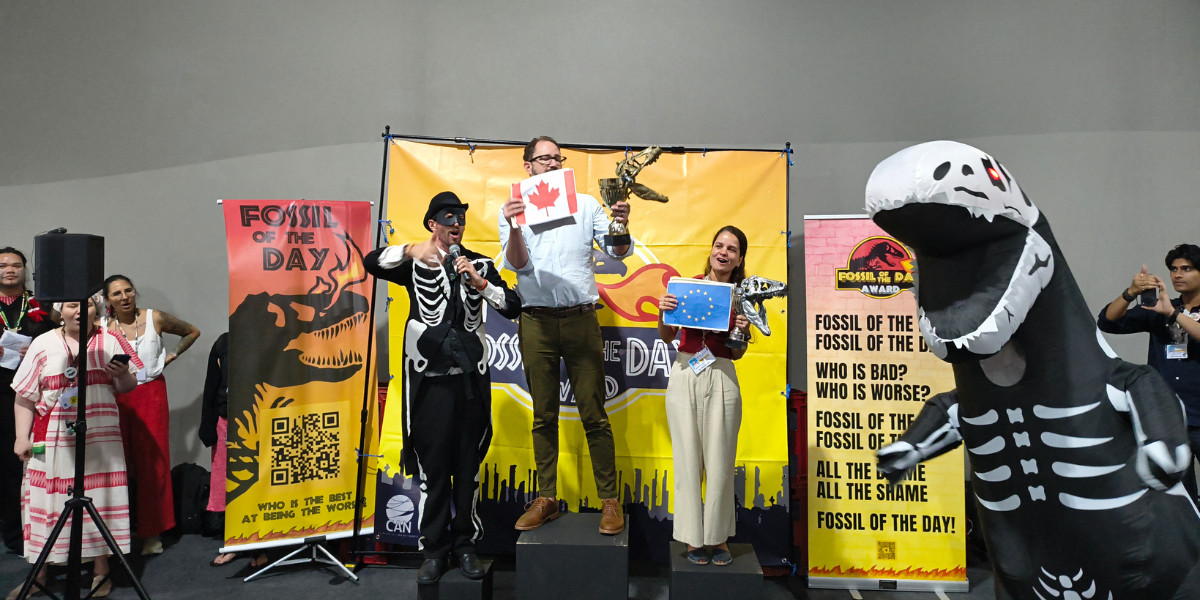
At COP30, Canada was shamed as “Fossil of the Day”, the first time since 2014. “While the world at COP30 is actively working to establish the Belém Action Mechanism – a new global architecture to ensure a just transition for workers, communities and Indigenous Peoples – Canada remains silent in the conversation. We see the G77+China, the European Union, and others propose ways forward for the Just Transition Work Programme, yet Canada remains vague. The country offers only sympathetic nods to domestic “sustainable jobs”, but no substantive commitment to the mechanism that could link global cooperation, justice, and climate ambition,” a statement by Climate Action Network International noted.
(Climate Action Network)
The backing of a costly and high-risk carbon capture project by fossil fuel giants has spurred additional investment in carbon capture and storage initiatives in Alberta with many details missing.
In December, U.S.-based Mantel Capture announced that it began front-end engineering and design (FEED) study on a commercial-scale carbon capture project tied to Alberta’s oilsands, which is being carried out with an unnamed oil and gas producer using steam-assisted gravity drainage (SAGD) technology.
The project is being funded by Alberta Innovates, a provincial crown corporation created and funded by the Government of Alberta.
The proposed system will be integrating Mantel’s molten borate-based capture technology directly into existing SAGD infrastructure in central-western Alberta, with the aim of capturing roughly 60,000 tonnes of carbon dioxide annually, generating about 150,000 tonnes of high-pressure steam for continued oil sands production, according to a press release.
By embedding capture into the thermal processes already required to extract bitumen, the project is designed to reduce reported emissions without disrupting or scaling back core oil and gas operations.
“By cutting energy losses by up to 97 percent and generating high‑pressure steam, it has the potential to position Alberta as a global leader in cost‑effective CCS and industrial decarbonization,” a statement by Alberta Innovates shared with The Pointer noted.
The Pointer reached out to Mantel Capture to find out more details about the deal but did not receive a response by the time of publication.
Founded in 2022, Mantel Group, a startup out of Massachusetts Institute of Technology’s (MIT) Department of Chemical Engineering, made headlines in 2024 when it raised USD $30 million in early-stage funding led by fossil fuel giants Shell and Eni, alongside bp Ventures and other energy-linked investors, to develop molten-salt carbon capture technology that can be installed directly inside refineries, furnaces, and other emissions-intensive industrial infrastructure, allowing polluters to maintain existing oil, gas, and heavy-industry operations while reducing reported emissions.
That year, Shell had rolled back its near-term climate targets amid uncertainty over the pace of the energy transition and pressure from investors to improve returns.
Coincidentally, in 2022, a Pembina Institute report highlighted that Pathways Alliance was also failing to deliver on its promises to bring Canada’s oilsands operations to net zero by 2050.
“Since Pathways was established (in 2021), there have been no significant allocations of funding or investment decisions made to support the urgent progress that is required to substantially reduce emissions from the sector this decade,” the report revealed.
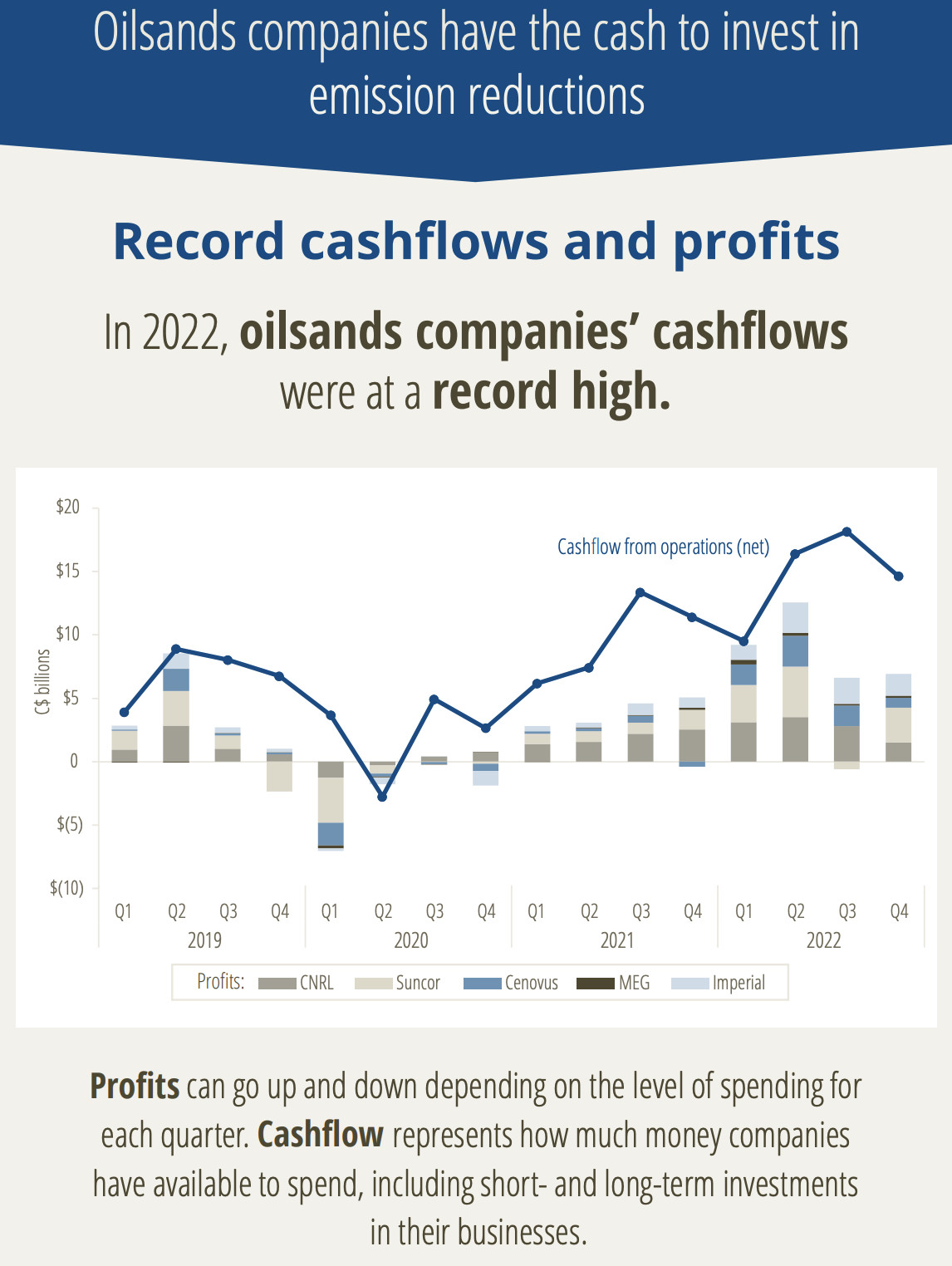
Over 2022, the Pathways Alliance, representing about 95 percent of Canada’s oilsands production, continued to promote its three-phase plan to reach net-zero greenhouse gas emissions by 2050, but with most details undisclosed and no significant funding or investments made since its 2021 founding to drive the urgent emissions reductions needed this decade.
(Pembina Institute)
Even Pathways Plus is not being funded by Pathways Alliance, neither does it have a proponent.
On November 3 last year, 49 environmental, health and community organizations sent a joint letter to Carney and his cabinet urging them to reject “any new public funding” for the Pathways CCS Project.
“We are skeptical to say the least, but are not opposed to industry spending their own resources as they see fit,” the letter stated, arguing that while the oil industry has promoted CCS as a way to decarbonize production, public funding for a technology with such a “flawed track record” is unjustified.
“The rapid acceleration of clean energy globally, including electrification and renewable energy deployment, is expected to make high-cost Canadian oil sands increasingly uncompetitive. Using public dollars to fund CCS not only risks locking in future stranded assets but also diverts resources away from proven and lower-cost solutions to reduce emissions.”
Environmental Defence oil and gas program manager Aly Hyder Ali says since Carney has come been elected, he has continued to tout carbon capture as a “silver bullet that's going to help fight climate change and somehow decarbonize Canada's oil and gas industry.”
But the facts aren't in line with that theory,” Hyder Ali told The Pointer, calling carbon capture a “dangerous myth”.
“Carbon capture is not new. Canada has invested billions in the technology since 2000, yet it has only captured about 0.0004 percent of the country’s total emissions. There’s no evidence that new projects, including the Pathways CCS Project, will improve that record,” he added.
Large-scale deployment of CCS, which consists of post-combustion, pre-combustion, direct air capture and bioenergy with CCS, also has the potential to dramatically increase humanity’s water footprint, a 2021 study warned.
Depending on the technology, the water footprint ranged from 0.74 to 575 cubic meters per tonne of carbon captured, with bioenergy with CCS being the most water-intensive due to the high irrigation needs for growing biomass.
Researchers warn that large-scale deployment of CCS consistent with the 1.5 degrees Celsius climate target could almost double humanity’s anthropogenic water footprint, potentially exacerbating green and blue water scarcity in many regions.
It is a cost Canada may struggle to absorb, considering the country already has close to 300 data centres, with demand expected to rise after Carney made clear in his budget that artificial intelligence will be a cornerstone of his government’s economic strategy.
Global data centre capacity is expected to almost triple by 2030, while extreme heat, drought and other climate hazards could drive cumulative climate-related costs at data centres to $3.3 trillion by 2055. Annual costs alone could reach $81 billion by 2035, rising to $168 billion by 2065, with water stress and cooling demands among the biggest drivers, the World Economic Forum anticipates.
Can Canada afford to expand both water-intensive CCS infrastructure and AI-driven digital infrastructure at the same time?
The largest oil sands companies in Alberta together already used more than 222 billion litres of freshwater in 2023, as reported by the Alberta Energy Regulator.
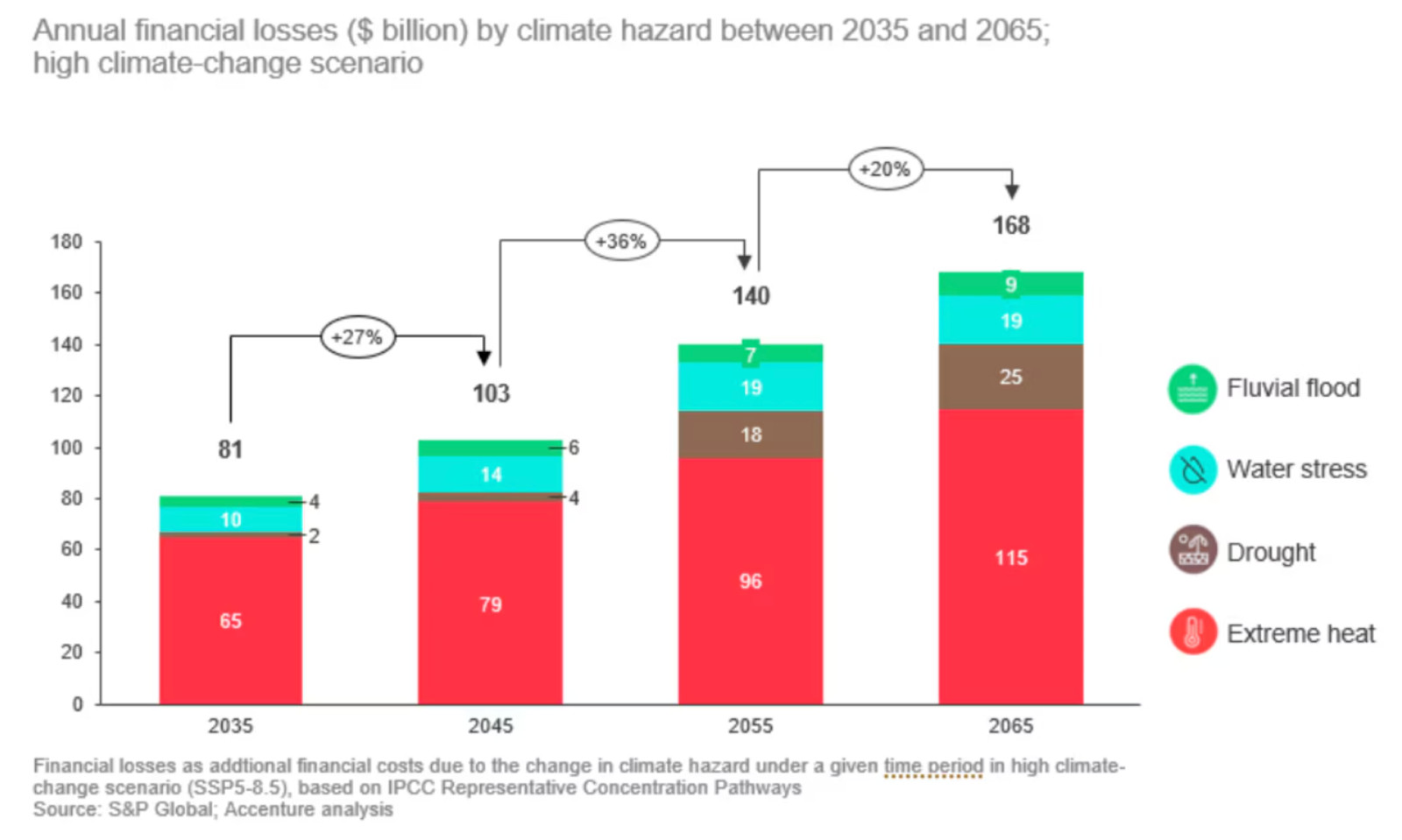
The World Economic Forum highlighted in a recent report that “racks of the latest AI chips consume more than ten times as much energy as their predecessors and generate so much heat that air conditioning is no longer sufficient to keep them cool”.
(World Economic Forum)
The debate over carbon capture and storage has been ongoing for years, including at Parliament Hill under former Prime Minister Justin Trudeau.
On April 5, 2022, former Member of Parliament for Guelph Lloyd Longfield asked whether CCS was “critical to achieving carbon neutrality,” to which research and policy analyst on net-zero transitions, Dr. Simon Langlois-Bertrand, replied no.
“It seems to be—and there seems to be consensus more and more on this across net-zero reports around the world—that CCS will be necessary to reach carbon neutrality in the longer term,” Langlois-Bertrand said.
“However, it needs to be kept for applications where it's absolutely essential, so where it's impossible to avoid the emissions, for example, in the production of cement, steel and such…but that doesn't include oil and gas.”
Hyder Ali points to it is the “policy choices that Canada has made” over the years that has resulted in climate targets increasingly being out of reach further leading to a tonal shift by the federal government.
In September, Carney said "the government is focused on results," during a press conference last year.
“They're trying to match the fact that they're going to miss out on the targets, but that doesn't change the fact that targets are still important to hold countries like Canada accountable for what they commit to,” Hyder Ali said.
“Otherwise, any promise that any elected official, any jurisdiction makes, is worthless if you have no measures to keep them accountable to it and that's what targets do, and that's what interim targets do.”
When the 2015 Paris Agreement was adopted, it was never meant to be a modest goal; it was, as former Commonwealth Secretary-General Patricia Scotland put it, “1.5 [degrees] to stay alive.”
Canada has a legal requirement to reach net-zero by 2050, enshrined in legislation in 2021, with an interim goal of cutting emissions at least 40 percent below 2005 levels by 2030.
In February last year, after much delay, Canada updated its Nationally Determined Contribution (NDC) under the Paris Agreement, setting a target to cut greenhouse gas (GHG) emissions by 45 to 50 percent below 2005 levels by 2035.
What about progress? As of 2023, emissions were only about 8.5 percent below 2005 levels, with oil and gas emissions remaining stubbornly high, rising 1.9 percent in 2024 alone.
According to the 2024 Early Estimate of National Emissions (EENE) from the Canadian Climate Institute, emissions flatlined at 694 megatonnes of carbon dioxide equivalent, leaving Canada far off track for the 2030 goal “given weakening policy momentum across the country”.
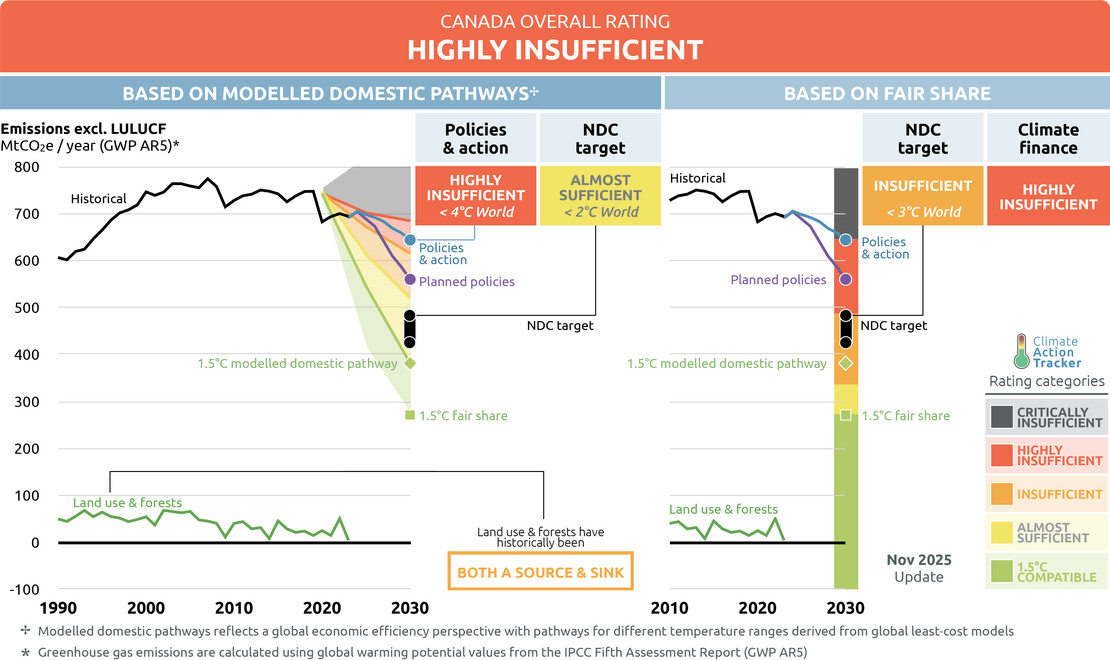
Canada’s climate performance is “Highly Insufficient,” according to the Climate Action Tracker. Despite legally binding net-zero and 2030 targets, policy delays, rollbacks, and continued reliance on oil and gas, alongwith the removal of the consumer carbon price, mean Canada is off track. Even full implementation of current measures would still put emissions on a path consistent with 4 degrees Celsius of warming. Land use and forestry help, but not enough and international climate finance remains low.
(Climate Action Tracker)
“I feel sad that this limited progress that we have finally started to see in Canada in bending the curve of our climate pollution downward has just been set aside so readily,” Abreu said.
At the current pace, Canada is projected to reduce emissions only 20 to 25 percent below 2005 levels by 2030, falling short of the legislated target and “well below what could have been achieved if governments across the federation had implemented climate policies as announced.”
Despite Canada lagging behind its peers—ranking 17th for renewable energy investments, with less than four percent of U.S. investment levels and trailing the EU, UK, and even China—she remains optimistic about the global green revolution.
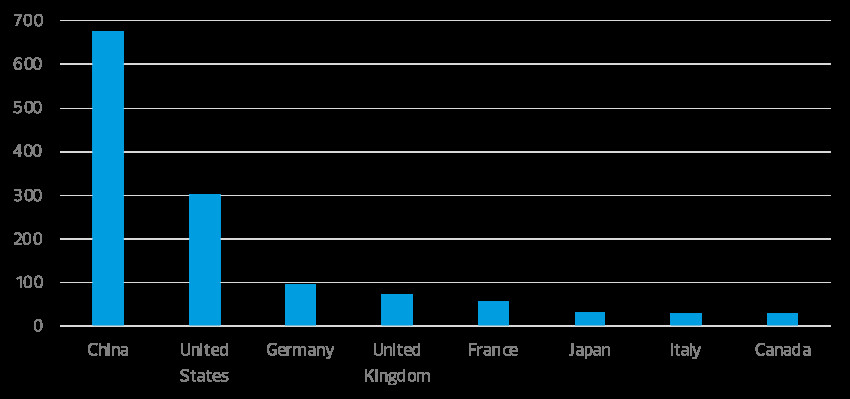
In a 2024 report, economist Tu Nguyen noted Canada risks being left behind in the global energy transition, as investments in renewables lag far behind other G7 nations, and without a stronger combination of carbon pricing and aggressive incentives for clean energy, the country could face higher costs, lower competitiveness, and missed opportunities in the rapidly growing global green economy.
(RSM Canada)
In 2024, the world surpassed 40 percent clean power, including renewables and nuclear with solar and wind now cheaper than fossil fuels at utility scale in most regions, according to the International Energy Agency.
Over 90 percent of new renewable projects cost less than their fossil fuel alternatives, and global renewable capacity is expected to more than double by 2030, adding roughly 4,600 gigawatts, equivalent to the combined power generation capacity of China, the European Union, and Japan, showing that the transition is already underway despite pushback from the fossil fuel industry.
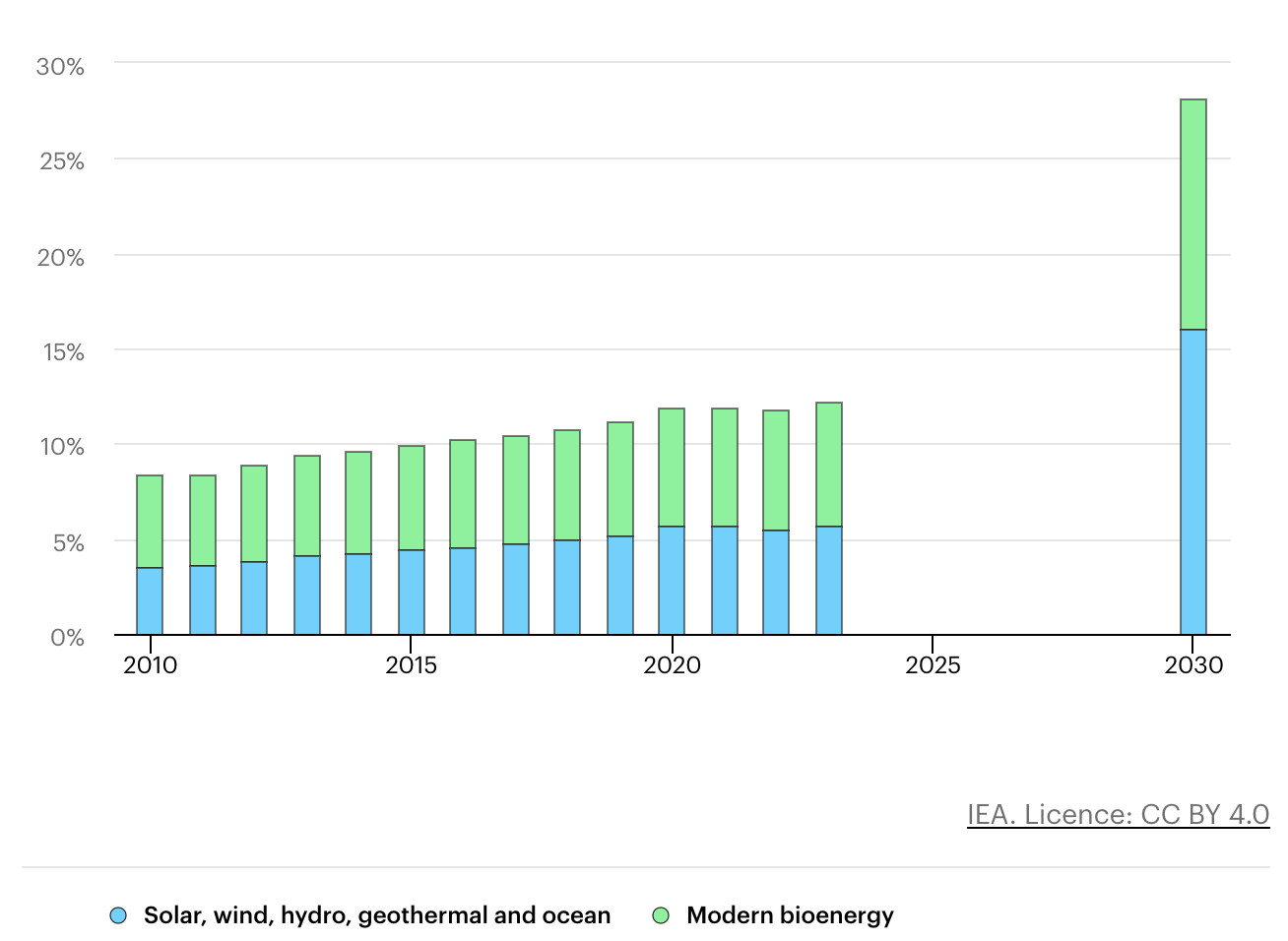
The International Energy Agency reported that while renewables saw their second-largest increase on record in 2022 and grew by more than 5 percent in 2023, raising their share of global energy supply to 5.7 percent, with modern bioenergy reaching 6.5 percent, annual expansion must accelerate to around 15 percent between 2024 and 2030 to align with the Net Zero Emissions (NZE) scenario.
(International Energy Agency)
In May last year, Canadian Climate Institute’s Senior Research Associate Kathleen Mifflin warned that Canada, under Carney’s leadership, needs to look “beyond the U.S. to avoid falling behind in the global energy transition”.
Mifflin pointed to rapid growth in electric vehicles, expanding carbon markets in China and India alongwith new carbon border tariffs in Europe as clear signals that the global economy is moving decisively toward low-carbon systems — changes that could leave Canadian exporters exposed if domestic climate policy does not keep pace, especially as Canada seeks to diversify trade beyond the U.S. amid uncertain economic headwinds.
“If it wants to deliver on its promise of strengthening Canada’s economy, the new federal government needs to make climate a policy priority,” Mifflin said.
Abreu anticipates that the resignation of country’s top climate scientists can open up the “political space” for the Carney government to “come through and tell us what their plan is, not just what it isn't”.
Having made such a difficult decision of stepping down from her role, The Pointer asked Abreu whether hope still guided her work.
“I don't work on climate change because I'm hopeful. I work on climate change because I need to, because there are people and places in this world that I want to protect because I love them, and climate change is actively threatening those people in those places that I love,” she concluded.
“I work on climate change because I know that most climate actions are actually going to improve people's daily lives…For me, working on climate change isn't a choice. It's an imperative.”
Email: [email protected]
At a time when vital public information is needed by everyone, The Pointer has taken down our paywall on all stories to ensure every resident of Brampton, Mississauga and Niagara has access to the facts. For those who are able, we encourage you to consider a subscription. This will help us report on important public interest issues the community needs to know about now more than ever. You can register for a 30-day free trial HERE. Thereafter, The Pointer will charge $10 a month and you can cancel any time right on the website. Thank you
Submit a correction about this story

