
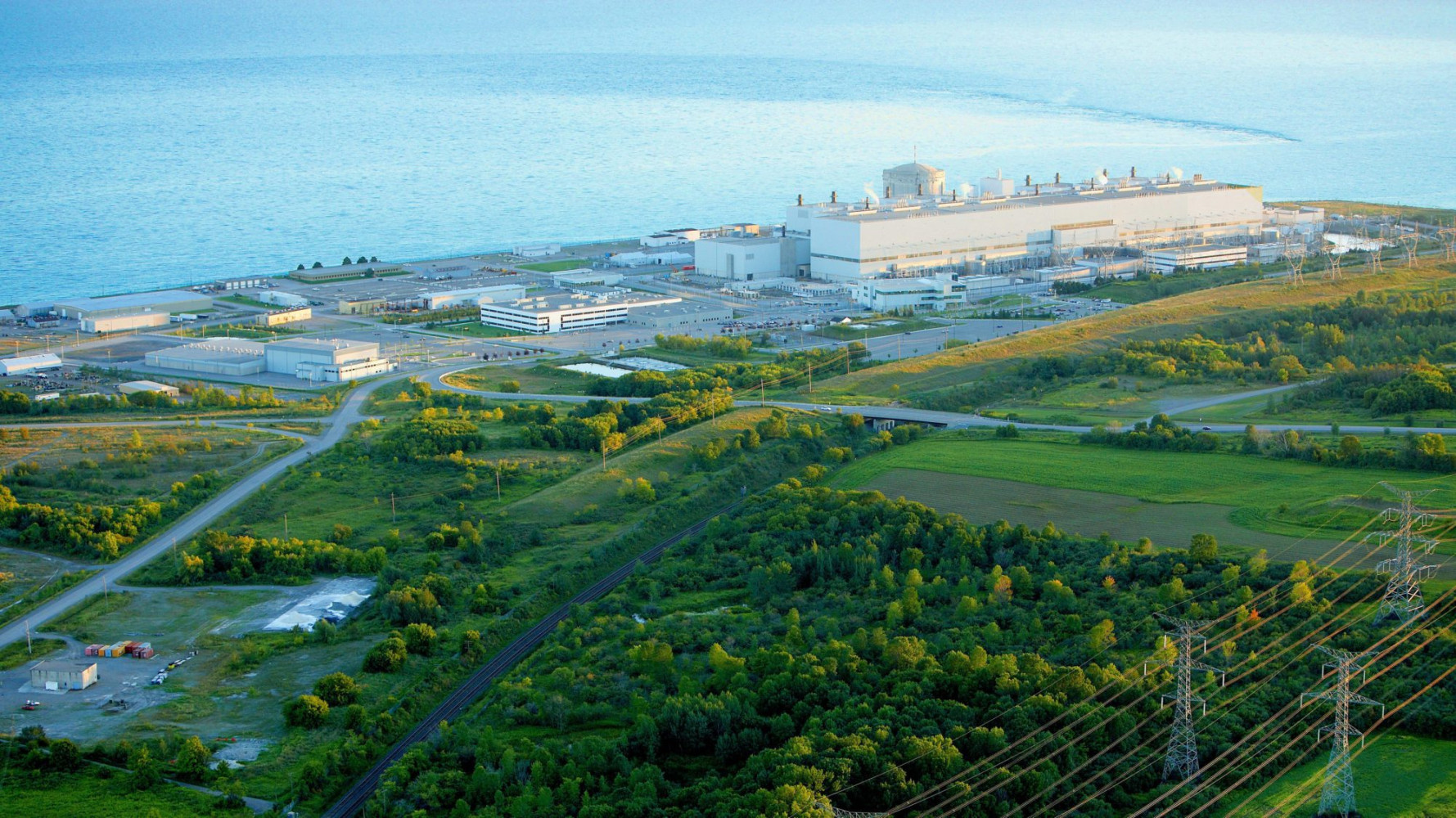
Ottawa’s ‘new nuclear renaissance’ ignites debate over Canada’s energy future
“There is no credible plan for Canada to become an energy superpower if we choose not to build upon one of the strongest energy advantages we have.”
While unveiling a new national strategy for nuclear power on June 22, Energy minister Tim Hodgson made it clear that under the Mark Carney government, Canada was entering a “new civilian nuclear renaissance” with the country’s electrical grid capacity expected to double by 2050, “driven by digitalization, electrification and artificial intelligence”.
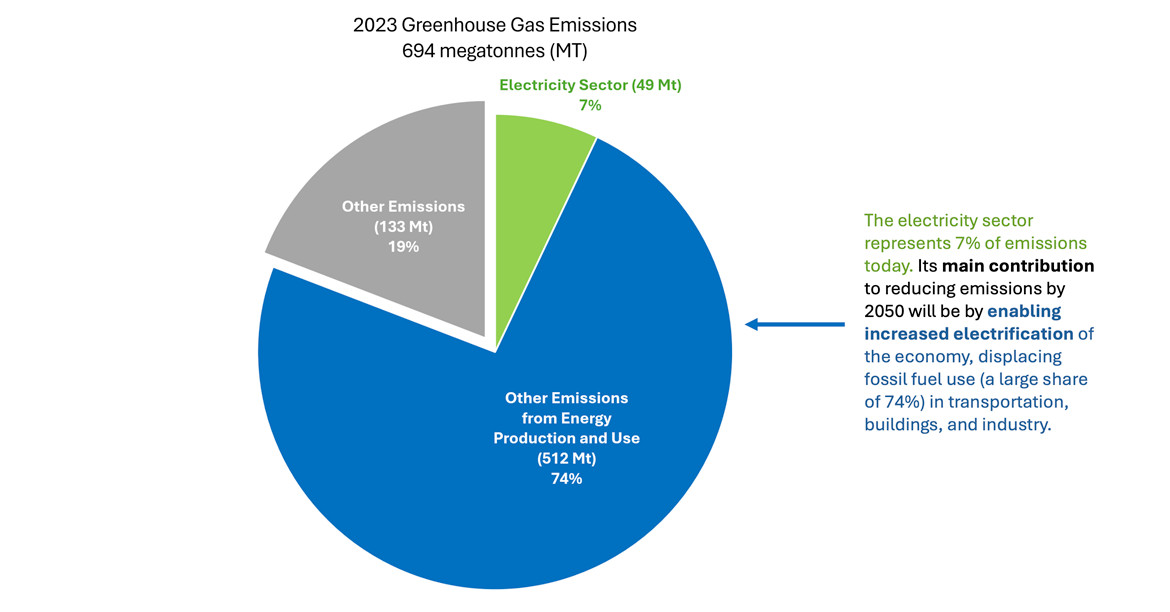
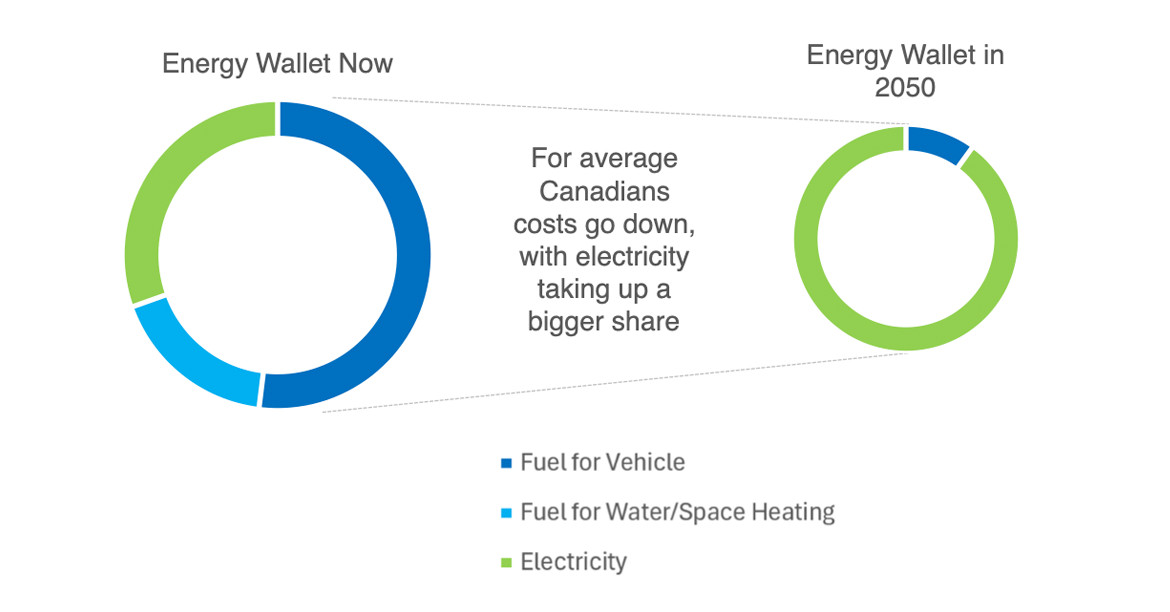
In March, when the federal government unveiled its electricity strategy, it highlighted that over the coming decades, Canadians are expected to use more electricity and less fuel as vehicles, home heating and industrial systems increasingly electrify. “With the right investments and electrification measures, Canadians could save $15 billion in total energy costs, with 7 out of 10 Canadian households paying less by 2050,” the strategy noted.
(Government of Canada)
“If our goal is to double our grid and build a low-carbon economy in less than 25 years, there is no credible plan to do that without nuclear energy and the clean, reliable baseload power it provides.”
For decades, nuclear energy has remained one of the environmental movement's most polarizing issues. Many experts have continued to oppose it over concerns about radioactive waste, catastrophic accidents, project delays and soaring costs. But some are warming up to it, viewing it as an essential tool for decarbonizing electricity systems and tackling climate change.
Environmental Defence’s Senior Program Manager of Ontario Climate, Emily Hunter, was “disappointed” by the recent announcement, fearing it signals the Carney government’s doubling down on an energy path that overlooks Canada's vast renewable potential.
She believes the country has the land, wind and solar resources, and battery storage potential to become a clean energy leader while expanding electricity exports to neighbouring provinces and the United States.
“Instead, we continue to delay the energy transition that a lot of other countries are enacting and modernizing their grids with,” she told The Pointer.
“We're going very much backwards towards outdated energy, in many ways, towards our particular fossil fuel agenda.”
In Canada, approximately 82 percent of emissions stem from energy as Canadians use more energy due to extreme temperatures, dispersed population and vast landscape.
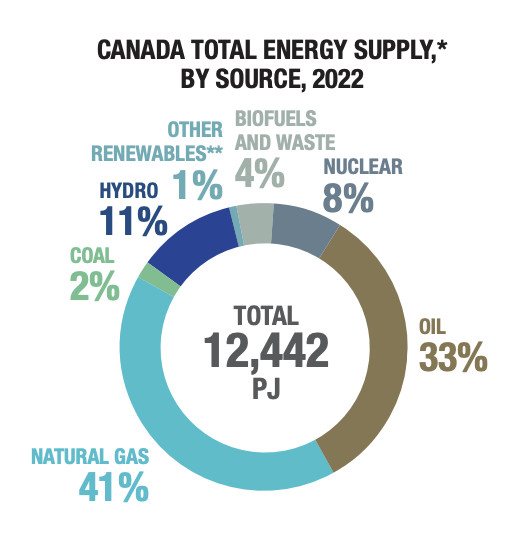
In 2022, fossil fuels made up 77 percent of Canada’s total energy supply (oil: 33 percent, coal: two percent, natural gas: 41 percent) while 16.8 percent came from renewables and eight percent from nuclear, a 2024-25 Natural Resources Canada report stated.
Jatin Nathwani, Ontario Research Chair in Public Policy for Sustainable Energy and founding Executive Director of the Waterloo Institute for Sustainable Energy (WISE), makes the case that nuclear is necessary to tackle the “serious challenge” of displacing fossil fuels that are deeply embedded in the energy system while meeting climate goals.
“People get married to the idea of solar, wind or water being the answer. It's really a combination of resources and strategic thinking that is necessary,” Nathwani added.
A reliable, affordable and low-carbon electricity system comes from a “judicious” energy mix that depends on each province's geography, existing infrastructure and natural resources: Quebec can continue to rely heavily on hydropower being geographically flush with massive river and lake systems while Ontario has largely “tapped out” its hydroelectric potential and must increasingly turn to a mix of wind, solar, batteries and nuclear.
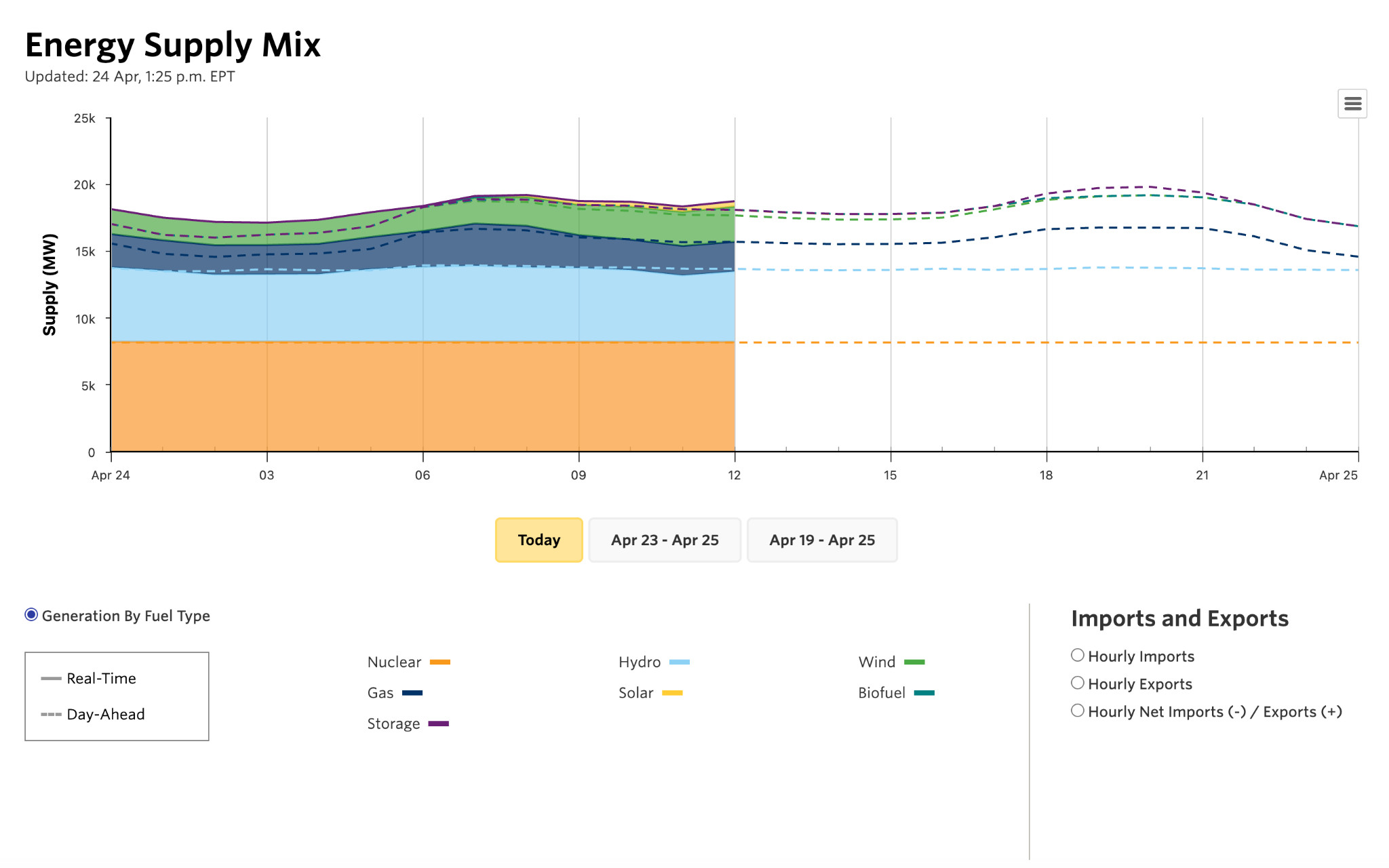

Most of Ontario’s electricity comes from nuclear sources followed by hydro, gas and wind.
(IESO)
On June 12, Ontario, through the Independent Electricity System Operator’s Second Long-Term Request for Proposals (LT2), secured 640 megawatts of new, low-cost battery storage capacity from three projects capable of powering about 640,000 homes during peak demand.
“In an open, technology-agnostic competition, where batteries faced off against any resource able to deliver dependable capacity, battery storage won every contract,” Clean Energy Canada’s Clean Economy Program Manager, Oliver Sheldrick, said.
“What is particularly encouraging here is that fundamentally this is a story about technology costs. Batteries, wind and solar are demonstrating that they will often be the cheapest, fastest way to add reliable capacity to a growing grid, and it is ratepayers that will benefit most.”
Nathwani acknowledged that rapid declines in battery costs over the past decade have made wind-and-solar-plus-storage systems a far more credible alternative to fossil fuels than they once were but renewables also require vast land and transmission infrastructure, making them better suited to some regions than others.
In remote locations, utility-scale solar installations of 1,000 megawatts or more are feasible due to strong solar resources and available land; electricity can be generated at scale and integrated into the grid but only if significant transmission infrastructure is built to move power from where it is produced to where it is needed.
When combined with battery storage, wind and solar can increasingly approximate “near baseload” performance, though they still require careful economic and planning trade-offs around land use, community impacts and system reliability.
As reported by The Pointer previously, a solar project proposed in Kawartha Lakes on one of the world's rarest habitats for endangered species including Eastern Loggerhead Shrike has brought forward the unique challenge of balancing renewable energy development with biodiversity conservation.
Nuclear energy, on the other hand, is a high-density source of power, capable of producing large amounts of electricity on a relatively small land footprint, albeit with high upfront capital costs.

The federal government and the Ontario PCs announced on June 23 that they are providing $700 million in loan guarantees to the seven Williams Treaties First Nations northeast of Toronto, which will be converted into an equity stake in one of the four small modular reactors planned at Ontario Power Generation’s Darlington New Nuclear Project in Bowmanville.
“Ontario is actually the leading jurisdiction of this when it comes to nuclear in Canada,” Nathwani said, referencing proposals to develop the Wesleyville site near Port Hope into a potential 10,000-megawatt nuclear facility on 1,300 acres of existing brownfield land.
By comparison, achieving equivalent output with solar and storage could require hundreds of thousands of acres, which might not be able to catch up to the rising electricity demand.
In its latest electricity strategy, Ottawa projects that by 2050 electricity generation will range from 30 percent higher to more than double current levels across different scenarios while the share of non- and low-emitting sources rises from about 80 percent today to over 96 percent in all cases. New generation capacity will be led overwhelmingly by wind as the largest source of additional supply.
It signals the focus is not shifting away from renewables, rather nuclear is being added to the mix as a complementary source that can “help make the energy sector’s journey away from unabated fossil fuels faster and more secure”, as the International Energy Agency (IEA) has noted.
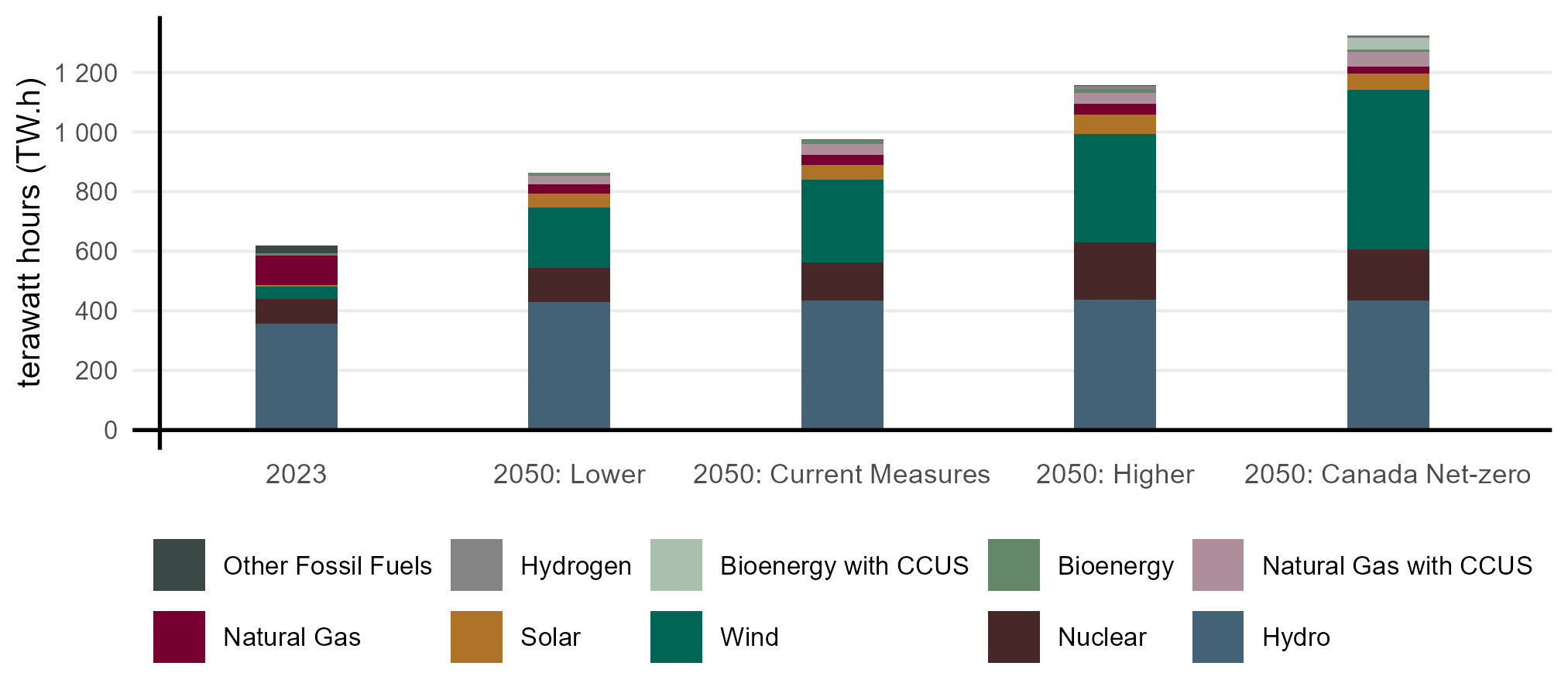
The Government of Canada projects wind energy will be the largest incremental source by 2050 followed by nuclear.
(Government of Canada)
“It's a lot easier to decarbonize the grid and achieve net zero emissions if nuclear is a viable option,” Clean Prosperity’s Vice President of Policy, Brendan Frank, told The Pointer.
“It just expands the number of pathways you can take to get to net zero. It's not essential; I wouldn't say any single source is but it does make things easier in the long run.”
Ottawa's new strategy envisions a major expansion of that footprint with construction beginning on two new large-scale reactors by 2035, five more reactors planned or under development by 2040 and at least one reactor under construction outside Ontario by 2035.
It also sets a goal of developing a Canadian-designed Generation IV microreactor by 2035 “to support defence facilities and operations and, in the longer term, remote and northern communities”.
A proposed project at Darlington, which has been referred to the Major Projects Office, would deliver the first small modular reactor (SMR) in the G7 with a total capacity of 1,200 megawatts, enough to power about 1.2 million homes, while Saskatchewan is targeting SMRs by the mid-2030s. Alberta has also hopped on board, committing to developing a nuclear power strategy with Ottawa.
A day after the federal government’s announcement, Ontario confirmed a historic $700 million equity investment from the Williams Treaties First Nations in the Darlington New Nuclear Project, marking the first time First Nations have become full equity partners in a Canadian nuclear project.
“Through this investment, we are not only creating opportunities for our own communities – we are helping advance a project that will play an important role in meeting Ontario and Canada’s growing energy needs,” Chiefs of the Williams Treaties First Nations said in a statement.
“This investment demonstrates what is possible when First Nations are able to participate meaningfully in projects taking place within their territories, not only as rights holders, but as investors, partners, and participants in the long-term success of the project.”
In 2024, a Clean Prosperity report suggested new commercial reactors could become a major source of zero-carbon electricity nationally but high upfront costs and policy uncertainty were limiting the sector's growth.
“Ambitious nuclear policy doesn’t make sense without ambitious climate policy,” Frank said at the time as the lead author of the report.
“Canada only needs to build more nuclear reactors if we plan to achieve net-zero by electrifying our economy. Federal and provincial governments need ambitious climate policies to convince the market that growing demand for electricity will support the economic case for new reactors.”
The federal strategy mirrored many of the report's recommendations including committing to a fleet-based approach to reactor deployment, expanding the domestic supply chain and increasing Indigenous participation.
Unlike Canada, where the existing fleet is built around Canada Deuterium Uranium (CANDU) technology (powered by natural uranium, a resource Canada possesses in abundance and has always produced domestically), the United States operates 96 commercial reactors across 54 plants, which account for roughly 19 percent of total U.S. electricity generation, using a wide variety of designs, making it more difficult to build engineering, construction and project management expertise from one project to the next.
“Reaffirming a limited number of reactor designs for each application or use case is really good policy,” Frank said.
The strategy also leaves one critical issue unresolved: financing.
While Minister Hodgson did not indicate how Ottawa would pay for the reactors, the government is estimating it could cost more than $100 billion. The plan only mentioned a federal financing policy for new nuclear projects by April 2027 through loan guarantees, green bonds and other risk-sharing tools to help de-risk large-scale reactor construction.
“The strategy at a very high level is the federal government's acknowledgement of its role in de-risking these projects, both through financial and regulatory,” Frank noted, describing the new strategy as “comprehensive”.
“This is not just about electricity; it is about economic growth, economic diversification, reshoring supply chains and innovation.”
Unlike wind and solar manufacturing, where global production is largely concentrated outside Canada (heavily dominated by international markets like China, the EU and the U.S.), Canada's “very active” nuclear supply chain that has been strengthened through reactor refurbishments at Darlington and Bruce gives the country a chance “to really seize a hold of what seems to set to be a growing market in a way that we just couldn't for winds and solar”.
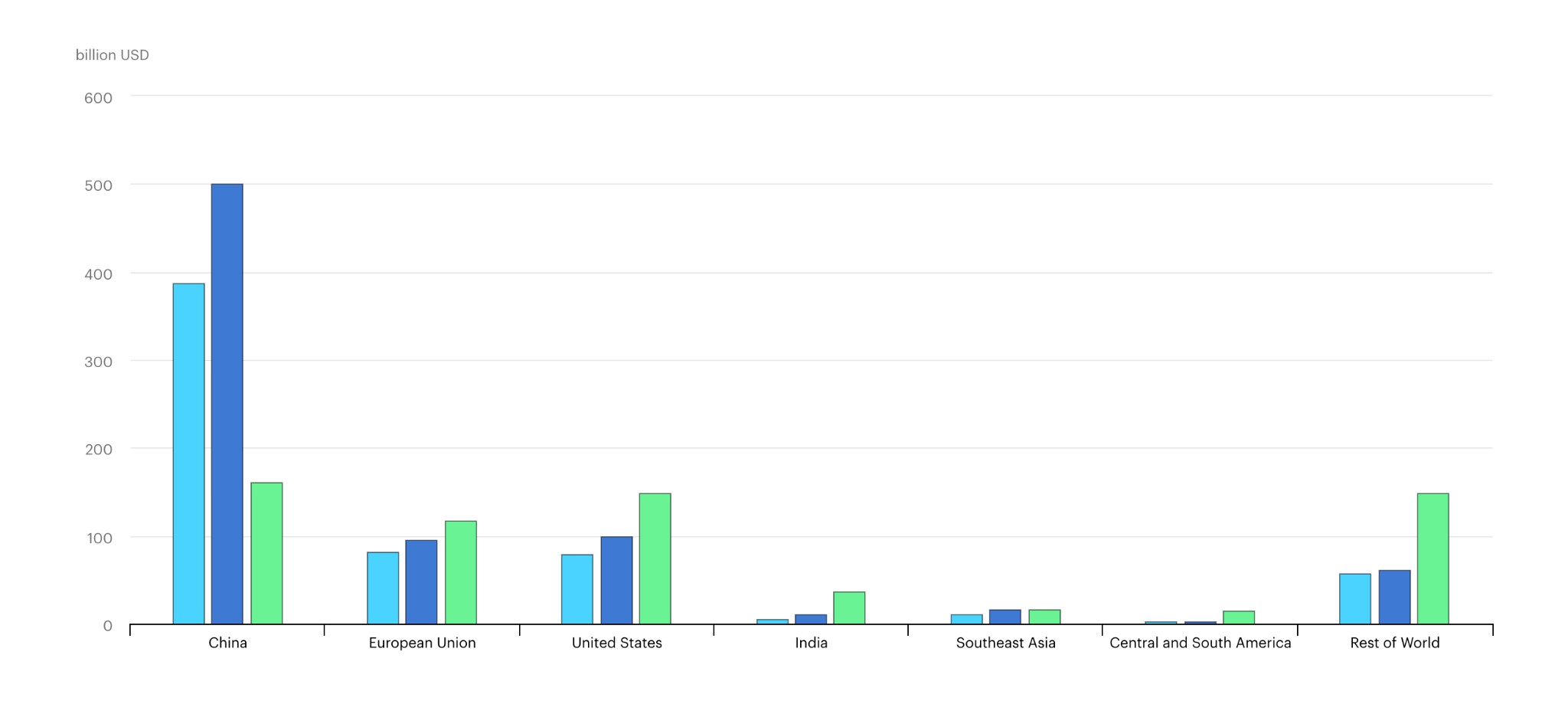
The IEA report Energy Technology Perspectives 2023 noted China has been “well positioned to capture USD 500 billion in 2030 or around 65 percent of the outputs of announced manufacturing capacity in monetary terms in the same year”.
(International Energy Agency)
“China has completely cornered the manufacturing; there's not a ton of value in the manufacturing component of the supply chain—that is not the case for nuclear,” he added.
Proactively identifying potential shortages in areas such as specialized manufacturing and expanding the nuclear supply chain beyond Ontario will be essential if Canada hopes to scale up reactor construction.
“An ambitious nuclear policy can make sense if it's paired with [an] ambitious electrification policy,” Frank remarked.
“And the federal electricity strategy is very ambitious: a doubling of supply in 25 years is unprecedented. A big challenge here, of course, is that electricity is largely the domain of the provinces, and each province kind of has its own setup.”
However, Frank awaits a clear federal financing policy, given the high capital costs associated with nuclear projects. These costs add up when coupled with execution risk, projects going over schedule, which almost inevitably drives them over budget.
Even relatively small delays arising from a mere late component delivery can push construction back by an entire season in countries like Canada, where work is highly seasonal. Vogtle in the United States completed seven years behind schedule as massive delays and complex logistical failures made it the most expensive power project in U.S. history, with final costs exceeding $36 billion. Europe’s Hinkley Point C in the UK has been delayed to 2030 with a budget that has climbed over £40 billion.
“There are good reasons to believe that Canada can do better, Ontario can do better than all of those projects,” Frank said, noting Ontario’s Bruce Power Unit 3 reactor refurbishment was completed seven months ahead of schedule and under budget, saving ratepayers $150 million.
Even though refurbishments are not directly comparable to new builds, he is confident with improved supply chains, standardized designs and stronger institutional capacity, “pursuing a small handful of nuclear projects in the coming years seems like a reasonable hedge”.
“Nuclear is not going to compete on cost with wind, solar, and batteries, but it's also not clear how much wind, solar, and batteries you can actually get on the grid,” he added, pointing to limitations Nathwani outlined.
While most of the system should be built around fast, lower-cost renewables, a smaller share of long-lead, high-reliability resources like nuclear can provide insurance against the upper limits of renewable integration and rising electricity demand.
While Frank and Nathwani are cautiously optimistic, and Hunter has expressed dissent for the latest strategy, all three converge on two key beliefs: they still have a lot of unanswered questions from the nuclear strategy and they support ditching fossil fuels.
“While new plants that can take seven to ten years to build come online, the grid is still being supported by fossil fuels, that is: natural gas,” Hunter stressed.
“By pushing out a high, heavy nuclear energy pathway, the federal government and Ontario are giving leeway to the fossil fuel industry to be legitimized as a necessary backup energy for our grids.”
But that’s not the only concern.
While the latest nuclear strategy can be viewed through the lens of climate action and emissions reduction, questions remain about whether those gains could be offset by the government’s recent energy decisions including softening of Clean Electricity Regulations and the Ottawa–Alberta agreement advancing a potential West Coast oil pipeline, which could carry up to one million barrels per day and be designated a project of national interest with possible approval by September 2027 despite strong opposition from British Columbia and coastal First Nations over environmental and jurisdictional concerns.
The move doesn’t seem to align with the Carney government’s push for sovereignty against “hegemons”. Geopolitical tensions, recently between Iran and the United States, have already exposed the fragility of oil and gas dependence, as disruptions to global supply chains forced countries to confront energy insecurity and hastened the push toward renewables.
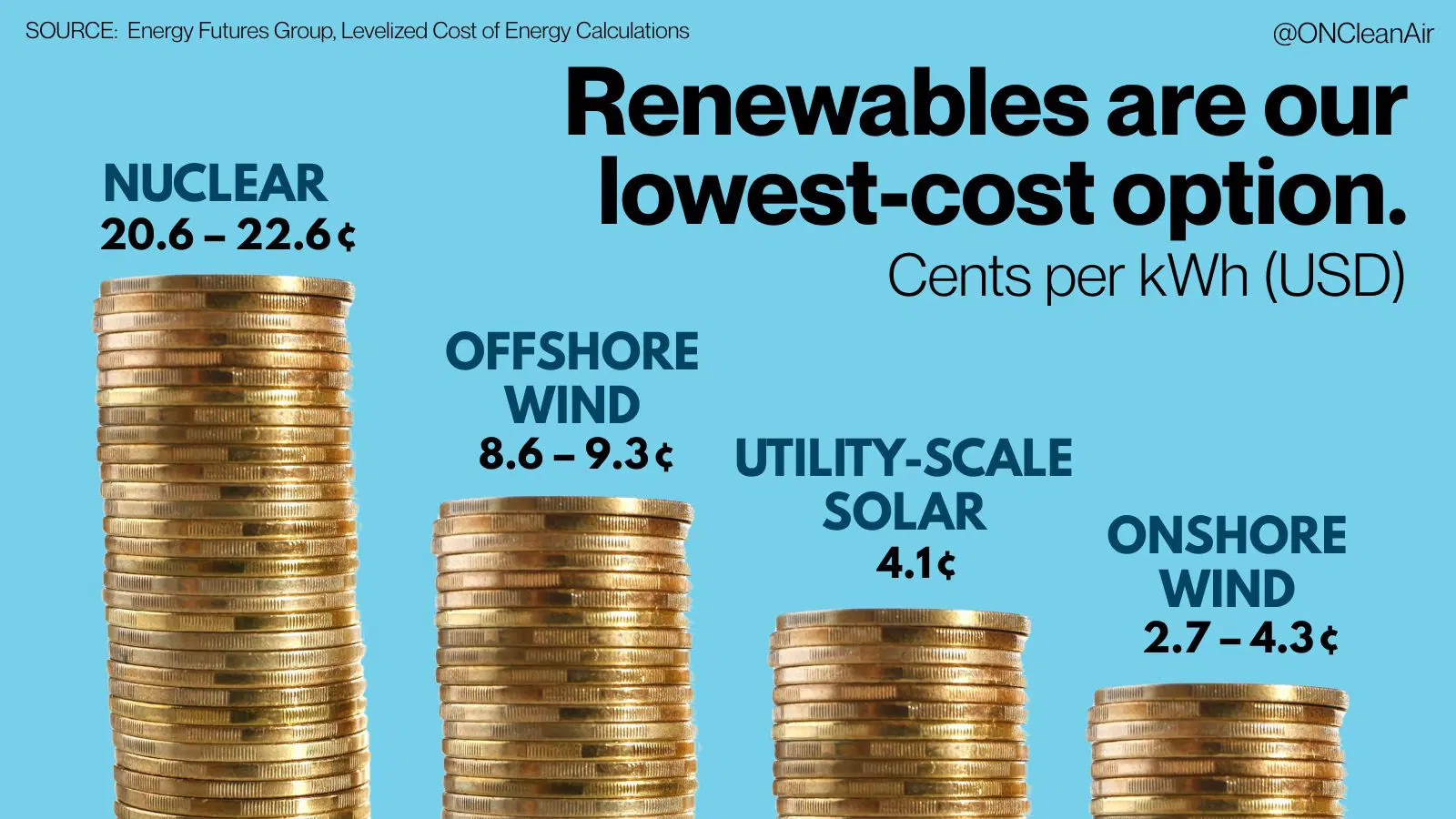
The Ontario Clean Air Alliance warns the new U.S. GE-Hitachi nuclear reactors are the highest-cost option to meet Ontario’s electricity needs – costing two to eight times more than new solar and wind power.
(Ontario Clean Air Alliance)
The new reactors being pushed by Ontario Power Generation, including the GE-Hitachi BWRX-300 planned at Darlington, are also American-designed light water reactors which require low-enriched uranium fuel (about five percent Uranium-235) that Canada cannot produce. Enrichment services are concentrated in the U.S., France, and most dominantly, Russia.
In 2023, OPG announced that it intends to source fuel enriched at a U.S. plant in Eunice, New Mexico, supplemented by France’s Orano.
This means Canada would, for the first time, depend on the United States for the operation of its nuclear fleet.
An Ontario Clean Air Alliance report warned the new U.S. GE-Hitachi nuclear reactors are the highest-cost option to meet Ontario’s electricity needs, costing two to eight times more than new solar and wind power.
“If we're really trying to have energy sovereignty and economic sovereignty, renewables are the pathway forward,” Hunter emphasized.
Email: [email protected]
At a time when vital public information is needed by everyone, The Pointer has taken down our paywall on all stories to ensure every resident of Brampton, Mississauga and Niagara has access to the facts. For those who are able, we encourage you to consider a subscription. This will help us report on important public interest issues the community needs to know about now more than ever. You can register for a 30-day free trial HERE. Thereafter, The Pointer will charge $10 a month and you can cancel any time right on the website. Thank you
Submit a correction about this story

