
Feeling the need for speed: Speeding across the province spikes after Ford’s ASE camera ban
The morning had unfolded like any other. Less than two weeks before the start of winter, after starting her day, the 74-year-old woman went on an early walk near her Scarborough home. She began to cross an intersection, when a driver struck her. She later died from the injuries caused by the fatal incident.
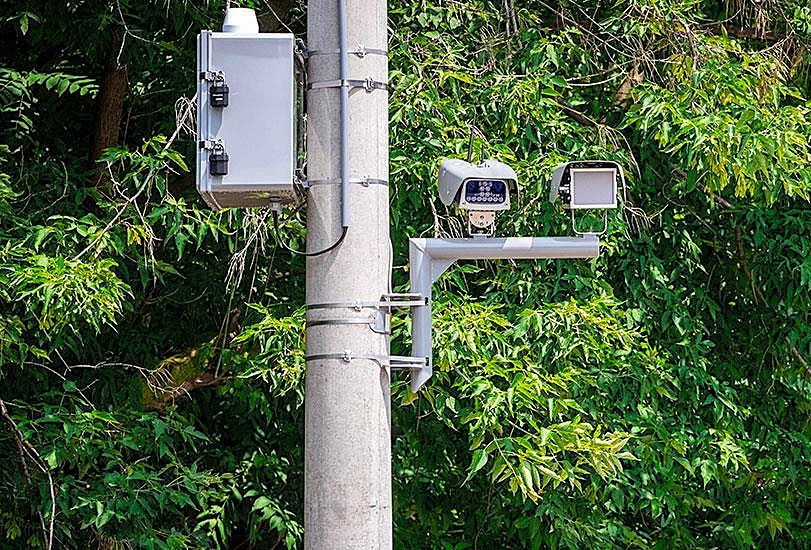
Though police did not report the cause of the driving death, widespread backlash against Doug Ford erupted. Less than 300 metres from the spot of the collision, weeks before the fatality, a previously stationed mobile Automated Speed Enforcement Camera had been removed, after Premier Ford banned their use because the tens of thousands of tickets issued due to the technology, according to him, were an expensive, unnecessary cash grab.
Three weeks ago, inside Queen’s Park, Liberal MPP Stephanie Bowman did not mince words: “...even the police chiefs in Ontario begged this government, ‘Don’t remove the speed cameras. They save lives.’ This government ignored that, on a whim of the Premier. We heard that the Premier’s daughter got a lot of speeding tickets from those cameras; maybe that’s why. So he did that on a whim.”
After the woman was struck down, Scarborough Liberal MPP Andrea Hazell, wrote on social media that, “Speed cameras save lives. Heartbroken over the tragic loss of a woman in her 70s who was struck by a vehicle in Scarborough. This serves as a powerful reminder of the importance of road safety. Every life matters, and we must do our part to protect one another. Speed cameras do save lives."
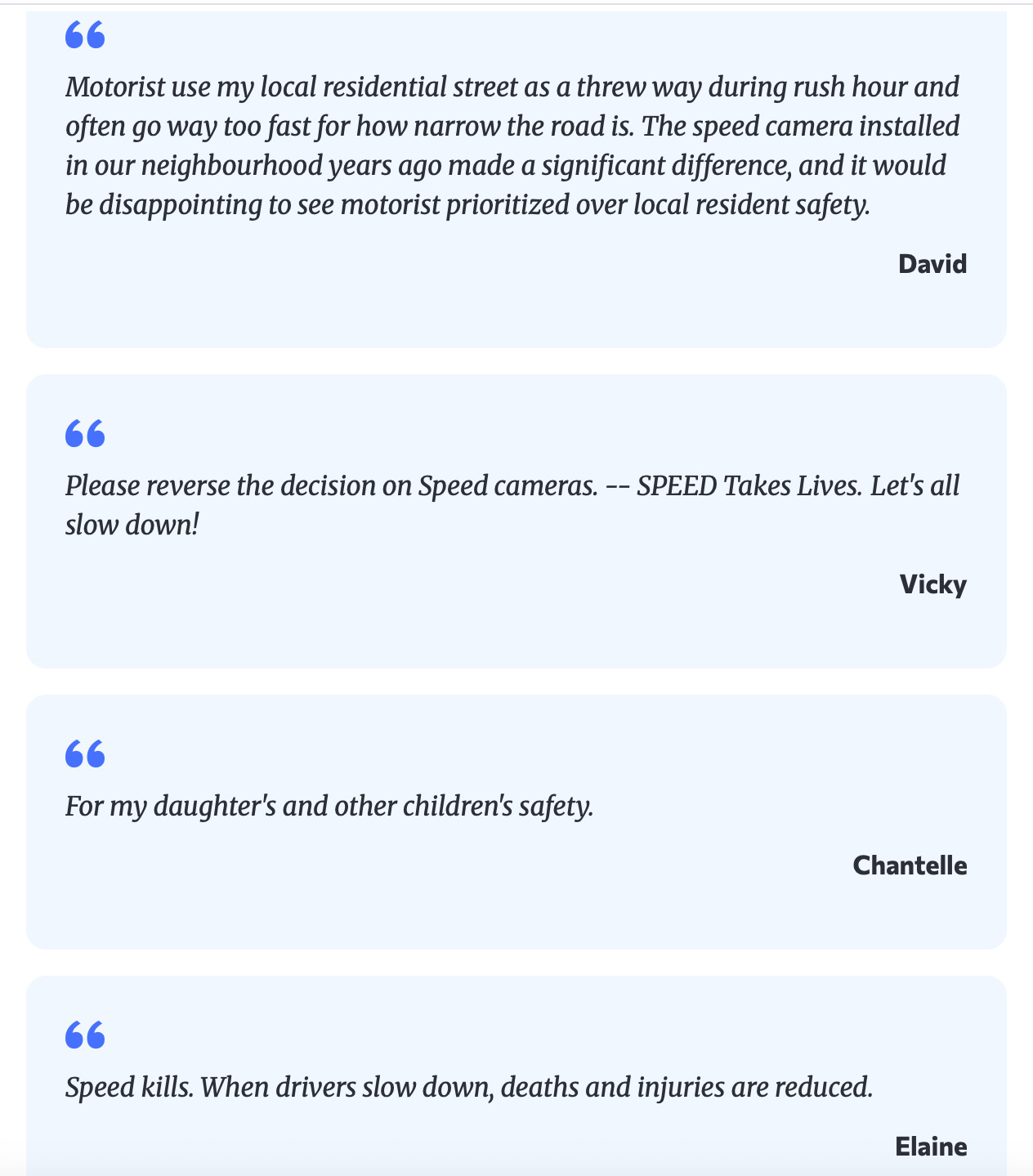
While Toronto Police said they could not determine if speed was a factor in the death, municipalities around the province have reported a spike in speeding following the removal of ASE cameras in November. Without the effective technology, cities are scrambling to figure out how to calm dangerous drivers. Ontario residents have expressed concern over their removal across the province and started a petition on Change.org calling on Ford to reverse his controversial decision.
(Change.org)
During a Brampton Council meeting on June 3, elected officials discussed traffic safety impacts related to automated speed camera enforcement, debating how to move forward without the technology as the provincial government has started to release funding allocations for alternatives such as traffic circles and speed bumps. City staff reported that in November, after banning speed cameras, the PCs allocated up to $6,997,341 to Brampton “to address short-term road safety needs.” The City received the funds in January “with eligibility focused primarily on reimbursing school zone traffic calming initiatives.”
Council members passed a motion at the meeting two weeks ago to increase the City’s Road Safety Initiative project by $5,587,341.
The provincial government also gave Mississauga interim funding of $2,242,888, with an additional $8,934,513 to be reimbursed after costs are incurred by the City to introduce traffic calming measures.
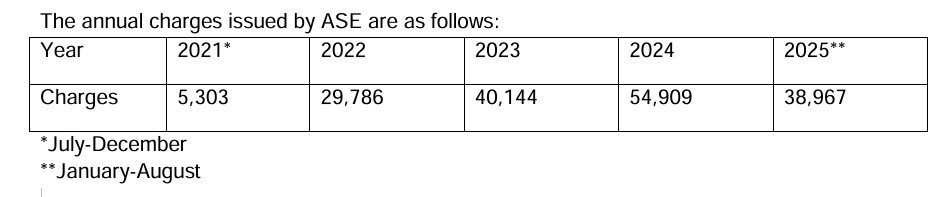
The ASE program in the city had been effective. Mississauga staff reported that prior to the ban the highest number of tickets issued from one camera, located on Hillcrest Avenue south of Pearwood Place, was 8,469 since July of 2021. “The highest ticketed speed was 147 km/h, nearly 120 km/h over the posted speed limit, on Speakman Drive, north of Flavelle Boulevard. Between July 2021 and August 2025, the total number of vehicles travelling by an ASE camera was observed to be 19,638,724."
(City of Mississauga)
In November, a week before the speed camera ban came into effect, Mississauga’s Transportation Commissioner, Sam Rogers, said the move would be felt immediately. “The loss of speed cameras will have a significant impact and place added pressure on our existing road safety initiatives.”
The City of Brampton confirmed all of its 185 now-banned photo radar cameras are still operating, but they do not issue tickets. They are instead being used to collect vehicle speed and volume data, which City staff say has revealed an increase in speeding since the photo radar ban came into effect.
“So far, preliminary data has shown a significant increase in the number of vehicles travelling more than 11 km/h over the posted speed limit since the end of the ASE program,” Staff reported.
They disclosed that the data was previously shared with the Ministry of Transportation while the speed cameras issued tickets over a five-year period, to highlight how effective the cameras were in reducing speeds.
In a letter sent to Queen's Park on October 2 signed by 22 mayors and municipal officials across Ontario, they referenced a study carried out in July 2025 by SickKids Hospital and Toronto Metropolitan University, highlighting that in Toronto ASE cameras led to a 45 percent reduction in speeding vehicles across 250 school zones, including an 88 percent reduction in vehicles travelling more than 20 kilometers per hour over the speed limit.
Municipalities lobbied Ford and his PCs to reconsider their decision, demanding the cameras continue operating in school zones under tighter regulations by the provincial government.
Mississauga’s speeding problems have been chronicled for decades, as many drivers believe the higher speed limits on regional roads and other major thoroughfares allow commuters in the car-dependent suburb to travel more efficiently across the city and often onto the major 400-series highways that surround it.
Critics of the city’s high-speed culture have pointed out how effective ASE cameras were in school zones, where community members now fear children are at increased risk. The city reported that the cameras led to an average speed reduction of nine kilometres per hour in these zones and a 178 percent increase in compliance with speed limits, as drivers adjusted their behaviour to avoid the financial burden speeding tickets from cameras came with. As of last year approximately 169,109 speeding tickets had been issued since 2021.
Despite funding from the Ford government for alternative traffic calming infrastructure, including more signs, municipalities have started to release the numbers that show how drivers have reacted to the ASE ban.
In the first week after the ban the number of drivers in Brampton travelling faster than the 11 kilometre-above-the-speed-limit threshold, skyrocketed from 31,581 to 71,258, according to what was reported in council, a 125 percent increase.
One street in Toronto saw a 235 percent increase in the number of vehicles travelling 60 kilometres or more (despite the speed limit of 40 kilometres) on Parkside Drive according to the Safe Parkside group, which says the figure comes from a city “Watch Your Speed” sign installed a few metres from a former ASE camera location.
“January to April 2026 saw a 235 percent increase in the number of vehicles travelling 60+ kilometres an hour on Parkside Drive when compared to the same time period in 2025 when the Parkside Drive speed camera was keeping a watchful eye over the street,” the Parkside group reported.
Peel has had a long history of tragic and alarming speeding incidents as Brampton and Mississauga have grappled with how to calm drivers in these two car-dependent suburbs where the exploding population has made traffic safety a major challenge. In 2020 Brady Robertson (who already had 15 previous driving infractions) barrelled down a Brampton street going 167 kilometres an hour, when he swerved out of control, ramming into a family vehicle and killing a young mother and her three daughters. Robertson was sentenced to 17 years in prison after he tested positive for having eight times the legal limit of THC in his system. Following the horrific fatality which gained international attention, Brampton officials took action to slow down drivers by implementing ASE cameras among other preventive measures.
Recently, in Mississauga on May 23, a driver was charged with stunt driving after being caught going 102 kilometres an hour in a 60-kilometre zone near Winston Churchill Boulevard and Argentia Road. The 20-year-old driver, Mitchel Hunter from Woodstock, faces four charges of stunt driving, speeding and failure to surrender his driver's licence. Police suspended his license for 30 days and impounded his vehicle. Mitchel already faces additional charges in connection to a collision in Brampton in November 2024 that left one man dead and two others injured as he was allegedly leaving a street racing event despite speed cameras in place at the time.
In Brampton, council has displayed some of the more alarming high-speed infractions caught by ASE cameras over the last five years, prior to the ban:
- 200 km/h in a 50 km/h zone — McVean Drive north of Tappet Drive
- 186 kilometres an hour in a 40 kilometre an hour zone by Heart Lake Road north of Copperfield Road
- 172 kilometres an hour in a 50 kilometre an hour zone at Clarkway Drive south of Castle Oaks Crossing
- 153 kilometres an hour in a 40 kilometre an hour zone at Cottrelle Boulevard east of Valleycreek Drive
- 143 kilometres an hour in a 40 kilometre an hour zone at Worthington Avenue south of Spencer Drive
- 142 kilometres an hour in a 40 kilometre an hour zone by Financial Drive north of Plentwood Drive
- 139 kilometres an hour in a 50 kilometre an hour zone at Rutherford Road North, south of Madoc Drive
- 137 kilometres an hour in a 50 kilometre an hour zone at Central Park Drive north of Hanover Road
- 137 kilometres an hour in a 40 kilometre an hour zone by North Park Drive south of Nuttall Street
- 137 kilometres an hour in a 50 kilometre an hour zone at Central Park Drive east of Goldcrest Road
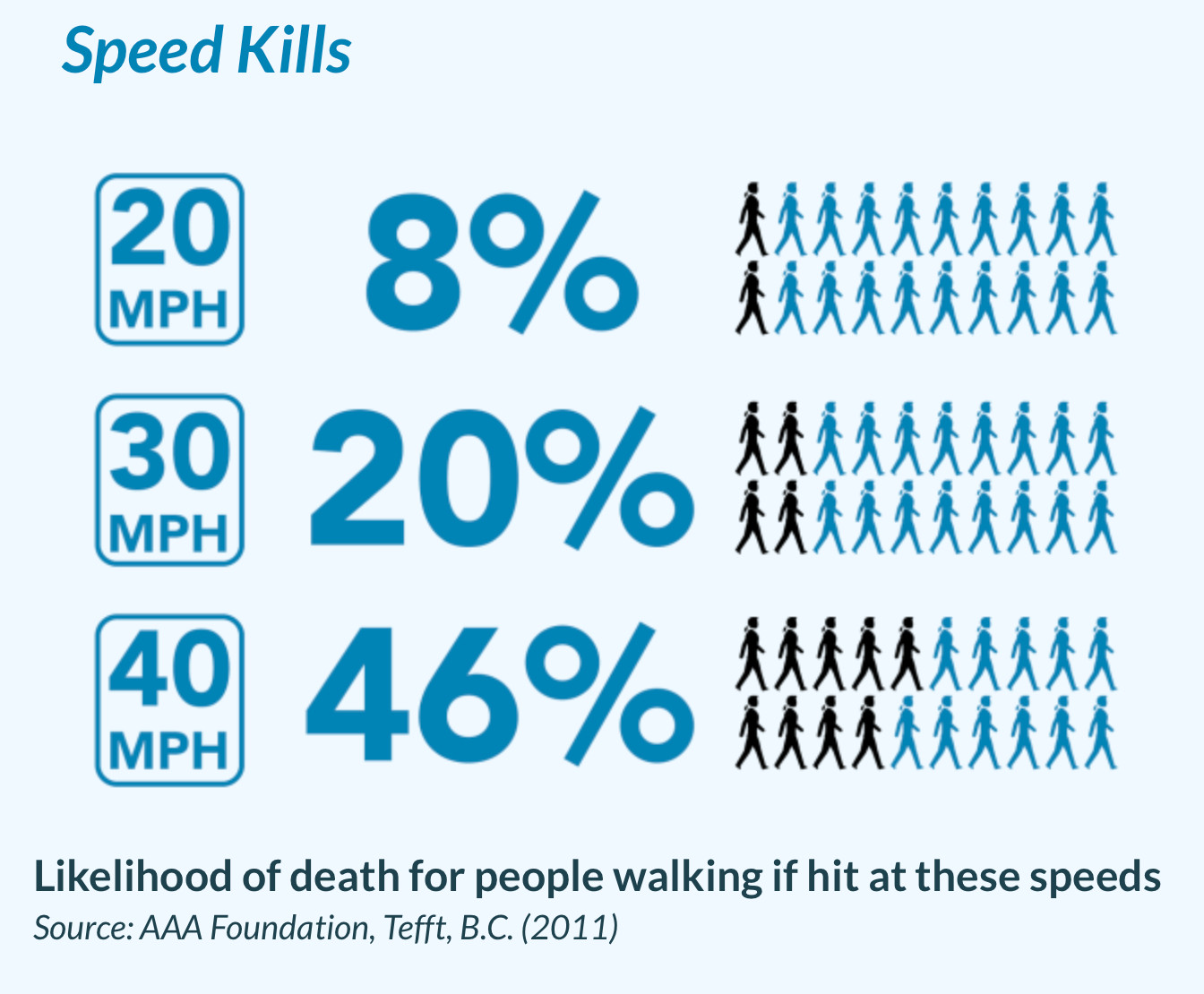
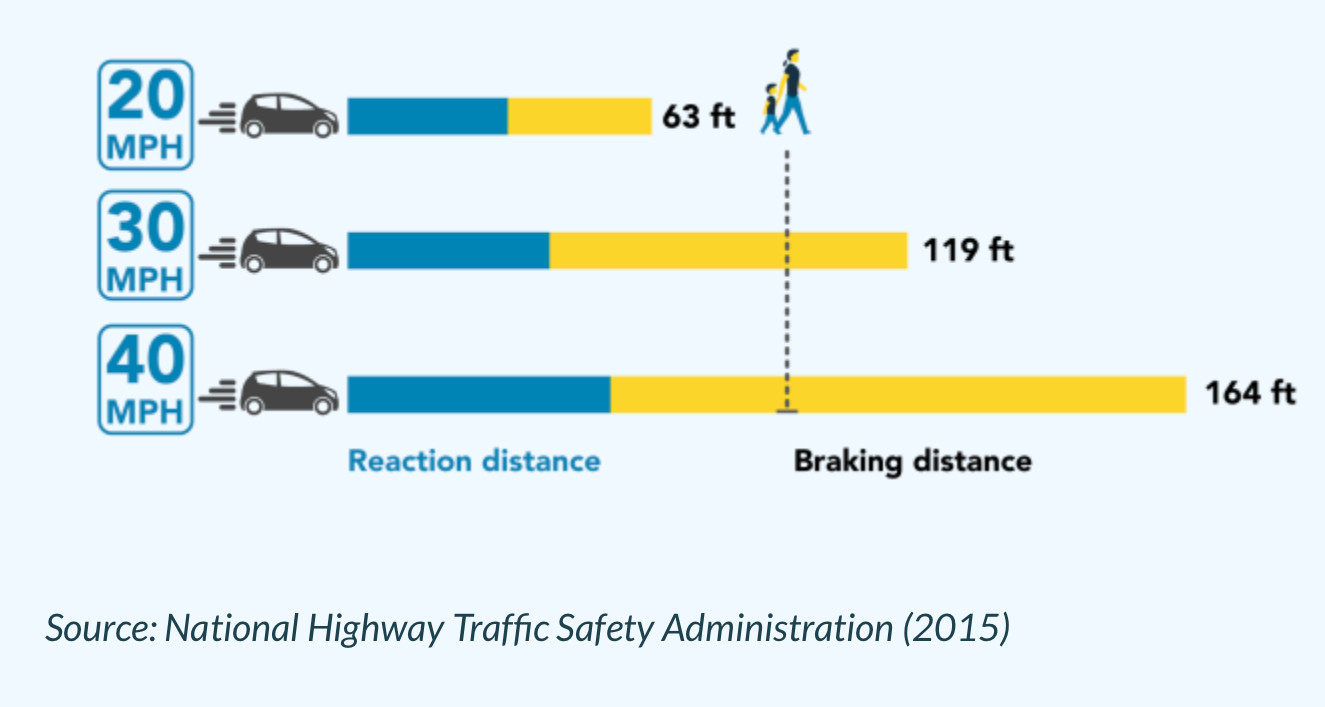
A minor increase in speed is all it takes for someone to die from a collision.
(Vision Zero Network)
Reducing speed has been proven to save lives and keep people safe, especially in school zones. A 2019 study from the Columbia Mailman School of Public Health found that speed cameras are among the most effective ways of saving lives and reducing healthcare costs. Advocates have pointed out that moving at 100 kilometres an hour in a 30 zone effectively renders a car into a mechanized weapon.
While drivers in two of Canada’s largest cities have repeatedly disregarded speed limits, Mississauga and Brampton vehicle owners pay the highest insurance rates in the country.
According to the Canadian Insurance Brokers Inc., Brampton in particular has disproportionate rates, averaging about $3,341($278 per month), with Mississauga residents paying $2,258 to $2,531 ($188 to $211 per month).
In comparison, Toronto drivers average $2,231 to $2,400 per year or $185 to $200 monthly; and in Ottawa the cost averages $1,560 to $1,827 per year or $130 to $152 monthly, with costs in other cities across the province substantially lower.
Insurance companies have provided data for over a decade that show accidents in Brampton, on average, are much more costly because of the higher rates of speed involved in collisions, with higher rates of fraud also leading to higher auto insurance rates.
Before the removal of the ASE cameras, Premier Ford and other critics called the ASE cameras a “cash grab” by municipalities, and urged them to focus on alternative speed control infrastructure such as speedbumps, roundabouts and curb extensions. It was Ford’s own PC government that introduced legislation in 2019 to allow municipalities to deploy the short-lived, and highly effective automated speed camera program.
Email: [email protected]
At a time when vital public information is needed by everyone, The Pointer has taken down our paywall on all stories to ensure every resident of Brampton, Mississauga and Niagara has access to the facts. For those who are able, we encourage you to consider a subscription. This will help us report on important public interest issues the community needs to know about now more than ever. You can register for a 30-day free trial HERE. Thereafter, The Pointer will charge $10 a month and you can cancel any time right on the website. Thank you
Submit a correction about this story

