
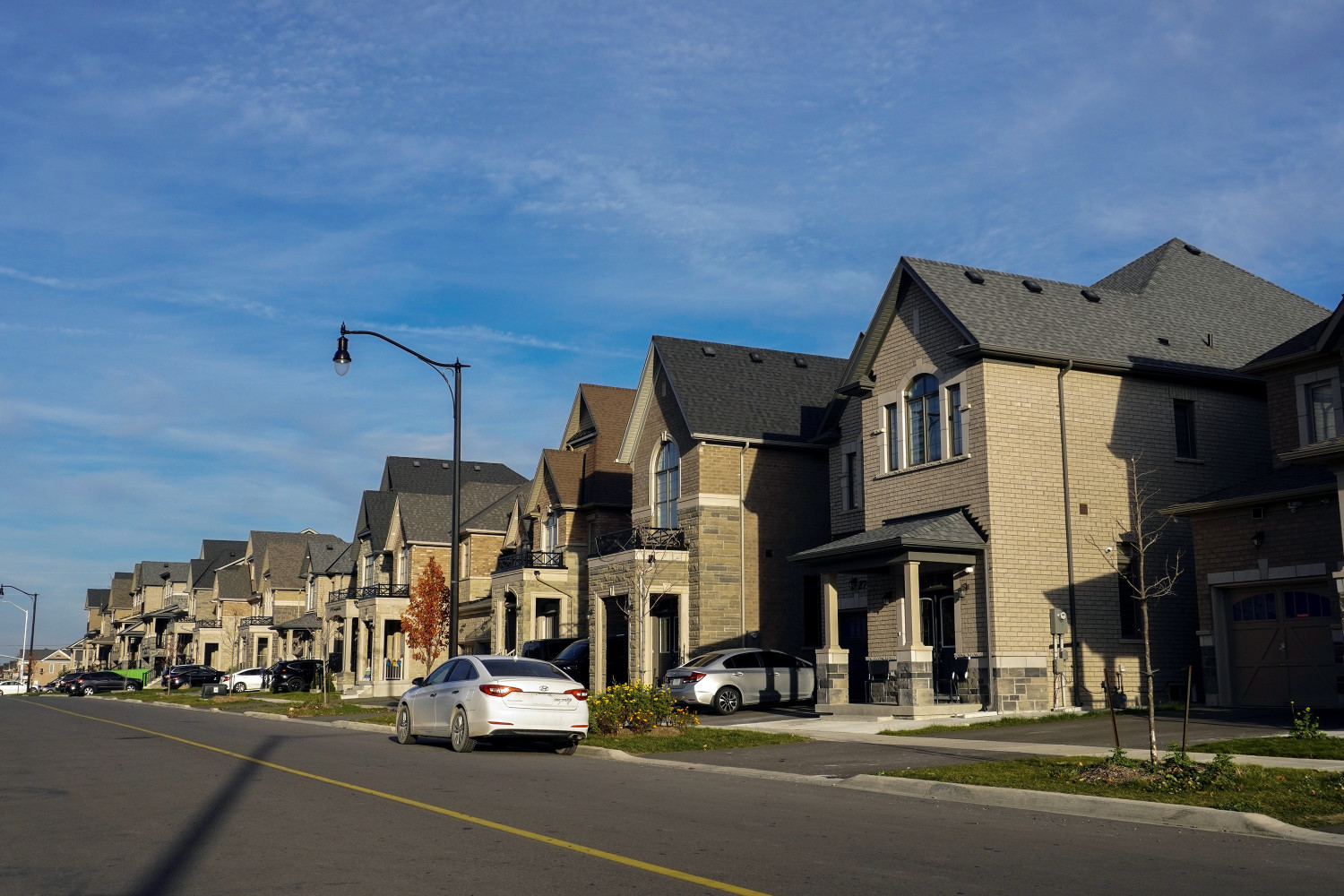
Brampton had the highest rate of mortgage delinquency in Canada—real estate experts warn the crisis could get worse
Homeowners in Brampton are increasingly struggling to keep up with mortgage payments, according to recently released data from Equifax Canada which reported that the city had the country’s highest delinquency rates, a trend mortgage experts say is just the beginning of a crisis.
“I think this is just the tip of the iceberg. Things are going to get worse before they get better,” Rakhi Madan, a mortgage specialist in Brampton, told The Pointer, detailing multiple factors that have triggered mortgage delinquencies across the city where unique housing dynamics have long caused problems for homeowners.
“Right now, many homeowners have no safe exit because even if they sell their homes, there is not enough equity left.” She also raised concern about the sudden drastic drop in Brampton’s international student population.
According to the data from Equifax Canada, and highlighted by the Globe and Mail, for the fourth quarter of 2025, the delinquency rate in Brampton, defined as at least 90 days of missed payments, was 0.6 percent, as more homeowners struggle to cover their mortgage; the number was more than double the national average of 0.24 percent at the end of last year, according to Equifax data published by the Canada Mortgage and Housing Corporation, an agency of the federal government.
According to OntarioHousingMarket.com key factors worsening the problem in Brampton include: much higher monthly payments after renewals from historically low mortgage rates; COVID-related financial pressures; more variable rate borrowers in Brampton who are impacted by increases that fixed-mortgage holders are protected from; more residents who are unable to negotiate favourable refinancing arrangements with financial institutions; declining home values in the city compared to the peak about three years ago; and a high number of investors carrying mortgages on multiple properties.
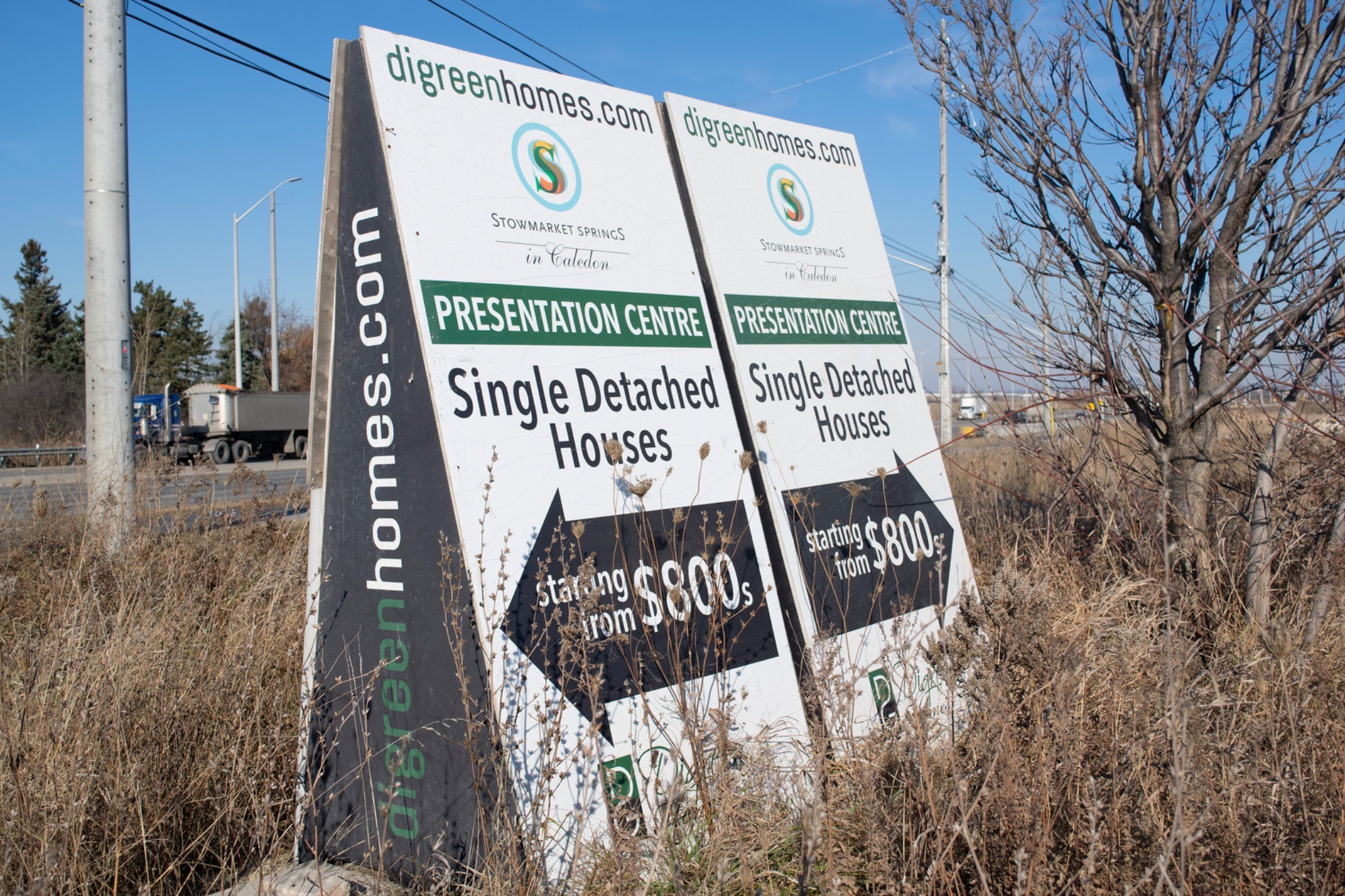
Data from the Region of Peel show 1 in 5 families in the region live in core housing need, meaning they spend more than 30 percent of their monthly incoming on housing costs. (Alexis Wright/The Pointer files)
Brampton has much higher numbers of “secondary suites” in houses (officials have conservatively estimated at least 50,000 illegal rental units in the city in 2019 with some councillors previously stating there were as many as 100,000 illegal rental suites in homes at the time), as the supply of market housing has for more than a decade failed to keep up with demand in the booming city, whose population went from less than 200,000 in 1986 to almost 800,000 in 2024, according to Statistics Canada.
Investors across the city who use properties to generate rental income, commonly providing tenancy to immigrants, post-secondary students and young families in legal and illegal secondary suites, are more exposed to economic swings and policy shifts.
Officials in Brampton have told The Pointer since 2024 that the federal government’s dramatic cuts to international students would have ripple effects across the local economy. The city’s Algoma University campus, for example, had almost 5,400 students in 2024, and 95 percent were from overseas; that number could be closer to 1,000 this coming September as federal cuts to international student numbers continue.
There is very little student housing in Brampton (Algoma has none) and the sudden drop in numbers, as thousands of international students from India who had attended institutions across Southern Ontario and chose to live in the city due to its huge South Asian population, are no longer living in Brampton where they had rented from home owners now stuck trying to carry mortgages without the lost revenue.
The Equifax Canada data for the fourth quarter of 2025 show mortgage delinquency rates have risen sharply in Brampton.
During the same period in 2019, the rate was one tenth of what it is now; only 0.06 percent of Brampton, when the national average was almost five times higher, at 0.29 percent. That was when housing prices in the city were surging and rental revenue from international students was flowing.
Now, other cities are faring far better. While Brampton’s mortgage delinquency rate had swelled to 0.6 percent by December, for the last quarter of 2025 the rate in Victoria was one sixth the number, at 0.1 percent; Quebec City’s was 0.11; Ottawa-Gatineau’s was 0.16; Toronto’s was 0.29 (less than half Brampton’s rate); and Calgary’s was 0.17 percent, according to the Equifax data published by the CMHC.
Madan says that multiple factors are playing a significant role in the worsening problem, such as multi-generational households supporting large families on limited incomes and homeowners heavily refinancing properties during the low-interest rate housing boom, which shrunk home equity.
She also pointed to the decline in rental income tied to the reduced international student numbers due to changes in federal immigration policy since 2023, and the financial challenges many self-employed residents are facing because of economic uncertainty.
"A lot of people in Brampton are also self-employed, especially in sectors like trucking and small businesses, which were heavily impacted by COVID-19 and later by tariffs," she said.
"Many people have seen their income shrink significantly, and that has added major financial pressure on homeowners."

Rakhi Madan, a real estate agent and market analyst, spoke with The Pointer about the growing mortgage delinquency crisis in Brampton.
(Supplied)
She says with rising property taxes, cuts to increases may provide some relief, but they would not fix the broader crisis.
The inability to carry mortgages is part of a broader financial challenge more homeowners are grappling with across the city. The Pointer previously reported on the sharp increase in residential properties in Brampton falling into property tax arrears.
In 2024, there was an alarming 400 percent increase in the number of property tax default cases that were sent to a bailiff for collection on behalf of the City of Brampton, from 234 in 2023 to 1,170 a year later.
A staff report in September went before City Council, revealing that the total value of unpaid property taxes in 2024 reached $151.2 million—an increase of $40.5 million in just one year, as 40 percent more home and business owners fell into tax jeopardy, with the possibility of losing their property.
Housing advocates say the city’s housing crisis reflects a broader problem that Brampton households are dealing with.
"With the current global uncertainty, we're seeing the rise of unemployment like we haven't seen in a very long time, if not decades," Michelle Bilek, founder of Peel Alliance to End Homelessness, said.
"More folks are unemployed; possibly more people in Brampton are in precarious work, where they're just not getting enough to keep up with housing costs. Multiple companies are laying off individuals in various spaces, everywhere from government right down to manufacturing corporations."
She warned that if market conditions continue to worsen, it could lead to more foreclosures and create opportunities for large predatory investors to target distressed properties.
Email: [email protected]
At a time when vital public information is needed by everyone, The Pointer has taken down our paywall on all stories to ensure every resident of Brampton, Mississauga and Niagara has access to the facts. For those who are able, we encourage you to consider a subscription. This will help us report on important public interest issues the community needs to know about now more than ever. You can register for a 30-day free trial HERE. Thereafter, The Pointer will charge $10 a month and you can cancel any time right on the website. Thank you
Submit a correction about this story

