
A ‘New Deal’ for Niagara or another no deal?
“(Regional) Council should be at the centre of decisions that fundamentally shape how our region operates,” Regional Councillor Haley Bateman, who represents St. Catharines, said on April 15 during the Region’s Corporate Services Committee meeting.
She was presenting her motion, titled A New Deal for Niagara, which attempts to solve the structural financial challenges faced by the regional government. It calls on the Queen’s Park to reassess municipal service responsibilities, eliminate or mitigate downloading to municipalities and identify new and sustainable municipal revenue tools, using Niagara as a “pilot”.
It also calls on the federal government to expand permanent funding streams to municipalities, increase investments in affordable housing and related infrastructure and recognize Niagara’s high impact tourism and trade corridor.
The motion has cleared one hurdle, gaining support from the Region’s Corporate Services Standing Committee. It will now head to Regional Council for a final vote on April 30, Thursday.
Bateman’s reference to the need for Council to be at the centre of decisions is a criticism of the PC government’s top-down decision making which will dramatically change Niagara’s governance at the regional level after the October municipal election.
On April 2, Minister of Municipal Affairs & Housing, Rob Flack, introduced the Better Regional Governance Act. The proposed bill would cut the size of Niagara Regional Council from 32 members to just 13 (Niagara’s mayors and an unelected Regional Chair). The latter would be handpicked by the provincial government, given unilateral powers to set budgets, hire and fire the municipality’s Chief Administrative Officer and override by-laws, subject to opposition by two-thirds of council.
Bateman’s motion is also a response to the way Niagara’s 19 directly elected regional councillors, including herself, have been largely shut out of the decision making on the future of regional governance. She referenced former regional chair Bob Gale’s consultation with unnamed Niagara businesses, but not his council colleagues prior to his unilateral decision to propose amalgamation to the Province before suddenly resigning.
Minister Flack seemingly sought feedback only from Niagara’s mayors, without input from their respective councils.
The issue was brought up recently at the council meetings of Niagara-on-the-Lake and St. Catharines, based on a March 31 letter signed by nine of Niagara’s mayors endorsing a mayor’s-only regional council and the controversial weighted voting proposal that could see Niagara’s largest municipalities (St. Catharines and Niagara Falls) holding the balance of power.
The letter preceded Flack’s announcement by two days, though the Minister had indicated that he had spoken to all of Niagara’s mayors in the lead up to the introduction of the legislation.
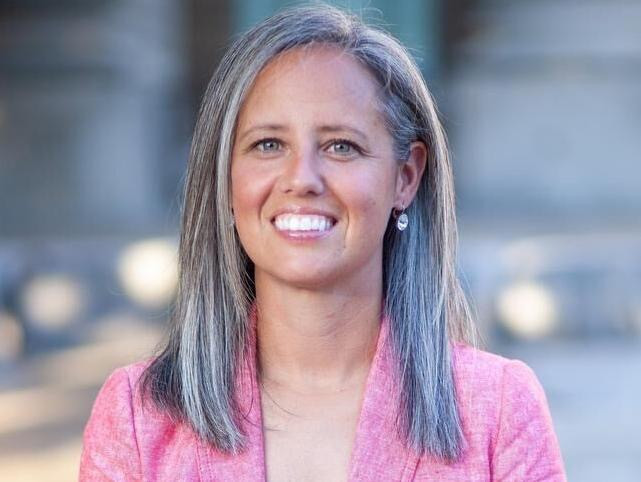
Niagara Region Councillor Haley Bateman is pushing for a “new deal” for Niagara that recognizes the region’s unique position as a tourism destination and halts unsustainable downloading of programs and services from upper levels of government to municipalities.
(Haley Bateman)
At the news conference introducing the Better Regional Governance Act, Flack claimed the legislation would “save some money”, though based on the 2025 Statement of Councillor Remuneration, the elimination of 19 Niagara regional councillors would equal a little over $1 million in wages and benefits, less than a quarter percent of the Region’s 2026 budget.
Issues that councillors have pointed to as the cause of unsustainable tax increases at the Region—policing costs that are 39 percent of the Niagara budget are next to impossible to pare back due to provincial legislation; provincial downloading for big ticket items such as affordable housing; and local costs for everything from hospitals to homelessness that have traditionally been covered by Queen’s Park—were not addressed by Flack and are absent from his proposed legislation.
“We are being asked to deliver more services in more complex areas with revenue tools that have not kept pace and without the financial support of provincial and federal governments,” Bateman said.
Her motion references similar efforts by municipal advocacy groups as the Association of Municipalities of Ontario (AMO) and the Federation of Canadian Municipalities (FCM) to help municipalities close these funding gaps.
AMO has identified the provincial-municipal framework as unsustainable due to the “structural mismatch between municipal responsibilities and available revenue tools”.
FCM has highlighted that the municipal level of government is responsible for maintaining and delivering the majority of infrastructure and services that support Canadians, including roads, water and public transit, but they have been hampered by “adapting their services to a growing population under a 19th century revenue framework that was never designed for the realities of the 21st century.”
Bateman notes that municipalities own 60 percent of infrastructure, but only raise 9 to 10 percent of overall tax revenue in the country, leading to billions in infrastructure deficits facing Canadian municipalities. Niagara’s infrastructure backlog is more than $2 billion.
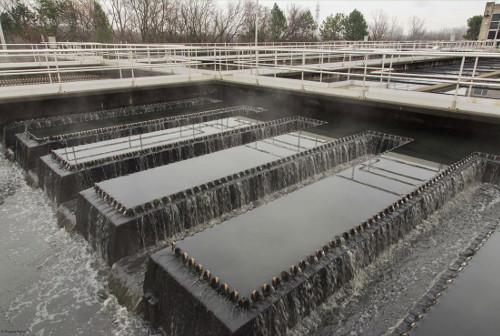
Niagara Region’s aging water and wastewater infrastructure is a constant financial strain.
(Niagara Region)
Bateman includes a number of examples where Niagara Region has either seen decreases in funding or has had to increase funding in areas that the Province has not kept up with. For example, legislative changes by the Province to encourage housing starts, by eliminating Development Charges, meant a loss of approximately $135 million in revenues in 2023-2024 that would have supported roads, water, infrastructure and essential services. With no provincial funding to fill the gap, municipalities are forced to either raise property taxes, take on debt or defer infrastructure expenditures.
“About 30 years ago when the federal government decided it was going to balance its budget it did that by downloading a number of things to the provincial government. The provincial government thought that was such a great idea that they downloaded things to the regions in the municipalities,” Fort Erie Mayor Wayne Redekop, who seconded Bateman’s motion, said during the April 15 committee meeting. He lamented that predictable funding streams from the upper levels of government had to a “great extent” disappeared. “Everything is application based, nothing is necessarily reliable for a long term, and that's not how businesses operate, and that's not how municipalities should be expected to operate.”
St. Catharines Mayor Mat Siscoe indicated his support for Councillor Bateman’s motion, but claimed it mirrors previous efforts.
Councillor Bateman pushed back on the characterization.
“This motion has not been here, and there's been no other motion like it. This is Niagara specific,” Bateman said. Emphasizing Niagara’s global recognition as a tourist destination, the motion highlights the $3 billion in tourism-related economic activity generated from the 14 million annual visitors to the region, and points out the additional impacts borne on local infrastructure, such as roads, waste management, transit, policing, paramedic services and water and wastewater systems, by the influx of visitors.
The motion concludes that property tax revenues “do not scale with tourism or trade corridor demands.” It calls for the federal and provincial governments to “formally recognize the infrastructure and service demands” associated with being “Canada’s leading tourism destination”, by providing predictable funding for tourism-supporting infrastructure.
After lauding the hard work Councillor Bateman had put into the motion, Councillor Redekop was matter-of-fact:
“This is a motion that's based on fact and has pretty straightforward requests for the responsibilities of government to be shared,” he said.
“We’ve all been to conferences where the premier and cabinet ministers have talked about municipalities being partners. Well, I couldn't agree more. We are partners. We're the entity that's on the ground, closest to the people, that provides the services to the people that they need daily and we need assistance in providing those services and providing the infrastructure that is fundamental to the provision of those services.”
Email: [email protected]
At a time when vital public information is needed by everyone, The Pointer has taken down our paywall on all stories to ensure every resident of Brampton, Mississauga and Niagara has access to the facts. For those who are able, we encourage you to consider a subscription. This will help us report on important public interest issues the community needs to know about now more than ever. You can register for a 30-day free trial HERE. Thereafter, The Pointer will charge $10 a month and you can cancel any time right on the website. Thank you
Submit a correction about this story

