

Navneet Kaur’s killing was a call to action for more resources to combat Intimate Partner Violence
On the morning of July 24, 2026, a shot rang out on Humberwood Boulevard near the Rexdale neighbourhood in Etobicoke.
26-year-old Navneet Kaur lay dead of a gunshot wound.
A man had approached her, spoken to her for less than a minute before shooting her and fleeing on foot. Toronto police allege the shooter was 37-year-old Sharnjeet Singh of Brampton. He had been explicitly ordered by the court to have no contact with Kaur, directly or indirectly.
The court order, evidence against Singh strongly suggests, did nothing to save Kaur.
Singh has been charged with first-degree murder. A year before she was shot dead, Singh was charged with criminal harassment and assault against Kaur. He had been released on bail under the strict order to have no contact with her.
In such decisions, the court offers no explanation of how the accused will be kept away from their victim under a no-contact order. If someone wants to ignore the direction, there seems to be little a victim can do to protect themself, even if there is a strong indication that their life is in imminent danger.
On July 28, 2020, Darian Henderson-Bellman, a 25-year-old woman, was found fatally shot inside the Brampton home of her on-again-off-again boyfriend Darnell Reid. He was charged with second degree murder and convicted to a mandatory life sentence after being found in the home suffering from gunshot wounds, a suspected suicide attempt after he killed his partner.
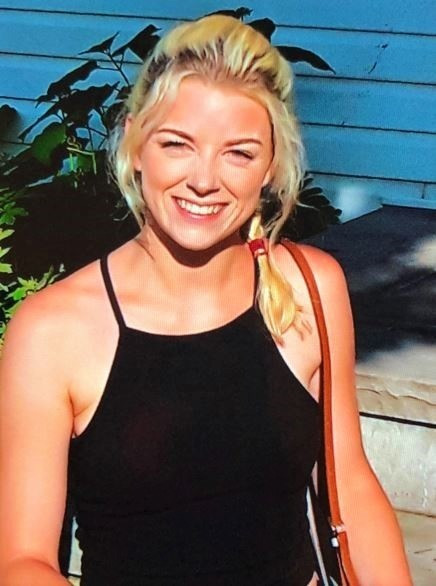
In 2020, Darian Henderson-Bellman was shot dead by her intimate partner, Darnell Reid, who had a long history of violence against her. Court orders directing him to have no contact with Henderson-Bellman did nothing to stop Reid from killing her. (Peel Police)
A year before he killed his partner, Reid was arrested for assaulting Henderson-Bellman and released with a number of conditions, including that he have no contact with her. He was caught breaching his conditions on four separate occasions. In May of 2020, Peel Police arrested him with a loaded handgun. Despite all of this, and his past offences, he was released after only six days in custody and ordered to house arrest with a GPS tracker. The decision was “rigorously opposed” by local Crown attorneys. Less than three months later, Henderson-Bellman was dead. Family and friends were devastated and left confused about how the legal system could put their loved one in such obvious, immediate danger, which would prove to be fatal.
Kaur’s killing four months ago was part of a long pattern seen across the GTA.
According to the Toronto Police report, officers responded to a shooting call in the Humberwood and Rexdale area shortly after 7:20 a.m. Singh was caught by the Ontario Provincial Police after a search involving drones and a K9 unit. He was charged with first-degree murder and failing to comply with an undertaking, and made a first court appearance on July 25 at the Ontario Court of Justice.
Global News later obtained court documents showing that Singh had been released on an undertaking on July 17, 2025, after being charged with criminal harassment and assaulting Kaur, on the condition that he have no contact with her and not attend any place where she was known to work or associate. His prior bail was rescinded after the July 24 shooting death.

Twenty-six-year-old Navneet Kaur was shot dead in July; a Brampton man, Sharnjeet Singh, had been ordered by the court to have no contact with her a year earlier after he was charged with assaulting Kaur. He has been charged with first-degree murder. (Toronto Police Service)
Duty Inspector Scott Bradbury told reporters that investigators believe the shooting was targeted.
At the time, Kaur’s killing was Toronto’s 22nd homicide of 2026, and the second alleged intimate partner homicide in the city within six days: 29-year-old Thi Nguyen was fatally stabbed in North York on July 18 allegedly by her husband, Martin Ly.
Declarations by politicians to confront intimate partner violence typically come with no legislative authority and often no funding to provide options to those in danger and trying to flee their situation.
Peel Region declared intimate partner violence (IPV) an epidemic in 2023. Toronto followed the same year. Three years later, Peel Regional Council sent a letter to Premier Doug Ford, calling on the province to overhaul a two-decade-old shelter funding formula, and remove the four-month cap on how long shelters can house a family and fund long-term transitional housing.
The letter followed warnings from frontline agencies that Peel’s shelter system, which had roughly 300 combined family and standard beds as of the last public count, is being outpaced by demand.
Statistics Canada shows that 128,175 people in Canada were victims of police-reported intimate partner violence in 2024, a rate of 356 victims per 100,000 residents aged 12 or older, a 14 percent increase from 2018.
Advocates stress that these statistics only account for reported incidents of intimate partner violence, and that the vast majority of violence is not reported.
In Peel, social services agencies have for two decades advocated for culturally relevant data and support to address unreported intimate partner violence in specific cultural/religious communities that suffer from entrenched behaviour that subjects women to violence and severe retribution for speaking out.
Canadian Femicide Observatory for Justice and Accountability shows that 187 women and girls were violently killed in Canada in 2024, about half were killed by a current or former intimate partner, and 93 percent of the accused were male.
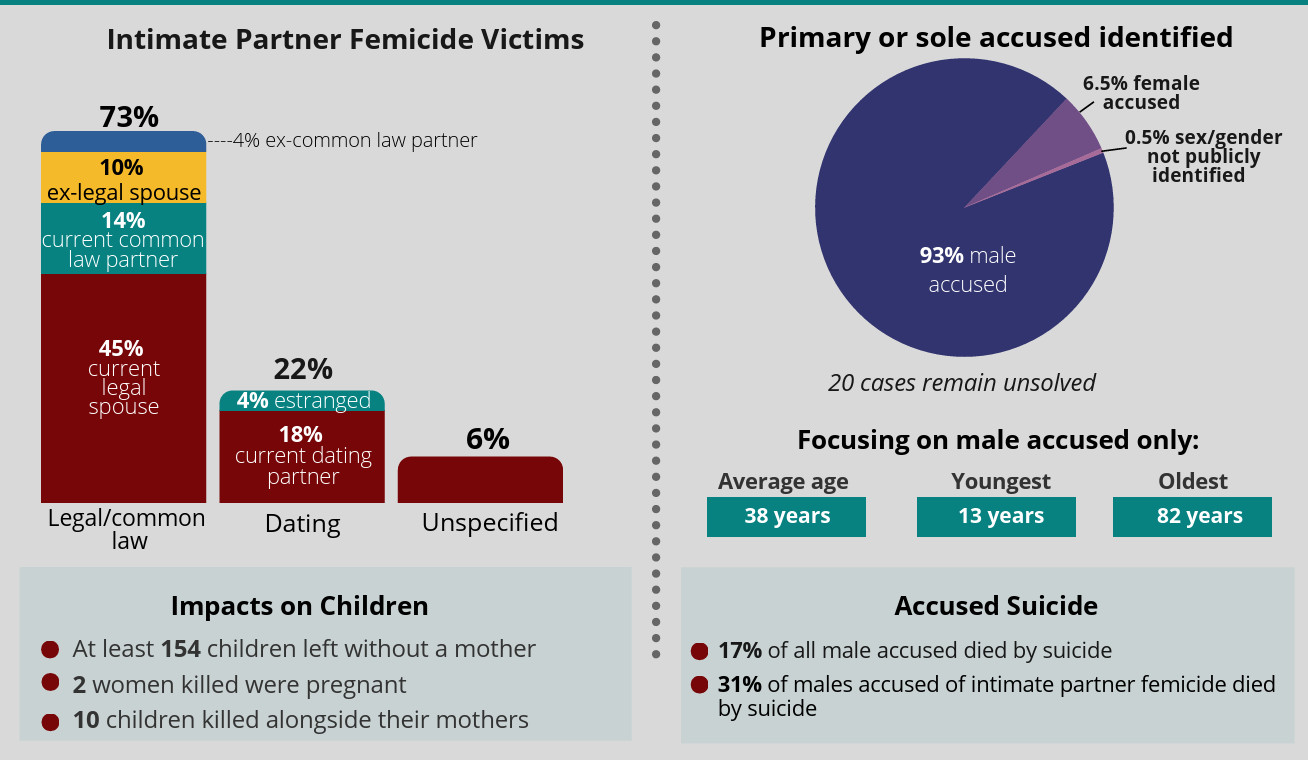
Of the women killed by a current or former partner, nearly half were a current legal spouse. Intimate partner violence greatly impacts children as well, with 154 children left without a mother and 10 children killed alongside their mothers. (Canadian Femicide Observatory for Justice and Accountability)
The Canadian Women’s Foundation shows that nearly two-thirds of people in Canada, 65 percent, personally know a woman who has experienced physical, sexual, or emotional abuse.
In 2020, The Pointer reported on the killing of Darian Henderson-Bellman. Her murder and many others followed a similar pattern of violence that ultimately led to Kaur’s murder six years later.
Peel’s Domestic Violence Death Review Committee found that 67 per cent of domestic homicides reviewed between 2003 and 2018 occurred during an actual or pending separation, and that in the decade since 2009, 44 women had been murdered by an intimate partner.
On June 19, Ottawa classified “Femicide” as first-degree murder. In a news release, the Canadian government said “The law gives the justice system stronger tools to intervene earlier to sexual violence, gender-based, and intimate partner violence before that violence turns fatal.”
The changes mean that femicide is now classified as a first-degree murder, and a new offence was created for coercive control in intimate relationships, updating criminal harassment provisions to make them easier to prove in court, make it a crime to threaten to distribute non-consensual intimate images including sexual deepfakes and increasing the maximum penalty for sexual assault on summary conviction and voyeurism.
Danielle Warren, senior manager at Aura Freedom, was quick to question the government’s framing of femicide. She noted that although femicide is mentioned in the changes to the Criminal Code, it is not codified as its own offence.
Bill C-16 raises certain intimate-partner and coercive-control killings to first-degree murder, but stops short of defining femicide as a distinct, gendered crime.
“There isn’t the gendered understanding that’s included in the legislature just yet,” Warren said. “We’re not seeing the education around femicide happening. We’re not seeing the usage of femicide happening in sectors where it would be very helpful to see—for police to be using that language in their news releases, for media to be using that language in their reports.”
She pointed to Ottawa, where police and media were already calling a femicide a femicide before Bill C-16 took effect.
Rebecca Pacheco, Director of Professional Practice and Advocacy of Embrave Agency to End Violence and Coordinator for Peel Committee Against Women Abuse (PCAWA), largely agreed, framing the recognition as necessary but insufficient. “It’s certainly progress in talking around femicide, naming it for what it is, but certainly it’s not sufficient in and of itself of a change,” she said, adding that formal recognition matters mainly for data collection.
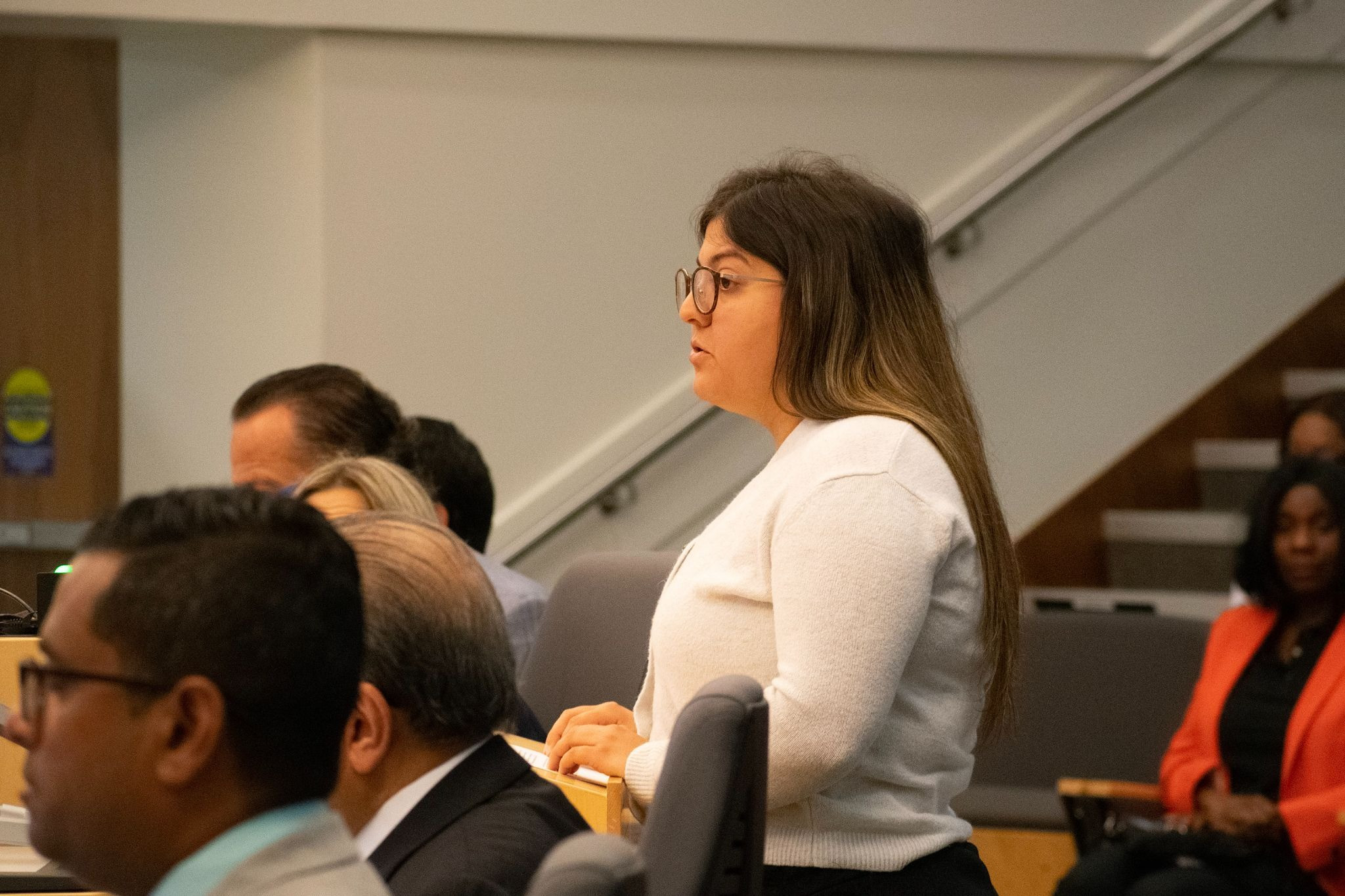
Rebecca Pacheco, Director of Professional Practice & Advocacy of Embrave Agency to End Violence and (PCAWA) Coordinator, has delegated to Brampton Council multiple times outlining the grave need for stronger supports for those experiencing intimate partner or gender based violence. Council members have paid lip service to IPV, offering declarations with little financial support for victims. (The Pointer)
She said it was necessary “to be able to collect data that properly reflects the incidence of gender-based violence in its most lethal form.”
Warren added that in such relationships, control is often asserted due to a fear of loss or rejection. “Abusers often view this as a direct challenge to their authority, their power and their ownership.”
The recurring theme in such relationships is simple: “If I can’t have you, no one will.”
Pacheco said coercive control is difficult to prove, and survivors often misread themselves as the aggressor.
“Because coercive control is so nuanced, unfortunately at times it’s actually the survivor themselves that’s misidentified as the aggressor,” she said. “It’s incredibly important that when we’re looking at coercive control, we’re understanding it from the survivor’s lens and from a trauma-informed lens.”
Both Warren and Pacheco do not believe that tougher charges for murders like Kaur’s will prevent IPV from happening. Warren said, “When folks are in contact with legal systems, with police, with judges, courts, whatever the case is, often that safety has already been attacked.
“We really fundamentally need to be changing the approach to the lens that we’re looking at when it comes to prevention and protection.”
Andrine Johnson, CEO of Embrave Agency to End Violence and PCAWA Co-Chair, said knowledge is key. “It’s important to educate so victims and even the perpetrators themselves can identify that they’re doing something wrong,” she said. “We have to look at things through more of an intersectional lens in order to best support and meet people where they are at and support them while they are at their best capacity.”
Pacheco added, “It’s never going to be this one thing that is going to solve the problem.”
Regarding Peel Region’s letter to the province this summer, Johnson said it was the right thing to do but falls short. “Four months, it’s not enough time,” she said. “It’s enough time, yes, to get the person to safety, but the person has the rest of their life to plan for.”
Johnson said that Embrave has had to grow to keep up with the demand, from 54 to 72 beds in under a year through internal reallocation but no new funding, despite the critical support the organization provides to keep women safe.
“We’re just as important as a hospital, I’ll tell you that much.
“The mere fact that we’re in an epidemic…we have to be creative.”
Email: [email protected]
At a time when vital public information is needed by everyone, The Pointer has taken down our paywall on all stories to ensure every resident of Brampton, Mississauga and Niagara has access to the facts. For those who are able, we encourage you to consider a subscription. This will help us report on important public interest issues the community needs to know about now more than ever. You can register for a 30-day free trial HERE. Thereafter, The Pointer will charge $10 a month and you can cancel any time right on the website. Thank you
Submit a correction about this story

