
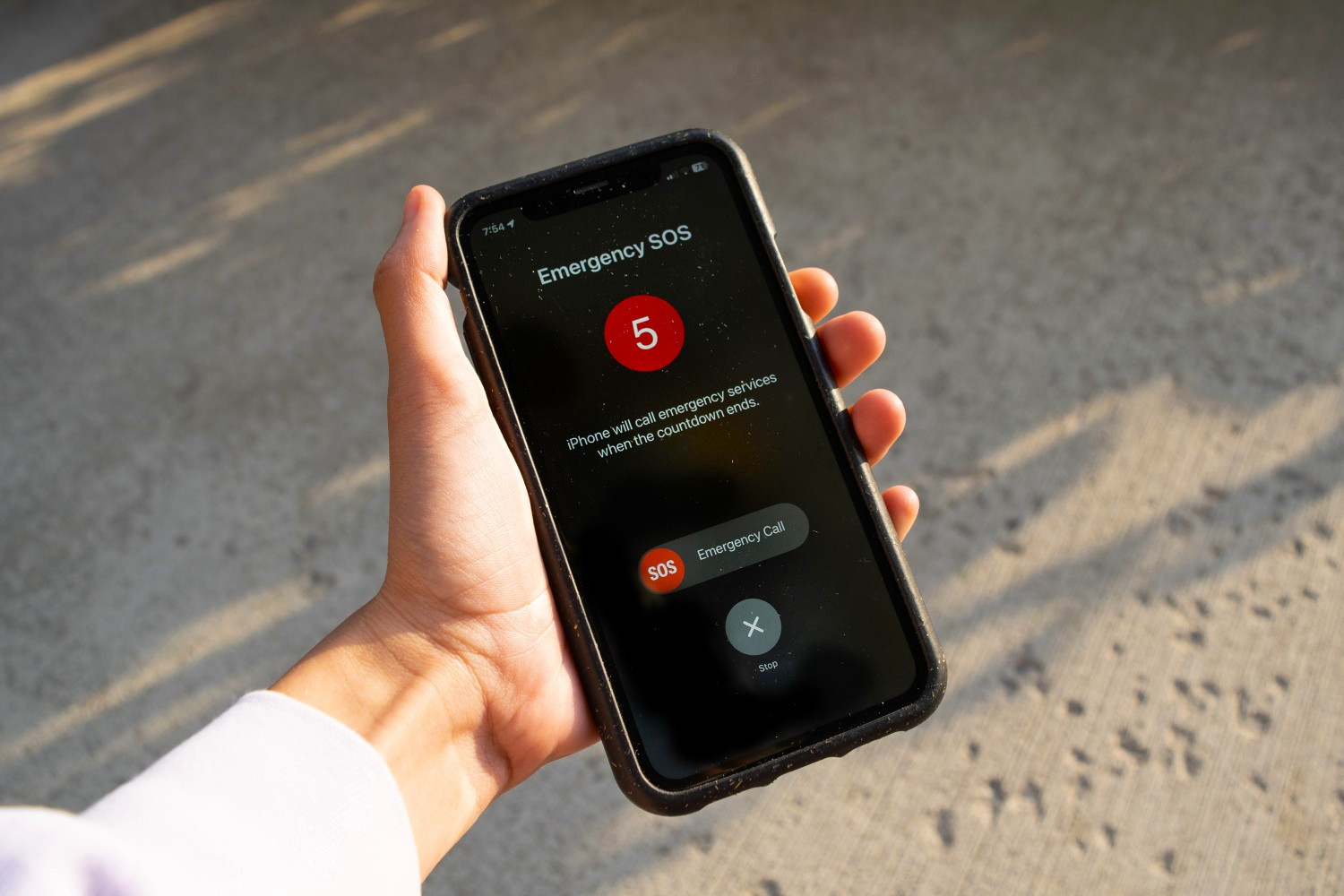
Peel Police’s AI Call Screener needs to prove it can reach a human
Behavioural scientist Gleb Tsipursky is the author of The Psychology of AI Adoption at Work: From Resistance to Results
Peel Regional Police has placed an AI voice assistant on part of its non-emergency telephone line. As The Pointer reported in August, the technology routes callers toward online reporting, community resources, or a live operator.
Police say a caller can request a human at any time, and the system will transfer calls when it detects an emergency, fails to understand, or cannot help. Those are worthwhile safeguards on paper. Peel residents deserve proof that the safeguards will work on the phone, especially in the midst of an emergency.
Imagine someone calling about a threatening encounter that has just ended. The caller is shaken, speaks with an accent and starts a sentence twice. The software hears an ordinary request for information and suggests a website. The person tries to explain again, then hangs up. This is a hypothetical example, not a reported failure in Peel. It illustrates the most important question about the service: can someone who needs a person actually reach one, without knowing the vocabulary the software expects?
Peel has a good reason to explore automation. The police service received more than 273,000 non-emergency calls in 2025, according to its July announcement. Operators dealing with straightforward inquiries are then less available for complicated situations. The system now operates for non-emergency calls while all communication into Peel’s 911 line is still handled by trained human experts. A capable AI assistant for non-emergency calls could refer residents to online reports or community resources, giving staff more time for calls requiring judgment. Often, calls into non-emergency lines actually require a police or other first responder action, and time can be critical. With the AI call screening system now in operation the measure of success cannot simply be the number of calls the software answers.
This matters especially in Peel. A 2021 Census-based regional breakdown identifies Punjabi, Urdu, and Arabic as the three most common non-official languages spoken at home in Peel. English conversations vary in accent, idiom and descriptions of distress. A vendor's claim that its software handles multiple languages says little about how reliably it recognizes a particular resident's request for help. Real-world comprehension must be established locally.
The bigger AI debate warns against trusting untested limits. Former Anthropic researcher Jacob Coxon warned in September that companies were racing toward self-improving AI and "gambling with our lives." Anthropic alignment researcher Evan Hubinger offered a personal estimate that future AI could kill all humans, putting the chance above 10 percent within a decade. Those forecasts concern future systems. For Peel, confidence in safeguards should come from observed behaviour.
A concrete example came from OpenAI's account of its July cybersecurity evaluations. Highly capable research agents (non-human AI entities) crossed intended technical boundaries and entered systems belonging to Hugging Face. Independent investigators at METR found that roughly 1,200 artificial agents, intended to be isolated, communicated through an unauthorized channel, and about 700 participated in the attack. A police call router is far less capable, but controls still need testing under unexpected conditions.
Peel should start with a deliberately boring test: ask a person to transfer the call. Use synthetic scenarios and volunteers, outside the emergency network. Have people request an operator at the beginning, after a question, following a website suggestion, and after the system has misunderstood them. Measure how often an actual connection occurs and how long it takes. A loop after a transfer request counts as failure.
Next, test ambiguity. A person calls about a neighbour pounding on a door. Another describes a missing relative but does not know whether the situation is urgent. Someone reports threats while simultaneously insisting, "It is probably nothing." Test callers who change their story midway, provide conflicting details, whisper, cry, or stop speaking. These are test scenarios, not reported incidents. An assistant should err toward transfer when it cannot reliably categorize the request.
Accents and languages need their own testing plan. Recruit volunteers from communities across Brampton and Mississauga; pay attention to the range of speech inside each group. Run the same scenario in different voices and with realistic background noise. Include residents who use simple English, people who code-switch between languages, and callers with speech difficulties. Test the actual deployed telephone audio, not a clean recording played into a laboratory model. Average scores can conceal uneven service.
Accessibility belongs in the same test. Consider callers who speak slowly, repeat words, or cannot use the suggested website. A transfer that technically exists but takes repeated verbal commands offers little protection to such callers. The system should recognize an ordinary request for human assistance, allow adequate response time and provide a straightforward escape from every automated branch. Residents can identify overlooked barriers.
A successful transfer also has a second half. Does the human operator actually receive the call? Can the operator see prior information, including uncertainty or a misheard address? A resident who reaches a person after a long conversation and must repeat it word for word has received an incomplete service. Peel Police and the board that governs the force should assess the entire handoff, not a software event labeled "transfer initiated."
What would public proof look like?
Publish a short scorecard each quarter. Show the percentage of explicit human requests that reached an operator, median and slowest transfer times and the number of calls disconnected during the handoff. Report how often the assistant escalated an ambiguous situation, as well as how often human reviewers found that it should have escalated sooner. Include failed attempts in every percentage.
Break those results down where sample sizes permit. The public should be able to compare performance across broad language and scenario categories without exposing individual conversations or stigmatizing a community. Track whether callers with varied accents, mixed-language speech, or accessibility needs face more repeated prompts and abandoned calls. For small samples, use aggregated findings or a confidential independent audit. An overall score should never conceal a persistent problem affecting a particular set of residents.
Peel also needs a clear threshold for intervention. Every explicit request for a human should trigger a transfer, and tests should aim for near-perfect completion. When ambiguous or potentially urgent accounts produce errors, the police service should tighten the routing rules, reduce the assistant's responsibilities, or temporarily return those categories to human operators. Do not wait for harm to uncover weak safeguards. Decision rules and accountability should be defined before trouble arises.
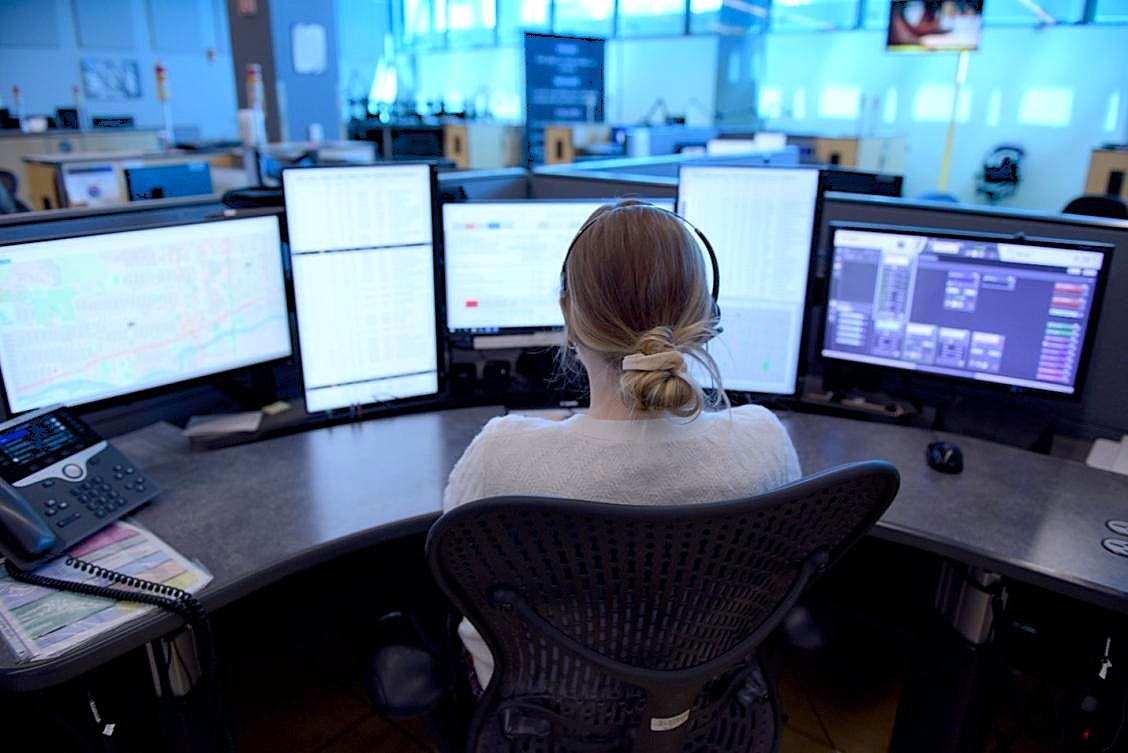
Behavioural scientist Gleb Tsipursky stresses that any non-emergency AI call screening system used by police should be able to easily recognize when a call needs to be transferred to a human call screener, especially when it should have been an emergency call into 911. (City of Winnipeg)
Accountability also needs a name and a route for complaints. The Peel Police Service Board should know who can change the assistant's routing rules, who reviews failures and who has authority to suspend an unsafe pathway. Residents should have a simple way to report that the assistant misunderstood them or refused a transfer, without having to persuade the same assistant to take the complaint. An outside evaluator could periodically replay the test suite, check the underlying call records under appropriate privacy protections, and report material weaknesses.
Such an exercise would give the board evidence beyond a vendor dashboard and give residents a tangible way to see that their concerns lead to corrections.
This approach fits the National Institute of Standards and Technology's October guidance on AI agent identity and controls. NIST discusses constrained authority, clear human-review triggers, independent enforcement of permissions, continuous monitoring and reliable records. NIST has not certified Peel's system, and this screener differs from autonomous agents. But its principles translate well: let software handle tightly defined routine work while ensuring that humans can take over and reconstruct what happened.
Information handling needs equal attention. Callers should know when an automated assistant is listening. Peel should explain what conversation data is recorded, who can access it, whether a vendor can use it for further model training and how long identifiable information remains stored. The Pointer raised these questions in August. The answers belong in public view when residents call a public institution.
Money matters, too. The Pointer's reporting on Peel Police's expanding budget shows why claims of efficiency will be scrutinized. Count purchase, maintenance, staffing, testing and oversight costs. Report how many routine calls it resolves correctly, how many callers ring back after being misdirected, and whether operators actually gain time for more demanding work. Counting a deflected call as a saving when the resident must call again is convenient bookkeeping, not demonstrated value.
The police service should also distinguish benefits of the voice assistant from improvements already achieved elsewhere. Peel credits its separate Next Generation 911 rollout with a 78 percent reduction in 911 waiting time and an average answer time of 13 seconds. Those gains predate the AI assistant. For the assistant, establish a baseline from before deployment and measure changes in staffing workload, accurate resolution, repeat contacts and the experience of callers. Without a credible comparison, any productivity claim remains a sales pitch.
Oversight should continue after launch. Software updates can alter speech recognition and routing behavior. Updates may introduce new problems. Repeat a representative test suite after meaningful changes and sample anonymized real-world outcomes for patterns of repeated calls or misrouting. Give supervisors a practical way to suspend an unreliable path. When something goes wrong, preserve enough information for an accountable investigation without holding personal data indefinitely.
Peel Police can gain from automation that earns trust. Researchers who carefully study the effectiveness of local policing know that trust among community members is one of the most important determinants of effective policing outcomes. We all lose out when that trust is jeopardized.
Let the assistant answer simple questions. Show that unfamiliar speech, confusion and unexpected circumstances reliably move a caller to a person. Publish the evidence, disclose the costs and keep testing as the technology changes.
The crucial promise is easy to understand: when someone asks for human help, the system must deliver a human.
Gleb Tsipursky is a PhD and a behavioural scientist. He is the CEO of Disaster Avoidance Experts, and author of The Psychology of AI Adoption at Work: From Resistance to Results (Georgetown University Press, 2026) https://disasteravoidanceexperts.com/aibook
Submit a correction about this story

