
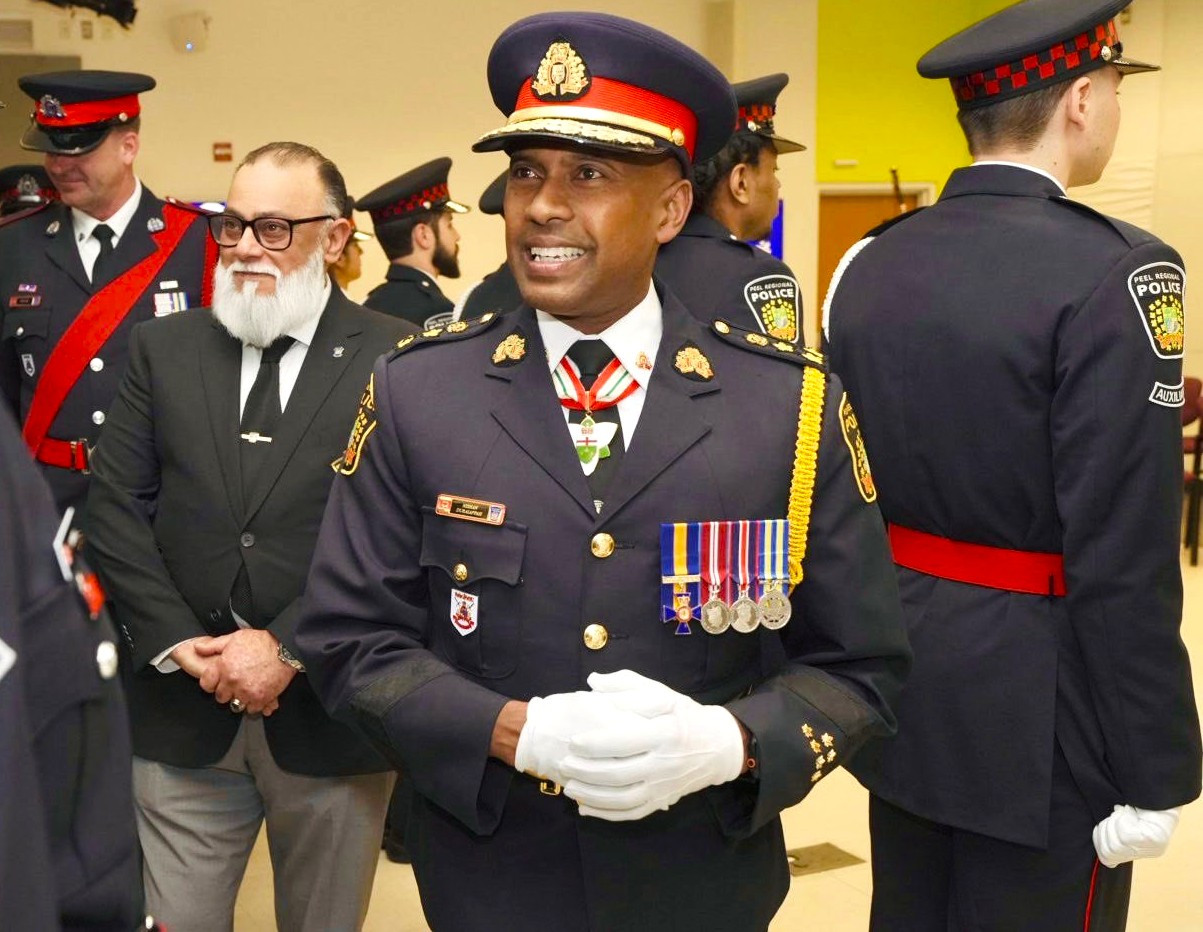
Critics question how Peel Police could be recognized for human rights work
Despite a documented history of targeting the Black community, Peel Regional Police recently celebrated its recognition by the International Association of Chiefs of Police for human rights work.
The recognition is given to law enforcement organizations that “exemplify the protection and promotion of civil and human rights”, according to the IACP website.
Advocates characterize the entire exercise as nothing more than a public relations stunt aimed at misleading the public about organizations that are among the worst perpetrators of systemic racism, inequity and other forms of entrenched discrimination.
To David Bosveld, Founder of the Black Education Fund (BEF) and a former member of Peel Police’s Anti-Racism Advisory Committee, who resigned in the midst of controversy after members who demanded change were marginalized, the recognition is nothing more than “window dressing” and a performance.
He underscored that Peel Police had to apply for the recognition, and nobody approached the PRP to honour them. In essence, the service asked for the recognition, which, he believes, is nothing more than an attempt to deflect from how bad the force’s record on human rights has been.
Bosveld pointed to an April 9 presentation PRP delivered to more than 100 educators at the Dufferin-Peel Catholic District School Board (DPCDSB). The shocking, blatantly racist performance included images displayed by Peel Police staff portraying only Black youth as gang members, discriminatory language and repeated use of the N-word. Black educators and community advocates condemned it as one of the most racist and harmful things they had ever witnessed.
The Peel Police presentation drew the attention of the Catholic Principals Council of Ontario (CPCO), which wrote to Dufferin Peel Catholic District School Board (DPCDSB) Director of Education Marianne Mazzorato and her team condemning Peel Police’s racist conduct.
“Our interest as an association is directly aligned with Dufferin-Peel’s recent Black History Month theme, Reclaiming the Narrative, which calls on us to challenge reductive portrayals and uplift the authentic, multifaceted experiences of Black students,” the letter obtained by The Pointer explained. “Our schools serve diverse communities, and our leadership responsibility requires us to ensure that professional learning and system level communications affirm student and staff identities rather than reinforce harmful or historically rooted stereotypes.”
The next day, following concerns raised by several educators in attendance, Mazzorato issued an apology, acknowledging the harm the presentation caused to those in attendance.
“The audible use of discriminatory language, specifically the n-word, caused harm and distress, and I deeply regret that this occurred within one of our professional learning spaces,” Mazzorato wrote in the letter sent on April 10 to all principals and vice principals, and obtained by The Pointer.
“I want to acknowledge the harm caused by the way the presentation depicted only Black-identifying youth, without including or contextualizing other identity groups. This reinforced harmful stereotypes and deficit-based narratives that we actively work to dismantle as a system.”
The school board initially apologized, acknowledging that the presentation reinforced anti-Black stereotypes, but later withdrew its support for that apology, following pressure from provincial Education Minister Paul Calandra, who condoned the racist conduct.
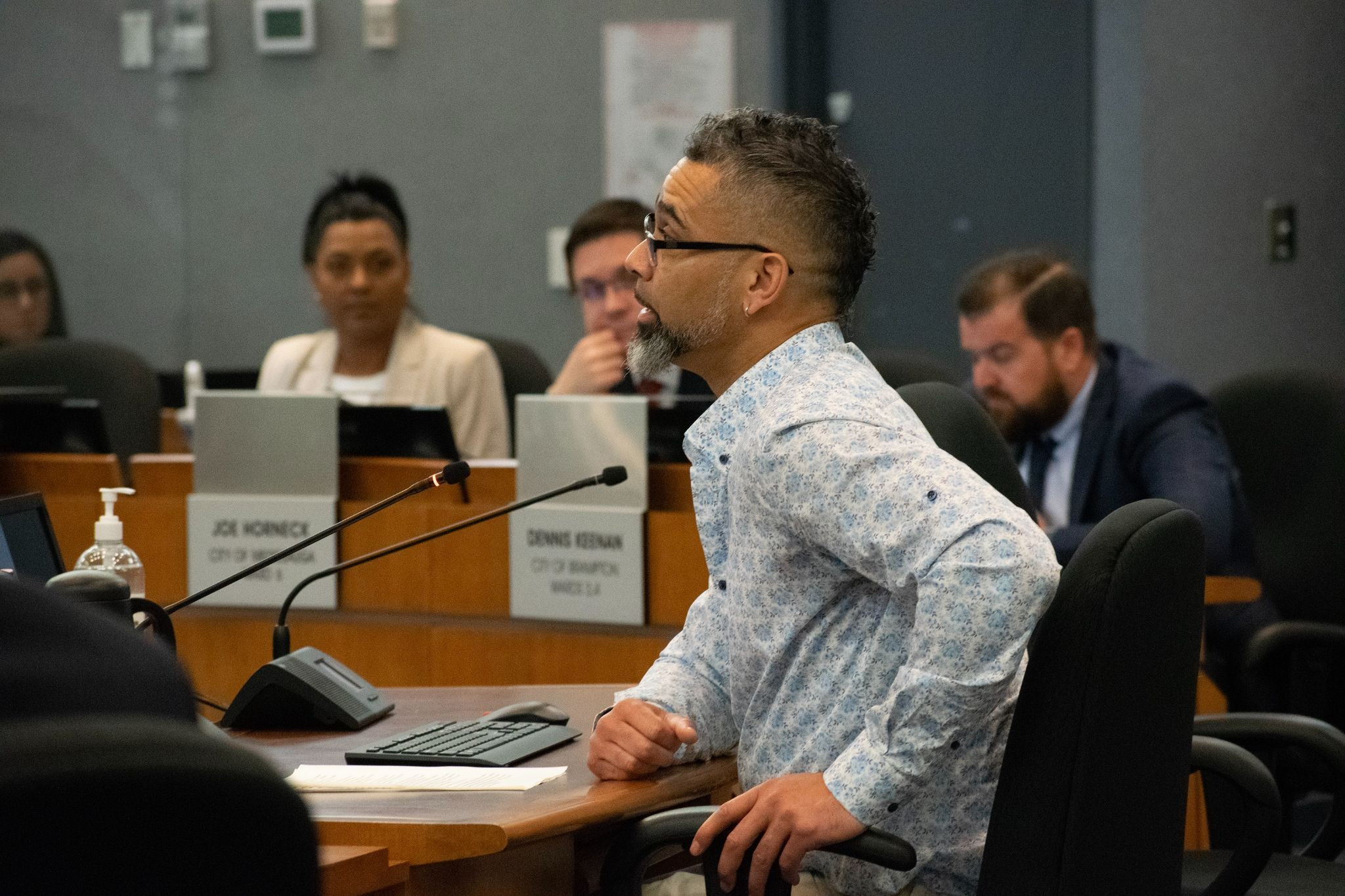
David Bosveld says that Peel Police’s award is nothing more than “window dressing,” and that it was all a performance. (Alexis Wright/The Pointer)
Now, to rescue its pathetic record on human rights and systemic internal racism, Bosveld says the force has sought out recognition to soften its discriminatory reputation.
“This is Peel Police dedicating staff to making the case as to why they should win this award,” he said.
“So it’s actually taxpayer dollars being used to promote Peel Regional Police as champions of human rights.”
Applying for the award defeats the purpose of getting recognized in the first place, Bosveld noted. He compared it to his own experience as a football coach, saying the type of recognition that matters most is when it comes without asking for it.
“The one award that I would value is if my players, other coaches, other organizations decided on their own to award me an award.”
The Pointer sent questions to Peel Police asking if its officials had to apply for the recognition or if they were recognized for their efforts by the IACP without having to go through an application process.
Peel Police did not respond.
Kingsley Gilliam, Director of Communications, Social Justice, and Social Services for the Black Action Defence Committee (BADC), says he was unfamiliar with both the Human Rights Project and the IACP recognition, and could not speak about any tangible progress Peel Regional Police has made on human rights issues. He stressed that claims of progress must be independently verified.
After decades of community advocacy, Gilliam says much of what the police often claim to have accomplished amounts to nothing more than an effort to create positive promotional narratives.
“Most of what police do is more public relations exercises,” he said.
“And we have to have the civil society stakeholders that attest to it before I would give it any credibility.”
Peel Police has a recent record of blatantly racist conduct. The force last year tried to justify its high rate of use of force against Black residents by claiming the background of these individuals is the reason why Peel Police have to constantly use force against them.
On March 20, 2015, officers fired 19 bullets after an encounter where Ekamba was reportedly armed with a knife and showing signs of mental distress; Ekamba was struck 11 times and killed, while an officer and an innocent bystander were accidentally shot.
Ontario’s Special Investigations Unit (SIU) initially ruled the officers were justified under the Criminal Code and laid no criminal charges. However, the 2022 Inquest Jury findings specifically advised Peel Police to re-evaluate programs such as Crisis Outreach and Support Team (COAST) and Mobile Crisis Rapid Response Team (MCRRT) and to acquire funding to implement those recommendations.
The recommendations also called on police services to “establish permanent data collection and retention systems to record race, mental health issues, and other relevant factors on use of force incidents”. More importantly, the first recommendation is to “improve knowledge and awareness…of the signs of mental health crisis”.
On August 18, Peel Police signed an agreement with the Ontario Human Rights Commission and the Peel Police Service Board to address systemic racism as part of its work on eliminating racial profiling and discrimination. The Binding Arbitration Agreement, which is available in full on the Peel Police website, contains 67 recommendations; the first says the police service must “apologize for racially discriminatory service delivery and commit to ending systemic racism within PRP”.
As of today, November 4, Peel Police has not issued a formal apology. This calls into question how the force could have been recognized for human rights commitments.
The 67 recommendations contain everything that the 35 jury recommendations mentioned in the verdict for the Marc Ekamba case.
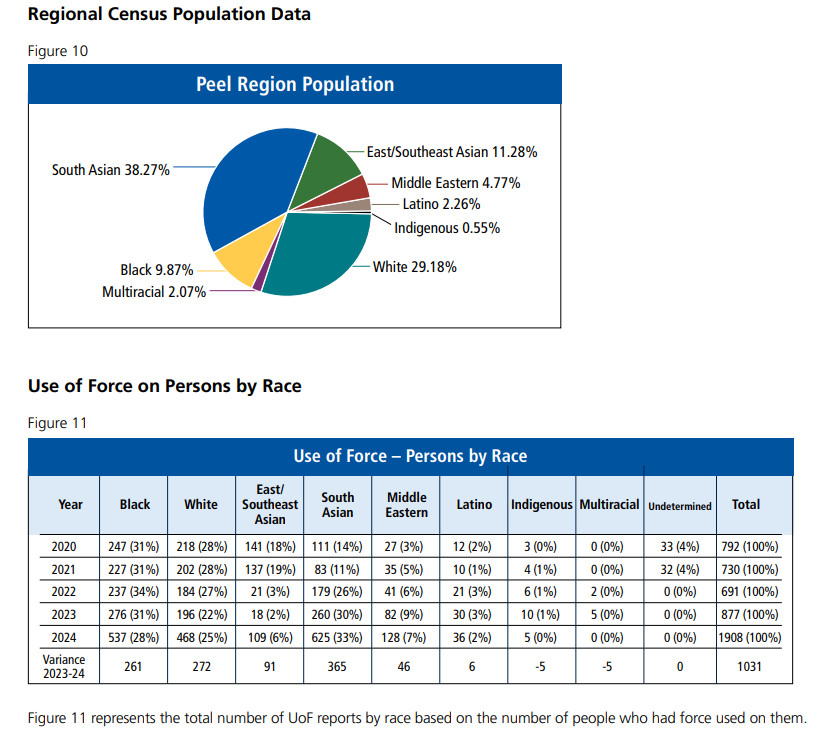
Peel Police publishes its use-of-force data in its Human Rights Project 2024 progress report. (Peel Regional Police)
Advocates including Bosveld have criticized any public claims of human rights work by Peel Police as simply performative, in the face of decades of history of discrimination the service has been found guilty of, including the groundbreaking human rights case brought against Peel Police by former officer BJ Sandhu. The force’s long history of overt racism was laid bare in the hearings and evidence for the case, which Peel Police lost after trying to discredit the celebrated officer’s long service for his community.
Peel Police has been publishing a human rights report since 2022, working on the OHRC recommendations. The most recent report is for 2024, where it states that six subcommittees were formed within the Anti-Racism Advisory Committee (ARAC), publishing use-of-force data by race, injuries by race and persons-in-crisis outcomes.
Bosveld told The Pointer that any members of ARAC who spoke out and were not willing to promote Peel Police’s narratives around its claimed commitments to human rights work, were marginalized, prompting many of the most committed members with a proven history of advocating for systemic transformation to resign from the anti-racism committee.
Much of Peel Police’s work to eradicate discrimination falls short of the OHRC commitment, as parts of the multi-year action plan are labelled as “ongoing” or “under review,” with only a handful of action items completed. The independent verifier is still “to be appointed”, another process that is marked as “ongoing”.
The 2024 report also shows 1,763 use-of-force reports, up 111 percent from 835 in 2023, and 1,908 people subjected to force, up from 877.
Force used on people in crisis doubled, from 75 reports to 152.
On the subject of race, Black residents were 28 percent of people subjected to force (537 of 1,908), and 31-34 percent in 2020-2023.
The 2025 report has not been published yet.
Calls for an independent auditor to regularly review the progress of Peel Police, including its record on human rights issues (which might also either validate or invalidate PR-style recognitions such as the recent honour from the International Association of Chiefs of Police) have fallen on deaf ears. Peel Police leaders and the board that governs the force have consistently pushed back against calls to bring in an independent watchdog.
Email: [email protected]
At a time when vital public information is needed by everyone, The Pointer has taken down our paywall on all stories to ensure every resident of Brampton, Mississauga and Niagara has access to the facts. For those who are able, we encourage you to consider a subscription. This will help us report on important public interest issues the community needs to know about now more than ever. You can register for a 30-day free trial HERE. Thereafter, The Pointer will charge $10 a month and you can cancel any time right on the website. Thank you
Submit a correction about this story

