
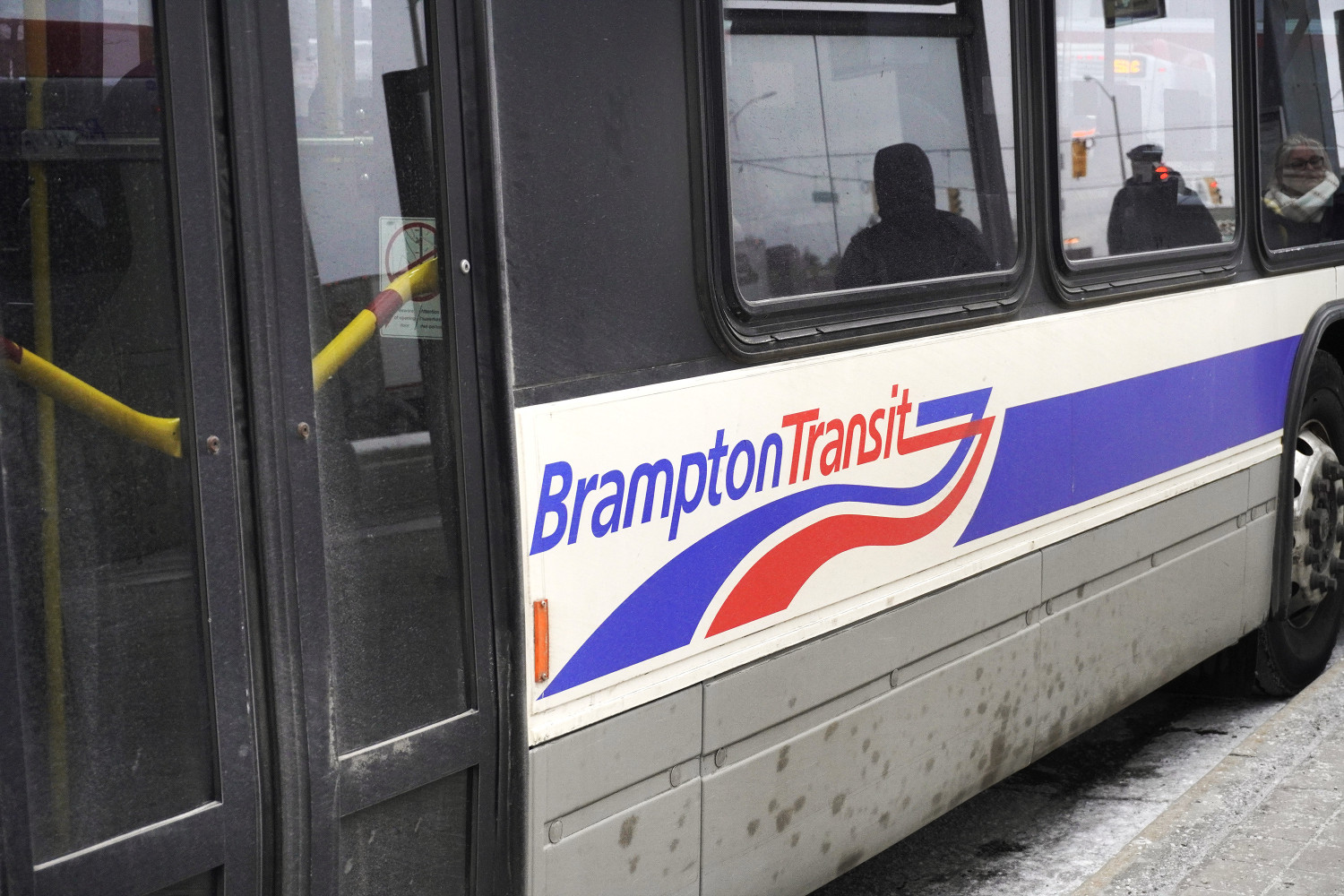
Brampton Transit’s bumpy ride: falling ridership, service reductions and revenue shortfalls. Riders & candidates weigh in
For many Brampton residents, the only way to get around town is to take transit. Usually, this takes the form of Brampton Transit. Residents like Shanice Swaby have ridden the bus since she was a teenager, growing up in Brampton.
When asked if Brampton Transit has changed or improved in any way since then, she says it hasn’t. In fact, she believes it is doing the opposite. She spoke of increasing wait times and the lack of frequency in buses.
“There hasn't been any progress in the sense of frequent buses coming in, more quicker times compared to Toronto Transit,” Swaby said. “Sometimes you'll have 20 minutes, 30 minutes for one bus to come.”
Prabhdeep Chana, a Brampton Transit user, put his frustration into words.
“There is a deep gap in the frequency of buses,” Chana said. “If you want to cut a few routes, add something else to it so that people prefer to use it. I would suggest we should have an inclusive transport system rather than excluding things.”
Chana, who said he had lived in London and Belgium, said the gap between what he’s experienced in European transit systems and what Brampton offers is stark - not just in frequency, but in something as basic as knowing when the next bus will actually arrive.
“You don’t see indicators - where the bus is, how long it will take,” Chana said. “Probably you can find it on the internet or on an app, but when someone, an old age person, goes to the transit station, they don’t find it convenient.”
Immigrant communities, including international students, rely heavily on transit systems than Canadian-born residents. Transit systems like Brampton’s are used by new immigrants to get to their destinations, which include secondary schools or workplaces. Public transportation is a lifeline on which they rely for cheap transport without the need for buying a car and paying for insurance.
Recently, The Pointer reported transit systems in Ontario’s major cities like Toronto, Brampton and Mississauga are failing to adequately serve these immigrant communities. Infrequent buses, poor connections, limited off-peak service and confusing routes make it even more difficult for newcomers to access jobs, healthcare and education. Research has shown transportation barriers can even cause immigrants to turn down employment opportunities. Budget pressures and service cuts only serve to worsen the problem.
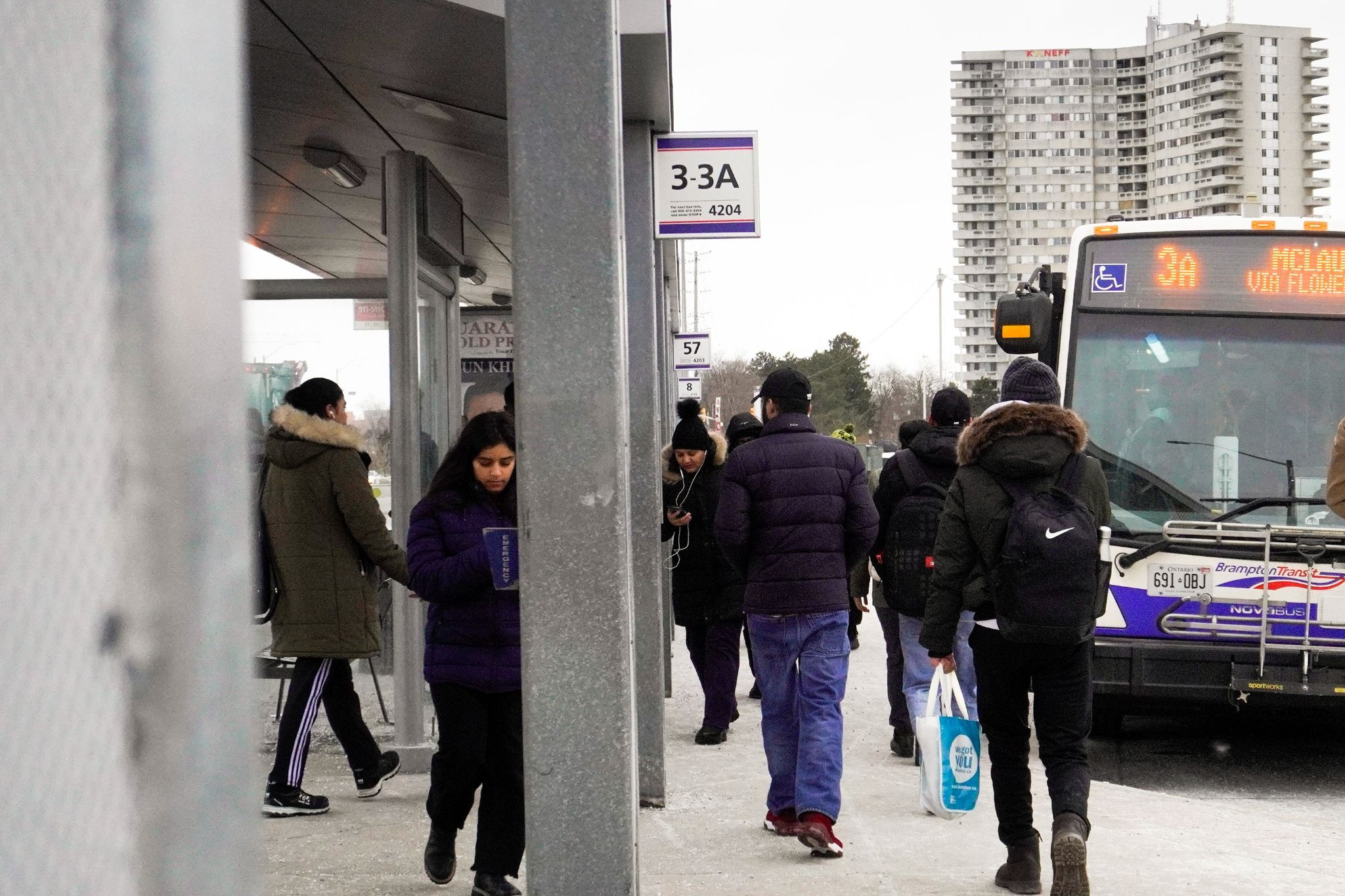
Brampton Transit experienced an increase in ridership due to the influx of international students and temporary workers. (Alexis Wright/The Pointer)
A look at the transit company’s ridership page shows that in 2025, ridership sank 13.1 percent, to 37.9 million trips from 2024. A closer look at the numbers also reveals that ridership numbers for 2026 are lower than those of 2025. Brampton Transit collected $121 million in fare revenue in 2024, according to the City of Brampton’s 2025 Transit Revenue Audit Report. The report does not provide a comparable full-year 2025 fare-revenue total.
As of the end of September 2025, the system’s revenue-to-operating-cost ratio stood at 52 percent, compared with 54 percent for all of 2024.
On April 27 of this year, the City suspended four routes. This includes the 33 Peter Robertson, 26 Gardenbrooke, 55 Elbern Markell and 56 Kingknoll, citing “low ridership demand.” The City, in a staff report on the 2025 Second Quarter Operating Budget Forecast in October of 2025, placed the blame on Ottawa’s cap on international students.
The report states that the Transit system was “projecting a net deficit of $8.8 million driven by $17.7 million in revenue shortfall due to reduced ridership resulting from the federal government’s cap on international study permits and temporary residents.” Mayor Brown also echoed these sentiments, placing the blame squarely on the federal government’s policies.
What the City has done about it is to have a hiring freeze, $25,000 buyouts for its least senior transit staff, a fare increase of about five percent in February and suspended routes.
The Transit system has been experiencing some turbulence recently. In April 2025, the Amalgamated Transit Union (ATU) Local 1573 voted 98 percent in favour of a strike mandate after rejecting the City’s contract offer, accusing management of “bad faith bargaining.” The Union said they were blindsided by the Argo’s announcement, which broke publicly within the same window as the stalled negotiations. Andrew Salabie said the union needed “the employer to see us where we are”.
However, a new three-year ATU Local 1573 contract was ratified that avoided a system-wide strike, with roughly three-quarters of members voting in favour. Salabie called for the City to prioritize “badly needed infrastructure and new buses,” and pointed to the long-delayed third transit maintenance facility as a persistent bottleneck even as ridership was, at the time, still climbing.
Mayor Patrick Brown and council quietly approved a $10.9-million contract with private on-demand operator Argo Transit. This is a company that has been operating for less than a year. A subsequent freedom-of-information request returned 1,492 pages of documents, 86 percent fully redacted and a further 6 percent redacted past readability, including the final contract itself.
Caledon followed suit, days before The Pointer’s freedom-of-information appeal over Brampton’s Argo deal reached Ontario’s Information and Privacy Commissioner. The story documented how residents caused backlash on social media over the loss of Route 55 and others, and detailed how the City has continued to withhold basic information about Argo’s ridership and the terms of its contract.
Researcher and policy expert on infrastructure and transportation Jonathan English says the federal international student cap is “probably most of the story”. Thanks to the increase in international student permits, Brampton had a large concentration of students and newcomers who were reliant on Brampton Transit to travel to work and classes.
The 2025 deficit is being covered from reserves, which English says is the right tool for a temporary dip. “That’s what reserves are for,” he said, provided riders come back.
English, however, remains optimistic about the state of Brampton Transit. He stressed Brampton’s success predated the international student boom. For the past 15 years the system has attracted riders with better service, which justified more service. Even after the drop, ridership, he insists, is above where it was before improvements. He says historical evidence shows service builds ridership, and not population alone.
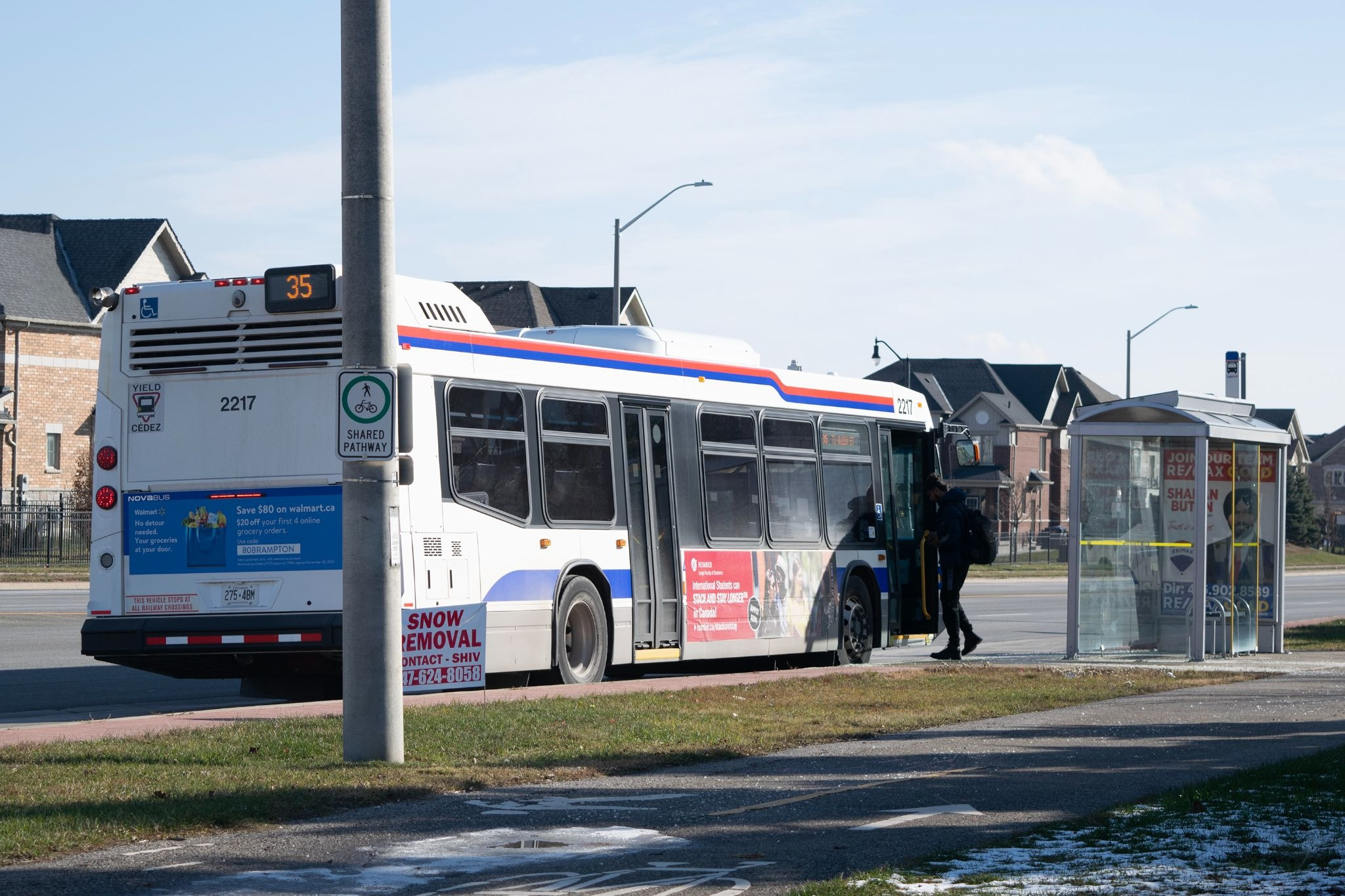
Service reductions, according to English, can drive riders away from using transit more than fare increases. (Alexis Wright/The Pointer)
“The availability of service is by far the most important determinant of transit ridership,” he said.
However, he is also very much aware of what can happen when Brampton Transit makes service reductions. He said reducing services can drive riders away more than “modest fare increases”.
“If you start cutting service significantly, then you will have a negative feedback loop of reduced service driving riders away, which will prompt further reductions in service, etc,” he said. “So you really, really don’t want to get caught in that kind of loop.”
English believes the decline is simply “a bump in the road” that “can be overcome”.
Mayoral candidates for Brampton also addressed what they would do differently in situations like this, if elected. In written statements, they outlined their plans for Brampton Transit.
Brampton mayoral candidate Wesley Jackson says the transit system’s problems are specific, and the fixes should be as well. He said he would begin by a route-by-route review of passenger loads, missed trips, delays and buses passing riders because they are full, rather than reacting to the citywide ridership decline.
A headline drop, he argues, hides which routes are overcrowded and which neighbourhoods lack dependable service. He said a 30 percent cut on a route where every bus is full “does not allow the city to reduce service on that route,” while a 40 percent cut on a sparsely used one might justify pulling buses off entirely.
With regard to finances, he says the 2025 budget “borrowed against reserves and balanced the budget with a promise to find savings later,” and “the public will not have access to a full accounting until after the election.” If elected, he says, his first target would be to target recurring operational savings, like outside contracting, management salary growth and procurement.
He is wary of relying on senior governments. Provincial and federal money should be pursued, he says, but “dependable daily service cannot depend on grants that have not been secured.”
Jackson also said, “selling land or drawing down reserves cannot sustainably pay for an ongoing bus service.”
He said he would direct staff to cost service every 10 minutes or better at peak on overcrowded corridors. Results would be published by route and time of day with quarterly reports to the committee. He would report early departures separately, “rather than hidden within an ‘on-time’ figure.”
He further suggested, if elected, he would prioritize stabilizing existing service, easing the worst overcrowding and setting up transparent reporting. He would keep pursuing rapid transit, including new Züm routes and a plan to be bus rapid transit (BRT) ready, but says “commuters should not have to wait for a major construction project to get a more dependable bus ride.”
Jagruti Bhatt also supports a route-by-route analysis to “put resources where riders actually need them, and publish the results.” In 100 days, she said she would require a route-by-route review of on-time performance, overcrowding, missed trips and pass-ups, and she would add peak-hour service on the busiest corridors.
On finances, Bhatt rejects “higher taxes” and “across-the-board service cuts.” She said she would first review route productivity, overtime, procurement and underused service, then redirect resources toward the routes carrying the most riders. She promises to "aggressively pursue provincial and federal transit funding” and support more municipal money only with a clear business case. She also supports fare capping through PRESTO, which she says would give frequent riders “more predictable costs.”
She would also support publishing quarterly reports and a public Transit Performance Dashboard with route-level results. She added, “If targets are missed, residents should see why and what corrective action is being taken.”
Her first year would deliver a reliability audit, a dashboard, targeted fixes on the worst routes and a financial review. She promises “better information, clearer accountability,” rather than “another round of announcements without measurable outcomes.”
Sandeep Somal is also aware of residents waiting for longer times for buses and seeing buses arrive fully packed. “That shouldn’t be acceptable in a city the size of Brampton,” he said. He said he would review the busiest routes for overcrowding, delays and missed trips, then adjust schedules and bus availability for peak hours. He also wants more transit signal priority and an east-west corridor with dedicated space for buses and emergency vehicles.
He said he would speed up electric-bus adoption and fix the infrastructure storage delays that have held it back. On ridership drop, he says “cutting service to address declining ridership would only make that problem worse.”
Somal supports investing in transit, but promises to not raise property taxes or cut existing services to pay for it. He would look first for savings in Argo, consulting contracts, administration and procurement, and he wants an independent Auditor General.
His targets are at least 85 percent on-time performance, buses every 15 minutes or less at peak on the busiest routes, and a 25 percent cut in preventable missed trips in year one. He wants customer satisfaction up 10 percentage points over the term, with quarterly public reports. He plans a 100-day review of the worst routes, with public reporting by six months and a dashboard by the end of the first year.
In the end, however, it depends on whether riders can count on the bus. For transit users like Swaby and Chana, that is the question for the vote.
The Pointer sent questions to Brampton Transit General Manager, Heidi Dempster, Mayor Brown’s office and the city of Brampton. The questions asked how Brampton Transit hopes to build ridership, how many transit workers accepted the voluntary buyout package and the projected financial position for 2026. As of publication, all parties have not responded.
Email: [email protected]
At a time when vital public information is needed by everyone, The Pointer has taken down our paywall on all stories to ensure every resident of Brampton, Mississauga and Niagara has access to the facts. For those who are able, we encourage you to consider a subscription. This will help us report on important public interest issues the community needs to know about now more than ever. You can register for a 30-day free trial HERE. Thereafter, The Pointer will charge $10 a month and you can cancel any time right on the website. Thank you
Submit a correction about this story

