
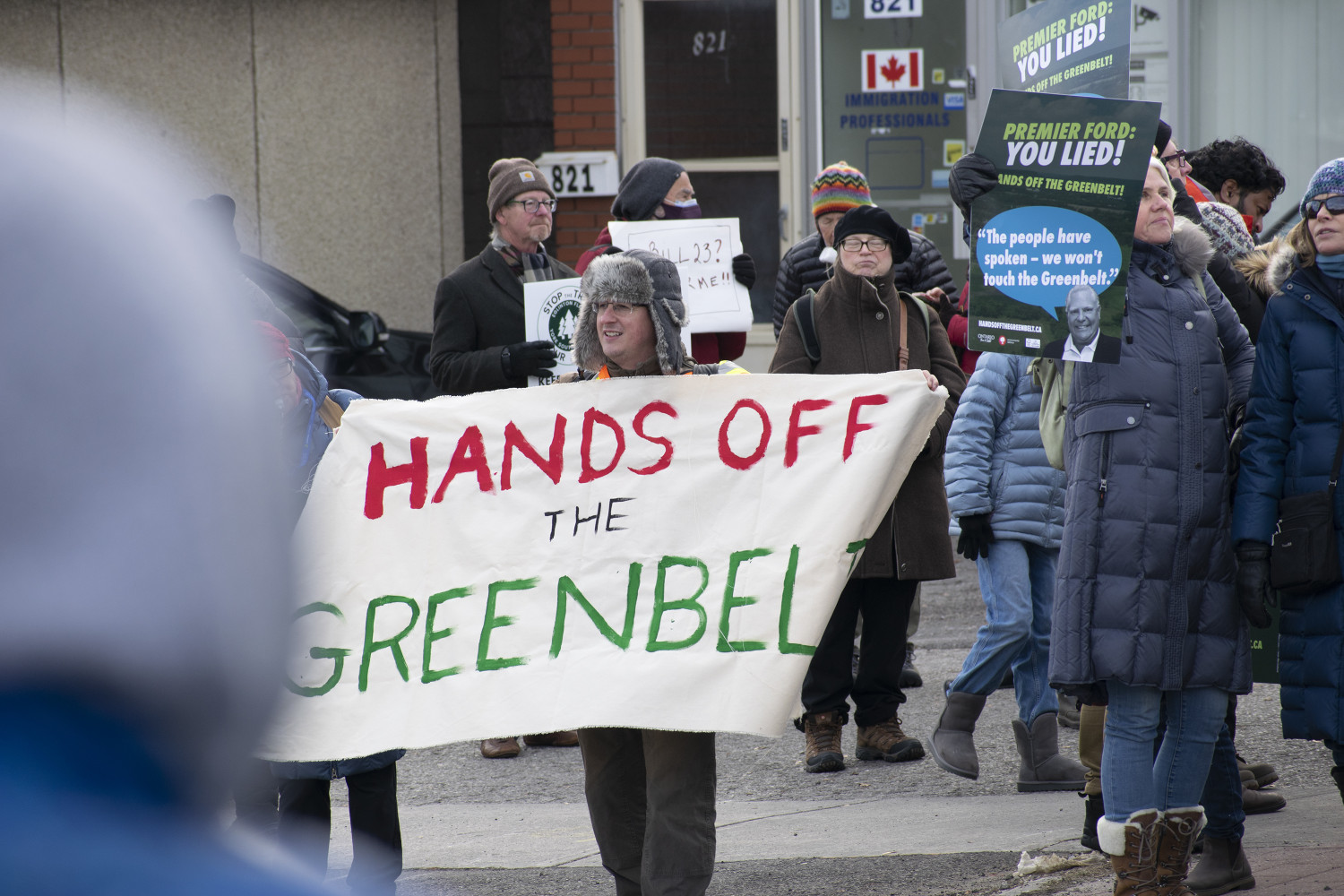
‘No one is above law’: RCMP probe into Ford’s Greenbelt scandal reaches 3-year mark
October 10 marks three years since the RCMP launched a criminal investigation into the Doug Ford PC government’s decision to swap thousands of acres of protected Greenbelt land to spur new housing development.
It’s not the only consequence of the scandal that has yet to be resolved.
It makes Greenbelt architect and former Ontario planner Victor Doyle “anxious” that the inquiry remains “unresolved”.
“It [the Greenbelt land swap] was highly inappropriate and under hugely questionable circumstances…where preferred treatment was given to certain developers under a cloak of secrecy, and muffling of the entire civil service, directing them to do things that they recommended otherwise,” he told The Pointer.
“It was a reflection that this government tends to favour corporate interests or other broader vital goals like environmental protection or healthcare or education in terms of their privatization efforts on all of those.”
Doyle had resigned from the government in 2017 because he knew the Ford administration was coming to power: “I knew I couldn’t work for them.”
Ford, infamously, was caught on camera in a private room filled with developers before the 2018 election. He told them: “We will open up the Greenbelt, not all of it. We’re going to open a big chunk of it up, and we’re going to start building.”
The then-54-year-old future Ontario leader was exposed on the leaked video clip telling some of the province’s most powerful builders, all they had to do was help him get elected.
“The people have spoken. I’m going to listen…we won’t touch the Greenbelt,” he said shortly after, following fierce public backlash to the video—a promise he would break a few years later.
Shortly after he took office in early summer 2018, a series of contentious changes to land use planning and environmental policy hurtled like a planet-killing asteroid toward the province’s vast greenspaces.
On November 4, 2022, the PCs announced plans to remove 7,400 acres of protected land across 15 parcels from the Greenbelt to build more than 50,000 homes—another scheme that never came to fruition; as of August 2026, total housing starts in the province dropped 23 percent year-over-year.
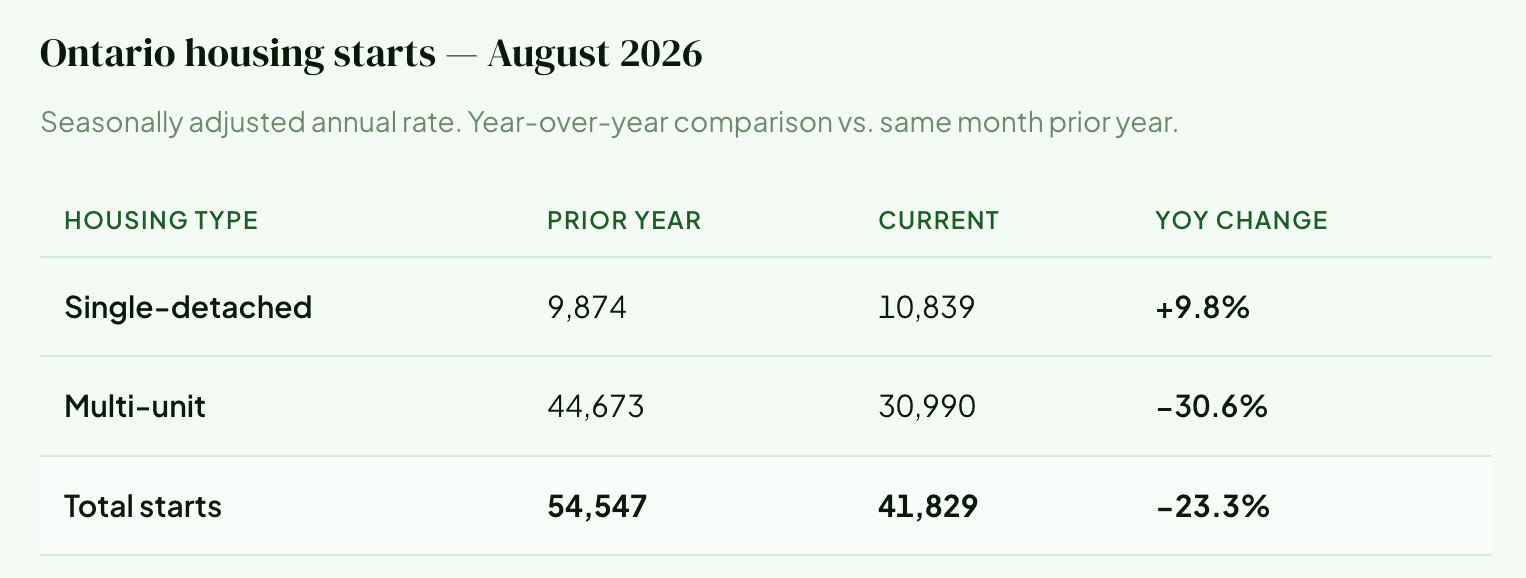
The latest Canada Mortgage and Housing Corporation (CMHC) data show Ontario’s total housing starts fell 23 percent year-over-year on a seasonally adjusted annual rate (SAAR) to 41,829 units in August this year, marking the fourth consecutive monthly decline. (Data: CMHC, Table: Modular Homes 400)
In August 2023, reports by the provincial integrity commissioner and auditor general revealed PC officials created a process favouring developers with close party ties.
Auditor General Bonnie Lysyk noted the Ford government, in its “haste” to build, failed to leverage “the expertise of provincial experts in land-use planning, Indigenous communities, or the municipalities and conservation authorities that would have to address the impact of the changes”.
“Direct access to the Housing Minister’s Chief of Staff resulted in certain prominent developers receiving preferential treatment,” Lysyk said in her report.
The rushed and opaque process heavily favoured a small group of well-connected developers—who stood to make an estimated $8 billion or more from Ford’s largesse.
“About 92 percent of the approximately 7,400 acres ultimately removed from the Greenbelt are five land sites put forward by two developers (which included a land site associated with a third developer) who had access to the Chief of Staff in September 2022,” she highlighted.
Ontario’s Integrity Commissioner, J. David Wake, found the housing minister at the time, Steve Clark, violated sections 2 (conflict of interest) and 3(2) of the Members’ Integrity Act, 1994, by failing to oversee his chief of staff, Ryan Amato.
The same investigations found that government staff had used personal devices and accounts to communicate information related to the Greenbelt decision-making process, rather than relying exclusively on official channels.
In January, Amato challenged an order by the Information and Privacy Commissioner of Ontario (IPC) requiring him to search his personal email for Greenbelt-related records and testify under oath about them.
On August 30, 2023, Commissioner Wake had also formally recommended that Queen’s Park issue a reprimand against Clark. As of now, he has never been reprimanded.
Five days later, Clark resigned as the housing minister only to be promoted immediately to one of the most powerful positions in the legislature—Government House Leader—by June 2024.
In September 2023, the former government House leader, Paul Calandra, tabled a motion that the “Legislative Assembly accept the report of the Integrity Commissioner” and “approve the recommendation contained therein”.
The motion was never scheduled, debated or voted upon.
On October 7, Liberal Member of Provincial Parliament for Don Valley East, Adil Shamji, sent a letter to Clark calling for a motion on his pending reprimand to be reintroduced when the legislature resumes after an extended 21-week summer break and be debated promptly.
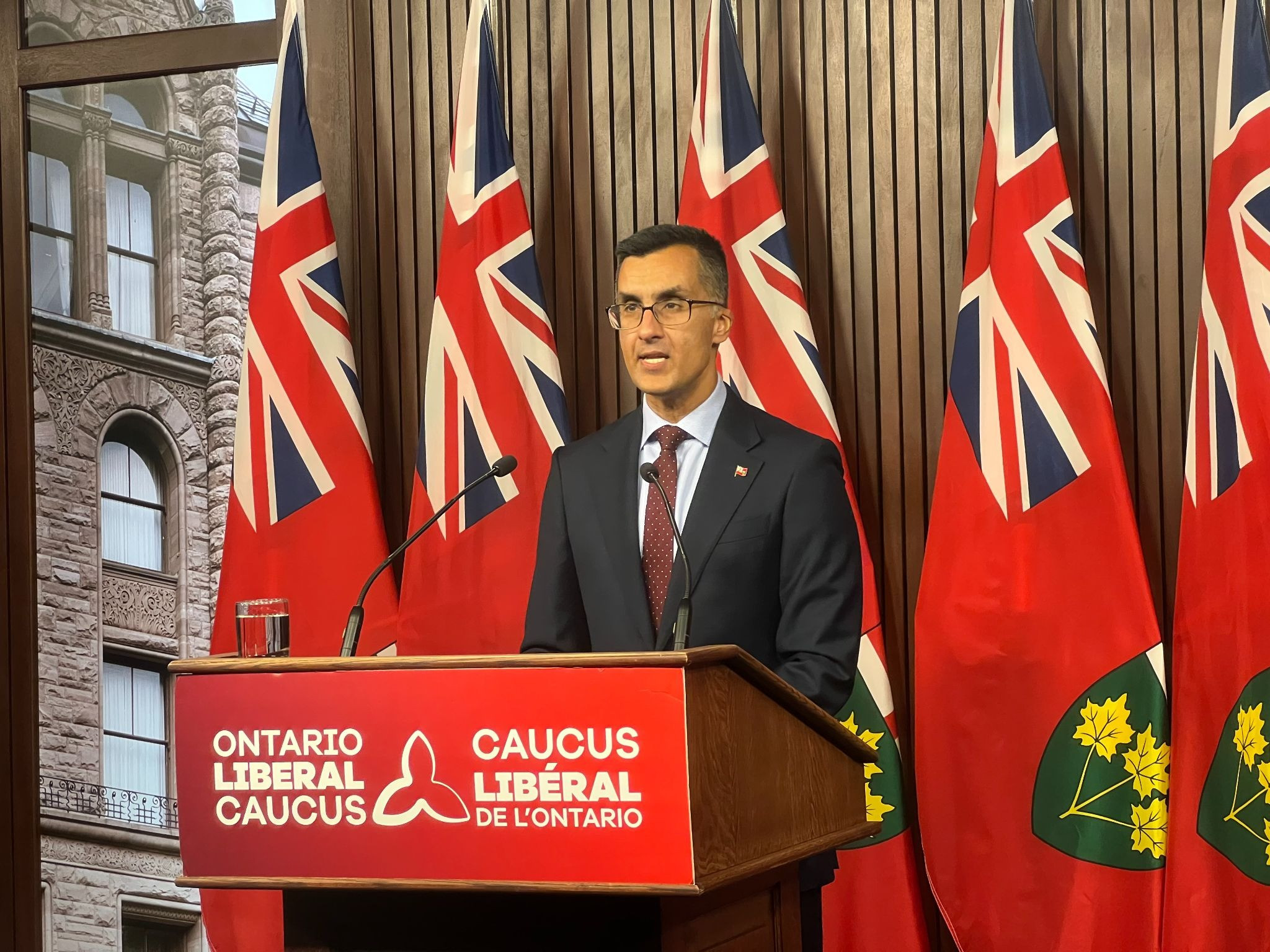
On October 7, Liberal MPP Adil Shamji wrote to Steve Clark calling for the long-pending motion to reprimand him, recommended by the Integrity Commissioner, to be reintroduced and debated when Queen’s Park resumes on October 27. (Anushka Yadav/The Pointer)
Acknowledging the “ironic twist” that it is Clark who controls whether the debate occurs, Shamji warned that he will “table a motion to the same effect” if it is not introduced within the “first week of the next sitting” at Queen’s Park.
“If Mr. Clark feels that he cannot schedule this because he is the subject of that motion, then the deputy government house leader should do so,” he added.
While the government should introduce the motion because only a government motion can be binding, Shamji said a non-binding private member’s motion would still carry “symbolic” weight by showing that recommendations from the Integrity Commissioner “cannot be simply discarded”.
“No one should be above the law,” Shamji said during a press conference.
The Pointer reached out to Clark’s office for a statement but did not receive a response.
Ontario Green Party Leader Mike Schreiner said he “would support efforts” to ensure those responsible for the Greenbelt scandal are held accountable and “the public is fully informed on what happened”.
“It’s one of the reasons why I continue to call on the RCMP to complete its investigation and be transparent with the people of Ontario around what did happen,” he told The Pointer.
The RCMP investigation’s results are still pending. The findings were expected in the spring of 2025, prompting Ford, as many speculated, to call an early election last year, positioning himself as an anti-Donald Trump crusader…and simultaneously getting ahead of the investigation’s conclusion. If that was his real motive, it was not necessary—they say the Mounties always get their man…the entire province is still waiting.
“It does seem peculiar to me that the criminal investigation has continued for as long as it has, and it certainly makes me wonder that there are a lot of stones that are left unturned,” Shamji said.
An RCMP spokesperson, Owen M., confirmed there are “no updates” at this time.
Ahead of the provincial election, The Pointer also uncovered a troubling pattern of delays and evasions by the Ford government in response to Freedom of Information (FOI) requests related to the Greenbelt scandal, with multiple requests, particularly those seeking documents on the removal of 15 parcels of protected land, either denied outright or delayed past the February 27 timeline, despite legislation requiring timely public access.
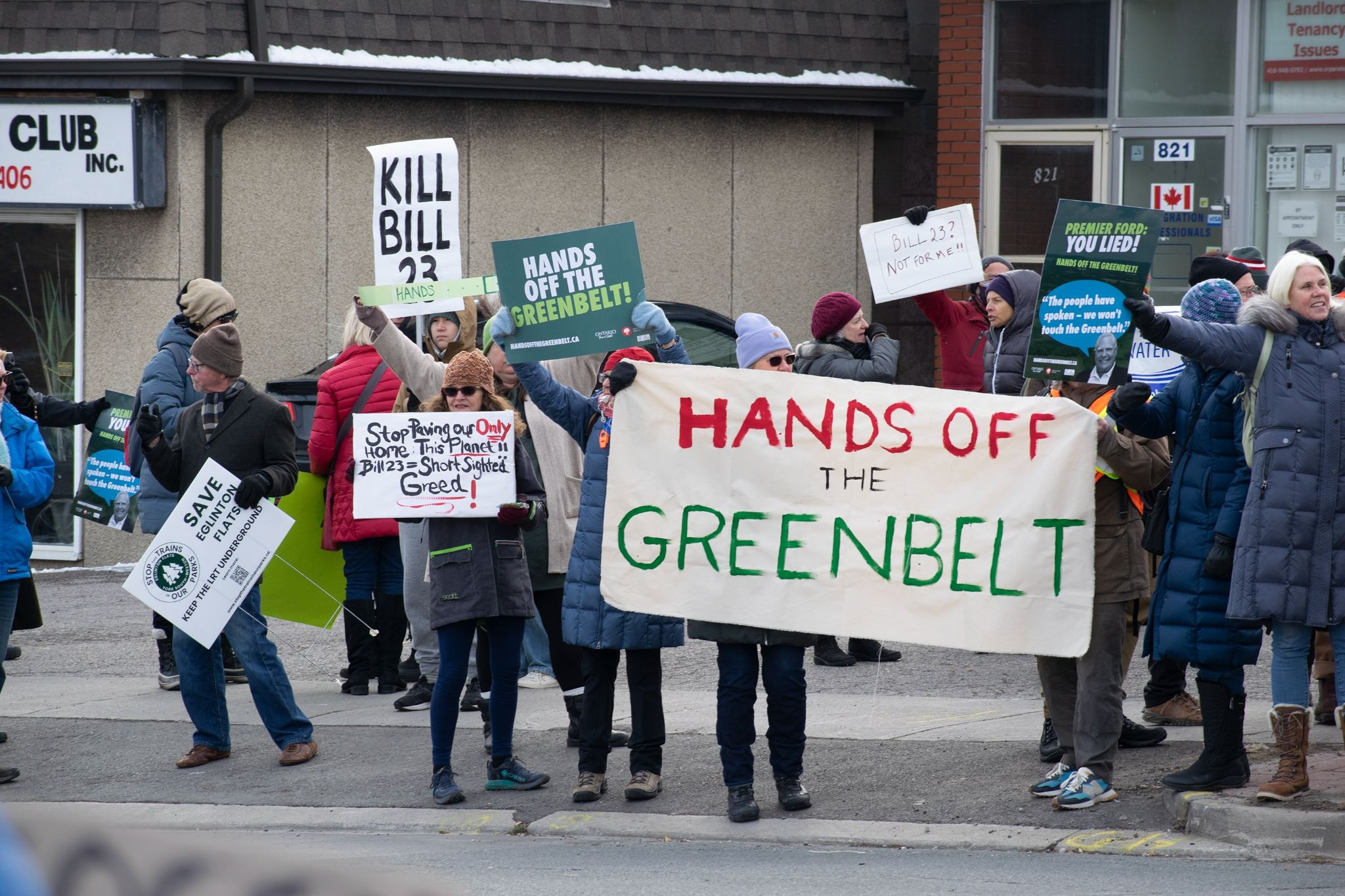
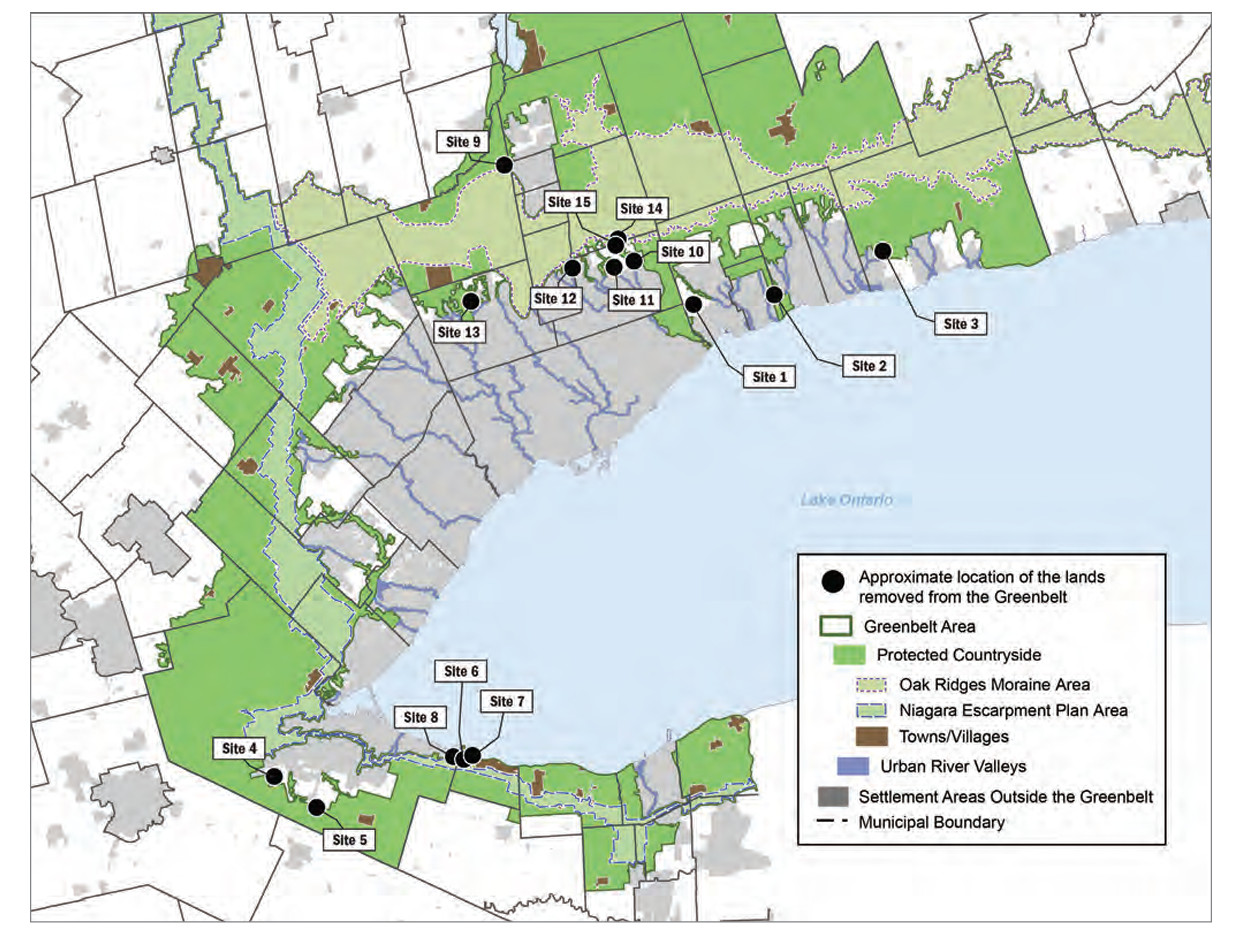
The 15 parcels of land removed from the protected Greenbelt by the Progressive Conservative government in 2022. (Photos: Alexis Wright/The Pointer, Map: Environment Registry of Ontario)
The Cabinet Office initially indicated it would partially release key documents before reversing course and issuing a full denial, as other requests involving senior officials, including Secretary of Cabinet Michelle DiEmanuele, remained unanswered even when findings from the Auditor General and Integrity Commissioner directly contradicted claims by Ford and Clark that they were unaware of the land selections, with internal notes suggesting both had significantly more involvement than acknowledged.
“It seems completely implausible that this whole scheme was dreamed up without political direction from the most senior levels,” Doyle said.
When asked if Shamji would commit to reversing the FOI changes that are stonewalling Greenbelt accountability attempts, he said they were an “affront to the accountability and transparency that all Ontarians deserve”.
He argued that subsequent directions to halt or delay the processing of FOI requests showed a government unwilling to face scrutiny.
“Freedom of information rules should be reversed, so that we can find accountability and transparency not just on the greenbelt, but on so many of the other scandals that are literally unfolding before our eyes,” he added.
Ontario is also months behind on its legally required 10-year review of the Greenbelt Plan despite legislation mandating it begin in February.
In June, internal documents, obtained by CBC, revealed civil servants urged municipal affairs and housing minister Rob Flack to launch it immediately after Ford’s third-term win. The process was not formally underway as of late March, and the advisory Greenbelt Council was effectively defunct, staffed by only one member and lacking a chair.
It was rumoured that the government would quietly announce the start of a Greenbelt review sometime in September, beginning with a preliminary consultation on how the process should be conducted, but no announcement had been made yet.
“The greenbelt’s working pretty well. So, I don’t think there’s a big threat to it from the review not occurring,” Doyle said.
The greater concern is the failure to move forward with expanding the Greenbelt, particularly to extend its protections to farmland, natural areas and water resources beyond its current boundaries—and the Duffins Rouge Agricultural Preserve (DRAP), also known as the Crown Jewel of the Greenbelt, serves as a cautionary tale of what can unfold when the remaining green spaces are left vulnerable.
In the early 1970s, the province expropriated agricultural lands in Pickering and Markham as part of plans for a proposed airport that was never built.
Following two decades of public advocacy, Ontario announced plans to protect 12,000 acres of the Rouge Valley as a natural heritage park and another 8,000 acres as an adjoining agricultural preserve.
By 1995, the province had decided to permanently protect the agricultural status of the Pickering preserve by keeping development-related property rights out of private hands when the land was transferred to farmers and tenants.
Four years later, the province, Durham Region and the City of Pickering signed a legal agreement committing to the continued agricultural and natural use of the land wherein agricultural easements were registered on title in perpetuity, binding future owners and keeping development rights out of private hands. The limited rights transferred to farmers were reflected in land prices of roughly $4,000 an acre.
The arrangement later came under scrutiny after agriculture-only parcels began being acquired by companies that purportedly acted as landlords for tenant farmers. Media reports brought to light that companies owning 24 properties in the preserve listed real estate developer Silvio De Gasperis as a director and the properties were purchased for a total of $8.6 million.
To add a further layer of protection to the roughly 4,700 acres, the Duffins Rouge Agricultural Preserve was added to the Greenbelt by 2005 but some of those protections were challenged after the City of Pickering moved to release easements it had been entrusted to hold.
As a result, the Government of Ontario used a Minister’s Zoning Order to create the Central Pickering Development Plan and passed Bill 16, the Duffins Rouge Agricultural Preserve Act in December, reinstating the easements and solidifying the legal and planning measures designed to keep DRAP in agricultural and natural use.
That same year, the preserve was added to the Greenbelt under the government of Premier Dalton McGuinty.
In December 2022, the day after the municipal election, the Ford government removed Duffins Rouge from the Greenbelt. Soon after, the province announced its intention to repeal the Duffins Rouge Agricultural Preserve Act in its entirety.
However, intense public backlash led the PCs to reinstate DRAP and return to the Greenbelt when the Greenbelt Statute Law Amendment Act came into effect on December 6, 2023.
While some areas have been shielded from developer invasion, there are others that have been stripped of any legislative defense: the repeal of the Growth Plan in 2024 left roughly 80 percent of the Greater Golden Horseshoe outside the Greenbelt without a provincially specific protection policy.
“So there’s a big threat with not moving forward to expand it [the Greenbelt],” he noted.
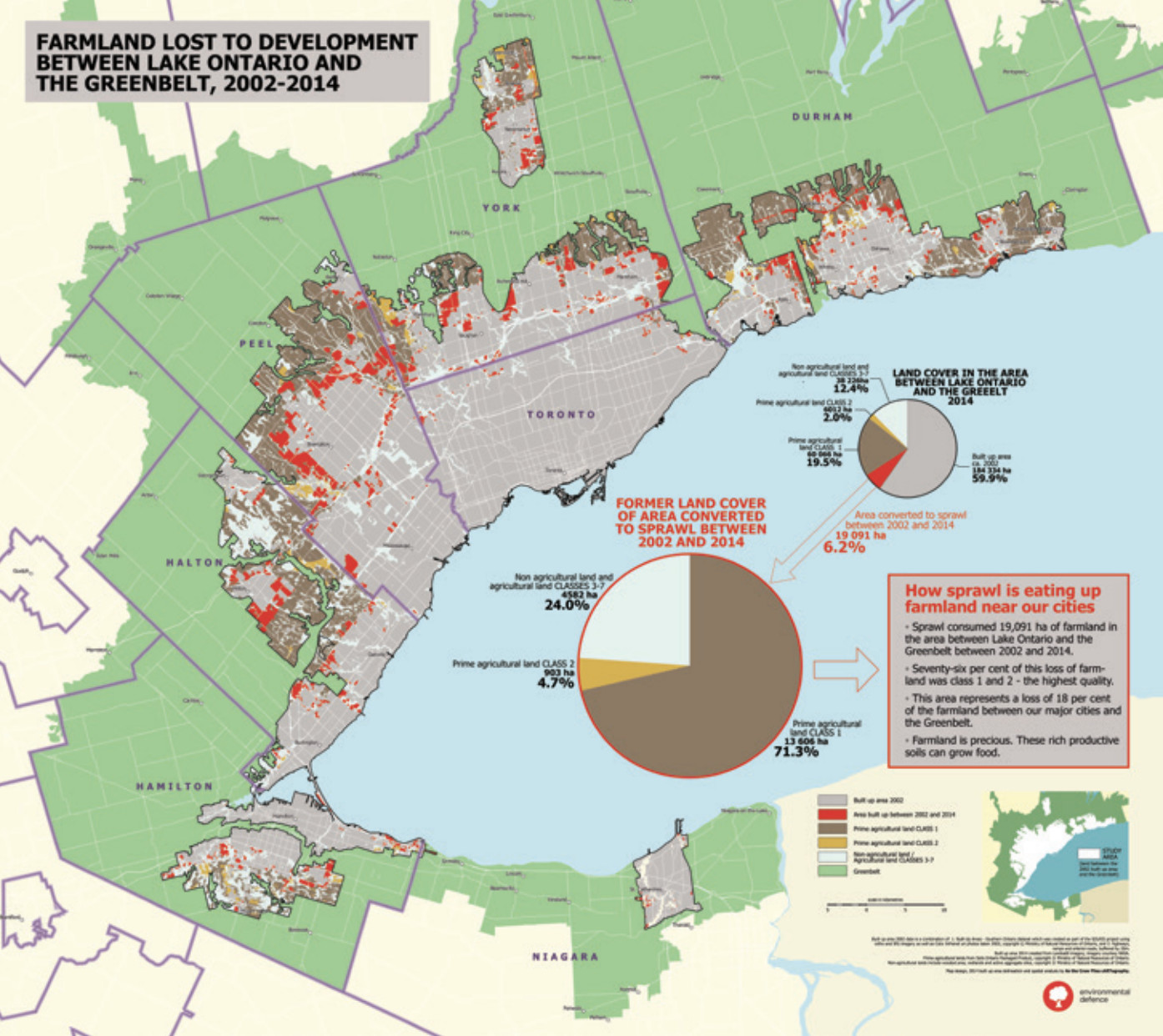
Between 2002 and 2014 alone, Ontario lost 18,978 hectares of the best farmland (Class 1 and Class 2) between Lake Ontario and the Greenbelt. Without the Greenbelt, the province would have lost an estimated quarter million acres of fertile farmland by 2031 to sprawl development. (Dumb Growth to Smart Growth/Environmental Defence)
Schreiner agrees the review is vital to strengthening Greenbelt protections and ensuring it can continue to provide the environmental and agricultural benefits Ontarians rely on.
“I would like to see it updated and in a way that ensures that we have the policies in place to make sure we protect the integrity of the Greenbelt,” he said, pointing to Highway 413, the Bradford Bypass and “development pressures on waterways in and around the Greenbelt”.
“The review is an important way to make sure that we have a policy and framework in place that protects the benefits and services the Greenbelt delivers for people.”
While Schreiner has not yet decided whether he will take any further action to push the review forward, he has vowed to “continue to advocate with the minister” when the legislature is back in action.
Doyle believes it would be “really useful” to have the outcome of the police investigation before any review takes place, arguing that if it finds inappropriate or illegal activity, it would strengthen the case for “a completely independent, evidence-based review” of the Greenbelt.
“The review should be conducted by objective third parties of the Greenbelt rather than some in-house job that the government has shown it’s capable of doing by just telling the civil service to do whatever it wants,” he added.
Email: [email protected]
At a time when vital public information is needed by everyone, The Pointer has taken down our paywall on all stories to ensure every resident of Brampton, Mississauga and Niagara has access to the facts. For those who are able, we encourage you to consider a subscription. This will help us report on important public interest issues the community needs to know about now more than ever. You can register for a 30-day free trial HERE. Thereafter, The Pointer will charge $10 a month and you can cancel any time right on the website. Thank you.
Submit a correction about this story

