
‘A terrible decision’: PM Carney set to open Canada’s four largest airports to private investment
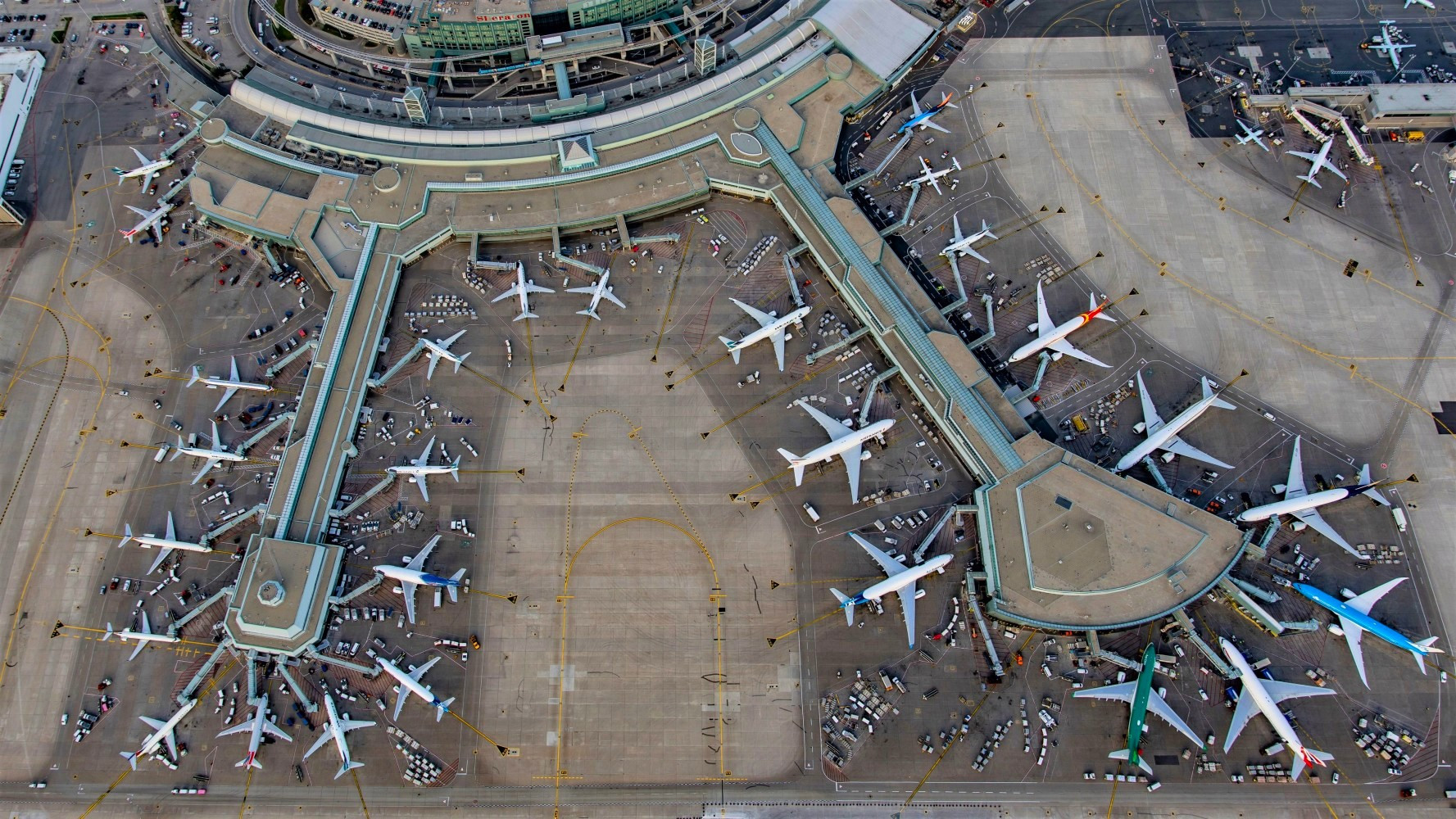
Canada’s busiest airports could soon become laboratories for a new model of private investment as Prime Minister Mark Carney moves to hand decades-long operating concessions for those airports to private capital—a plan that is sparking questions about customer service, security for airport workers and impacts on municipalities that depend on the country’s largest aviation hubs.
In his first budget, Carney hinted his government is considering changes to the ownership structure of airports across the country to “unlock more of the economic potential of Canada’s airports and consider new ways to attract private sector investment”.
On September 15, a day after hundreds of protestors voiced opposition to the first-ever Canada Investment Summit and Carney’s focus on attracting private capital, with few explanations of how this would be controlled, the Prime Minister announced plans to open the four largest aviation centres, including Toronto Pearson Airport, Montréal-Trudeau International Airport, along with Calgary and Vancouver airports, to private investment.
“The experience is that customer service is improved, efficiencies are found. We, as a government, will be able to get tens of billions of dollars in proceeds from this process that we, as I said earlier, will reinvest in our regional airports,” he said during a press conference.
“Canadians will benefit directly.”

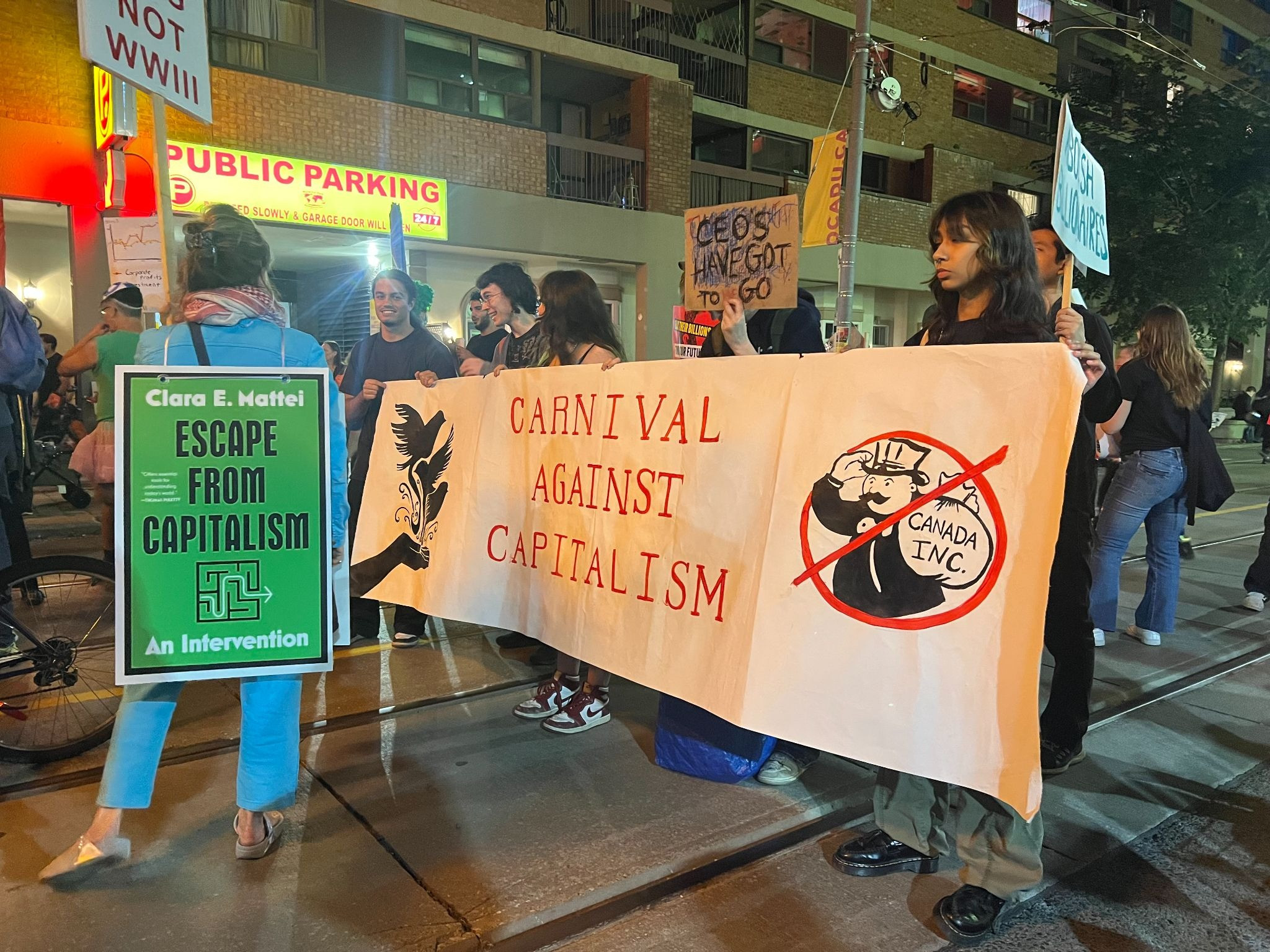
On September 14, as Prime Minister Mark Carney opened the doors to more than 100 of the world’s largest investors, pitching 167 projects including airports in a bid to secure $1 trillion in investment over the next five years, more than 2,000 protesters faced a sea of police presence from the Ontario Provincial Police, Toronto, Peel, Durham and York forces. (Anushka Yadav/The Pointer)
Rather than selling the underlying airport land and assets outright, the government intends to allow private operators to take on the airports through long-term concession arrangements while the federal government retains ownership of the underlying assets.
Airport privatization can take several different forms.
In a legal analysis by Gowling WLG, they describe privatization as a spectrum ranging from a complete sale of an airport to arrangements where governments retain ownership while private companies operate facilities for a set period for long-term leases or concessions. For example, a private operator may run, maintain, finance, and invest in public infrastructure, in this case the airport, while the government retains ownership of the underlying assets.
Carney’s proposal falls into that concession category rather than a straightforward sale of the airports. Carney said the government was not looking to privatize the airports in the sense of giving up ownership but instead wanted private operators to manage them for periods measured in decades under government oversight. The federal government will retain ownership in the concessions through the Canada Strong Fund so Canadians could benefit if the value of the airports increased.
Managing partner at YYZ Law Ehsan Monfared said his main question is not about who operates the airports, but whether the arrangement can create meaningful competition where competition is actually possible and doesn’t lead to mega-monopolies.
“There is the possibility of doing privatization in a way that it creates competition but then you need to go through and separate out the elements of an airport which are naturally monopolistic so there’s nothing that can compete with them on the airport or the airfield versus those elements that don’t necessarily have to be monopolistic,” he noted.
The government would need to distinguish between infrastructure that naturally functions as a monopoly and services where competing providers could realistically operate. He is concerned that simply transferring operations to private capital might not automatically create a competitive market.
“If they must and I don't think it's a good idea, then they should do it in a way that separates out and privatizes only those elements of the airport which are not subject to a natural monopoly and that they can actually benefit from competition,” Monfared said.
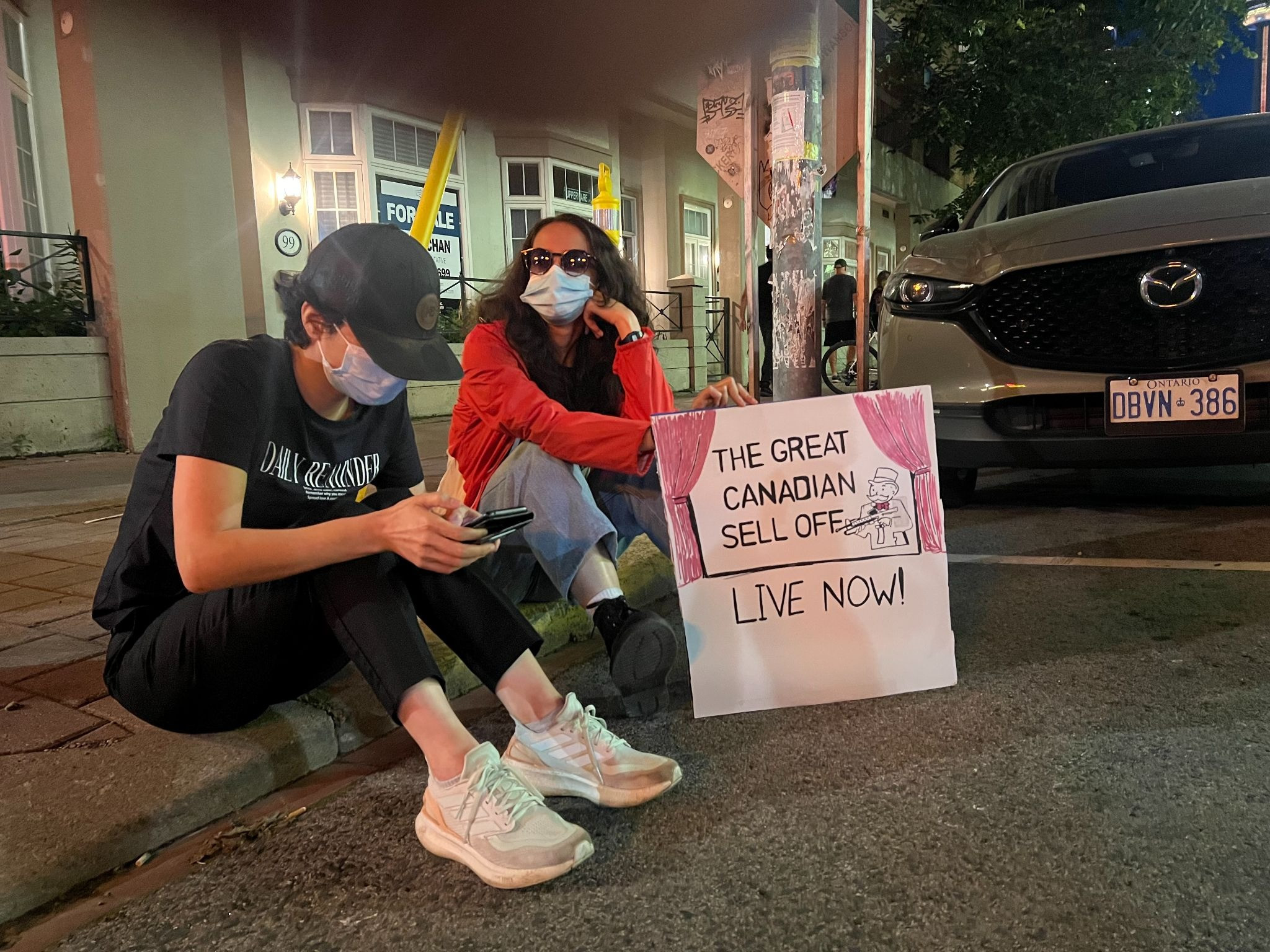
Critics like Ehsan Monfared worry there would be no net positive from airport privatization as consumers would likely deal with higher airfare prices and less employment within the airport as investors would look to find avenues to cut costs. (Anushka Yadav/The Pointer)
Airport privatization is not a new conversation and has been implemented in other parts of the world for years, though it hasn’t always benefitted the consumer.
A March 2019 report from the Australian Competition and Consumer Commission (ACCC) examined four of Australia’s largest airports: Sydney, Melbourne, Brisbane and Perth airports, focusing on their market power and the regulatory framework surrounding them. The major airports had strong natural-monopoly characteristics and therefore faced little competition in providing aeronautical services.
The ACCC reported that aeronautical revenue per passenger increased over the decade leading to 2017-18, with Perth recording a 61.5 percent increase; aeronautical profits also surged, ranging from 50.6 percent at Melbourne Airport to 133.4 percent at Perth Airport over that same period while Sydney Airport had accumulated more than $3.2 billion in operating profit from aeronautical services.
Charges at Australian airports were relatively high compared with some international airports operating under regulatory or government-ownership constraints, with consumers seeing higher airfare prices almost as soon as private investors started becoming more central to the operations.
The commission argued that monitoring alone could not necessarily prevent monopolies from using their market power to the detriment of consumers. It supported a system in which airlines could have access to arbitration when negotiations with airports broke down, describing commercial arbitration as a possible way of constraining airport market power without jeopardizing investment.
Australia stands as an example for Canada’s potential future because the four airports examined by the ACCC are also major aviation hubs operating under private ownership arrangements.
WLG noted that Australia uses 50-year airport leases as an example of the long-term concession model and identified Australia and the United Kingdom as jurisdictions where independent economic regulation has been used as part of the broader airport framework.
But according to Monfared, his concern for Canadian passengers is that if private operators are allowed to prioritize profitability without sufficient competitive safeguards, costs could eventually be transferred to travellers.
“If there’s going to be any increase in fares and costs, it's going to make Canada less competitive, less attractive as a destination and therefore it's going to backfire from a broader economic perspective,” he said.
The federal government has not guaranteed that passengers will not face higher costs.
Transport Minister Steven MacKinnon, in an interview with CTV, acknowledged that the operating model for the four airports would be regulated while fares and fees would only be partially regulated. When asked whether he could guarantee that airfare would not increase, MacKinnon said the government believed it could establish agreements that would reassure Canadians there would be no unjustified increases in relevant fees, but could not guarantee there would be no increase.
MacKinnon also said the government’s program would be designed to reward regional connectivity and that part of the investment would be directed toward improving air travel in Canada. He pointed to communities that lack sufficient service or infrastructure and said the government wanted to make regions and major airports more connected—a need that’s become more urgent with climate change.
This summer, as wildfires erupted through Canada, many First Nation communities that are only accessible through seasonal roads or airports struggled. On July 18, when Neskantaga First Nation Chief Gary Quisess had to evacuate his community members, they first travelled by boat to an airport about 12 kilometres away, only to wait nearly two hours after the aircraft scheduled to transport residents developed mechanical problems.
The government wants to take a shot at opening capital tied up in airport infrastructure while directing some of that money toward projects that may not attract private investment as easily.
Monfared wearily said that the reinvestment component could change the discussion, but only if the federal government provides a detailed and credible plan for where the money will go.
“They’ve indicated that they're going to reinvest in additional airport infrastructure, and I think that that component of it is really key because building out connectivity across Canada in the context of climate change [or] population growth is something that we also need to do and have in place so that we can spur additional economic activity in those secondary markets,” he added.
Regional airports could benefit if the government used the money generated from the major airports to increase capacity elsewhere: “Say they do significant investments in Hamilton and Ottawa and they expand those airports. Those kinds of things could work if they take the four to six billion dollars that they raised and spend it on extending runways and appropriating land expand current capacity at smaller or mid-sized regional airports, but they haven't really planned this out, and so consumers are paying more without a clear plan. Everybody should be concerned about it.”

If the Prime Minister's plan comes to fruition, funds raised from private investors could be used to directly fund improvements to airport infrastructure and extend or provide additional runway tracks, allowing additional investment in Canada’s busiest airports. However, some aviation lawyers worry private investment could lead to decreases in airport efficiency, jobs, and significantly higher airfare for consumers. (Toronto Pearson Airport)
The federal government would need to provide a much broader investment strategy before the aviation industry could potentially support the arrangement.
“If they have a clear, credible plan that redirects all the money raised into projects in regional airports across the country, say the top 20 to 25 regional airports, that sort of comprehensiveness of their plan that they need to put forward in order for industry to possibly be supportive,” Monfared noted.
The proposed shift would also represent a change from how Canada’s major airports have traditionally operated. According to WLG, Canada currently has 26 not-for-profit airport authorities operating airports across the country. The major airport authorities operate facilities on federally owned land through long-term ground leases, while the authorities themselves are private, not-for-profit, non-share capital corporations rather than Crown corporations.
Under the existing system, airport authorities are expected to operate with little or no public funding and generate revenues through activities surrounding the airports.
That existing financial structure is part of what makes the proposed change significant. WLG says the federal government would effectively be exchanging some recurring annual revenue for upfront payments, potential revenue-sharing arrangements and commitments to future capital investment. The structure of each concession agreement would therefore determine how the public benefits from the arrangement over the long term.
For municipalities located around major airports, the financial relationship is another part of the equation. Toronto Pearson (YYZ) provides a particularly relevant example because of its relationship with Mississauga, where the airport is located.
As it currently stands, and as previously covered by The Pointer, Pearson is operating under a payment-in-lieu-of-taxes (PILT) arrangement rather than paying conventional property taxes on the land it occupies.
The arrangement means the City of Mississauga receives payments connected to the airport’s passenger activity rather than standard municipal property taxation, with a five-per-cent cap on increases in Pearson’s PILT payments.
While the payments can fall without the same type of floor, increases after a decline are restricted to five-per-cent increments. Mississauga was facing an estimated $21.6-million reduction in PILT revenue in its 2022 budget as the effects of reduced air travel flowed through the payment system.
A year prior, in 2020, in the midst of the COVID-19 Pandemic, YYZ and Mississauga were closely connected economically, but the PILT system created severe financial pressures.
Before the pandemic, Mississauga was already more than $15 million short because of the airport-related financial relationship.
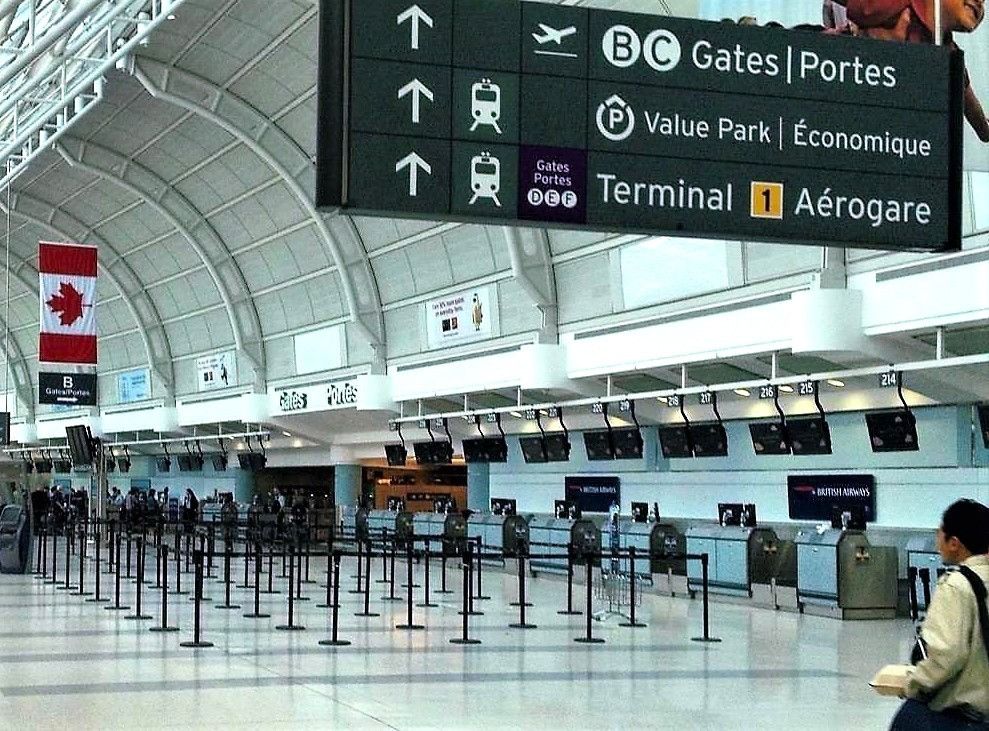
(The Pointer file photo)
The municipal implications matter because a change in the way Pearson operates could affect more than passengers and airlines. The airport’s financial relationship with its host municipality has historically been shaped by its special tax arrangement, while Mississauga provides infrastructure and services connected to the airport.
Research commissioned by Pearson in 2016 estimated the airport generated 332,000 jobs and that commercial spin-offs contributed to an economic impact of $42 billion. The airport currently supports 52,000 jobs.
Shortly after the Prime Minister’s announcement, a YYZ statement noted the airport would continue working with the federal government on the next steps while focusing on the airport’s role as an employment hub.
The GTAA also said its focus remained on operating Pearson safely and efficiently while continuing work connected to employees, Pearson LIFT and the airport’s role in Canada’s economy. The statement said Pearson would continue collaborating with the federal government to preserve the airport’s long-term economic value and meet passenger needs.
The question of employment is one Monfared believes deserves particular attention under a private operating model.
“They would actually see likely less employment, as the private capital would try to drive down their operating costs, not their revenue model. If you’re in Mississauga and it's a full privatization, you're likely to get less employment out of the airport directly,” he said.
The concern is not limited to the number of airport employees. Monfared also pointed to the role major airports play in supporting business activity that depends on access to aviation.
“As it stands already, business aviation has a hard time accessing these major airports and business aviation moves decision makers between places where they have factories, processing centers, where they have thousands of employees, and so privatizing it and making it making profitability the top-tier motive essentially hurts everybody, including the government itself, where its interests are to spur further economic growth and development,” he noted.
That issue raises another question about the meaning of competition in the airport sector. An airport can potentially face competition from another airport in some circumstances, but the physical and geographic characteristics of aviation infrastructure can limit the ability of one facility to substitute for another.
“This would be a different discussion if Billy Bishop had been fully expanded and was able to service jets and now you had two proximate airports that could compete with each other for the GTA attachments area, but other than maybe signalling to global investors that ‘hey Canada's open for business,’ I don't really see any other incentive or value,” Monfared said.
The Australian experience also illustrates the challenge of treating airports as though they operate in ordinary competitive markets. In its 2019 submission, the ACCC argued that the major Australian airports exhibited strong natural-monopoly characteristics in aeronautical services. It also questioned whether existing monitoring arrangements were sufficient to constrain the airports’ market power.
The commission said the fact that airlines had reached commercial agreements with airports did not necessarily demonstrate that market power was absent. It argued that airlines could have limited alternatives when dealing with an airport that controls essential infrastructure, meaning an agreement itself did not necessarily establish that the terms were competitive.
The Australian regulator’s concerns extended to parking and landside services as well. The ACCC said those services could involve locational advantages, but argued that this did not make it possible to simply conclude that high prices did not reflect market power.
For Canada, the regulatory structure will therefore be one of the most important unresolved pieces of the federal plan. WLG said Canadian airports currently operate without formal economic regulation, with airport authorities setting their own fees under federal transparency requirements. A move toward private operation would require the government to decide how economic terms such as charges, service quality, capital investment and consumer protections would be overseen.
The legal analysis identifies three broad approaches that could be used. A price-cap system could establish maximum charges that are periodically reset, a rate-of-return model could allow operators to recover costs along with a regulated return and a contractual model could instead build pricing and service requirements directly into the concession agreement.
Each approach would create a different relationship between the government and private operators. WLG noted that independent regulation could provide continuing oversight but would require a new institutional structure, while contractual regulation could provide greater certainty at the beginning of a concession but become less flexible over a period that could last decades.
The transition would also have to account for the airport authorities already responsible for operating the four facilities. WLG said those authorities have managed their airports for more than three decades and have developed operational expertise and relationships with stakeholders. The firm said the authorities should have a meaningful role in the consultation process as the government develops the new system.
The federal government has indicated that Transport Canada will retain regulatory authority over aviation safety, security and operational standards. The economic side of regulation, however, remains a more complicated issue, particularly around how charges and service standards would be controlled over concessions that could last for decades.
That long-term horizon is meaningful because the government is not simply looking for an operator to manage an airport for a few years. Under a concession, the private operator would assume responsibility for operating, maintaining, financing and investing in public infrastructure for a defined period. The agreement would therefore have to establish investment requirements, service expectations, risk allocation, revenue arrangements and what happens when the concession ends.
The financial incentive for private investors would come from the airports’ commercial potential. WLG continued to note that airports generate revenue not only from aviation activity but also from areas such as real estate, cargo and logistics, retail, hospitality, parking, transportation, advertising and technology.
That creates a potential tension at the heart of the federal proposal: the same commercial opportunities that make airports attractive to investors also create questions about how much of that value should accrue to private operators and how much should remain available to the public. Monfared argues that the government risks gaining a large payment at the beginning of the concession while giving up greater value over time.
“If the government goes ahead in actually privatizing these airports, they're going to be able to raise some money up front and then consumers are going to pay far more over the course of that period of privatization,” he predicts.
“It would be a terrible decision for Canada to privatize its four major airports. Those are such economic generators for [the] provinces that they're in.”
The potential consequences extend beyond the airports’ immediate operating budgets. Pearson demonstrates how closely a major airport can be connected to its surrounding municipality, while the federal government’s own stated objective for the concession model is to use proceeds to support infrastructure and regional connectivity elsewhere in Canada.
According to Monfared, the success or failure of the plan will therefore depend on what happens to the money generated from the four major airports and whether Canadians can see tangible benefits from the transaction.
The federal government has not yet provided all of the details of the operating framework. MacKinnon said more information would be released in the weeks and months following the announcement, including details about how the model would be implemented.
That leaves several questions unresolved: How will private operators be selected? What conditions will be attached to their concessions? How will passenger fees be controlled? What employment protections will exist? How much money will be raised initially? How will revenue be shared afterward? And how will the government ensure that promised investments in regional airports actually take place?
Monfared’s preferred outcome would involve a structure that creates actual competitive opportunities rather than simply replacing public or not-for-profit management with private management.
“The completion model will make it so that either that cost will reduce or cost [will] stay the same and the value proposition actually increases,” he estimates.
The proposed regional investment is the part of the plan that could provide a broader national benefit, but only if it is sufficiently detailed to show Canadians where the proceeds will go.
As consultations move forward, the eventual agreements will determine whether the plan functions primarily as a new source of capital, a change in how airports are operated, or a broader restructuring of Canada’s aviation system. The answer will ultimately depend on the rules governing prices, competition, investment, employment, and the public return from the four airports.
Email: [email protected]
At a time when vital public information is needed by everyone, The Pointer has taken down our paywall on all stories to ensure every resident of Brampton, Mississauga and Niagara has access to the facts. For those who are able, we encourage you to consider a subscription. This will help us report on important public interest issues the community needs to know about now more than ever. You can register for a 30-day free trial HERE. Thereafter, The Pointer will charge $10 a month and you can cancel any time right on the website. Thank you
Submit a correction about this story

