
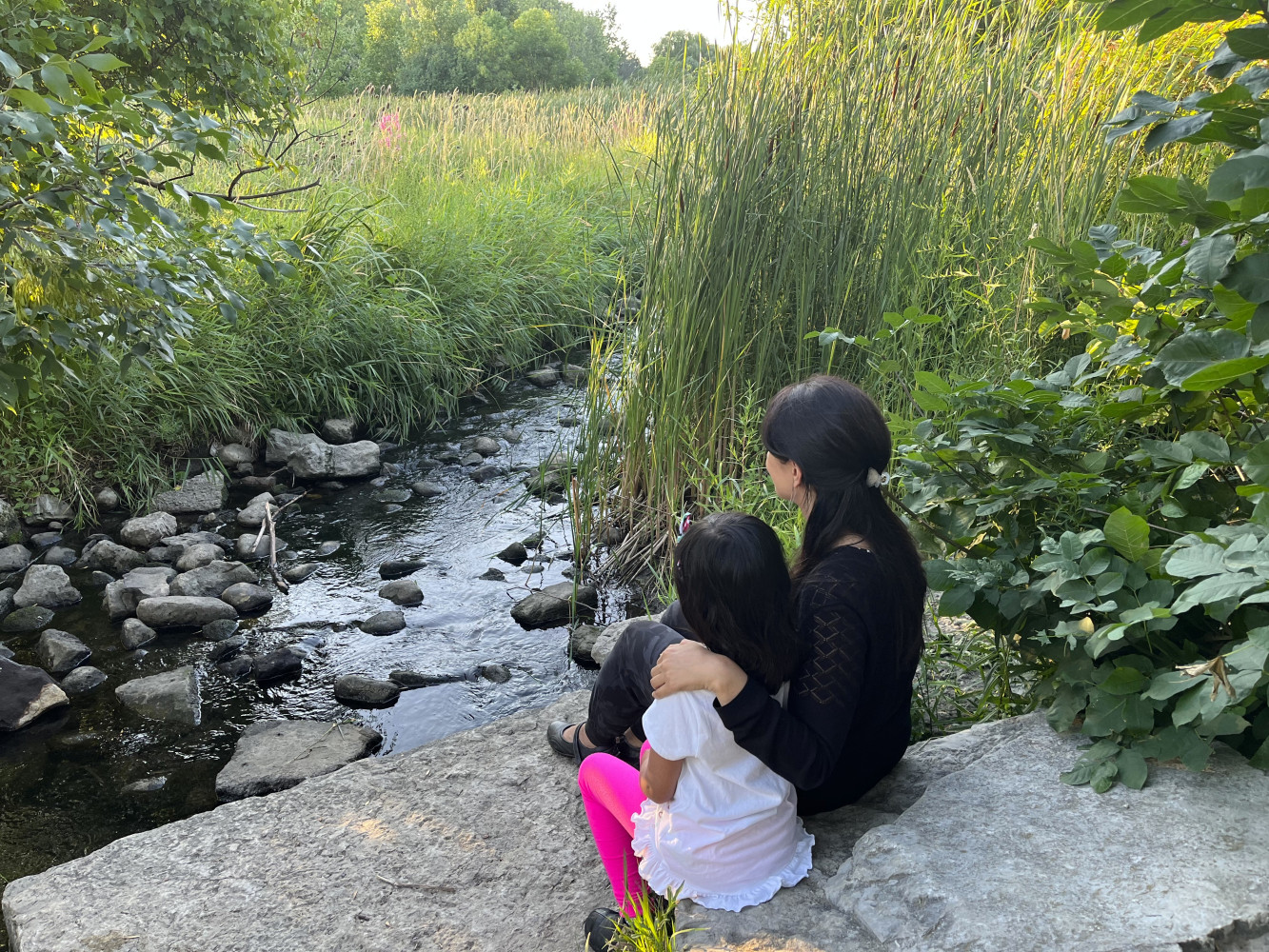
Mississauga tween, mother on a mission to protect Osprey Marsh
In the middle of the pandemic, as four-year-old Iyah’s parents drove her to their new home in Mississauga, her eyes caught a sea of fall-tinted trees sheltering a gigantic mural of animals at a park; a place that would become a “blessing” she set out to protect seven years later.
“It was impossible to miss it,” Iyah told The Pointer.
When the family of three moved into the Lisgar neighbourhood in the fall of 2020, the world outside felt “quiet and strange”. Schools were closed, activities had been cancelled and, with no family nearby, there were few places for them to go.
“But one place near our home was always open,” Iyah said, remembering the beautiful park she had observed on the first day of moving.
“Osprey Marsh.”
She asked her mother, Jenna Evans, if they could visit.
It did not take Jenna long to say yes. It had been a few weeks of unpacking and decorating the space; she thought she could use a break. After all, she loved nature herself and the marsh was only a 10-minute walk away.
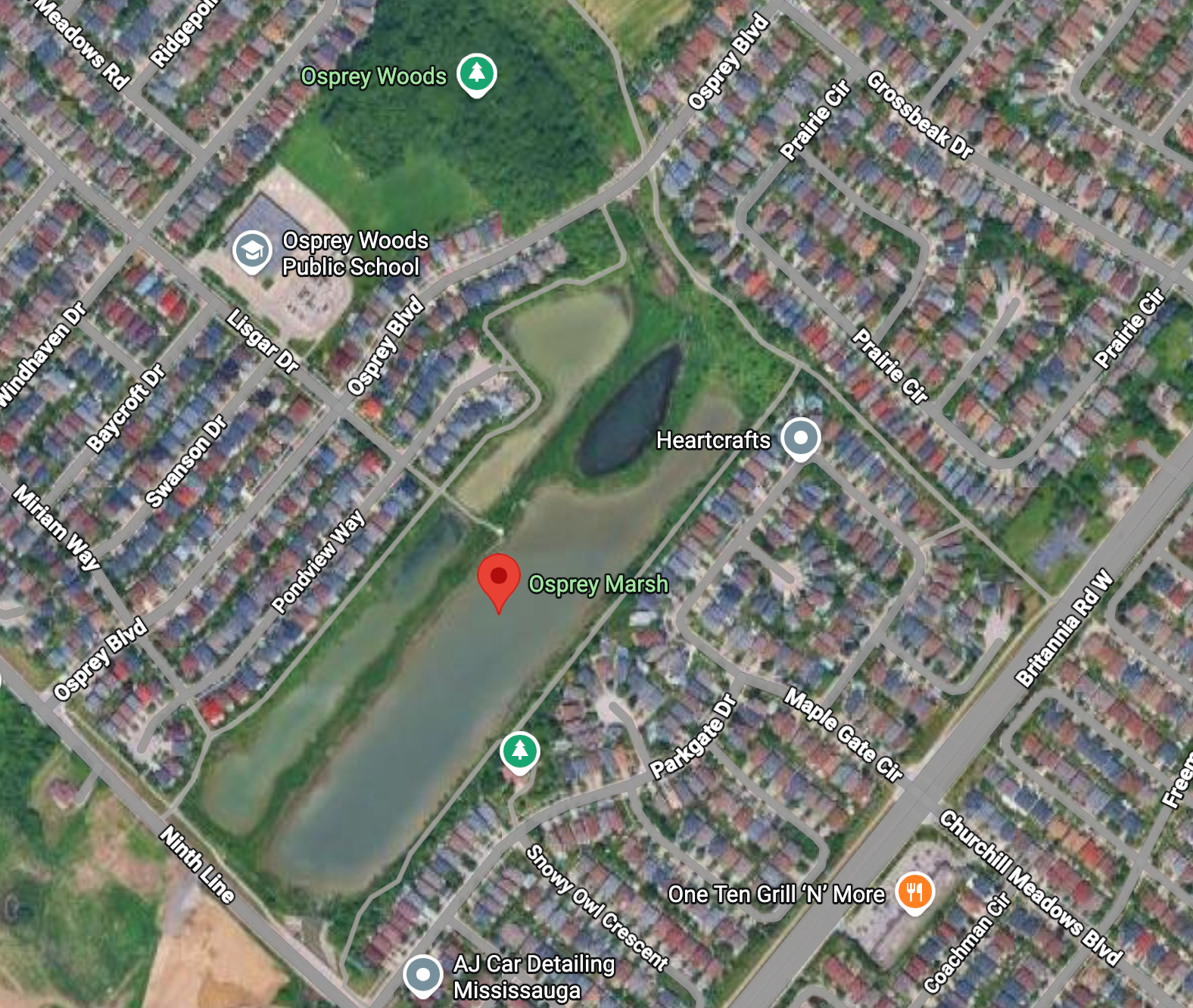
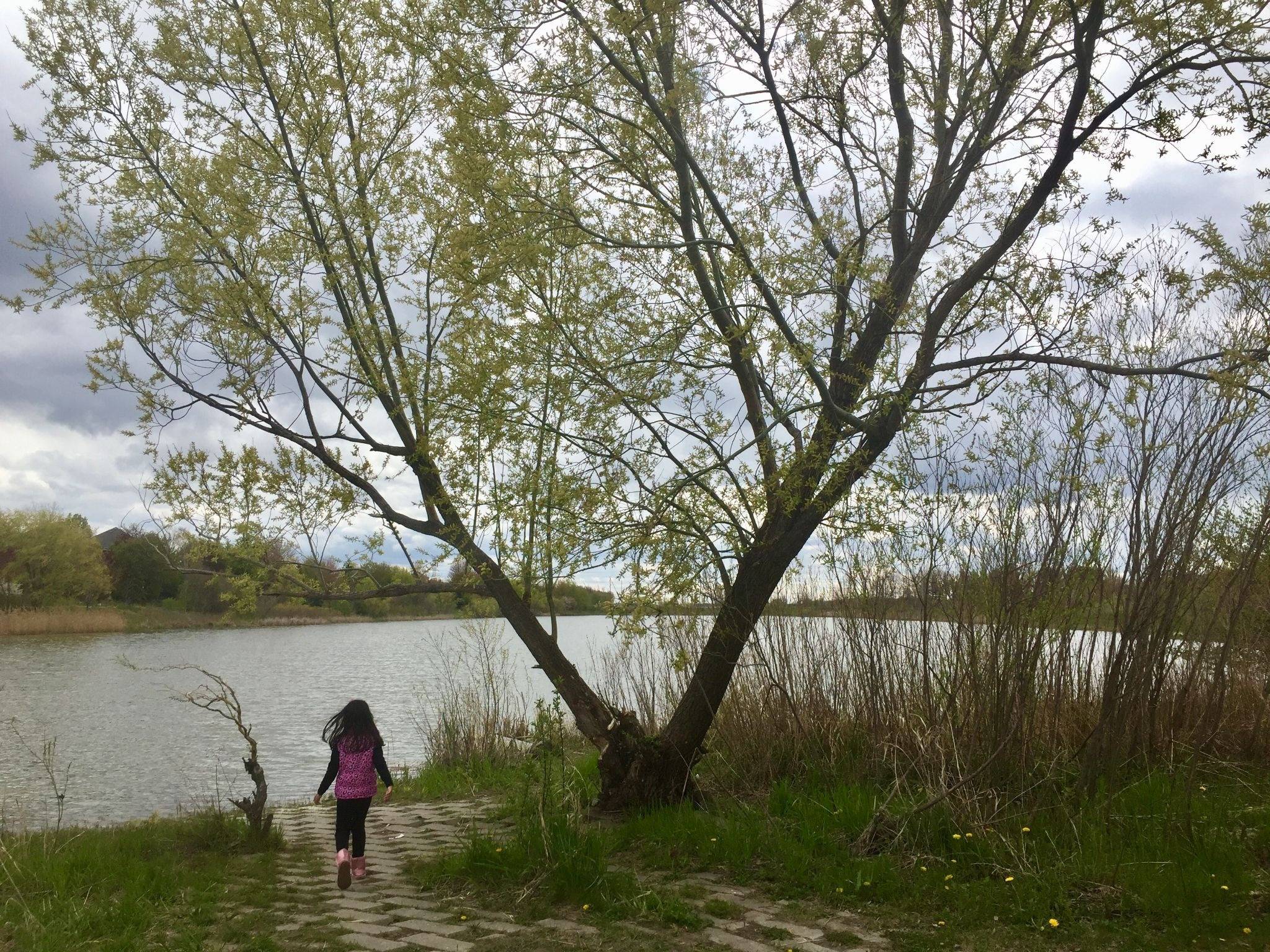
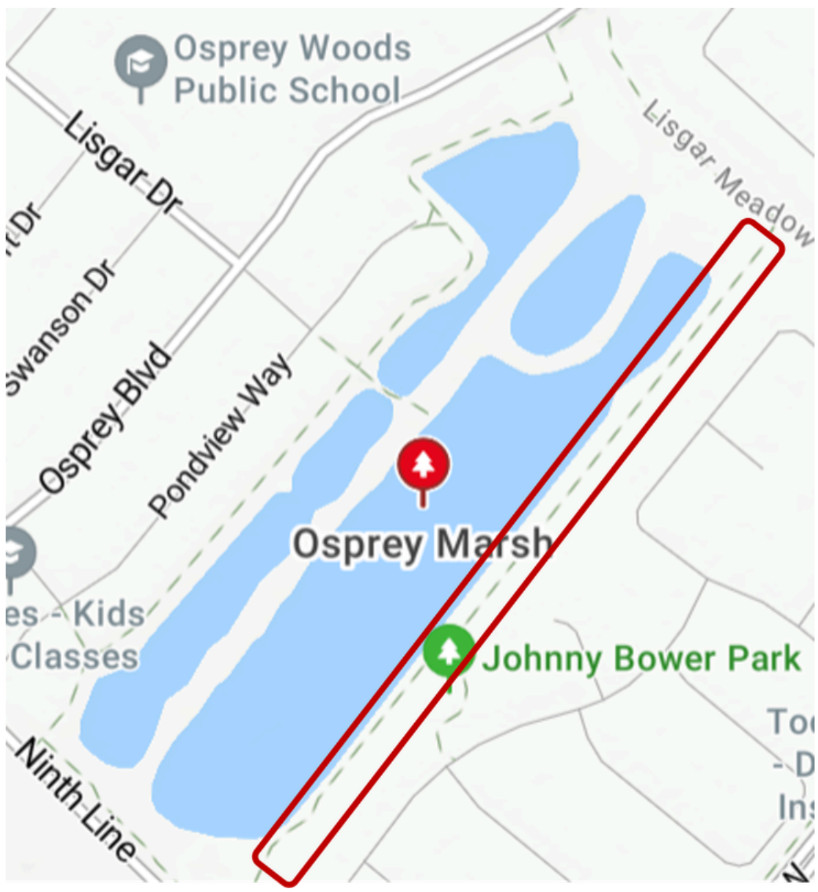
Osprey Marsh is located in the northwest corner of Mississauga (north of the intersection of Ninth Line and Britannia Road West) in the Lisgar neighbourhood. (First: Google Maps, Second: Supplied/Jenna Evans)
When mother and daughter finally made their way there, the place was even more striking up close. Amber and auburn leaves carpeted the ground while the animals on the giant mural turned out to be species found right there in the green haven.
“And then, we just kept going back,” Jenna told The Pointer with a big smile.
It was the start of a “close relationship” that would outlast the pandemic.
They wandered through the marsh two or three times a week — sometimes “every single day,” spending “at least an hour” — to “collect leaves and flowers” to do crafts with.
“It was so fun,” Iyah’s eyes lit up as she looked at her mother.
“There are ducks. It’s cool to watch them and listen to the water.”
As they traversed trails that did not even appear on the official paths, Jenna found herself becoming a kid with Iyah as the two climbed over rocks, crossed stretches of water and discovered hidden streams.
“It’s kind of hard to explain because even on the map, it won’t show you the true depth of the space,” Jenna said.
“There was so much to explore that was new each time we went…”.
As the warm memories came rushing back, Iyah’s face lit up, eager to recount the first time she came face-to-face with a great blue heron, just over a year after moving into the neighbourhood.
“There’s this really beautiful blue heron that lives at the marsh,” Iyah said.
“One day I got so close to it, and it was amazing.”
The large, tall wading bird with a dagger-like bill became one of her favourite reasons to return to the marsh. She felt lucky to observe the heron up close as it stayed put longer at each encounter.
“We were surprised that it didn’t fly away,” Jenna added.
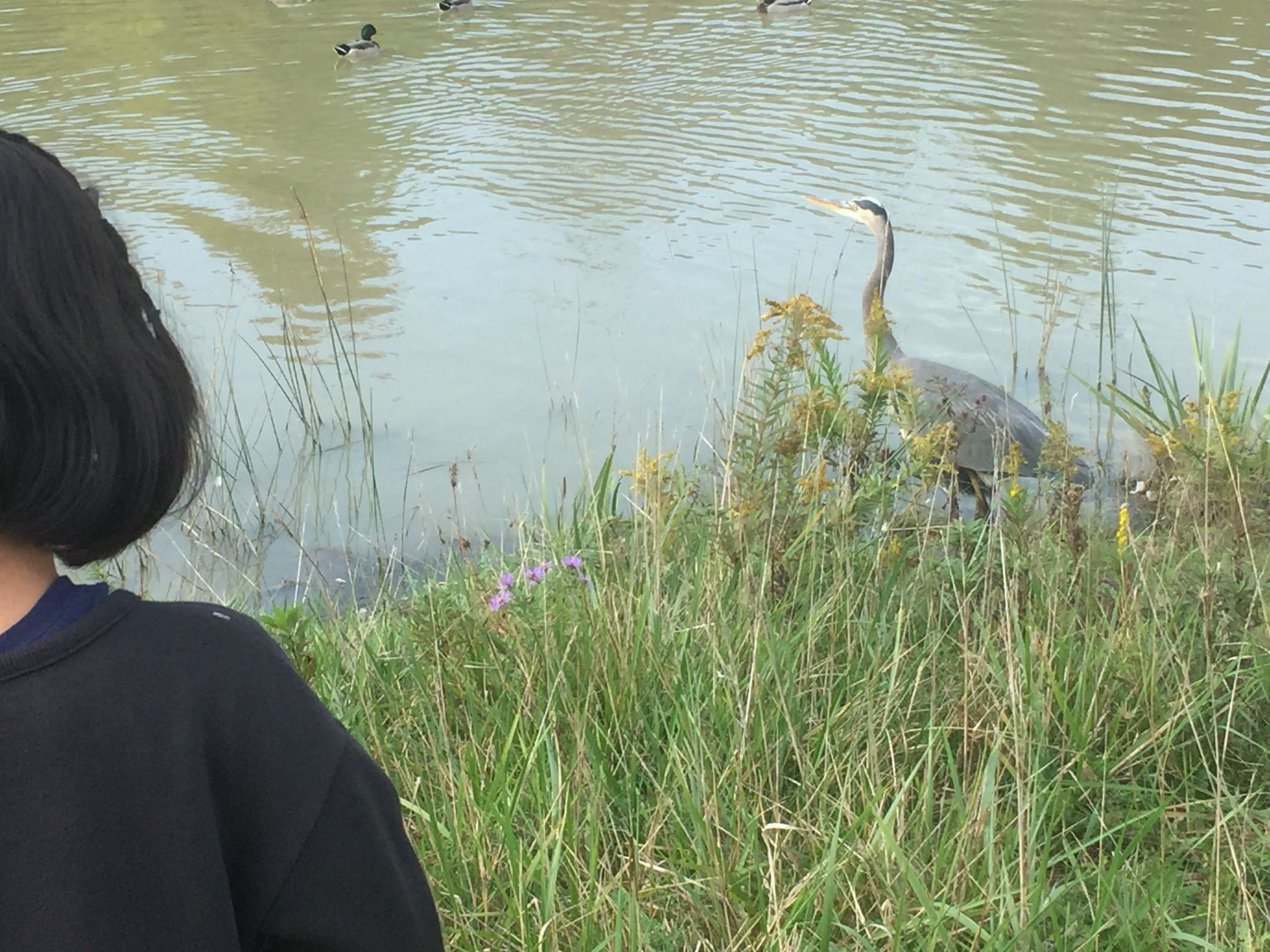
Iyah standing close to a blue heron. (Supplied/Jenna Evans)
But it wasn’t always the haven for local wildlife that Iyah knows today.
Long before ducks skimmed across its ponds and families wandered its curves, Osprey Marsh was a low-lying land with bog-like characteristics that made it unsuitable for agriculture at a time when farming communities settled in the city.
Decades later, that uniqueness would make it the perfect candidate for a series of man-made stormwater management ponds. In the mid-1990s, Osprey Marsh was designed to regulate rainwater and snowmelt, control local flooding and reduce runoff into storm sewers from Sixteen Mile Creek.
The green infrastructure soon attracted birds and other wildlife including Canada geese, who found food and shelter among its ponds and wetlands—necessities to flourish in a city that was rapidly expanding its suburban landscape—a commonality that Osprey Marsh shared with Lake Aquitaine Park, another man-made stormwater management pond.
What Osprey Marsh came to mean for Iyah, Lake Aquitaine became for a Mississauga teen who immigrated to Canada and found a sense of home among its ponds; a connection that led to the important discovery of the invasive red swamp crayfish at the park, prompting a rapid response by the Credit Valley Conservation.
Despite its original intent, Osprey Marsh has not been enough to tackle the flooding issues that have haunted the Lisgar neighbourhood due to a changing climate leading to increasingly severe once-in-a-century storms.
In fall 2025, Ward 10 councillor Sue McFadden announced in one of her blog posts that part of the Osprey Marsh trail was closing for a year as the City of Mississauga undertook the first-ever dredging of the stormwater pond to restore some of the capacity the pond had lost over time as a result of sediment accumulation at the bottom of the pond taking up space that would otherwise be occupied by stormwater.
The work, expected to be “completed by the end of this year”, forced the closure of the north section of the trail while extending west to Ninth Line this spring. Another section of the trail closed to accommodate the construction of a fourth Lisgar pumping station—a critical piece of infrastructure that is “now fully operational”.
For Iyah, all that construction raised a question of her own: what was happening to the water of her beloved marsh?
“As I got older, I started wanting to take care of the marsh, and really wanted to make a difference,” she said with a determined grin.
In January, she asked her mother to drive her to their favourite spot as she packed a water testing kit from Water Rangers in her bag.
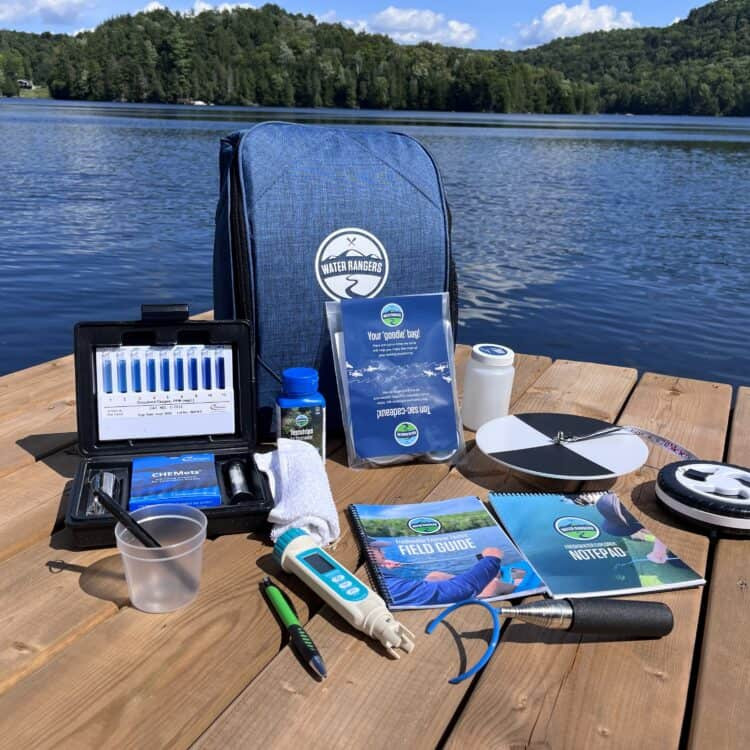
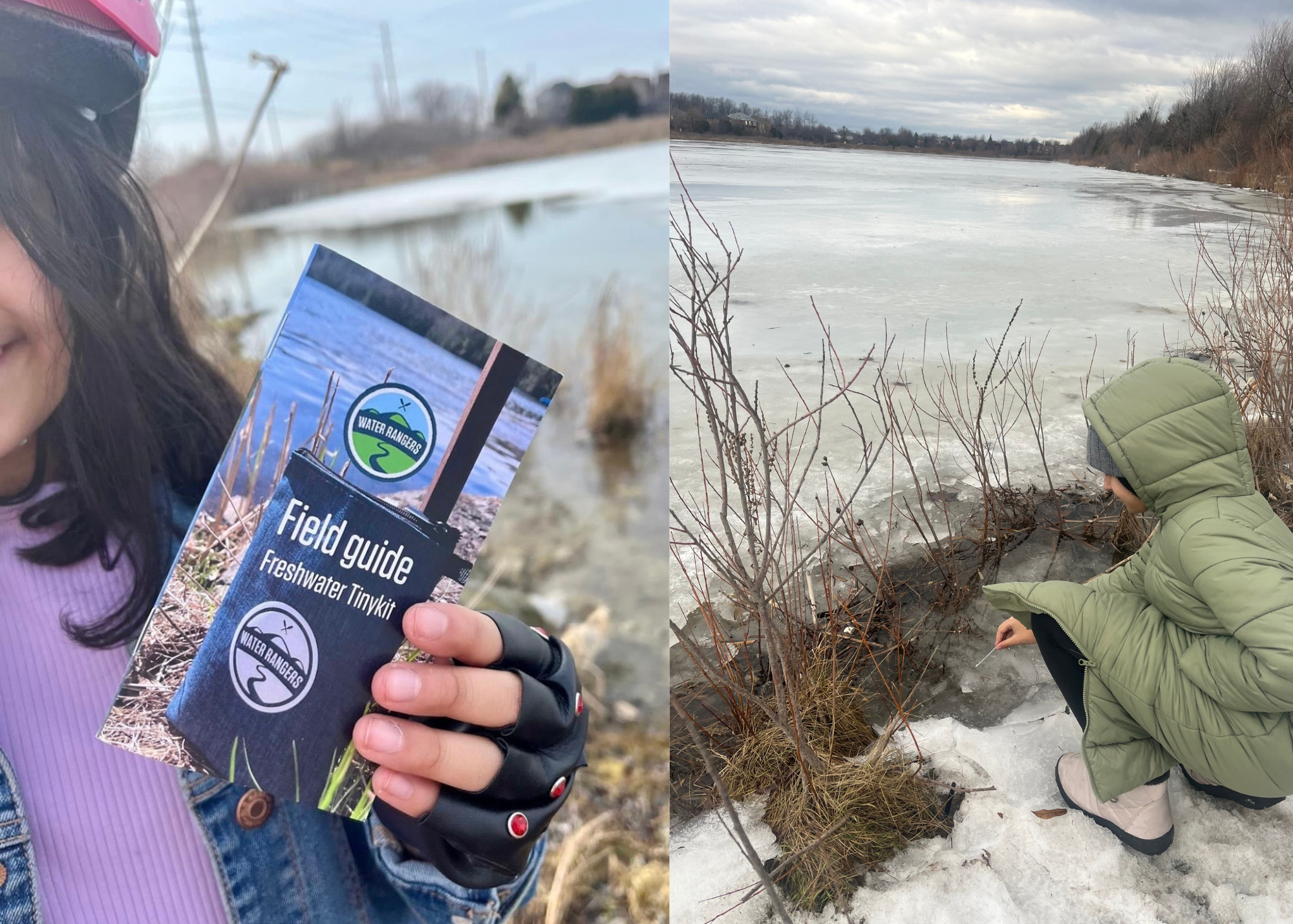
Water Rangers' portable test kits allow citizen scientists to test general health parameters of lakes, rivers and streams across Canada including pH, water hardness, conductivity, alkalinity, clarity, oxygen and air temperature. (First: Water Rangers, Second: Supplied/Jenna Evans)
Once there, she dipped a small testing strip into the water for about 10 seconds before holding it up against a colour-coded chart to see what the water was telling her.
“We thought we might find something wrong with the water quality given all the construction,” Jenna said.
But the water was “mostly stable”.
Since then, the duo have been visiting the marsh every month to test the water and enter each reading into the Water Rangers app along with observations about the weather and what they noticed around the marsh.
But the deeper you look, the more you see…
And they found trash — buried in nooks and entangled with plants.
“When you first take a look at the marsh, it actually looks pretty clean, but when you actually start looking closely, you notice there's actually a lot of trash there,” Iyah said.
“It was crazy. We were honestly really surprised by the amount of trash we found.”
It became difficult to ignore. So, their exploratory walks blossomed into picking up and sorting garbage together, and documenting it.
“It's sad to see how much trash there is,” Jenna said.
“But it's been really nice for both of us to bond in this way over a place that meant so much to us for years during the pandemic, and to now be able to give back to the marsh in a way.”
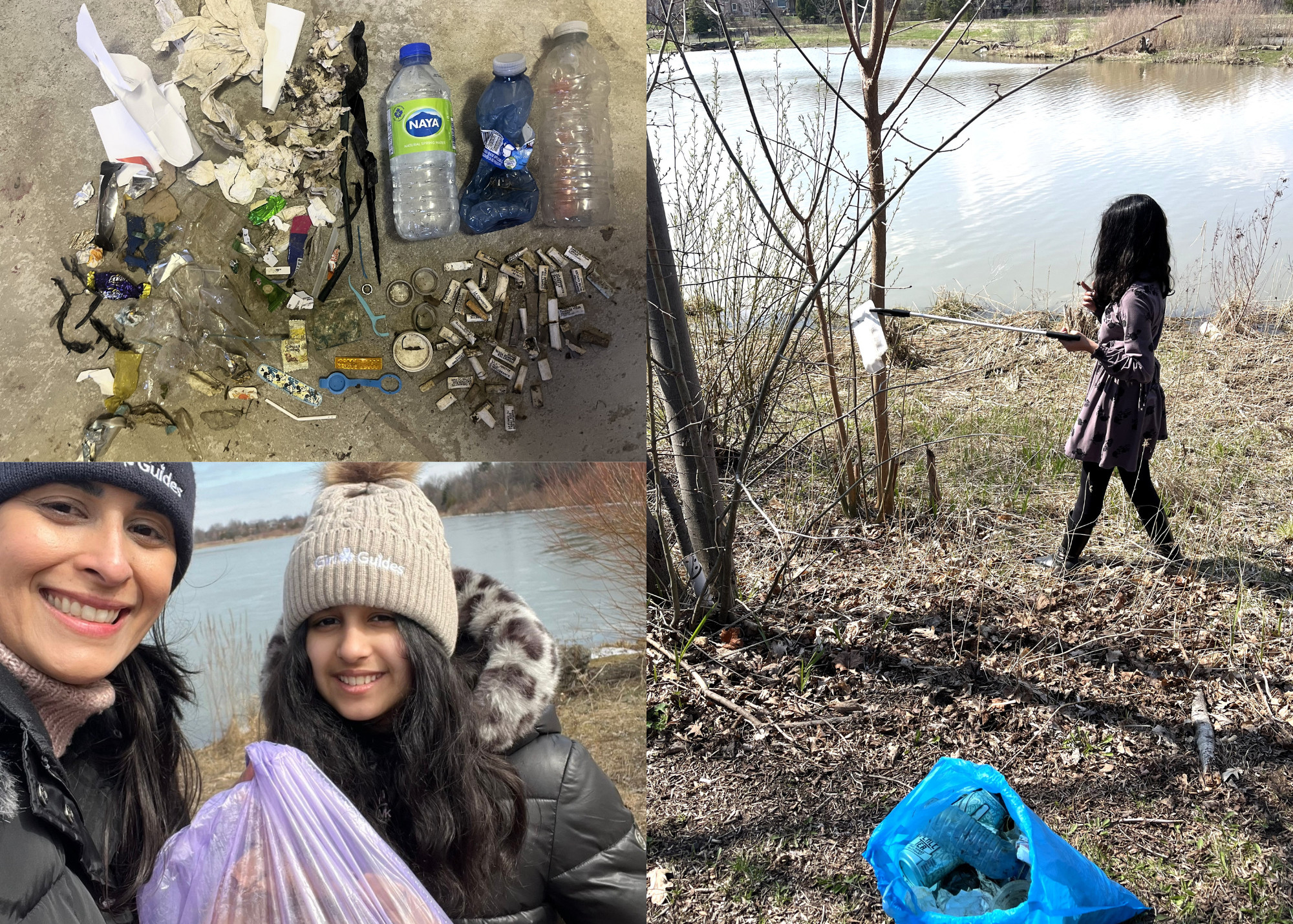
Jenna and Iyah have been cleaning Osprey Marsh together, and plan to open their initiative to others with the same passion for protecting the pond. (Supplied/Jenna Evans)
On August 10, Iyah emailed the City of Mississauga’s Environmental Action Committee announcing ‘Osprey Marsh Monitor’, her youth-led water quality and litter audit project that will focus on one section of the marsh—the portion closest to Johnny Bower Park since construction has closed off other routes and left the two nearby trails as the only accessible ones.
She also shared her findings for the past six months, finding over 680 pieces of litter including empty water bottles, plastic bag pieces, candy wrappers and cigarette butts; the highest monthly count came in April, when she recorded 225 pieces.
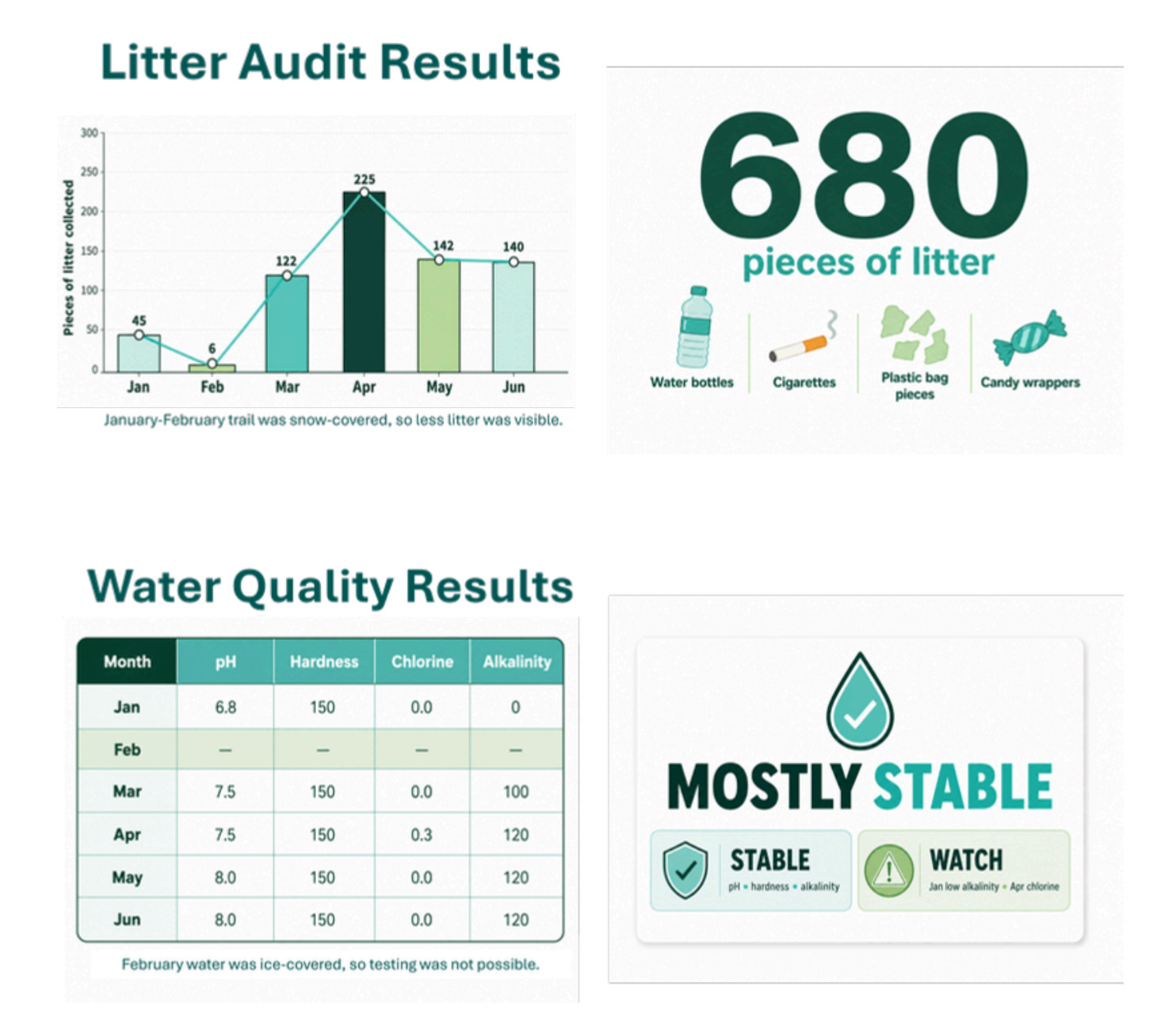
Iyah presented a six-month interim report of her ‘Osprey Marsh Monitor’ initiative to the City of Mississauga Environmental Action Committee. (Screengrab from Iyah’s presentation/City of Mississauga)
As she continues her research for the next six months, she is considering making small receptacles that could be attached to benches to give smokers somewhere to dispose of their cigarette butts rather than leaving them on the ground.
“We noticed that, especially in the summertime, a lot of people go to the marsh, smoke their cigarettes and then throw them on the ground,” Iyah added.
“It's so annoying. Every time I go to [the] benches to pick up trash, there's like 10 cigarettes on the floor.”
It hasn’t been easy. While some days have been sunny, others have brought freezing temperatures and worse—bugs—that make way into their garbage bags sometimes.
“We’re both terrified of bugs!,” Iyah chuckled as Jenna laughed with her.
But a recent encounter left Jenna worried.
While Iyah had previously ventured a few steps into the vegetation to reach pieces of garbage that could not be grabbed from the trail, this time was different; Jenna found a tick bite on the 11-year-old’s skin.
As they rushed to the nearest doctor, Jenna made a new, simple rule: if the trash cannot be reached safely from the sidewalk, it stays—but they are not going to stop.
Since starting the project, Jenna feels their family has become so “hyper-attuned” to the problem that they now notice trash everywhere they go — something they might have overlooked before, “but now it feels like our responsibility to pick it up.”
“I work full time, have my own volunteer commitments, and have a toddler, so supporting Iyah with all of this isnt always easy,” Jenna said.
“But I desperately want her to grow up knowing that she has a voice, that she has agency, and that she can make a difference in the world, even as a child.”
Iyah, who hopes to pursue a career in environmental science, believes children should be involved in protecting nature because “one of the little kids out there is gonna become president,” and they need to understand what is happening in the world and be ready to take action.
“Our opinions matter; we are the future,” she declared.
Email: [email protected]
At a time when vital public information is needed by everyone, The Pointer has taken down our paywall on all stories to ensure every resident of Brampton, Mississauga and Niagara has access to the facts. For those who are able, we encourage you to consider a subscription. This will help us report on important public interest issues the community needs to know about now more than ever. You can register for a 30-day free trial HERE. Thereafter, The Pointer will charge $10 a month and you can cancel any time right on the website. Thank you
Submit a correction about this story

