
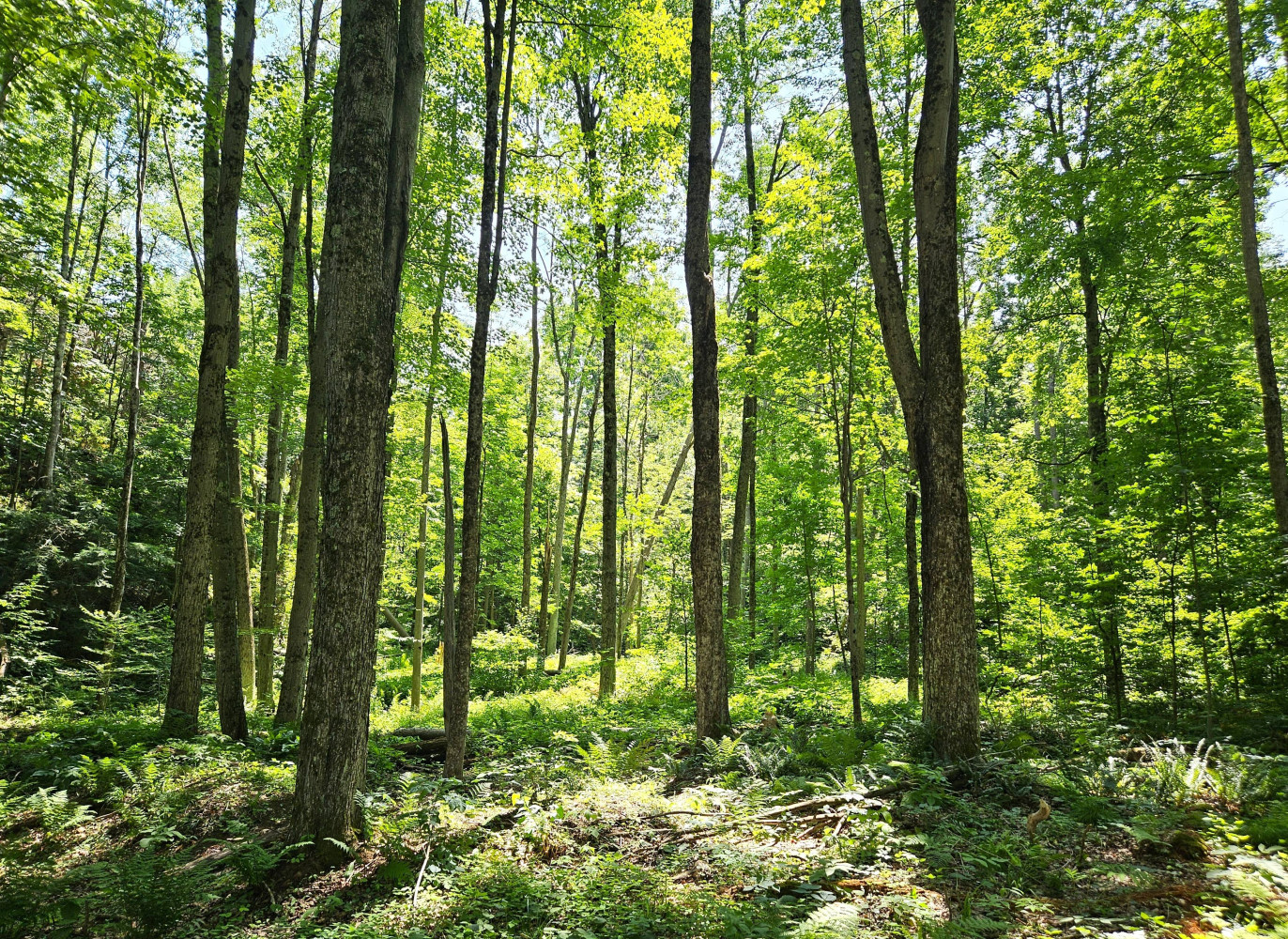
As Canada slides on conservation targets, one Ontario group’s latest acquisition is moving the needle
Two days after U.S. President Donald Trump signed an executive order officially renaming (for Americans) Lake Ontario as “Lake America”, Ontario Premier Doug Ford spent $25,000 in taxpayer money to answer with a billboard declaring: “Lake Ontario now and always”.
Mirroring the floods happening on both sides of the border — from the Grand Canyon to St. Catharines — the political rigmarole opened the floodgates online to memes, angry posts and commentaries over a body of water that has existed for thousands of years.
Layered within the absurdity is an irony: many of the leaders, including Ford, now using Lake Ontario’s name as a political tool have in recent years ignored the protection of natural spaces that feed the Great Lakes, repeatedly pushing unchecked development that poses devastating environmental risks to the largest fresh water system in the world.
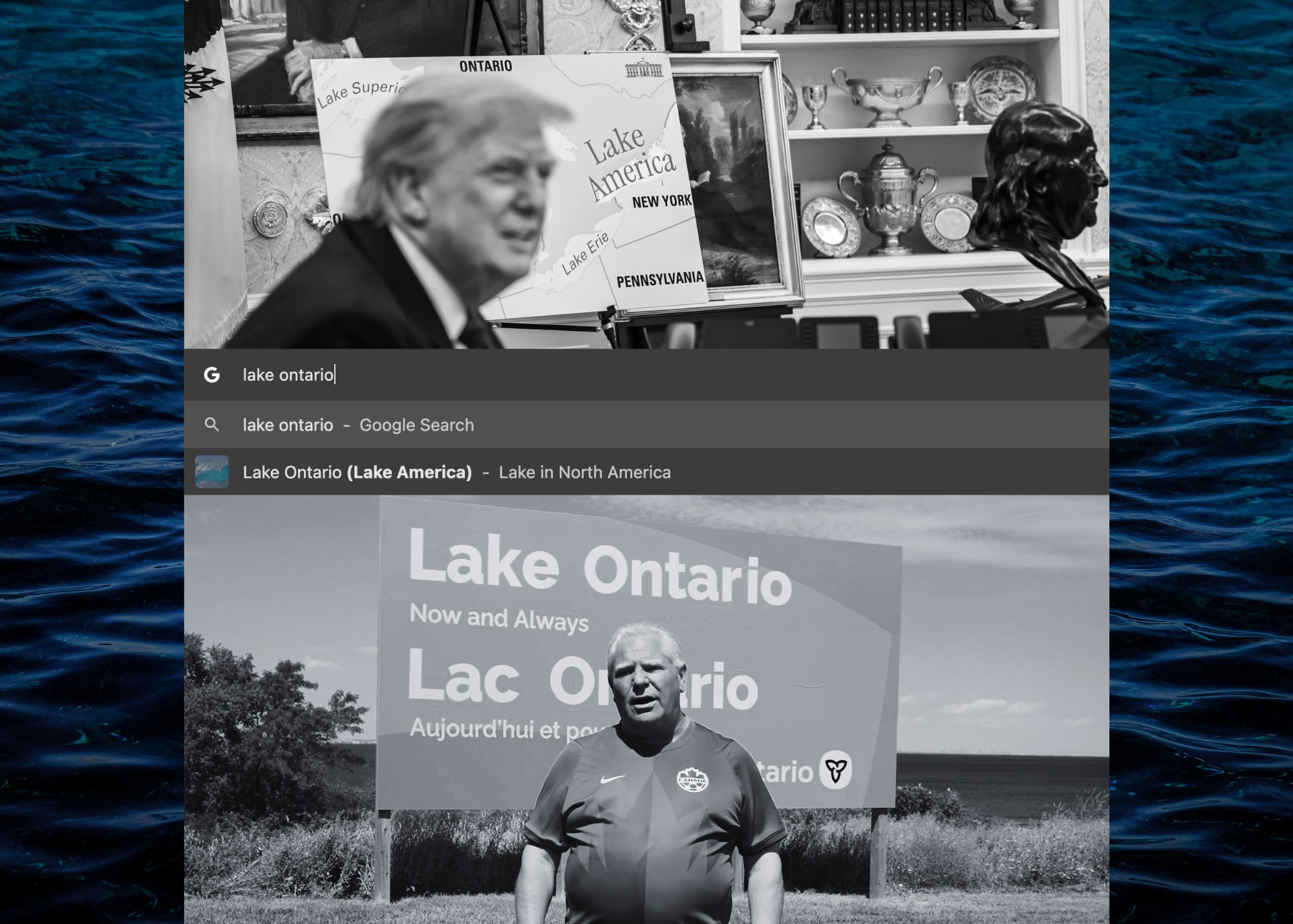
Google and Apple recently updated their mapping apps in the U.S. to display “Lake America” instead of Lake Ontario following a controversial order by U.S. President Donald Trump. The name Lake Ontario comes from the Iroquoian (specifically Huron-Wendat) word Ontarí:io or oniatarí:io, which means great lake, beautiful lake or lake of shining waters.
(Photos: White House, Doug Ford/X; Graphic: Anushka Yadav/The Pointer)
The lake does not need a billboard.
It needs protection.
In 2021, within his first week in office, U.S. President Joe Biden committed to conserving 30 percent of America’s lands and waters by 2030, a target echoed two years later through the Kunming-Montreal Global Biodiversity Framework, also known as 30×30.
Four years later, when Trump took office, he overturned the U.S. commitment, even as 12 to 13 percent of the country’s land remained protected while nearly 30 percent of U.S. waters were under some form of protected status.
While Canada is still a signatory to the 30x30 target, progress has been painfully slow with only 13.8 percent of land protected.
Ontario is further considered a national laggard, having preserved less than 11 percent of its land and waters.
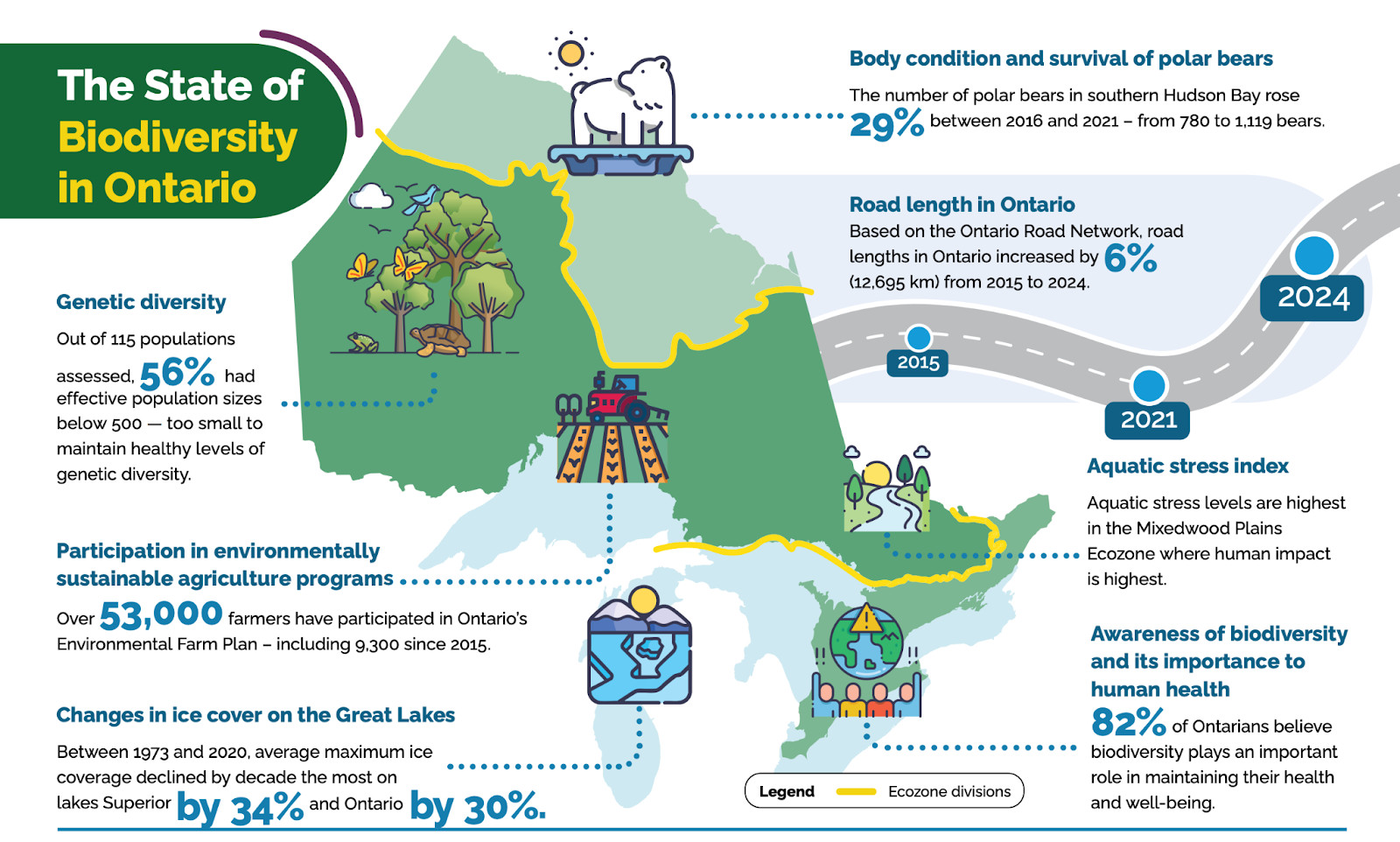
In 2025, Ontario’s biodiversity progress remained uneven: more than half of the strategy’s conservation targets (54 percent) have made little progress, 38 percent have seen some progress, none have achieved substantial results and no targets have been fully met. The report also found that 88 percent of Ontarians support investments in biodiversity protection and restoration.
(State of Ontario’s Biodiversity/Sobr)
That gap is being filled by conservation groups and private landowners who, with limited funding, are relentlessly ensuring the land that feeds, surrounds and connects these waters is not developed in the first place.
On August 25, Ontario Nature announced it had acquired 17.97 acres (called Jannen III property) in the Township of Leeds and the Thousand Islands, adjoining the existing Lost Bay Nature Reserve, bringing the protected area to 662 acres and permanently protecting an ecologically important piece of the Frontenac Arch.
Ontario Nature Executive Director, Andrés Jiménez Monge, marked it as the “first step toward an ambitious goal” of securing at least 2,500 hectares of habitat in key priority areas by 2031.
“We have been working on expanding [the] Lost Bay Nature Reserve for a number of years now,” Marcus Maddalena, Nature Reserves Manager, Ontario Nature, told The Pointer.
“That part of Ontario, specifically the Frontenac Arch, is one of three priority regions that we have [in the province] for expanding our nature reserve system.”
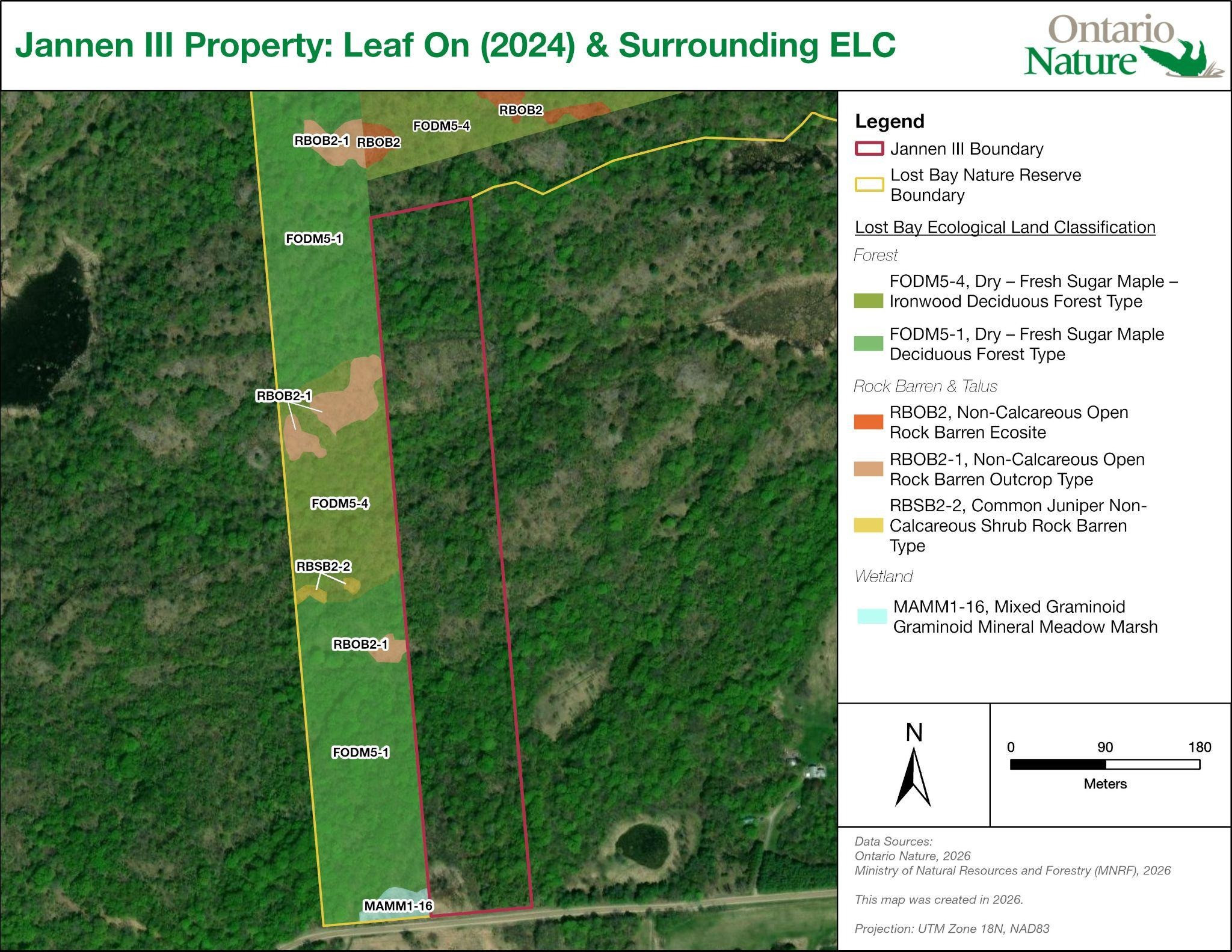
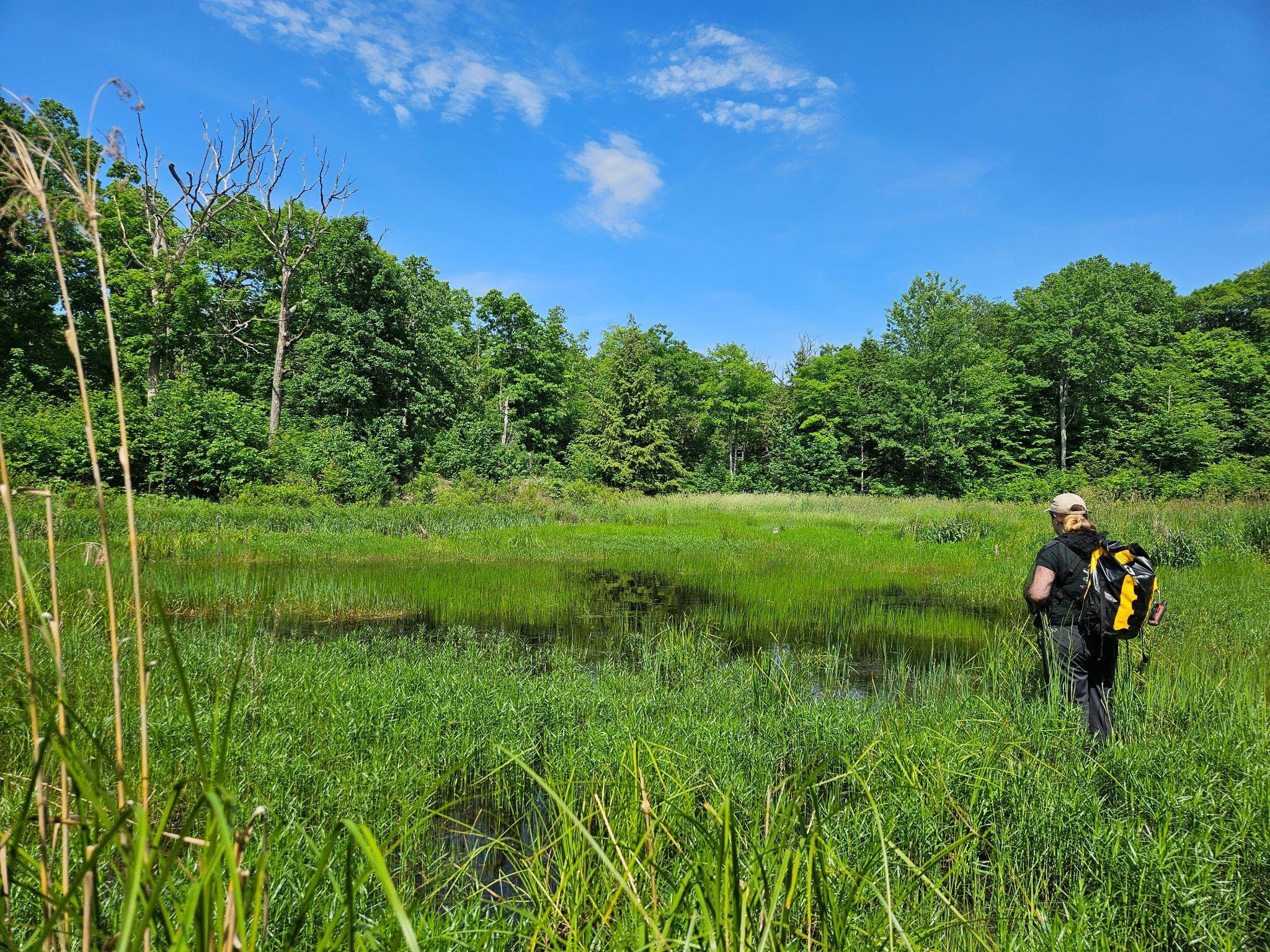
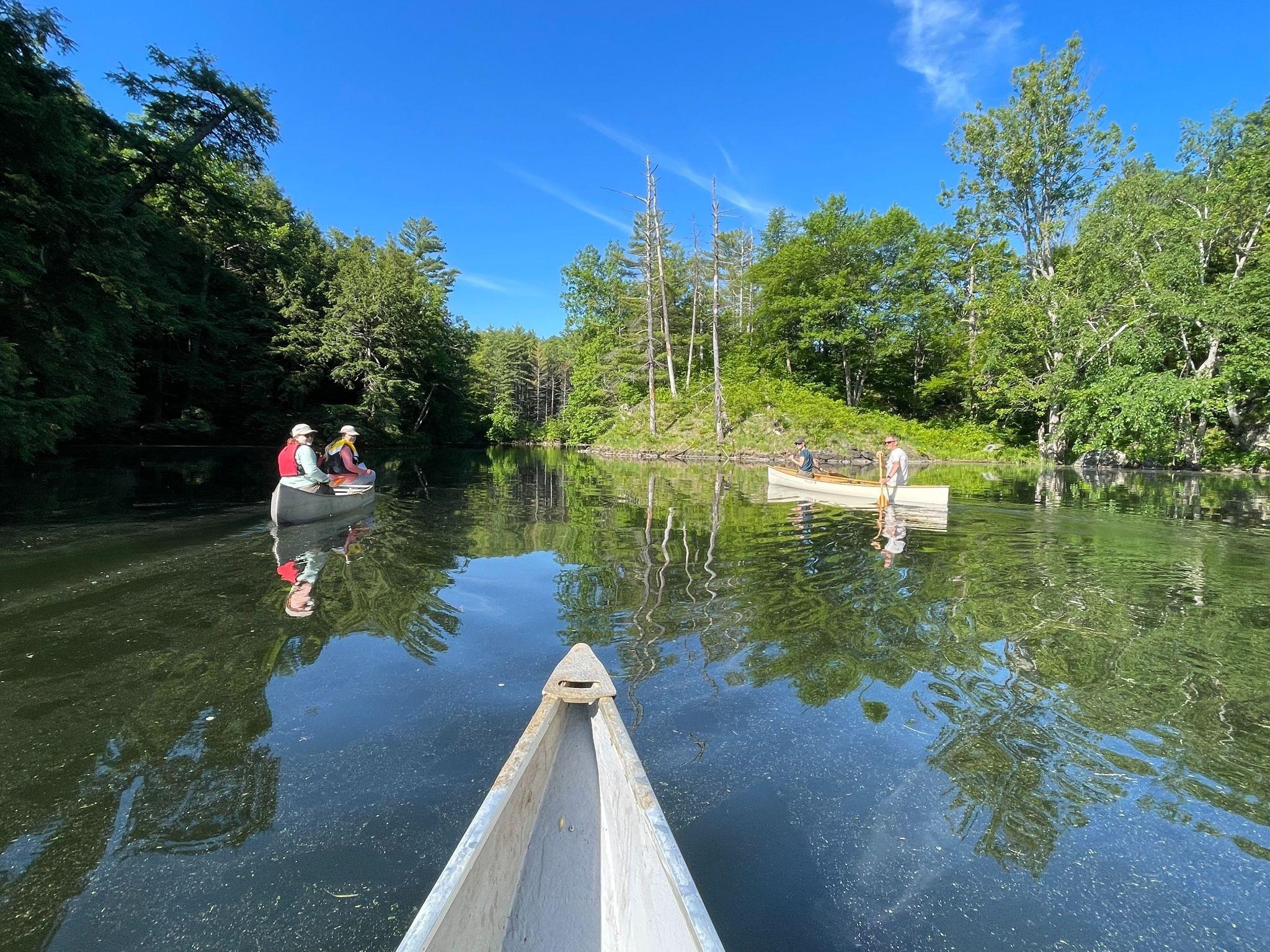
Ontario Nature’s acquisition of the 17.97-acre (7.27 hectares) “Jannen III” property permanently protects an environmentally sensitive tract within the Frontenac Arch, a UNESCO World Biosphere Reserve widely celebrated as one of Canada’s most biologically rich and diverse landscapes.
(Ontario Nature)
The Frontenac Arch Biosphere Reserve serves as a reminder that nature does not recognize the lines governments draw on maps. Designated as one of 16 biosphere reserves in Canada in 2002, the southeastern Ontario reserve stretches across 2,700 square kilometres from Brockville to Kingston and north toward Verona and Perth.
At its center is the Frontenac Arch, an ancient granite formation that extends from the northern Canadian Shield around Algonquin Park toward the Adirondack Mountains in the U.S. — serving as critical habitat for an unusually high concentration of rare and threatened species.
Intrigued by the possible purchase of an environmentally sensitive tract within the Frontenac Arch, Maddalena visited Jannen III for an initial walkthrough earlier this spring.
He was there to look for anything unexpected: whether the property matched the ecological character of the surrounding landscape and whether there was a strong case for conservation—observations he has learned to make quickly, being responsible for looking after 26 of Ontario Nature’s reserves and three conservation easements.
What he found was a landscape that looked, in many ways, quintessentially Frontenac Arch.
“There were these deciduous woodlands, and then they're interspersed by what we call rock-bearing habitat,” he explained with an earnest smile.
The “long, narrow property” turned out to be a mix of mature forests with sugar maple, red oak and shagbark hickory rising above parts of the landscape alongside exposed rocky ridges with “very little vegetation,” and low-lying areas where water collects in seasonal pools.
What caught his eye was what was in between two ridges: a series of large vernal pools and an ephemeral stream flowing out of them, around one of the rocky barrens and across the property.
The stream eventually passes beneath a small road before flowing through a channel toward a Provincially Significant Wetland (PSW).
“It’s the upper reaches of this creek. You could see where the creek starts and follow it sort of all the way down,” Maddalena added.
“It’s not common to see headwaters of a creek or a stream actually forming.”
That small stream is part of a much larger ecological system—and a big reason the property was worth protecting.
The property sits within one kilometre of two PSW—Lost Bay Wetland and Wiltse Creek Marsh. Its upland habitat forms a band between the two wetlands, helping maintain the movement of water and wildlife through the landscape.
He learned that the stream he had followed eventually flows into Wiltse Creek, which empties into Gananoque Lake. Ontario Nature’s Gananoque Lake Nature Reserve that has been home to more than 18 species at risk and 20 rare species, sits near the mouth of the creek.
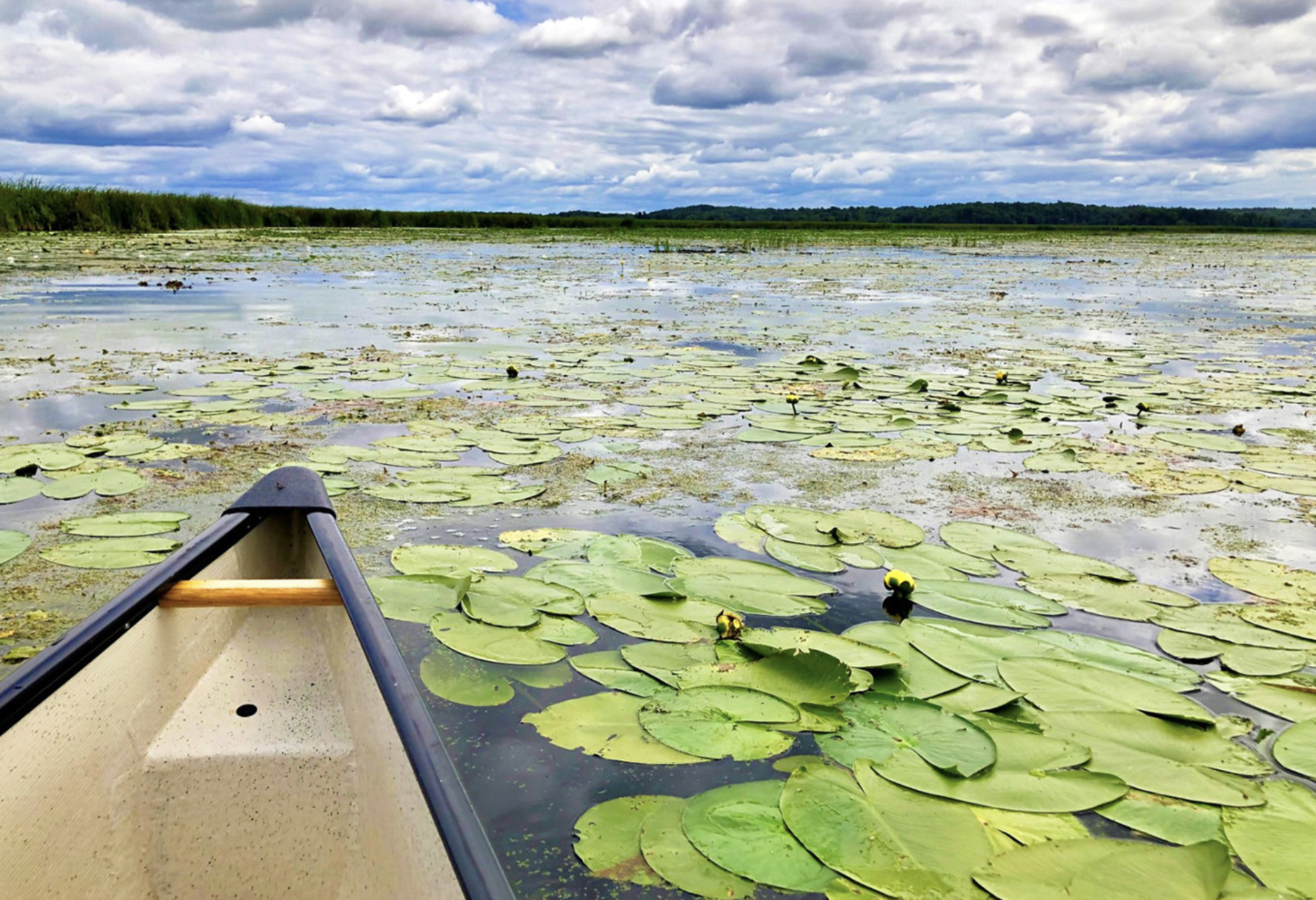
The Gananoque Lake Nature Reserve within eastern Ontario’s Frontenac Arch protects 416 acres of forests, wetlands and shoreline along a 400-kilometre wildlife corridor connecting Algonquin Park with New York’s Adirondack Mountains, providing habitat for more than 18 species at risk and 20 rare species, including the cerulean warbler, western chorus frog and gray ratsnake. It was established as Ontario Nature’s 26th nature reserve in 2020. In 2024, an adjacent 58-acre property was acquired, expanding the protected habitat.
After Ontario Nature secured the Janen III property, its nature reserves team carried out an ecological land classification, assessing the ecological communities found there.
They observed 33 species at risk and 18 rare species were either on or directly adjacent to the newly acquired property including cerulean warbler, monarch butterfly, Blanding’s turtle, butternut and flooded jellyskin.
Because the new lands are contiguous with the existing reserve, many of those communities “span both properties”. And unlike some conservation properties that require extensive restoration, this one was already largely intact.
“We haven’t really noticed much in terms of invasive species, so there won’t need to be any immediate action,” Maddalena said.
“It’ll be part of the Lost Bay nature reserve complex now, and the intention is just to preserve it as conservation land.”
The addition of the valuable parcel of land that spent years as vacant property was made possible through financial support from the Flanagan Foundation, the ECHO Foundation, Ontario Nature members and the province’s Greenlands Conservation Partnership program, administered through the Ontario Land Trust Alliance.
For now, little will change on the 17.97 acres but that, in many ways, is the point.
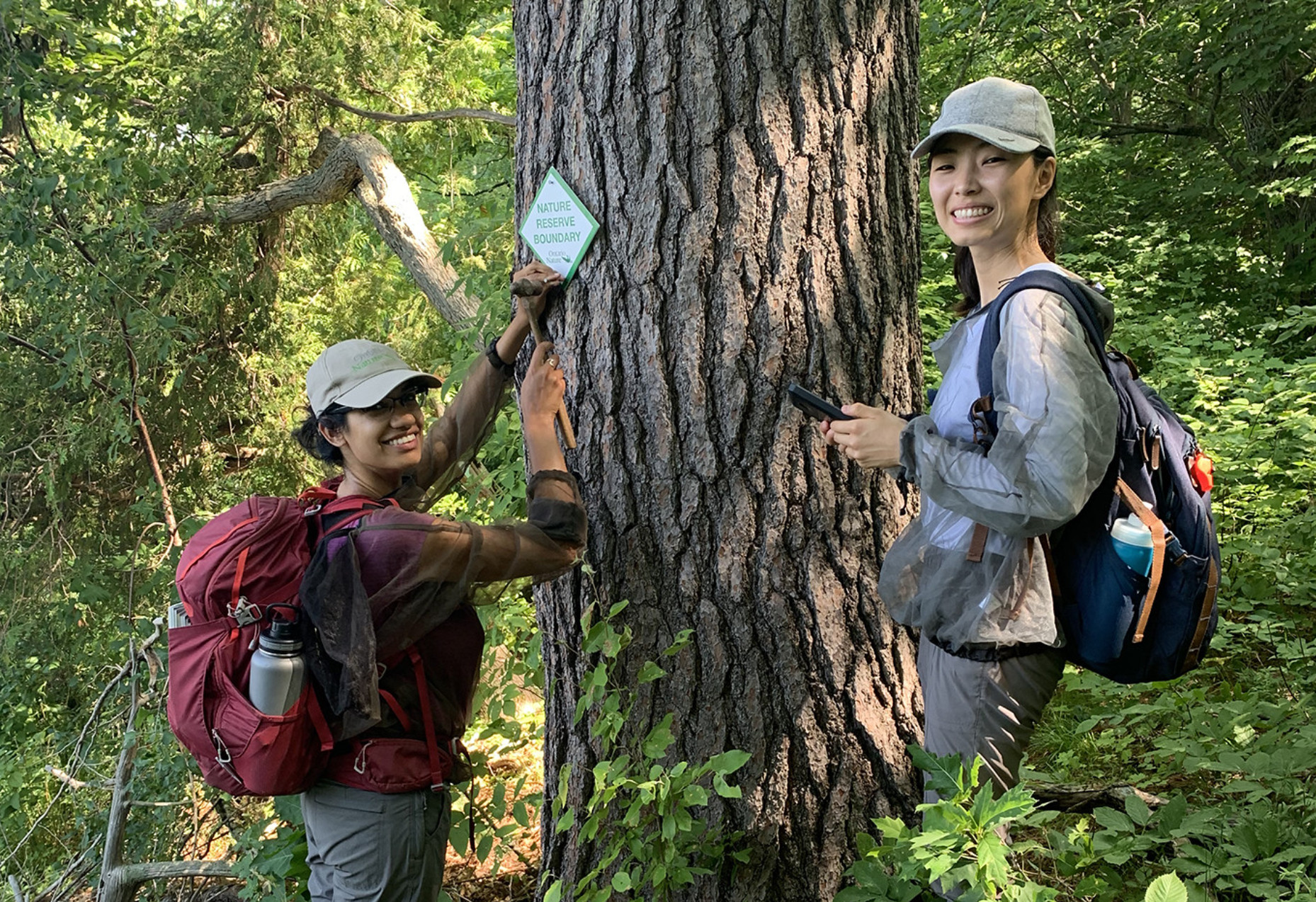
The property will not gain a subdivision, a new road or a trail network. There is no restoration project waiting to transform it. Instead, Ontario Nature will mark its boundaries, monitor the land and leave its ecological processes to continue—a shared responsibility that extends beyond the owner or seller of the lands.
Once the paperwork is rubberstamped, conservation organizations rely heavily on volunteer property stewards including local nature clubs, neighbours, nature enthusiasts and people who simply enjoy spending time outdoors, to keep an eye on the land.
“These folks are our eyes and ears on the ground,” Maddalena added.
He encouraged those nature enthusiasts to explore the area by canoe or kayak from public launches.
“These properties don't have any public access…but Lost Bay and Gananoque Lake are both beautiful to paddle.”
Email: [email protected]
At a time when vital public information is needed by everyone, The Pointer has taken down our paywall on all stories to ensure every resident of Brampton, Mississauga and Niagara has access to the facts. For those who are able, we encourage you to consider a subscription. This will help us report on important public interest issues the community needs to know about now more than ever. You can register for a 30-day free trial HERE. Thereafter, The Pointer will charge $10 a month and you can cancel any time right on the website. Thank you
Submit a correction about this story

