
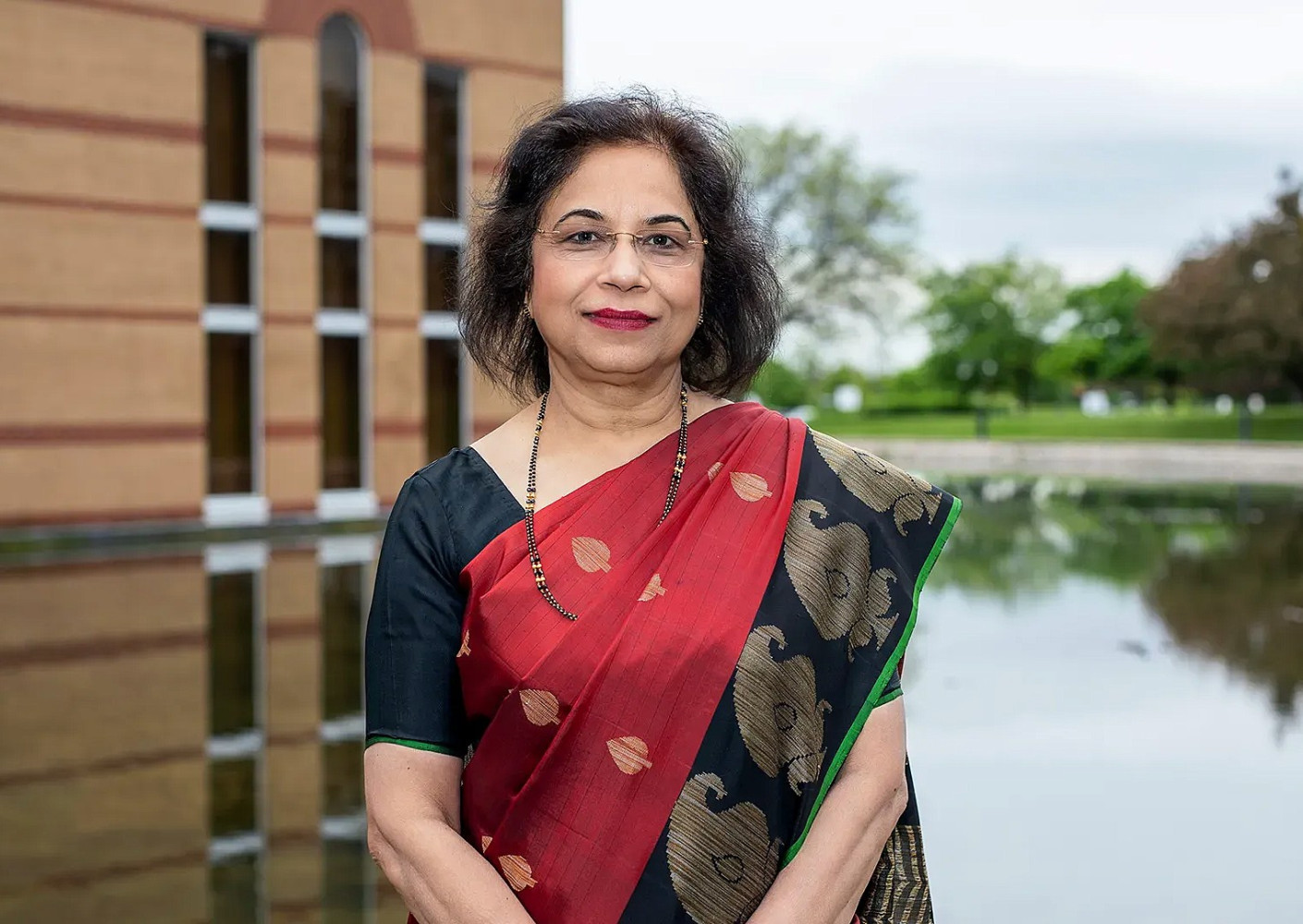
‘She’s leaving with a terrible legacy’: anti-Black racism advocates candid about upcoming retirement of PDSB director Rashmi Swarup
The image of schools as safe spaces has never fit the reality of Peel students who have navigated a minefield of discrimination and overt racism for decades inside the region’s largest board.
Peel District School Board officials were eventually forced to begrudgingly admit they had caused systemic harm to Black students after a scathing investigation by the Education Ministry a half-decade ago exposed what many in the community had known for years.
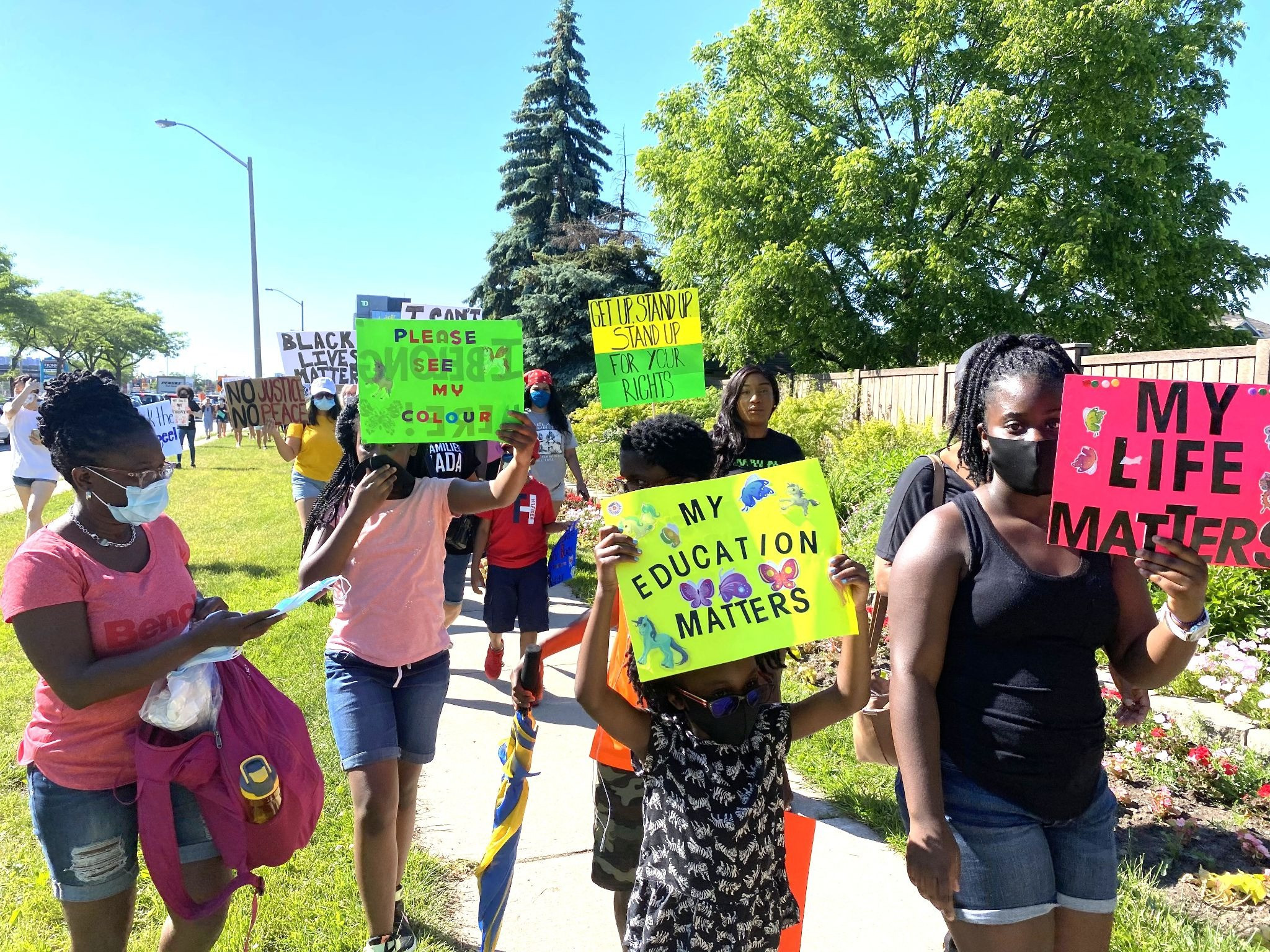
Members of Peel’s Black communities turned out to protest the PDSB after a disturbing 2020 investigation by the Education Ministry confirmed evidence of widespread anti-Black racism within the board.
(The Pointer file photos)
Advocates across Peel’s diverse Black community did most of the heavy lifting, and were relieved when the director of education at the PDSB was let go in 2020 following the damning provincial review. The beleaguered board was put under provincial supervision when it became clear that the majority of its elected trustees were not interested in reform.
Eventually, Rashmi Swarup was brought in to lead a process of wholescale change, armed with a long list of 27 strict directives from the ministry to finally eradicate systemic racism, after previous board leaders had ignored the provincial mandate.
Recently, however, advocates have voiced their disappointment with Swarup, who was appointed director in 2021. After a disturbing lawsuit was filed against the PDSB and Swarup by the board’s former head of equity, the director announced her retirement on June 2, and she will step down at the end of November, a little more than five years after she was hired to help rehabilitate a school board that has done generational harm to racialized students, who make up almost 85 percent of the PDSB’s student body.
Idris Orughu, is a long time community advocate and is running for a City of Brampton Council seat in the October municipal election. He was one of the key community leaders who pushed for change inside the PDSB and butted heads with the leadership prior to Swarup’s arrival. He says he maintained a cordial, hopeful relationship with her, initially, but is now not surprised by her departure in the face of mounting criticism and the provincial government’s second takeover of the board.
He feels disappointed with himself, Orughu told The Pointer in a candid interview, after he originally championed Swarup for the board’s top bureaucratic position when he communicated with the Education Minister in 2021.
“She had demonstrated an ability to work with the community, empathize, and understood the struggle that was happening within the Black community, especially as it pertains to education and the treatment of Black children,” Orughu said. “It was a crucial part of being interviewed (for the director job).” When she came to Peel all of the equity work and steps to eradicate anti-Black racism were at the top of the priority list, he said. “We believed that she was going to do the right thing. And she started off that way. But then, along came perhaps what may be seen as her true colour.”
In her recent announcement, informing the PDSB community of her upcoming retirement, Swarup did not address the harsh criticism she has faced over the last two years, or the recent takeover by the province for allegedly failing to keep the PDSB budget under control and dropping the ball on key priorities set out by the ministry.
“Serving the students, staff, families and communities of Peel has been an incredible privilege and one of the greatest honours of my career,” Swarup wrote in the announcement of her departure. “While there is still important work ahead in the months to come, I want to express my sincere gratitude for the support, partnership and shared sense of purpose that have made this journey so meaningful.”
In March, the provincial government issued a harsh warning to the PDSB and other school boards across the province for widespread financial mismanagement the ministry claimed was the reason for appointing supervisors to take over some of the boards.
It addressed two of the boards in a statement: “After careful review, it is clear that both Peel and York Catholic are facing serious challenges that they cannot resolve on their own,” Paul Calandra, Minister of Education, said in a press release, claiming the supervisors will “restore sound management, strengthen oversight and ensure every decision is focused on protecting student learning and success.”
It was a stinging indictment of Swarup’s leadership.
She did not respond to questions from The Pointer, following the announcement of her upcoming retirement.
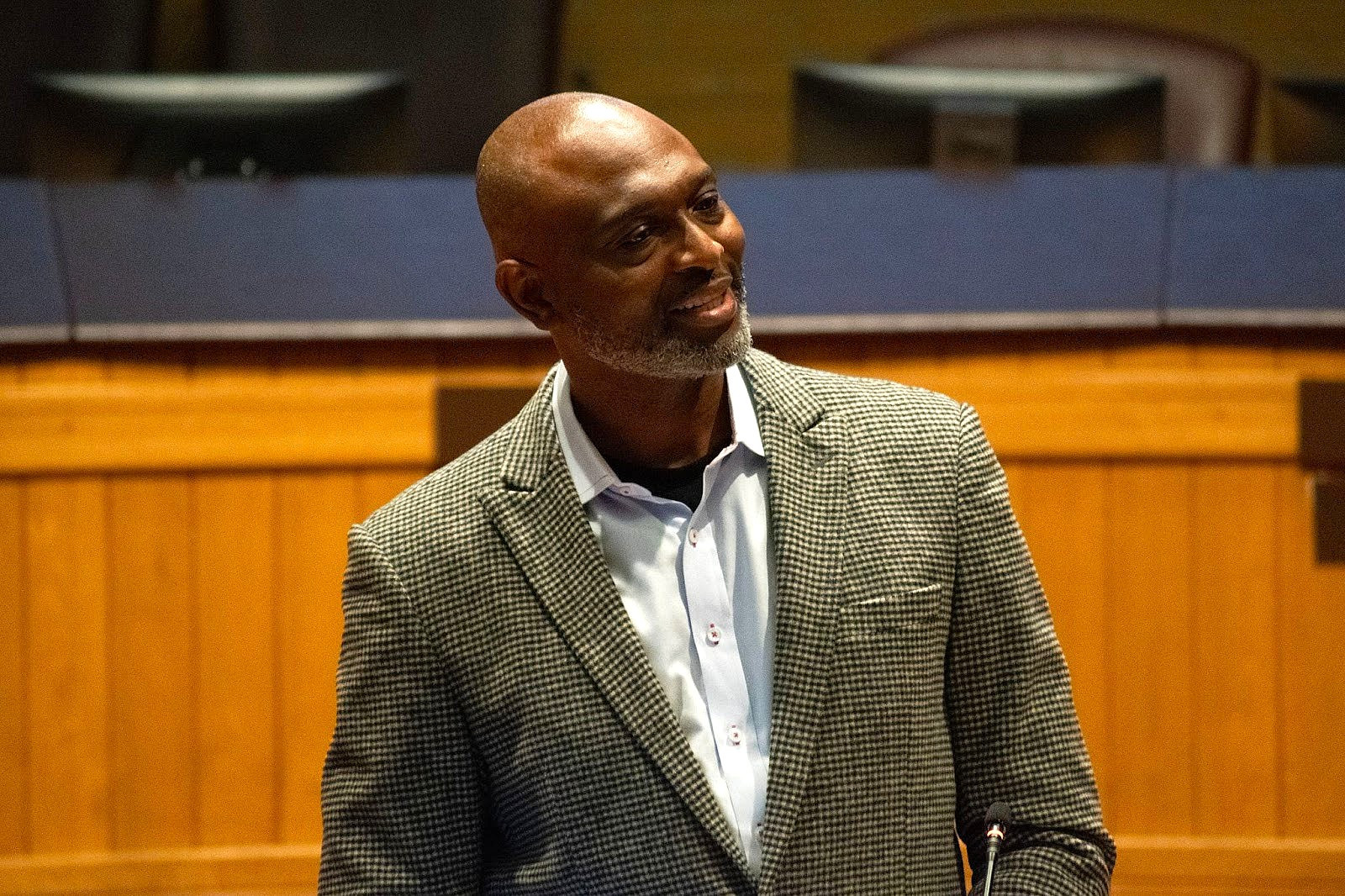
Long time community advocate Idris Orughu, pictured speaking at a PDSB meeting, expressed his disappointment with the current board leadership.
(Alexis Wright/The Pointer)
For many within Peel’s Black communities, Swarup’s upcoming retirement marks the end of a tenure that began with optimism but was ultimately defined by fractured relationships, accusations of broken commitments and lingering questions over whether meaningful change ever materialized.
One of the defining moments repeatedly raised by community members was the PDSB’s decision surrounding the Centre for Black Excellence.
Following years of advocacy by Black parents, students and community organizations, the PDSB had publicly committed to establishing the centre as part of its broader commitments to address systemic anti-Black racism.
Controversy erupted within the community when the board and Swarup suddenly abandoned plans to name the centre after beloved education advocate Kola Iluyomade, who passed away suddenly in 2021. The decision, which came with blatantly misleading claims made by the PDSB’s Chair, was viewed by many community members as a betrayal of those commitments, which were made during the provincial government’s first takeover of the PDSB over its failure to protect the vast majority of its students who are racialized.
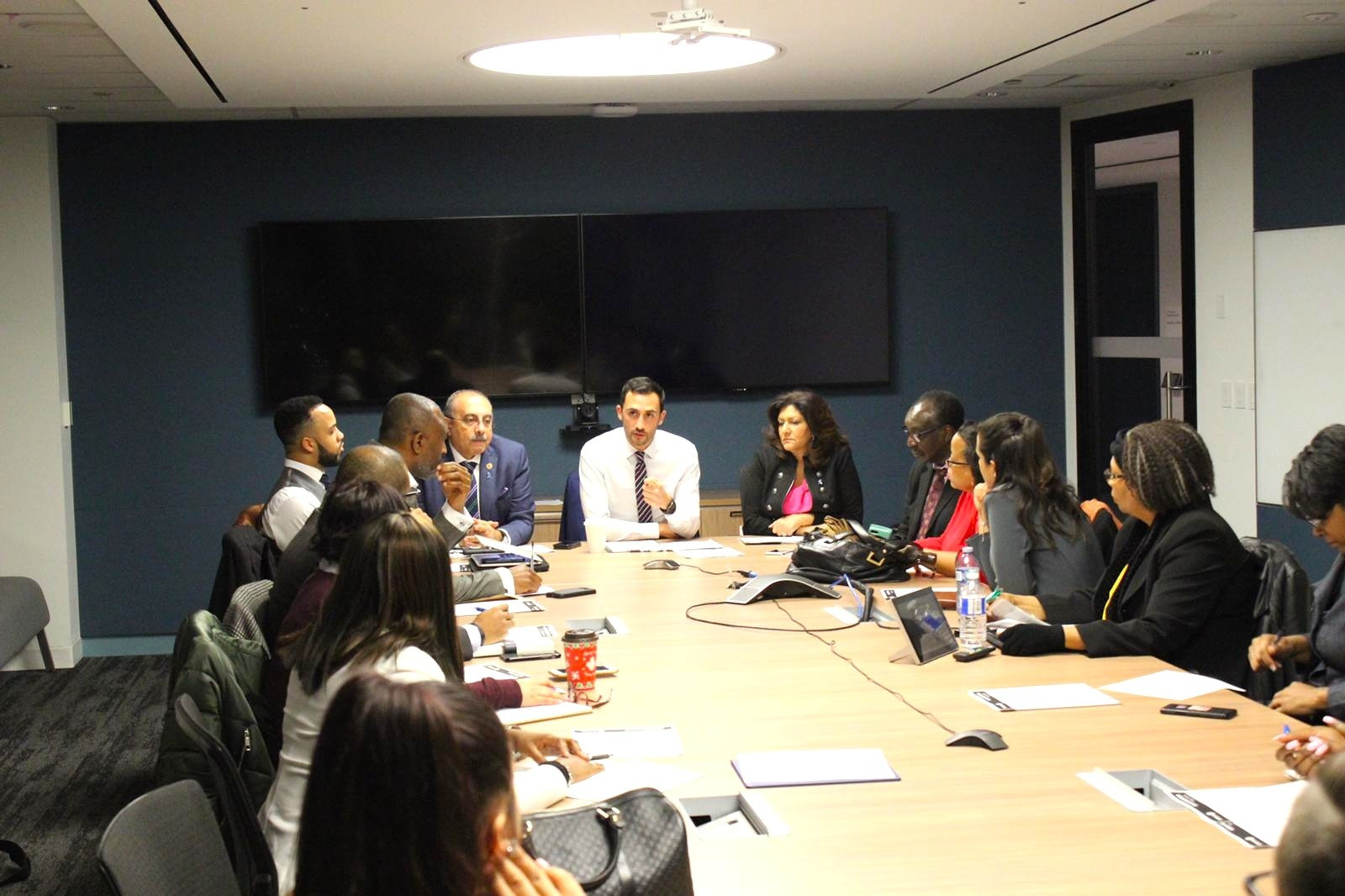
Former education minister Stephen Lecce (centre in white shirt) meets with members of Peel’s Black communities in 2021 when he demanded the PDSB eradicate systemic anti-Black racism and brought down 27 binding directives the board had to implement.
(Stephen Lecce/X)
The controversy would become a sharp turning point in Swarup’s relationship with many of the same advocates who supported her appointment.
“When she first came, the relationship with Black parents was strong. We used to meet very regularly and have really important and frank conversations,” Danielle Dowdy, a law enforcement expert and community safety professional with more than 20 years of experience, a former Brampton Citizen of the Year and mother of two children within the PDSB, told The Pointer. “Once the whole issue with the naming of the Centre of Black Excellence happened, conversations just ended. She's not been engaging with the parents who have been around the table for years. She just stopped. We were very candid in wanting accountability for what had happened, and she just would not provide it.”
Dowdy said the collapse of communications, rather than any single decision, became the defining feature of the relationship between parents and the PDSB’s senior leadership under Swarup.
“The parents that had been working with the board just felt like the relationship had become a very dishonest relationship, and it didn't make sense to still be at the table with partners who are not going to be honest.”
For Orughu, who was close with Iluyomade (both were threatened with trespass orders by the PDSB which was later acknowledged by the board’s first provincial supervisor as an example of the board leadership’s anti-Black racism), the lengths PDSB leaders went just to keep Kola Iluyomade’s name off the new building, telling Black community members they could not pick the person who would be memorialized on a building that celebrates Black excellence, was a deeply personal slight by Swarup.
“It was simple. She needed to get her four-year extension. The only way she could get that was to not be on the side of the community.” The decision on the naming of the building was made despite explicit instruction from the education ministry to put Kola Iluyomade’s name on the centre.
Orughu believes the dispute surrounding the Centre for Black Excellence fundamentally altered the relationship between the board and the Black community.
“Where it started, there were certain actions that she took as it pertains to the Centre for Black Excellence that were agreed upon by the ministry and the provincial supervisor, that herself and the members, especially the current board, did not approve of, because naming the centre after my friend who passed away was a bitter pill for the board to swallow because he was very critical of it, and led efforts that exposed them for their complicity in harming students.”
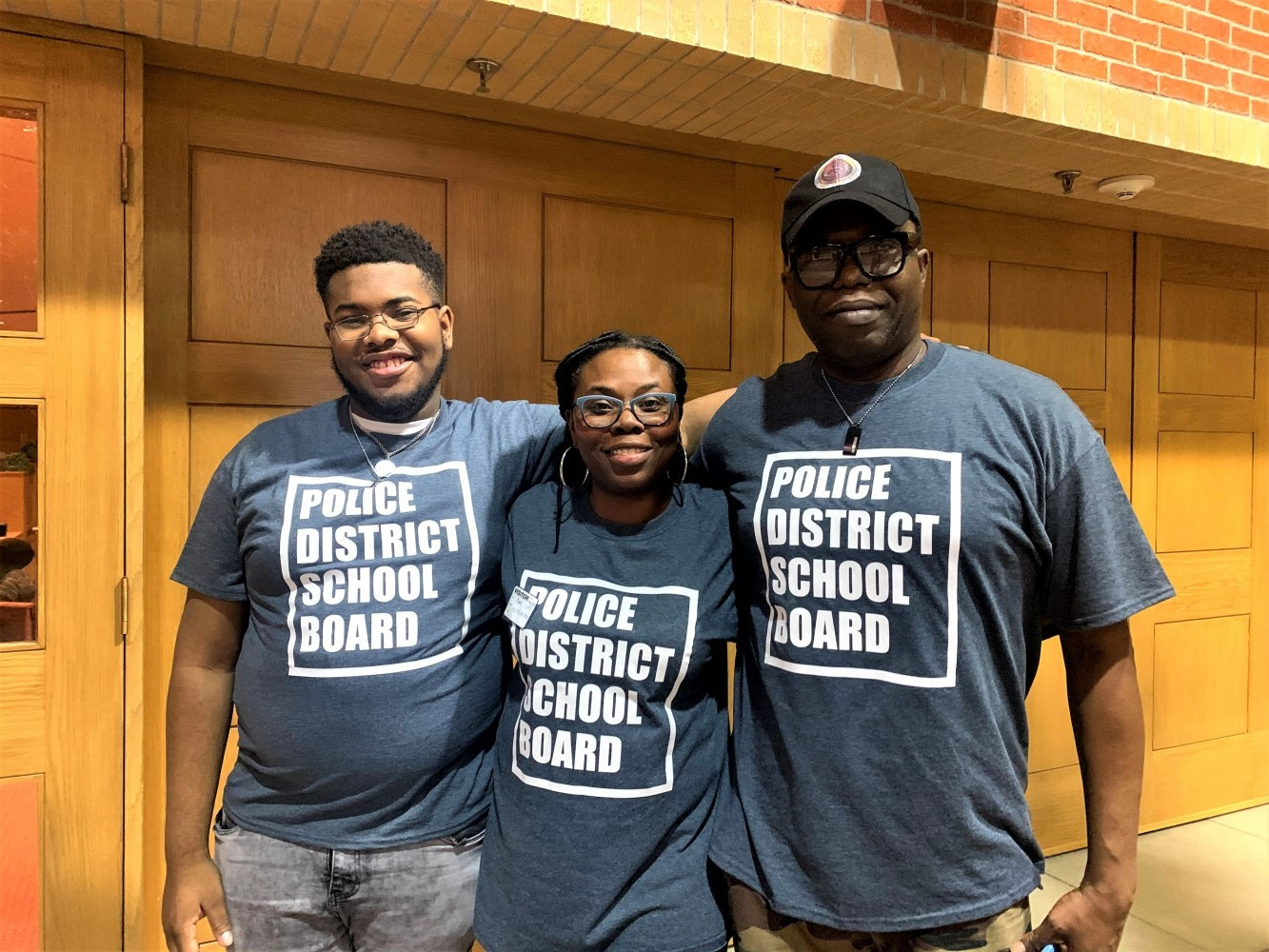
Several advocates including Kola Iluyomade (right) for Peel's Black communities along with students and parents within the board, fought for years to change the system that had harmed children and staff for decades.
(The Pointer files)
“I actually should have known better. She flipped on the community. It was a different side. The moment that happened, I refused to meet nor engage with her, because I saw how horrible she was. When you make such a bold turnaround, as an educator, imagine how this event is going to turn out. Imagine how the community felt. It just displayed to all of us that she was never true to her words.”
Orughu says he and others had initially thought Swarup would be a key ally, after she said all the right things to get the job.
“I wanted to work with her. To make sure we were together. But it was a very painful betrayal.”
The debate over the naming of the centre did not occur in isolation. It unfolded against the backdrop of provincial intervention within the PDSB after successive reviews found evidence of systemic anti-Black racism and the board’s repeated failure to address the harm done to students and staff. Those findings prompted the Ontario government to place the board under supervision in 2020, removing the governance authority of elected trustees while ordering sweeping reforms aimed at rebuilding trust with students, parents and staff.
While supervision was finally lifted in 2023 after more than two years, concerns over the board’s unwillingness to change persisted.
In January of this year, the province once again assumed control of the PDSB, citing continued governance challenges, recurring budget deficits and concerns that board leadership had failed to adequately address longstanding problems. The move also halted plans to lay off approximately 60 teachers midway through the school year while provincial officials reviewed the board’s finances and operations.
“I’m taking immediate action to put an end to mismanagement and disruption,” Minister Calandra said. “The action I am taking at the PDSB will put an immediate halt to a disruptive mid-year upheaval in staffing that would have created uncertainty for parents, students and teachers alike.”
Although the province’s latest intervention is focussed primarily on financial oversight and governance, many community advocates argue the board’s struggles can not be separated from years of unresolved equity concerns.
Swarup and the PDSB board are facing a $7.26 million dollar lawsuit filed by the former head of equity, Poleen Grewal. In her statement of claim, Grewal alleges she experienced retaliation after attempting to address anti-Black racism within the organization, and that senior leadership, including Swarup, undermined Grewal. She was allegedly blamed for the board’s systemic failures to eradicate systemic racism, despite evidence that Grewal was the leading voice within the board to finally change its discriminatory culture. She alleges Swarup and other leaders failed to support the work the province had ordered the board to undertake, then Swarup wrongfully dismissed Grewal.
“By making the recommendation to dismiss the Plaintiff, the Defendant Swarup was aware that the decision would be unlawful and contrary to the Education Act,” the lawsuit alleges. “In fact, the Defendant Swarup decided that she wanted to terminate the Plaintiff’s employment to appease those who were opposed to the Ministry Directives and the work around dismantling anti-Black racism and the Defendant Swarup later sought to manufacture a justification for the decision after the fact.”
None of the allegations have been tested in court and the Peel District School Board has denied the claims.
For advocates like Dowdy, the systemic problems within the PDSB extend beyond any one lawsuit or one director of education.
“All of the policies are there. It's just how much are they paying attention to them? You know, there's the Black Student Success Strategy. You don't really hear about that anymore. The Black Student Success Strategy is a very clear document about how to make the school system address the issues that Black children face. Whether it's over discipline, lack of expectations, lack of academic reflection in the curriculum, whether it's how do you address the issue of poor or lower graduation rates, higher suspension rates; there's so much in there, and there's nobody holding the schools actually accountable to the strategy, to implement it.”
Dowdy says the apathy among education leaders shows they are not interested in minimizing harm to Black students.
“It's not even like anything new needs to be done, except the things that they committed to, they need to be implemented. You need the champions at the top, you need that accountability measure to hold teachers accountable for implementing the strategies that have already been committed to.”
With Swarup set to leave at the end of November, the board’s leadership structure is poised for significant change. The Ontario government is also moving ahead with legislation that could fundamentally reshape how school boards across the province are governed.
Through Bills 33 and 101, the province has proposed expanding provincial oversight of school boards while introducing new executive leadership positions with greater responsibility for financial management and operational performance. While the government has argued the changes are intended to strengthen accountability and improve student outcomes, some parents and advocates fear the legislation places increasing emphasis on corporate management while doing little to ensure expertise in equity, human rights, anti-discrimination work and overall student success.
“The concerns that the community has raised is that this is coming out of the province,” Dowdy said, addressing Bill 101. “When you look at what the focus has been on, it's been on kind of business acumen, not necessarily education, but equally as important, it's missing, [how] that person (who will take over many leadership responsibilities at the board under the new legislation) does not need to be qualified in human rights, discrimination, or understanding systems of oppression. They just need to have a business mind.”
Similar concerns have been raised across the province.
“That's been a big concern for communities, that we're just going to get some business folks at the top who do not care about equity work, who do not care about experiences of Black children within the system.”
For many families, the discussion surrounding leadership changes is secondary to a more pressing question: will anything actually improve for students?
Dowdy says years after community members first sat down with senior board officials to discuss systemic racism, many of the same systemic harms remain unresolved.
“It's a nightmare. The experiences my children have, they've been brutal throughout their education, their experiences in school and feeling their belonging in school. It's been really difficult. It's heartbreaking.”
She says those experiences have forced Black children to mature far sooner than they should.
“It’s no wonder that the PDSB continues to face increasing rates of low enrolment year over year. Parents are withdrawing their children from the PDSB altogether, everyone is putting their kids into the Catholic system, even though it’s not a walk in the park, it’s better than the PDSB, and offers their children an opportunity in a better learning environment.”
Her children, she says, have been forced to take on adult responsibilities, in the absence of care that educators are dutybound to provide.
“The kids, they're resilient, they're young, but I don't like that they have already built this level of resilience at their age; like they have not been afforded the opportunity to be innocent children.”
Dowdy stressed that her family’s experiences are far from isolated. “Many parents are having a hard time, its not just my kids.”
She says communication between the board and the community has all but disappeared.
“We've been promised that that meeting will be put forth and we haven't heard anything. The expectation would be that we hear from the provincial supervisor, Heather Watt (a management consultant with no experience in education).”
In March, when she was appointed, Orughu expressed his concern over the decision to The Pointer. “Heather Watt does not have any experience to tackle the multifaceted issues of the PDSB as it pertains to education, or the diversity and equity issues for which the PDSB was previously taken over by this same government.”
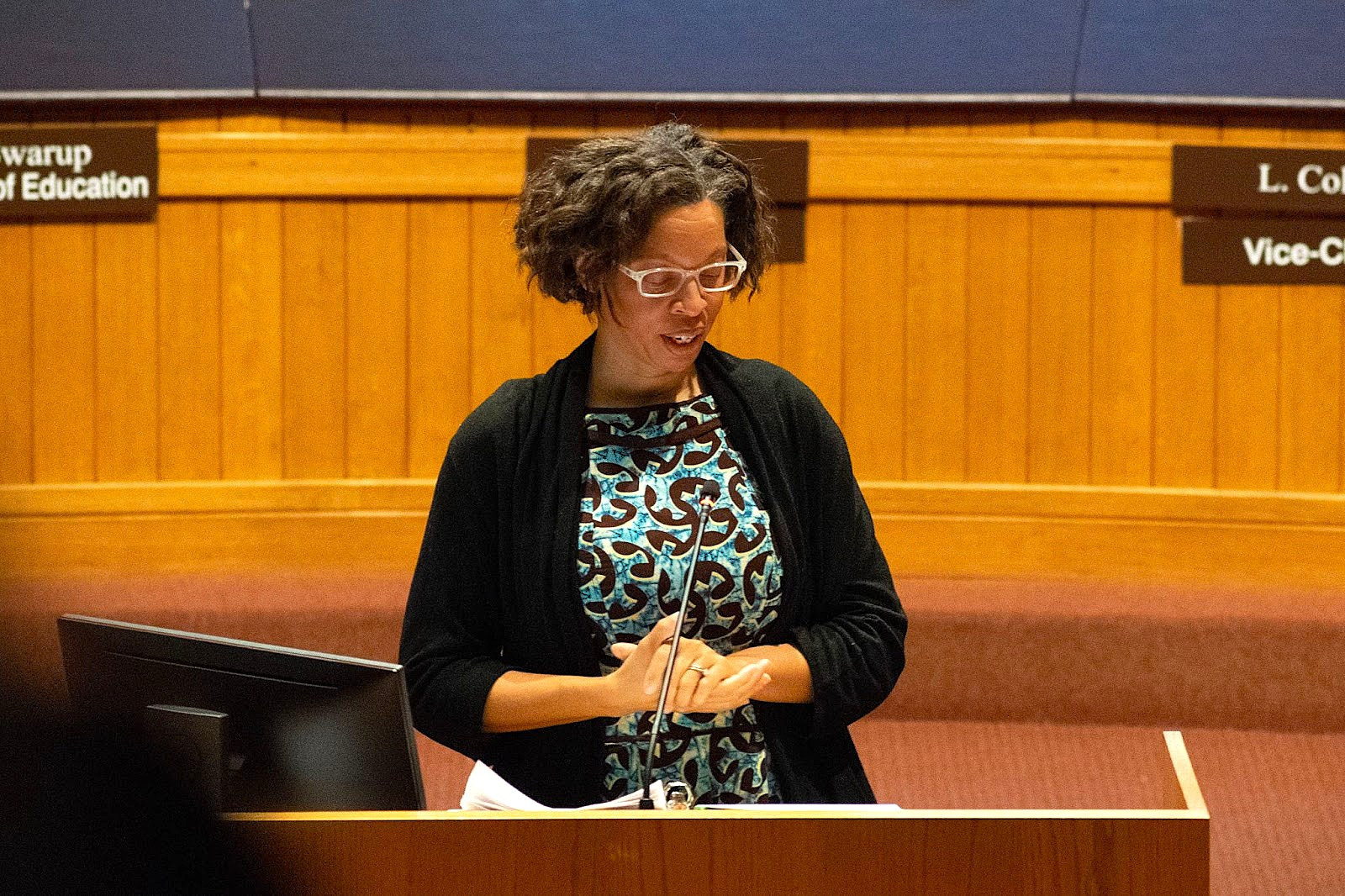
Danielle Dowdy, Brampton's former Citizen of the Year and a law enforcement and community safety professional with more than 20 years experience, speaking at a PDSB meeting. She is highly critical of Director Rashmi Swarup's failures to fulfill commitments made to the Black community in Peel.
(Alexis Wright/The Pointer)
For Dowdy, the controversy surrounding the Centre for Black Excellence represented something much larger than the simple naming of a building.
“I think the naming of the centre is very emblematic of all the things that are wrong with the PDSB, and we were working together for years, we were working towards a goal, and we had no idea that they were working in parallel when undermining all of that.”
“People might feel like, ‘oh, you know, you guys walked away from the table over this’, but it's not just this, it's what it represents. And what it represents was a fundamental dishonesty and fundamental unwillingness to actually do the thing that the community wanted.”
According to Dowdy, the relationship was never repaired.
“This relationship broke down a very long time ago and it's unfortunate because it's the kids who are impacted.”
Although Swarup’s retirement has created an opportunity for new leadership, Dowdy says confidence will depend on whether the next administration demonstrates a willingness to rebuild trust that has been lost for more than a decade.
“[I’m] hopeful always, obviously I wouldn't be around the table if I wasn’t. There are elections coming up (the municipal election in October). I’m hopeful that we’ll see a new set of trustees who really care about these issues. If we have a board of trustees that is actually responsive and cares about these issues, that's also hope. But with the current people in leadership, we're exhausted.”
Beyond students and parents, concerns have also been raised about the experiences of Black educators working inside the PDSB. Dowdy says she has repeatedly heard from teachers and staff members who describe feeling unsupported when advocating for Black students.
“From what I've heard, there are a lot of Black teachers and staff who are off on leave. There's a frustration happening amongst those who are in the system, but there's also the ways in which the system not only harms our kids, but also harms the staff.”
She says many educators have approached parent advocates privately because they fear speaking publicly out of risk of losing their job.
“They are so dejected by the treatment that they see Black students receiving by their colleagues. And when they speak up, they're ostracized. Or they don't speak up and they are stressed. A lot of Black teachers are incredibly frustrated with what they see happening to Black kids and feel that their hands are tied. And so they have to step away for their own mental health. Or if they do step in and intervene, it doesn't go well for them, they get targeted.”
Her allegations echo claims made in the lawsuit filed by Grewal, who alleges that efforts to advance equity within the board were met with resistance from senior leadership and ultimately resulted in retaliation against her.
Orughu says the failure to meet commitments made by the board, ultimately will leave a deep and long lasting scar long after Swarup steps down.
“She’s leaving with a terrible legacy. And it's someone who's been with the education school board for such a long time. She will always forever be remembered for it.”
He argues the province’s latest intervention into the board should have focussed less on finances, and more on whether commitments made to marginalized communities were ever fulfilled.
“I don't really agree with the ministry putting the board under supervision. I think the reason should have been their failure to follow their own directives, but wanting to take the school board over due to financial mismanagement, it doesn't sit right with us.”
Like others, he questions the motive.
“It's not a business. You can't rule. You cannot make the system like a business. You're not making business decisions here, you're making human decisions.”
Dowdy says that regardless of who occupies the director of education’s office next, rebuilding trust must begin with meaningful accountability rather than additional promises.
“Its not even like anything new needs to be done, except the things that they committed to already.”
Orughu says trust can only be restored if the board demonstrates that community voices are once again part of decision making, rather than an afterthought.
“Are we so unimportant, are we so inconsequential, that the community isn't even factored into the policies?”
He worries that increased provincial control could further diminish the influence of parents and community advocates.
“With the current position of this ministry, nothing will work with appointed committees.”
Orughu also rejects the province’s argument that stronger financial oversight alone will solve the board’s problems.
“That's not what the truth is. That's not going to happen, because I can look at the provincial government and tell you about the various amounts of waste there. If the government is interested in eliminating waste, we’ll roll out the red carpet for them to come into the City of Brampton.”
Orughu recounted his representation of a Black student before the board’s discipline committee after the student was encouraged to accept a suspension for a fight he maintains the student did not participate in. According to Orughu, an audio recording of a conversation showed the school’s vice principal encouraging the student to accept responsibility, while allegedly making derogatory comments about the football team the student was on which was primarily made up of Black students. Orughu said the suspension was ultimately withdrawn after he challenged the board’s handling of the case and forced decision makers to listen to the audio recording.
The incident, he says, illustrates why he believes the conversation around critical equity work to protect students from harm that began years ago, remains unfinished.
“DEI doesn't mean you're giving a grade like you're failing, I'm just talking about representation. DEI seems like it's this boogeyman. It's coming after everybody's job. It's to the point where, even for those people who didn't understand the meaning, we’re all afraid to speak.”
Dave Bosveld, another long time critic, community advocate and observer of the PDSB’s actions toward Black families, offered a succinct assessment of the challenges facing the organization.
“I think there's a lot of problems.”
Advocates who spoke to The Pointer said Swarup’s departure could mark the beginning of meaningful change, or it could simply open another chapter in the board’s history of failures to protect Black students from harms that can last a lifetime.
Email: [email protected]
At a time when vital public information is needed by everyone, The Pointer has taken down our paywall on all stories to ensure every resident of Brampton, Mississauga and Niagara has access to the facts. For those who are able, we encourage you to consider a subscription. This will help us report on important public interest issues the community needs to know about now more than ever. You can register for a 30-day free trial HERE. Thereafter, The Pointer will charge $10 a month and you can cancel any time right on the website. Thank you
Submit a correction about this story

