
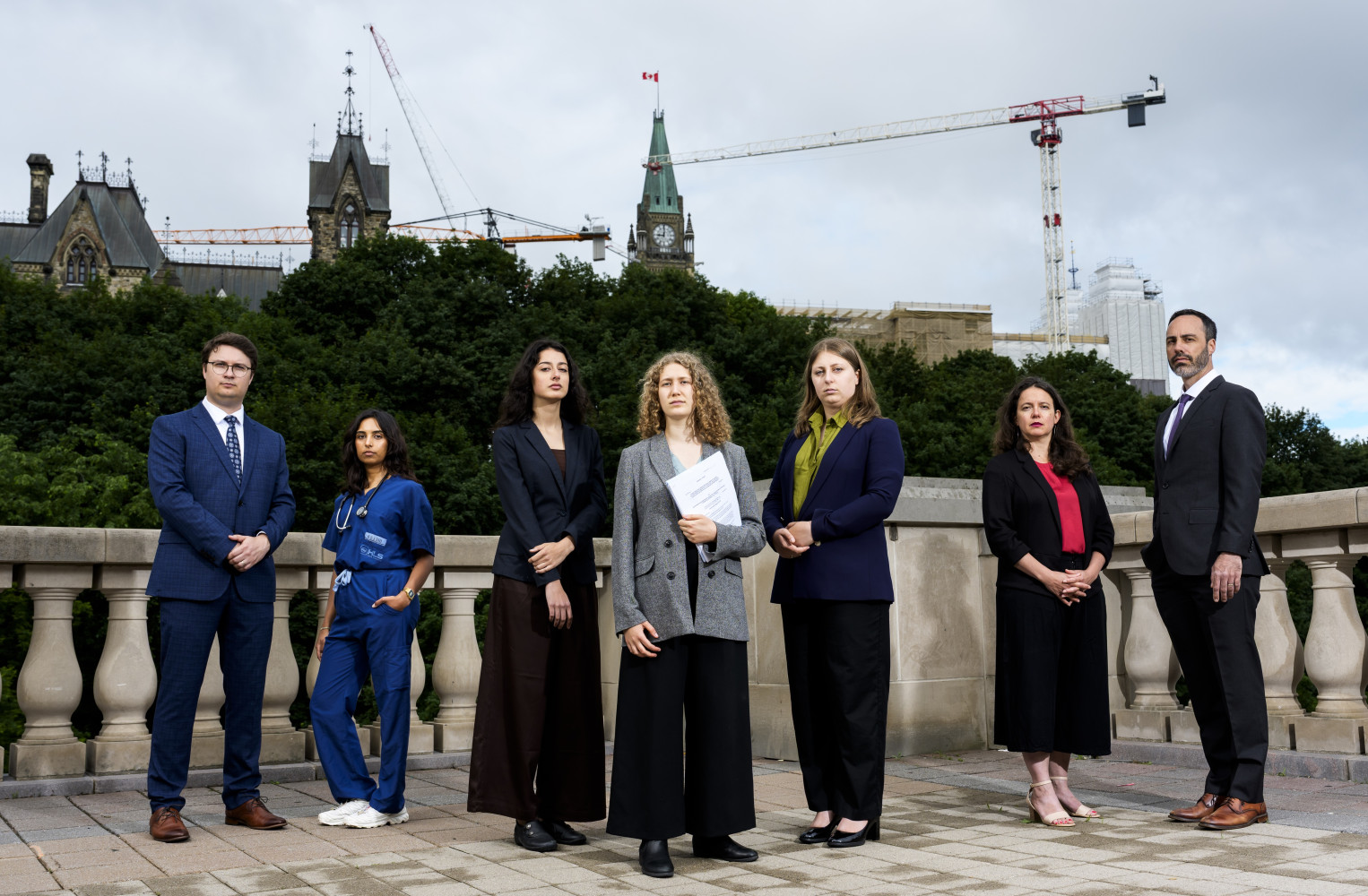
Youth taking Carney government to court over alleged illegal climate rollbacks
Sudbury-based climate activist Sophia Mathur took Ontario Premier Doug Ford and his PC government to court in 2019 with hopes a lawsuit would force stronger climate action.
Eight years later, while that fight continues, she is now attempting to protect what is left of federal environmental regulations by suing Prime Minister Mark Carney for “dangerous”, allegedly illegal rollbacks undoing decades of progress.
“This is not where I saw myself in 12 years,” Mathur said at a press conference in Ottawa on June 16.
“I was hoping by this time that we would have stricter climate policies and plans, but it feels like it is an endless amount of promises with no effective plan and it was disappointing to hear when I was 11 and it's disappointing to hear when I am 19 now.”
She is not alone.
Quebec-based climate activists Marie Maltais and Shirley Barnea share similar anxieties like many young Canadians who are standing at the cusp of an uncertain future shaped by worsening wildfires, flooding, droughts, rising food prices, high home insurance rates and other climate impacts that are becoming increasingly difficult to turn a blind eye to, while the federal government under Carney’s unpredictable leadership continues to favour the fossil fuel industry driving so much of the climate chaos.
“Climate activism is fulfilling in the sense that it gives meaning to our lives but this is not how I would have wanted to spend my teen years and beginning of my twenties,” Barnea, who recently turned 22, told The Pointer.
“We are taking action literally out of a feeling of desperation. We have no choice because our leaders are not doing their job.”
On Tuesday, walking through the grand halls of Parliament Hill with Maltais, both slightly nervous, she learned it was Maltais’ first visit there, “and it was to sue the government”, she chuckled.
Between deep breaths, quizzing each other and even a moment of music to shake off the jitters, they steadied themselves before stepping into the press conference for the sake of the future that lay ahead if they chose to stay silent.
Maltais recalled the 2023 wildfire, the worst in Canadian history, when her home city of Montreal experienced “the worst air quality in the entire world” as a “forested area the size of Denmark” burned due to dry weather conditions made twice as likely by climate change.
In the past year and a half since the prime minister took office, they had been on the lookout for signs that Carney would take their “security seriously”. Instead, the two watched his government weaken, delay or repeal key climate measures at an “alarming speed”, from scrapping the consumer carbon price shortly after being elected, to rolling back policies that target oil and gas emissions and vehicle pollution, without providing adequate alternatives to curb rising levels of dangerous pollution.
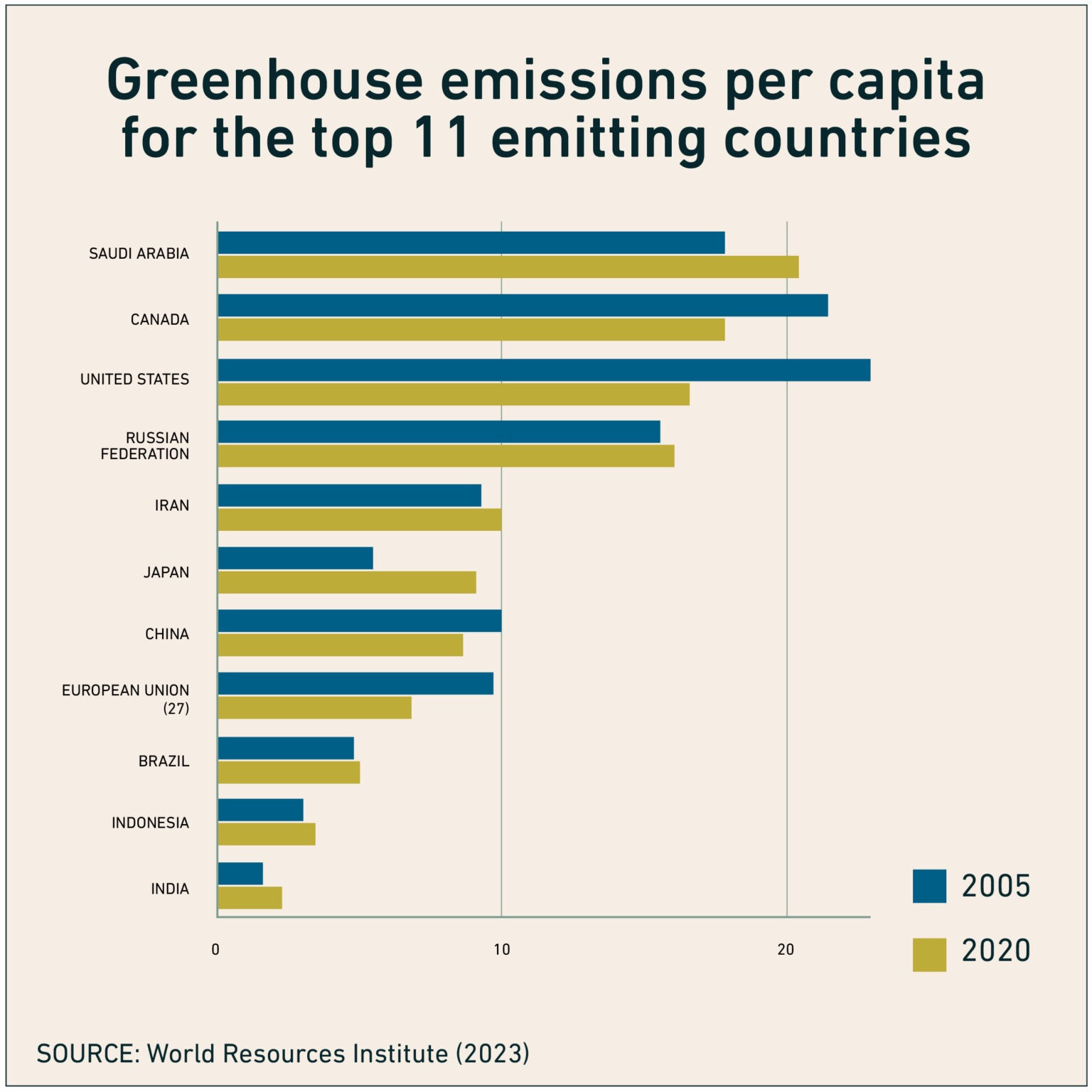
Canada has one of the highest per capita carbon footprints in the world, second only to Saudi Arabia and emits twice as much per person as China. In 2023, it produced 5.76 million barrels of oil daily, about six percent of global output with most reserves located in Alberta’s oil sands.
(David Suzuki Foundation)
The tipping point arrived in May with the Canada–Alberta Memorandum of Understanding setting the stage for expanded fossil fuel development while weakening industrial carbon pricing, environmental assessments and retreating from a promise of net-zero power grids by 2035, despite seven in ten Canadians (including 62 percent Albertans) supporting regulations to limit oil and gas emisisons. These decisions led to the former environment minister Steven Guilbeault’s resignation from Parliament Hill.
“I don't envy Carney’s position. It's hard to govern a country such as Canada,” Barnea said.
“But if he thinks that appeasing Danielle Smith is more important than maintaining liveable conditions on planet Earth for young Canadians, then I'm very sorry for that choice. The claim that, under what he's doing, we can still reach our [climate] target is just objectively false.”
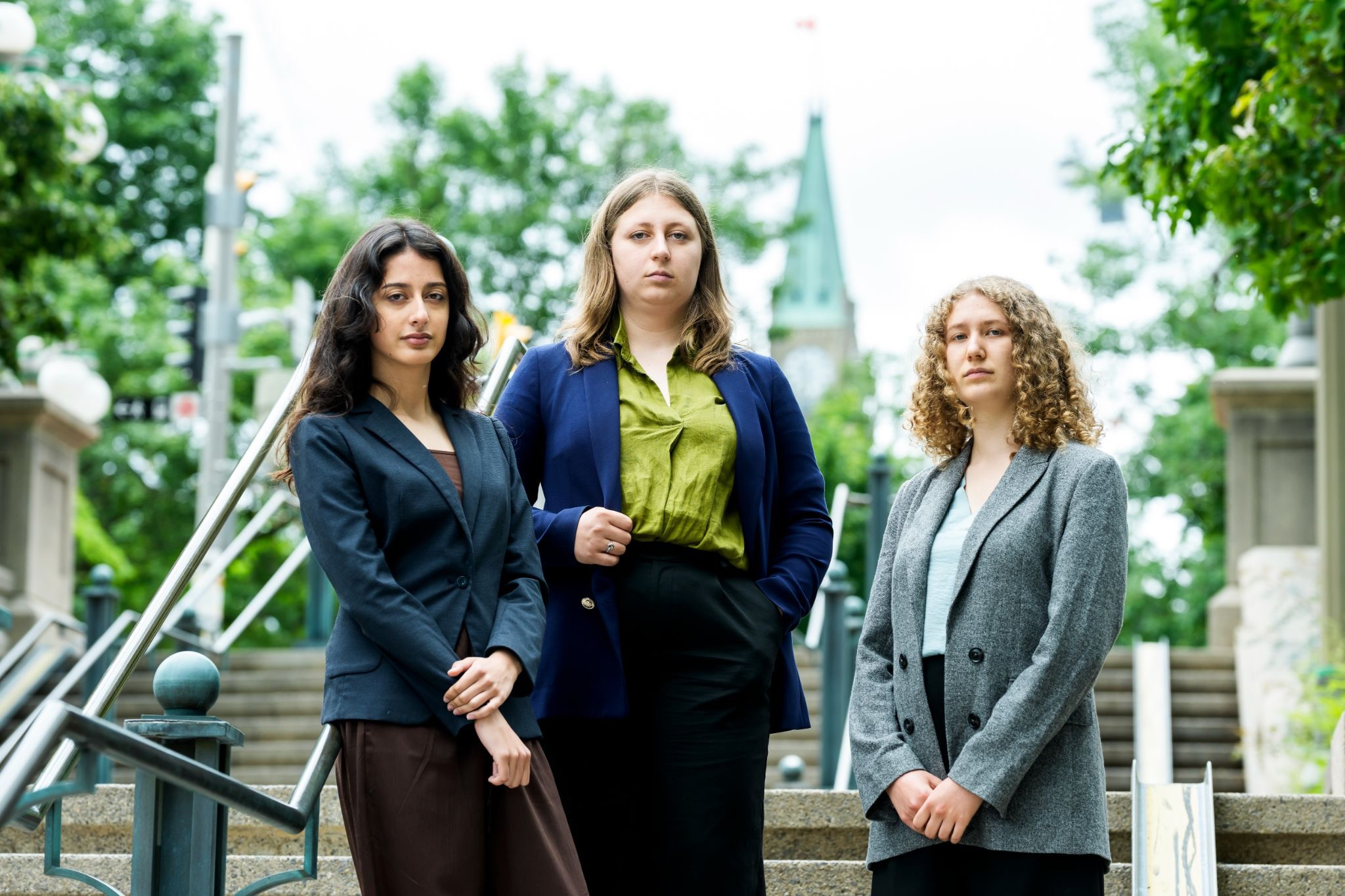
Sophia Mathur (left), Marie Maltais (center) and Shirley Barnea are taking the Mark Carney government to federal court over recent climate rollbacks and a failure to follow its legal mandate of meeting climate targets.
(Justin Tang/Ecojustice)
On June 15, Ecojustice on behalf of the three young activists, Environmental Defence and Canadian Association of Physicians for the Environment (CAPE) filed an application for judicial review arguing the federal government no longer has a credible plan to meet its legally binding 2030 climate target.
“You cannot abandon the map and still expect to reach your destination…Right now, its only climate plan is a plan to fail — and that’s not just irresponsible, it’s unlawful,” Ecojustice Climate Director, Charlie Hatt, said.
“Neither the climate nor the law can tolerate rollbacks today in exchange for promises of action many years from now.”
When Canada passed the Canadian Net-Zero Emissions Accountability Act (Bill C-12) in 2021, it created a legal framework requiring the government to set binding greenhouse gas reduction targets including five-year milestone targets and publish detailed, science-based plans and progress reports aimed at achieving net-zero emissions by 2050; part of that plan is achieving the 2030 target to cut emissions by 40 to 45 percent or approximately 440 megatonnes (Mt) below 2005 levels under the Paris Agreement.
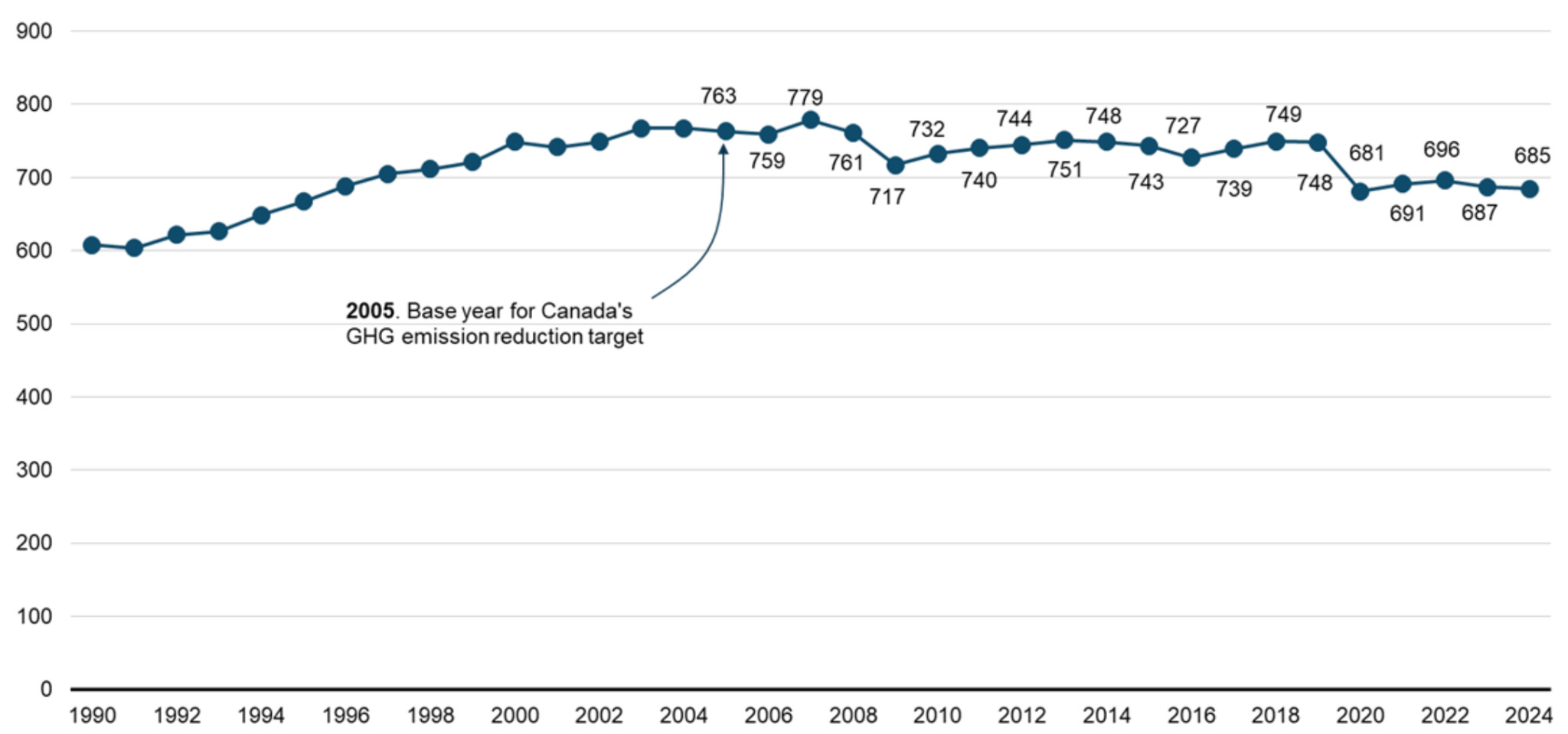
In 2024, Canada's total greenhouse gas emissions were 685 megatonnes of carbon dioxide equivalent (Mt CO2 eq), a 0.3 percent decrease from 687 Mt CO2 eq in 2023.
(Government of Canada)
Even if fully implemented, Ottawa’s climate plans would at best reduce Canada’s emissions by 21 to 28 percent by 2030, missing the legally mandated 2030 target by 90 to 140 million tonnes of climate change fueling carbon emissions. The government’s own 2025 Progress Report on the 2030 Emissions Reduction Plan confirms Canada is not on track to meet its legislated 2030 climate targets.
“It's not the first time that the federal government has not been on track to achieve a target that it is set for emission reduction,” Hatt told The Pointer.
“But it is the first time that that's happened in the context of there being an established climate accountability law that sets in place duties binding the federal government in respect of targets and plans.”
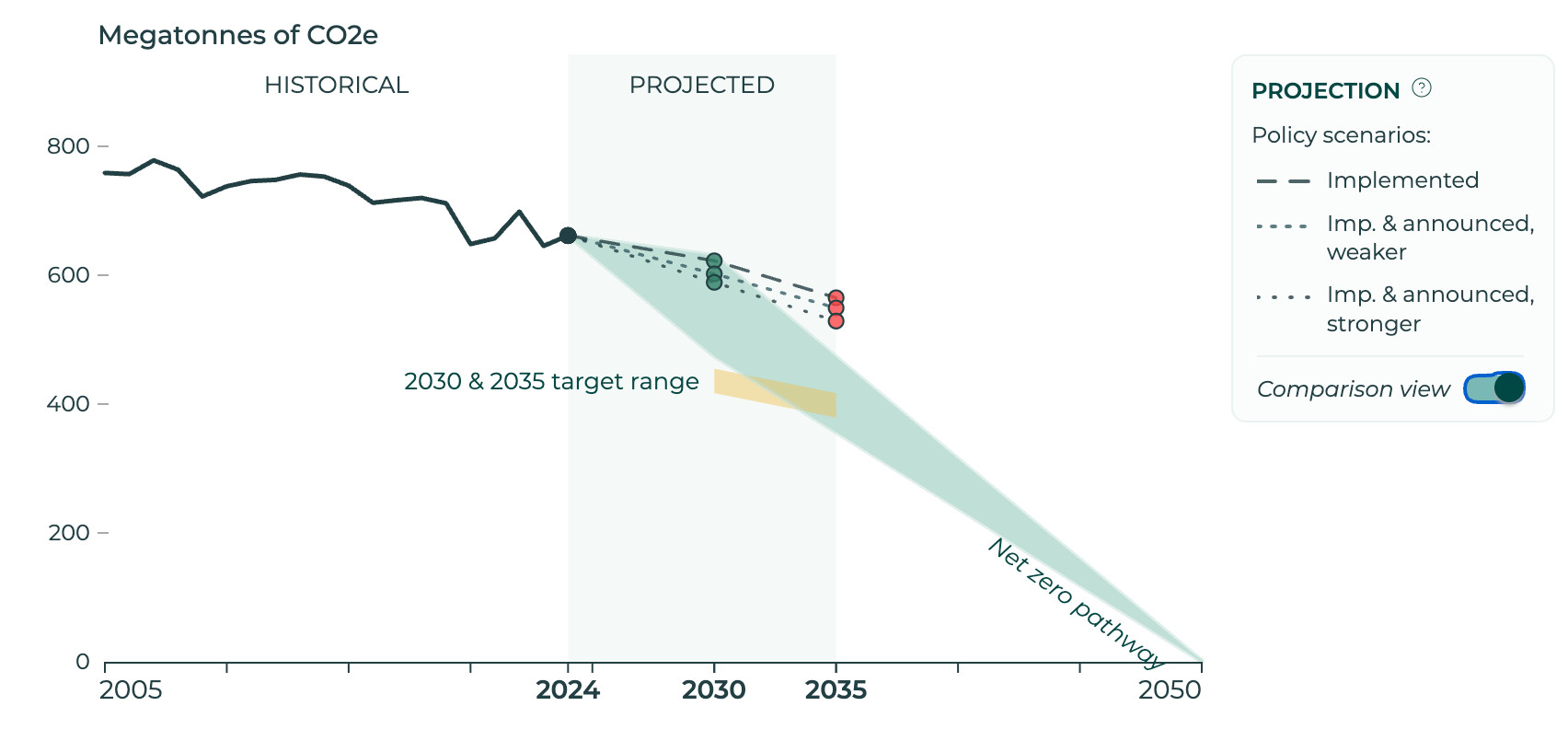
According to the Canadian Climate Institute, greenhouse gas emissions in Canada are projected to be behind the net zero pathway by 91.9 megatonnes in 2035 under implemented policies.
(Canadian Climate Institute)
On May 15, Ecojustice wrote a letter to environment minister Julie Dabrusin demanding that she initiate, within 30 days, a formal process to amend Canada's 2030 Emissions Reduction Plan (ERP) to ensure it complies with the mandatory requirements of the Canadian Net-Zero Emissions Accountability Act (CNZEAA) or risk being served with a legal notice.
The deadline passed without any actions taken by Dabrusin.
Just a week later, UN General Assembly overwhelmingly backed the International Court of Justice’s landmark July 2025 ruling declaring that countries have binding legal obligations under international law to address and prevent climate change by curbing greenhouse gas emissions from fossil fuel production—making it more than a mere political choice.
“It is time for accountability before the law,” Hatt said as he announced a pivotal moment in Canadian climate litigation, moving into uncharted legal territory.
It is not the first instance the federal government has faced a lawsuit for failing to meet its climate targets or fallen short of being on track to meet its emissions reduction goals, but it is the “first time that the federal climate accountability law is going to be interpreted by the federal court”.
In 2019, the La Rose v. His Majesty the King was filed as a historic youth-led constitutional climate lawsuit against the federal government by 15 children and youth from seven provinces and a territory, contending that the national GHG emissions and inadequate climate policies violate their fundamental rights.
The plaintiffs allege the government’s failure to adequately address the climate crisis violates their rights to life, liberty and security of the person under Section 7 and their equality rights under Section 15 of the Canadian Charter of Rights and Freedoms, given that young people will disproportionately bear the long-term impacts of climate change—and is therefore, “unconstitutional”.
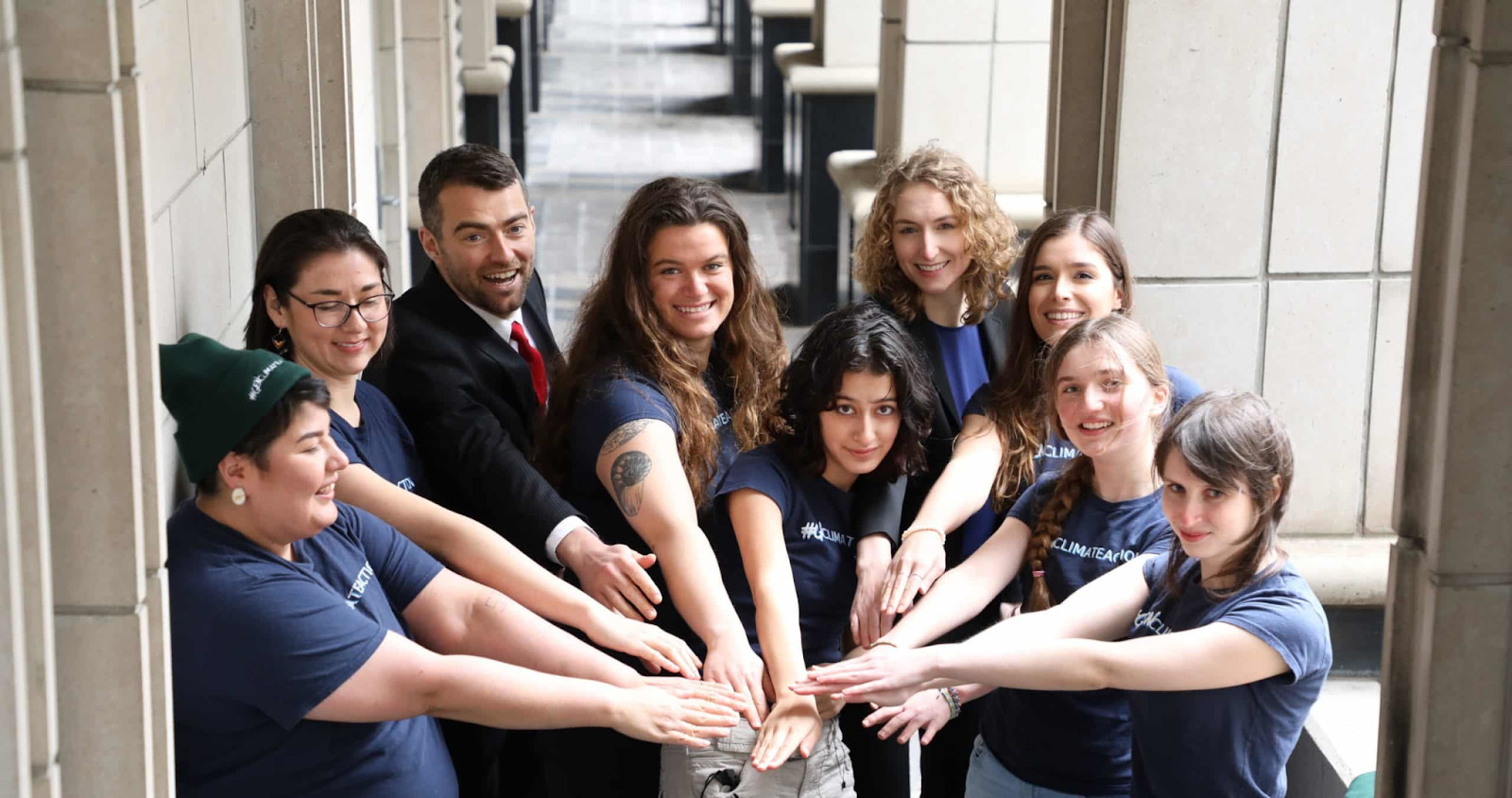
Sophia Mathur (centre) is among seven youth plaintiffs challenging the Ontario government in a Charter-based climate lawsuit alleging that the province’s weakened emissions targets violate their fundamental rights due to insufficient climate action. Mathur was just 12 years old when she joined the case.
(Ecojustice)
Akin to the federal legal challenge, the 2019 Mathur et al v. His Majesty the King in Right of Ontario is also a Charter rights case where the seven plaintiffs claim the provincial government’s weakened 2030 GHG emissions targets violate their rights to life, liberty and security. Despite being in court for its lack of environmental protection, the Ford government removed its mandate to publicly report on its progress made to reduce emissions in Ontario.
“I'm 19 [years old] now, so it has been some time, I think that I understood when I signed up for that case, that it was a long process,” Mathur said.
“It's upsetting to know that in that time, the Ford government still has not taken proper action to protect our environment and to protect our future.”
The latest legal challenge, on the other hand, is “administrative” in nature and represents the first time a federal court will interpret and apply the CNZEAA to assess whether the government is complying with statutory obligations set out in climate accountability legislation.
“Because the structure of the act is successive milestone year targets every five years—2030, then 2035, and so on and each time, a plan needs to be made to meet that target. So if the government can simply set and forget that climate plan…then later down the line, just eliminate all the key measures for achieving the target, then one might reasonably question, how is this Act that is meant to hold the government accountable on climate serving its purpose?” Hatt explained.
“We think that an interpretation of the Act that understands that purpose of accountability, that drives action towards meeting our climate goals and protecting Canadians in our environment from climate harms is one that will win the day.”
Judicial review applications are also meant to be summary proceedings that “move relatively quickly” and he hopes that there will be a hearing “within the not too distant future” either later this year or early 2027 given the looming deadline of the 2030 target.
That urgency is already being felt everyday across the country, impacting Canadians’ wallets as well as health.
In 2024, insured losses from severe weather in Canada exceeded $8 billion for the first time in the country’s history, according to Catastrophe Indices and Quantification Inc. (CatIQ), nearly triple the insured losses recorded in 2023 and about 12 times higher than the annual average of $701 million between 2001 and 2010.
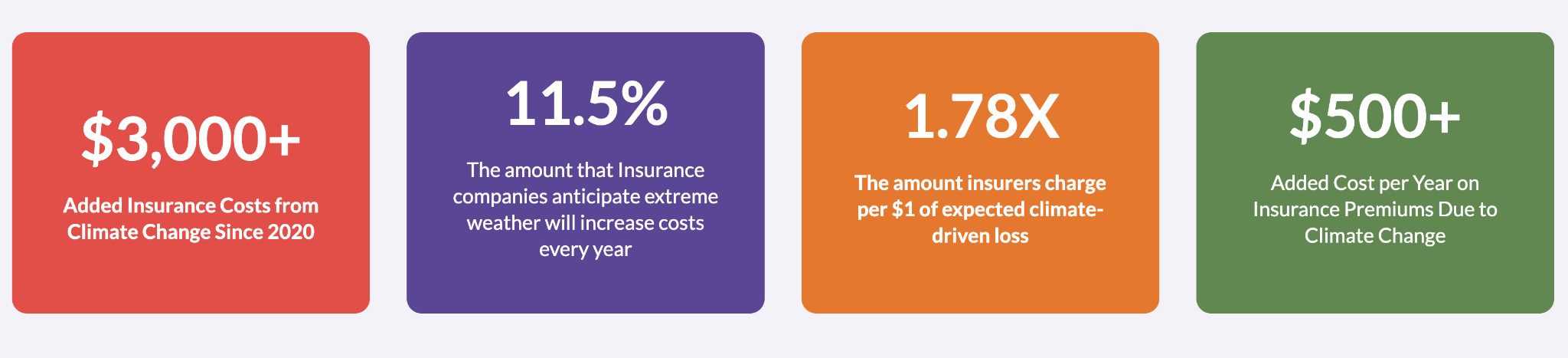
Climate change is rapidly driving home insurance costs across the country, adding an estimated $533 per year to the average homeowner’s premium since 2008 and more than $500 annually as extreme weather intensifies.
(Environmental Defence)
Climate change accounted for 54.5 percent of home insurance premium increases between 2008 and 2024. As a result, in the past six years, homeowners have likely paid more than $3,000 in additional home insurance premiums as climate-driven extreme weather events intensify across Canada, a recent report by Environmental Defence and University of Toronto found.
Even a roof over one’s head cannot help everyone escape the wrath of the natural world at the behest of a warming planet.
Last summer, Canadian Association of Physicians for the Environment President, Dr. Samantha Green, met one of her patients — a mother living with her teenage son in a one-bedroom apartment in Toronto without working air conditioning. What should have been a place of rest had, instead, become an “oven-like” space during periods of extreme heat, forcing them through nights of little to no sleep as temperatures climbed.
When the mother opened the window to let some air in, her son’s asthma was “triggered” due to the wildfire smoke that engulfed the Greater Toronto Area. Her own health began to deteriorate; she reported worsening depression and a flare-up of chronic pain.
“Climate change is not an abstract environmental issue. It is one of the greatest health threats of our time,” Dr. Green said.
In 2023, wildfire smoke in Ontario alone was estimated to have generated roughly $1.28 billion in health-related costs over just a few days. The Canadian Medical Association projects by 2050, climate-related health costs in Canada could reach between $59 billion under a low-emissions scenario and as high as $110 billion if emissions remain high.
In November, the same month when Smith and Carney signed the MoU, Carney reaffirmed that his government would “respect” the Paris commitments for climate change: “we’re determined to achieve them”.
When Mathur recently met Carney, she asked him to keep the “climate promise” that he had made before being elected because her parents had taught her “when you make a promise, you keep it”.
“But promises without a plan are not enough,” she added.
On June 17, Green Party leader Elizabeth May said her initial optimism about Carney, shaped by his record at the Bank of England, the Bank of Canada and as the UN Special Envoy on Climate Action and Finance, had quickly fizzled away after working alongside his government.
“The Prime Minister’s Office is the worst I’ve seen since 15 years of my political career,” May said at a press conference, calling Parliament Hill a “democracy theme park” as the House sitting nears its summer break.
On June 9, that rollercoaster was on display when Canada’s two prominent climate voices, Catherine Abreu and Simon Donner, appeared before the House of Commons environment committee after resigning from the federal Net-Zero Advisory Body (NZAB), the independent panel created to guide Canada toward its legally binding 2050 net-zero target.
As they testified, they told MPs that Canada was drifting away from its climate commitments amid weak policy follow-through and limited consultation, saying their advice was often neither requested nor acted upon and that the advisory body had been left severely depleted in membership.
It wasn’t just their testimonies that shocked Canadians but the opposition parties, including Conservatives, uniting to push back against Liberal attempts to steer the discussion toward procedural motions on home energy retrofits, moves critics believed used to run down the clock and avoid directly confronting the scientists’ warnings.
At the recent presser, May recalled the “appalling” Bill C-5, dubbed the One Canadian Economy Act, being “bulldozed” with limited committee scrutiny and a lack of time spent to “study” the legislation despite concerns shared from environmental and Indigenous advocates about the bill weakening oversight and consultation processes. The intent was to fast-track development of projects in the national interest but May said not a single project has moved forward since its passing in June last year due to proponents being hesitant about running into legal issues.
She cautioned that a similar pattern was emerging yet again with omnibus bills: Bill C-30 (the Spring Economic Update Implementation Act) and Bill C-31, which introduce drastic regulatory changes under the Pest Control Products Act including provisions allowing Cabinet to override Health Canada’s science-based pesticide restrictions if deemed necessary for broadly defined economic security or food security considerations.
“Democracy itself is disrespected, Parliament itself is disrespected,” May said, cautioning “decades” of environmental, health, safety and Indigenous protections are being eroded as legislative processes are pushed through.
Ecojustice’s Hatt believes that their legal challenge is an “important opportunity” to push for environmental protections and reopening Canada’s climate plan to proper scrutiny and feedback from Indigenous communities, experts and interested parties such as the three young activists.
“If the court grants the order we're asking for, they [the federal government] won't be able to avoid that consultation any longer,” he noted.
“I think that would show that the government understands climate accountability is a worthwhile process to engage in.”
Email: [email protected]
At a time when vital public information is needed by everyone, The Pointer has taken down our paywall on all stories to ensure every resident of Brampton, Mississauga and Niagara has access to the facts. For those who are able, we encourage you to consider a subscription. This will help us report on important public interest issues the community needs to know about now more than ever. You can register for a 30-day free trial HERE. Thereafter, The Pointer will charge $10 a month and you can cancel any time right on the website. Thank you
Submit a correction about this story

