
Former environment minister calls on Ford to dig into green jobs as Ontario records largest unemployment increase in Canada
“Our government has been clear since day one – we are making Ontario open for business. We will bring quality jobs back to Ontario and help all families get ahead,” Ontario Premier Doug Ford said in November 2018, five months after his election.
Seven years later…
In November last year, Ford told a protester inside Queen’s Park to “go find a job” as controversial housing legislation (Bill 60) was being debated—it now makes it easier for landlords to evict tenants.
Each time Ford has been re-elected he has made repeated claims that he would invest tens of billions to retrain workers for new opportunities, retool companies for new customers, re-shore supply chains and rebuild roads and highways to create new jobs—only to shift the blame onto Ontarians when confronted by the reality that his policies have failed to make life easier for millions across the province who continue to struggle as the cost of living spikes alongside unemployment.
“It drives me nuts when I see young, healthy people and they’ll call me saying, ‘I can’t find a job,’” Ford complained during a breakfast speech at the Toronto Region Board of Trade in September last year.
“I assure you, if you look hard enough, it … may be in fast food or something else, but you’ll find a job.”
Less than a week before, Statistics Canada reported the province had shed 26,000 jobs in August and 66,000 jobs since the trade war with the United States began in February 2025 — the most of any province in the country with the highest jobless rates in Windsor at 11.1 percent, nine percent in Oshawa and 8.9 percent in Toronto.
A year did not make much difference.
In February this year, Ontario’s unemployment rate rose to 7.6 percent.
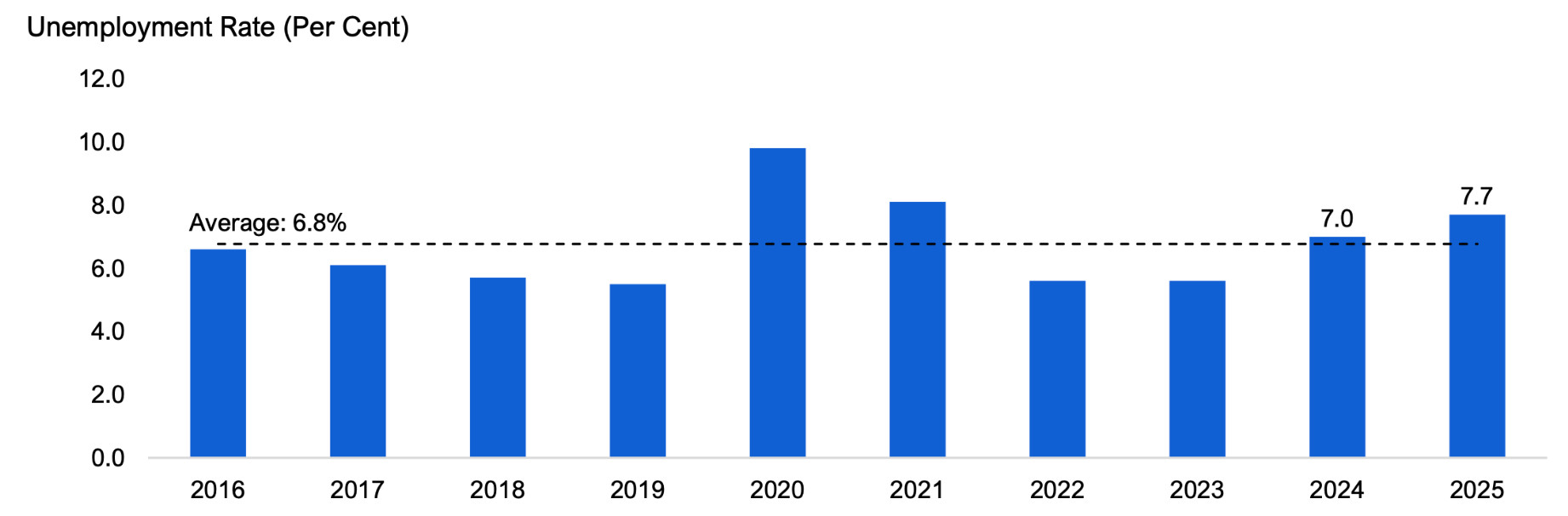
The latest Financial Accountability Office report revealed the unemployment rate in Ontario increased to 7.7 percent in 2025.
(Financial Accountability Office of Ontario)
On April 29, the Financial Accountability Office of Ontario (FAO) released a report noting the province’s employment growth (1.0 percent) was the third slowest among the provinces, and Ontario’s unemployment rate was the third highest in the country.
“Job creation did not keep pace with the increase in the number of people looking for work, causing Ontario’s unemployment rate to increase to 7.7 percent in 2025, up from 7.0 percent in 2024 and the highest since 2012 excluding the pandemic,” the watchdog reported.
Last year, the province’s youth unemployment rate averaged 9.6 percentage points higher than that of core-aged workers, “the second largest two-year gap on record back to 1976”.
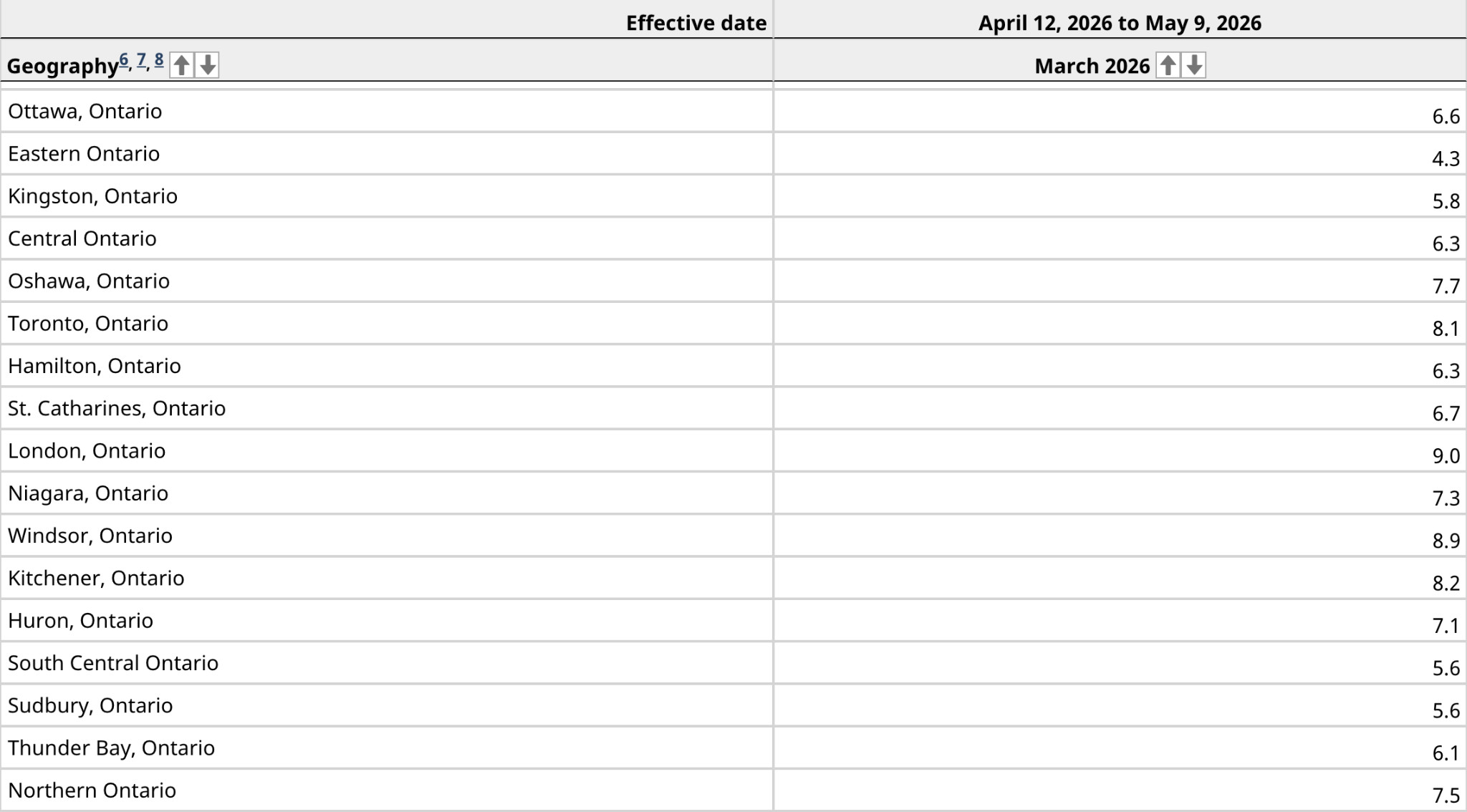
As of March this year, Ontario has had one of the highest unemployment rates in the country with London, Ontario taking a hit at nine percent.
(Statistics Canada)
But a year tilted the scale enough to reveal how Ontarians felt about the ruling party: a recent poll found support for Ford’s PCs (36 percent) is now been trailing Liberals (38 percent) for the first time in almost a decade.
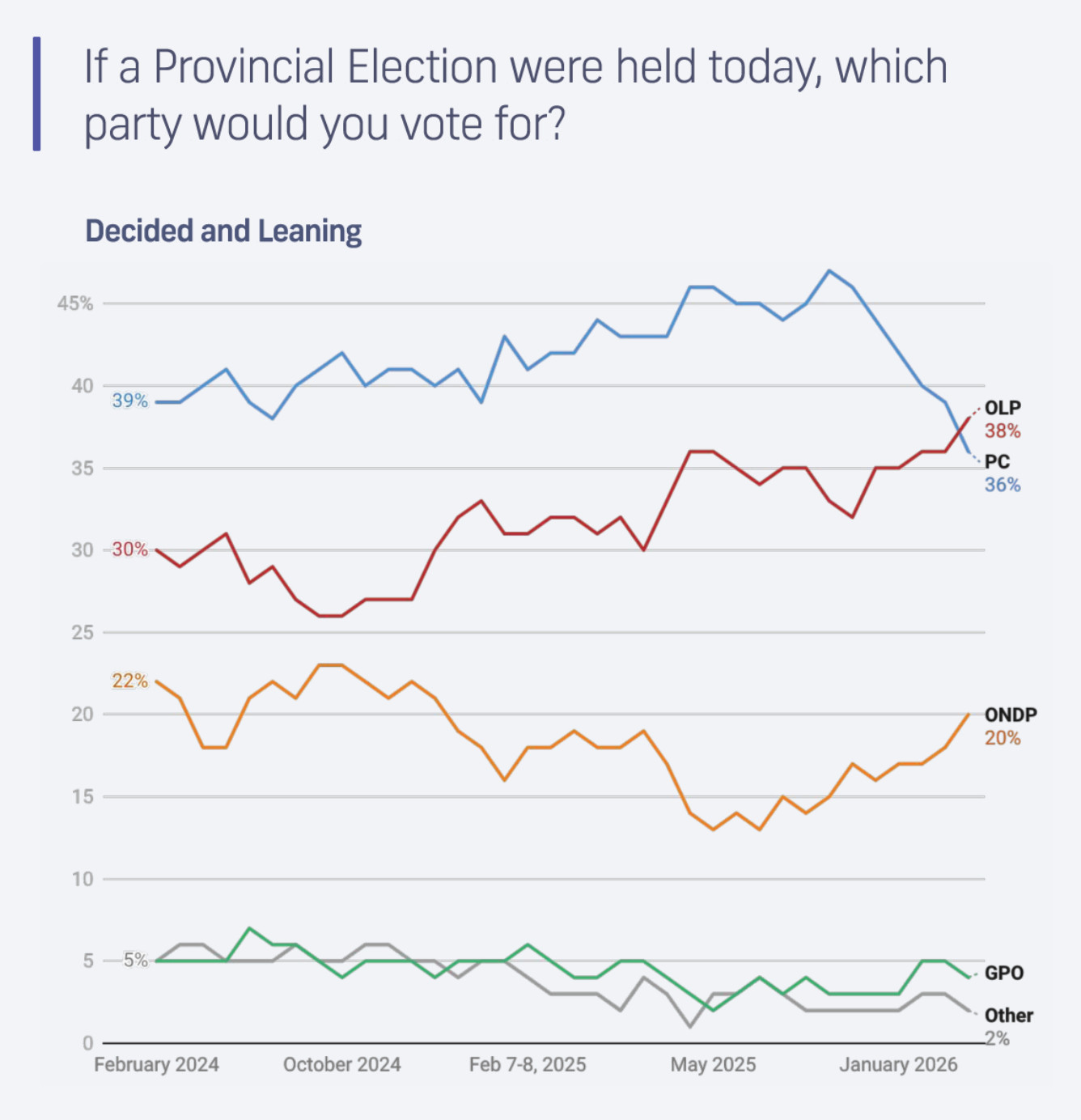
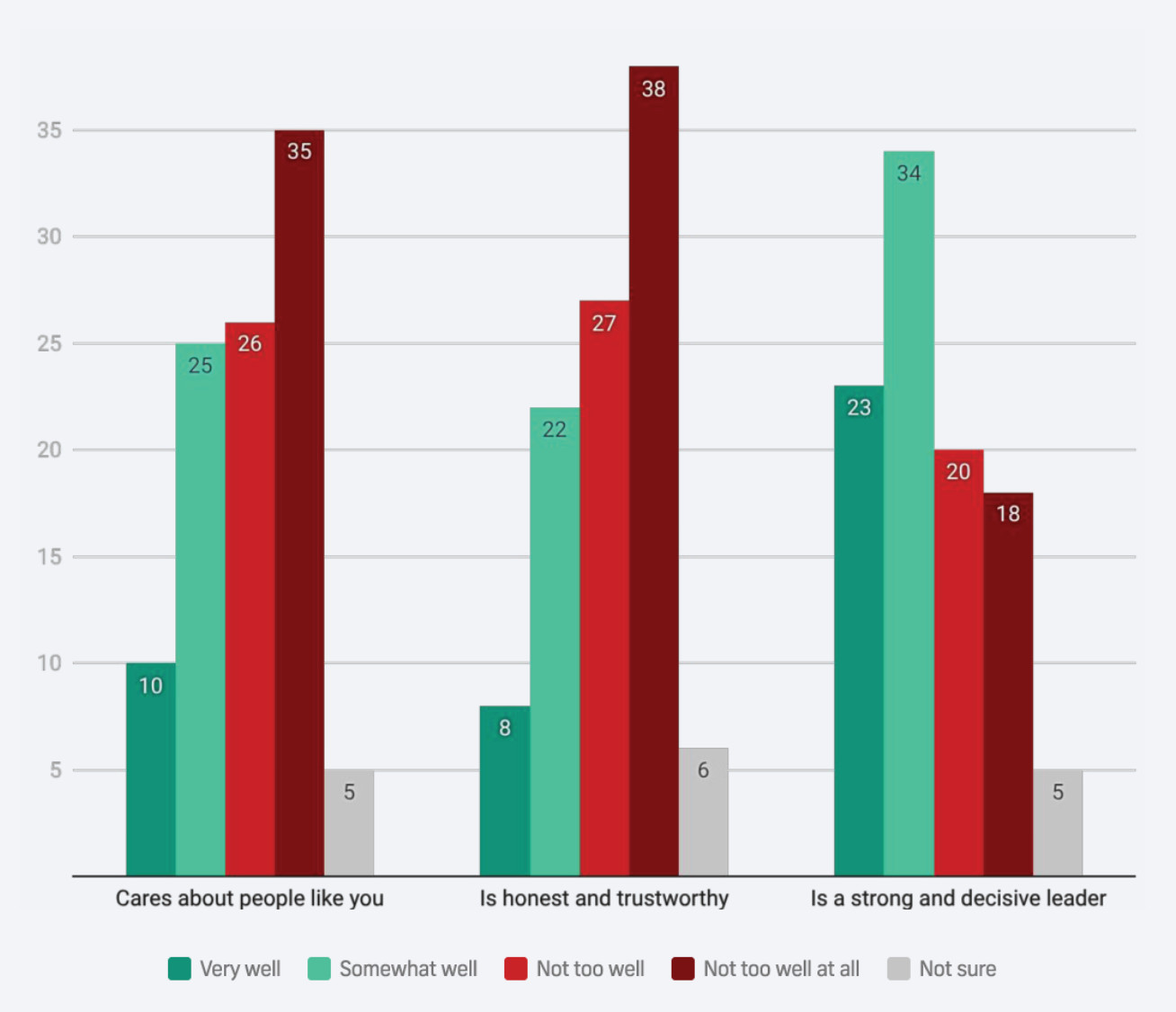
The latest Liaison Strategies survey for Ontario noted the PCs trailing the Liberals by two points. “When asked if Ford cares about people like you, just 35 percent say he does while a majority, 61 percent, say he does not,” David Valentin, Principal at Liaison Strategies, said. “The numbers are even weaker on trust. Only 30 percent say Ford is honest and trustworthy, compared to 65 percent who say he is not.”
(Liaison Strategies)
In 2025, the average salary of an Ontarian was just over $63,000. That same year, Ford made $269,567.49 while the finance minister took home $213,939.75, according to the province’s recently released Sunshine list.
While Ford continues to voice frustration over Ontarians struggling to find work and frames projects like Highway 413 and opening up the Ring of Fire as job creators, his Progressive Conservatives are overlooking a rapidly growing sector with far greater employment potential.
At a two-day Earth Day event inside Queen’s Park, Ontario’s former Minister of the Environment and Climate Change Chris Ballard made the case for green jobs as he joined a coalition that asked the province to reinstate a stronger, science-based climate plan.
“If we make the right choices, if the province returns and develops a very strong climate action plan that includes…a rebuilding plan, a high-performance building plan…We can create all sorts of investment in Ontario,” Ballard said during a presentation on April 23.
A 2022 study by the Canada Green Building Council (CAGBC) and The Delphi Group projected that greening Canada’s buildings has the ability to create 75,000 jobs annually on the pathway to net zero. CAGBC’s latest Green Retrofit Economy Report estimated that green retrofits alone could generate 2.1 million jobs by 2050, and that meeting retrofit demand will require tripling today’s green building workforce by 2030.
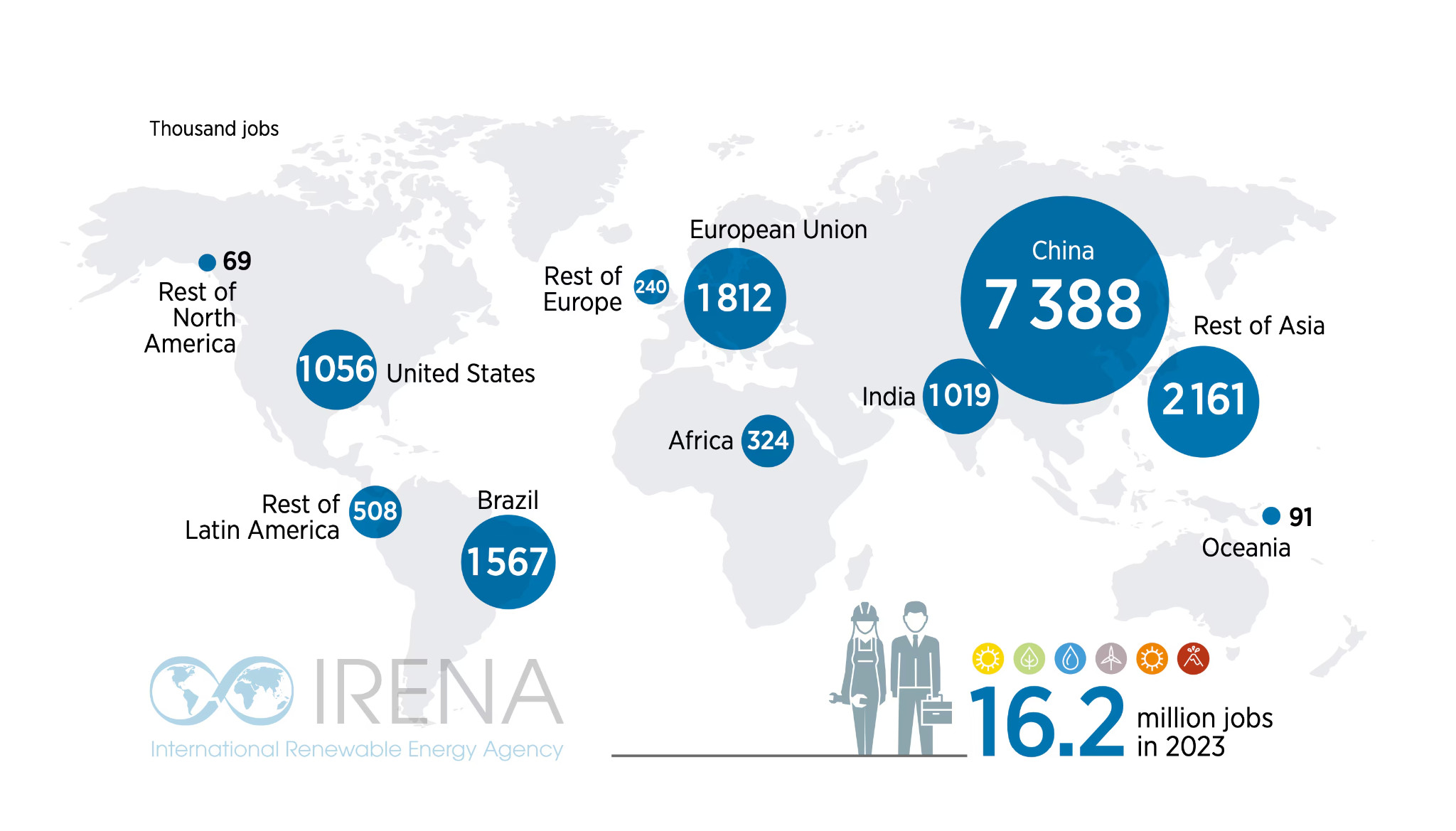
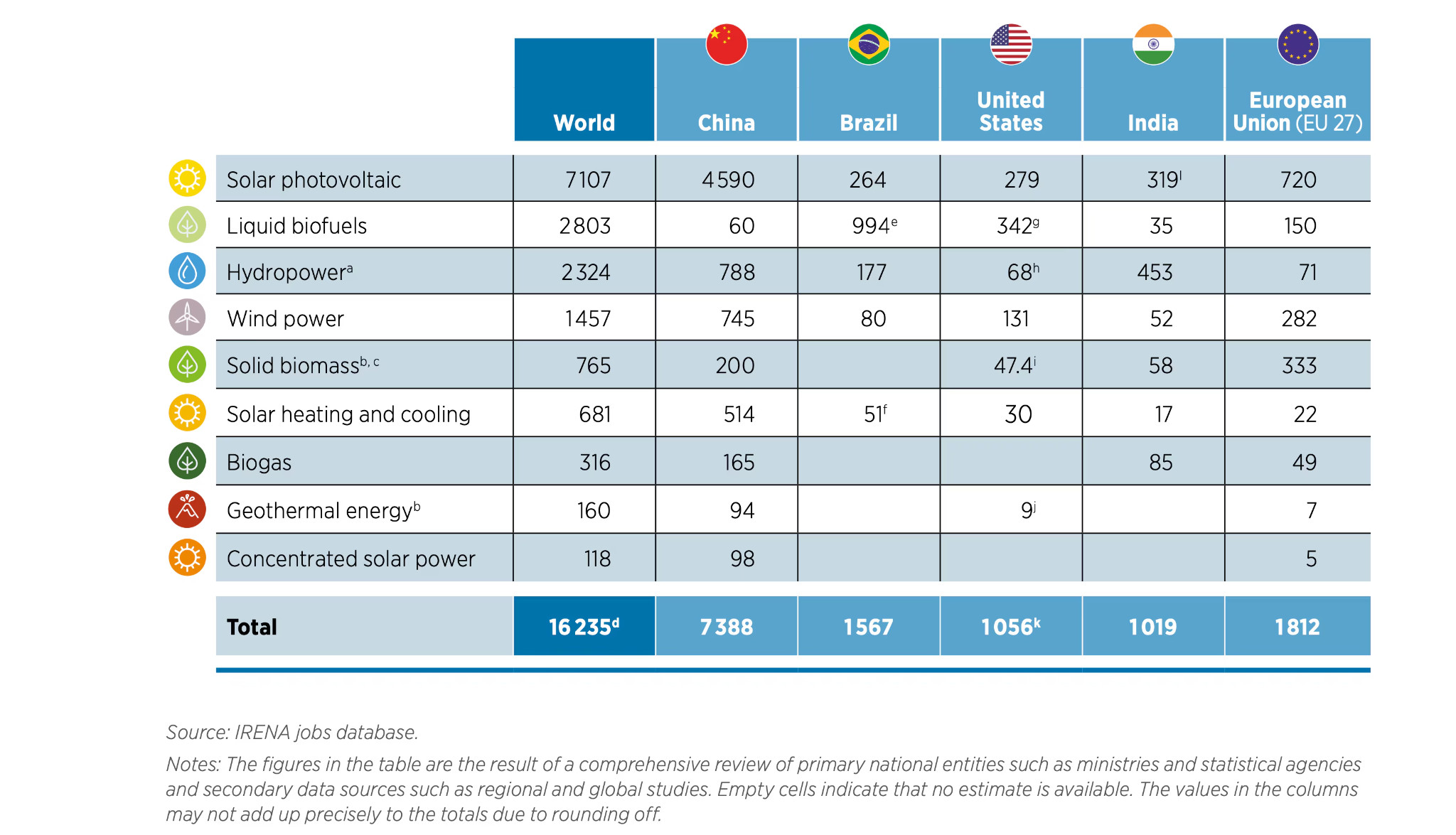
A 2024 World Economic Forum report highlighted that China (7.39 million) is leading when it comes to creating green jobs with 46 percent of the global total, followed by the European Union at 1.81 million jobs.
A 2024 BuildForce Canada report noted approximately 57,000 new, additional workers are needed to meet the demand for residential fuel switching and energy-efficiency retrofits which includes up to 16,300 jobs for fuel switching and 40,600 for retrofits, primarily affecting HVAC mechanics and other trades.
“The problem isn't our lack of willingness to work, but our government's lack of willingness to work for us,” Youth Climate Corps Executive Director Bushra Asghar said.
“We don't have to choose between the economy and the climate. This choice is a myth.”
In November, the federal government signalled support for the Youth Climate Corps through a $40 million commitment in Budget 2025. It marked an important step toward establishing a national, government-funded program designed to employ thousands of Canadians under 35 in two-year paid apprenticeships that combine training and fieldwork while supporting urgent climate action, community resilience and the transition to a green economy.
Ballard is confident a “bold provincial climate plan” will open “endless” opportunities in employment as well as attracting a “meaningful share of the billions of dollars flowing globally into high-performance building component manufacturing”.
“If we had a clear, high performance, provincial building standard as part of a provincial climate plan, this would give the building, materials, manufacturing, and clean tech sectors the policy certainty they need to invest in Ontario,” he said.
Recalling a visit to Boston, Ballard described touring what was then the largest Passive House commercial building in the world, where he noticed construction panels stamped with a Canadian maple leaf and asked: “what company makes those with the maple leaf on it? He looked at me like I was an idiot, because these were Passive House certified panels that were made right here in Ontario.”
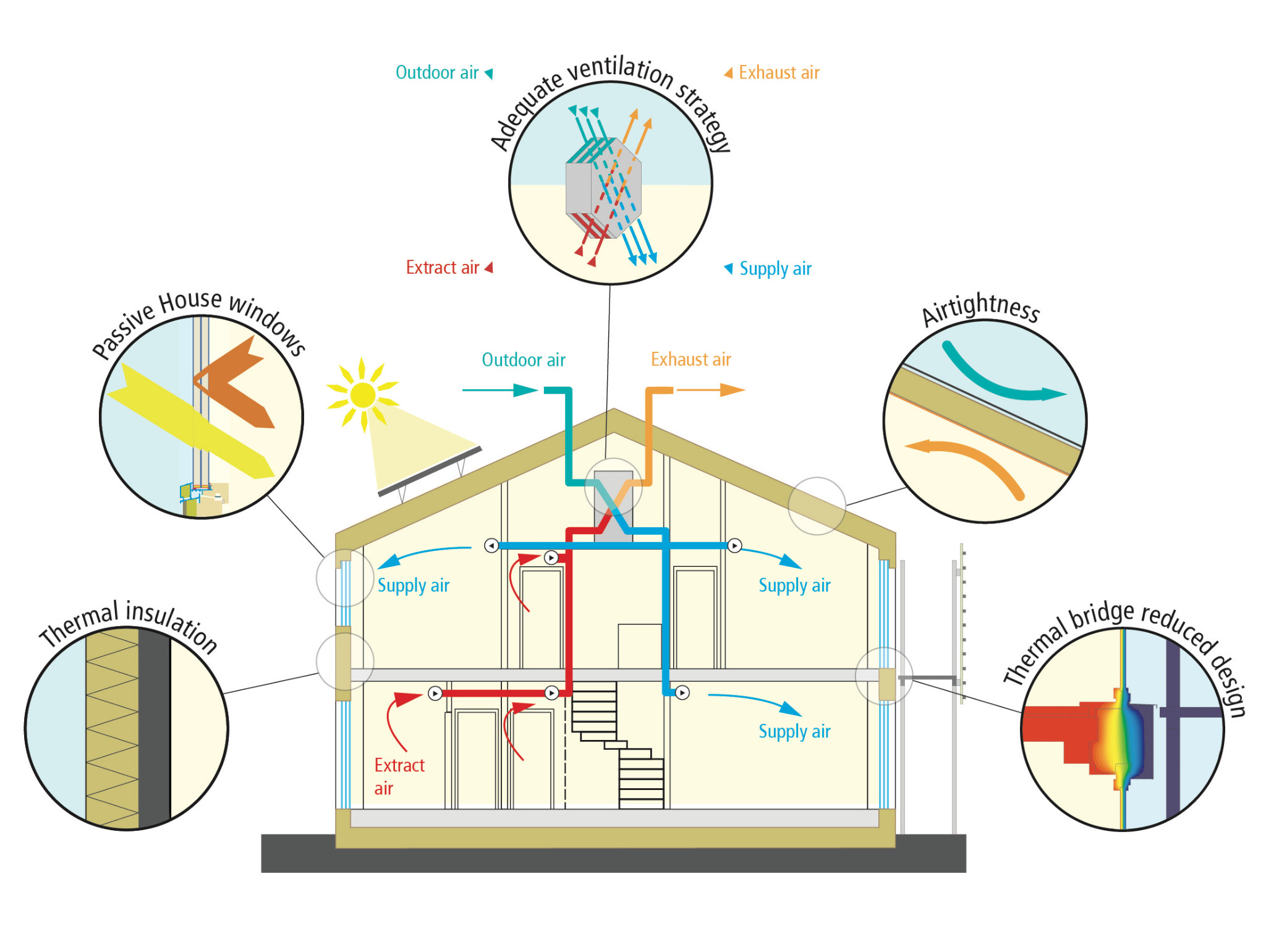
Passive House standards are a high-efficiency German building code that minimizes energy consumption through structures that are ultra-insulated and designed to stay warm in winter and cool in summer without excessive heating or cooling.
(Passivhaus Institut)
He was taken aback as to why Ontario wasn’t using them instead of shipping south of the border.
“That’s Ontario jobs that we could be building right here.” Ballard said. That moment for him underscored the province’s unrealized potential — a “real advantage” if it chooses to scale up its clean construction and manufacturing capacity at home.
Why does it matter what Ontario does?
“The policy choices made by Ontario are uniquely capable of reconfiguring national climate trajectory allowing the province to play the role of a swing actor or climate broker in Canada’s federal context,” York University’s environmental studies associate professor Mark Winfield said.
“What happens in Ontario matters nationally. What happens when Canada does matters globally.”
Email: [email protected]
At a time when vital public information is needed by everyone, The Pointer has taken down our paywall on all stories to ensure every resident of Brampton, Mississauga and Niagara has access to the facts. For those who are able, we encourage you to consider a subscription. This will help us report on important public interest issues the community needs to know about now more than ever. You can register for a 30-day free trial HERE. Thereafter, The Pointer will charge $10 a month and you can cancel any time right on the website. Thank you
Submit a correction about this story

