
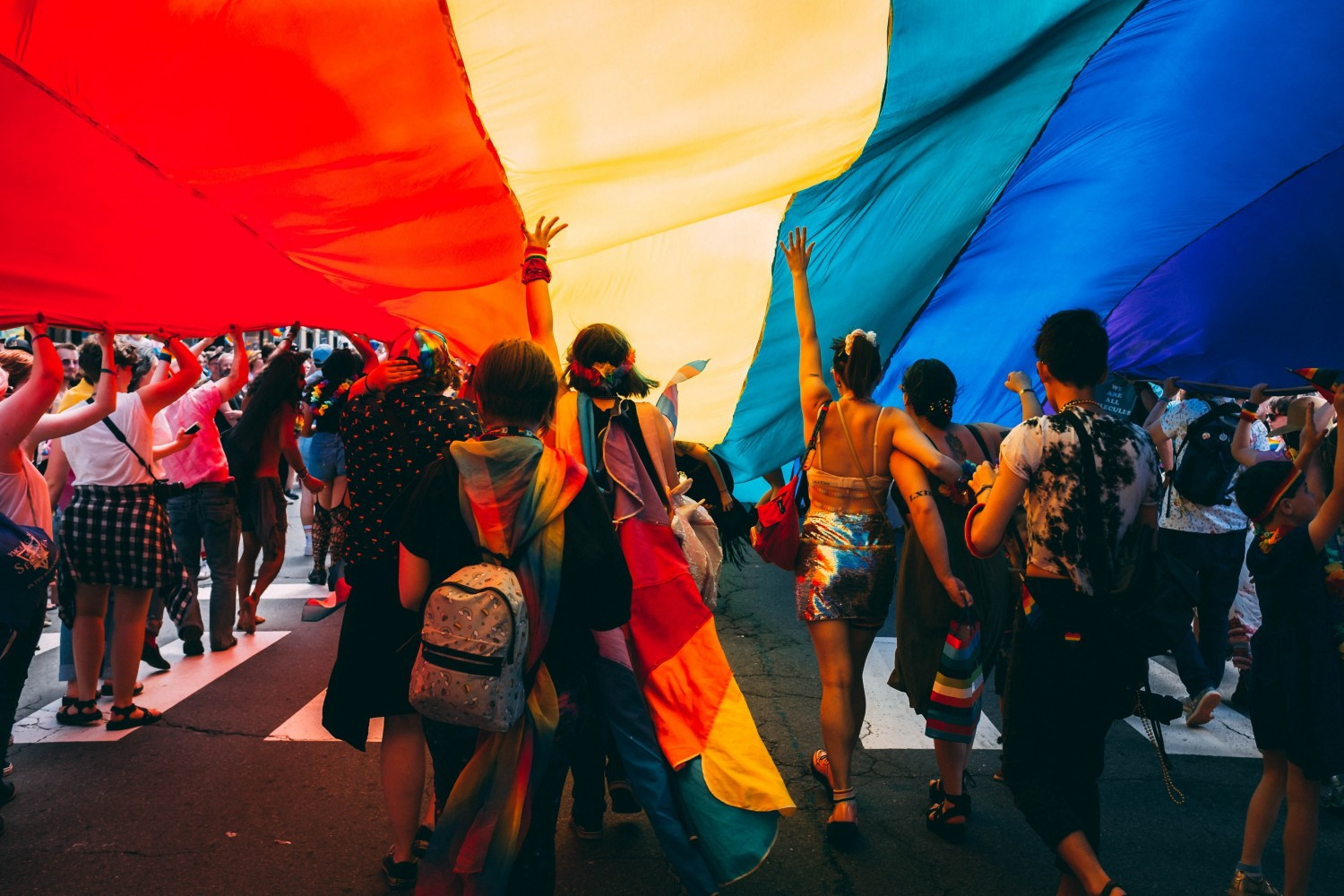
Advocates urge Brampton and Peel to strengthen support for LGBTQ+ communities
LGBTQ+ communities in Peel are urging Brampton and Peel councils to strengthen queer support, as vulnerable individuals are leaving the region due to the scarcity of resources and necessary services.
Lisa Clarke, the community organizer with EQUAL (Empowering Queer Unity And Leadership) Peel, spoke to Brampton councillors on March 4 highlighting numerous challenges community members from diverse groups are facing in the region, such as underrepresentation due to a lack of data collection, limited resource allocation, fragmented planning and social barriers.
“There is no dedicated queer community centre, hub, or year-round municipality programming in Brampton, Mississauga, or Caledon,” she said. “Although community support exists, they operate independently and lack sustainable municipal funding.”
Clarke said the absence of queer spaces beyond local Pride Month celebrations and the limited in-person queer programs has forced many individuals to leave the region to find community elsewhere.
“I don’t know of any queer spaces here in Brampton/Peel; I typically go to T-dot,” one Reddit user wrote in a comment included in EQUAL Peel’s presentation to show the lack of visible, consistent queer spaces.
Equal Peel highlighted that a key challenge for garnering support and resources to fill this gap for the queer community is the “lack of regional data on sex/gender identity, faith, or cultural stigma from newcomer populations, which limits access to queer spaces and services. Local diversity, equity and inclusion strategies lack explicit 2SLGBTQIA+ inclusion, with reliance on one Pride event per year. Peer-led groups like QTBIPOC, PFLAG and Moyo exist, but lack municipal partnership or visibility.
The 2SLGBTQ+ group also claims Peel’s strategic framework does not explicitly highlight the needs of their community, with no mention of queer or trans identities, instead, broader language like “marginalized populations” is used.
“2SLGBTQIA+ representation within the regional equity plan remains under-articulated, creating a lack of institutional visibility and resource commitment,” the group’s presentation explains.
In an interview with The Pointer, Clarke said that, unlike the Region of Peel, Brampton explicitly recognizes 2SLGBTQ+ communities in its DEI strategy. However, she argued that the City's approach is more focused on raising awareness about intolerance without going far enough to connect with the community.
“If all we are doing is focusing on building awareness about the negative impact of intolerance, we are not really taking the strategy beyond anti-harassment and non-discrimination,” she said. “It just feels like it is not a complete picture.”
Clarke urged Brampton council to work together with EQUAL Peel and create year-round queer spaces and programming and provide funding to help address the needs of its 2SLGBTQ+ residents so they can find support within the city.
“Representation inspires investment, and investment inspires retention,” she said.
Clarke positioned EQUAL Peel as a community-based hub that can assist the City in turning its DEI strategy into meaningful outcomes for its queer residents and can boost the local economy.
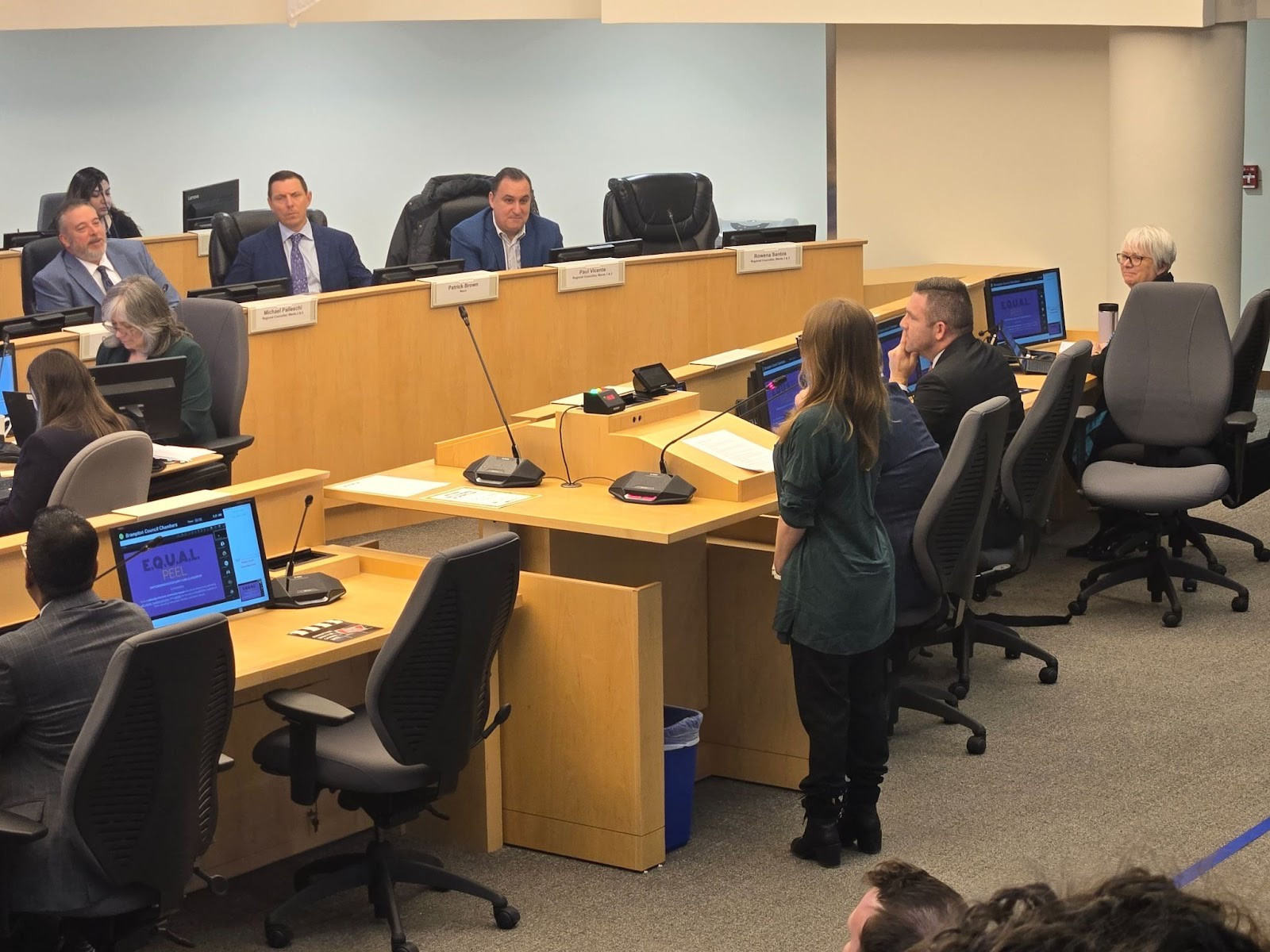
Lisa Clarke, the community organizer with EQUAL (Empowering Queer Unity And Leadership) Peel, speaks to council the challenges 2SLGBTQ+ communities are facing in Peel.
(Muhammad Hamza/The Pointer)
“This is work that can not solely be done inside the walls of city hall,” she said. “Events like queer markets, drag brunches, and film nights attract not only queer residents but also allies, families, and tourists. Safe queer hubs like community cafes, art spaces, and bookstores create jobs… All of this is going to contribute to both economic and community development."
Following her delegation, Councillor Martin Medeiros acknowledged the fact that the events related to queer communities should run throughout the year and referred the matter to staff to work further with EQUAL Peel.
Councillor Gurpartap Singh Toor agreed with Medeiros and suggested Clarke delegate to the regional meeting of Peel to highlight the gaps the 2SLGBTQ+ communities are facing in the region.
The concerns raised by EQUAL Peel indicate a broader problem that the City of Brampton and the Peel region are facing. Both have long struggled with the issue of diversification, where the majority of the population belongs to different socio-ethnic groups.
According to the 2021 census, more than 80 percent of Brampton’s population reported as being a visible minority, with the top three groups reported being South Asian, Black, and Filipino.
Despite being one of the most diverse cities in Canada, whose foundations are built on the struggles of an immigrant population, it has historically failed to reflect the communities it serves.
In 2021, Williams HR Consulting, an employment law firm, conducted a review that detailed the specific concerns with anti-Black discrimination at City Hall, including a lack of racial diversity in fire and emergency services and fear of losing a job for racialized contract employees if they spoke out about those concerns.
The Black and racialized participants who took part in the research have provided feedback and shared their personal experiences of discriminatory treatment they have faced while working at various departments.
For the Parks, Maintenance, and Forestry team of the Community Services department, the racialized staff, specifically Black staff, the report noted that they tend to be employed in temporary contract roles, and they are often afraid to speak up about the discriminatory workplace practices due to the precarious nature of their contracts.
The report also indicated that several departments of the City were not racially or ethnically diverse, where only a small number of Black employees were hired compared to non-Black racialized groups.
The Pointer also reported on an audit conducted by the Canadian Centre of Diversity and Inclusion (CCDI) in 2019 that found that the City's workforce is predominantly white, with only 37 percent of respondent employees identified as racialized, and for those who are at senior ranks at the Corporate Leadership Team (CLT), only 15 percent of them are from visible minorities.
The CCDI report wrote that certain barriers hinder the city’s ability to hire a diverse workforce, including the senior officials at CLT who don’t believe workplace issues exist that could negatively impact the city’s inclusion climate.
The Pointer sent questions to the City of Brampton Media Relations Department, requesting the updated workforce demographic data regarding the diversity of its employees and the percentage of the workforce that identifies as visible minorities.
The publication also asked the City whether they collect demographic information regarding LGBTQ+ representation among employees and if they can share the latest figures.
They have not responded.
Apart from this, the situation at the regional level is equally dire.
Based on the survey analysis report submitted to the region of Peel in 2023 by Worktango, an external audit firm that conducted a workplace survey in 2022, the absence of diversity among senior leadership was reported.
The survey analysis noted that the “employees who identified as White provided significantly more favourable scores on team diversity and believing that the workforce is diverse at all levels of the organization.”
The White employees from the “Executive Office and Leadership Team,” who responded that the region’s workforce is diverse, were sitting at the top of the workplace hierarchy.
The department’s six members, who see thousands of employees from the region, were all White.
At present, despite 69 percent of the regional population being identified as racialized, as per the StatsCan 2021 data, the top officials at the Region of Peel remain largely white.
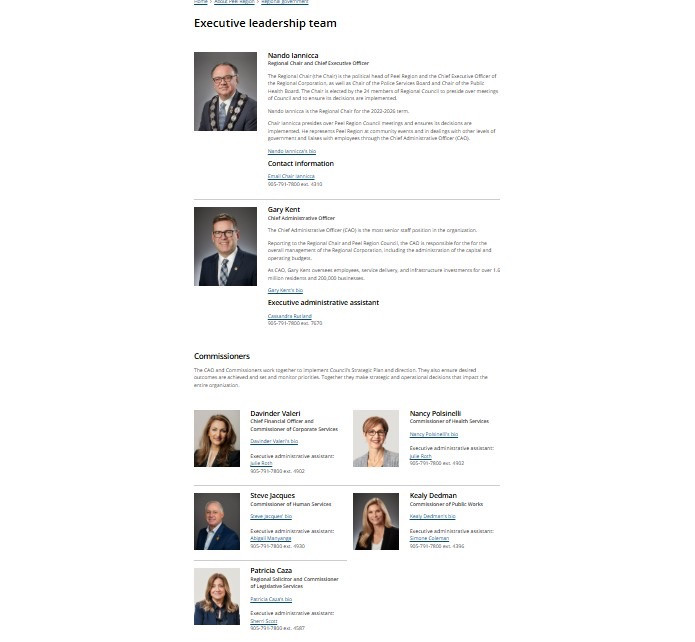
Senior leadership at the Region of Peel.
(Region of Peel)
The review report suggested that 48 percent of regional government staff identified as BIPOC, when nearly 70 percent of the population identified as non-white.
In 2023, Ava Wells, manager of survey and insight for Worktango, flagged issues in Peel.
“What we found is that across the organization, the biggest concern is that diversity is not present across all levels in the region of Peel.”
Email: [email protected]
At a time when vital public information is needed by everyone, The Pointer has taken down our paywall on all stories to ensure every resident of Brampton, Mississauga and Niagara has access to the facts. For those who are able, we encourage you to consider a subscription. This will help us report on important public interest issues the community needs to know about now more than ever. You can register for a 30-day free trial HERE. Thereafter, The Pointer will charge $10 a month and you can cancel any time right on the website. Thank you
Submit a correction about this story

