
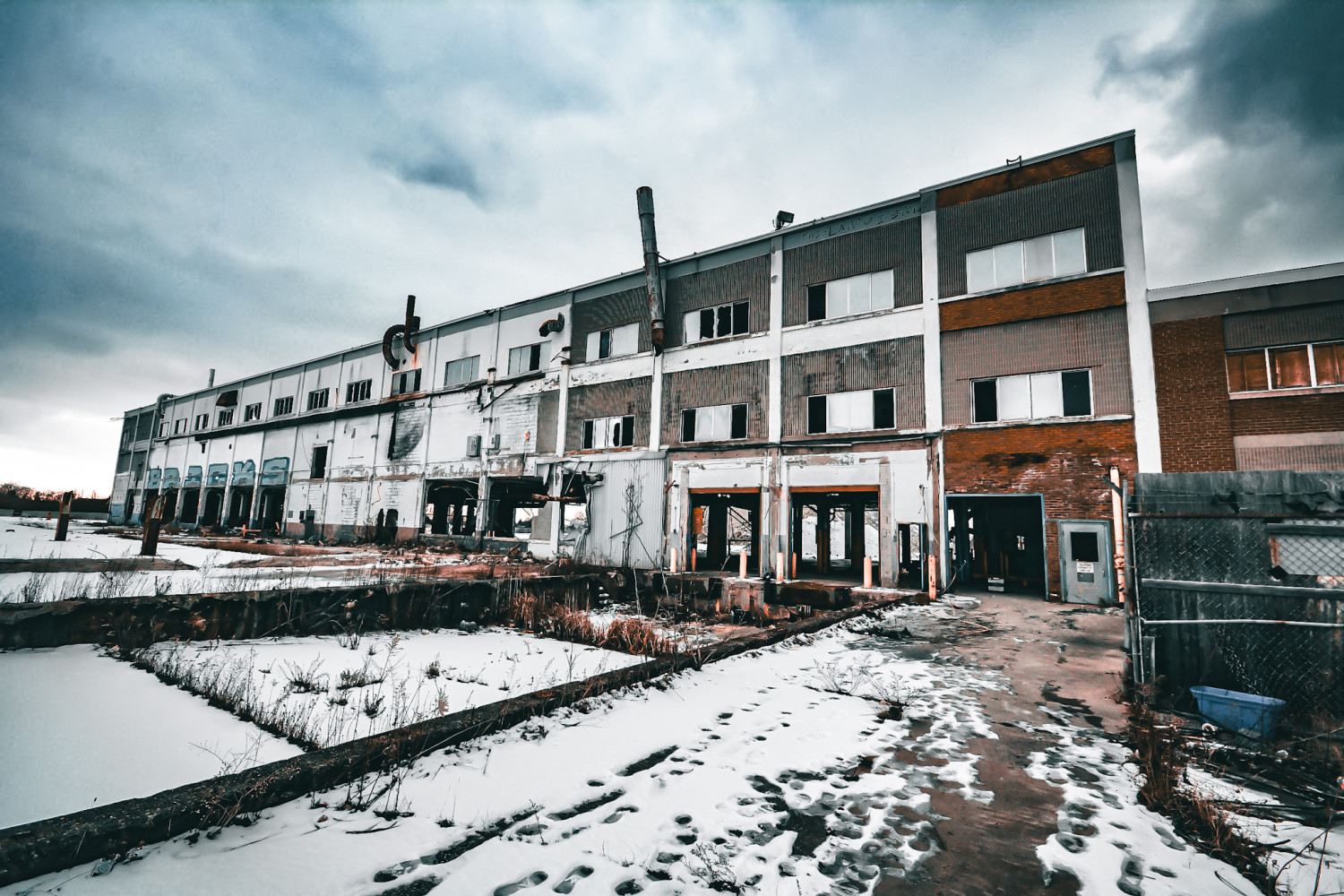
Records reveal murky ownership of former GM site after years of failed rehabilitation
As emails to the City, provincial ministries and the property’s owner go unanswered, residents concerned about the former General Motors property in St. Catharines say they are growing increasingly frustrated about the derelict, contaminated site next to the heart of the city.
The giant 55 acre former GM plant has been decommissioned and out of production for more than a decade. But long after the production lines shut down, the site’s impact on the surrounding community remains a concern.
For a century, thousands of men and women passed through its gates to work, helping build a corporate giant while supporting their families and the surrounding community.
Today, the vast industrial complex that once anchored the local economy has deteriorated into what residents describe as a scab on the landscape, one that carries significant potential health risks.
A years-long investigation by The Pointer uncovered environmental assessment documents detailing contaminants present on the site at levels more than 1,100 times above healthy limits.
Massive structures stand in varying states of decay, while known and unknown environmental contaminants remain both above and below ground. As reported by The Pointer, research examining communities living near contaminated industrial sites has linked close proximity to negative health outcomes, including reduced life expectancy and higher rates of illness.
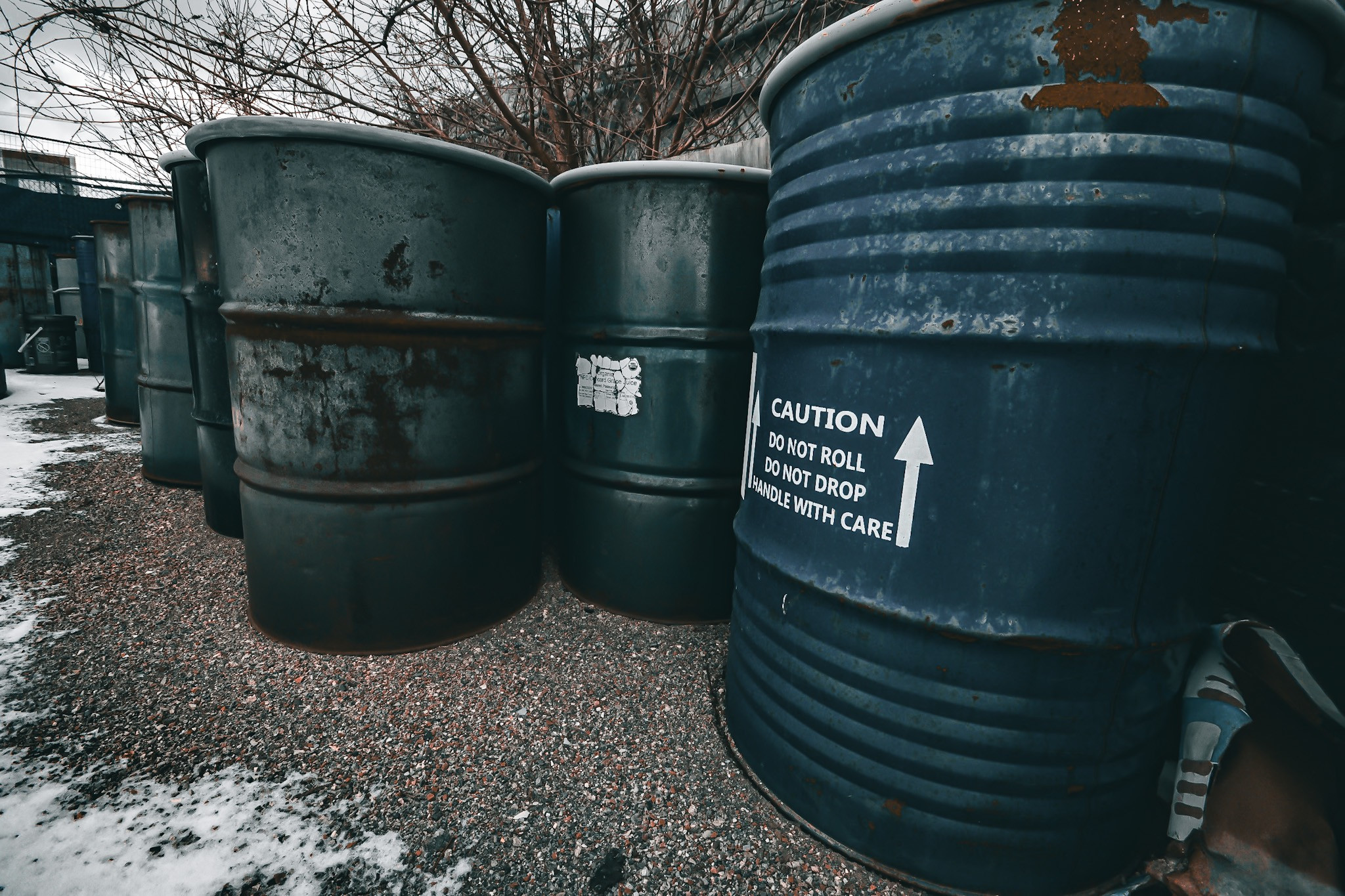
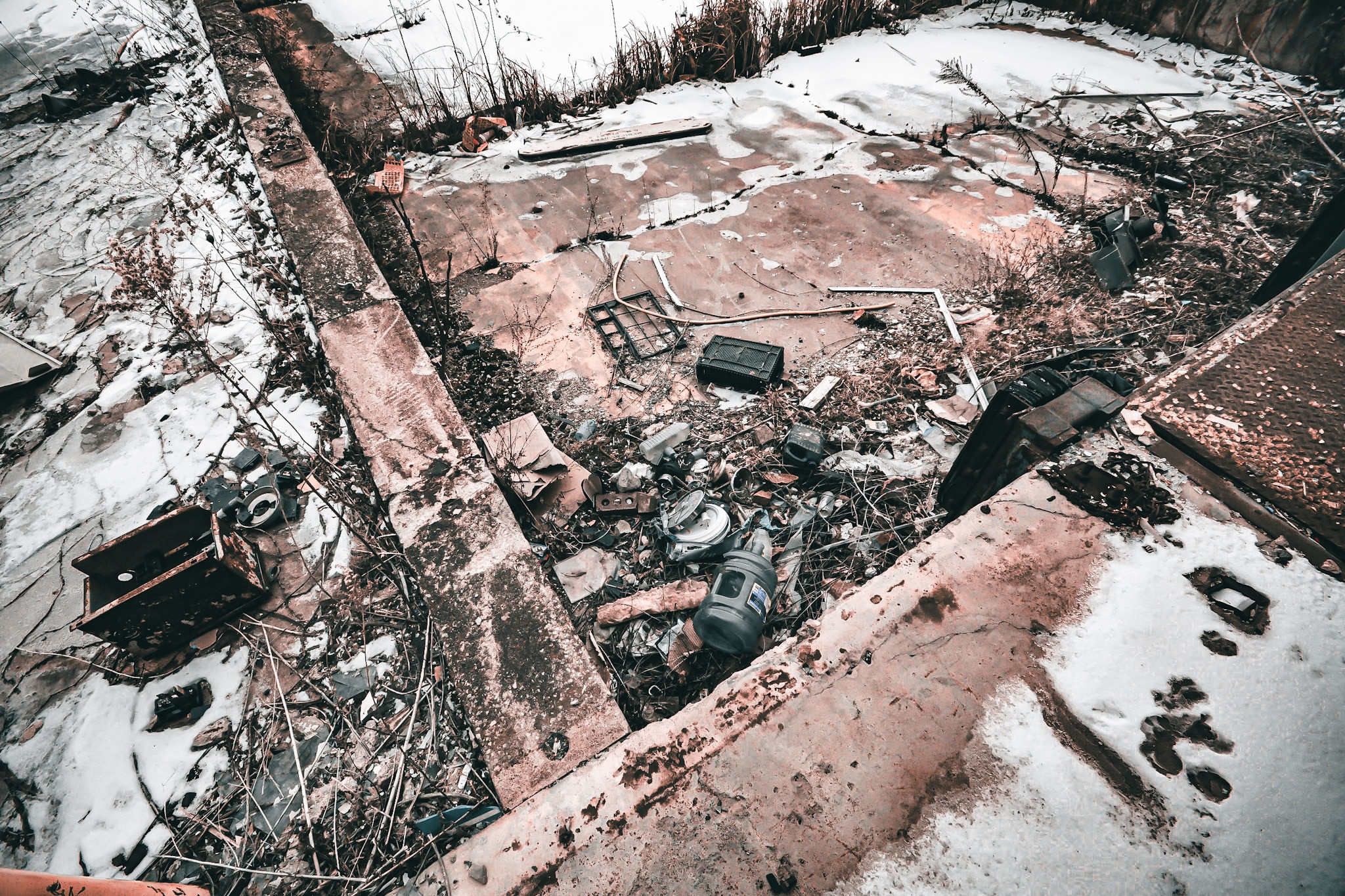
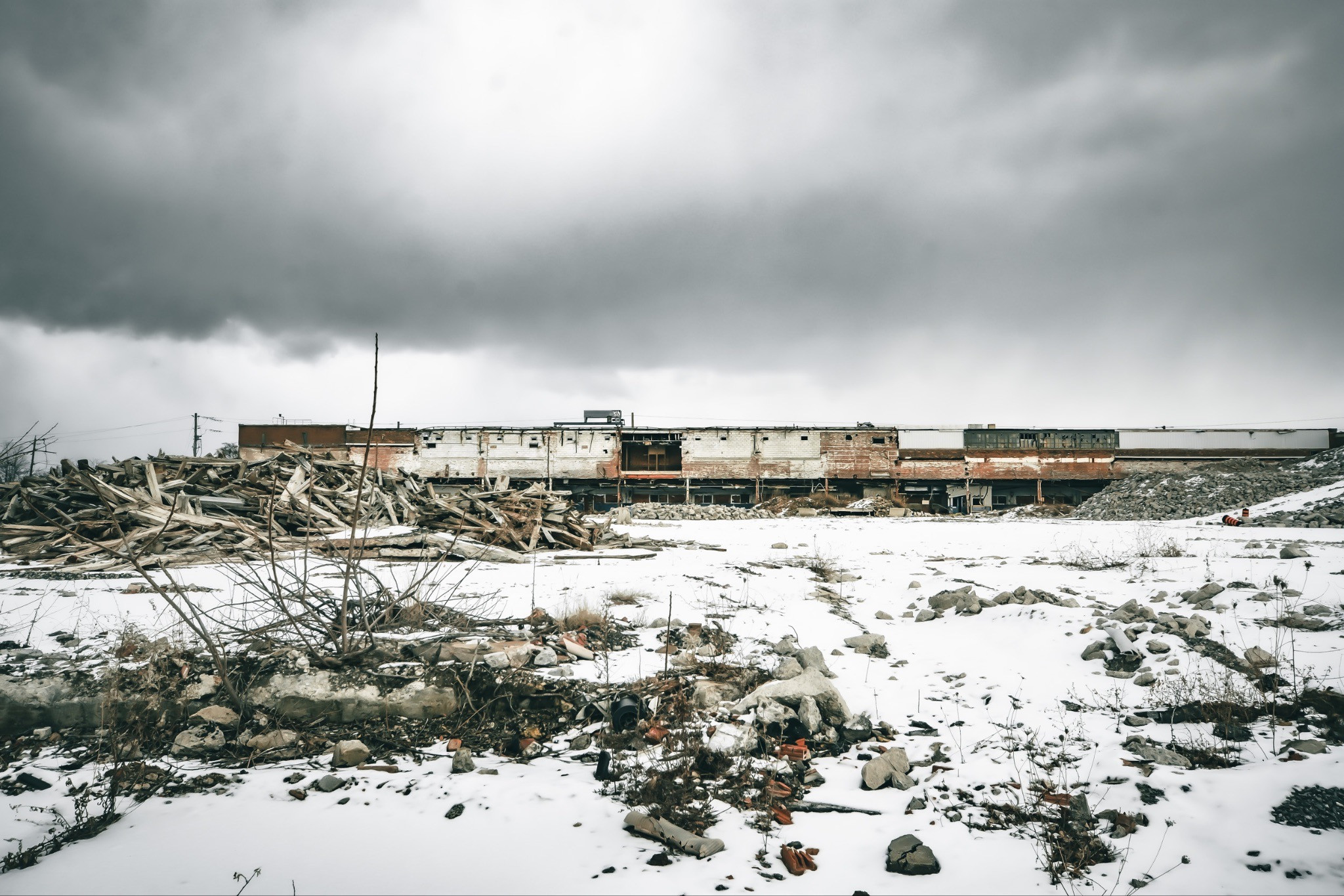
The former GM site is now filled with detritus and waste, its crumbling structures posing a significant risk.
(Joel Wittnebel/The Pointer files)
City of St. Catharines officials have shown their inability to rehabilitate the toxic site. They admitted having no idea if a filtration system meant to clean contaminated stormwater on the property was functioning. The webpage maintained by the City to keep residents informed about news on the site is rarely updated, and when it is, residents have said information is buried and hard to locate.
Residents have also shared with The Pointer that attempts to get answers from the Ontario Ministry of the Environment, Conservation and Parks (MECP) about conditions at the site, any ongoing investigations, and monitoring to ensure safety, have also been ignored.
It has left many now looking to owners of the property for answers.
According to Ontario Land Registry documents, Movengo Corp, a Hamilton-based developer, and Celernus Investment Partners are still listed as mortgagees on the property. Movengo provided $20 million to Bayshore Group in 2017, when the company was planning a high-end mixed use residential and commercial project on the site (Bayshore’s current involvement in the property remains unclear). Celernus Investment Partners was part of a large group of companies and individuals that provided a $5 million investment the same day the property was sold by GM to Bayshore in November 2014. The others involved in that initial investment have since transferred their interests in the property to Celernus. Most of the transfers took place in March 2020 at the start of the COVID-19 pandemic. Neither Movengo or Celernus responded to questions from The Pointer about their involvement in the property.
Following instructions published on the City’s website dedicated to the 282-285 Ontario Street properties, many residents have sent questions to an email address reportedly connected to the owners of the property. They have been met with silence. Questions sent by The Pointer to the same email address have gone unanswered.
Gwen Kennedy is a representative of the Coalition for a Better St. Catharines, a community group that has focused on issues surrounding the former GM site and the risks it poses to residents for more than eight years. She expressed the organization’s frustration with its repeated attempts to start a dialogue with the site’s owners directly. The St. Catharines resident says she has made at least three separate attempts to establish communication with the property owners.
“We (the Coalition) have sent multiple emails to the address provided to us by the City, we have not received a single response.” Kennedy said. “At some point we have to ask the City why they are promoting an email address, when nobody responds to enquiries that are sent.”
The email address ([email protected]) was shared with the City as part of a report analyzing the stormwater stored on the property. The Pointer's reporting revealed the filtration system meant to clean the stormwater was offline, prompting reaction from nearby residents, and local MPPs who are still demanding answers from the MECP. The ministry says an investigation is ongoing.
City officials have shown they can communicate directly with representatives of the ownership group when issues arise. Most recently, the mayor asked the council to defer a scheduled discussion about the catwalk spanning Ontario Street so he could obtain an engineering report from the property owners, which was provided within two weeks. Residents note that the city has so far refused to facilitate direct dialogue between the community and the landowners, offering only the email address that goes unanswered.
That study, detailing the state of the metal catwalk spanning the two properties, came with an opening letter from Gordon Martin, the president and founder of Celernus.
Martin did not respond to questions from The Pointer about his involvement in the site or whether Celernus is now the primary point of contact with the City of St. Catharines regarding issues on the property.
The City has not answered questions about who local officials contact for issues related to the property.
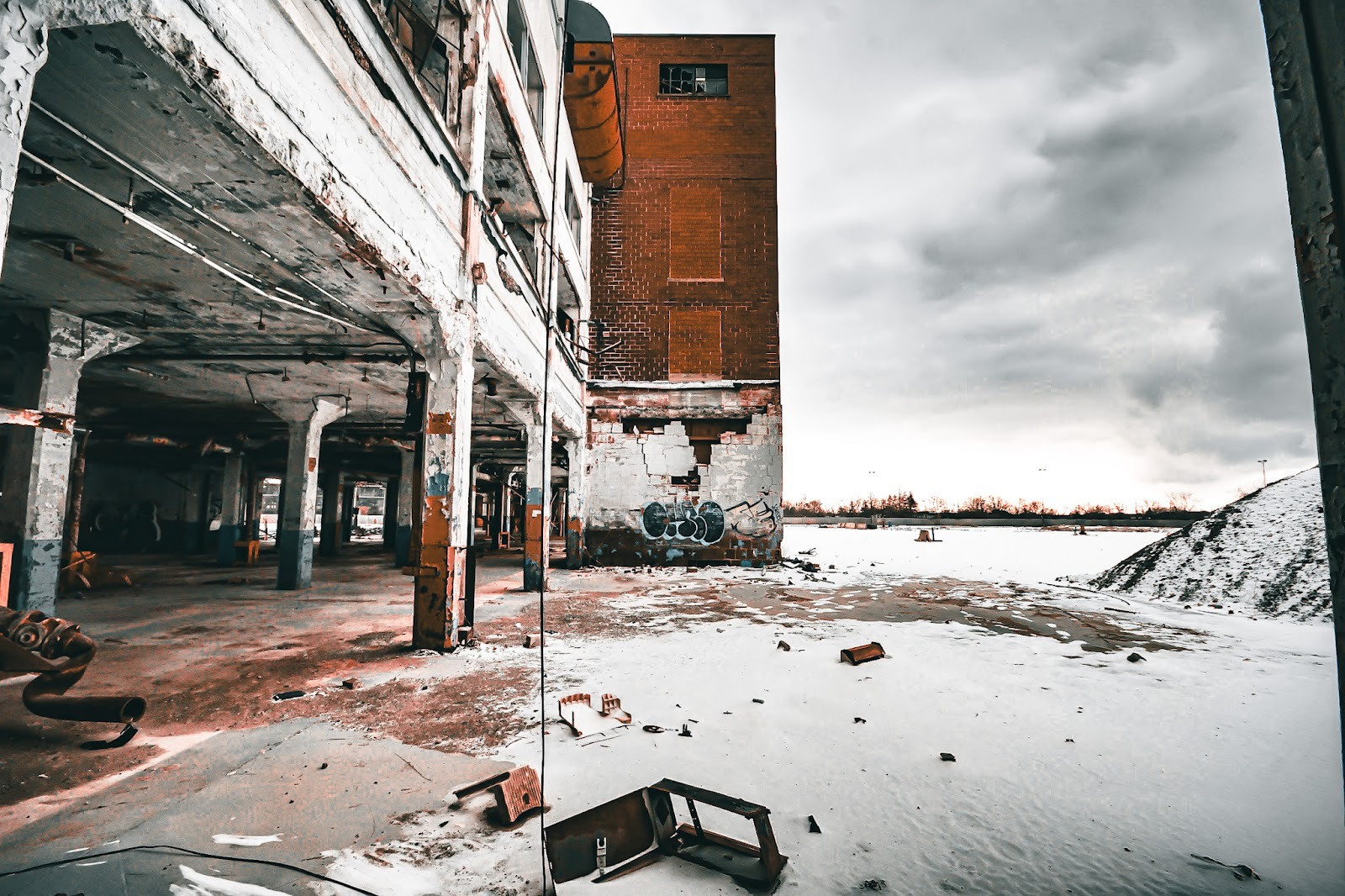
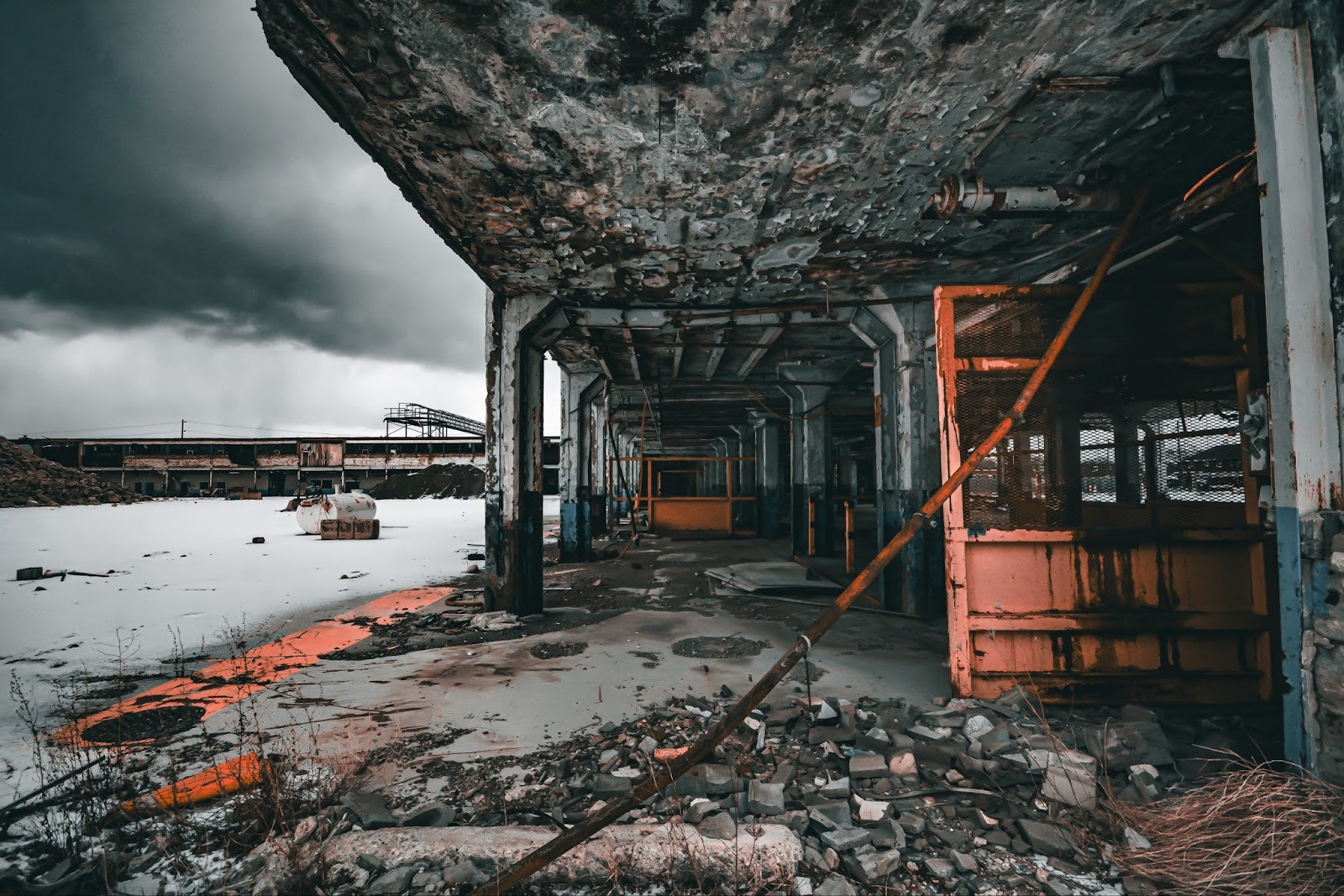
The crumbling structures on the former General Motors property are completely exposed to the elements, speeding up erosion and the risk of collapse.
(Joel Wittnebel/The Pointer files)
Since 2014, when General Motors sold the site to Bayshore Groups for $12.5 million, the community has ridden a cycle of hope, speculation and frustration. Bayshore initially unveiled ambitious plans for the property that included a mix of retirement homes, rental apartments, commercial businesses, trade schools and other developments intended to transform the sprawling industrial lands.
But the early promises of visionary redevelopment faded after a few years. The rumour mill intensified in 2018 when the City announced it was only days away from initiating a tax sale after unpaid property taxes and associated fees ballooned to nearly $2.5 million. The move could have resulted in the property being seized and auctioned by the municipality if the debt was not settled in time.
Over the years the property has also been encumbered with financial instruments that hint at the complexity behind the ownership structure. Mortgages registered against the land, tax liens and construction liens tied to remediation work suggest a site that continues to generate controversy, even in a state of dormancy. As The Pointer has previously reported, a lien was placed on the property by Peters Environmental in February 2025, the company hired to install the now inactive filtration system. The demolition permits on the site were revoked in April 2025 due to inactivity on the site.
The layered ownership arrangement has complicated efforts by the public to determine who holds responsibility for remediation and site management.
Elevating questions to the provincial level has done little to shed light on the situation at the site. Even local MPP Jennie Stevens has not received the level of engagement she would expect for an issue of such obvious priority.
Requests for information from Stevens to the MECP have repeatedly received the same response: an investigation into the site is underway. Beyond that, officials have provided few details about the scope of the investigation, its timeline or whether enforcement actions may eventually follow.
“They have ignored every other request for transparency and the opportunity to share inspection reports to the public,” Stevens said in a statement posted on social media.
The Pointer has contacted the MECP numerous times for comment, no response has been received. An FOI investigation revealed a political staffer in the minister’s office intervening, ordering The Pointer’s media request be “closed” without any answers provided.
For the surrounding neighbourhood, the lack of transparency from both levels of government and the property owners is an additional layer of uncertainty.
With the ownership structure difficult to decipher and provincial oversight largely communicated through brief cryptic statements, many residents who spoke with The Pointer say they are left to rely on occasional news reports or informal updates to understand what is happening at the site.
Against that backdrop, a question has increasingly begun to surface among residents: why the City has been reluctant to enforce its own property standards and vacant building bylaws.
Municipal bylaws exist in part to address the very hazards neighbours report at the former industrial complex: crumbling structures, unsecured areas, and widespread neglect. The City has enforced these rules aggressively at other large properties, including to compel cleanup after a fire destroyed the Welland House and to prevent unauthorized access at the shuttered YMCA. Both sites posed serious safety risks to the community, so the City intervened. What is different about the GM property?
In seeking to understand the City’s reluctance to order completion of the demolition—an action that would cost taxpayers nothing, it may be helpful to consider past communications between the City and the property owners.
As reported by The Pointer, emails obtained through a series of freedom of information requests show that then-mayor, Walter Sendzik, held a meeting with the ownership structure of the site, in order to “achieve a great outcome for myself (landowner) and the city”.
Following that meeting, one of the site’s owners, Aaron Collina (the president of Movengo), emailed the mayor to summarize the discussion and outline follow-up items.
The email raised several concerns, including Collina’s claim that the City indicated it would examine the feasibility of transferring responsibility for the site’s environmental risks from the ownership structure to the municipality in exchange for a commitment to a residential mixed-use development plan. The correspondence also suggested the City would apply pressure to the Niagara Peninsula Conservation Authority (NPCA) to accept transfer of a portion of the property known to be highly contaminated, specifically the slope leading to Twelve Mile Creek.
That same email listed another concern of the owners, the fact that “If wall is demolished, region will take 12 meters.” (sic)
The GM site was constructed long before modern building standards existed, and as a result, the factory sits right at the edge of the sidewalk. Any new construction would be subject to current building codes, with setbacks among the most important requirements. The landowner acknowledges that demolishing the wall could trigger a regional requirement for a 12-meter setback. This potential loss of usable land might create a strong financial incentive for the owners to halt their demolition work.
An examination of campaign finance records from the 2022 election reflects that Mayor Mat Siscoe as well as Ward Councillor Robin McPherson received the maximum allowable donation of $1,200 from both Collina and Darren Peters. Collina is a mortgage holder on the site and Peters company (Peters Construction Group, of which Peters Environmental is a division) was awarded a $22-million remediation contract for the site. The donations were legal and do not constitute a conflict of interest, under the Municipal Conflict of Interest Act. The presence of donations does not by itself indicate influence or preferential treatment.
The ongoing silence from the City stands in contrast to commitments made during the 2022 municipal election campaign.
At the time, Mayor Siscoe and Ward 4 councillors McPherson and Caleb Ratzlaff pledged to leave “no stone unturned” in their efforts to see the site cleaned up and its long-standing issues addressed.
More than three years after the trio assumed office, the City continues to provide responses that shift responsibility to other authorities, leaving residents frustrated by the limited enforcement of bylaws that could help drive meaningful progress.
To date they have contented themselves with a City-supported community art project in which plywood fencing surrounding parts of the site was painted by local participants. The program cost approximately $10,000 in municipal funds.
While Ratzlaff and McPherson framed the effort as a community-building exercise, critics argue it did little to address the underlying conditions that have concerned neighbours for years.
More than a decade after production ended at the former factory, the site remains one of the largest and most dangerous brownfield properties in the region.
Behind its fences lie aging structures, incomplete remediation work and a complex web of financial and corporate relationships.
Outside those fences lives a neighbourhood still waiting for answers.
Email: [email protected]
At a time when vital public information is needed by everyone, The Pointer has taken down our paywall on all stories to ensure every resident of Brampton, Mississauga and Niagara has access to the facts. For those who are able, we encourage you to consider a subscription. This will help us report on important public interest issues the community needs to know about now more than ever. You can register for a 30-day free trial HERE. Thereafter, The Pointer will charge $10 a month and you can cancel any time right on the website. Thank you
Submit a correction about this story

