
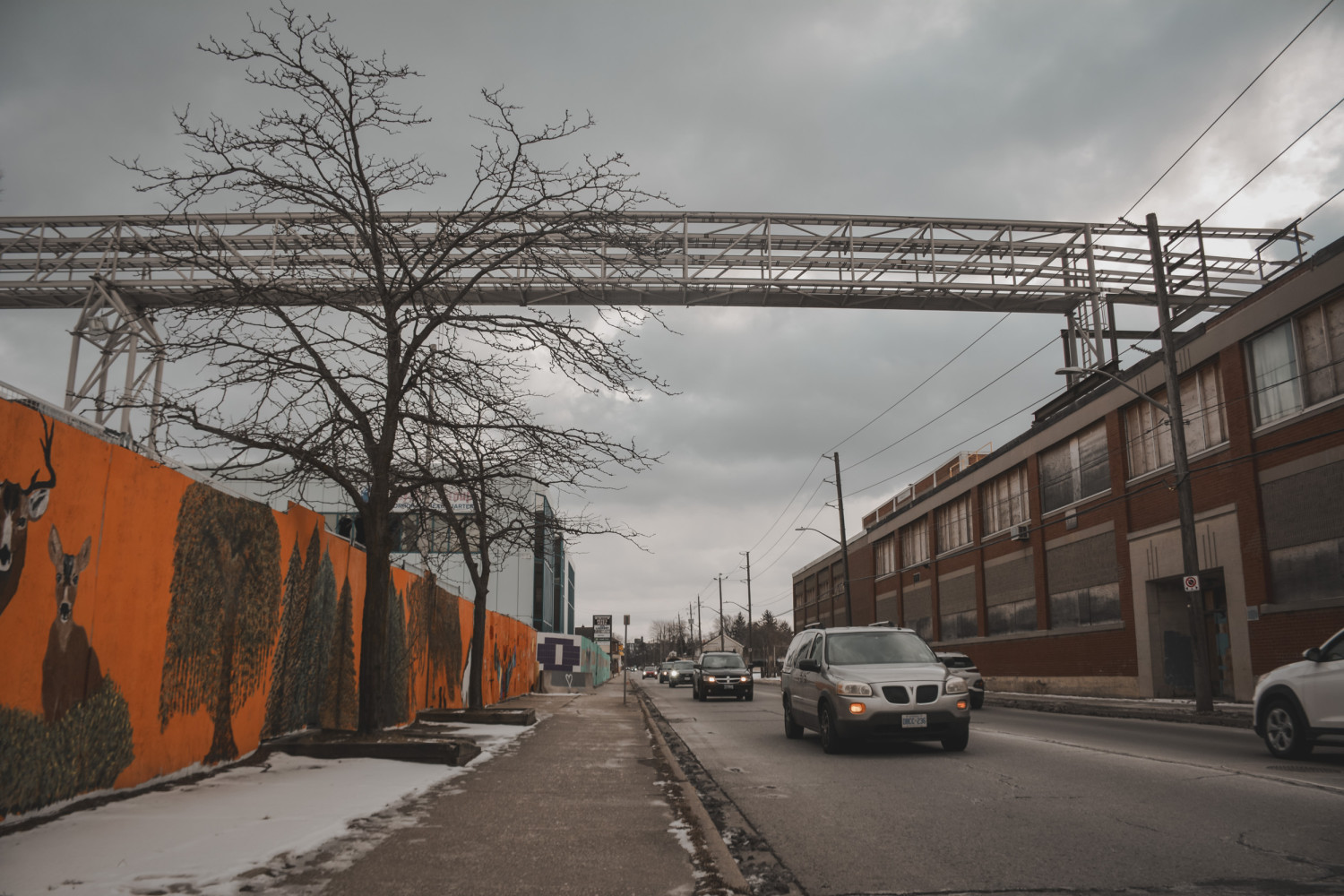
Will structural analysis of rusting catwalk over Ontario Street finally mean action at the crumbling former GM property?
As The Pointer has reported regularly over the past year, what remains on the former General Motors property on Ontario Street are dilapidated structures with broken windows, hanging pipes and a network of subterranean vats and openings, 55-gallon drums labeled with hazard warnings and exposed manholes with 30 to 40-foot drops, which are dangerously accessible due to inadequate fencing and hoarding, leaving the property dangerously unsecured.
Despite authority under the municipality’s Property Standards by-law and the demolition provisions under the (provincial) Building Code, the City has been unwilling to step in and address safety concerns.
While this detritus is contained to the private 55-acre site, one aspect of the physical structure left behind by the former automobile plant that has a greater potential to impact public safety is the overhead catwalk suspended above Ontario Street.
On Monday, January 26, St. Catharines City Council was to consider a motion introduced by the two Port Dalhousie ward councillors, Bruce Williamson and Marty Mako, to review the current condition of the overhead structure “and if warranted, take any remedial action by December 1st, 2026.”
Late in the week prior to the meeting, a note on the electronic version of the Council agenda indicated that Councillors Williamson and Mako had “deferred this motion to a future meeting.”
At the meeting, Mayor Mat Siscoe announced:
“With respect to Ontario Street and the overhead structure, it has been referred to a future meeting. By way of an update to those in the community who are interested, and to members of council, there will be a structural analysis done of the overhead structure in the coming days. I wanted everybody to be aware of that, and once the report has been prepared, we will have it, and we'll be able to post it to the website. This is our custom with any reports regarding 282 or 285 Ontario Street.”
This latter statement is somewhat misleading as the City has failed to keep citizens informed about significant changes on the site. For example, despite learning in October of last year that a critical filtration system meant to treat stormwater on the site was offline, no announcement was made to the public.
The councillors’ justification for the motion was that the public artery below the structure is heavily travelled and a primary responsibility of local government. The road authority, the Region of Niagara, is to ensure public safety by maintaining public roadways in a safe condition.
The motion called on City staff to coordinate efforts with the Region and the property owner, Movengo, a Hamilton-based builder and developer, to inspect the structure. In addition, the motion stipulates that the costs of any remedial action required are paid by the property owner.
When reached by The Pointer, Councillor Williamson expanded on his rationale for the motion: “The fact is this aging overhead gantry is an obvious hazard suspended above busy traffic at the old General Motors site on Ontario Street. As the saying goes the chain is only as strong as its weakest link and in the case of this abandoned framework the weak links may well be the abandoned, partially demolished buildings to which it is attached. If one or the other of them is compromised by fire or some other cause it could lead to the gantry becoming untethered. It serves no purpose and has already been exposed to the elements for a decade or more since the sale of the property. Our efforts need to focus on a plan of action to safely remove a dangerous threat over a busy public street as soon as possible.”
An email to The Pointer from the City’s communications department confirmed that the structural analysis “is being led by, and was initiated by, the representatives of the property owner” and not through any enforcement efforts by the municipality.
“Whether or not this unused industrial remnant is in itself structurally sound now is not what we should focus on,” reasoned Councillor Williamson. Expressing a lack of confidence in the attached buildings, he argued that the structure serves no purpose and has no heritage value. “The best thing is to take it down safely.”
The Coalition for A Better St. Catharines, a non-partisan organization that advocates for a bottom-up citizen-led approach to governance, urban design and development, in a communication to The Pointer shared similar sentiments as Councillor Williamson, and skepticism about possible action to address the overhead structure: “Ideally the take down of the structure would be a sign that the City was taking public safety and the dangerous condition of all the structures on both sides of the property seriously. Given the cautious nature of the Mayor to date and the rumours of ownership changes we have no reason to believe there will be any substantial action toward changing the toxic status of the property.”
The City of St. Catharines website describes 282-285 Ontario Street as, “a privately owned property that has been of significant interest to the City and community, given its history, present state, and future opportunities.”
The history of 282-285 Ontario Street is such that the land is more commonly known as the General Motors (GM) property. An industrial operation since 1901, GM operated the automobile plant from 1929 to 2010, producing engine and transmission parts.
After the plant’s closure, the 55-acre site was sold to other private interests and has been plagued with issues ever since. Following a two-year fight with the City to gain access to environmental reports about the two properties, The Pointer revealed the extent of the heavy contamination on the site from dangerous toxins. It’s a disturbing litany of cancer-causing chemicals including heavy metals, petroleum hydrocarbons (PHCs) and other industrial wastes that can be incredibly harmful to humans, fish and other aquatic life at high concentrations—the site is directly adjacent to Twelve Mile Creek. Lead contamination—which can hamper brain development in fetuses, infants and children, was found at 10 times the level established to protect human health and the environment; PHC F1 (a class of petroleum hydrocarbons that includes things like gasoline) was present at levels more than 20 times healthy limits; trichloroethylene (TCE), a known human carcinogen, was present at more than 30 times healthy limits; benzene, another known carcinogen, was found at levels more than 50 times set limits; polychlorinated biphenyls (PCBs), were found at more than 85 times the set limit; and PHC F3 (another class of PHCs which includes diesel) was detected at 1,100 times the limit.
Despite the environmental concerns and history of the site, the City is still hopeful for the future of the site, “medium and higher density residential housing with a mix of other smaller scale uses such as retail and service commercial, office, institutional and recreational uses. This would require extensive, expensive remediation that the current owner appears incapable or unwilling to do, pausing further studies back in May 2024. Prior to that, the former mayor Walter Sendzik worked behind the scenes with the developer to get the property rezoned for residential development, despite the public safety concerns.
With each passing year, and no action to clean-up or develop the site, any bright future seems more distant.
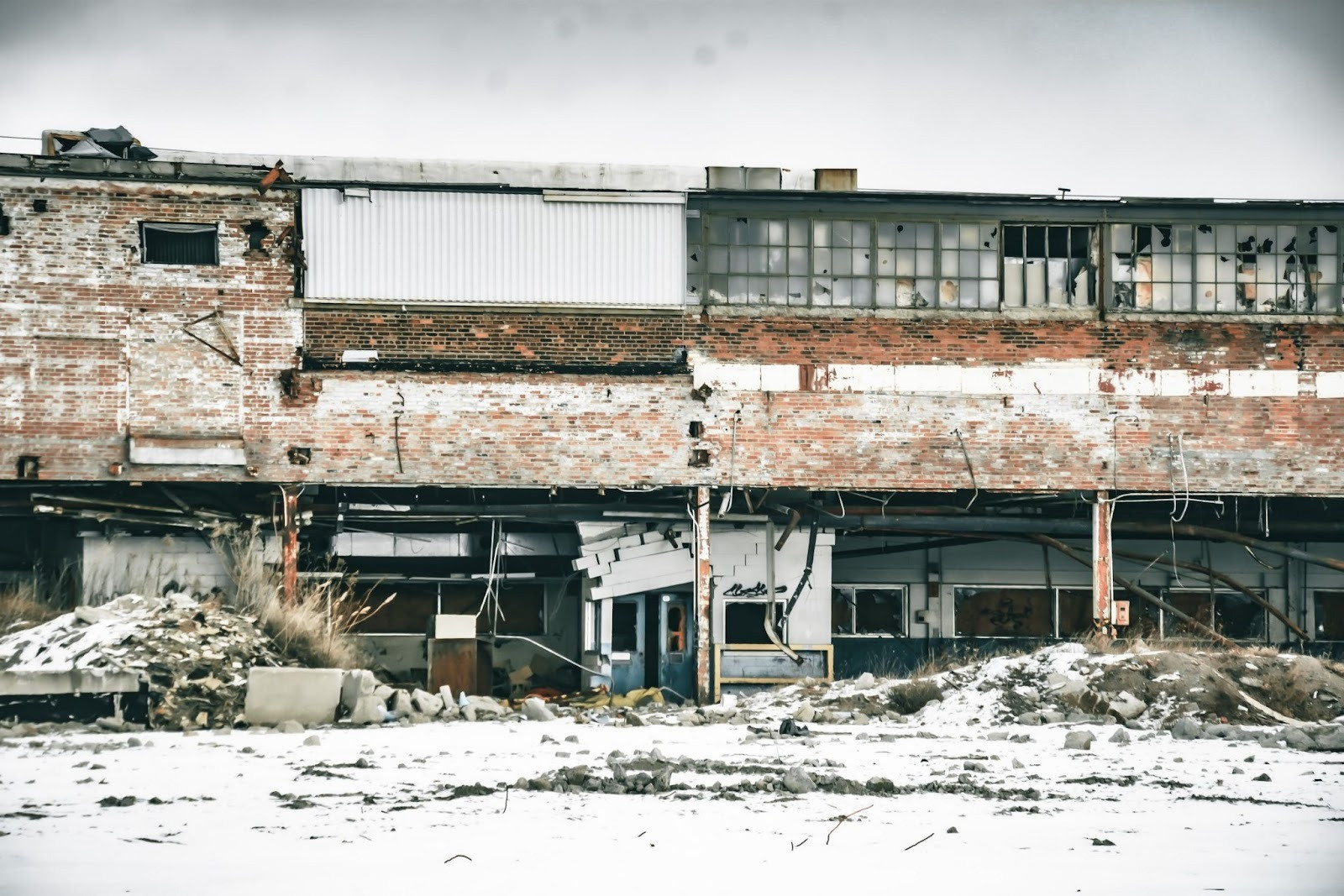
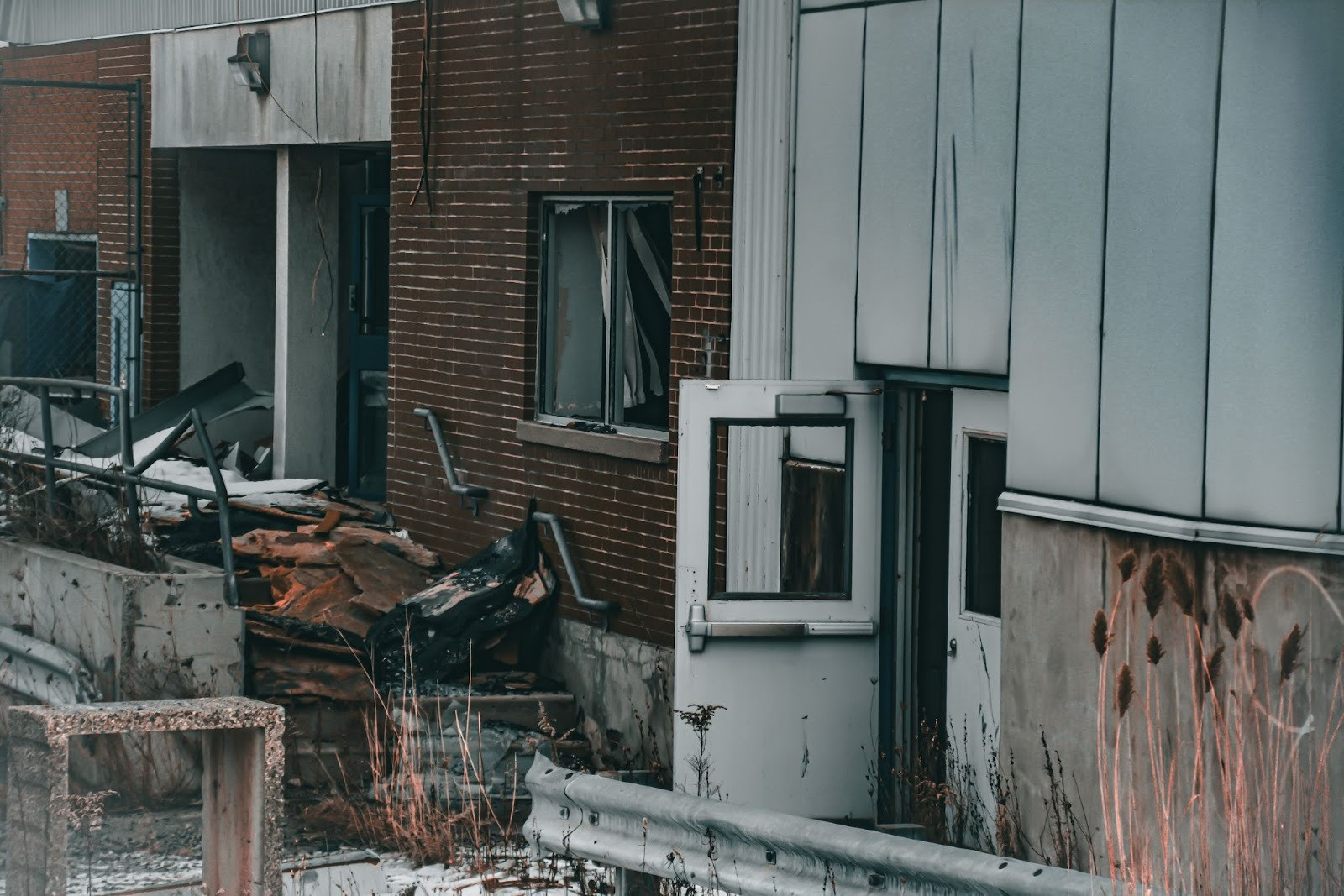
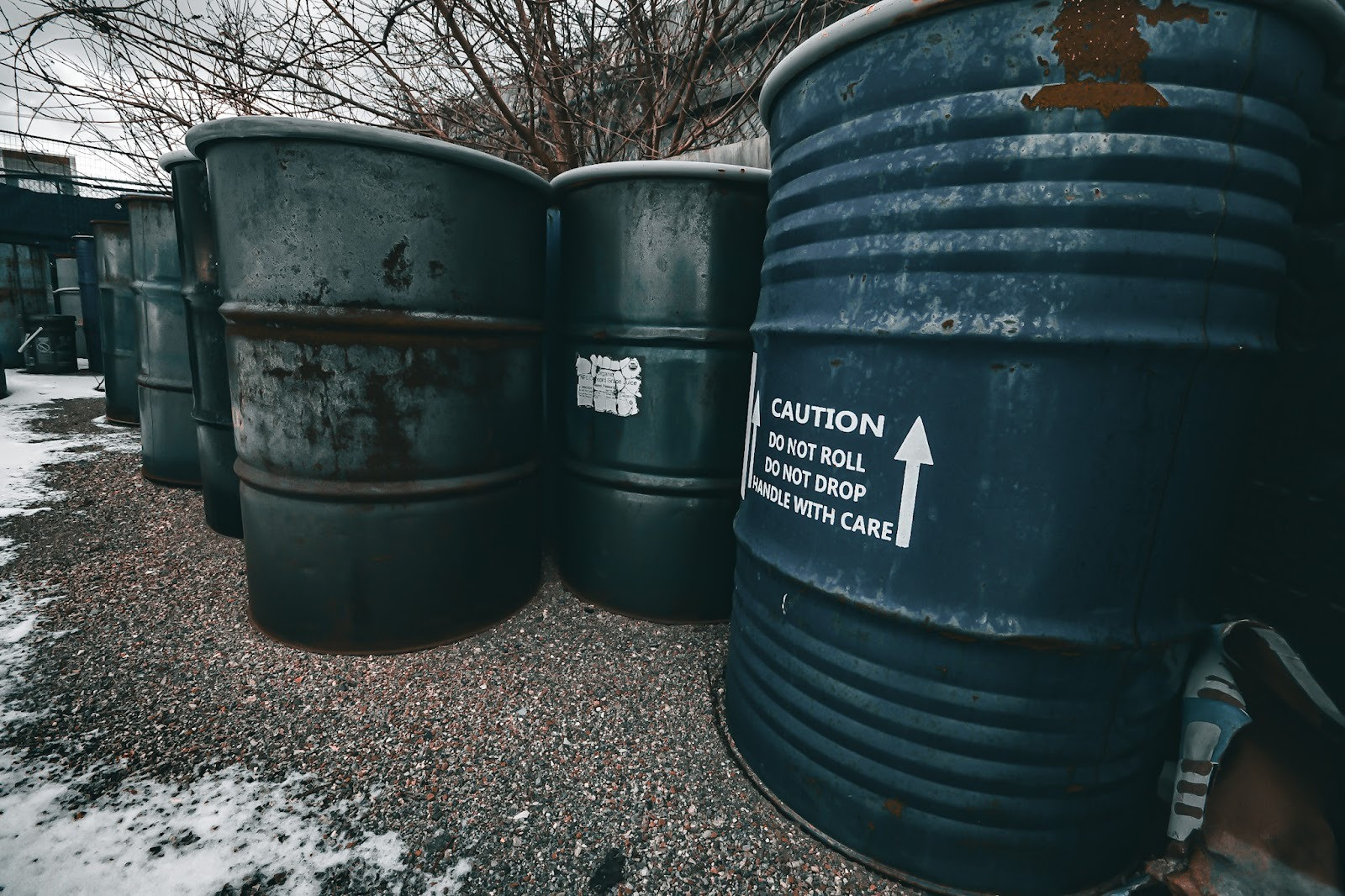
The waste left behind on the former industrial property and the crumbling buildings pose a significant risk to anyone who ventures onto the site—which is easily accessible with open doors and broken fencing.
(Joel Wittnebel/The Pointer files)
Had Monday’s motion occurred, it would have been six years and a day after another resolution on the clean-up of the GM lands was before St. Catharines City Council.
On January 27, 2020, several delegates appeared before Council expressing their frustration regarding the state of the property and the urgent need to clean up the site. The minutes from the meeting note a petition with approximately 1,800 signatures.
The result of the meeting was touted as an “Action Plan on the General Motor Lands” that would take steps to address the public concerns related to the property. The Action Plan was segmented into three headings: Environmental Concerns, Safety and Security and Cleanup and Redevelopment.
On the environmental concerns, the Action Plan outlined a letter writing campaign by the City to various Provincial ministries and inspection authorities requesting remedial action, testing and related reports.
The most apparent result of the efforts regarding environmental concerns was a December 5, 2022, special council meeting at the beginning of the current council’s term that saw presentations by the Drinking Water and Environmental Compliance Division of the Ministry of the Environment, Conservation and Parks and the property owner’s environmental consultants.
These efforts resulted in very little meaningful change on the property, even as a filtration system meant to filter toxic PCBs was found to be offline, which prompted local MPPs to reach out to the Ministry of the Environment, Conservation and Parks for an investigation.
More recently, the City’s website highlights that on January 9, 2026, representatives of the property owner shared with the City a stormwater pond testing update that, based on November 2025 testing, there was no discharge to the municipal storm sewer system, no detection of PCBs in the stormwater pond located on the property, and water quality met regulatory criteria for controlled discharge and the Niagara Region’s Sewer Use By-law. Nonetheless, the recent report from MTE consultants came with caveats.
“This report may not deal with all issues potentially applicable to the site and may omit issues…MTE makes no representation that the present report has dealt with any and all of the important features, including any or all-important environmental features,” it emphasizes. “This report is not intended to be exhaustive in scope or to imply a risk-free facility.”
Regarding the cleanup and security of the property, neighbourhood residents would likely be hard pressed to note any change or improvement since 2020, if not a continual deterioration of the site.
The municipality has communicated mixed messaging on its ability to enforce cleanup and securing of the property. The City’s website outlines that because the former GM site is private property, “the City cannot unilaterally act to clean up the site on our own.” At a public town hall meeting in October 2025, Mayor Mat Siscoe seemed to imply that the municipality had no power to secure the site.
While the municipality has processes it has to follow in the enforcement of its bylaws, and would be unlikely to take unilateral action in non-emergency situations, the same webpage that highlights the “challenges” also trumpets that they “moved to prosecute the current landowner over alleged infractions to the Building Code, Fire Code and Waste By-law.” The page also notes that the municipality retained external legal support to advise on provisions that “would allow for City-led cleanup and demolition.”
When interviewed by The Pointer nearly a year ago, Tami Kitay, Director of Planning and Building Services indicated that property standards enforcement was being “held in abeyance” due to the property owner having been issued a demolition permit.
“As these are active demolition sites, it is expected that, during the course of demolition, the building structures will be compromised. Property Standards enforcement would be at odds with the eventual demolition of the buildings/structures (i.e., why would the City initiate enforcement to restore deteriorated buildings/structures when they are in the process of being razed?),” claimed Kitay. Despite her contention, the existence of a valid permit at the time did not seem to spur any “meaningful work” being started on the demolition of the remnant buildings on the property, the requirement under the Building Code. That demolition permit was revoked in April 2025 due to inactivity.
Since then the City has taken no action to secure the site, despite the fact it has the power until existing bylaws and provincial legislation to take steps to protect the public. City inspectors could investigate the structures, deem them unsafe and order them demolished, with the eventual costs being handed to the property owner.
One of the other activities, under the Cleanup and Redevelopment heading of the 2020 Action Plan that did come to pass was the formation of a “political action group” in relation to the site. A neighbourhood advisory committee was formed by the municipality in 2023 as part of the Ontario Street Corridor Secondary Plan, the planning process that would determine land use vision for the former GM lands and surrounding environs. However, with the May 2024 announcement by the developer that work on the site had been halted because of “unfavourable market conditions”, the City put the Secondary Plan process on hold. The neighbourhood advisory committee only met once.
The Coalition for A Better St. Catharines lamented the suspension of the secondary plan and related Ontario Street Corridor study. “The City has been banking on a “Hail Mary” plan, hoping for a white knight developer to appear.”
With the developer halting work and stasis related to the property cleanup, the Coalition has decided enough is enough, launching a concerted effort to draw attention to the former GM property.
The Coalition’s Facebook page declares that “for more than 10 years, St. Catharines elected council and mayor have refused to take any leadership role whatsoever in resolving this public health, environmental and safety catastrophe.” With the municipal election slated for October, the group sees an opportunity to hold the politicians accountable.
“Leading up to the election, we will be focusing on candidates who accept responsibility and are committed to taking action,” the Coalition wrote in an email to The Pointer. To that end, a GoFundMe page has been set up with a goal of $10,000 to fund the outreach campaign, educational materials, public events, and sustained community engagement.
On January 21st, the group submitted a petition with 1077 signatures to the municipality that was circulated and placed in the Council’s publicly accessible correspondence folder, the following day.
The petition states that “the vacant and deteriorating buildings at the former GM site on Ontario Street pose a hazard to the community, attract vandalism, and negatively impact the surrounding neighbourhood.” The Coalition calls on Council to enforce the vacant building bylaws to ensure the removal of all unsafe and abandoned structures; apply Property Standards Bylaws to restore safety and security to the site and surrounding area; and hold property owners accountable for any and all costs to ensure compliance and prevent further community harm.
While the motion on the overhead structure was deferred at the January 26th Council meeting, the Coalition’s petition did prompt some immediate action with the petition being referred to staff and Councillor Robin McPherson (St. Patrick’s), whose ward contains the former GM property, formally requesting a report on the concerns listed.
As for the overhead structure motion, Councillor Williamson indicated to The Pointer that his willingness to agree to the deferral was based on the matter returning to the February 23rd Council meeting. The Coalition feels time is of the essence and “it is reasonable to expect results of inspections in the next four weeks.” The City Communications Department indicates, however, that the rationale and timeline for the structural analysis work is being determined by the property owner.
When asked by The Pointer if he views the removal of the structure as a crucial first step to finally get the cleanup of the former GM property underway, Councillor Williamson responded: “100 percent. If we can get a concerted effort (to remove the structure) then, hopefully, the removal of the buildings can move forward and then the physical contamination of the property can be dealt with.”
As for the Coalition for A Better St. Catharines, the organization envisions a “multi-faceted, year-long marketing campaign designed to amplify our message, mobilize community support, and build the political appetite needed for meaningful action on the (former) GM site.”
When asked what would signify progress, the Coalition responded:
“The City has the power to enforce its own municipal property standards and order the demolition of all the buildings still standing. The City can act unilaterally and bill the property owner if it fails to comply. The catwalk is the first step that would demonstrate progress. We demand the removal of all the dangerous structures on the site, and, of course, until the site is fully remediated it still presents a hazard to residents of the adjoining communities.”
Email: [email protected]
At a time when vital public information is needed by everyone, The Pointer has taken down our paywall on all stories to ensure every resident of Brampton, Mississauga and Niagara has access to the facts. For those who are able, we encourage you to consider a subscription. This will help us report on important public interest issues the community needs to know about now more than ever. You can register for a 30-day free trial HERE. Thereafter, The Pointer will charge $10 a month and you can cancel any time right on the website. Thank you
Submit a correction about this story

