
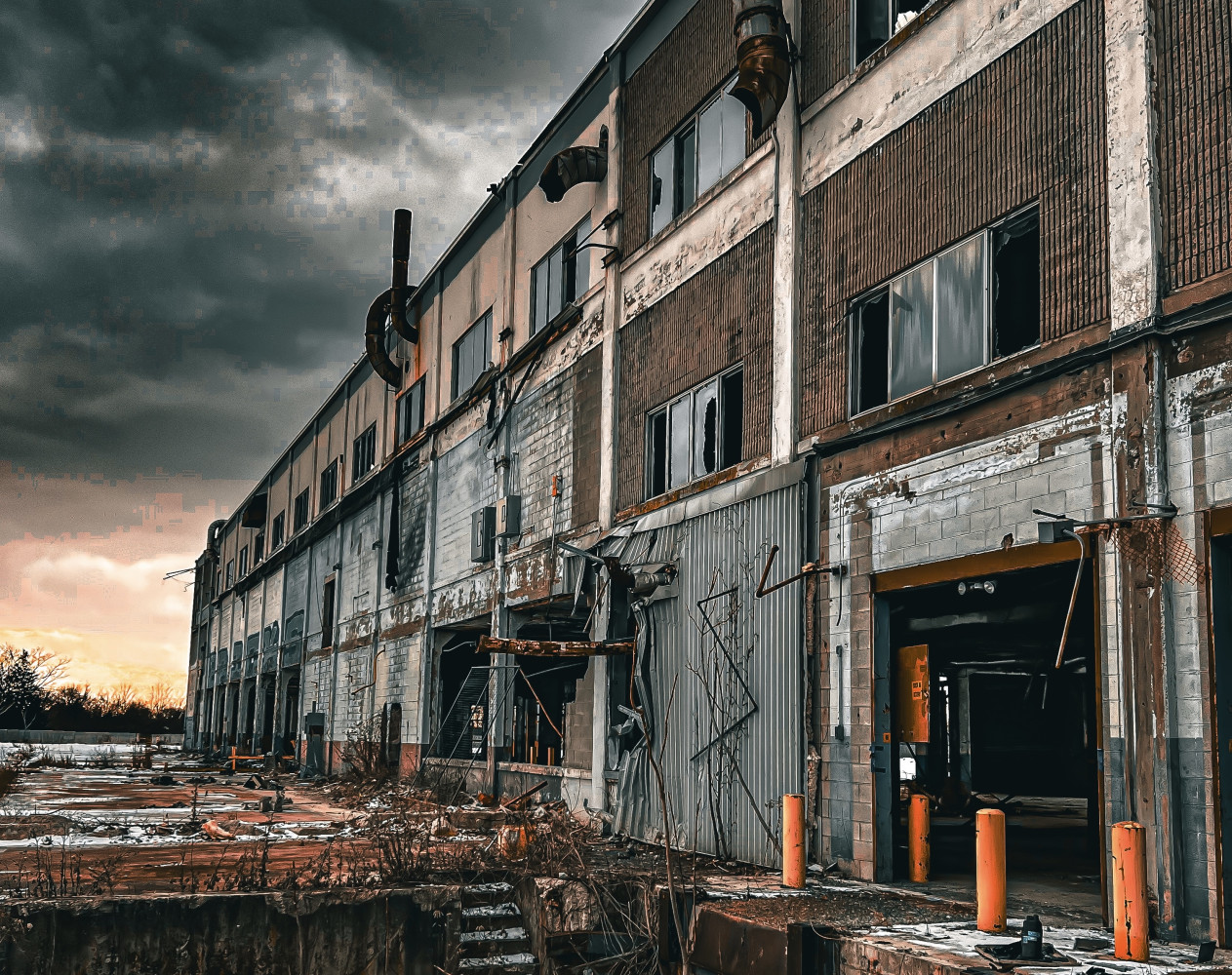
Updated testing finds no PCBs in stormwater pond on former St. Catharines GM site, but it might not be a ‘risk-free facility’
Amid intense public scrutiny of the contaminated former General Motors site in St. Catharines, including concerns about an offline filtration system meant to eliminate toxic chemicals from stormwater runoff, the property owner has ordered further lab testing on the northern portion of the 55-acre property, the City has shared.
In a post on the City of St. Catharine’s webpage dedicated to the property at 280 and 282 Ontario Street—the first update posted in months—officials explain that on January 9, a report from MTE Consultants was shared by “representatives of the property owner” which outlined the results of testing of the stormwater pond on the north property (282 Ontario Street) conducted on November 13, 2025.
The testing was done three weeks after reporting by The Pointer revealed the filtration system installed on the contaminated site was apparently not functioning, and the company hired to maintain it, Peters Environmental, had placed a lien on the land for a failure to make payments in excess of $1.7 million. The worrying news about a glaring public health risk led both Niagara Centre MPP Jeff Burch and St. Catharines MPP Jennie Stevens to write the Ministry of the Environment, Conservation and Parks (MECP) demanding answers.
The recently shared report addresses several questions residents and the two NDP politicians have been asking for months, but also leaves many unanswered: there is currently no discharge of stormwater off the 282 Ontario Street property; tests of the water in the containment pond found no presence of PCBs or any chemicals at levels that would violate Niagara’s Sewer Use Bylaw.
The report contains no sampling data. A “Public FAQ” section attached to the MTE Consultants’ document and prepared by “representatives of the property owner”, only explains the water was tested for: PCBs, “Metals”, petroleum hydrocarbons, “Nutrients”, volatile organic compounds and “Bacteria” like E.coli.
It does not address whether the testing results were reviewed by the Ministry: “Results from November 2025 are consistent with earlier testing conducted in spring 2024 and reviewed by the MECP.” It’s unclear if a review by MECP was only done for the 2024 results or both. Questions sent to a designated email address set up to respond to queries about the report were not answered.
A major concern is the report only deals with one specific part of a 55-acre site, leaving the vast majority of the property including the area right next to Twelve Mile Creek untested, despite the documented presence of highly toxic chemicals in these parcels of land.
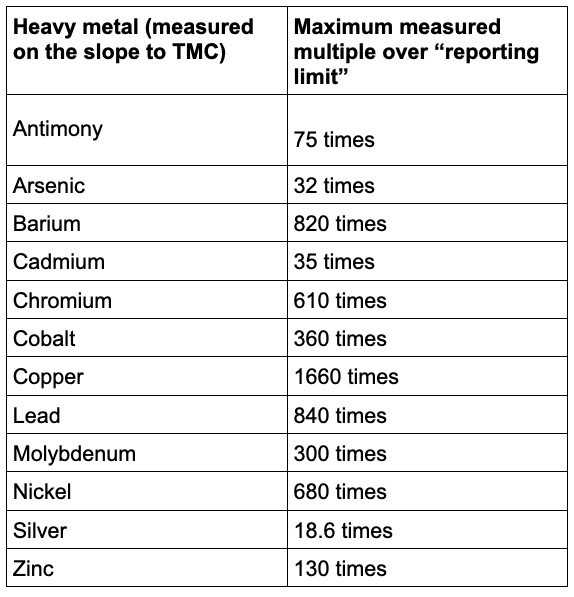
The sloped area directly adjacent to Twelve Mile Creek contains some of the highest levels of contamination. This area was not included in the most recent round of testing.
The report also claims “The system and testing are not self-regulated”, and oversight comes from both the MECP, and “independent professional engineering and accredited laboratories”.
It is unclear if the Ministry will be conducting any of its own sampling to confirm what MTE found. In response to the letter Stevens sent in October 2025, the MECP confirmed the matter had been referred to its Enforcement and Investigation Branch, but it's unclear if this will involve further testing on the site.
The report confirms the system designed to remove potential PCB contamination from the stormwater runoff is offline, and may have been shut off as early as the end of 2023.
“The treatment system was deactivated by Peters at the end of 2023 (winter shutdown),” the report explains. The system had been used throughout 2023 to pump stormwater, filter out the PCBs, and then direct it out into the municipal stormwater system. According to MTE, this is the only way stormwater can leave the site, as a berm and ditch constructed around the property directs all water to the catchment pond and all of the discharge points to the municipal sewer system were capped when Peters did the original work in early 2023.
There is no mention in the report of the system ever being turned back on.
Testing completed in the spring of 2024 found no PCBs present in the stormwater pond, but the report does not explain if the system was left offline because it was not needed at the time, or if it was disconnected for other reasons, possibly the non-payment of services by the property owner (the Ministry had ordered the property owner, Hamilton-based developer Movengo, to have the filtration system installed). It also does not clarify if any stormwater was pumped off the site while the filtration system was offline, or if it was kept contained.
MTE makes it clear that the recent report is not a fulsome analysis of the current conditions at the former GM property.
“This report may not deal with all issues potentially applicable to the site and may omit issues…MTE makes no representation that the present report has dealt with any and all of the important features, including any or all important environmental features,” it emphasizes. “This report is not intended to be exhaustive in scope or to imply a risk-free facility.”
While providing some assurances about the quality of the stormwater at one part of the site, the report does not involve groundwater testing, historical discharges or investigate any impacts regarding testing frequency and oversight responsibility.
The same day the test results were delivered to the City, Stevens sent another letter to Todd McCarthy, Minister of Environment, Conservation and Parks (MECP) demanding answers that have yet to be provided. In her first letter she asked about the status of the property and plans to address widespread pollution that was previously found (The Pointer conducted an FOI investigation that took two years to finally unearth documents that showed some chemicals were present on the site as recently as 2012, at levels more than 1,000 times above allowable limits).
Stevens acknowledged the Minister’s recognition that the need for site analysis had been referred to the Ministry’s Enforcement and Investigation Branch for a potential investigation. She and residents are now waiting for this work to finally be done.
Stevens sent questions about inspections, monitoring frequency, risk assessments and responsibility for site maintenance that have gone unanswered by the Ministry, despite the site’s well-documented toxic history.
Her attempts to get answers for residents are part of a pattern: public pressure, then provincial assurances and either selective disclosure or delayed responses.
The former GM site has a long history of contamination, including polychlorinated biphenyls (PCBs), chemicals linked to serious health and environmental risks, as well as many other heavy metals and volatile compounds.
The documents finally disclosed to The Pointer at the end of 2024 included Phase I and II environmental assessments commissioned by General Motors, completed in 2010 and 2012 respectively. These in-depth studies found the soil and groundwater beneath the site harboured nearly 25 different potentially harmful chemicals at levels above Ministry thresholds meaning they could be harmful to the environment and human health.
It is a long list of cancer causing chemicals, heavy metals, petroleum hydrocarbons (PHCs) and other industrial wastes that can be incredibly harmful to humans, fish and other aquatic life at high concentrations. Lead contamination—which can hamper brain development in fetuses, infants and children, was found at 10 times the level established to protect human health and the environment; PHC F1 (a class of petroleum hydrocarbons that includes things like gasoline) was present at levels more than 20 times healthy limits; trichloroethylene (TCE), a known human carcinogen, was present at more than 30 times healthy limits; benzene, another known carcinogen, was found at levels more than 50 times set limits; polychlorinated biphenyls (PCBs), were found at more than 85 times the set limit; and PHC F3 (another class of PHCs which includes diesel) was detected at 1,100 times the limit.
Other harmful carcinogens including arsenic, cadmium, cobalt, antimony, chromium, molybdenum, nickel, ethylbenzene and polycyclic aromatic hydrocarbons (PAHs)—a particularly toxic type of PHC that is incredibly hard to break down in natural conditions—were all discovered at the site above Ministry thresholds set in the Environmental Protection Act to protect people and wildlife.
Chemicals and metals like barium, zinc, copper, silver and toluene, were also found at levels exceeding safe limits. While these are not known carcinogens, they can cause negative effects to the liver, kidneys and lungs of humans and wildlife at high exposures.
As part of the Phase 1 ESA in 2010, fieldworkers frequently encountered soil that had “a noticeable hydrocarbon odour and sheen”.
The Ministry has attempted to downplay health concerns. A previous investigation by The Pointer found MECP officials removed comments from Niagara Public Health officials who intended to address the long-term dangers of contaminants in a written presentation to council, but that section was removed by Ministry staff.
Stevens said political staff within the government “apparently prevented the release of information related to the contamination at the former GM site”. A recent investigation revealed political staff in the Ministry directed MECP communications staff not to respond to questions from The Pointer.
Stevens is concerned the Ministry has not clarified if filtration or runoff-control systems have been inspected since a lien was placed by Peters Environmental early last year. Like others, she wants to know if these systems are operational, when the last on-site sampling occurred, how frequently monitoring is taking place and who is responsible for maintaining the property.
“While your letter states that PCBs are no longer an issue in the storm sewer and that perimeter checks have not identified further off-site issues,” Stevens wrote in the recent letter to the Minister, “these assurances are difficult for the community to accept in the absence of transparent, accessible information.”
“It is deeply troubling to learn that requests for information about a site with such a serious toxic legacy may have been discouraged or delayed, particularly when residents have repeatedly raised concerns about the lack of communication from the Ministry. This reporting reinforces what many in St. Catharines already feel: that residents have not been provided with timely, complete, and transparent information about risks in their own backyard,” Stevens added: “Any perception that information is being withheld, especially intentionally, undermines confidence in the Ministry’s commitment to protecting public health. Given the seriousness of this situation, I again urge the Ministry to provide clear written responses to the outstanding questions outlined above and to commit to regular, public updates on the status of the former GM site. Making relevant monitoring data, inspection results, and enforcement actions publicly available is a critical first step in engaging directly with the community.”
It was only through information obtained via a freedom of information request that the existence of a Ministry investigation at the site became known. The Ministry has not publicly acknowledged any investigation, nor has it indicated whether the findings will be shared. As a result, critical questions about oversight, verification and accountability remain unanswered.
The City has maintained throughout its long-standing hands-off approach. Responsibility for safety, site inspections and testing, and communication with the public has been consistently deferred to the province or the landowner.
Concerns about transparency and site safety were recently compounded by visible signs of physical deterioration. Last week, a significant section of fencing intended to restrict public access to the former GM site collapsed, briefly leaving the property fully open to anyone including children, before it was repaired days later.
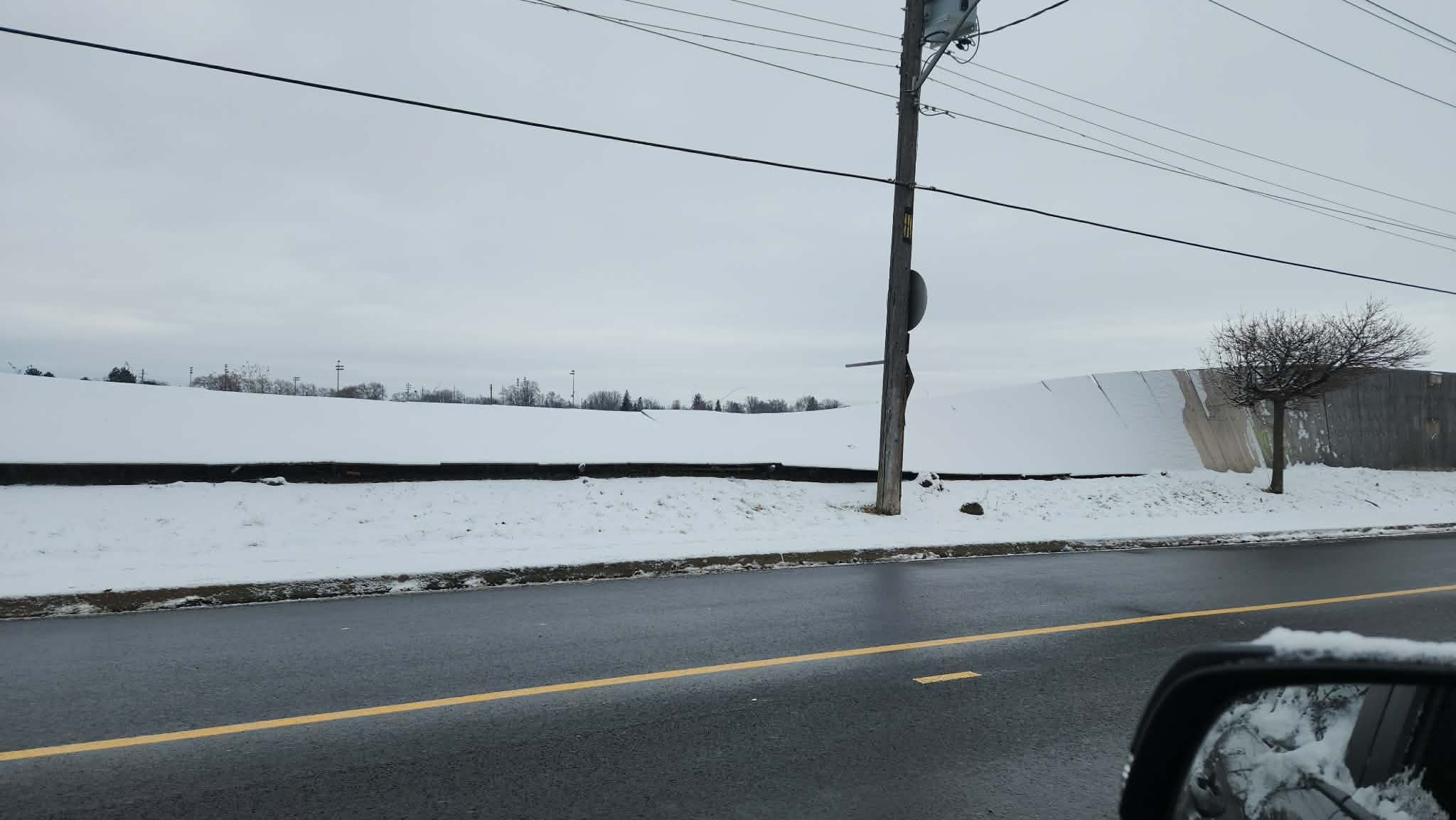
A portion of the “temporary” fencing surrounding the contaminated General Motors site on Ontario Street collapsed earlier this month.
(Submitted)
Previous reporting has highlighted the broader decay of structures on the property, including a large metal catwalk that spans Ontario Street, a major vehicle and pedestrian corridor. Originally built to move materials and workers across the 55-acre complex, the catwalk is deteriorating; it is unclear if anyone conducts regular inspections of the rusting metal structure, to ensure its safety.
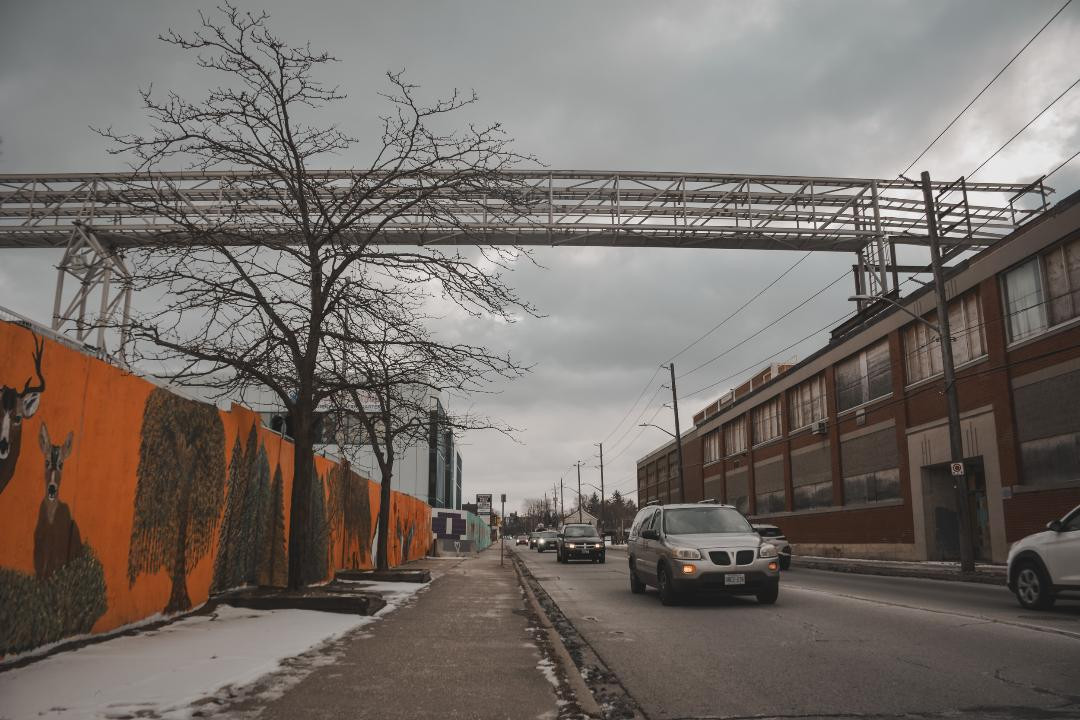
The aging metal catwalk spanning Ontario Street connects the two former GM properties. It’s unclear what level of inspection occurs to ensure it is stable.
(Joel Wittnebel/The Pointer files)
Stevens is one of the only elected officials pressing the Ministry for information. At a public town hall meeting in late October, Mayor Mat Siscoe refused to take questions about the former GM site from The Pointer, despite the urging of residents. Sisoe repeatedly misled those in attendance, claiming the City has no power to secure the site and take steps to make sure it is safe.
Email: [email protected]
At a time when vital public information is needed by everyone, The Pointer has taken down our paywall on all stories to ensure every resident of Brampton, Mississauga and Niagara has access to the facts. For those who are able, we encourage you to consider a subscription. This will help us report on important public interest issues the community needs to know about now more than ever. You can register for a 30-day free trial HERE. Thereafter, The Pointer will charge $10 a month and you can cancel any time right on the website. Thank you
Submit a correction about this story

