
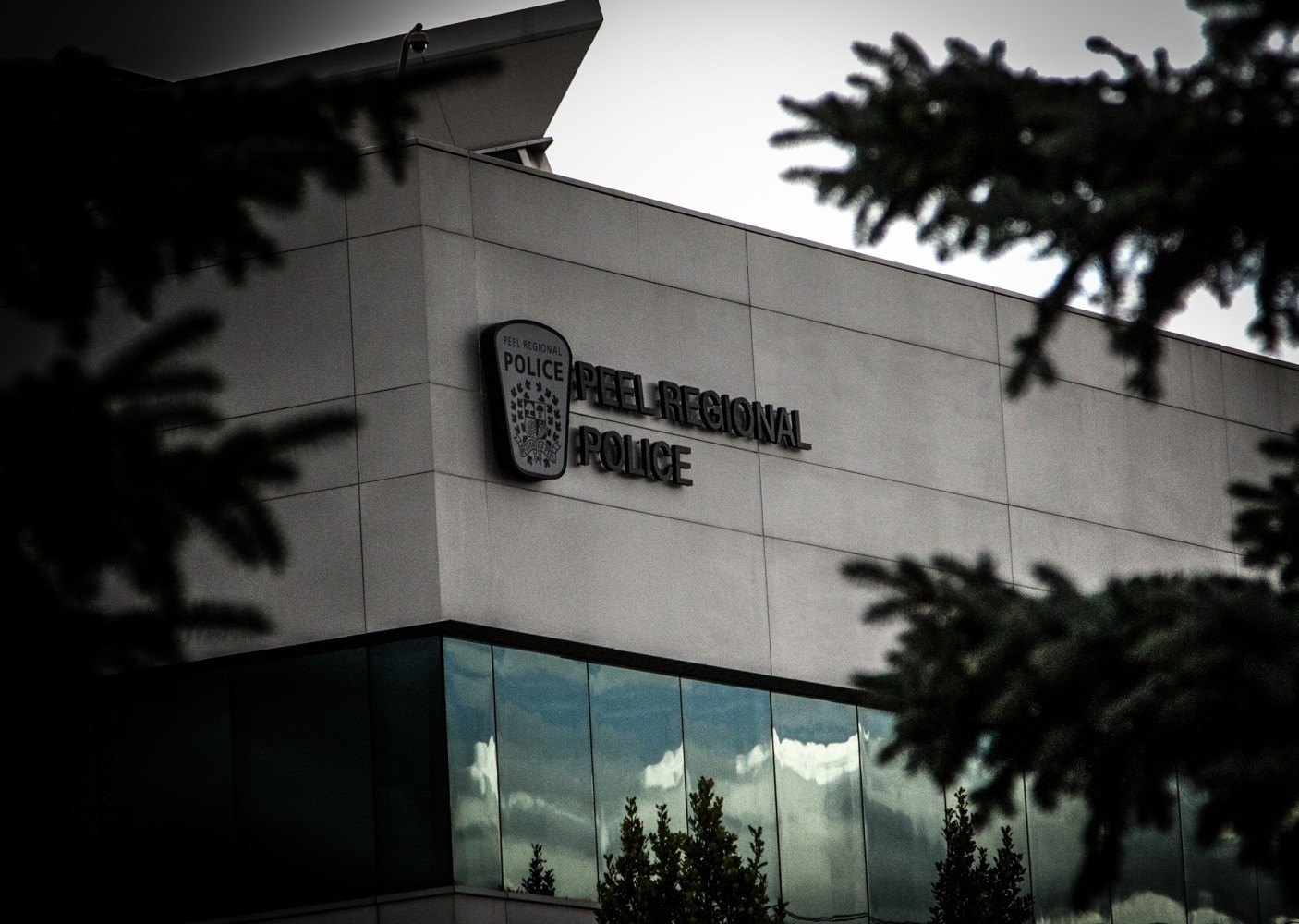
Independence of police review following corruption scandal questioned; Peel Police remain silent on involvement of 3 suspended officers
Despite evidence linking three Peel officers to one of the most egregious cases of police corruption in Canadian history, Peel Police Chief Nishan Duraiappah and the Peel Police Services Board have remained silent. Peel’s top cop and the board responsible for governing the force have also failed to release any statement in support of, or even to acknowledge, the province-wide review of police agencies by the Inspector General of Police, Ryan Teschner.
Announced on February 9, Teschner revealed his plan to conduct an inspection of all 45 police forces across Ontario, evaluating “effectiveness of police services, police service boards, and the Ontario Provincial Police in preventing, detecting, responding to, and fortifying their organizations from corruption.”
The announcement was made a few days after a bombshell press conference by York Police announcing the arrest of seven Toronto Police officers, and one recently retired member, on February 5. York Police showed video evidence of gangland-style shootings and outlined how these targeted attacks, and a conspiracy to kill a Toronto-area corrections officer, allegedly involved at least seven current members of the Toronto Police Service, and one now retired officer, feeding information to an organized criminal network with international ties. The disturbing case continues to unfold after a report released last year by the Criminal Intelligence Services of Canada outlined how organized crime groups have made concerted efforts to infiltrate law enforcement agencies across the country, which “continues to pose a threat not only to the safety and security of Canadians, but also to the integrity of Canada's political and economic environment.”
The Pointer reported the following day that three officers with Peel Police had been suspended after York Police shared evidence of their alleged involvement in the scheme. Sources have told The Pointer that the three Peel officers are Sergeant Adrian Shipp, Constable Scott King, and Constable Paul Binns.
Details of their alleged involvement have not been shared by Peel or York Police. According to reporting by the Toronto Star, one of the suspended Peel officers (it’s not clear which one; The Pointer is in the process of identifying the officer through public records) was allegedly in contact with accused Toronto officer Robert Black regarding a plan to commit insurance fraud, which was not carried out.
“Why don’t we know exactly what they’re alleged to be involved with?” asked David Bosveld, a resident of Peel who has worked for nearly a decade to reform policing and eliminate anti-Black racism that remains widespread within the Peel force. “Does that not feel to you that someone is trying to protect, either the badge, the individual officers, or the service? Who they are protecting, it seems to be clear. And their mandate is to protect the community. We pay for them, they claim they want trust, and one way to establish that trust is to put that garbage out by the curb and disassociate yourself.”
Peel Police have not released any details about the suspended officers, other than they have not been charged in connection to Project South. The force did not respond to questions about whether the three officers were suspended with or without pay.
The silence contradicts Peel Police’s commitment to transparency made when it signed a Memorandum of Understanding with the Ontario Human Rights Commission—an effort aimed at eliminating anti-Black and other forms of racism after a scathing audit exposed a police department that causes widespread harm to Peel’s racialized communities and a senior leadership unwilling to change.
The audit covered the few years prior to Duraiappah’s arrival in 2019. He committed to eradicating the harmful culture and lack of transparency that had made Peel Police a province-wide example of the wrongdoing and internal decay that the recently announced review will examine. Over a five-year period starting in 2010, approximately one-third of the uniform officers in the Peel Police department had to be disciplined for some form of wrongdoing, the worst record in the province by far, with three times the rate of officer misconduct compared to the next worst force in Ontario over the same period.
The MOU signed after the alarming data was made public and following the scathing external audit requires the Peel Police and the Peel Police Services Board to “promote transparency and accountability”.
“It’s not just a one-time acknowledgement and apology for the fact that there has been in the past anti-Black racism. It’s when things come up, you need to acknowledge them,” Bosveld says, pointing to an ongoing pattern by Peel Police to either remain silent in the face of serious wrongdoing, including scathing court rulings tossing out charges because of egregious use of force by officers, and recommendations for improvement from Ontario coroner inquests, or to deflect blame on others for harm within the organization—including a recent use of force report that blamed Peel’s Black communities for a 111 percent increase in instances of officers using force against residents.
“You’ve got to be transparent, you can’t just share with us when it hits the news,” Bosveld says.
According to a press release outlining Teschner’s review, his inspection will evaluate police services and police service boards in five defined areas: screening and vetting; supervision; access to databases; evidence management; and substance abuse and fitness for duty. He has the ability to examine additional processes and conduct if needed.
“Given the importance of this inspection being conducted in a timely manner, the Inspector General will appoint an individual external to government to serve as lead inspector,” the release explains. “Upon completion, the inspector will submit a Findings Report to the Inspector General, who will independently review the report and determine whether any directions must be implemented to ensure compliance and improve performance across Ontario’s policing system.”
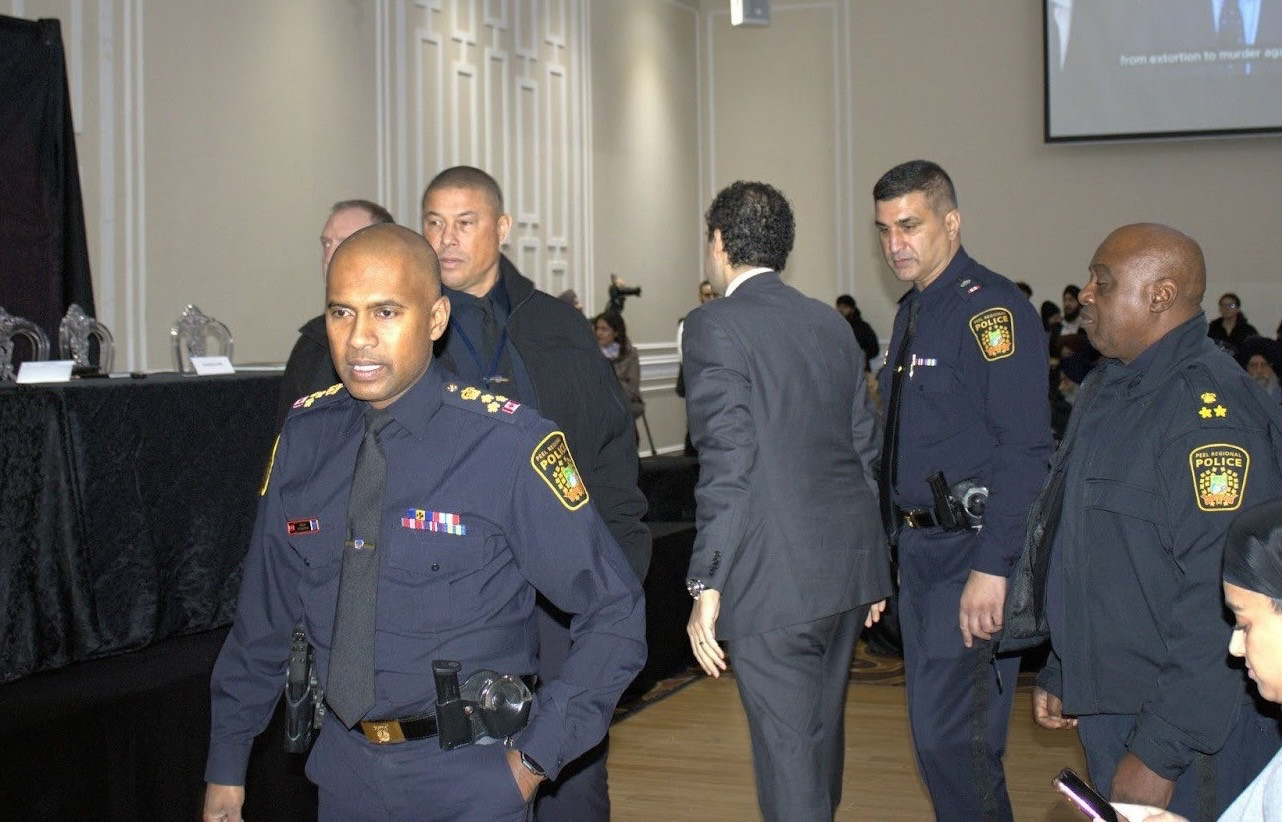
Peel Police Chief Nishan Duraiappah (left) has not released any statements following the suspension of three of his officers due to alleged connections to York Police’s ongoing corruption probe, Project South.
(Muhammad Hamza/The Pointer files)
Teschner has the authority to issue legally binding recommendations. These recommendations and the lead inspector’s report will be made public, the Inspector’s office told The Pointer.
Police experts have questioned whether Teschner will be able to analyze these reports objectively, particularly when it comes to the Toronto Police and the Toronto Police Service Board.
“There is an appearance of conflict from the fact that Teschner served as the Executive Director of the Toronto Police Services Board for several years before assuming his current job and enjoyed a warm relationship with Chief (Myron) Demkiw. He is the only police board executive director I know in Canada to be saluted by the police chief when stepping down from his position,” Alok Mukherjee, the former chair of the Toronto Police Services Board and former president of the Canadian Association of Police Boards, wrote on his website. “How will this history affect Ryan Teschner’s judgement as the Inspector General in setting up and overseeing a comprehensive inspection of his former employer? Further, given this past connection with the board and the chief, what might be the public perception of the credibility of what he decides to do?”
The Inspector General’s Office did not respond to questions about the potential conflict.
In the press release announcing the review, Teschner says, “Independent oversight is not to be feared – but welcomed. It is essential to maintaining public trust in policing, particularly at a time when confidence must be earned and sustained.”
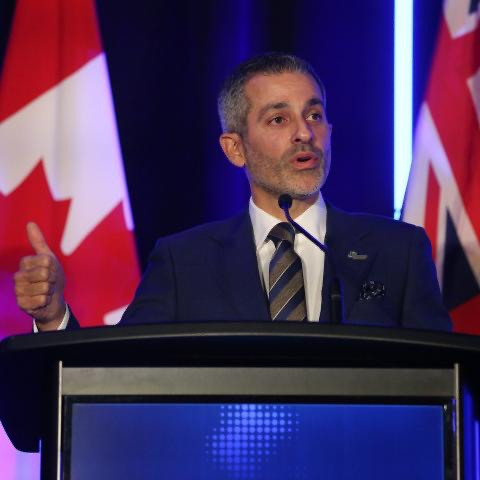
Ryan Teschner currently sits as Ontario’s first Inspector General of Policing.
(Inspector General of Police)
Teschner has yet to announce a lead inspector to assist him with the review. Officials in Teschner’s office told The Pointer once an inspection plan is finalized, the full scope and parameters will be shared publicly.
Questions are also being raised about the wide scope of the investigation and how a thorough probe into all 45 police forces in the province can be done in a meaningful way.
“Is he going to send out a team of 45 investigators and embed them in each of these police services? I don’t see, logistically, how you can take on a project that big without hiring many, many, many staff,” Bosveld says.
Mukherjee agrees, explaining that the mandate for the review is a rehashing of the initial request for review sent by the Toronto Police Chief and the Toronto Police Services Board.
“(Teschner) does not say what information he has from all of Ontario’s municipal police services that led him to this decision within days of being contacted by Toronto. Nor does he tell us how this overly broad-brush approach will address the specific issues raised by the situation in Toronto affecting Torontonians’ confidence in the integrity of their police service or, for that matter, how it will help the police board in determining the performance of its top employee,” Mukherjee wrote. “My own experience tells me that a thorough and deep systemic review or investigation or examination of just one police organization takes a considerable amount of time. It took the late Justice John Morden two years to conduct his independent civilian review of the governance of the 2010 G20 Summit policing in Toronto. Mr Teschner knows since, as legal counsel to Justice Morden, he was directly involved in the review. He knows how expensive it was, how much work was involved for the work to be credible, and how time consuming that was.”
Responding to questions from The Pointer, Rima Amri, a spokesperson with Teschner’s office explained the province-wide scope was chosen “because effective policing depends on public confidence across the entire system, not just within any single service.”
Amri continued: “Police officers with criminal intent may not confine themselves to one service and may move between organizations to evade detection, with their conduct following them. Weaknesses in oversight or standards therefore do not remain isolated to one community but can undermine the entire system. A sector wide inspection ensures that any vulnerabilities are identified and addressed consistently so that safeguards are strong everywhere.”
While supportive of any effort to pull back the curtains on Peel police, Bosveld is skeptical the Ontario-wide focus will be able to get to the deep-rooted issues that plague the local force.
“Policing itself is the problem and people are very afraid to say that because there is a whole financial complex around policing and the gobs of money that they get and the power they enjoy.”
The political power he mentions was the cause of controversy recently when Premier Doug Ford suggested that Project South, widely considered the worst case of police corruption in Canadian history, is nothing more than a “few bad apples”.
Bosveld says if Peel’s public school board, which has admittedly cultivated a culture that for decades has caused generational harm to racialized students, can’t be reformed, it will be difficult to change an increasingly powerful Peel Police force seen by many as the only solution to crime in Brampton and Mississauga, despite its well documented problems over the past decade and declining results.
“We can’t shift our school board; how do we shift the para-military organization that is armed to the teeth?”
Email: [email protected]
Email: [email protected]
At a time when vital public information is needed by everyone, The Pointer has taken down our paywall on all stories to ensure every resident of Brampton, Mississauga and Niagara has access to the facts. For those who are able, we encourage you to consider a subscription. This will help us report on important public interest issues the community needs to know about now more than ever. You can register for a 30-day free trial HERE. Thereafter, The Pointer will charge $10 a month and you can cancel any time right on the website. Thank you
Submit a correction about this story

