
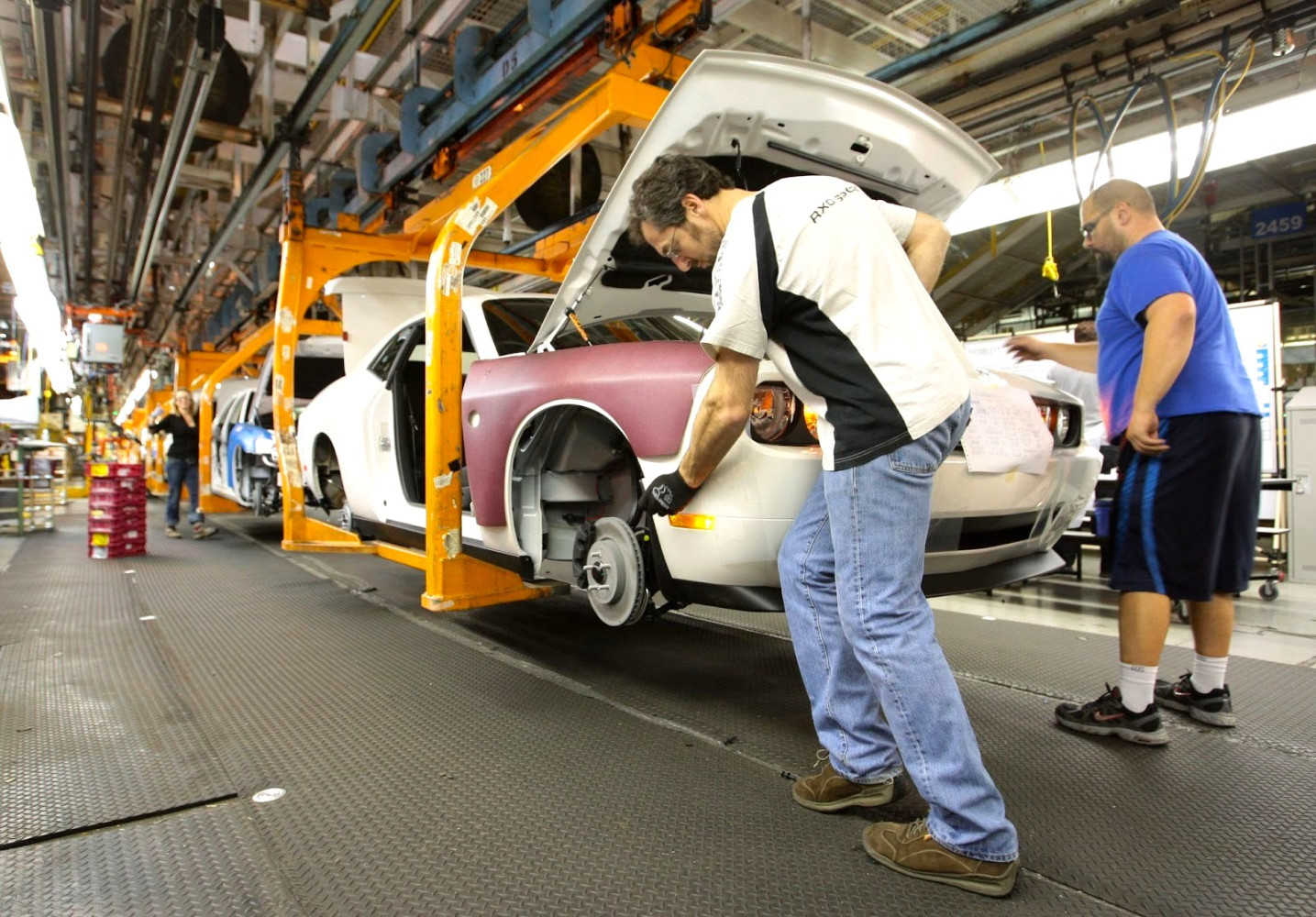
‘This deal is problematic for our plant’: laid off Brampton Stellantis workers say EV deal with China adds more uncertainty
While Prime Minister Mark Carney said the new deal with China to restart large-scale imports from the global leader in electric vehicle production “reflects the world as it is today, and benefits the people of both our nations”, it left many auto workers in Brampton feeling even more insecure about their future.
Some industry observers, however, believe the Liberal government is on the right track, and that EV import deals with the right partners could actually save the auto manufacturing sector in this country, after U.S. President Donald Trump’s protectionist policies effectively cut off his country’s market from vehicles made in Canada.
With the operations at the Brampton Assembly in limbo after Stellantis announced in October it would be shifting the production of the next generation Jeep Compass from Brampton to Illinois, under tariff threats from Trump, union officials say the new deal inked with China on January 16 only adds to the uncertainty roughly 3,000 Brampton auto workers still employed by Stellantis are grappling with.
“It doesn’t make any sense,” Vito Beato, President of Unifor Local 1285, told The Pointer. “They sold the auto industry out. It is problematic for our plant as well.”
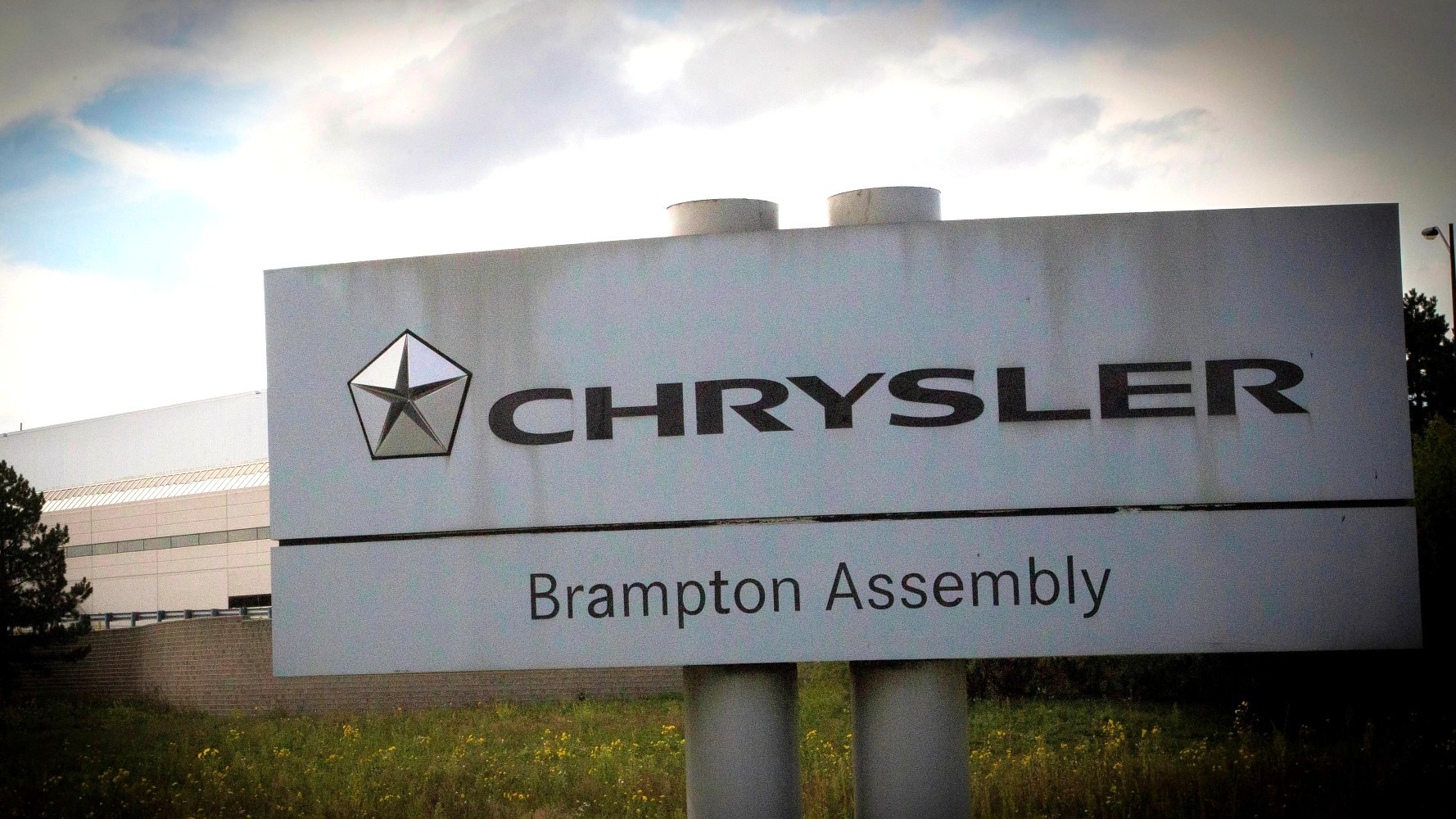
The Chrysler (Stellantis) assembly plant in Brampton.
(The Pointer file photo)
Beato has been at the forefront of advocacy efforts for the Brampton plant for more than a year. In February last year, in response to the tariff threats, Stellantis announced a pause on retooling efforts at the facility. The work was meant to prepare for production of the Jeep Compass, including electric and hybrid models, with the assistance of $529 million from the federal government. The pause was only meant to last eight weeks, but stretched on for months, ahead of the shocking October announcement of the production shift south of the border that left workers stunned and potentially out of a job. Employees told The Pointer they learned about the life-changing news through a robocall from company officials, a move that Unifor members said was “disrespectful and disgusting.”
Beato expressed frustration over the federal government signing a new import deal, instead of focusing on how to keep manufacturing jobs in Brampton.
“This puts our auto industry in a worse situation even than it was before,” he said. “I agree that it is hard to trust the U.S., but that does not mean you go make a deal with the country that you can never trust.”
Beato led a “Protect Canadian Jobs” rally in October demanding that Stellantis uphold its commitments under its current agreement with the union and the federal government. He wants to see a product strategy for the Brampton plant. No announcement has been made, since Stellantis officials told the federal government late last year that the company is committed to finding a solution for its massive assembly plant in Brampton. In December, Stellantis announced that 240 employees from Brampton had been shifted to work at its Windsor Assembly. Unifor Local 1285 represents approximately 3,000 workers.
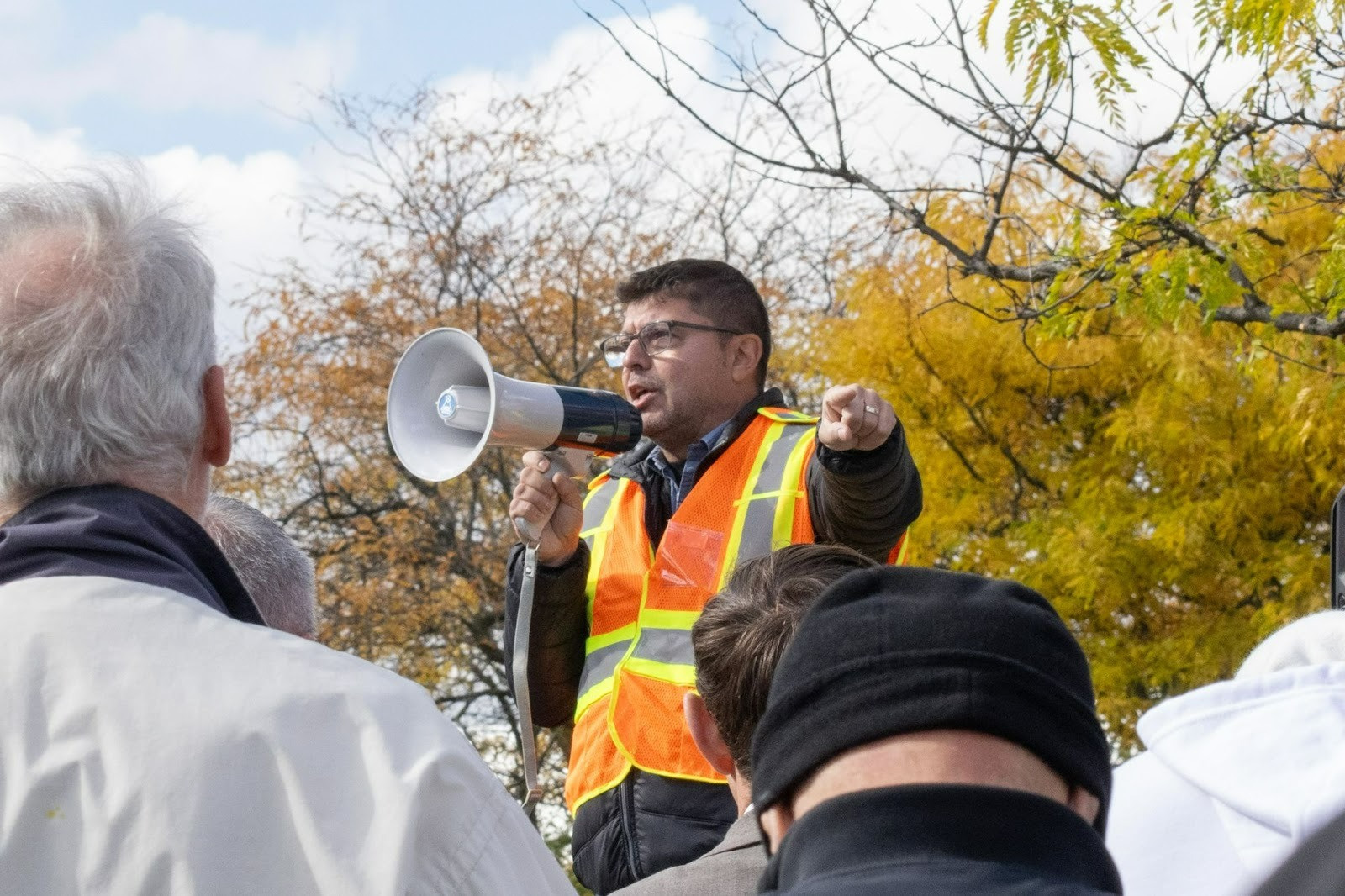
Vito Beato, President of Unifor Local 1285, led the “Protect Canadian Jobs” rally in October in solidarity with Brampton plant workers. He says the new Chinese EV deal is “problematic” for the country.
(Alexis Wright/The Pointer)
Despite Stellantis officials claiming the company has plans for the Brampton facility, no clarity has been provided.
Shifting employees to Windsor is nothing but a distraction, Beato said, adding it will do nothing to protect Brampton jobs.
"The company’s offer to transfer workers to Windsor or talk of major plans for Brampton seems like a smokescreen to justify their decision and claim our members are protected," he told The Pointer in October.
Stakeholders across Ontario want auto sector jobs protected.
Mike Schreiner, leader of the Green Party of Ontario, told The Pointer he is concerned about the potential loss of jobs in the province’s auto sector as a result of the new EV deal with China.

While showing solidarity with Brampton Plant workers, Mike Schreiner, leader of the Ontario Green Party, criticized Premier Doug Ford for scrapping EV-supported programs in Ontario.
(Green Party of Ontario)
“I share Unifor's concerns that this Chinese deal will threaten Ontario’s EV manufacturing sector…Because we want to make sure we protect Ontario jobs and investments in the EV sector,” he said.
Schreiner criticized Premier Doug Ford for making EV adoption more difficult in Ontario, including eliminating subsidies and removing requirements in the Building Code to install EV chargers in new homes. This has made it harder for Ontarians to afford “made in Ontario electric vehicles.”
“Every step of the way, Premier Ford has undermined demand for EVs in Ontario,” Schreiner said. "We're calling on the Province to aggressively roll out an EV charging infrastructure so Ontarians can actually afford electric vehicles and feel confident in operating those vehicles in any part of the province.”
The new agreement reached two weeks ago will allow China to sell up to 49,000 EVs in Canada each year initially, before 70,000 are allowed, with a tariff rate of 6.1 percent, down from the 100 percent imposed previously. By 2030 half the EVs will have to sell for $35,000 or less.
This returns the countries to the arrangement that was in place prior to 2024, when Canada followed the lead set by former U.S. president Joe Biden’s administration, which hit back against China with the 100 percent tariff due to a number of trade and other economic complaints.
In exchange for drastically reducing the tariff back to levels before Canada followed the U.S., China is also reducing tariffs on canola to 15 percent, down from approximately 85 percent, effective March 1, with the door now open to further tariff reductions for other Canadian agricultural and fisheries exports.
While talking to the media on January 19, Carney promoted the EV deal. “China produces some of the most affordable and energy-efficient vehicles in the world.” He said the agreement will bring “considerable investments in Canada’s auto sector,” will create employment opportunities and will speed up progress toward a net-zero future.
In a press conference on January 21, Lana Payne, national president of Unifor, was joined by Ontario Premier Doug Ford and auto industry leaders. She said the Chinese deal will worsen the impact of U.S. tariffs on local auto manufacturing in Ontario. Along with the idled Brampton facility, Payne also pointed to the GM Assembly Plant in Ingersoll which is currently shut down as a result of U.S. trade-related uncertainty.
“This China deal is a hard pill for them to swallow right now,” she said. “Autoworkers have been on the front lines of this trade war since last February, fighting to protect their jobs, their plants, and their communities.”
Ford also raised concerns over Carney’s decision to open the Canadian market for “cheap Chinese-made vehicles,” calling it a competition on “unfair grounds for Canadian workers.”
However, differences between the two leaders were apparently resolved after they met at a local pizza shop in Etobicoke.
While talking to the media on Monday, Ford warmed to the Chinese deal, calling the meeting with the PM “very productive.” It was “all about Team Canada.”
Later that day, the Premier also met with Industry Minister Melanie Joly at Queen's Park, where both agreed on working together to create an auto sector task force, though details were not disclosed.
Before his informal meeting with Carney, Ford criticized the federal government over its agreement with China, calling it a “terrible deal”, claiming it will only worsen the crisis that the car manufacturing sector in Ontario is already reeling from.
"Instead of importing vehicles, we should be making vehicles by Canadian workers, using Canadian steel, respecting Canadian specs and standards, and leveraging Canada's supply chain," he said. "If the Chinese are serious about making investments and creating auto jobs here in Canada, then show us proof."
Payne also stressed that point, explaining that even if Chinese companies do set up their operations in Canada, the core supply chain will remain in China, where these automakers benefit from massive government subsidies, cheap labour costs, and weak labour standards.
"Any credible federal auto policy must come down to a simple rule: if you want to sell vehicles in Canada, you need to build in Canada and employ Canadian workers," she said.
The Liberal government is signalling policies to pursue more manufacturing from other countries, with direct benefits for Canada’s auto sector labour market and possible ties to supply chains here.
On Wednesday it was reported that Ottawa and Seoul entered a potential game-changing deal that is designed to bring Korean vehicle manufacturing here, linked to a multi-billion-dollar effort the car-making giant has undertaken to build 12 submarines for Canada’s navy, according to The Globe and Mail.
The non-binding agreement with Korea will advance the country’s “automotive industrial footprint in Canada” and create “electric vehicle (EV) manufacturing opportunities.”
Another priority is “growing Korea’s battery manufacturing presence in Canada” including the supply chain for “manufacturing, critical mineral extraction and refinement, research, development and extraction.”
Industry experts have expressed cautious optimism that such new deals, including the EV agreement with China, could see a revamped, possibly larger auto manufacturing sector in Canada, with existing plants eventually taken over by companies from other parts of the world, as Prime Minister Carney continues his work to shift more and more of Canada’s economic livelihood away from our long reliance on the U.S., which under Trump has become less and less predictable.
Just days after Canada signed the deal with China, Trump threatened to impose 100 percent tariffs on all Canadian exports.
“China will eat Canada alive, completely devour it, including the destruction of their businesses, social fabric, and general way of life,” he posted on Truth Social.
Carney responded on Sunday, saying he has “no intention” of pursuing a free trade deal with China, and the country respects its obligations under the Canada-U.S-Mexico trade agreement, known as CUSMA, which is up for negotiation later this year.
According to the StatsCan 2024 report, a total of 1.9 million new cars were sold in Canada; 264,277 (13.8 percent) were electric and plug-in hybrid options.
The new deal could significantly boost these numbers, especially when the more affordable Chinese models hit the Canadian market at less than $35,000. The initial price points, makes and models that will be imported from China are still to be determined.
According to AutoTrader’s quarterly price index report for Q2 of 2025, the average new car price in Canada, for all vehicles combined including trucks, SUVs, sedans, minivans, hybrid and EV models, as of June was $64,445; the average price of just new EVs was $66,891.
Email: [email protected]
At a time when vital public information is needed by everyone, The Pointer has taken down our paywall on all stories to ensure every resident of Brampton, Mississauga and Niagara has access to the facts. For those who are able, we encourage you to consider a subscription. This will help us report on important public interest issues the community needs to know about now more than ever. You can register for a 30-day free trial HERE. Thereafter, The Pointer will charge $10 a month and you can cancel any time right on the website. Thank you
Submit a correction about this story

