
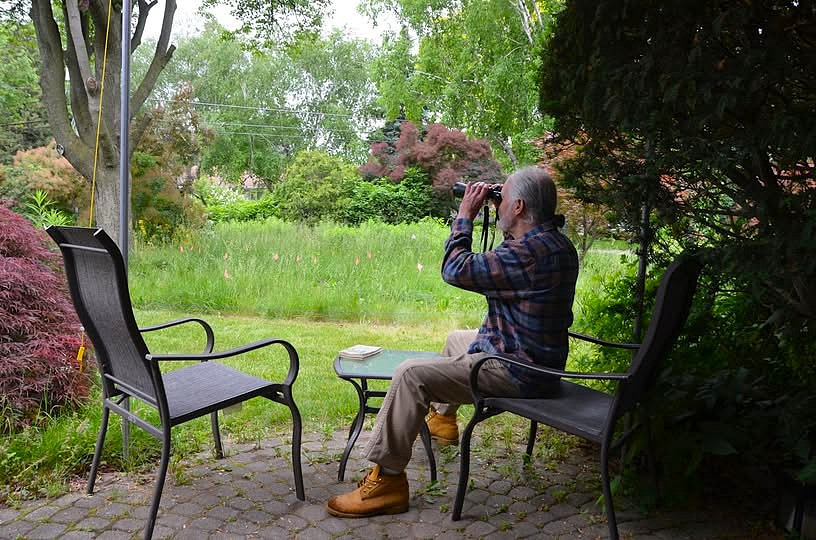
Mississauga resident wins legal fight against City’s strict requirement for manicured lawns
For the last five years every time a knock pounded from the door, Mississauga resident Wolf Ruck would start sweating and his blood pressure would rise.
He would peek through the window and if it was a City of Mississauga bylaw officer, the anxiety would start to vibrate through him.
Three years after taking the City to court, he was finally able to catch his breath.
“I experienced the same symptoms scanning the [court] decision…it was the end of a five-year saga,” Ruck told The Pointer. He was recently informed that the Ontario Superior Court of Justice ruled that key parts of the City’s lawn bylaw violated the Canadian Charter of Rights, which protects freedom of thought, belief, opinion and expression.
It was in August of 2021 when an enforcement officer first knocked on his door following multiple complaints from his neighbours about the “tall grass and weeds” growing on his property.
To Ruck, it was a biodiversity and habitat garden, a concept he had discovered that same year through the 1000 Islands Master Gardeners, a network of 27 local groups dedicated to promoting sustainable gardening as part of the province-wide Master Gardeners of Ontario Inc. (MGOI).
To the City and his neighbours, it was an abomination, out of step with the manicured lawns that define the verdant subdivisions across much of the giant suburb.
Rooted in colonial English landscape traditions, manicured lawns became popular in the late nineteenth century in North America. A century later, in 1998, Mississauga got its own Tall Grass and Nuisance Weeds By-law, which includes a list of 25 nuisance weeds and requires property owners to cut them down to less than 20 centimetres.
Ruck complied with the order the first time by cutting the grass before the City’s follow-up inspection. The matter was closed until the summer of 2022, when the City received multiple complaints and hired a contractor to mow his lawn.
Similar enforcement actions followed in 2023, after City staff, including a forestry technician, found cynanchum rossicum, better known as dog-strangling vine, and sow thistle on his lawn, both listed as prohibited nuisance weeds under Schedule “A” of the bylaw.
Ruck tried to reason with the bylaw officers, the City and his neighbours, pointing to environmental, scientific and legal reasons for maintaining a naturalized lawn. The City remained unwilling to engage with him and enforcement officers continued to enter his property to cut the grass and weeds, adding the charges to his property tax bill each time.
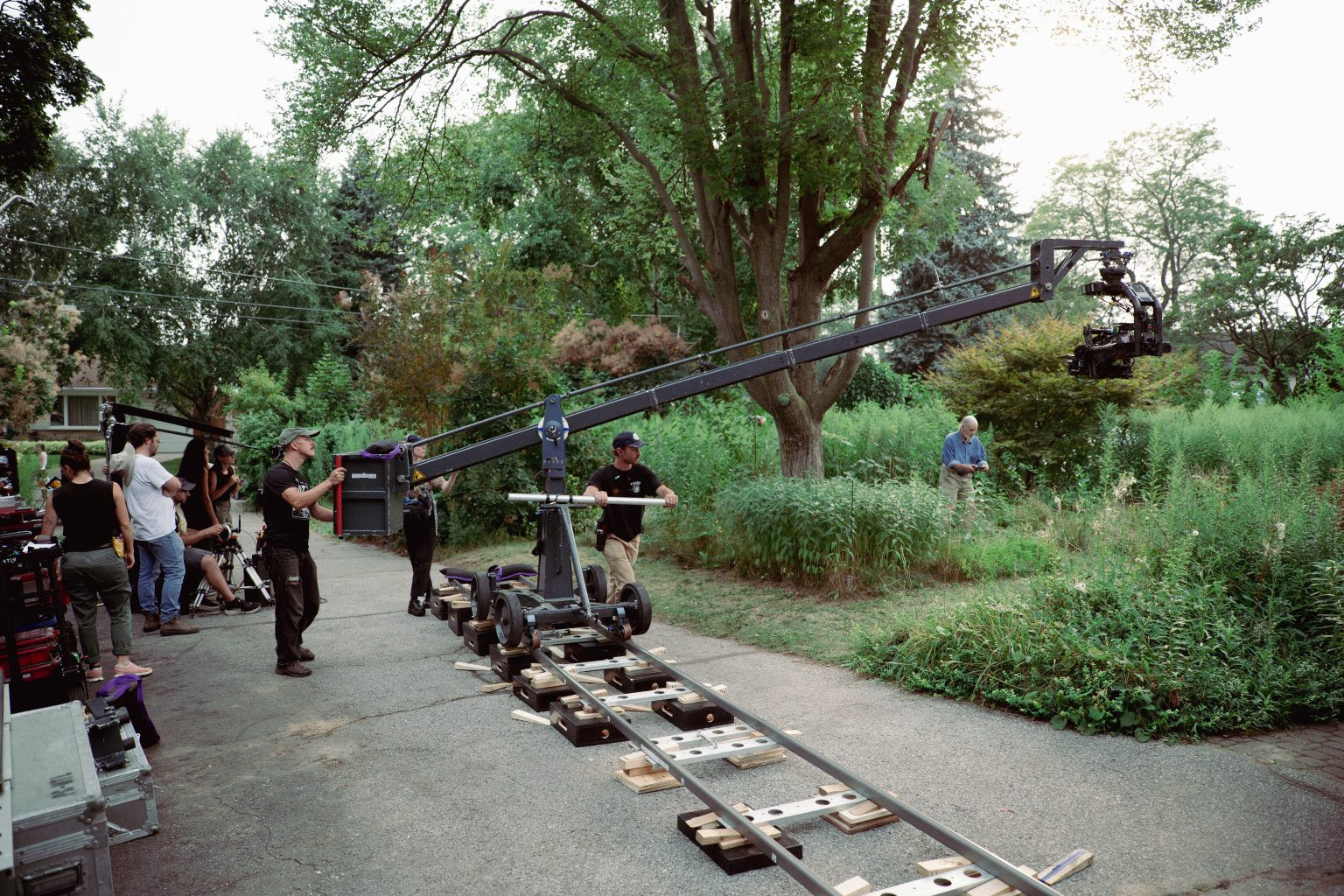
In August 2024, Mississauga resident Wolf Ruck stepped in front of the camera for the first time for a documentary, ‘A Wolf in The Suburbs’, based on his fight to maintain a naturalized lawn. Directed by award-winning filmmaker Amélie Hardy, the documentary is expected to premiere this year.
“I have a strong belief that nature knows best, and because of climate change, biodiversity decline emergencies, I felt that the least I could do is to make a pollinator and wildlife-friendly habitat out of my monoculture,” he said.
“That didn’t sit well with certain neighbours and that's what triggers these bylaw notices of contravention and then remediation, if you don't comply.”
By July 2023, Ruck had received his fourth Notice of Contravention. Enforcement followed a month later.
Determined to stop further damage to his garden, he decided to take legal action and filed a Notice of Application in Ontario’s Superior Court that November.
“At the heart of the case was a simple question: can a person choose to naturalize their property, allowing weeds and grasses to grow, in order to express environmental values about biodiversity, respect for nature and coexistence with wildlife?,” Ruck noted.
When the Court dismissed the case in May 2024, he appealed to the Ontario Court of Appeal, arguing that Mississauga’s actions of mowing his naturalized garden twice were unjust and arbitrary under administrative law, highlighting concerns over how enforcement has been handled in his case.
Even with the appeal underway, the City issued a fifth Notice of Contravention in the same month, prompting Ruck to file a Notice of Motion to Stay enforcement, which was also dismissed.
On February 24 last year, the legal tide shifted in his favour when the Ontario Court of Appeal ruled that Ruck’s case raised constitutional issues that had not been properly addressed. Because the case required a Notice of Constitutional Question, which had not been served on the provincial and federal attorneys general, the Court set aside the earlier dismissal and sent the matter back to the Superior Court for a fresh hearing.
For Ruck, who represented himself throughout the proceedings, “it was a technicality but it kept the case alive”.
When Charter issues are raised, notice must be given to the attorneys general so they have an opportunity to intervene, a requirement Ruck was unaware of when he first filed his application. The Court of Appeal found without that notice, the lower court should not have ruled on the case at all.
But 2026 brought with it a “New Year’s gift” that the Mississauga resident had spent years waiting for.
On January 6, as Ruck was checking his email, a familiar rush of adrenaline surged. This time, it wasn’t a notice from the City. It was a judgement on his case, Ruck v. City of Mississauga.
In a landmark decision, the Ontario Superior Court of Justice ruled that key provisions of Mississauga’s Nuisance Weeds and Tall Grass Control By-law violate the Charter.
The Court held that maintaining a naturalized, re-wilded garden can constitute protected expression under section 2(b) of the Charter, which guarantees freedom of expression.
“I find no basis to exclude Mr. Ruck’s non-conventional gardening activity from protection under s. 2(b) of the Charter,” Justice Michael T. Doi said in the ruling.
“As an environmentalist, Mr. Ruck has adopted a landscaping form on his property to convey his views about the importance of co-existing with nature, the need for biodiversity and wildlife-friendly naturalization efforts in urban areas, and the value of maintaining harmony with the natural environment.”
The Court also applied the Section 1 Charter analysis, which allows governments to limit rights only where they can demonstrate that the restriction is reasonable and “demonstrably justified in a free and democratic society.” While the City argued that the bylaw served pressing objectives such as public safety, property standards and neighbourhood aesthetics, the judge found those limits were not minimally impairing.
Justice Doi struck down Section 5, which caps grass height at 20 centimetres and Section 6, which bans listed nuisance weeds, finding the City failed to justify the limits.
The ruling found that while the City’s goals pertaining to public health, safety and neighbourhood standards were legitimate, it provided no evidence for whether the specific restrictions it imposed were necessary or minimally impairing.
“It is not sufficient for a municipality to say, ‘we are doing what everyone else is doing,’” Justice Doi said, citing a recent Ontario decision.
However, the court noted Ruck was unable to establish a “breach of his rights” under Section 7 of the Charter, which protects life, liberty, and security of the person and Section 15, which guarantees equality rights.
The judge also declined to award $2.46 million in Charter damages and other relief under section 24(1) that Ruck was seeking, finding that while the bylaw itself was unconstitutional, the City’s enforcement actions were lawful and procedurally fair.
The City was ordered to remove enforcement charges added to his tax bill and declared the unconstitutional provisions of the bylaw to be of no force or effect.
“It was a partial win but it is still a win for the urban rewilding movement,” Ruck said.
The ruling marks the third time Ontario courts have found that common municipal grass and weeds bylaws infringe the Charter-protected expressive right to a naturalized garden.
In 1996, the Ontario Court of Justice established a key precedent in Sandy Bell v. Toronto, recognizing that a naturalized garden can constitute protected expression under Section 2(b) of the Canadian Charter of Rights and Freedoms. Bell had been fined $50 for the “excessive” growth of grass and weeds in her front yard but the Court ruled the bylaw was void for vagueness and unjustifiably infringed her freedom of expression.
The judge found that Bell’s garden conveyed environmental values and a critique of conventional landscaping, concluding that aesthetic offence alone could not justify suppressing expression or imposing a total ban on naturalized gardens.
In 2002, that principle was refined in Counter v. Toronto, a case involving Etobicoke residents Douglas Counter and Victor Counter’s naturalized garden on a City-owned boulevard, a decision upheld by the Ontario Court of Appeal in 2003.
The Court reaffirmed that naturalized gardens are protected expression under Section 2(b) but clarified that the right is not absolute. Municipalities may restrict such gardens only where there is evidence of legitimate safety concerns, such as risks to drivers or pedestrians. Because the City failed to demonstrate any such risk, enforcement was not justified, reinforcing limits on naturalized gardens must be proportionate, evidence-based and narrowly tied to safety.
Cultivation artist and environmental advocate Lorraine Johnson says the court’s latest judgement in Ruck’s case “builds on” those previous decisions, possibly serving as a wake-up call for municipalities and catalyzing the legal fight of those in similar situations.
The “huge victory” feels almost personal for Johnson, who has spent more than 30 years championing naturalized gardens that nurture biodiversity in a world dominated by unchecked development, where species’ habitats are gradually shrinking and with laws like Bill 5 possess the ability to disappear in large swaths.
“It makes me feel hopeful,” she told The Pointer. “It’s time now for municipalities to rewrite grass and weeds bylaws so they support naturalization instead of punishing it.”
On March 26, the City of Brampton replaced its old Grass and Weed Cutting By-law 166-2011 with Ground Cover Maintenance and Prohibited Plants By-law 45-2025 which allowed residents “to maintain Gardens to provide aesthetic value, a naturalized habitat, or grow food; provided that they are maintained and intentionally Cultivated and do not cause potential adverse safety effects on something or someone” while keeping the 20 centimetre (cm) limitation.
The change was prompted when City staff recommended changes to its bylaw on March 19 to give residents “more freedom over their approach to gardening on their property including the option of maintaining more sustainable and natural gardens.”
Will it work? Time will tell.
In 2022, the City of Burlington updated its Grass and Weeds By-law 49-2022, which explicitly exempted “naturalized areas” defined as vegetation deliberately planted or cultivated, monitored and maintained by a person.
Despite the revision, in June 2023, Burlington resident Karen Barnes was ordered to cut down her decade-old naturalized garden, a striking repeat of what happened in 2018 when another Burlington gardener, Doreen Nicoll, faced enforcement for allowing milkweed to grow.
Barnes’s garden, planted with native species such as New England asters, milkweed and white panicle asters to support pollinators including endangered monarch butterflies, met the bylaw’s definition of a naturalized area.
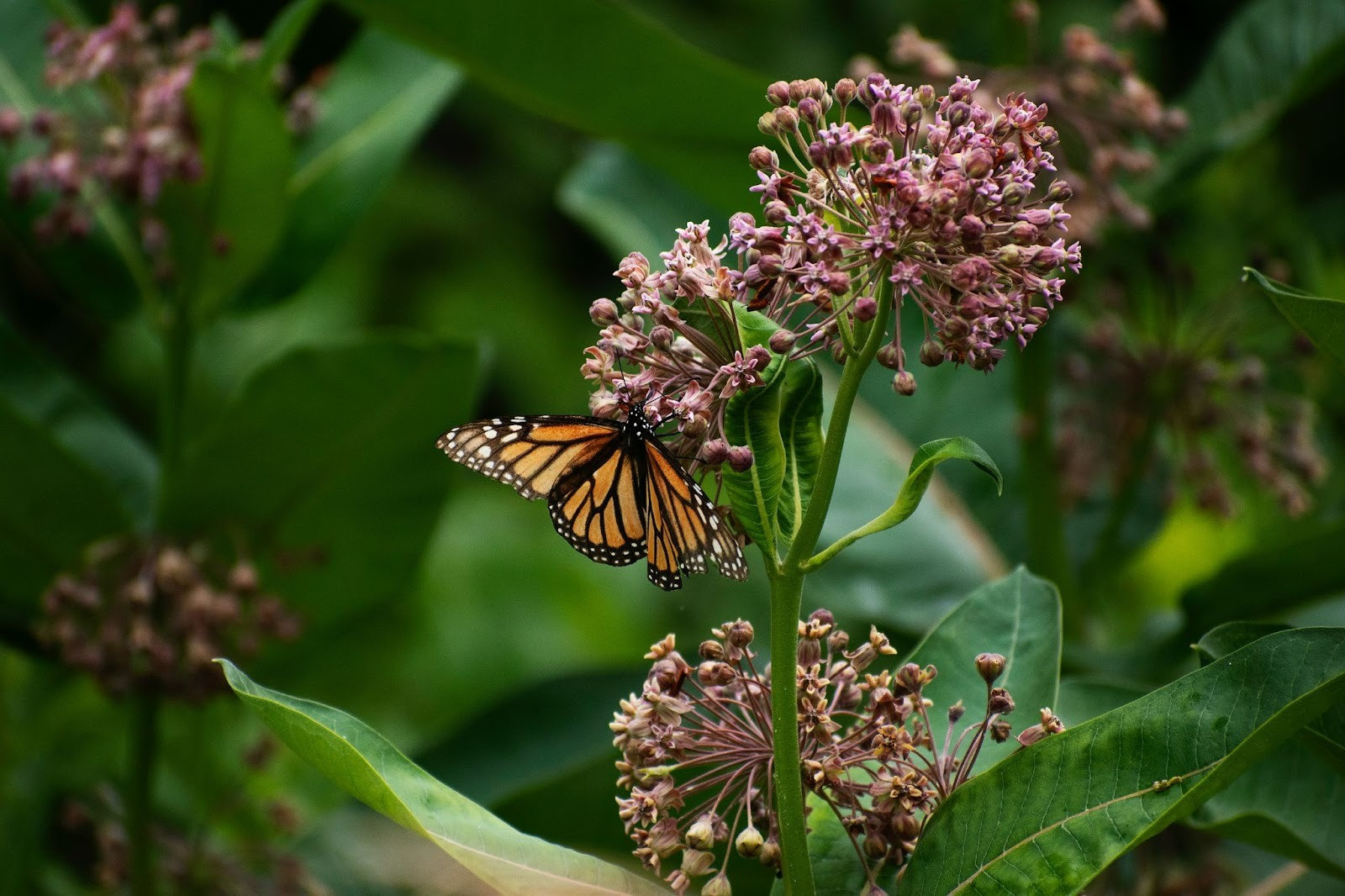
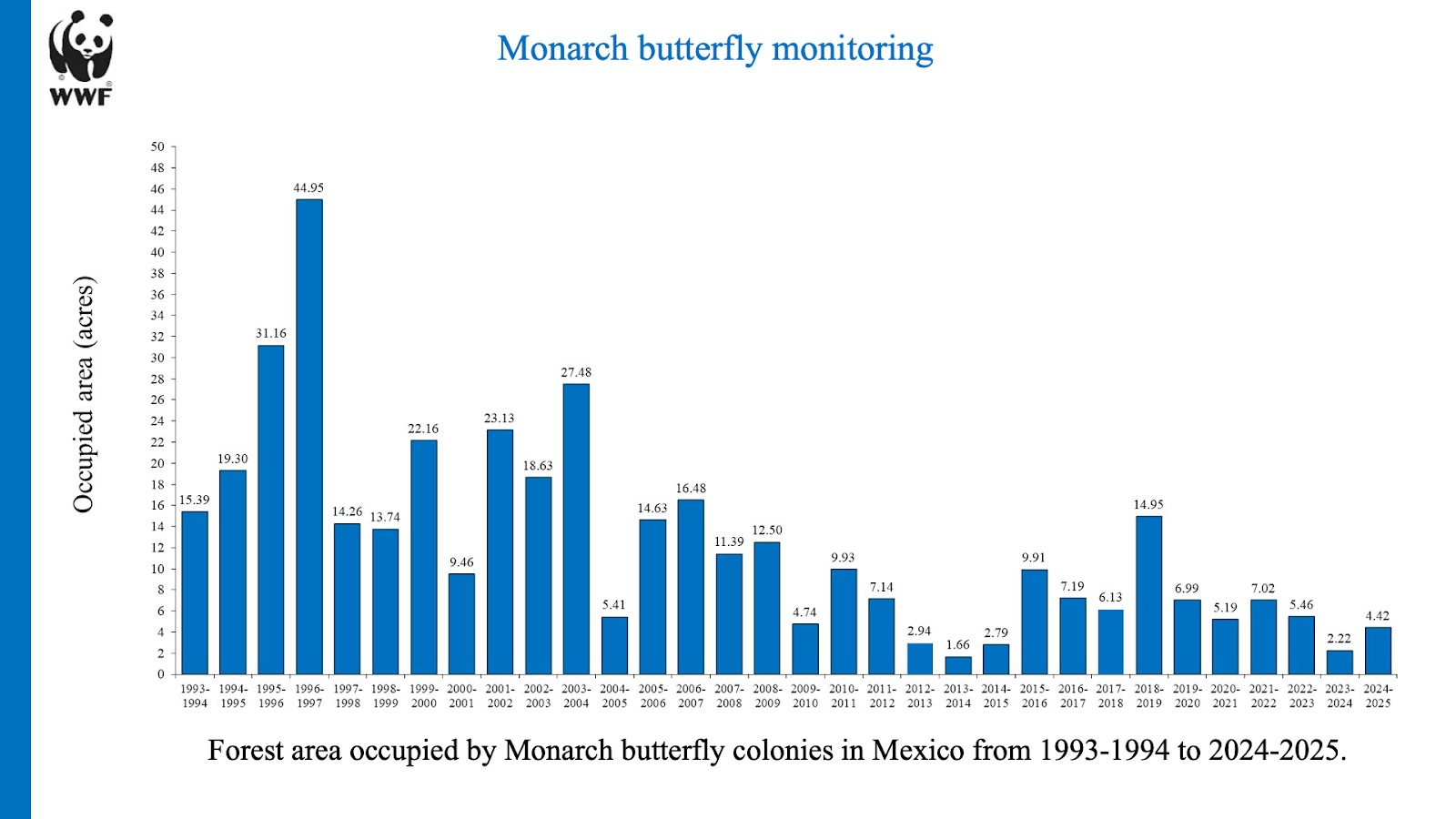
The monarch butterfly population in North America has been at alarmingly low levels, prompting experts to call for a coordinated international conservation strategy. A 2021 University of Guelph study found milkweed planted near neonicotinoid-treated crops were linked to reduced survival rates for butterflies.
(Photo: Alexis Wright/The Pointer, Graph: World Wildlife Fund)
But the city threatened thousands of dollars worth of fines and forcibly mowed her garden, even as she sought to appeal the order.
As reported recently by Toronto Star, Barnes is now taking the city to court, arguing that their actions violate her constitutional rights to freedom of expression and religion.
Ruck says he never expected to spend his retirement years becoming a legal expert when all he wanted to do was restore habitat, support bees and sequester carbon through a thriving ecosystem on his property.
“I thought I was retired, I thought I had graduated from school but I basically have been, what I would call, doing a postgraduate degree in law,” he shared, letting out a chuckle, tracing the long journey of representing himself at the courts.
He feels hopeful at the ruling, making a temporary “end of the saga of the last five years”. Why temporary? The City of Mississauga can choose to appeal the decision.
The City of Mississauga told The Pointer staff “are still reviewing the decision and considering next steps”, and have not made a decision on continuing the legal fight or making any changes to the Nuisance Weed and Tall Grass Control By-law.
Until then, Ruck looks forward to a summer this year when he can take a vacation up north, without worrying about a bylaw officer cutting his grass, returning to a decades-long family tradition that first started in the ‘80s.
Email: [email protected]
At a time when vital public information is needed by everyone, The Pointer has taken down our paywall on all stories to ensure every resident of Brampton, Mississauga and Niagara has access to the facts. For those who are able, we encourage you to consider a subscription. This will help us report on important public interest issues the community needs to know about now more than ever. You can register for a 30-day free trial HERE. Thereafter, The Pointer will charge $10 a month and you can cancel any time right on the website. Thank you
Submit a correction about this story


