

Brampton pushes downtown rezoning for development despite failing to address flood risk
For decades, Brampton’s downtown has been in steep decline. Buildings have been boarded up, storefronts have closed and aging streetscapes have cracked and crumbled.
A lack of investment has resulted from the failure of leaders such as Mayor Patrick Brown who have refused to budget for badly needed flood mitigation infrastructure that is required before widescale redevelopment can occur across the city centre, which sits in a floodplain next to Etobicoke Creek.
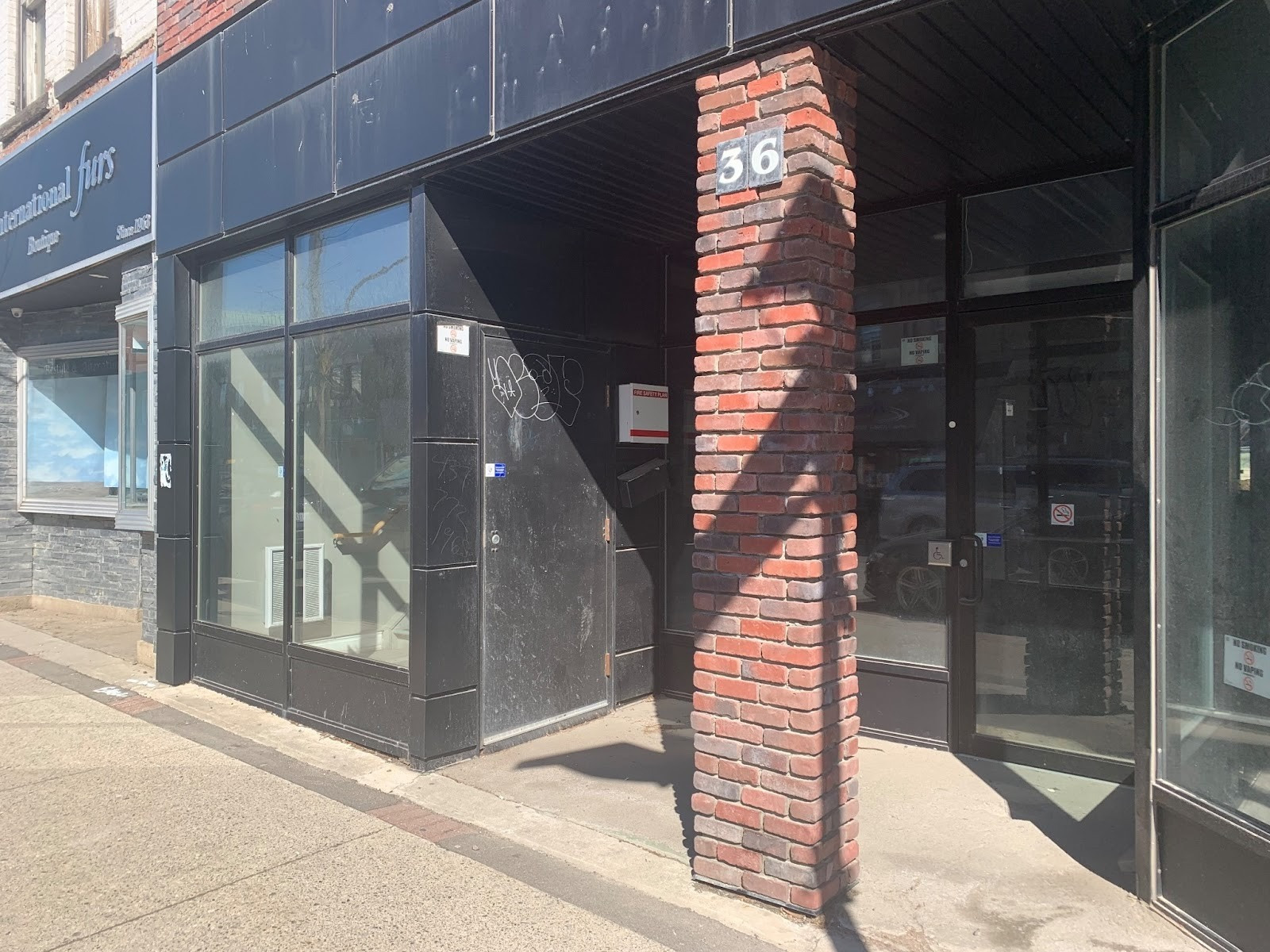
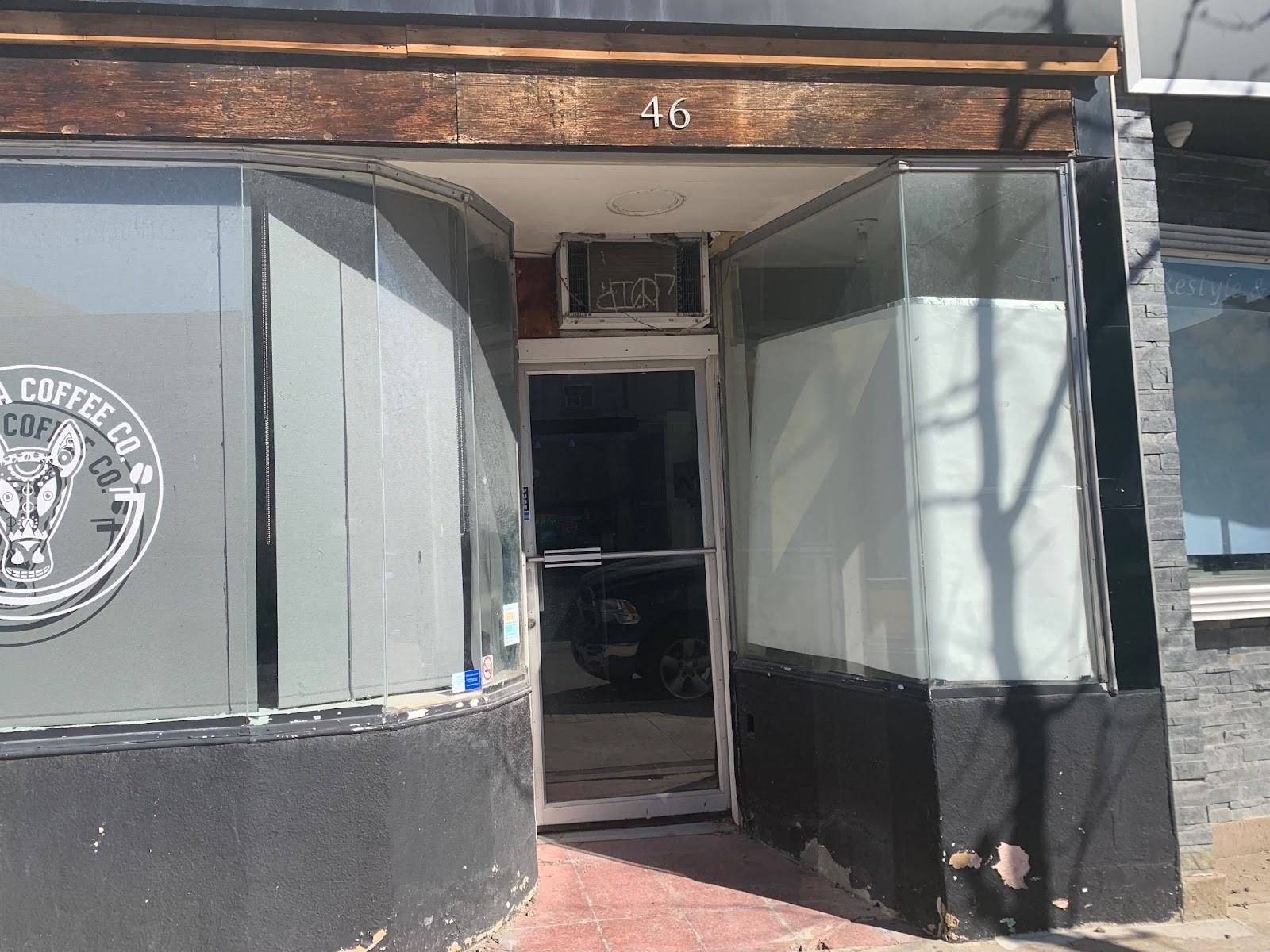
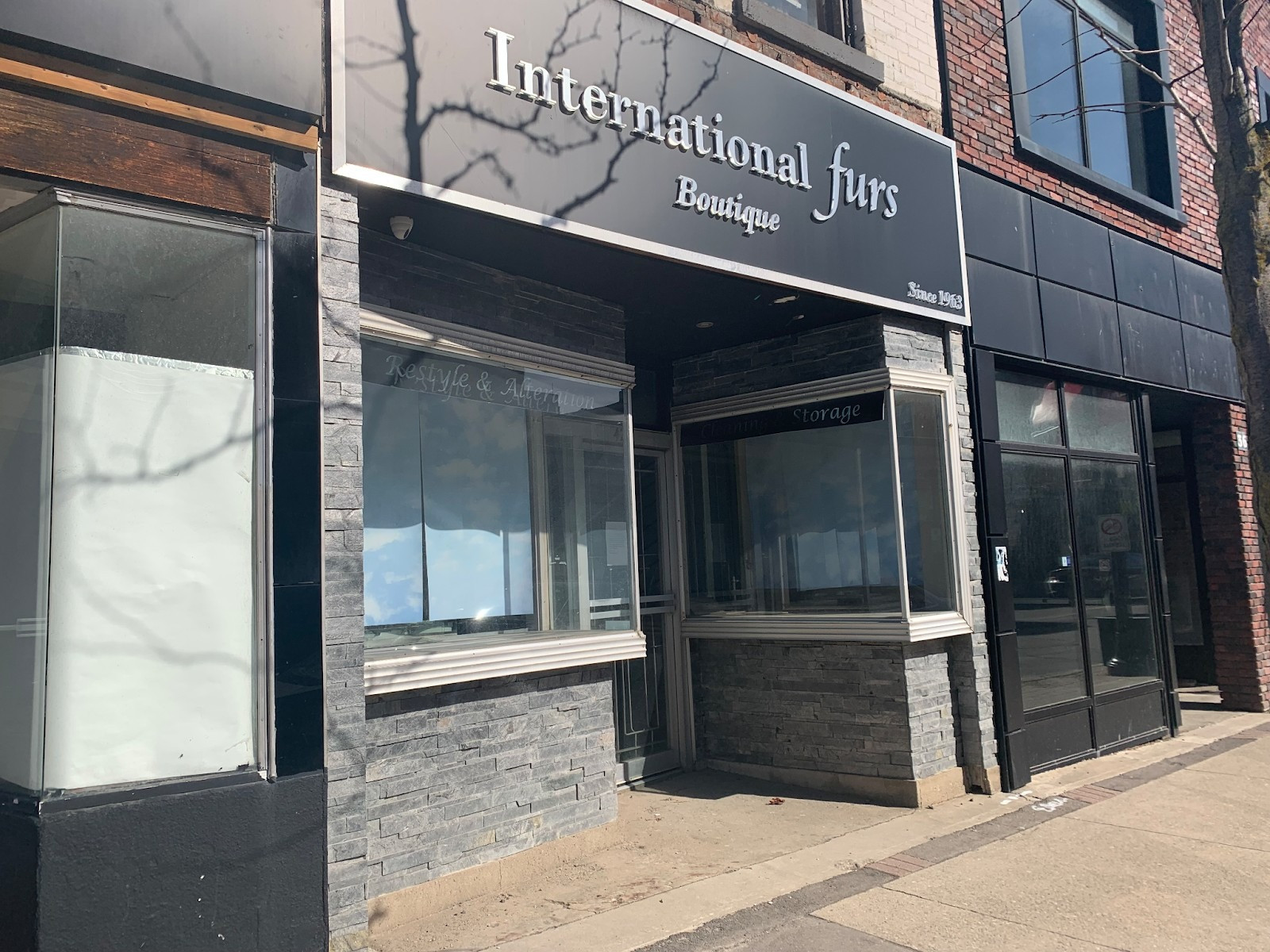

(The Pointer files)
Much of downtown is part of a Special Policy Area (SPA), a provincial designation that requires a municipality to impose special zoning requirements to ensure residents are protected due to unique circumstances—in this case flood risks.
Brampton has for more than a decade been planning a comprehensive project, called Riverwalk, to reconstruct the Etobicoke Creek floodway, which would protect the downtown and lift the most restrictive conditions under the SPA, clearing the way to finally redevelop the decaying city centre.
Despite federal funding assistance for the project (which could cost more than half a billion dollars) Brown has failed to provide matching dollars to unlock the $38 million Ottawa offered five years ago, and has ignored a range of spending priorities to rehabilitate Brampton’s struggling downtown.
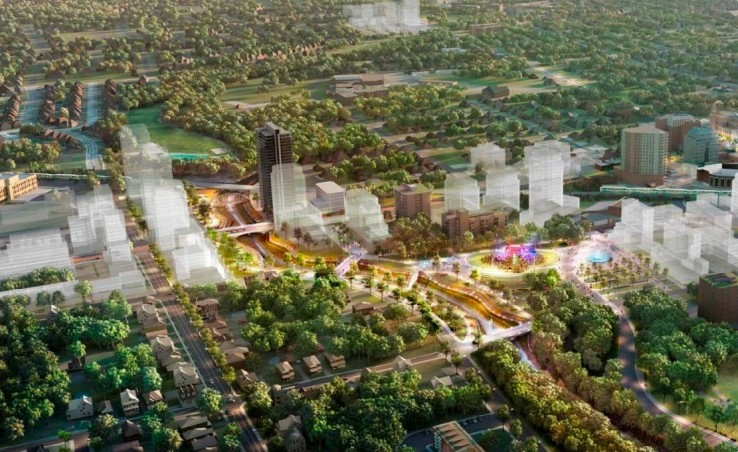
The long-delayed Riverwalk project was supposed to have fixed Brampton’s downtown flood-risk problem and spur major development in the city centre. That has not happened.
(City of Brampton)
Now, Brampton council members have initiated a process to rezone land in the downtown to facilitate development of the Centre for Innovation and other projects, despite the high risk of flooding and their ongoing failure to upgrade the stormwater infrastructure.
During the December 1 meeting of the Planning and Development Committee, council members approved a staff recommendation—with no discussion—to move forward with the rezoning process for parcels of land on George Street North and Nelson Street West for the Centre for Innovation; and 18 parcels on Main Street North for the Heritage Theatre Block and Southern Block.
The collection of parcels are covered under a Special Policy Area designation, the same one that applies to much of the downtown core. The provincial SPA restriction prevents many forms of development, including residential, within areas that could pose a risk to the public. Downtown Brampton, which sits in a floodplain, puts public safety and infrastructure at risk due to its natural topography.

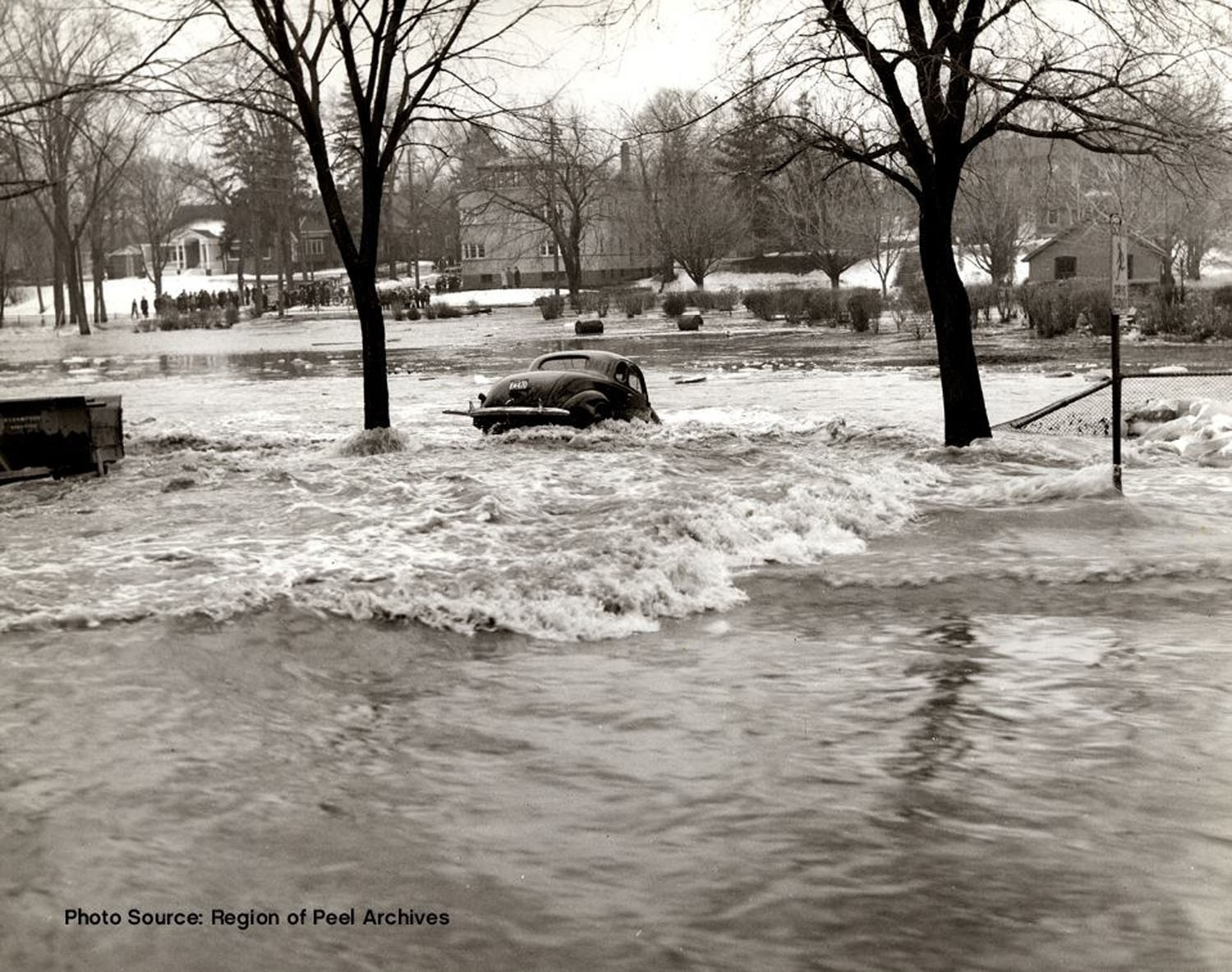
Flooding in downtown Brampton in 1948. While the concrete bypass channel built afterward helped mitigate the flood risk posed by Etobicoke Creek, the Toronto and Region Conservation Authority has made it clear the risk has not been eliminated. With climate change increasing the frequency of major storm events, the risk could actually be increasing.
(Peel Archives)
For more than 70 years the city has been handling the risk of water rising above Etobicoke Creek’s banks by diverting it around downtown through a concrete-lined bypass channel that has protected the area from flooding, but the provincial Special Policy Area designation due to the continued threat has hurt the city’s ability to redevelop its outdated city centre.
According to the City of Brampton, under current and forecasted conditions, the bypass channel doesn’t do enough to prevent the area from being vulnerable to flooding.

The Etobicoke Creek floodway runs through Brampton’s city centre.
(Alexis Wright/The Pointer files)
In 2014, Brampton Council approved the Downtown Etobicoke Creek Revitalization Feasibility Study which included an urban design vision for the area. In 2018, a subsequent, more detailed feasibility study was completed which reiterated that the future success of the urban vision was tied to the removal of flood risk in the downtown area.
Following this, an Economic Development Study was completed to support the case for investing in the Riverwalk project, and concluded every dollar invested would result in a 700 percent return on investment over the long term.
In 2020, the Downtown Brampton Flood Protection Environmental Assessment (DBFP EA) was completed and approved by the Toronto and Region Conservation Authority (TRCA).
The assessment indicated the Riverwalk project could eliminate the flood hazard and remove the SPA designation, which severely limits what can be built in the area, through parts of the corridor.
The project, involving partnerships with the TRCA, the City and the Region of Peel, involves reconfiguring the channel to provide more capacity to deal with higher water levels. This includes widening and deepening Etobicoke Creek in the city-centre area, replacing bridges with larger spans and making changes to some of the major streets in the corridor.
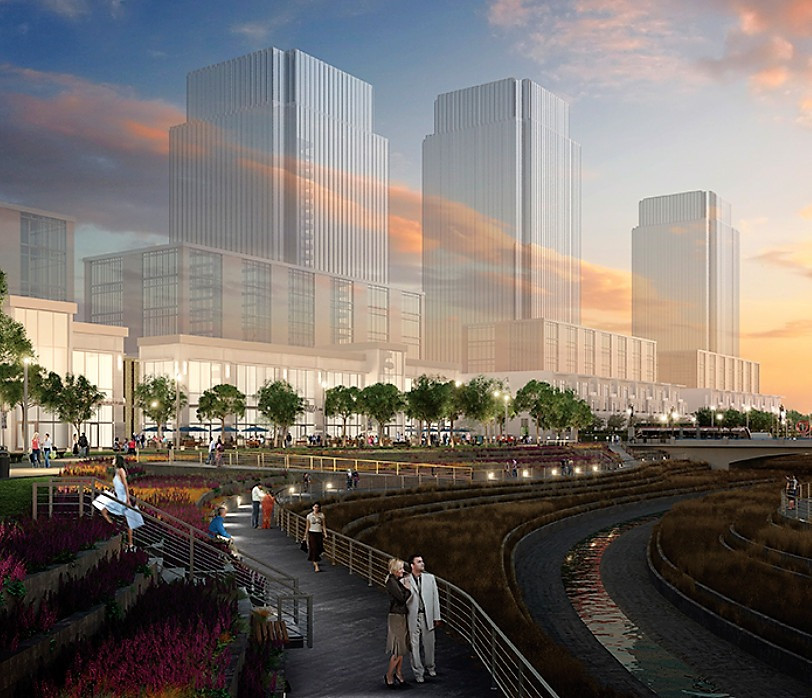
This rendering of the Riverwalk project is six years old. The plan has been repeatedly delayed because Mayor Patrick Brown has failed to budget for it.
(City of Brampton)
Once the flood risk is mitigated, an area of approximately 19 hectares will be removed from the floodplain, finally allowing parts of Brampton’s aging Four Corners area to be redeveloped.
The Riverwalk Urban Design Master Plan, presented to a committee of council in the summer of 2022, outlined the project timeline, but Brown failed to keep the plan on schedule and has repeatedly refused to fund critical infrastructure needs in the city, so he can achieve the politically advantageous budget freezes he claims when running for various elected positions.
The plan was a guiding document and a framework for future design and capital investment initiatives as well as smaller projects in specific local areas.
City staff began working on land acquisition for the project three years ago, but very little information has since been provided by council. After repeated delays since Brown was first elected in 2018, construction was finally supposed to begin last year, but that did not happen.
Etobicoke Creek meanders through downtown Brampton. The stormwater infrastructure constructed to contain it is not sufficient to withstand a major flood. This led the provincial government to designate the downtown floodplain a Special Policy Area, restricting development until the flood risk could be mitigated. The Riverwalk project is meant to be the solution to that problem, but under Mayor Patrick Brown, the project has seen minimal progress. The City is trying to move forward with development anyway.
(City of Brampton)
Currently, zoning on the lands restrict residential development to the level that existed in May 2014, a Brampton staff report explains, and non-residential space is capped at 88,000 square metres. Staff are now proposing a new zoning designation for the Centre for Innovation site and lands on Main Street to “enable these strategic City-led projects to advance while managing interim flood risk prior to completion of the…Riverwalk Flood Protection Project.”
Construction finally began on the flood mitigation work in November, and is scheduled for completion in 2028. This timeline is far from certain. The project has already been pushed back multiple times due to a lack of City Hall funding. The May 2022 Riverwalk Master Plan outlined how construction on flood mitigation work was supposed to begin in 2024 and be completed in 2027. It had been delayed prior to that as well.
If permission is granted by the TRCA and provincial government, the SPA designation can be altered to facilitate necessary development, a Brampton staff report explains. The new zoning would “introduce a modernized, site-specific policy framework that allows development to proceed safely.”
“This new policy framework is informed by updated technical studies, emergency management considerations, and coordination with the Toronto and Region Conservation Authority (TRCA) and Provincial staff…This process recognizes that the construction of Riverwalk is advancing,” the staff report details.
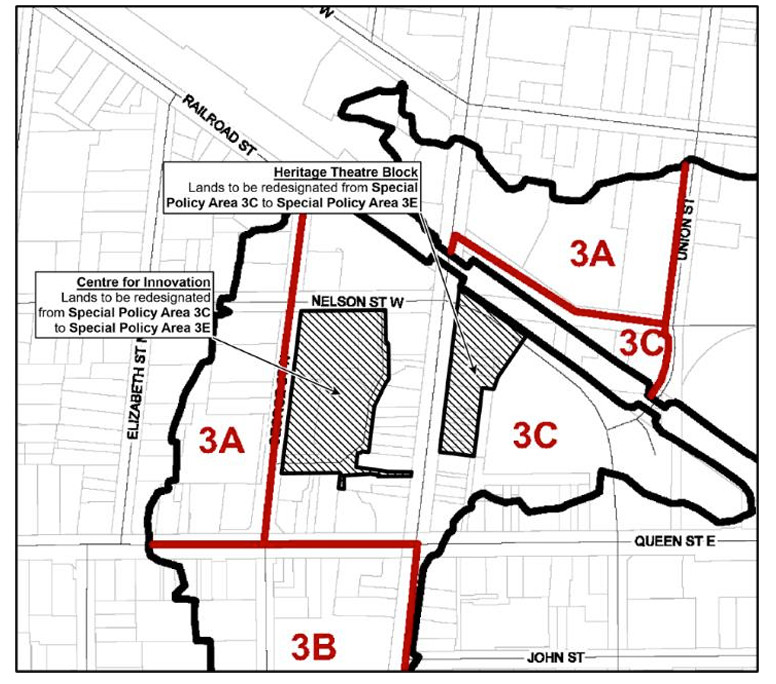
Brampton council members want to move forward with development in downtown, despite the risk of flooding. Staff claim this can be done in a safe manner. The construction of sufficient flood mitigation infrastructure is at least three years away.
(City of Brampton)
Following council’s go-ahead on December 1, staff are now working to finalize details of the zoning changes. A final version will come back to the planning committee at a later date before being submitted to the provincial government and TRCA for approval.
The zoning policy, if passed from its current draft format, would allow all stages of development, including full construction, to move ahead before the completion of the flood mitigation work. This is despite downtown Brampton being the fourth-most flood-prone area within the TRCA’s jurisdiction—an area that covers nearly 3,500 square kilometres.
“The lands are envisioned for transformative landmark city projects which will contain a mix of institutional, commercial, office and residential lands uses,” the draft policy sets out.
If approved it would allow for the approval of any “building and/or structures in advance of flood protection for Riverwalk infrastructure being complete and functional.”
The size and height of these buildings is not stipulated in the draft policy, neither is the number of residential units envisioned for the area.
The staff report does not detail the risks of building in a floodplain, but it is a clear subtext.
Any developer looking to take advantage of this zoning change—if approved—will need to create its own emergency management plan “addressing the protection of human health and safety and the protection of property (site, buildings, equipment)”; and “the acceptance of all risk by the proponent and…a complete indemnification, to the satisfaction of the City in consultation with the TRCA and MMAH/MNR, of all public authorities from any liability and costs, including those due to (i) property damage, injury or loss of life due to flooding during and after construction until the flood protection infrastructure is complete and functional from a flood plain management perspective; and, (ii) losses due to delay caused by a failure of the flood protection infrastructure to be completed or to be completed within the anticipated time frame.”
The Pointer reached out to Brampton Councillors Rod Power, Navjit Kaur Brar, Paul Vicente, Harkirat Singh, Dennis Keenan, Martin Medeiros, and Pat Fortini, and emailed City staff. They did not respond to questions about the risks of this zoning change.
Prior to 1952, flooding was a common occurrence in Brampton’s downtown. It led to the construction of the concrete bypass channel that year to mitigate the threat. It proved immediately useful, helping protect against the damage from Hurricane Hazel just two years later.
While the concrete channel, along with underground tunnels, helped control Etobicoke Creek and prevent flooding, it did not completely remove the risk. As the TRCA has explained in multiple environmental assessment reports, Brampton’s city centre sits in the depressed earth of Etobicoke Creek’s floodplain, and the river runs along an elevated ridge adjacent to the downtown core. This means that in the event of major storms—which are becoming more frequent due to climate change—water will spill out upstream and downstream of downtown.
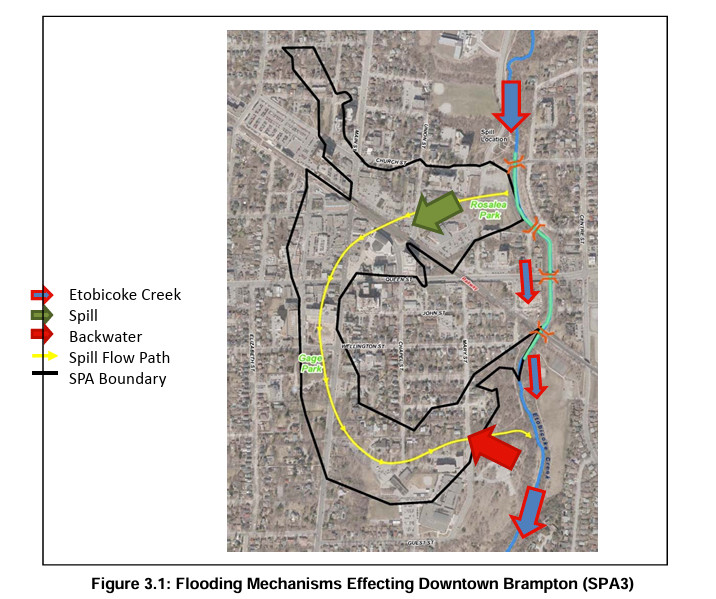
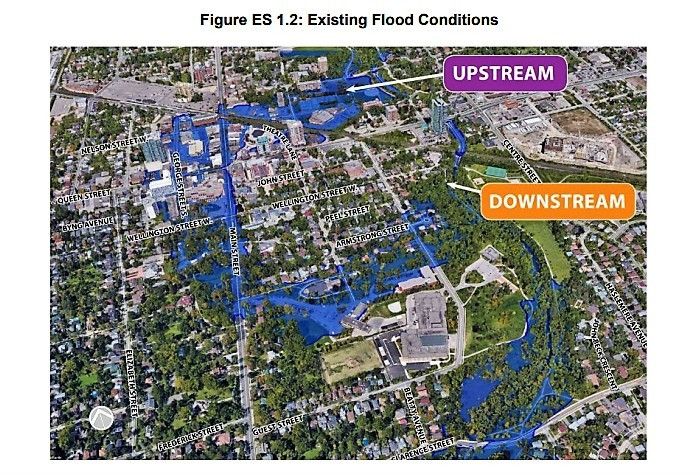
Based on its low elevation compared to Etobicoke Creek, downtown Brampton faces risk of flooding both upstream and downstream of the river.
(TRCA)
The rapid push to accelerate development in Brampton’s city centre follows years of delays by Brown and his fellow council members. He cancelled the original downtown revitalization plan almost immediately after getting elected in 2018. He then pushed forward with a budget freeze he promised residents, despite the City’s financial strategy outlining that modest budget increases were required to pay for necessary infrastructure improvements and major projects, like the Riverwalk.
Brown ignored this advice.
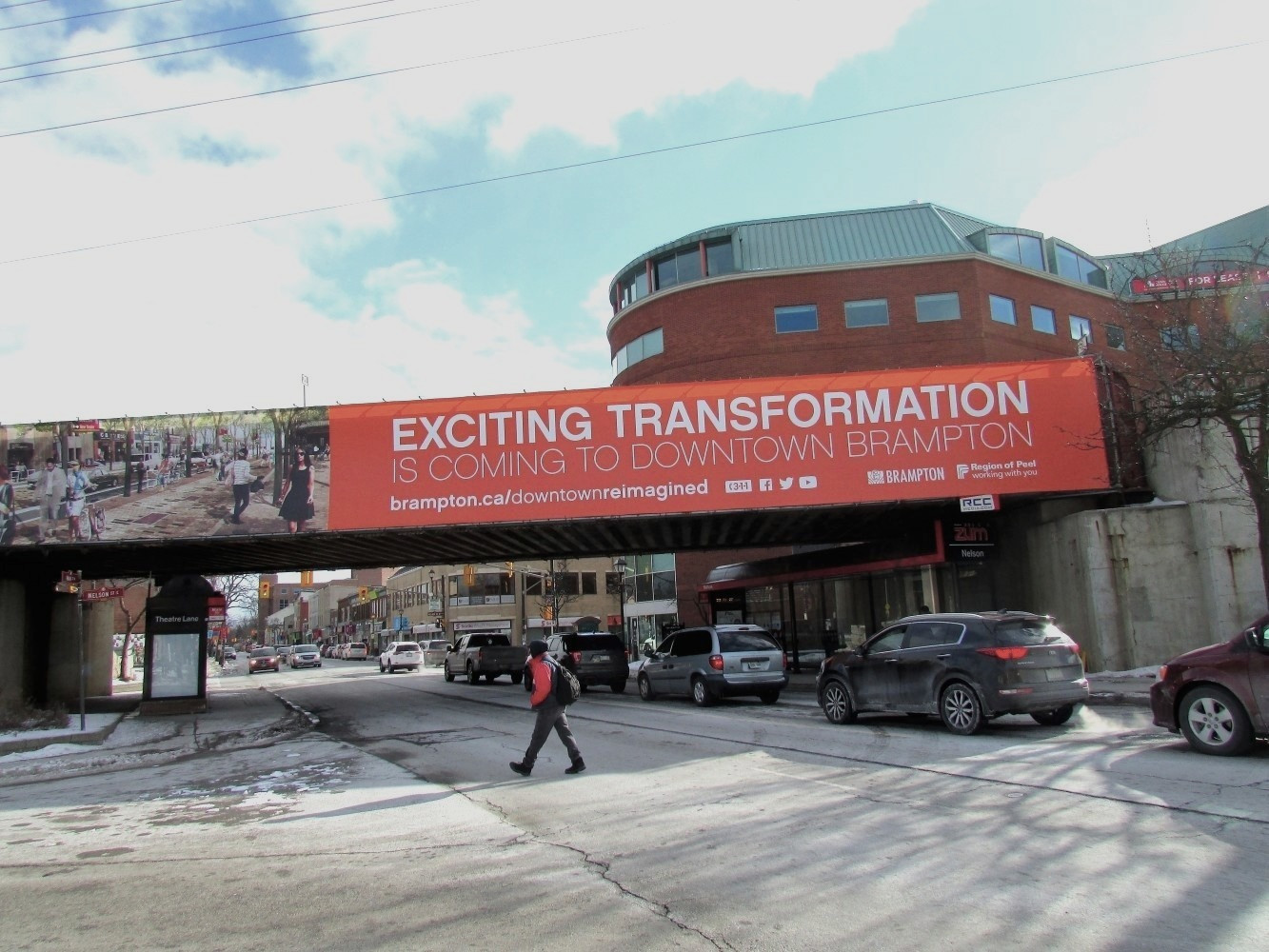
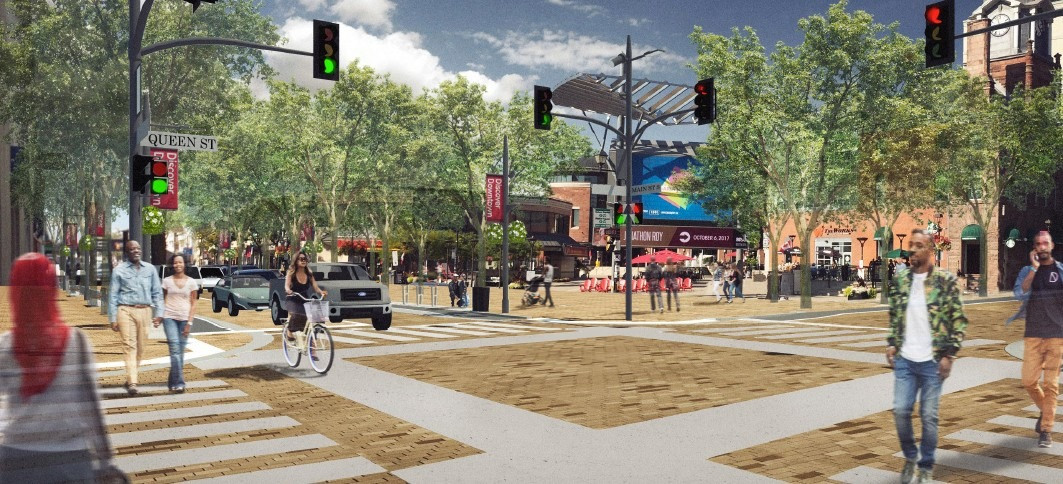
Brampton’s decaying city centre was supposed to be revitalized by the Downtown Reimagined plan, which Mayor Patrick Brown cancelled.
(Top The Pointer files; bottom City of Brampton)
Riverwalk and the associated flood mitigation work has since moved at a glacial pace.
It's unclear how much, if any of the pledged federal funding has been received, or what work has been done as a result. The City has not responded to The Pointer’s questions.
Email: [email protected]
At a time when vital public information is needed by everyone, The Pointer has taken down our paywall on all stories to ensure every resident of Brampton, Mississauga and Niagara has access to the facts. For those who are able, we encourage you to consider a subscription. This will help us report on important public interest issues the community needs to know about now more than ever. You can register for a 30-day free trial HERE. Thereafter, The Pointer will charge $10 a month and you can cancel any time right on the website. Thank you
Submit a correction about this story

