
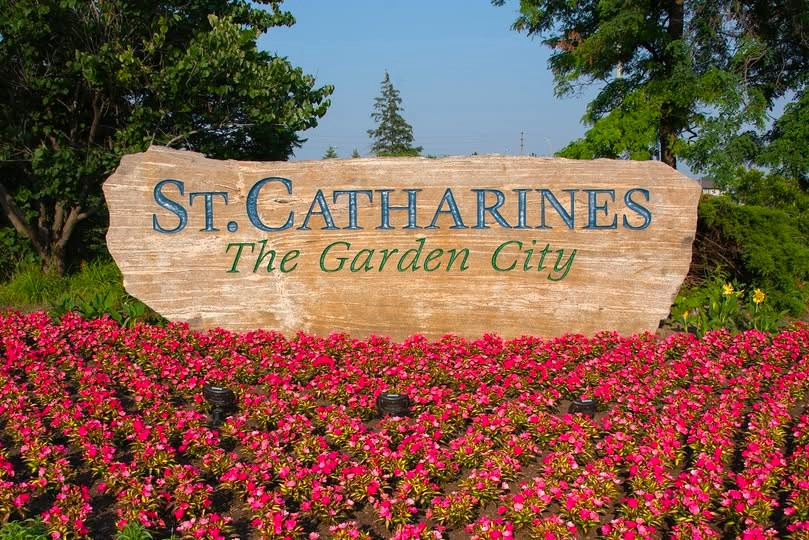
'The Garden City' wants residents to pay for their gardens
At its final meeting of the 2022-26 term, St. Catharines City Council approved a by-law regulating naturalized gardens that introduces a permit requirement, imposes new restrictions, identifies prohibited plant species and imposes hefty fines for those who maintain a garden without a permit.
The move is being described as over-reach, especially in a municipality that calls itself “The Garden City”.
The puzzling new rules, which carry potential penalties of up to $900, have prompted environmental advocates to warn that the added costs and regulatory requirements could discourage the very residents whose efforts are helping to promote biodiversity.
Ten councillors voted in favour, while three, Caleb Ratzlaff, Greg Miller and Kevin Townsend, opposed it. Only Ratzlaff is on the new council.
Although the by-law takes effect immediately, requiring residents with existing naturalized gardens to obtain permits, the City is waiving the fee until the end of 2027, when residents will be charged $125 for a permit. According to the staff report, the temporary fee waiver is intended to “allow for a transition and education period for those with existing naturalized gardens.” The fee-free period does not exempt residents from complying with the by-law's requirements or shield them from the penalties it imposes for non-compliance.
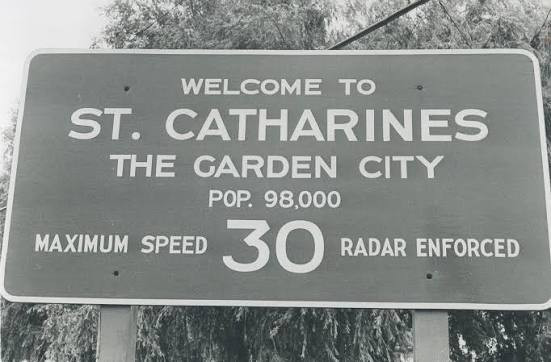
The sign that welcomed people to St. Catharines in 1968. (OldOntarioSeries/Instagram)
In a city that has long promoted itself as “The Garden City,” the by-law has drawn swift, pointed criticism from residents and environmental advocates who fear its restrictions and permit requirements will discourage the creation of naturalized landscapes and pollinator habitats, while penalizing those who already maintain them.
Their concerns include the requirement to obtain a permit, the $125 fee, the stiff penalties, restrictions on garden placement, the definitions used in the by-law and the City's approach to promoting environmental stewardship.
According to the staff report, permits will be issued to the property owner and “do not stay with the property should ownership change.”Consequently, someone purchasing a property with an existing naturalized garden could find themselves in violation of the by-law simply by taking ownership of their new home, unless they had the foresight to obtain a new permit in their own name.
Under the bylaw every naturalized garden on private property is required to maintain a minimum one-metre setback from all property lines.
Liz Benneian sees significant problems with that.
Contacted by The Pointer for comment, Benneian expressed frustration in trying to understand what the City hopes to achieve with the setbacks. She noted that if the City believes the restriction will prevent the spread of plants, it is mistaken.
“Seeds travel by wind, on animal fur and in their stomachs, while some plants spread through underground rhizomes,” she said, arguing that the setback rule can only serve to discourage the planting of gardens that support the local ecosystem.
Benneian is the founder and chair of Biodiversity and Climate Action Niagara (BCAC), a Niagara environmental organization, and is recognized throughout the region for her advocacy work on behalf of Niagara's biodiversity.
She notes that the one-metre setback restriction is particularly problematic for residents of townhouses and properties with limited yard space. “In those circumstances, a setback like that will make it difficult or impossible for a homeowner to establish a naturalized garden.”
According to Benneian, gardeners commonly establish plantings along fences, property lines and in yard corners, and the new policy means that many existing gardens will inevitably need to be altered, relocated or destroyed in order to comply. She repeatedly expressed disbelief that any municipality would impose permits and financial penalties on residents simply for gardening in an environmentally friendly way on their own property, and questioned how a by-law with such significant implications could have been developed with so little grounding in sound science or informed environmental guidance.
The City maintains that the permit system is intended to encourage, rather than discourage, naturalized gardening by creating what it describes as a “hands-off” area that is generally exempt from municipal by-law enforcement. In a response to questions from The Pointer, a City spokesperson said the permit process would verify that planting is purposeful and intentional, with applications reviewed by subject matter experts. The spokesperson also said the system would provide reassurance to property owners that their gardens are consistent with the City's biodiversity goals.
Permit applications will be reviewed and either approved or denied by City staff. Residents whose applications are denied will have the right to appeal to the Environmental Sustainability Advisory Committee, with a further appeal to City Council available as a final recourse if their application remains unsuccessful.
The report also estimates that no more than 15 applications will be received at the outset of the program, raising concerns about how the City expects to account for the potentially much larger number of existing pollinator gardens across St. Catharines and whether property owners who do not obtain permits could immediately find themselves in contravention of the by-law.
The penalties for non-compliance with the by-law are divided into three tiers. Tier 1 applies to a first contravention. Tier 2 applies when the same person commits the same designated offence for a second time within six months and Tier 3 applies to a third or subsequent contravention of the same provision by the same person within one year after receiving the notice for the immediately preceding contravention.
Several offences carry a maximum Tier 3 penalty of $900. These include keeping a naturalized garden without a permit and failing to comply with an order regarding a garden.
Other offences have a maximum Tier 3 penalty of $750. They include allowing a garden to encroach within the one-metre setback, permitting prohibited plant species to grow, failing to destroy prohibited plant species and failing to maintain a naturalized garden to the required standards.
The staff report identifies environmental stewardship as one of the City's strategic priorities, highlighting its goal that “St. Catharines will be recognized as a leader in environmental sustainability and resilient in the face of escalating climate change events.” Under its assessment of the by-law's environmental sustainability implications, the report identifies two anticipated benefits of the new permit system: “Providing opportunities to create and maintain pollinator habitats” and “Embracing the value and biological necessity of conserving pollinator wildlife species.”
The report offers no explanation of how requiring residents to obtain permits, coupled with a system of potentially substantial financial penalties for non-compliance, will advance these objectives.
The City also argues that the new by-law allows for greater biodiversity than the previous rules. In its response to The Pointer, staff explained that the former by-law required grass and weeds exceeding 20 centimetres in height to be cut down, leaving no provision for residents to maintain naturalized areas. The City cited goldenrod, a plant that provides important benefits for pollinators, as an example of a species that could have been subject to removal under the former height restriction.
Under the new by-law, property owners are generally free to plant whichever species they choose, with the exception of those identified on the prohibited plant list.
While the City describes the new rules as more permissive, that characterization does not address the additional obligations now placed on residents who wish to maintain naturalized gardens, including obtaining a permit, complying with placement restrictions and potentially facing substantial financial penalties for non-compliance. Nor does the City's response explain why residents who were already maintaining naturalized gardens need to obtain approval to continue doing so.
The Pointer also asked why the City proceeded without a broader public consultation, given that the by-law directly affects residents' ability to maintain naturalized gardens on their own private properties.
The City acknowledged that no City-wide public consultation was conducted, but said input was sought from subject matter experts, including the Environmental Stewardship Advisory Committee, a citizen-based committee that advises staff on environmental policies, programs and by-laws.
According to the City, the committee was presented with the proposed list of prohibited plant species and invited to provide feedback. While members raised no concerns about the list itself, they did identify a potential enforcement issue: seeds from prohibited plants can spread naturally through birds and other means, resulting in plants appearing on properties without the owner's knowledge or intention. The committee emphasized that residents should receive notice and an opportunity to address such issues before enforcement action is taken. City staff confirmed that this would be the approach.
While the City's response explains the involvement of its advisory committee, it does not explain why residents directly affected by the new requirements were not given a broader opportunity to comment before the by-law was brought to Council for approval.
Benneian believes the by-law is poorly written. She questions the distinction between naturalized and ornamental gardens, arguing that the definitions create unnecessary ambiguity. She believes residents may have difficulty determining which category their garden falls into and whether a permit is required.
The by-law defines a naturalized garden as an intentionally planted area of non-prohibited species maintained to promote biodiversity, but excludes ornamental plants, shrubs, trees, and cultivated fruits and vegetables. It makes no specific reference to native plants, which are among the key components of naturalized and pollinator gardens. In effect, traditional ornamental gardens, which often feature exotic or non-native species, remain unaffected by the new requirements, while gardens featuring native plants commonly used to support pollinators and promote biodiversity are subject to additional regulation, permits and fines.
Benneian points out that native plants are also planted for their ornamental value, including visual interest, beauty, colour and screening effects, while providing significant ecological benefits, including their ability to attract pollinators and support biodiversity. In her view, it makes little sense to impose additional regulations on gardens featuring native species while excluding other forms of landscaping that may offer considerably less ecological value.
Benneian says there are better ways to ensure that neglectful people do not get to claim that allowing weeds and grass to grow constitutes a “naturalized” garden.
“Intentional planting, obvious maintenance, keeping sidewalks and sightlines cleared are all reasonable expectations for any garden. But this by-law penalizes people who are trying to do the right thing versus penalizing people who are obviously doing the wrong thing,” she says.
Finally, Benneian points to what she sees as the ultimate irony of the new by-law. “Just months ago, St. Catharines residents experienced historic rainfall that overwhelmed the City's aging infrastructure” she states noting that “the deep root systems of many native plants used in naturalized gardens help water penetrate the soil, reducing runoff and helping to absorb, slow and filter stormwater, thereby contributing to flood mitigation.”
“The last thing St. Catharines should create barriers to naturalized gardens,” she states emphatically.
According to a spokesperson for the City, the permit system will establish a clearly defined area that can be better managed while still meeting requirements relating to biodiversity, prohibited plant species, impacts on neighbouring properties, and health and safety.
Permit applications will be reviewed and either approved or denied by City staff. Residents whose applications are denied will have the right to appeal to the Environmental Sustainability Advisory Committee, with a further appeal to City Council available as a final recourse if their application remains unsuccessful.
Mike Anderson, whose experience includes decades of municipal horticulture and environmental work, also objects to the bylaw's approach.
Anderson was a member of the City's Green Advisory Committee, chaired the St. Catharines Environmental Alliance and spent 35 years with the City, where he was responsible for horticultural development and urban tree planning.
He argues that residents who want to create more natural landscapes will only feel discouraged by the administrative layers, fees and penalties the city has introduced.
“If you're concerned about the environment or just want to engage in a more natural landscape you shouldn't have to temper your good intentions with nonsense restrictions and pay for those good intentions out of your own pocket,” Anderson said.
“Charging property owners to do something beneficial is regressive thinking. Restrictive bylaws like this will only discourage eco-conscious residents and instead of playing the part of advocate and proponent of biodiversity the City will become the adversary.”
Anderson also proposes a different use of municipal resources. Rather than directing staff time and taxpayer money toward regulating residents' naturalized gardens, he says the City should develop educational material and practical resources to help people establish and maintain them.
“If the City is really a champion of environmental sustainability then they would use the staff time and tax dollars allocated to discouraging public initiative and create planting guides, plant lists and neighbor friendly designs that would advocate for these types of landscapes,” he said.
The new by-law places naturalized gardens within a municipal regulatory framework that requires property owners to obtain permission, pay $125 for the right to garden on their own private property, comply with prescribed standards and face potentially substantial penalties for a range of violations.
Critics, meanwhile, say that for a municipality that has called itself “The Garden City” for more than 100 years, the approach seems decidedly counterintuitive.
Email: [email protected]
At a time when vital public information is needed by everyone, The Pointer has taken down our paywall on all stories to ensure every resident of Brampton, Mississauga and Niagara has access to the facts. For those who are able, we encourage you to consider a subscription. This will help us report on important public interest issues the community needs to know about now more than ever. You can register for a 30-day free trial HERE. Thereafter, The Pointer will charge $10 a month and you can cancel any time right on the website. Thank you
Submit a correction about this story

