
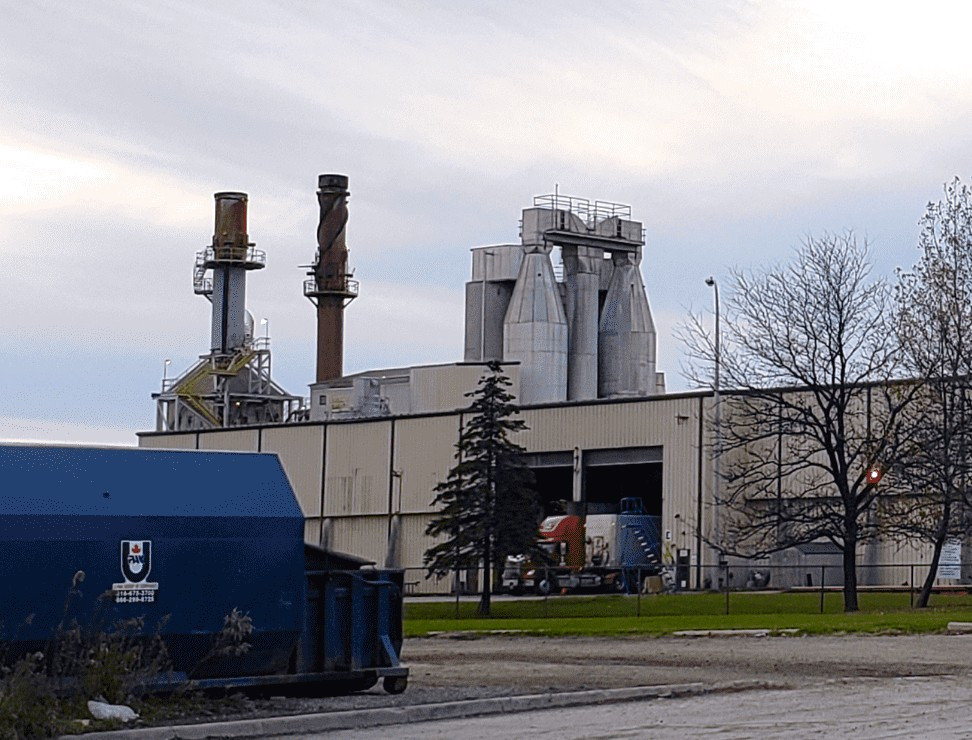
Brampton didn’t want to become the waste-burning capital of Canada. Bill 140 could force other municipalities to follow
Just over a year after approving Canada’s largest waste incinerator expansion in Brampton without a proper environmental assessment, the PC government is preparing to allow the burning of more garbage in communities without municipal consent.
“Brampton residents have been warning about the health and environmental impacts of the Emerald Incinerator for years. This government has ignored them,” Kitchener Centre Green Party MPP Aislinn Clancy said in a statement on Monday, joined by other critics who raised red flags about Bill 140 and its potential to force other municipalities across the province to accept the same fate as Brampton.
On October 27, the Doug Ford government tabled Bill 140, the Building Ontario Faster Act, which makes “anti-democratic” changes to over 20 existing pieces of legislation including the Environmental Assessment Act, the Environmental Protection Act and the Environmental Bill of Rights.
“The legislation would make it easier to build new landfill capacity here in Ontario, recognize energy from waste as a core part of our waste management system, and modernize how environmental decisions are made for the first time in more than three decades,” environment minister Todd McCarthy said last week, claiming new tariffs on transport trucks hauling garbage and waste products from Canada into Michigan helped justify the alarming decision.
Schedule 7 of Bill 140 proposes repealing “section 17.5” of the Environmental Assessment Act which requires landfill developers to obtain written “support” from the host municipality before proceeding with a comprehensive environmental assessment.
The ‘right to say no’ policy was first introduced by the Ford government in 2020 through Bill 197 to give municipalities a say over projects that could have lasting consequences for their communities including large landfill proposals.
When asked if the province would force a landfill or an incinerator expansion on a municipality that did not want one, McCarthy did not give a definite response. He said the government would “always prefer a host community that’s willing”.
“Anyone who thinks that the old ways of doing things can just go on, that the garbage is going to disappear into outer space, it will not,” he added, emphasizing the need for conversations with municipalities, public education and the “local economic benefits” of hosting a landfill and an energy-to-waste facility, including jobs and long-term employment.
He failed to mention air pollutants such as dioxins, furans and particulate matter, greenhouse gas emissions, the potential health risks and operating costs associated with waste-to-energy facilities.
The proposed changes have stirred concern among several communities.
In Caledon, Ward 1 councillor-elect Keri Parfitt wrote to residents on November 3, urging them to submit comments before the November 26 deadline if they want to protect their private wells, farms and rural communities which could suddenly be at risk.
“The proposed removal of environmental protections under the Environmental Bill of Rights, combined with the removal of municipal authority over landfill approvals, raises serious concerns, particularly for PRIVATE WELL OWNERS,” she said.
Brampton Environmental Alliance (BEA) Vice-President Steve Papagiannis says his community has already been blindsided. It was not willing to host the Emerald Energy from Waste incinerator expansion in northeast Brampton but the decision was still forced onto the municipality.
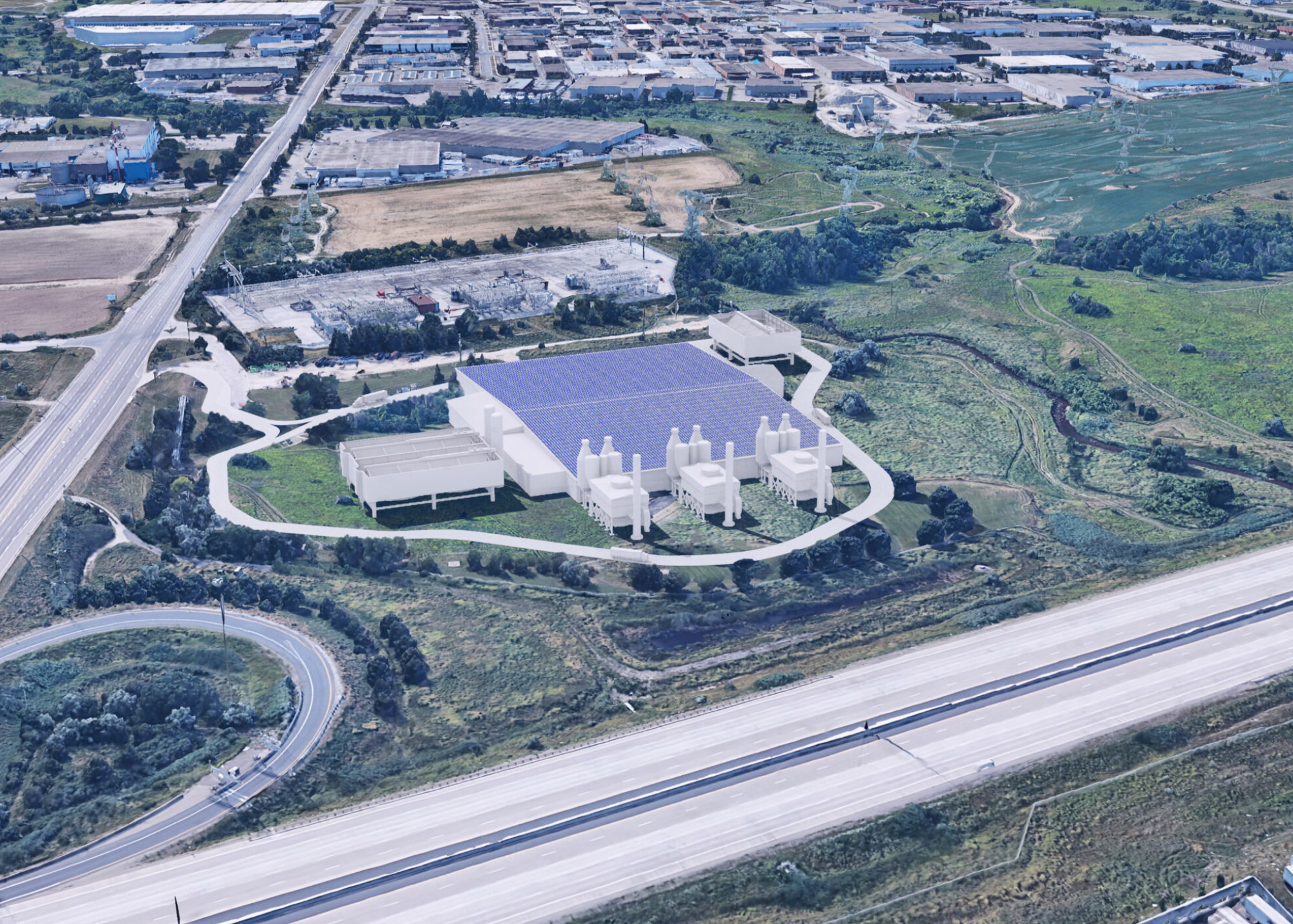
Rendering by Emerald Energy from Waste for the Brampton incinerator’s expansion. (Emerald Energy from Waste)
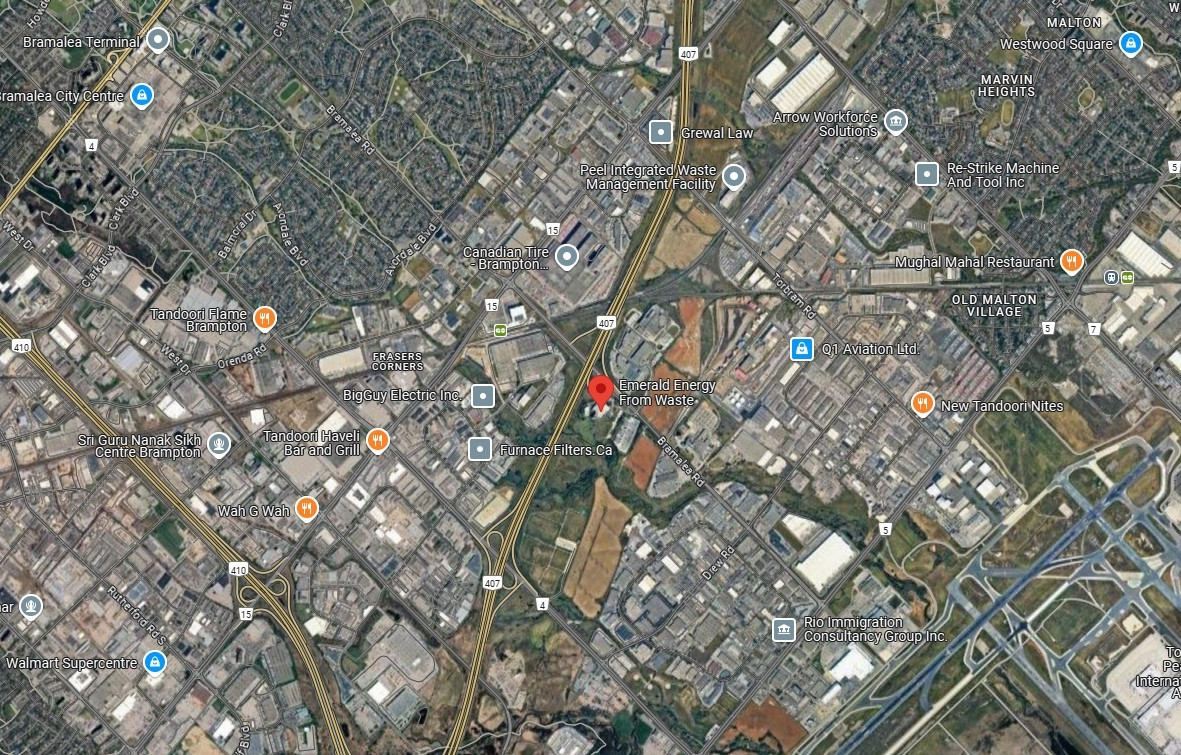
The Emerald Incinerator where the red pin is, right next to the 407 Highway, commercial businesses and near residential subdivisions. (Google Satellite)
The facility owner’s Environmental Screening Report (ESR) warned the area surrounding the incinerator is already burdened with high levels of air pollution, including elevated concentrations of hydrochloric acid and benzo(a)pyrene (B[a]P)—a probable human carcinogen—that exceed provincial air quality standards.
Peel Region’s Human Health Risk Assessment found that, under worst-case scenarios, certain air pollutants—specifically nitrogen oxides and trichloroethylene—exceeded health effect benchmarks at community locations near the Brampton facility, particularly at a nearby sports field.
These risks reach populations beyond the region, and will be compounded by deep-rooted social inequities in the area, including a higher proportion of racialized residents, single-parent families, individuals without high school diplomas and elevated unemployment rates, all of whom already face increased social inequities due to a range of systemic barriers and government policies. Placing waste-burning operations in communities that are predominantly white with populations that are more politically influential is rare in Canada.
Brampton will now be the waste-burning capital of the country.
In 2024, the city emitted 3,971,168 metric tonnes of carbon dioxide equivalent — 183,254 metric tonnes of carbon dioxide equivalent from waste alone, according to The Atmospheric Fund.
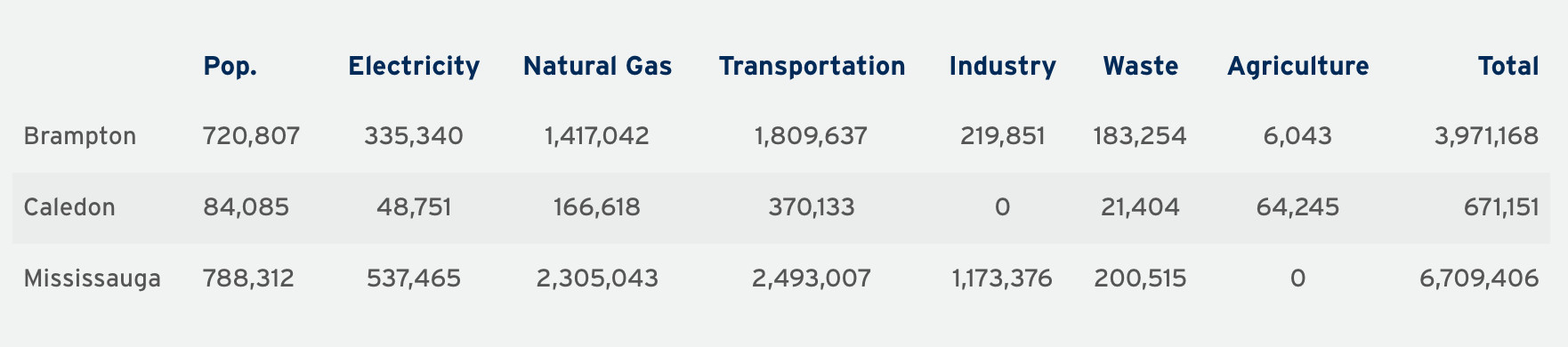
Peel Municipalities 2024 emissions by sector. (The Atmospheric Fund)
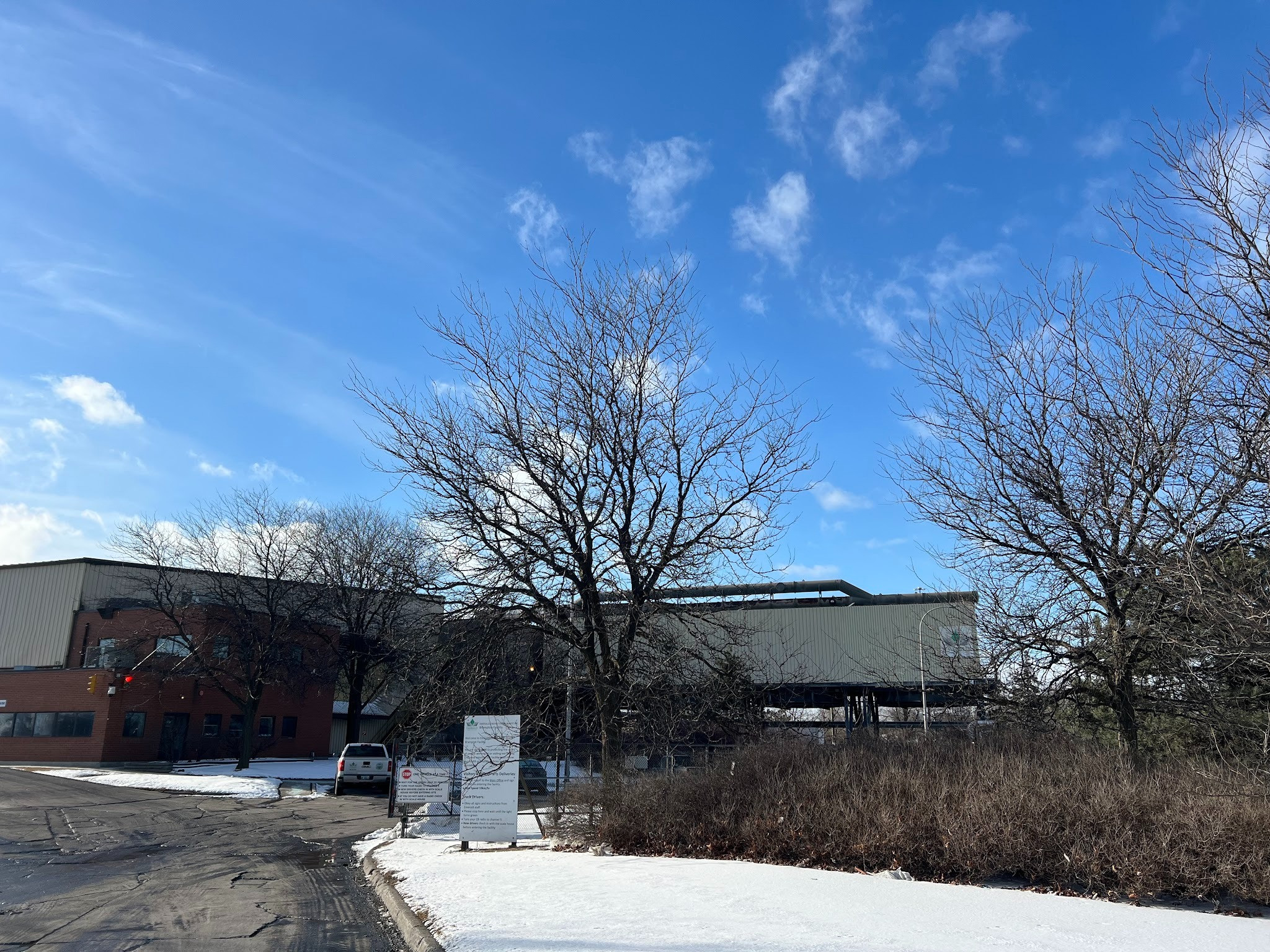
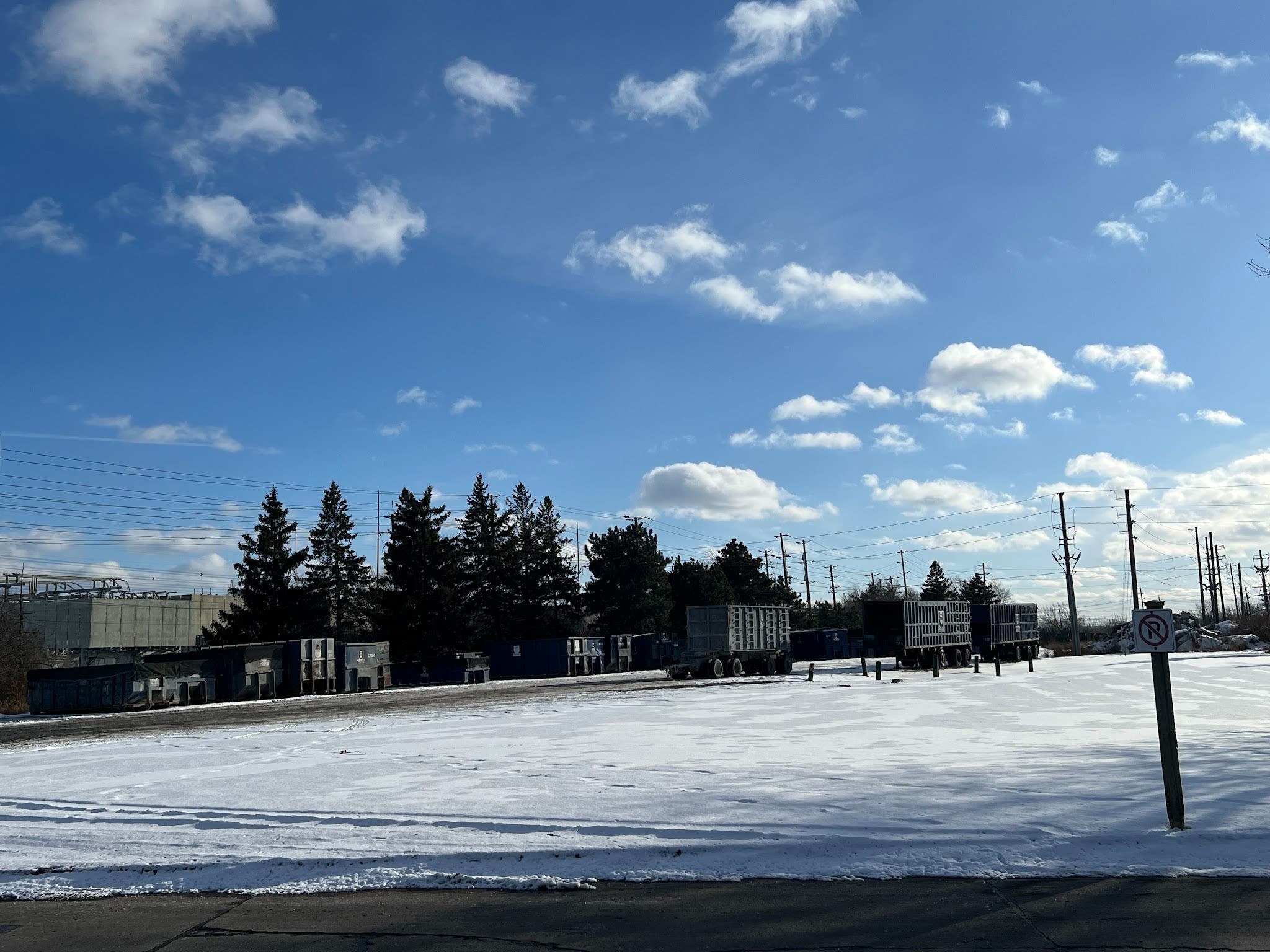
The strong smell of waste engulfs the area around the Brampton incinerator. (Anushka Yadav/The Pointer)
On April 12, Peel Regional Council decided to write a letter to Ontario’s ministers of environment and health calling for stronger pollution controls, independent community oversight, transparent emissions data, and a serious evaluation of the Brampton incinerator expansion’s climate and health impacts.
“This is black and white. This is science,” former Brampton Councillor Gurpartap Singh Toor said during the council meeting. “We had a lot of groups come, delegate about this, raising the red flag about this issue…here we have a project like this, that if it goes through, harms all those kids living in those areas. It is very unfortunate to see that we don’t really have the power to dictate what happens there—but we do have the power to advocate to the province.”
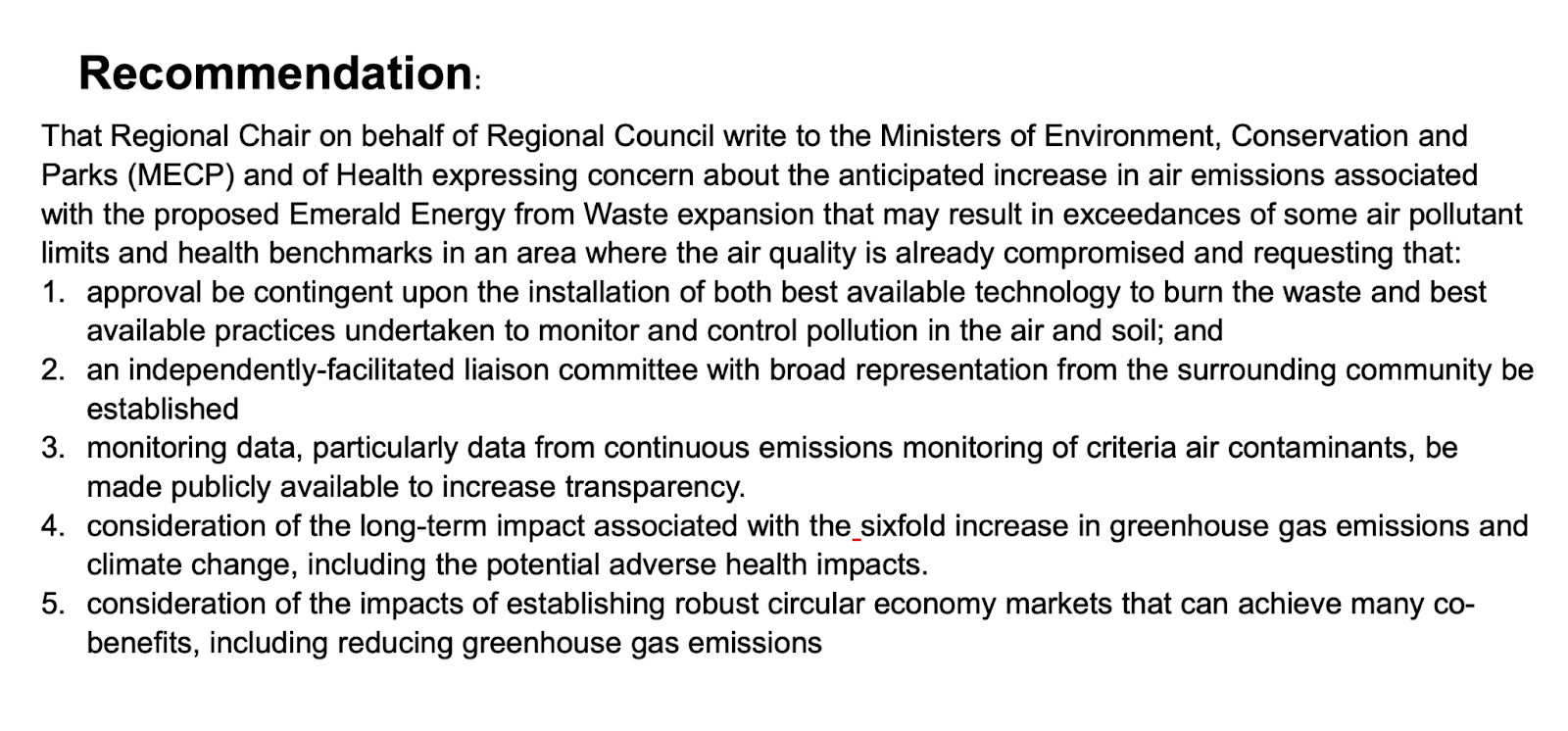
The Region of Peel urged the province for stricter pollution controls, independent community oversight, transparent emissions data and a rigorous evaluation of the project’s climate and health impacts. (Region of Peel)
Two weeks later, the province allowed the 30-year-old Emerald Energy From Waste (EEFW) facility to proceed with plans to nearly quintuple its incineration capacity—from 182,000 to 900,000 tonnes a year—pending the fulfillment of specific conditions.
McCarthy believed the facility did not need a full environmental assessment. MECP was satisfied that concerns related to air emissions, residual ash management, waste stream monitoring and impacts on the natural environment will be addressed through a further technical review as part of the facility’s Environmental Compliance Approval (ECA) applications and related permitting processes for air, noise, waste disposal and sewage works. This is a pattern with the PC government, which has approached big projects by approving first and studying later, contradicting decades of established planning and development procedures meant to balance growth while protecting the environment and human health.
“I was really disappointed that they moved forward despite all the evidence showing it’s a bad idea,” Brampton resident and small business owner Amisha Moorjani told The Pointer.
“It goes against global scientific guidelines, with experts urging us to reduce, reuse, and recycle. Instead, they’re allowing a for-profit corporation to essentially buy garbage from other places and burn it here in Brampton…The government didn’t address the community's concerns at all, and that was really frustrating.”
Both Moorjani and Papagiannis agreed that public participation in such decisions has never been a priority, pointing out that while organizations like Emerald claim to engage the public, the actual efforts are minimal.
“I didn’t even know we had a waste incinerator here in Brampton until April 2024,” Moorjani added.
The proposal had only come to light in 2023 after Environmental Defence uncovered the expansion plans and found that even without a completed environmental assessment, the PC government had already pledged $2.99 million to fund hydrogen production experiments using garbage combustion. The company, at the time, was proceeding through a new, expedited provincial Environmental Assessment process introduced by the Ford government.
Emerald has promoted its waste-burning facility as a source of clean energy, but experts have refuted this claim, noting that garbage is neither renewable nor clean.
Incinerators release more greenhouse gases and toxic pollutants than fossil gas per unit of electricity, and the facility’s plan to produce hydrogen from plastic involves a carbon-heavy process that burns more energy than it creates—far from the “green hydrogen” standard, which relies on renewable sources like wind or solar.
While the expansion’s groundbreaking was expected in the later half of this year, EEFW told media that the construction start has been delayed to 2027 as they don’t have a permit yet from MECP.
The Pointer reached out to Emerald Energy for Waste and MECP for comment but did not receive a response.
The facility will be able to burn almost five times more waste once the expansion is complete. The full buildout is anticipated by 2030.
“The big problem with not reporting is there’s a lack of accountability now. So if corporations are out there doing things…the public has a right to know if their air is being polluted. They have the right to know if the air quality is affecting their brain cells,” Papagiannis said.
On November 2, he joined Ontario Green Party Leader Mike Schreiner and Kitchener Centre MPP Aislinn Clancy to urge the province to protect Brampton residents from toxic pollution linked to the Emerald incinerator and prevent communities across Ontario from becoming “sacrifice zones” as a result of the “Ford government’s complete mismanagement of waste”.
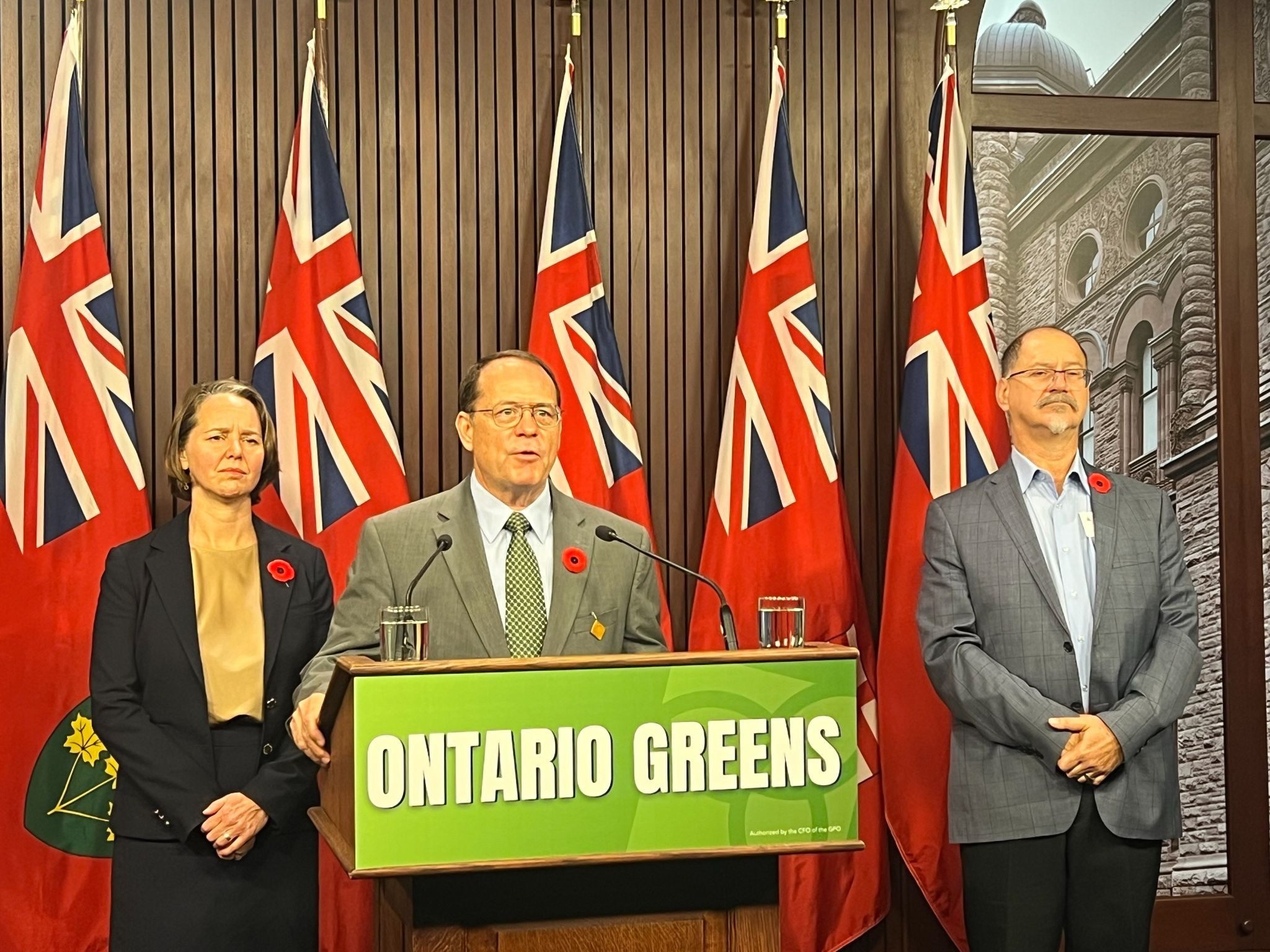
On Monday, Brampton resident Steve Papagiannis (right) joined Ontario Green Party leader Mike Schreiner and Member of Provincial Parliament for Kitchener Centre Aislinn Clancy to oppose the province’s plans to expand landfills and burn waste without municipal consent. (Anushka Yadav/The Pointer)
“One of the reasons we’re fighting so strongly against Bill 140 is that we don’t want to see the same thing that's happening in Brampton happening in communities across the province,” Schreiner said.
“The monitoring removals in Bill 140 is a threat not only to Brampton but to communities across Ontario.”
Papagiannis added, Bill 40 may not impact the Brampton incinerator but it is still imperative that residents try to hold the province as well as the facility owner, Emerald, “accountable for what they burn”.
“And if we can increase the air quality standards and have them report on what they’re doing,” he said.
“We want to solve the problem of making garbage. We don’t want to make it easier to burn and bury this trash.”
He recalled when the Brampton incinerator was first built in the early 90s, it stood on what was then the “edge of the city”. Today, however, it is surrounded by an expanding urban community, with Bramalea GO station less than a kilometre away, residential neighbourhoods within three kilometres and a children’s soccer field immediately adjacent to the facility.
“This is not some remote incinerator that’s going to affect no one’s lives. It’s going to affect all the citizens of Brampton,” he remarked.
Papagiannis expressed concern over the long-term accumulation of toxins from the incinerator, noting that even emissions within acceptable limits could result in harmful cumulative effects over time.
“We already know there will be long-term accumulation of toxins. Polluters often argue they’re operating ‘within limits’ because emissions are measured in parts per million—but over time, that adds up,” he noted.
The Pointer asked Schreiner if he would advocate for updating Ontario’s Guideline A-7, which governs air pollution control for municipal waste incineration. Experts including BEA and the Canadian Association of Physicians for the Environment (CAPE) have criticized the outdated guidelines for lacking crucial safeguards such as continuous monitoring of particulate matter and mercury, tracking of dioxins and furans and proper oversight during startup and shutdown.
“Absolutely, we know both in Brampton and Durham Region that the incinerators in both locations produce toxic air pollution that are above the provincial standards,” he said.
“It’s unacceptable in Durham, it’s unacceptable in Brampton, and it’s going to be unacceptable in any of the other communities this government imposes incinerators on due to its mismanagement. We need to make sure that the proper regulations are in place to monitor toxic air pollution around these incinerators to protect people's health.”
For a 2024 study, researchers took food and water samples near waste incineration and co-incineration facilities in Slovakia and the Netherlands and found elevated levels of persistent organic pollutants including dioxins and per- and polyfluoroalkyl substances (PFAS) in surface water that also enter the food chain. Eggs from backyard chickens living near both facilities contained dioxin concentrations nearly 300 percent above the European Union’s allowable limits.
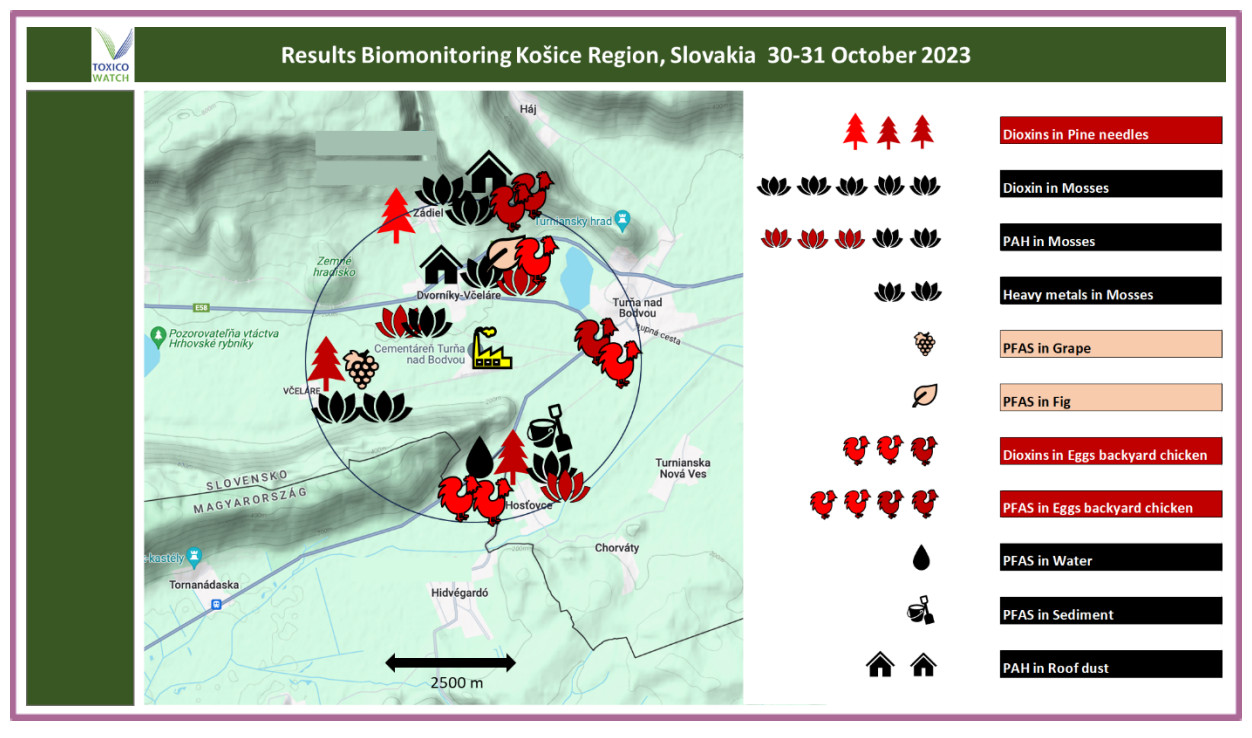
European investigations have confirmed free-range and backyard chicken eggs collected near waste incinerators and industrial facilities frequently exceed European Union safety limits for dioxins, PCBs as well as PFAS. (The True Toxic Toll/Zero Waste Europe)
But there are other problems associated with waste-to-energy facilities that aren’t often talked about: additional diesel truck traffic the expansion could bring at a time when residents are already struggling with traffic congestion and air quality concerns.
“It’s going to affect the home values of all the people who live in Brampton, and it’s going to reduce the quality of life overall for people in Brampton,” he feared.
“We want the government to rescind the expansion. I don’t believe that’s going to happen, but if they do, that [would be] the best case.”
However, he is cognizant of the decision taken by the province and is now pushing for stronger oversight and public accountability.
While approving the facility, MECP set several conditions for the expansion. These included the submission of a Technology Benchmarking Report to minimize emissions; the provision of real-time operational data to the public; a plan for managing and disposing of ash in line with regulations; measures for identifying and removing unauthorized waste; and the implementation of a backup power system, all as part of the Environmental Compliance Approval amendment process to mitigate risks to the environment and the community.
Environmental Defence’s senior program manager for plastics, Karen Wirsig, expects that, under the Technology Benchmarking Report requirement, Emerald Energy From Waste will need a new ECA to proceed with its planned use of ‘moving grate technology’, which is a shift from its current gasification approach and cannot be done under the existing permit.
It’s unclear whether any amount of filtration and pollution control equipment can adequately address the issue, as waste incineration generates numerous pollutants that end up in the air and accumulate in ecosystems. There are no known examples worldwide where this process has been carried out without posing risks to health or the environment, she noted.
Papagiannis reiterated residents want regular, unannounced monitoring of the facility by the provincial government.
“They currently do a once-a-year measurement, and they’re given advance warning,” he explained.
“If you look at a local restaurant, a health inspector can drop in at any time and do an inspection. We can at least expect the same for a massive incinerator in this province.”
He wants the province to install dioxin samplers in the incinerator’s stacks to provide more regular information about emissions, as well as public reporting on the waste entering the facility to ensure hazardous materials are not being burned.
“The Brampton expansion is a business proposition. It’s going to need big, juicy waste contracts from municipalities in Ontario,” Wirsig told The Pointer.
“And so, the next step, if people want to save communities around Brampton from breathing garbage, is to stop municipalities from signing contracts with Emerald and sending their waste there.”
In June 2024, Simcoe County Council approved a long-term, 20-year contract with Emerald Energy from Waste to export its garbage to Brampton's waste-to-energy facility starting in November 2026. With limited landfill capacity remaining, the contract was seen as a necessary step to ensure long-term waste management and cost certainty for the county.
“We’re heading in the wrong direction…we’re just literally now on a race to open landfills and build incinerators,” Wirsig had warned last year.
She had also expressed concerns that the Brampton facility undermined waste reduction and diversion policies, but MECP felt those concerns were adequately addressed by the waste company. The ministry also emphasized that it does not endorse one waste management technology over another, leaving it to Emerald to develop waste solutions for its clients.
Wirsig found that “absurd”.
“The proponent’s (Emerald’s) job isn’t to consider waste diversion; their job is to burn garbage,” she said.
“It’s the province’s responsibility to consider waste policy and figure out how to reduce the amount of waste we’re burning or burying in our communities.
“So far, the Province has done nothing.”
Ontario's Circular Economy Act, which governs waste management like the blue box program and other materials like packaging, clearly favours reuse and recycling over disposal or burning. While the province may not yet have a clear preference between burning or burying garbage, experts in zero waste policy argue that incineration is a worse option than landfills, as it produces harmful byproducts.
“Unlike a landfill, which can temporarily halt waste intake, a waste incinerator requires a continuous supply of waste to function; it is hungry for waste, making it an unsustainable option in the long term. For zero waste advocates like me and my colleagues, properly engineered landfills, if safe, are seen as a preferable option to burning garbage,” Wirsig said.
Under Bill 140, the province has proposed amendments to the Resource Recovery and Circular Economy Act, 2016 and the Blue Box Regulation, to supposedly “improve transparency and accountability”, and “curb” higher-than-expected cost increases in the recycling system.
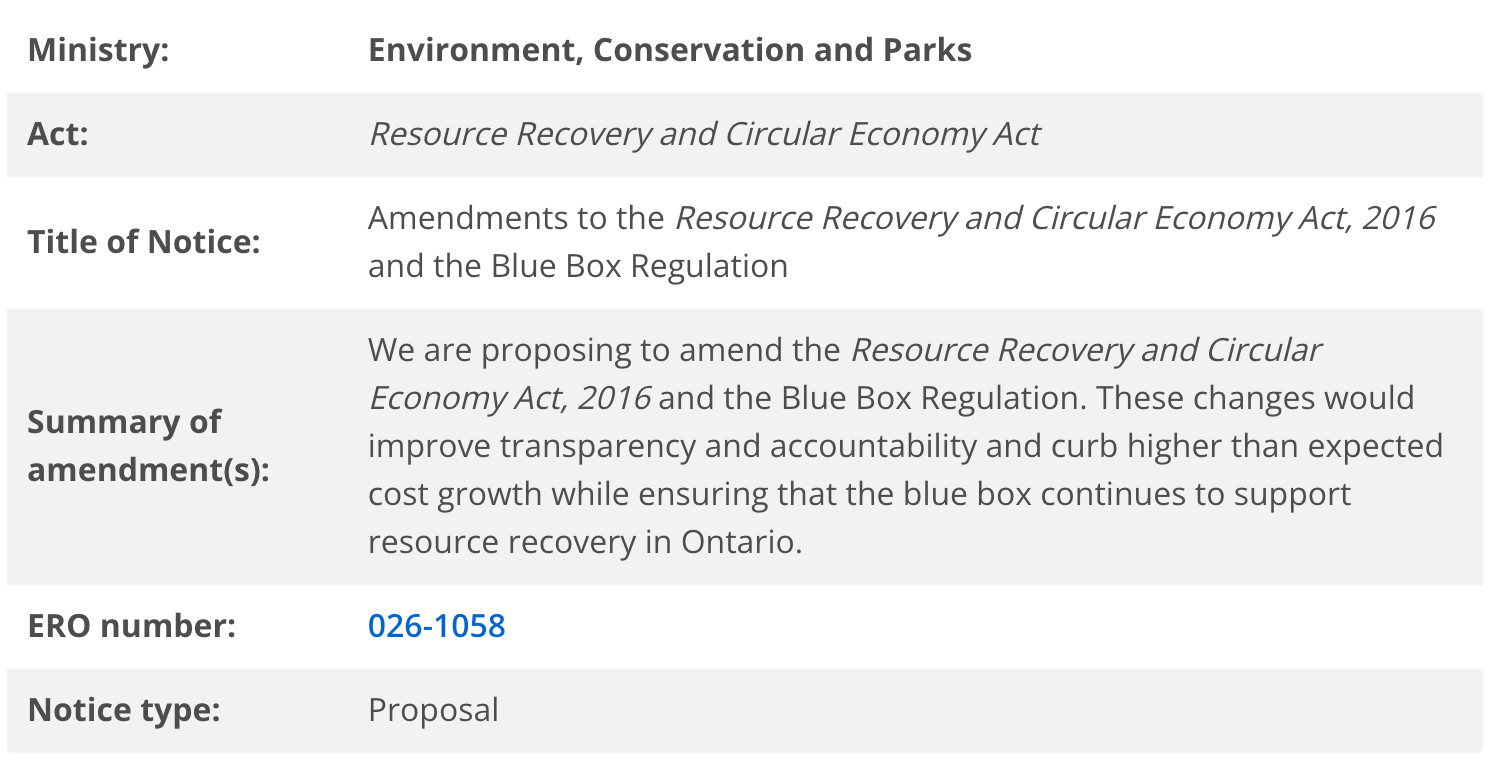
“The new blue box program is not even a year old and the government is already proposing to let the companies responsible for collecting and recycling our discarded packaging off the hook, and leave municipalities and residents holding the bag,” Environmental Defence’s Karen bWirsig said. (Environmental Registry of Ontario)
Under the proposed changes, producers would no longer be responsible for collecting flexible plastic packaging such as bags, films, wrappers and pouches, less than a year after they were held accountable for their actions.
“Municipalities would have to handle them as trash. That’s 80,000 tonnes of plastic garbage every year — and likely growing,” Wirsig noted.
Ontario’s producer-led Blue Box system, managed province-wide by Circular Materials since January 1 this year, shifted full financial and operational responsibility for residential recycling from municipalities to the companies that produce the packaging.
“The new [January 2026] blue box system was never meant to be just a privatized recycling program. Its purpose was to make the companies that put all that throwaway packaging on the market responsible for dealing with the mess after we’ve unwrapped their products,” Wirsig said.
“Municipalities used to be responsible for emptying our blue boxes and trying to recycle what was inside. They already knew how expensive and difficult it is to manage today’s mountains of single-use packaging. Anyone could have guessed that, all things being equal, the new blue box program was going to be expensive and difficult for producers too.
“But the point was certainly not to keep all things equal.”
The Ford government is also planning to remove the requirement for producers to collect excess recycling left beside blue boxes, potentially leaving Ontarians to store overflow materials until a later collection or dispose of them as garbage.
Wirsig argued the changes undermine the central principle of “extended producer responsibility”: making companies financially accountable for the packaging they introduce into the market and incentivizing them to reduce unnecessary packaging or design products that are easier to reuse and recycle.
The complex challenge also requires a clear understanding: Ontario has a waste problem.
“On average, each person in the province produces more than 850 kilograms of waste every year. For the past 10 years, we have only recycled about 25 per cent of our waste and the situation has not improved,” former Minister of the Environment and Climate Change Glen Murray said in a statement in 2017.
“This means that over eight million tonnes of our waste is sent to landfill each year.”
That number has changed—not for the better.
In a recent video, McCarthy acknowledged, “Ontario sends about 12 million tonnes of waste to landfill every year”.
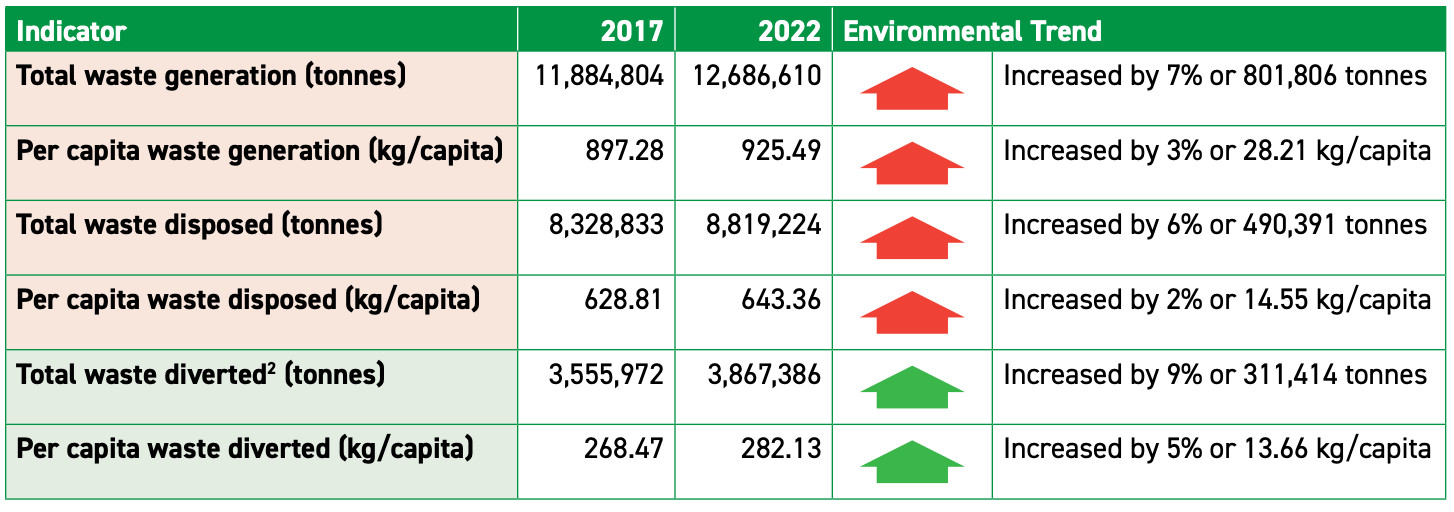
A 2023 report by the Association of Municipalities of Ontario (AMO) shows there has been an uptick in the per capita waste generated across Ontario, ranking the province among the highest levels of waste per person in the world. (Association of Municipalities of Ontario)
Wirsig believes Ontario needs much stronger requirements for businesses to reduce waste and separate organic materials, particularly food scraps — “the biggest, most heavy fraction of waste”, which should be directed to clean composting or anaerobic digestion facilities rather than incinerators or landfills.
Single-use packaging (particularly plastic) is the second major driver of the province’s growing waste problem. Critics argue Ontario needs to reduce unnecessary packaging and invest in reuse and refill systems.
“Those two things alone will contribute enormously to bringing down per capita waste on the consumer side,” she said.
“Businesses are not held to any standards right now when it comes to waste diversion, and waste reduction….and Bill 140 will only nibble around the edges of that problem.
“We need much stricter requirements for businesses to separate out their organics and have an organics ban in landfills and incinerators, and make sure all that material is being properly processed.”
She disagrees with McCarthy’s push for the benefits of creating energy from waste.
“Incineration is not renewable energy. It’s wasteful energy. If we want renewable energy, which we do, we need to support wind and solar that are cheaper,” she said.
“We don’t want to be producing single-use plastics so that we can burn them in an incinerator and call that renewable waste. This just invites very toxic pollution from the moment that plastic is created, to when we’re using it, and it’s sloughing off microplastics, to when it’s burned in an incinerator and generating some of the most toxic chemicals known to science.”
Email: [email protected]

At a time when vital public information is needed by everyone, The Pointer has taken down our paywall on all stories to ensure every resident of Brampton, Mississauga and Niagara has access to the facts. For those who are able, we encourage you to consider a subscription. This will help us report on important public interest issues the community needs to know about now more than ever. You can register for a 30-day free trial HERE. Thereafter, The Pointer will charge $10 a month and you can cancel any time right on the website. Thank you
Submit a correction about this story

