
After Ottawa abandoned its commitment, more than 1K trees find home at Claireville Conservation Area in Brampton
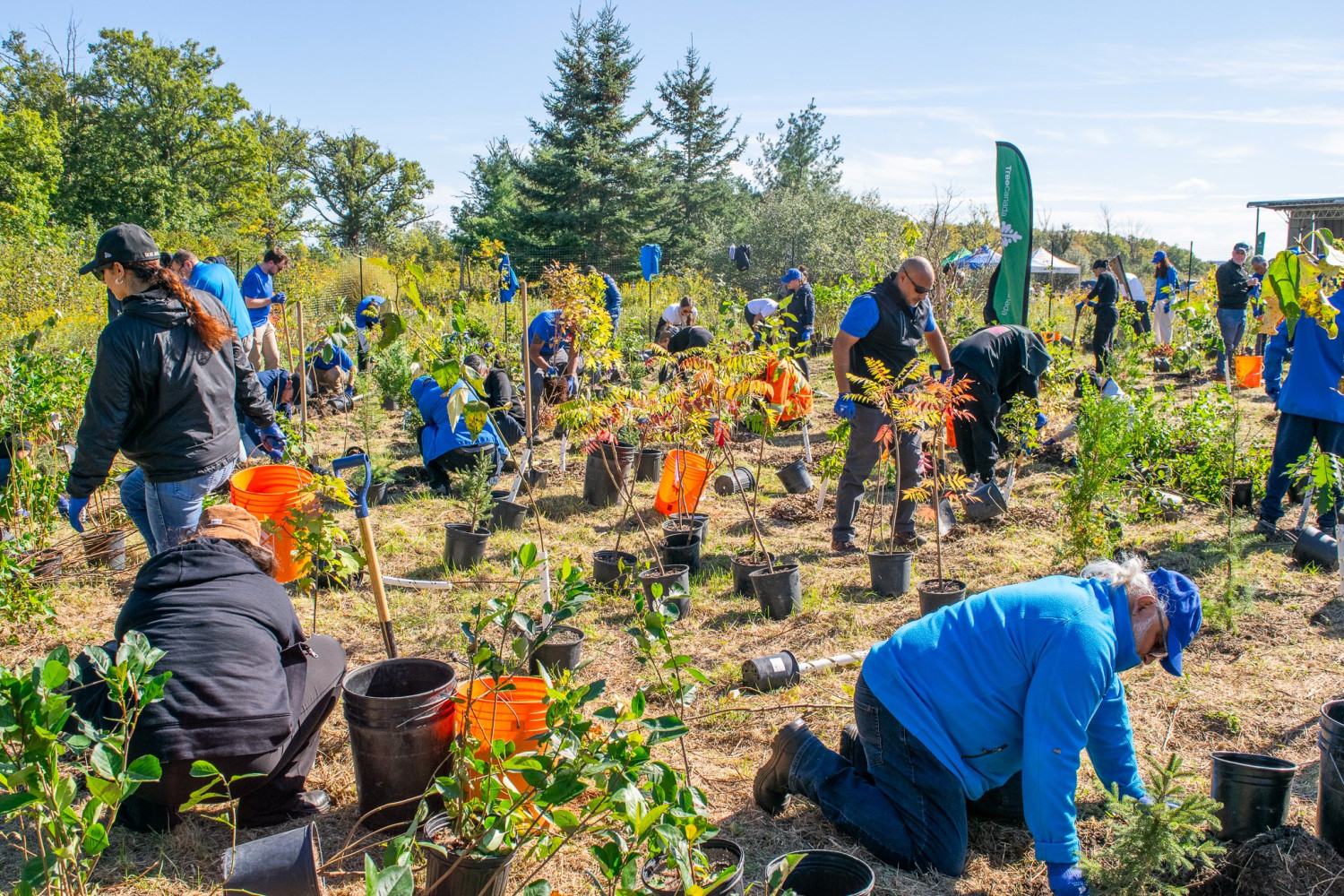
“Everything is linked [and] it all comes back to trees,” Tree Canada Chief Development Officer Greg Hotte said, as he welcomed nearly 300 Ontarians to Claireville Conservation Area on National Tree Day.
It was one of those perfect fall days when bright sunlight harmonized with the clear, blue sky. A cool breeze gently performed nature’s music through the green canopy under one of the oldest conservation spaces in Brampton.
The site was born from one of the region’s darkest environmental disasters.
In October 1954, Hurricane Hazel tore through southern Ontario, transforming the Humber River into a raging torrent. As floodwaters ravaged communities, 81 people lost their lives and thousands more were left displaced, their homes and livelihoods swept away in a flash.
The devastation left an urgent need to rethink flood-resilient infrastructure in the face of a changing climate and to recognize the role protected natural spaces play in safeguarding the landscape itself.
Three years later, with the idea to build a dam and reservoir to control flooding and protect the vast Humber River watershed, the Toronto and Region Conservation Authority (TRCA) established Claireville Conservation Area.
When the TRCA acquired the land in 1957, much of it was still agricultural with scattered woodlots. Today, the 848-acre conservation area stretches across Brampton and Toronto, encompassing forest, meadows, wetlands and the Claireville Reservoir along the West Humber River.
A 2014 TRCA Land Management Implementation Plan described Claireville as an urban “oasis for wildlife and people” and serving as one of the largest natural corridors in the Greater Toronto Area.
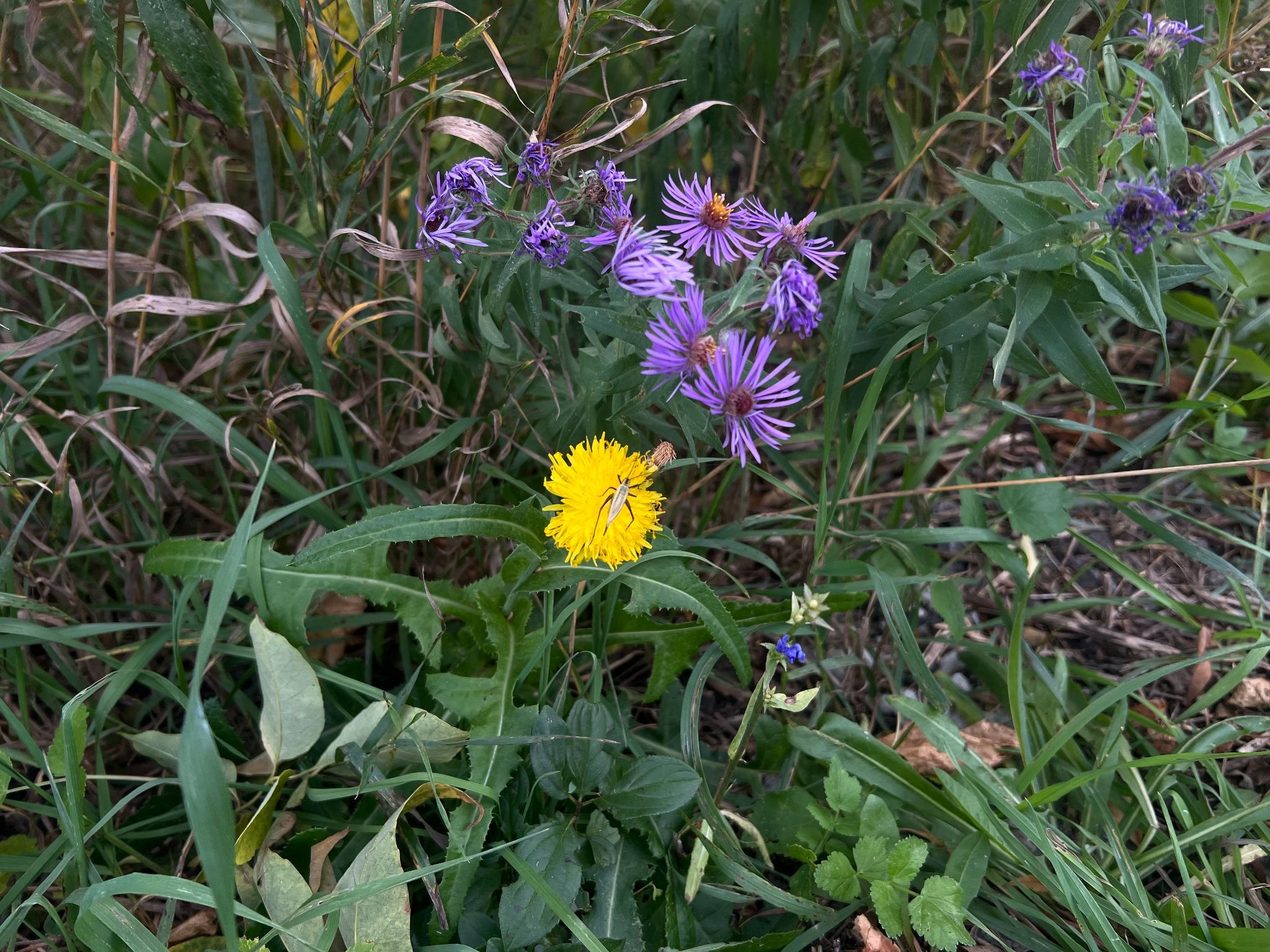
Claireville Conservation Area’s forests, fields, wetlands and waterways provide habitat for dozens of bird species and varied wildlife including eastern coyotes, white-tailed deer, muskrats, wood ducks, pileated woodpeckers, bobolinks, largemouth bass, pumpkinseed and other fish, amphibians and reptiles. (Anushka Yadav/The Pointer)
The plan recognized that, as the surrounding landscape became increasingly urbanized, protecting and restoring Claireville’s natural systems would become increasingly vital.
On September 23, TRCA and Tree Canada brought together approximately 300 volunteers of all ages to do just that, marking the 15th National Tree Day, established in Canada in 2011 through a parliamentary motion introduced by Conservative Member of Parliament Royal Galipeau.
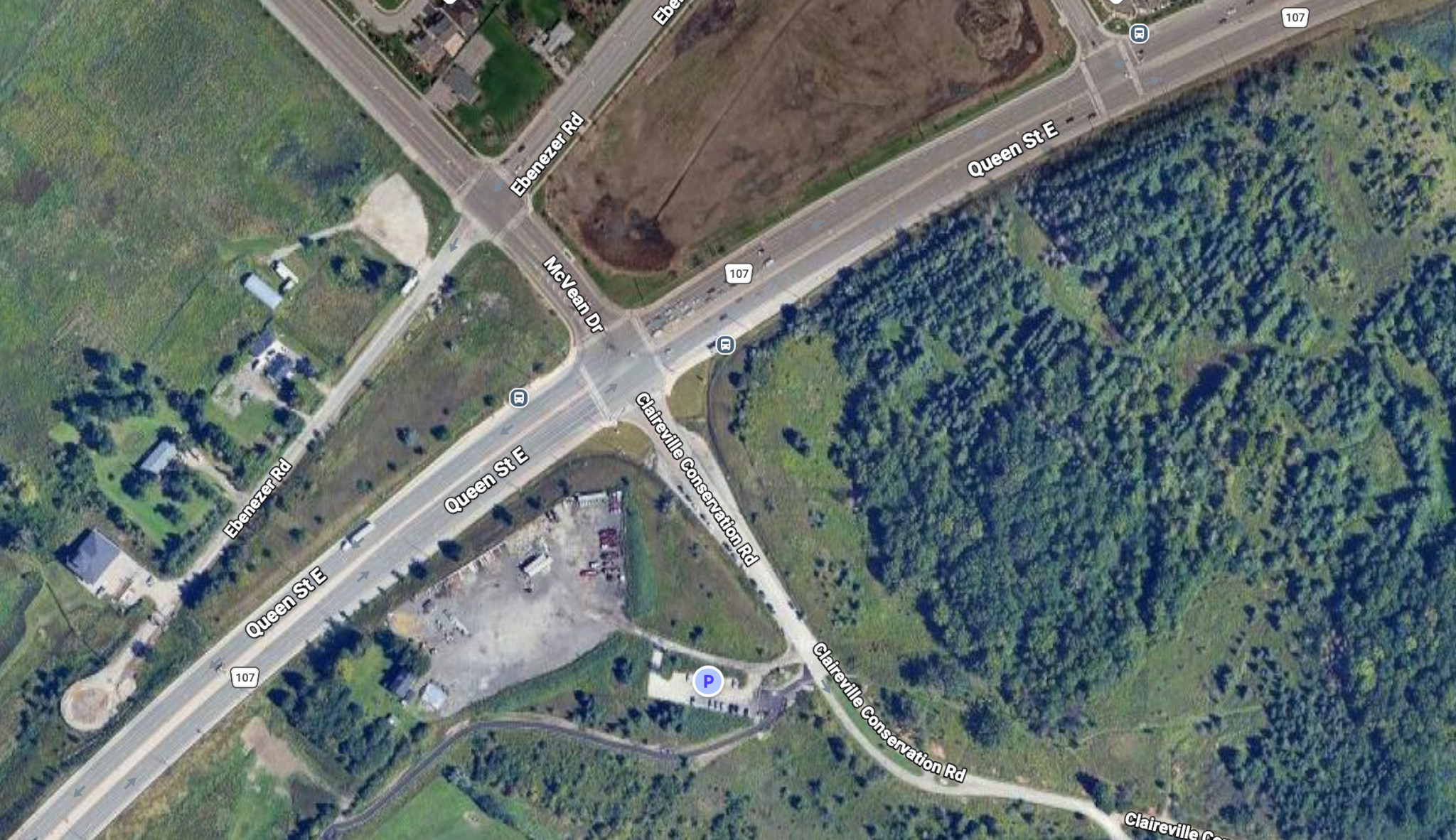
The fields on the right of Claireville Conservation Rd were selected for planting on September 23. (Google Maps)
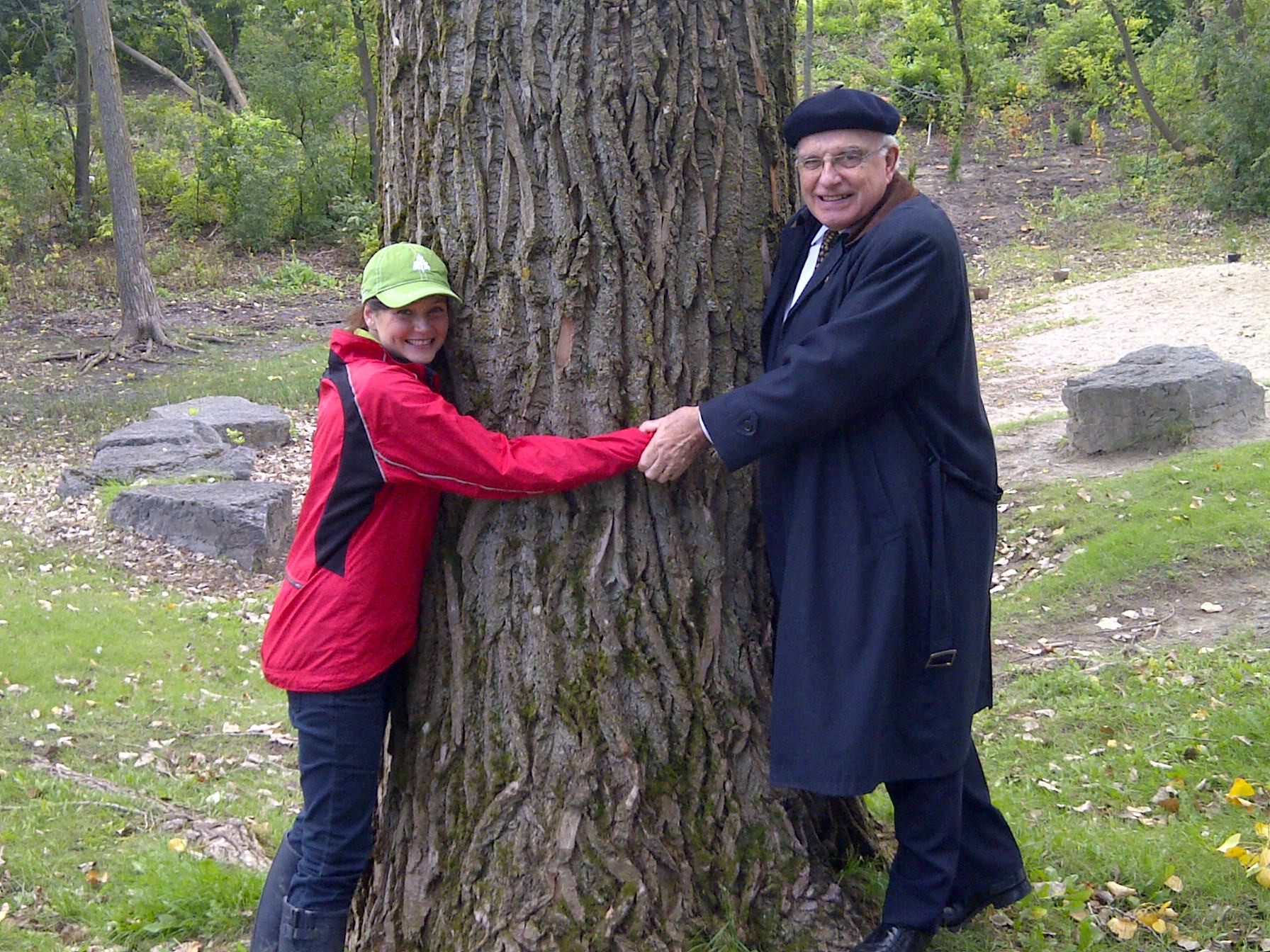
In 2011, Conservative Member of Parliament Royal Galipeau in collaboration with Tree Canada introduced a parliamentary motion to mark September 23 as National Tree Day. (Tree Canada)
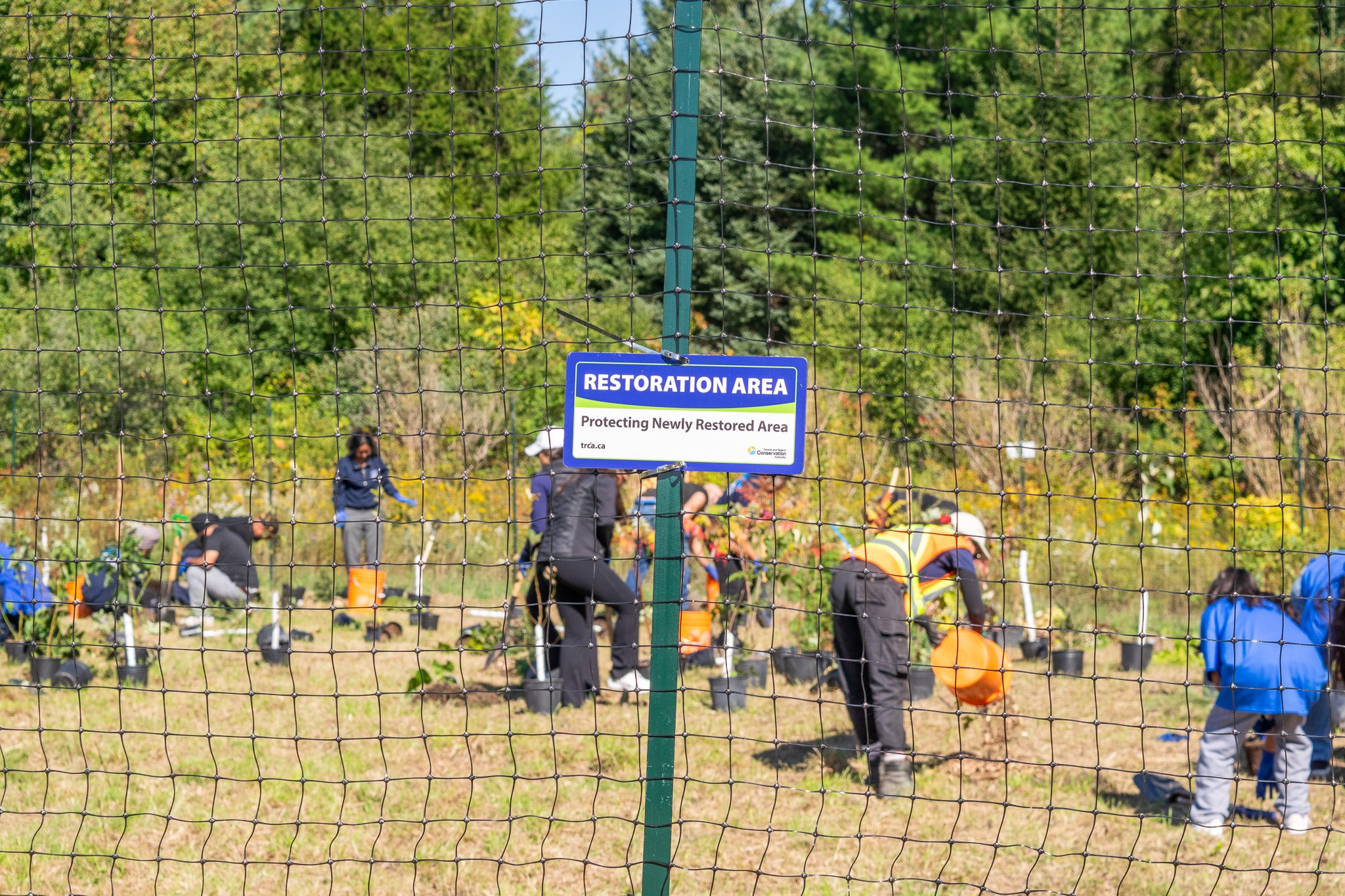
Shortly after 2:30 p.m., the crowd split into five groups. With gloves on, shovels were picked up one by one. Slowly, the volunteers with big smiles made their way toward a planting site, divided by fencing, parallel to Queen Street East.
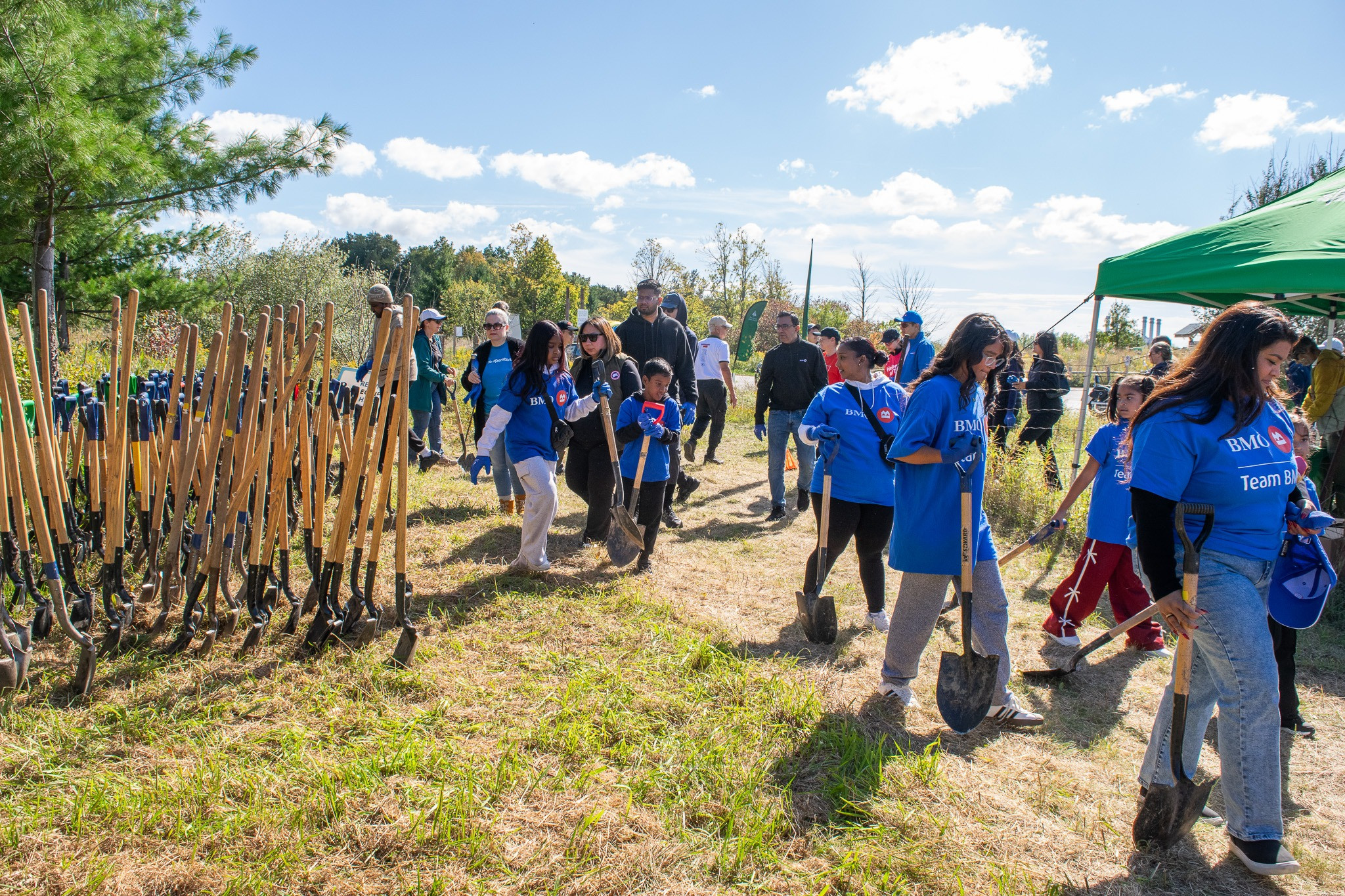
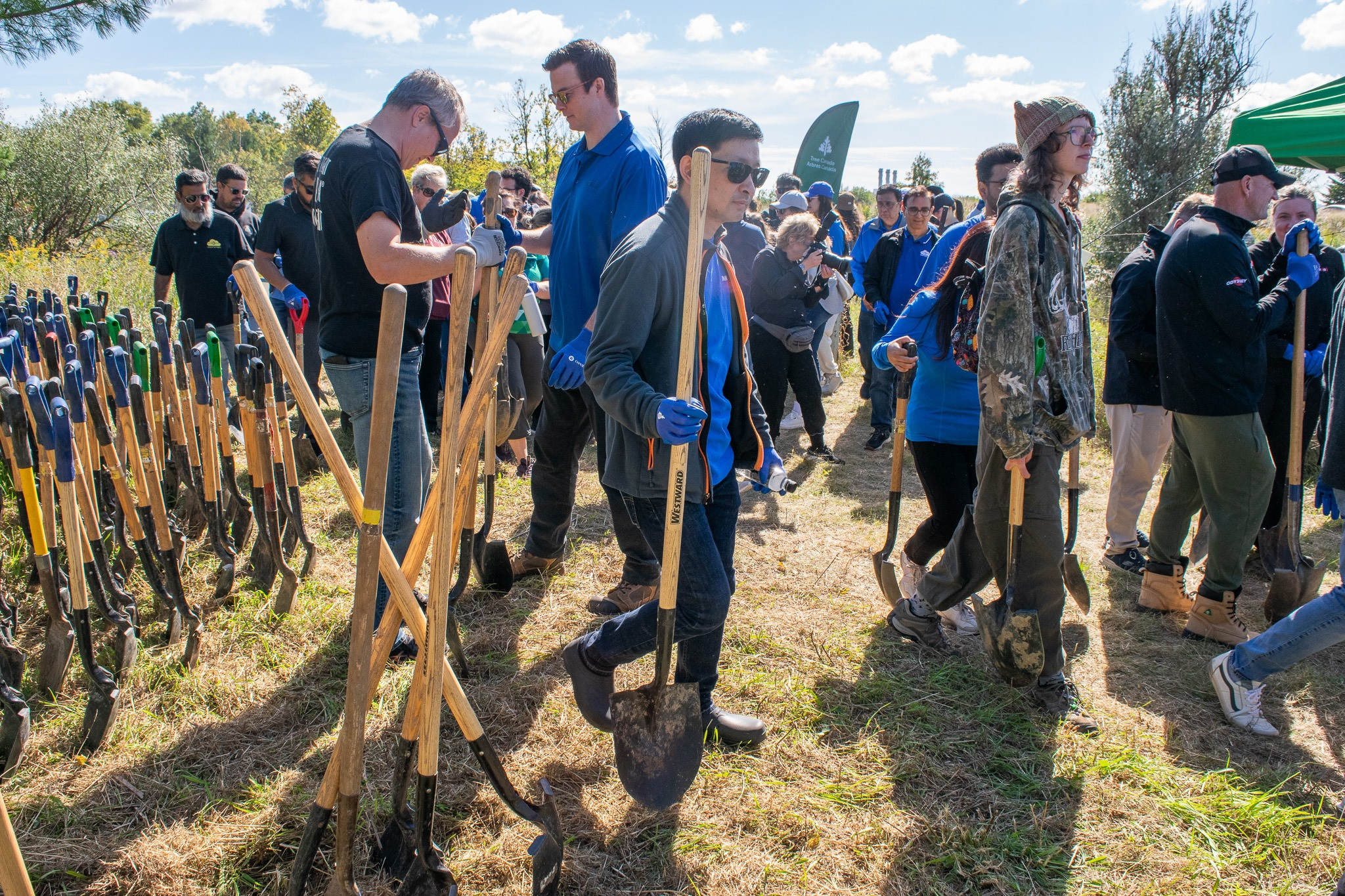
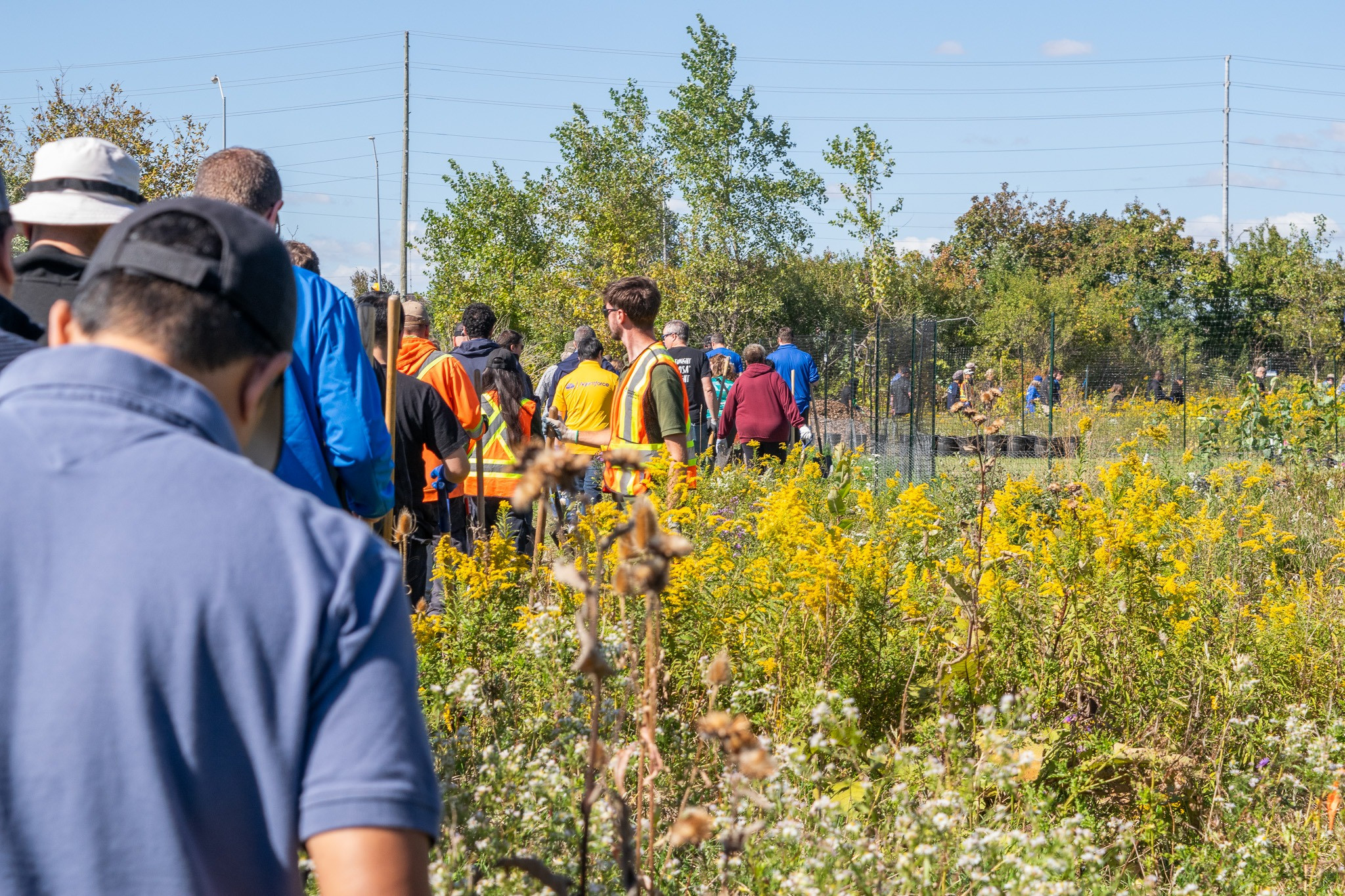
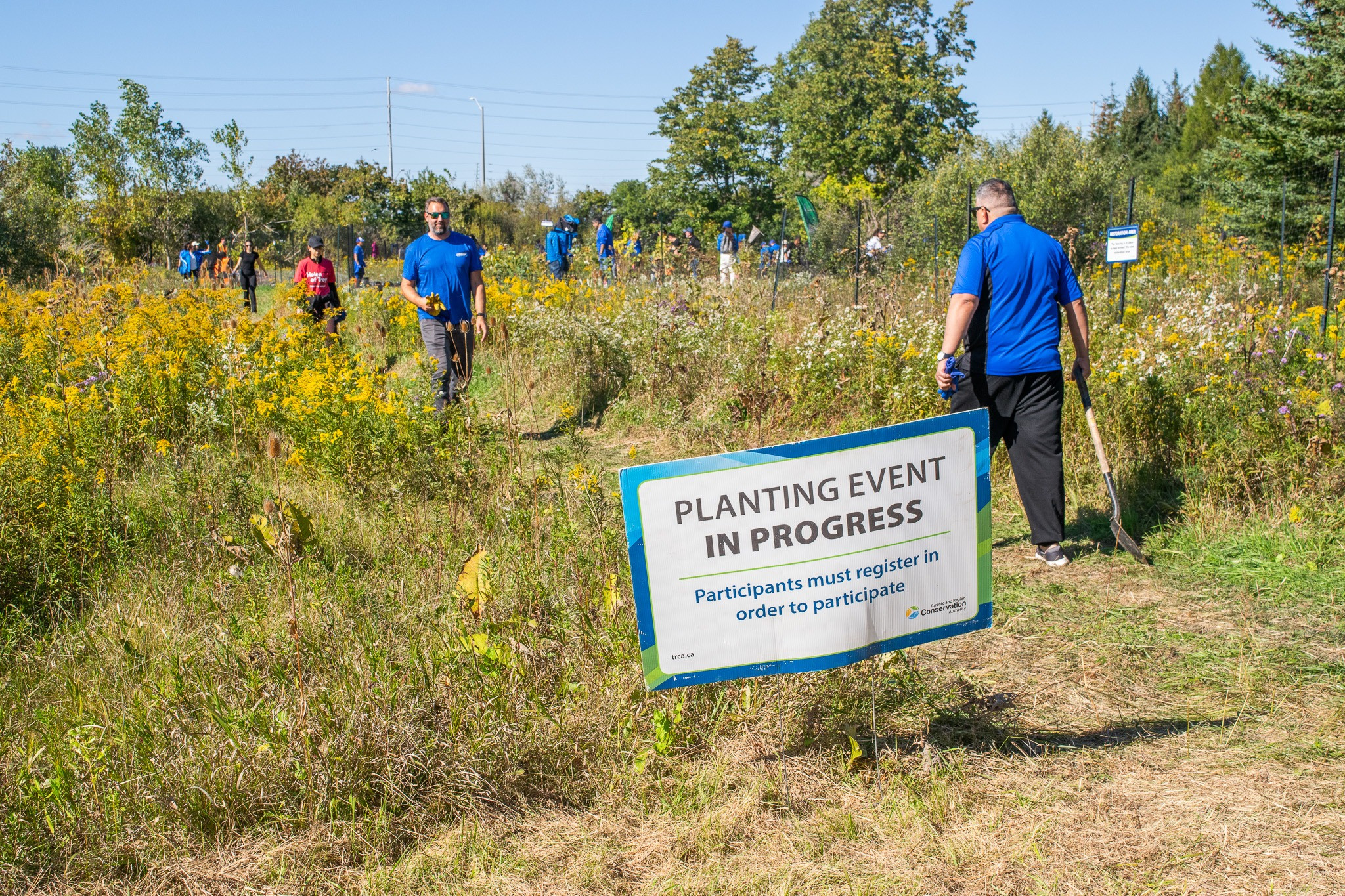
Volunteers grabbing shovels and heading to the planting site. (Alexis Wright/The Pointer)
For many, this would be their first time planting a tree.
The volunteers stood shoulder to shoulder—among them Tree Canada Chief Program Officer Brijpal Patel—as they watched TRCA staff show them the ropes: from digging the perfect hole to building a long-lasting space for the plant.
Patel stopped beside a patch of earth, chose a small native sapling and then, drove the blade of his shovel into the ground.
His right foot came down on the back of the shovel, pushing the metal deeper into the soil. He lifted the earth out and placed it beside the hole.
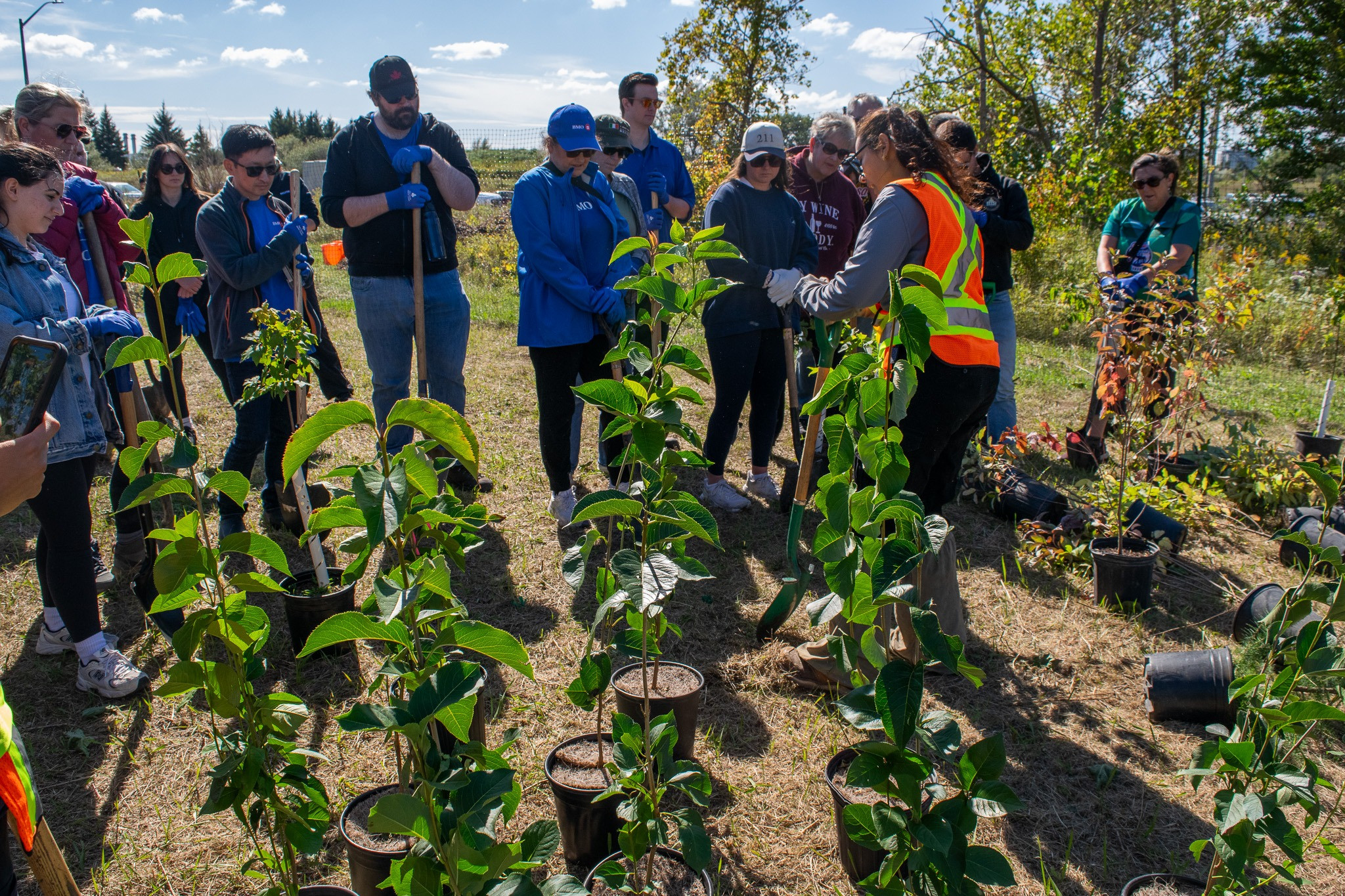
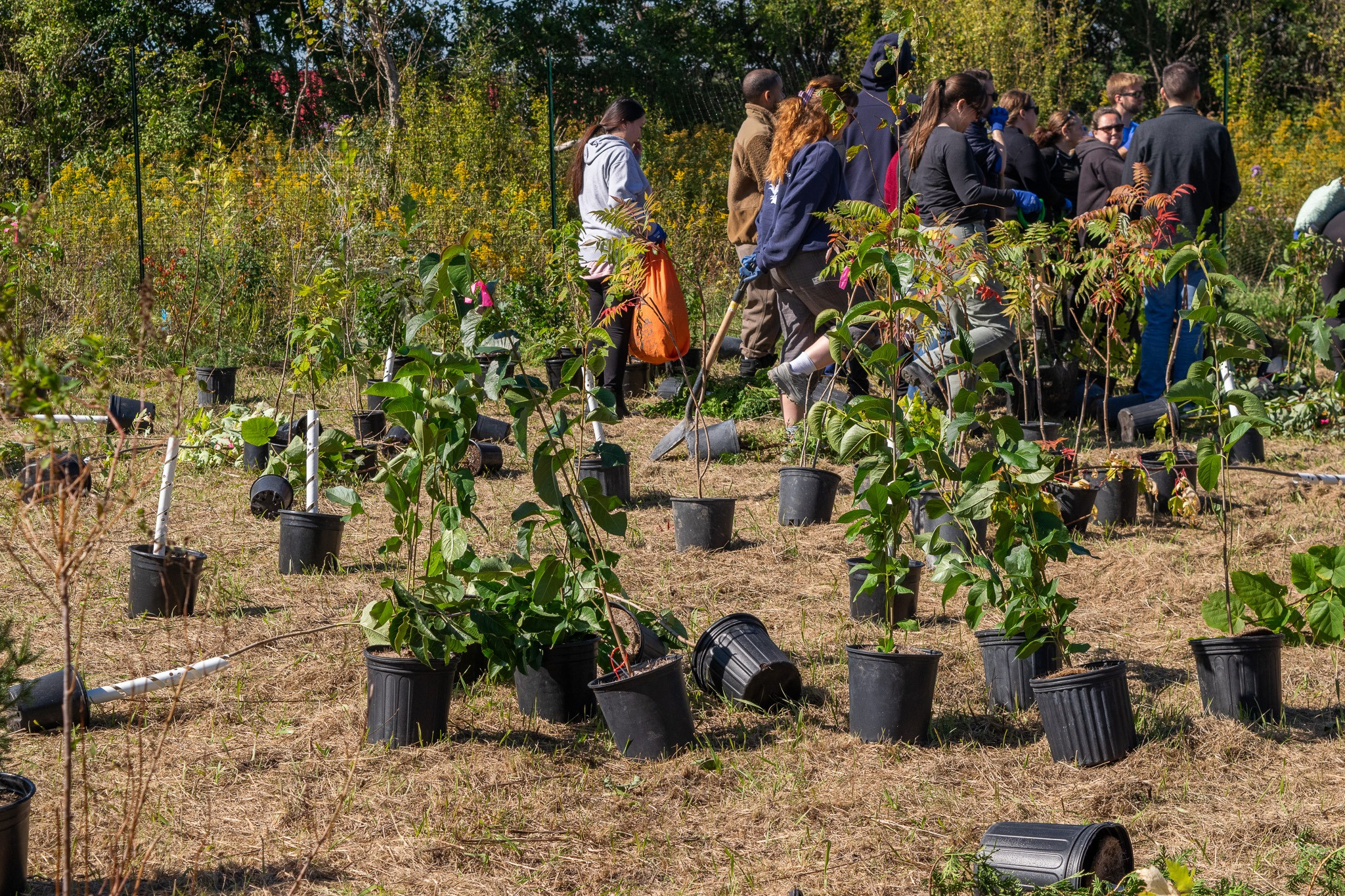
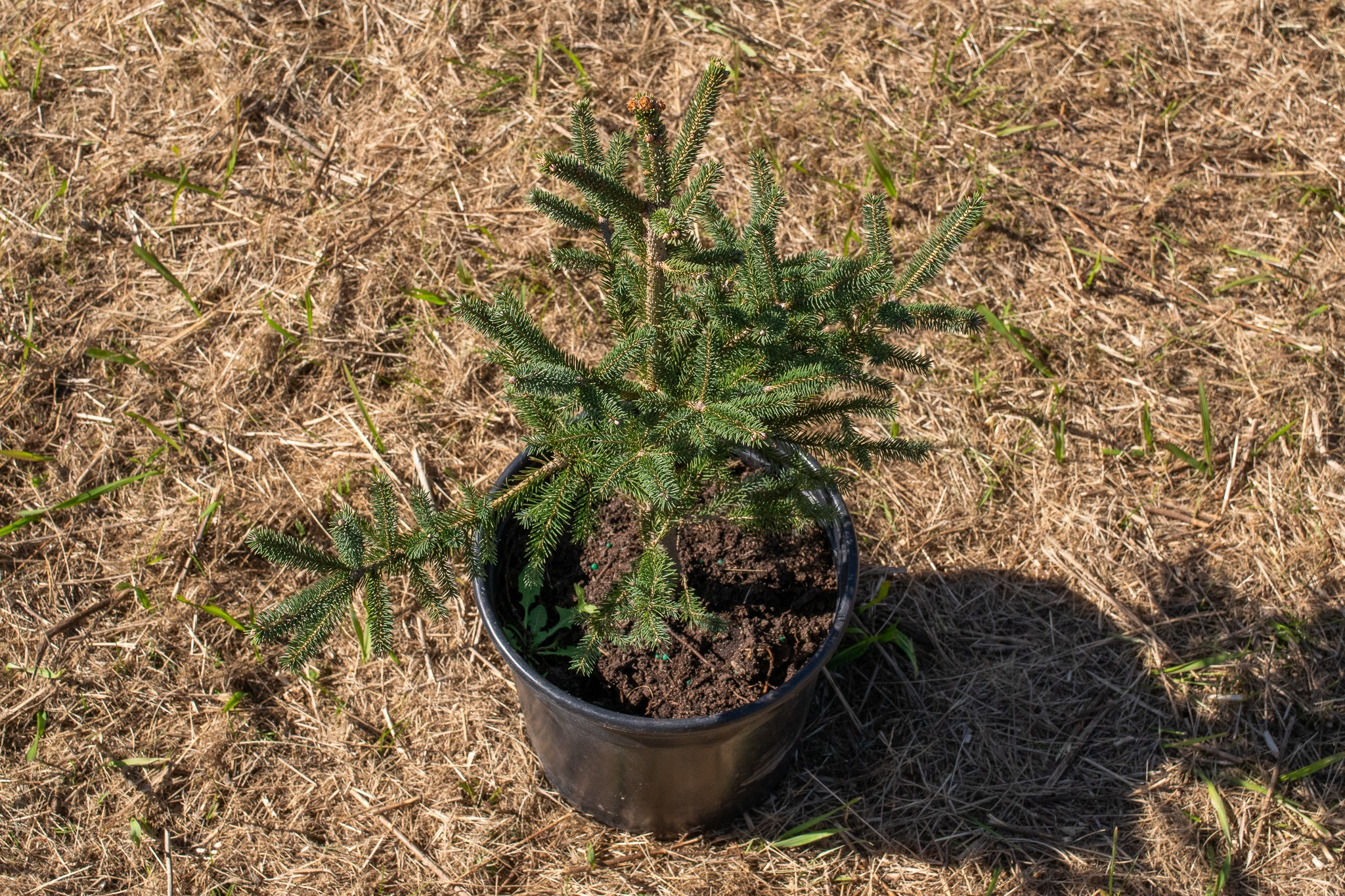
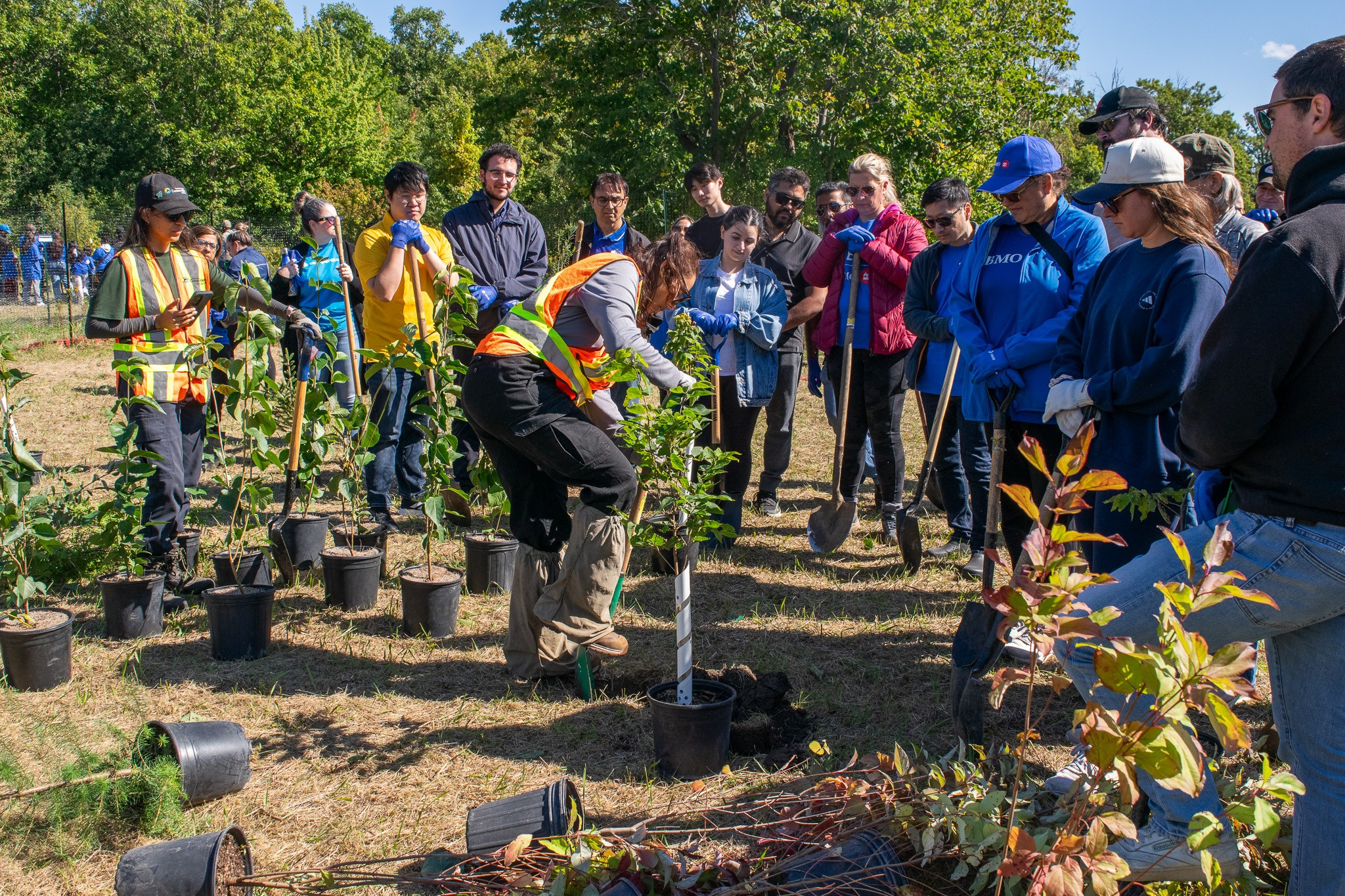
Toronto and Region Conservation Authority staff demonstrating the steps to carefully, skillfully dig a hole for a young green plant. (Alexis Wright/The Pointer)
Another shovelful followed. Then another. The pile of soil grew beside him. He would need every bit of it.
For Patel, this wasn’t the first time.
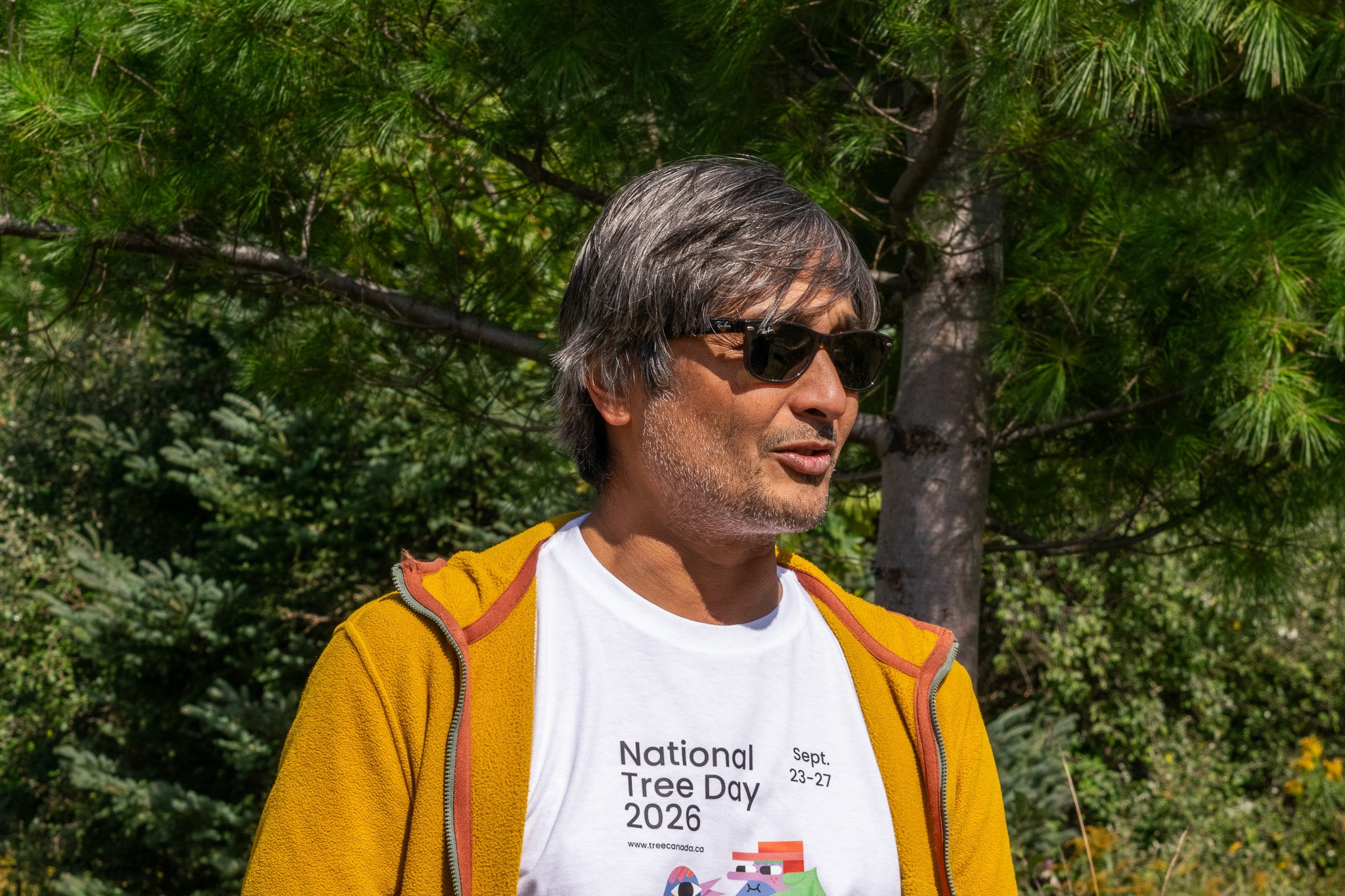
Tree Canada Chief Program Officer Brijpal Patel chatting with The Pointer on National Tree Day 2026. (Alexis Wright/The Pointer)
In 2025, he had planted trees with his team and Canadians across British Columbia & Territories/North, the Prairies, Ontario, Québec, and Atlantic Canada—planting over 4 million trees.
That same year, the federal government announced in the fall budget that it dropped its goal of planting 2 billion trees by 2031 through the 2 Billion Trees (2BT) program. But this is where non-profit organizations like Tree Canada and Forests Canada are stepping in.
“In the last 3 years, we have planted about 5,500 hectares of land,” he told The Pointer.
“It’s great to see community turnout towards these events, because we need this kind of public interest and public engagement in recognizing that trees are important. Let’s plan them in the right way, in the right places, and Claireville can’t be a better example for that.”
Patel picked up the young tree he had chosen with a small burst of green still held inside its nursery pot.
He gently laid it on its side and rolled the container between his hands, loosening the root ball before easing the sapling out.
The roots had grown tightly around the shape of the pot.
Patel carefully worked them loose with his fingers, opening them up so they could spread into the surrounding soil.
Once ready, he lowered the sapling into the hole and began pushing the soil back around it, scooping handfuls into the space around the roots and pressing them down with his fingers. The earth he had removed mere minutes earlier was finding its way back around the plant.
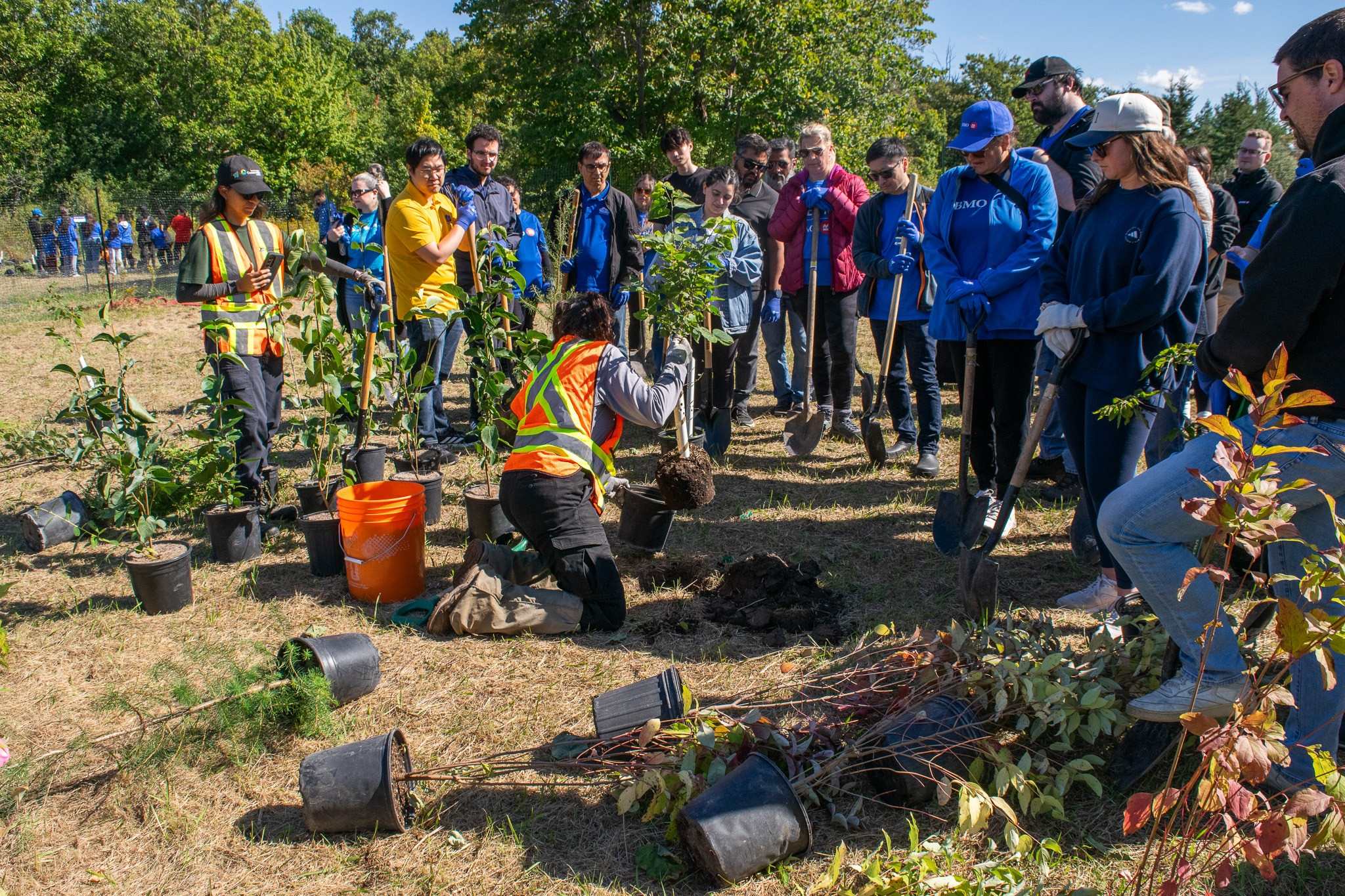
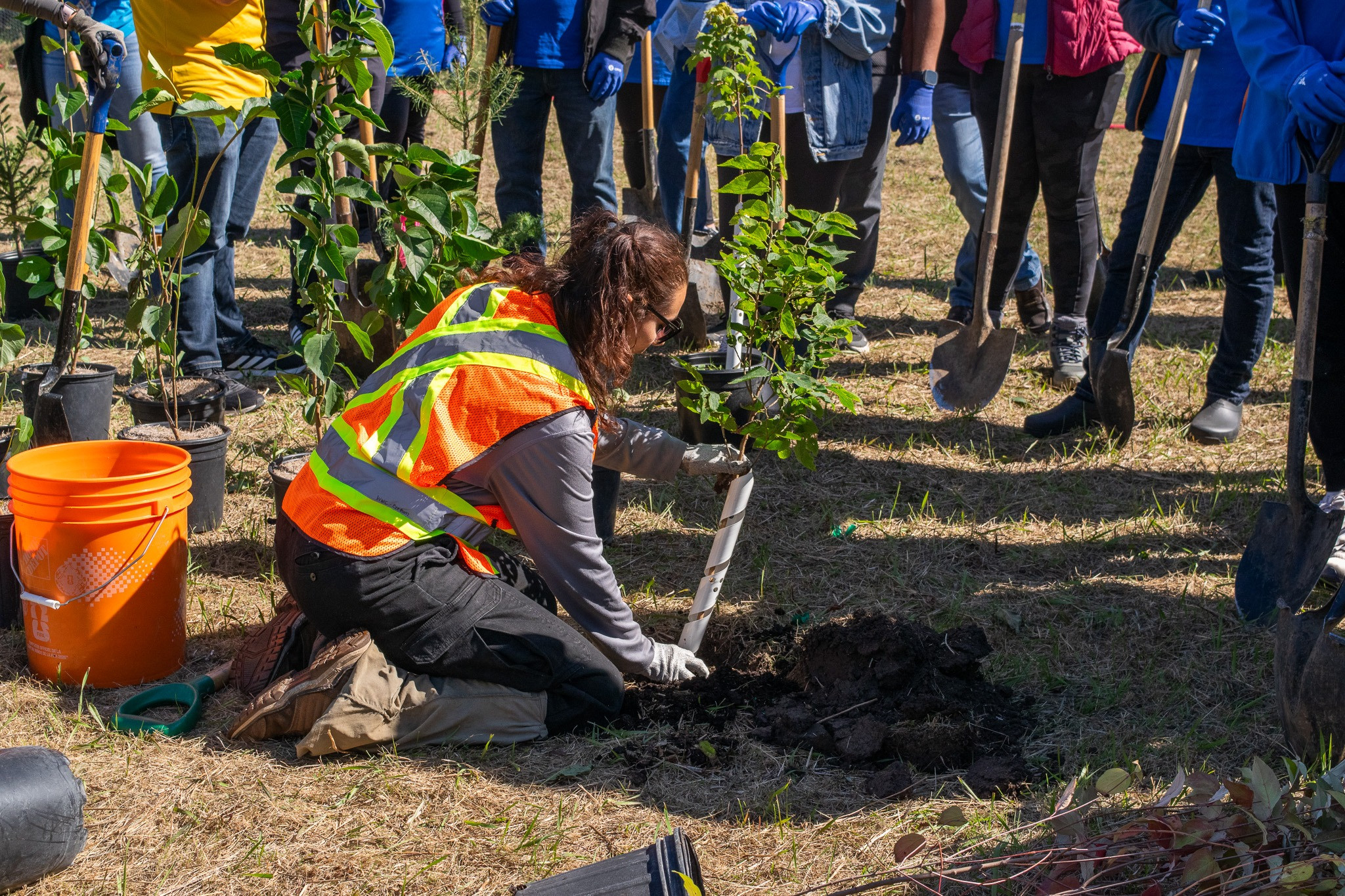
Volunteers watching intently how to take the plant out of the pot before moving it to the ground. (Alexis Wright/The Pointer)
As he admired the plant, his memory took him back to his own roots in Ahmedabad, Gujarat in India where he mobilized fellow students to stop the City administration from cutting down a century-old mango tree that had long provided food and shelter for people and wildlife.
He had come full circle…
“I've always done this and I don’t know what else to do,” he said as he walked to complete the last step of the process.
Patel returned with a bucket full of mulch and spread the material in a wide circle around the sapling, careful to leave space around its stem.
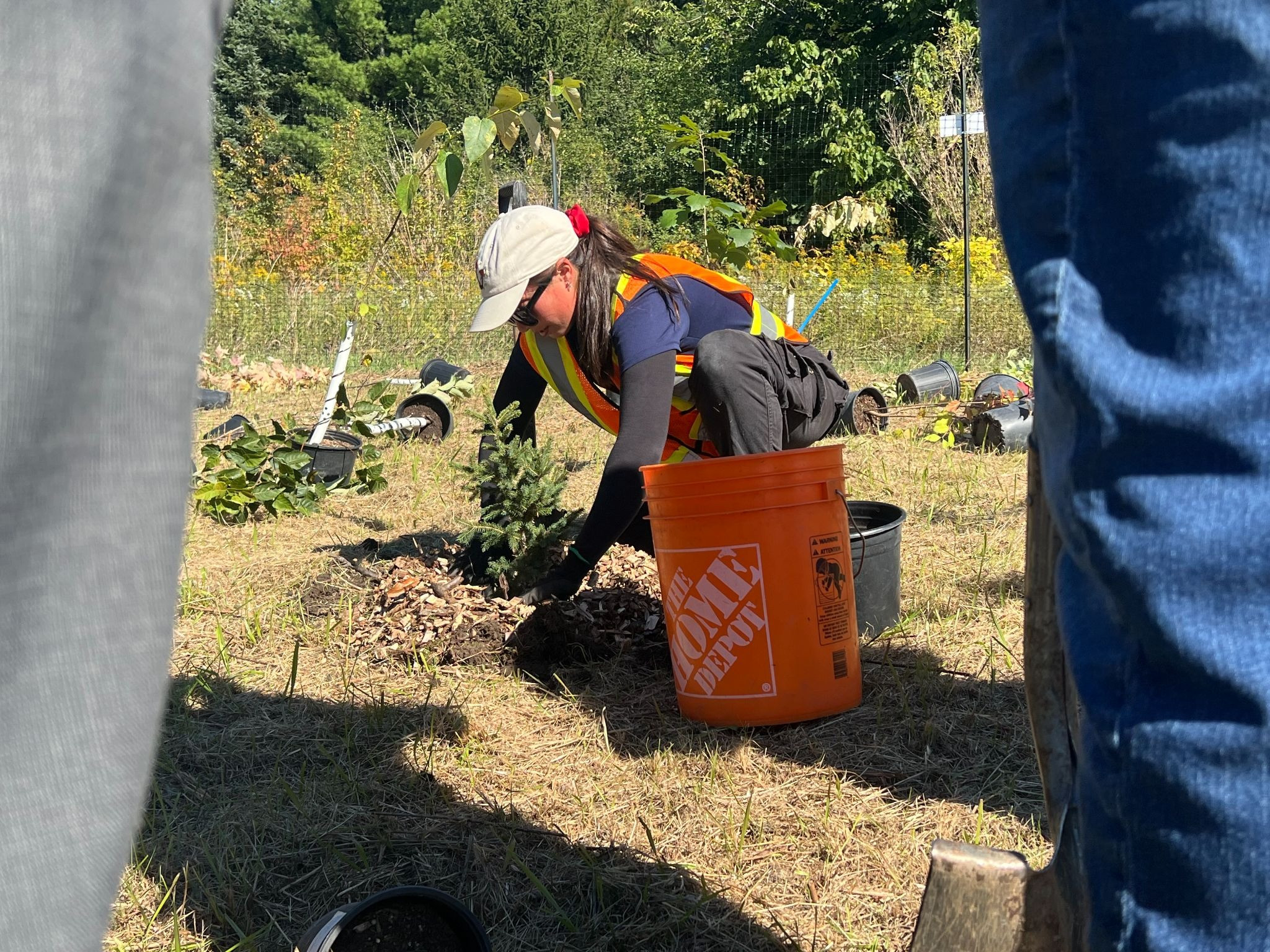
TRCA staff demonstrating how to cover the plant with mulch. (Anushka Yadav/The Pointer)
The mulch created a shallow basin that would help hold water around the tree while also protecting its shallow roots, retaining moisture and keeping competing weeds at bay.
The tree was barely taller than the shovel that had planted it but for volunteers who left Claireville that day, they became part of something larger than life.
Together, they planted 1,023 trees and shrubs that will soon provide food and shelter for pollinators, birds, and other wildlife while supporting biodiversity and ecological function across the site.
In some areas of Mississauga, where Tree Canada planted vegetation at more than 1,000 sites over the past two to three decades, the results are clearly visible: trees along streams have helped shade the water and lower its temperature, culminating conditions that have aided in the return of salmon spawning.
Claireville is “just a small part” of a much larger effort. Hotte estimated between September 23 and 27, nearly 1,500 volunteers across 14 sites in Canada planted for a better future.
Email: [email protected], [email protected]
At a time when vital public information is needed by everyone, The Pointer has taken down our paywall on all stories to ensure every resident of Brampton, Mississauga and Niagara has access to the facts. For those who are able, we encourage you to consider a subscription. This will help us report on important public interest issues the community needs to know about now more than ever. You can register for a 30-day free trial HERE. Thereafter, The Pointer will charge $10 a month and you can cancel any time right on the website. Thank you
Submit a correction about this story

