
More newcomers on the ballot in the GTA but winning is another story
Ontario's 2026 municipal election has seen a record number of first-time candidates. But immigrant and racialized residents — especially women — say the playing field remains uneven.
They point to problems such as raising money, getting media coverage, facing online harassment and the advantage that incumbents already have in election campaigns.
The Association of Municipalities of Ontario (AMO) reports that 4,502 people — 68 percent of all municipal candidates — have never held office before, up from 66 percent in 2022.
"One of the notable things about the 2026 municipal election is the number of people stepping forward for the first time," AMO executive director Lindsay Jones said.
"That is encouraging for the future of local democracy, but getting on the ballot is only one part of participating meaningfully."
On paper, this looks like progress. But AMO's research, together with interviews with four diverse candidates in the GTA, reveals that deep-rooted barriers still prevent many qualified newcomers from entering the race and competing against candidates with stronger financial and political networks.
"There isn't a single explanation, and election outcomes are shaped by many factors," Jones said. "What AMO’s research does show is that candidates from diverse and under-represented communities can encounter a combination of barriers throughout the campaign process."
These barriers include access to campaign donations, volunteers, mentors and established networks, as well as concerns about discrimination, harassment and exclusion.
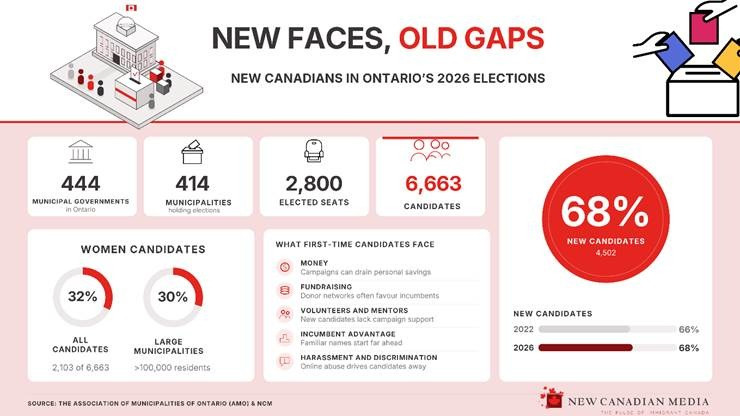
Data from the Association of Municipalities of Ontario (AMO) shows 68 percent of the 6,663 candidates in Ontario’s 2026 municipal elections are running for office for the first time. (AMO)
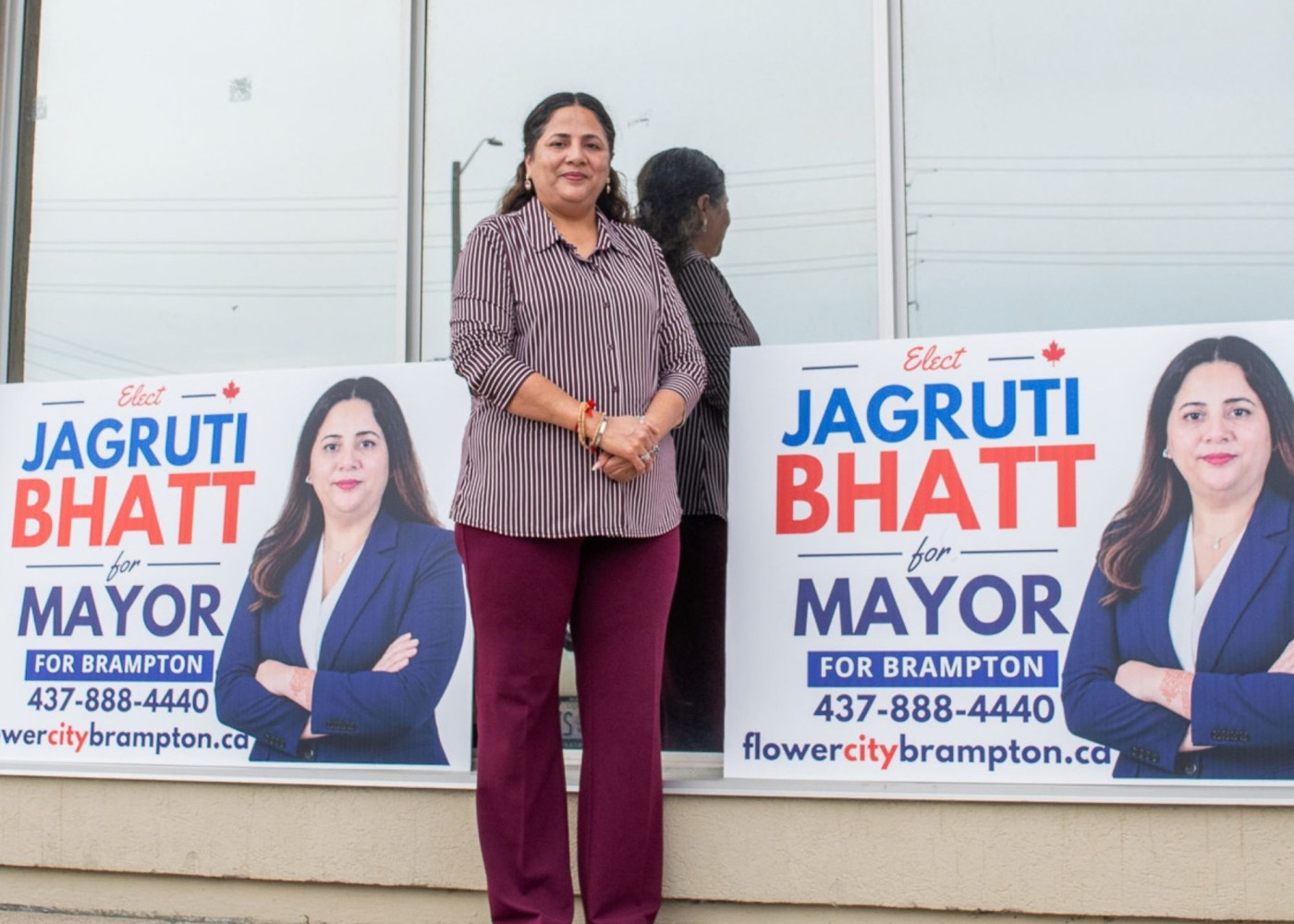
For more than 20 years, Jagruti Bhatt has called Canada home. Now the South Asian woman is running for mayor of Brampton on a platform built around accountability, healthcare expansion and housing that accommodates multi-generational families.
She made the move to politics after watching problems pile up while City Hall seemed focused on "everything except what affects our actual lives”.
But getting her message out has been an uphill battle. As a first-time candidate, she’s had to build her campaign from the ground up.
"Fundraising and securing community support have definitely been uphill battles," Bhatt said. Many groups now think twice before hosting open discussions or backing challengers.
She pointed to a chilling effect created by how the City hands out grants. "Many groups that should feel free to host discussions or engage openly now feel they have to stay silent, or quietly back incumbents out of fear that welcoming challengers could cost them their funding next year."
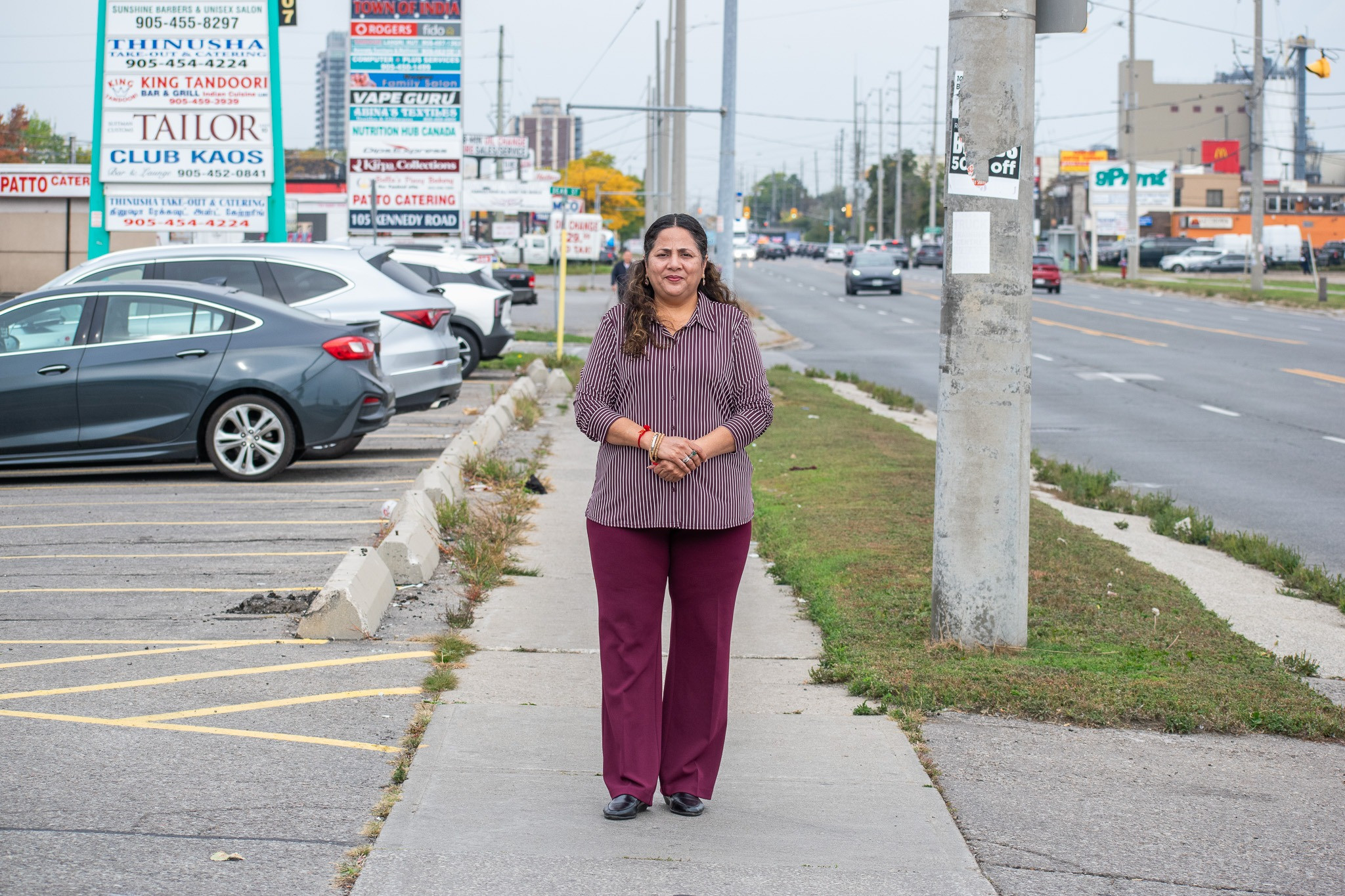
Jagruti Bhatt is a realtor and a business owner who has put her name in the bid for Brampton’s next mayor. (Alexis Wright/The Pointer)
Bhatt also described personal attacks online targeting her English language skills, despite more than 15 years of grassroots work and a career in real estate built on trust with local families.
"Being able to connect with people and advocate for them doesn't come from smooth, rehearsed political speeches; it comes from showing up and doing honest work," she said.
"Treating accents or language skills as a barrier is something far too many immigrant candidates run into, and it sends a harmful message that no matter how long you've contributed to your community, you're still treated as an outsider."
Her prescription is concrete: Match small donations for first-time candidates; offer real mentorship and pre-season training; firewall community grant decisions from electoral politics; and review city rules that favour incumbents.
East of Brampton, in Toronto's Ward 20 — Scarborough Southwest —Sharmina Nasrin, a former public servant who immigrated from Bangladesh in 2018, said she is running because she has practical ideas for her riding: Safer neighbourhoods, better parks, reliable transit services, tenant protections and stronger communication between residents and City Hall.
But as a first-time candidate without a large political organization, Nasrin has had to build everything from the ground up.
"Fundraising has been particularly challenging because I am running a grassroots campaign," she said.
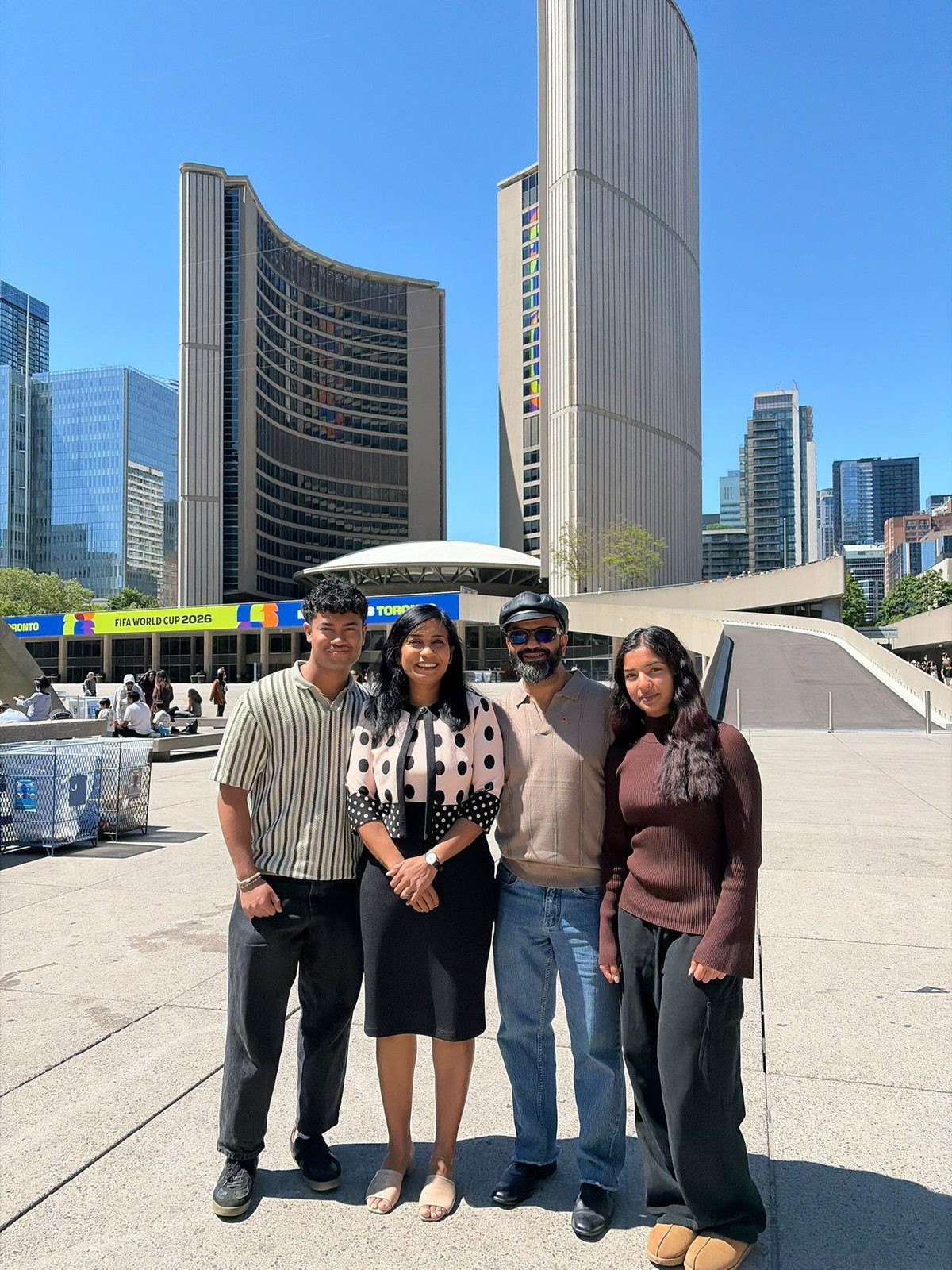
“I wasn’t born in Scarborough. Scarborough is where I became who I am,” Sharmina Nasrin said. (Sharmina Nasrin/ Campaign Website)
Reaching voters across a large, diverse ward has meant long hours of knocking on doors. But those challenges have also become one of the most meaningful parts of this campaign.
"Every door I knock on, every conversation I have and every volunteer who joins me is helping me build something," she said.
"I may not have the biggest campaign machine, but I am building a campaign based on relationships, hard work and trust."
Nasrin says there are more immigrant women who have the education and experience to serve but lack networks and confidence. She believes more support and visible role models would help close that gap.
"We need more mentorship, community-based political leadership programs and opportunities for women to build networks before they decide to run," she said.
"Most importantly, immigrant women need to see other women like themselves participating. Representation can change what people believe is possible."
Bahira Abdulsalam, an engineer and independent candidate for mayor of Toronto, believes the biggest barrier she faces is not that she's an immigrant — it’s that she’s running without a party machine or significant funding. "Many people don't even realize a candidate can run for mayor without a party; the model itself is unfamiliar."
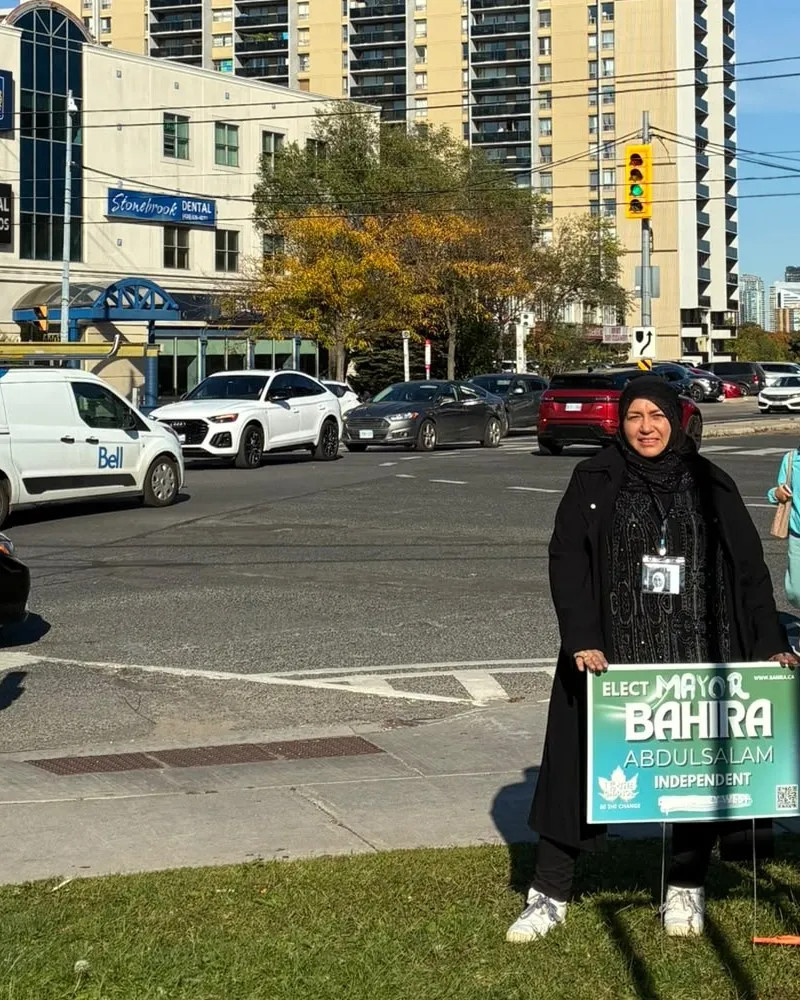
Bahira Abdulsalam aims to “bring an engineer’s discipline to City Hall, fix what we have, spend honestly, and put people first”. (Bahira Abdulsalam/Campaign Website)
Abdulsalam, who came to Canada from Egypt two decades ago, says she is running without funding and with minimal contributions because her campaign is focused on people already struggling financially.
"What I have instead is a wealth of experience and an extraordinary team of volunteers who give their time because they believe in the cause, but money is still a wall," she said.
On visibility, Abdulsalam said the pattern is telling. "In 2023, I was covered by mainstream Canadian outlets. In 2026 so far, I haven't been (interviewed), even by the Toronto Star, CBC and Radio-Canada, even as international media have taken an interest."
She said that she has faced Islamophobia and xenophobia, and that her willingness to speak plainly on issues such as Palestinian and human rights and education reforms that others avoid has led some institutions to keep their distance.
Abdulsalam said her name also does not appear in most polls.
"Private polling firms charge thousands of dollars, so unfunded independents are simply left off the list and voters can't choose someone they're never shown," she said.
Abdulsalam called for levelling the visibility playing field.
"Access to debates, forums and official candidate information should follow from being a registered candidate — not from money or party."
She also wants lower costs of entry and more value placed on lived experience. She said newcomers and people with international experience should have a stronger voice in how the city makes decisions.
"This city needs international experience and geopolitical knowledge to make room for them on city boards, in genuine consultation before decisions are made, and in the rooms where power actually sits," Abdulsalam said.
To better understand who is running and who is not, Ontario’s municipalities association asked the province to change its rules to allow municipalities to collect voluntary demographic information from candidates and elected officials.
"Having better information about who is running, who is elected and who is not successful would help municipalities, the province and organizations like AMO better understand where barriers may exist and where additional supports are needed," said the organization's executive director.
Until that data is widely available, stories like those of Bhatt, Nasrin and Abdulsalam offer a window into the gap between the surge of first-time candidates and the structural hurdles that keep many newcomer voices from breaking through.
For Bhatt, the message to Brampton is simple: "You don't need to be a career politician to listen, care and get things done."
"If more doors are opened, more immigrant women will walk through them," Nasrin said.
Abdusalam agrees that the real litmus test of a democracy is “whether a woman without money or a party can still be heard”.
Email: [email protected]
At a time when vital public information is needed by everyone, The Pointer has taken down our paywall on all stories to ensure every resident of Brampton, Mississauga and Niagara has access to the facts. For those who are able, we encourage you to consider a subscription. This will help us report on important public interest issues the community needs to know about now more than ever. You can register for a 30-day free trial HERE. Thereafter, The Pointer will charge $10 a month and you can cancel any time right on the website. Thank you.
Submit a correction about this story

