
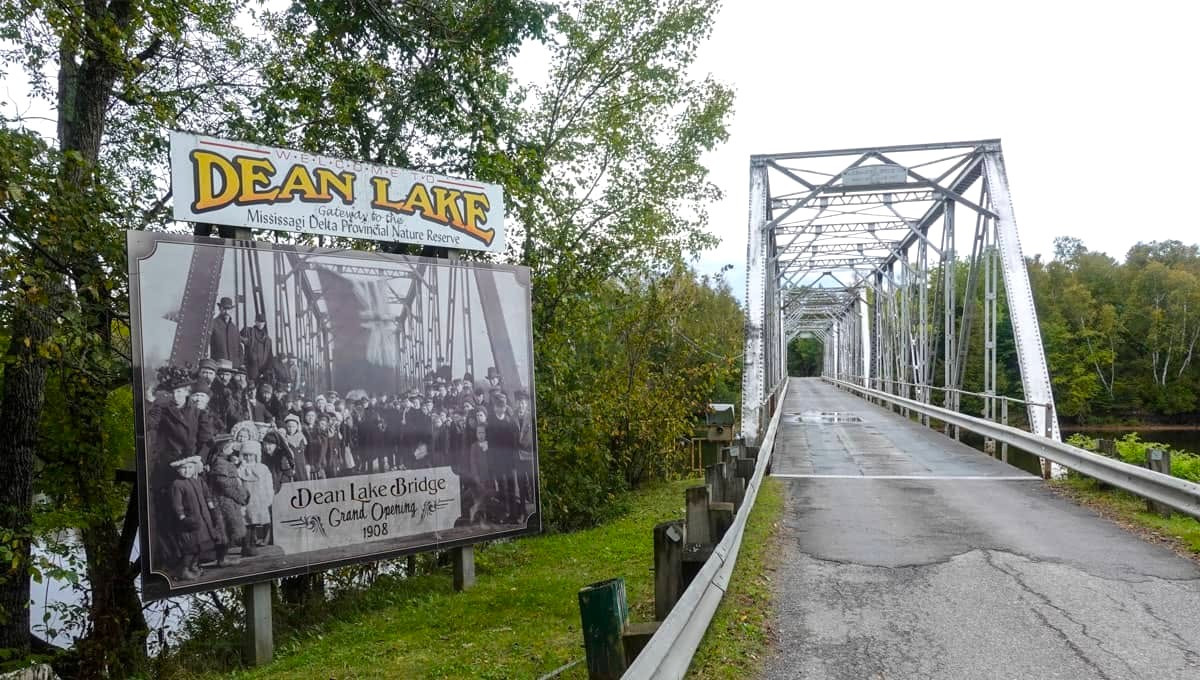
‘The whole record’: How citizens should evaluate municipal leadership
Municipal government is the level of government closest to the people. A statement made in Council’s chamber can directly affect whether a family has safe access to their home, whether an ambulance can reach a resident in time, whether a historic bridge is preserved or demolished, and whether ratepayers support or oppose an initiative. This is precisely why accuracy matters.
Not rhetorical accuracy. Not political accuracy. No actual documented, verified accuracy.
Accordingly, municipal decisions must be based on the public record. But not selected portions of that record. Not information separated from material context. Not statements that may be technically defensible when read alone but create a materially different impression when compared against the underlying documents.
No. The whole record.
Over the past 19 months, the Community Voices Committee (CVC) has reviewed engineering reports commissioned by the Municipality of Huron Shores, Council records, funding applications, public statements, historical documents, meeting transcripts, and records disclosed through the Municipal Freedom of Information and Protection of Privacy Act (MFIPPA). Moreover, we have attended and participated in various Huron Shores Council and Committee meetings.
What we have found is not simply a difference of opinion. It is a difference between what the public was led to understand and what the whole documentary record shows. The issue is not necessarily what Council concluded. The issue is whether Council had sufficient information to arrive at said conclusions. And just as important, whether residents were provided the full record before being asked to accept those decisions.
For the Huron Shores residents and many readers, these issues will sound familiar. Over the past 19 months, questions have been raised by the CVC about the deterioration of the Dean Lake Bridge, the adequacy of funding efforts, the viability of the proposed road alternative, the impacts on residents, and the information relied upon by Council in reaching its decisions. What follows is not a repetition of those questions. It is, in many respects, what we found while searching for the answers.
Council has repeatedly represented that it has been applying for funding grants for the Dean Lake Bridge.
As per our typical approach, the CVC initially gave Council the benefit of the doubt. But after hearing these statements repeated far too often with little evidence offered in support of them, we resolved to find the evidence. Unfortunately, what we found was a lack of it.
The CVC submitted a detailed MFIPPA request seeking municipal funding and grant records from January 1, 2010, to November 12, 2025. The request was limited to applications valued at $50,000 or more and sought the actual applications themselves as well as related staff reports and budget documents.
The Staff estimated that this search would require 30 hours across finance records, Council agenda packages, staff reports, departmental files, and legacy records. It also estimated another 12 hours to review and prepare the records for disclosure. This was not a casual search of recent files. It was represented as a comprehensive review across 15 years of municipal records. And the CVC paid a pretty penny for the search. What did that extensive file search ultimately reveal? Only three specific funding applications — in 15 years — for the Dean Lake Bridge.
That is not the record most reasonable people would understand from repeated statements that Council has been applying for funding for the Bridge. Those statements create an impression of sustained and repeated efforts across available programs and funding cycles. The records produced simply do not support that impression.
And this distinction matters most because the claimed inability to secure funding has been part of the public narrative supporting abandonment of the Dean Lake Bridge.
But failure to obtain funding is not the same thing as failure to apply for it.
To be clear, the three applications are important and should be acknowledged. But three documented applications do not establish the sustained funding-seeking effort that Council’s repeated statements led residents to believe had occurred.
Residents were entitled to an accurate account of Council’s record on the issue of funding sought before or at least as part of Council’s November 12th vote to abandon the Dean Lake Bridge.
We also asked for this account numerous times and in numerous ways prior to the vote. We did not receive one.
Why is it imperative to seek answers for this funding?
The condition of the Dean Lake Bridge did not suddenly appear as an issue in January 2025 with its sudden, engineer-recommended temporary closure. The documentary record shows that Council was advised of and discussed bridge deterioration at least a decade prior, with annual, urgent recommendations too (and I’m paraphrasing here): “do something or the Bridge will fail”.
Then, in response to the engineer’s recommended closure in January, based exclusively on the fact that the repeatedly made repair recommendations had not been completed, Council subsequently passed a resolution acknowledging that previous inspection reports had consistently identified significant structural deficiencies and the need for immediate and long-term rehabilitation measures with no repair plan implemented.
The public narrative has too often treated the bridge’s condition as though it emerged suddenly and left Council with no choice but to respond to an immediate crisis. The documentary record tells a more complete story.
The bridge deteriorated over time. Engineering concerns were documented over time. Repairs were recommended over time. And Council itself eventually acknowledged that no repair plan had been implemented. And little to no effort was made to secure the funding to develop and implement a repair plan.
Yes, these facts matter.
This does not require speculation about motives. It does not require a legal conclusion. It requires only that the public record be read and considered on its face and in chronological order.
Good governance demands more than informing residents about today’s problem. It requires accurately explaining how that problem developed, how long the risks were known, what actions were recommended, and what was actually done in response. Without that context, residents cannot fairly evaluate either the present condition of the bridge or the decisions now being justified by that condition.
Dissecting these misrepresentations is equally essential to understanding why the Bridge is not in use today—Council’s Nov 12th vote notwithstanding.
Which brings us to the culvert: After some additional review and consideration following the January closure, the Dean Lake Bridge was reopened in March last year on an interim basis and with a reduced load condition.
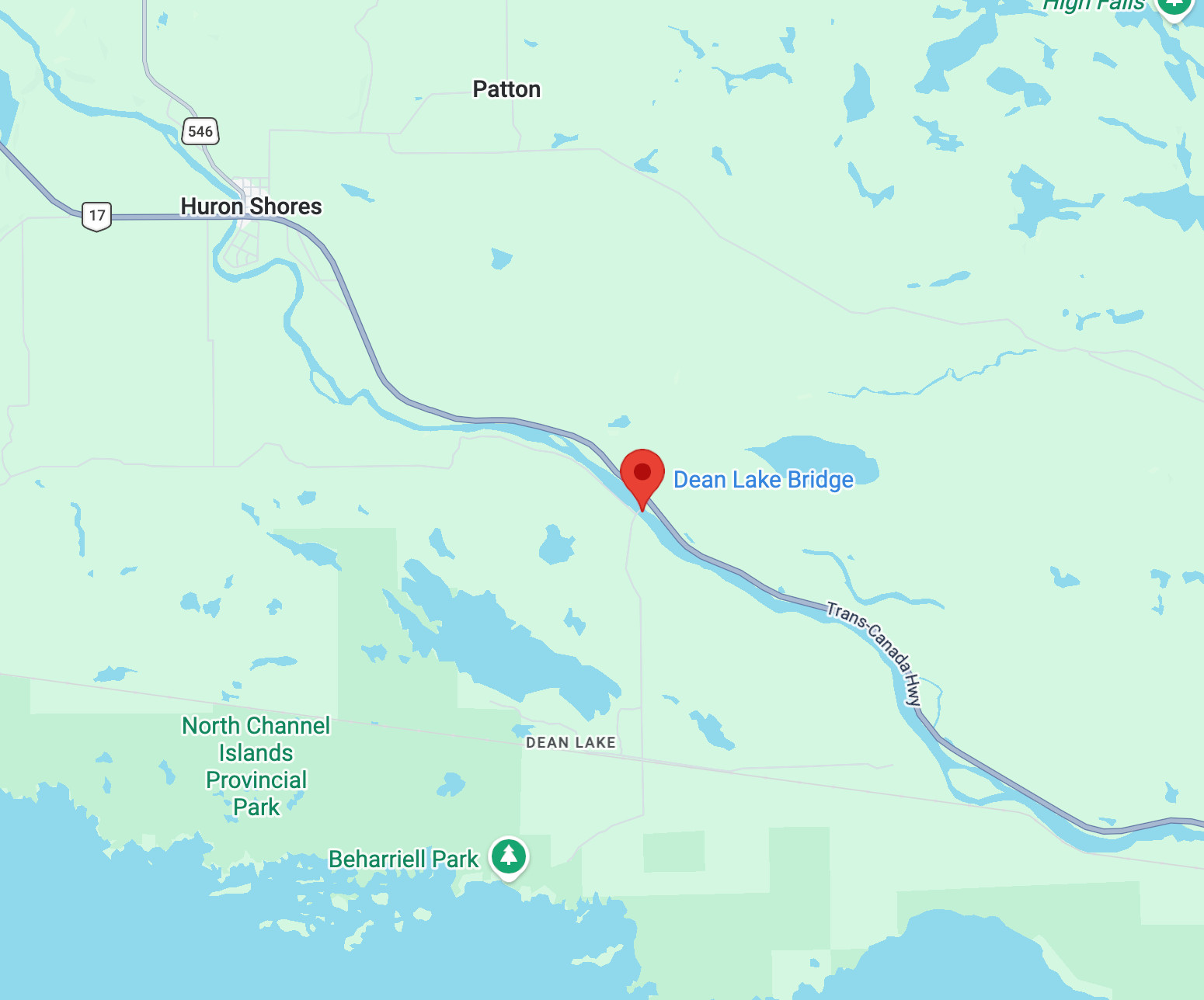
The Dean Lake Bridge is located in the municipality of Huron Shores in Northern Ontario, spanning the Mississagi River just off Highway 17 near the community of Iron Bridge. (Google Maps)
And then, in April 2025, the Dean Lake Road culvert failed, effectively cutting off access to the bridge and closing it once again.
Rather than embracing its responsibility and supporting stranded residents, Council questioned municipal ownership of the culvert and pursued the position that responsibility might rest elsewhere. It referred the matter to its legal council.
Some five months later, on August 19, the Municipality issued a public statement saying Council had received legal advice concerning the failed culvert and had directed staff to notify the Ministry of Transportation, the Ministry of Natural Resources, and Transport Canada of the Municipality’s “legal position”. The statement also said Council remained committed to a “transparent and informed process”.
But the municipality had already submitted a provincial funding application in June 2025, narrating a materially different story regarding its ownership and responsibility. This, and the previous three applications, also highlighted the importance of continued bridge access.
In June 2025, the municipality described the Dean Lake Road culvert as one of four “municipally owned watercourse crossings”. It expressly confirmed, “Yes, the applicant owns the asset in full,” and also confirmed that the municipality would operate the asset.
Those statements were not informal comments made during an evolving public discussion. They appeared in an official, legal application for provincial funding. And at the end of that application, the Municipality certified that the information provided, including the supplementary attachments, was “true, correct and complete in every respect”. The municipality’s Chief Administrative Officer and Clerk signed the application.
So, in April, it was “Not it”; in June, it was “Yes it” (albeit quietly); in August, it was back to “Not it”.
These omissions, or rather these misrepresentations, were material. It changed how residents understood the ownership issue, the reason for delay, and the municipality’s responsibility to act.
Not for nothing, but Council did not correct the record until November 2025, on the eve of Council’s November 12th vote to abandon the Dean Lake Bridge, despite having the records to do so well before then.
Ultimately, Council was forced to correct the record given what the CVC unearthed as part of our own records search regarding the matter of culvert ownership, which revealed the municipality had to be “it”. But by then, it didn’t matter much to anyone except the residents directly impacted. Moreover, by then the municipality had to be “it” so that the culvert could be abandoned right alongside the bridge.
These facts were directly relevant to Council’s November 12 decision, yet they were omitted from Council’s discussions at both the October Public Engagement session and the November Public Council meeting.
Instead, residents heard ‘the Bridge is too far gone” (with no admission as to why), “a road is better than a bridge” (with no coherent reason why) and that restoring interim access to the bridge until the road alternate could be realized would be throwing “good money after bad” (with no meaningful response to the over 42 detailed and technical questions regarding the viability of this alternate road).
These are not rumours. They are records. Again and again, we found the same problem. Not that records failed to exist. Rather, the relevant records often existed long before the public discussion but were not fully incorporated into it. And they should have been confronted openly. Because they were not, residents have been left to endure dangerous conditions and uncertainty.
Following Council’s August 2025 statement identifying its legal position, the CVC sought the legal opinion and underlying records concerning ownership and responsibility for the failed culvert. Access was denied.
Yet independently created records existed, including the June 2025 funding application and records released regarding ownership history. Those records contradicted the public narrative surrounding the issue. The matter is now before the Information and Privacy Commissioner. Whatever the eventual outcome, the existence of those records is not in dispute. The records speak for themselves.
The municipality’s own funding applications described the consequences of the loss of the bridge in unequivocal terms.
The June 20205 application stated that the culvert failure had cut off the primary access route for ambulances, restricted access for more than 130 residents, disrupted daily travel, and delayed emergency response. It described the detour as significantly longer and consisting of gravel roads not designed for regular or emergency use. It characterized the urgency of the project as “critical and immediate”.
The municipality’s October 2025 background material also characterized the effect of Bridge closure on emergency services as “operationally significant”.
A 2018 application reiterated the necessity for repairing the bridge: “These repairs are necessary to maintain a connecting link structure in the Municipality’s network that serves over 200 residents in Ward 4 and provides access to the Mississagi Delta Provincial Park and the Municipality’s only Lake Huron public beach. The only other alternate access to this area is via a 17.4 km detour over a significant gravel road, causing serious time delays and service interruptions and serious concerns for emergency response personnel.”
That language matters: “Critical and immediate” does not describe an inconvenience. “Operationally significant” does not describe a minor change in travel time. “Serious concerns for emergency response personnel” cannot be any clearer in terms of risk. These are the municipality’s own assessments of the consequences associated with the loss of direct access via the Dean Lake Road culvert and bridge. Yet when Council voted against restoring interim access to the Dean Lake Bridge, the public discussion did not meaningfully reconcile that decision with the urgency and risks described in the municipality’s own applications.
These were not minor omissions.
When information about emergency-service impacts exists in municipal records but receives little attention in public-facing discussions, residents are left with an incomplete understanding of the risks associated with a decision. Transparency requires more than disclosing information. It requires ensuring material facts are part of the discussion and it is incumbent upon the municipality to make sure things are understood.
The omissions effectively prevented the public from understanding how Council moved from describing Bridge restoration as critical and essential to rejecting interim restoration in November. If the Municipality’s assessment had changed, the residents deserved an explanation. If the facts had changed, the residents deserved to see the updated facts. If the funding application no longer reflected the municipality’s position, the residents deserved to know why. The residents deserved and expected to hear these things before Council voted.
And not for nothing, but residents repeatedly raised the same concerns about emergency access, isolation, road safety, transportation costs, and community impacts. Whether one agrees with those concerns or not, the residents deserved to hear how those concerns were evaluated and weighed against financial considerations.
We did not. Instead, we have been left to reconcile materially different municipal narratives on our own.
The public was told that upgrading the alternate road route was the preferred financial path. But the engineering record identified unresolved environmental constraints, unconfirmed land ownership issues, unknown subgrade conditions, and the need for further study before the feasibility and actual cost of the proposed road work could be known.
These were not minor construction details. They went directly to whether the road alternative was achievable, what it would cost, how long it would take, and whether it could provide a level of access comparable to the bridge.
The October 2025 municipal background report relied on the road feasibility work but did not include all of the environmental and land ownership constraints identified in that work. Council’s presentation focused heavily on financial comparisons alone and was remarkably silent regarding emergency-service delays, safety, accessibility, community impacts, and unresolved constraints.
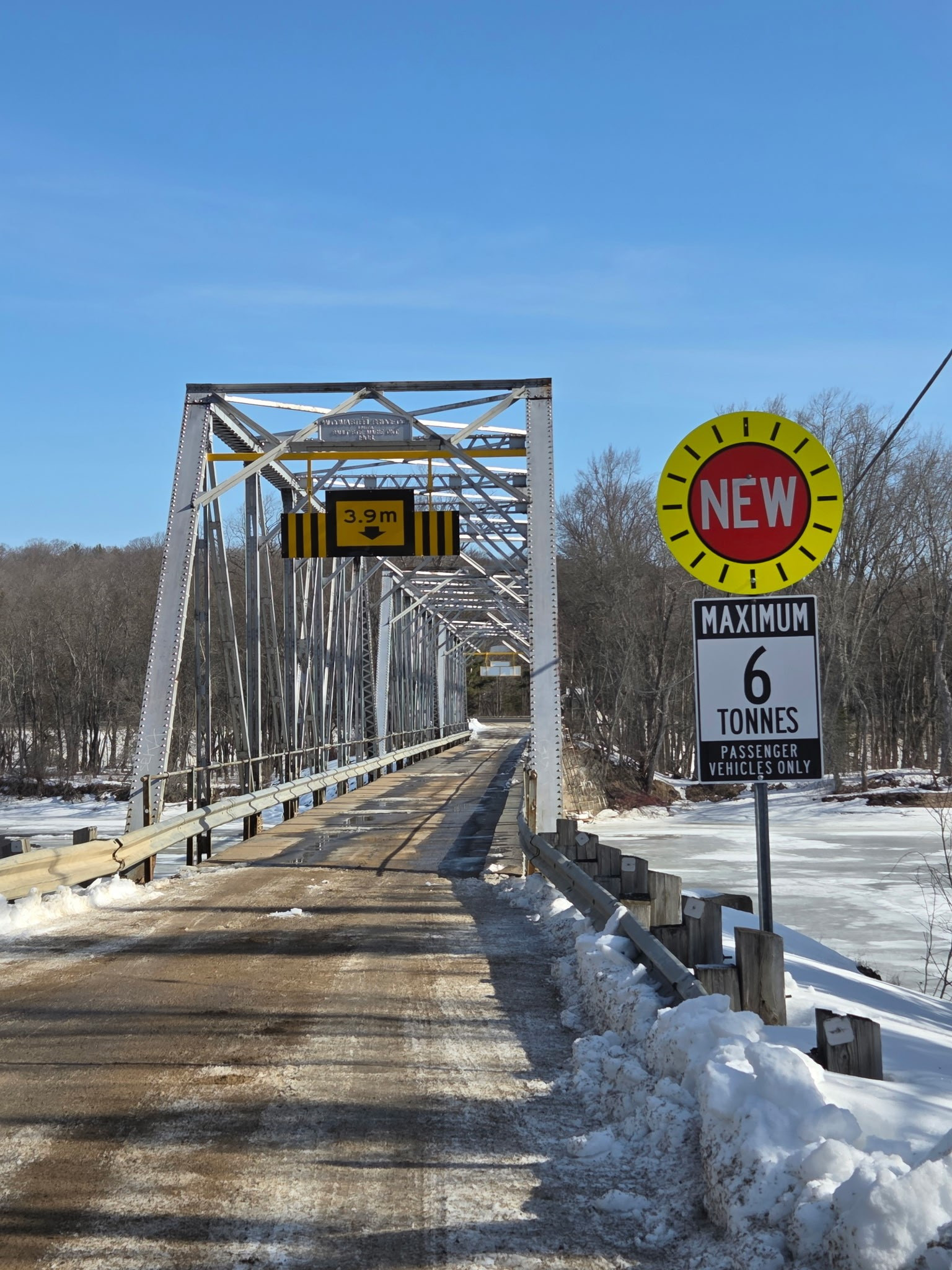
The Municipality of Huron Shores announced that the Dean Lake Bridge was reopening on March 13, 2025, with a six-metric-tonne load limit, following a structural inspection and analysis completed by Kresin Engineering. However, it closed again shortly after. (Municipality of Huron Shores)
This is precisely why completeness matters. A public presentation does not become accurate merely because each individual number displayed is technically correct. A presentation can still create a misleading impression if the uncertainties and costs attached to one option are emphasized while those attached to another are minimized, deferred or omitted.
Council said it had enough information to decide. Yet its own supporting records identified matters that remained unresolved.
The word “misrepresentation” should not be used casually. It should be tied to evidence. In the case of the Municipality of Huron Shores, the documentary record supports the numerous concerns as related to misrepresentation.
First, repeated statements that Council had been applying for grants for the bridge created an impression of sustained funding efforts. The extensive municipal file search produced only three specific Bridge applications, and one culvert application.
Second, the deterioration of the bridge was too often presented as an immediate problem requiring an immediate final choice, without equally emphasizing that engineering concerns and repair recommendations had been documented over several years and that Council itself acknowledged no repair plan had been implemented.
Third, Council publicly advanced a position questioning municipal responsibility for the failed culvert after the municipality had submitted a provincial application describing that culvert as municipally owned and certifying that the applicant owned it in full.
Fourth, the public ownership narrative did not disclose the historical records showing the culvert to be an asset of the former Township of Thompson that would have survived amalgamation.
Fifth, Council’s final public decision-making did not reconcile its rejection of interim access with its own funding application, which characterized the situation as critical and immediate and identified emergency access, public safety, and restoration of dependable transportation as central needs for the well-being of residents.
Sixth, the public presentation of the road alternative did not fully convey the environmental constraints, land issues, and other uncertainties identified in the underlying engineering work.
Seventh, Council said it had enough information to make a decision while its own records identified material questions that remained unresolved.
Eighth, whether the municipality properly interpreted and processed the request for the legal opinion and/or the underlying records remains a matter for the IPC to decide.
Each item is specific, traceable to a document and materially affects how the public understands the conduct of Council and its staff, and the decisions that are ultimately impacted by said conduct.
This is not about political disagreement. It is not about personalities. And it is not rhetoric.
It is about a municipality saying one thing in a provincial funding application, presenting something materially different to the public, withholding records needed to reconcile that difference, and making an irreversible infrastructure decision before the contradictions were resolved.
It is about repeatedly invoking grant applications without providing an accurate accounting of how many applications were actually made.
It is about discussing the bridge’s deterioration without providing equal attention to the documented history of engineering warnings, recommended repairs, and the acknowledged absence of an implemented repair plan.
It is about demanding that residents accept the road alternative without fully identifying the unresolved constraints attached to it.
It is about requesting public input while failing to demonstrate how that input influenced the final evaluation.
It is about describing a process as transparent and informed when material information was neither acknowledged nor reconciled in public.
The residents of Huron Shores were entitled to the whole record before Council voted to abandon the Dean Lake Bridge. We were entitled to know what funding had actually been pursued. We were entitled to know what engineers had recommended and when. We were entitled to know that the municipality had attested to owning the failed culvert. We were entitled to know what the municipality had told the province about urgency, safety risks, emergency-service impacts, and the necessity of restoring access. We were entitled to know the unresolved constraints and potential costs associated with the alternate road route.
And most importantly, we were entitled to have those facts and the documentary record addressed openly, publicly, and without regard for political convenience.
Accountability does not begin when every appeal is finished and every legal proceeding has concluded. It begins when the public record contradicts the public narrative. That is the point at which responsible leadership corrects the record.
Anything less is not transparency. Anything less is not informed decision-making. And anything less is not acceptable.
In Huron Shores, the residents were entitled to know not only what Council believed, but what evidence allowed Council to convert acknowledged uncertainty into decision-making certainty. And importantly, the issue is not what Council concluded. The issue is whether residents were provided the whole record before being asked to accept those conclusions.
The Dean Lake Bridge is ultimately only one issue. The larger question is what residents should expect from the people entrusted to govern on their behalf.
There comes a time in every community when people must decide whether they are simply going to accept what they are told or introspect at what has actually been done. The upcoming municipal elections across Ontario are one of these times.
A vote is not a habit. It is not a favour. It is not something owed to a familiar name, a friendly face, or a person who has simply held the seat before. A vote is one of the few direct tools we as residents have to shape the conduct, priorities, and accountability of local government. And that tool should not be wasted.
If the past year and a half has shown us anything, it is that local decisions can change lives while still being presented as routine business. A bridge can be closed. Access can be altered. Safety concerns can be brushed aside. Records can be withheld. Questions can be left unanswered. And unless residents are paying attention, all of it can be wrapped in language that sounds reasonable enough to pass.
In Huron Shores specifically, many residents have taken a focused look at the way municipal decision-making has unfolded, and it has given people pause. Questions have gone unanswered. Concerns have been minimized. Information has been difficult to obtain. Decisions with real consequences for real people have been treated as though they are little more than administrative matters. That is simply put not good enough.
Local government is not supposed to be something that happens to people. It is supposed to be something that works for people.
When residents raise legitimate questions, those questions deserve more than silence, delay, or deflection. When decisions affect safety, access, property, business, tourism, emergency response, public spending, and the future of an entire community, residents deserve more than convenient explanations after the fact. They deserve records, reasons, honesty and representatives who understand that public trust is earned through conduct, not claimed through title.
The upcoming election in every municipality gives every resident an opportunity to look beyond slogans and ask harder questions. Here are a few to get things rolling:
Who has shown up?
Who has listened?
Who has answered directly?
Who has asked meaningful questions before making serious decisions?
Who has treated residents as people to be represented, rather than problems to be managed?
Who has demonstrated independence of thought?
Who has been willing to challenge comfortable narratives when the facts required it?
And who has not?
These are not partisan questions. They are civic questions. They are the questions every voter has the right, the responsibility, and yes, the desire to ask.
Municipal councils make decisions that touch daily life in immediate ways. Roads, bridges, drainage, emergency access, public meetings, spending priorities, planning, community safety, and the use of public funds are not abstract issues. They affect whether people can travel safely, whether emergency services can respond effectively, whether businesses can operate, whether residents feel heard, and whether public decisions are made in the open or behind a wall of managed information. That is why elections matter.
The CVC formed because residents believed that community decisions should be made with integrity, care, and respect for the people most affected. We have asked questions. We have reviewed records. We have brought forward concerns. We have proposed practical solutions. We have tried to participate constructively, even when the process made that difficult. We have done so because we believe that communities are stronger when residents are awake to what is happening around them.
But to be clear, this is not about telling anyone how to vote. It is about asking everyone to think before you do vote.
Look at the record. Look at the decisions. Look at the explanations given, and the explanations avoided. Look at whether public concerns were treated as valuable input or as an inconvenience. Look at whether candidates have demonstrated the judgment, independence, humility, and accountability that public office requires. To do so, you must look beyond what is conveniently offered past the ticker-tape narrative, as it were and into the substance of the matters that impact your life and your neighbour's life.
A community does not become stronger when its people look away, or when they confine their concerns to the border of their own fence line. It becomes stronger when people pay attention to things beyond that fence line. It becomes stronger when residents ask questions and expect answers. It becomes stronger when voters understand that leadership is not measured by how confidently someone occupies a chair, but by how responsibly they use the authority that comes with it.
In every community, there is work to be done. Please vote. But more than that, please vote with care. Do not give away your voice cheaply. Do not confuse familiarity with trust. Do not mistake silence for competence. Do not assume that the easiest vote is the responsible one.
These elections are an opportunity to insist on better. Use it. Before you decide who deserves your confidence and your vote, examine how decisions were made, how information was presented, and whether the whole record was disclosed.
Our civic contract does not fail because people disagree or reach different conclusions... it fails when people stop paying attention and when the process can no longer be trusted. As residents and ratepayers, we are not entitled to a decision we like, or a particular outcome. But we are entitled to the whole record before a decision is made. And, as importantly, we would expect our elected representatives to want and understand the same.
That is the standard. And that is the record.
Mary Johnson is Chair of Community Voices Committee Inc., a group of concerned citizen advocates in the Municipality of Huron Shores.
At a time when vital public information is needed by everyone, The Pointer has taken down our paywall on all stories to ensure every resident of Brampton, Mississauga and Niagara has access to the facts. For those who are able, we encourage you to consider a subscription. This will help us report on important public interest issues the community needs to know about now more than ever. You can register for a 30-day free trial HERE. Thereafter, The Pointer will charge $10 a month and you can cancel any time right on the website. Thank you
Submit a correction about this story

