
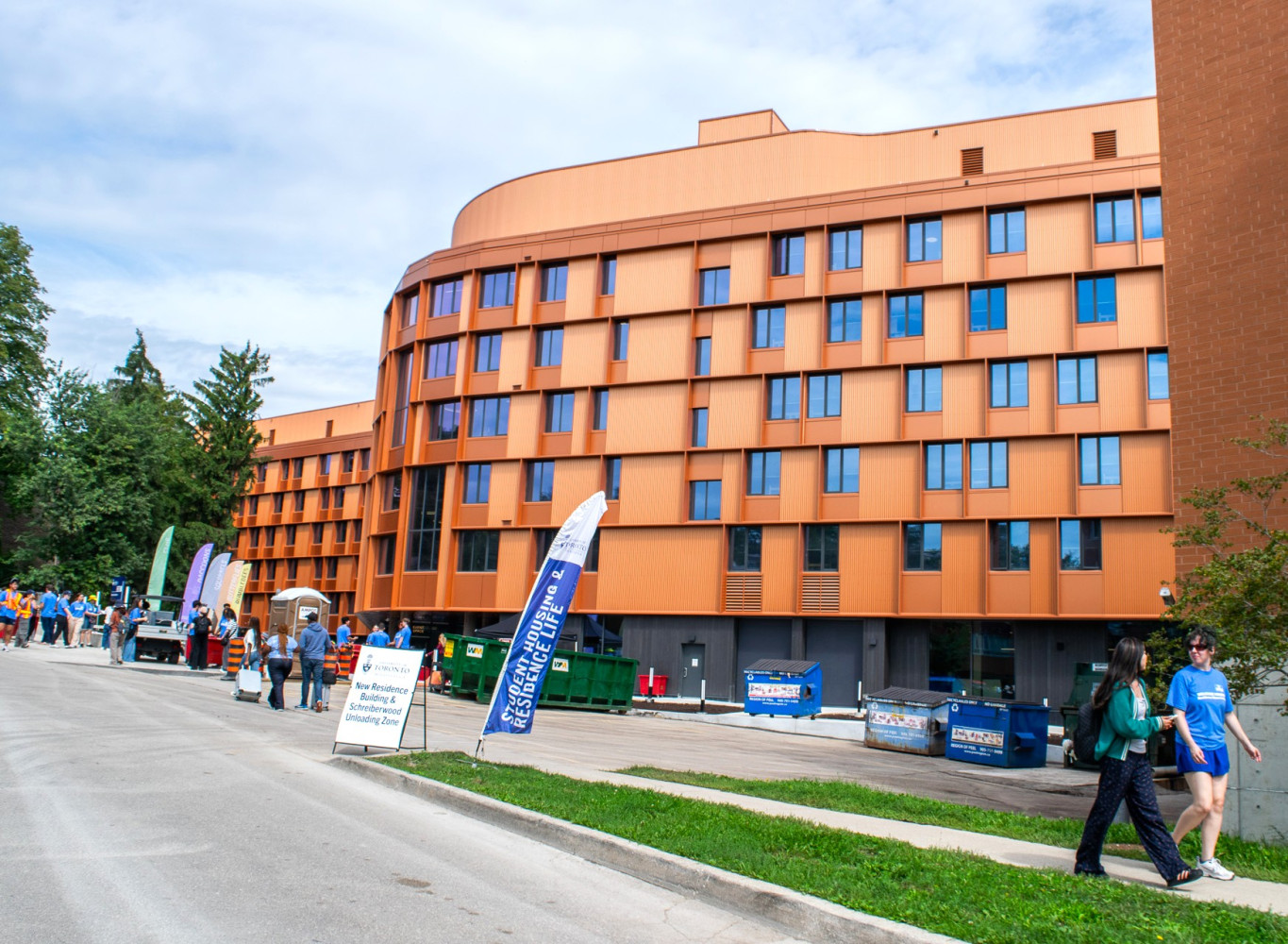
University of Toronto Mississauga expands infrastructure for students to foster community
As the newest cohort of students flooded onto the The University of Toronto Mississauga campus three weeks ago, hundreds walked into the place they will call home for the next eight months.
A brand new 400-bed residence opened on September 4, with the concept that student housing should be more than just a place to sleep.
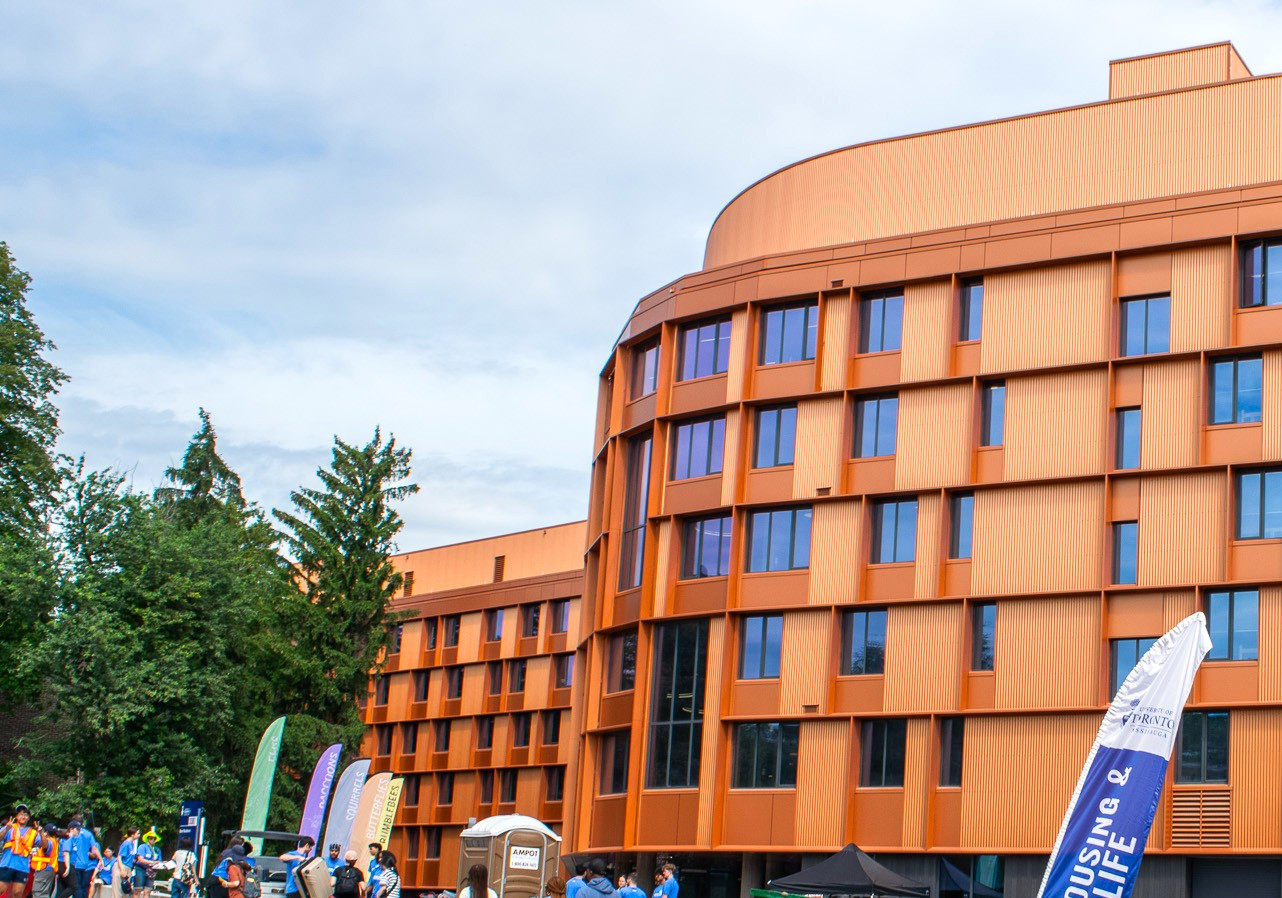
The six-storey residence was designed with community at its centre, combining shared spaces, student supports and a design intended to connect the building with the stunning natural environment that surrounds UTM. The building’s concept design began in 2018 before construction officially broke ground in 2024, making it the university’s newest residence since Oscar Peterson Hall was completed in 2007.
UTM communications professional Julia Le explained that the residence was designed around the concept of “Living Amongst the Trees,” reflecting its location within 225 acres of protected green space along the Credit River. The building is intended to blend into the greenery surrounding the campus, with naturally lit spaces designed to be bright and airy with students able to walk from the university’s classrooms to the surrounding forests in about five minutes.
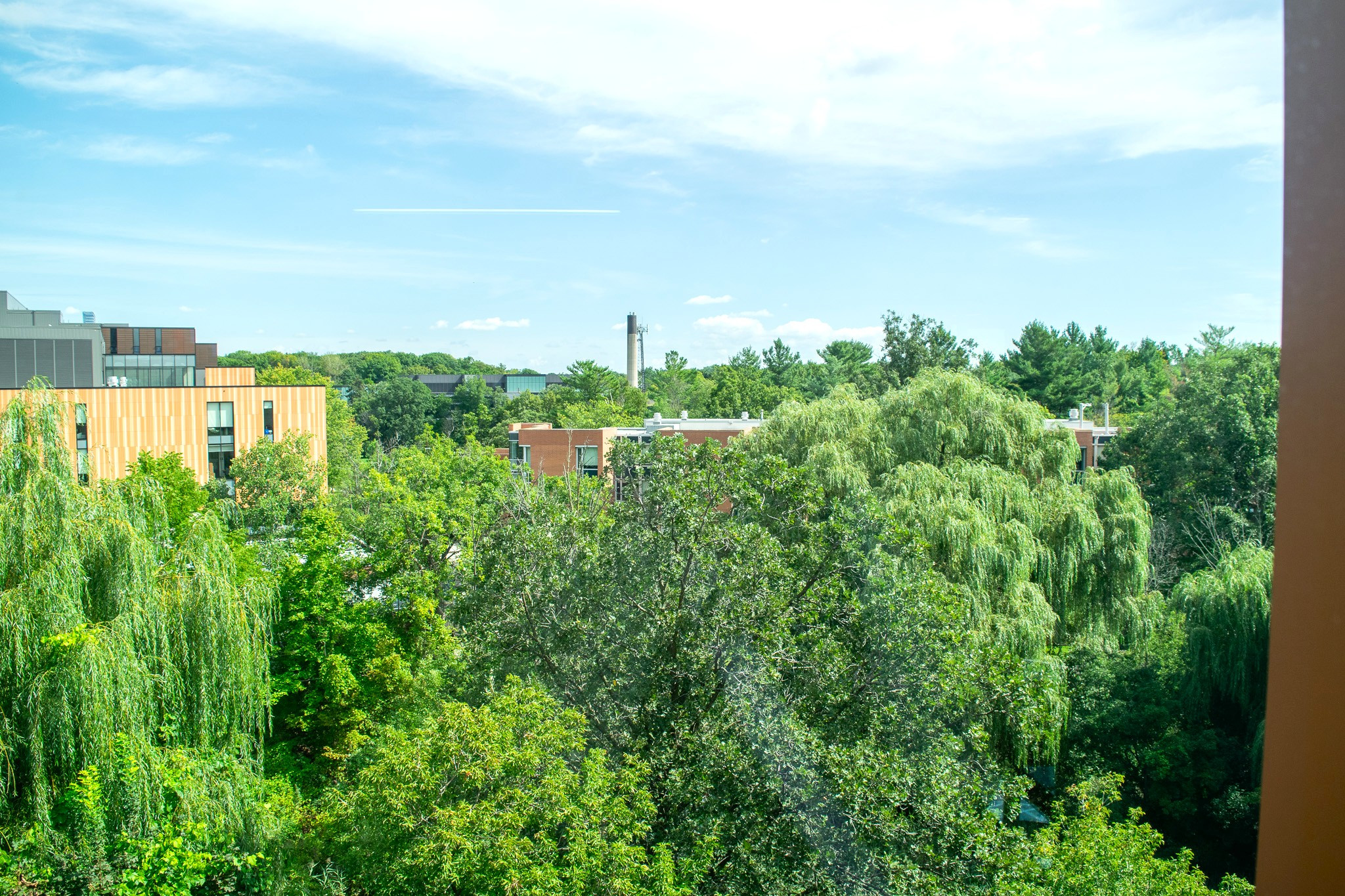
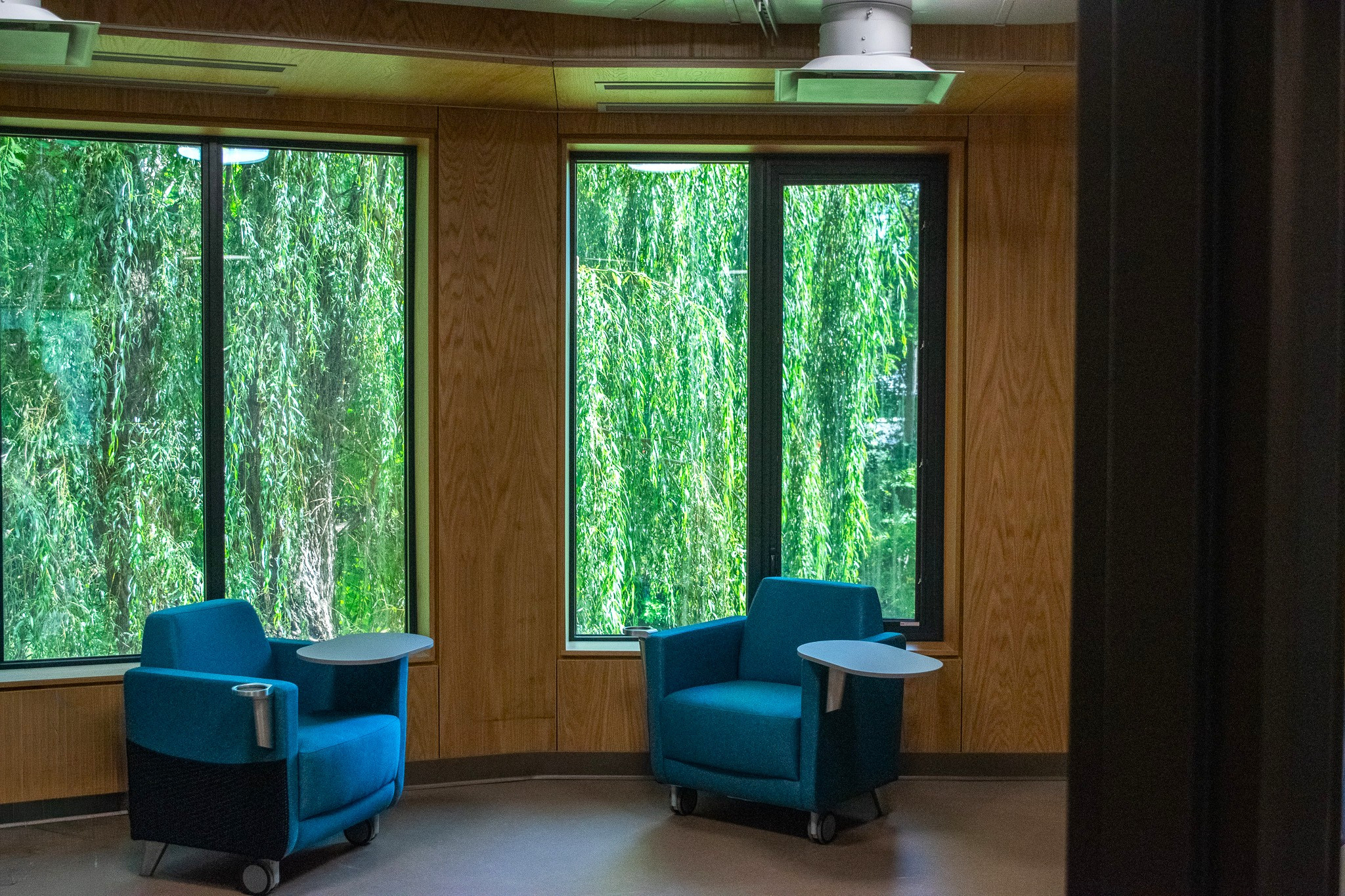
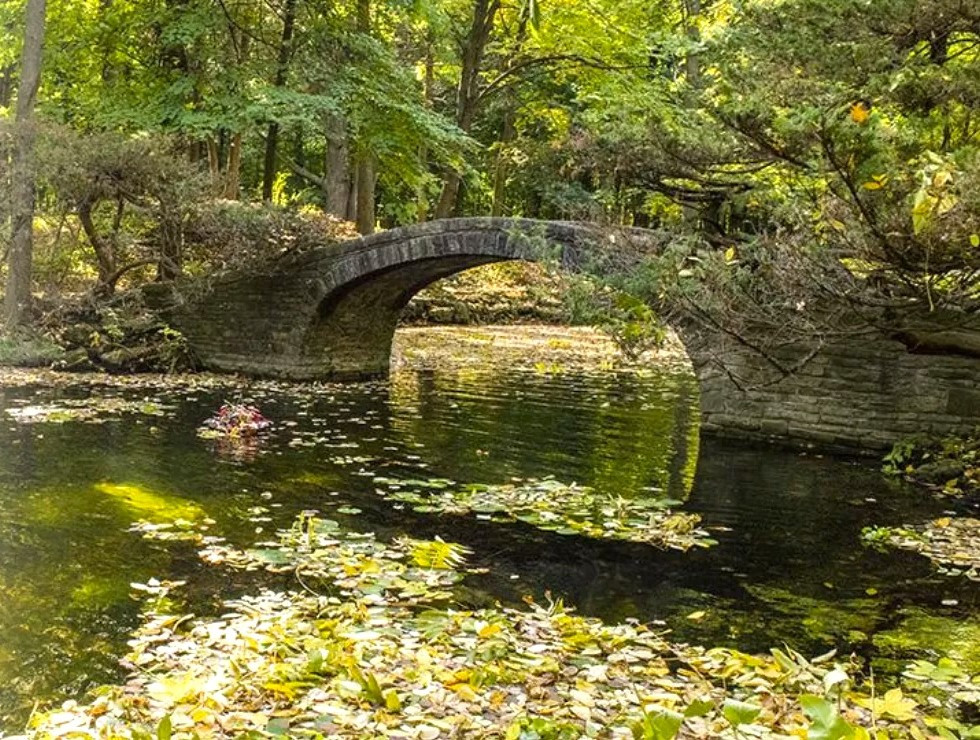
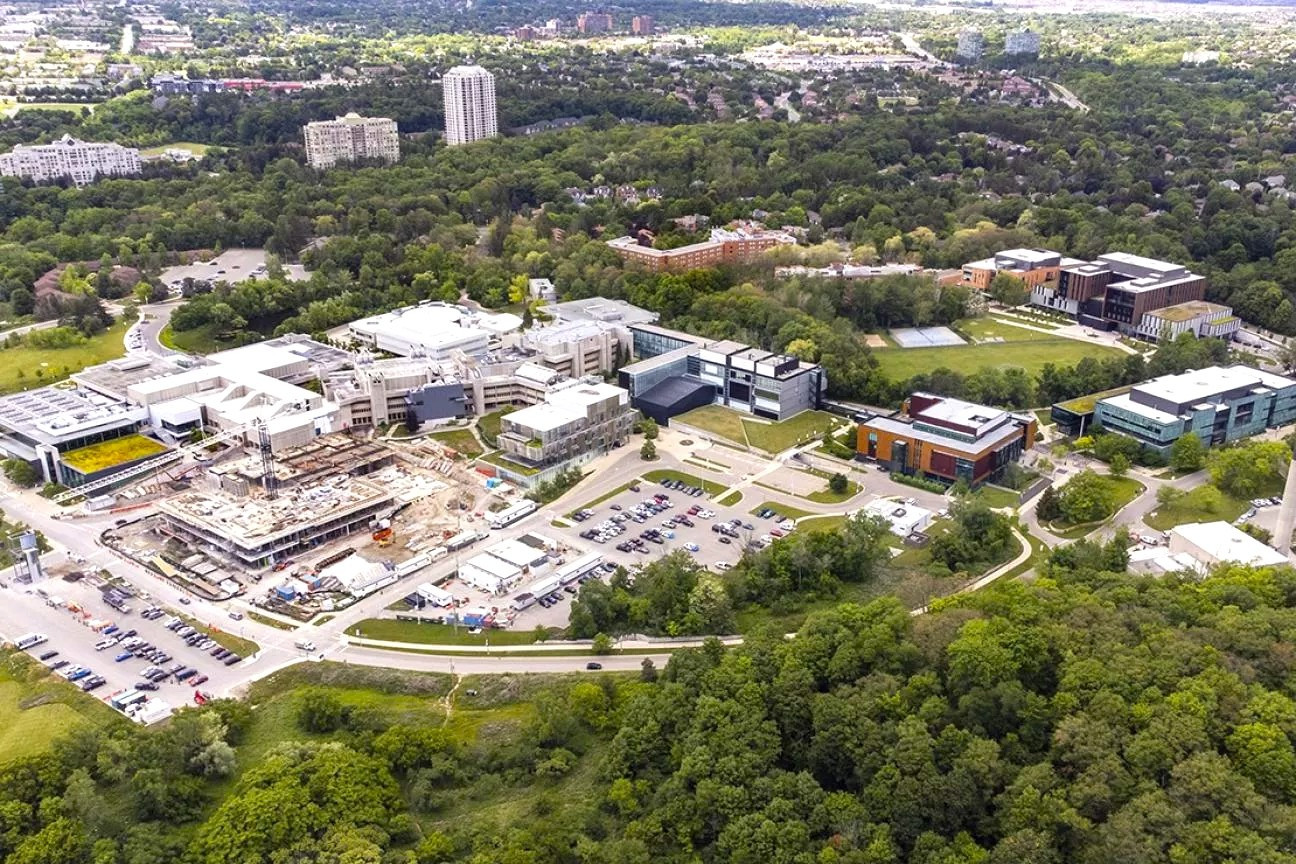
The UTM campus is widely known as one of the most beautiful in Canada, thanks to its heavily treed greenspaces. Views from the new student residence building capture the lush surroundings. (Top two photos Alexis Wright/The Pointer; bottom two UTM)
The opening of the new residence increases the number of students who can live on UTM’s campus to 2,000, providing another option for students who want to remain close to their classrooms, campus services and other students throughout the academic year. The new residence includes 115 single bedrooms, 135 double bedrooms and 15 bedrooms for staff, bringing a substantial addition to the university’s existing housing options.
But the building’s approach to residence life extends beyond the number of beds it provides. Its design reflects an effort to create spaces where students encounter one another naturally, rather than simply returning to private rooms at the end of the day.
Tim Fricker, Interim Dean of Student Experience and Wellbeing, said those connections can play an important role in how students experience university.
“As somebody that did their PhD on student success, that connection matters, meaning the earlier a student connects with another student or connects with a staff member or a faculty member, and the stronger that connection, the more likely they are to be successful during their time in university.”
That focus on connection can be seen throughout the residence, from its lounges and hallway spaces to the way its rooms and common areas are organized. Fricker described the building as a new interpretation of a familiar residence model, where shared areas are deliberately incorporated into the experience of living on campus.
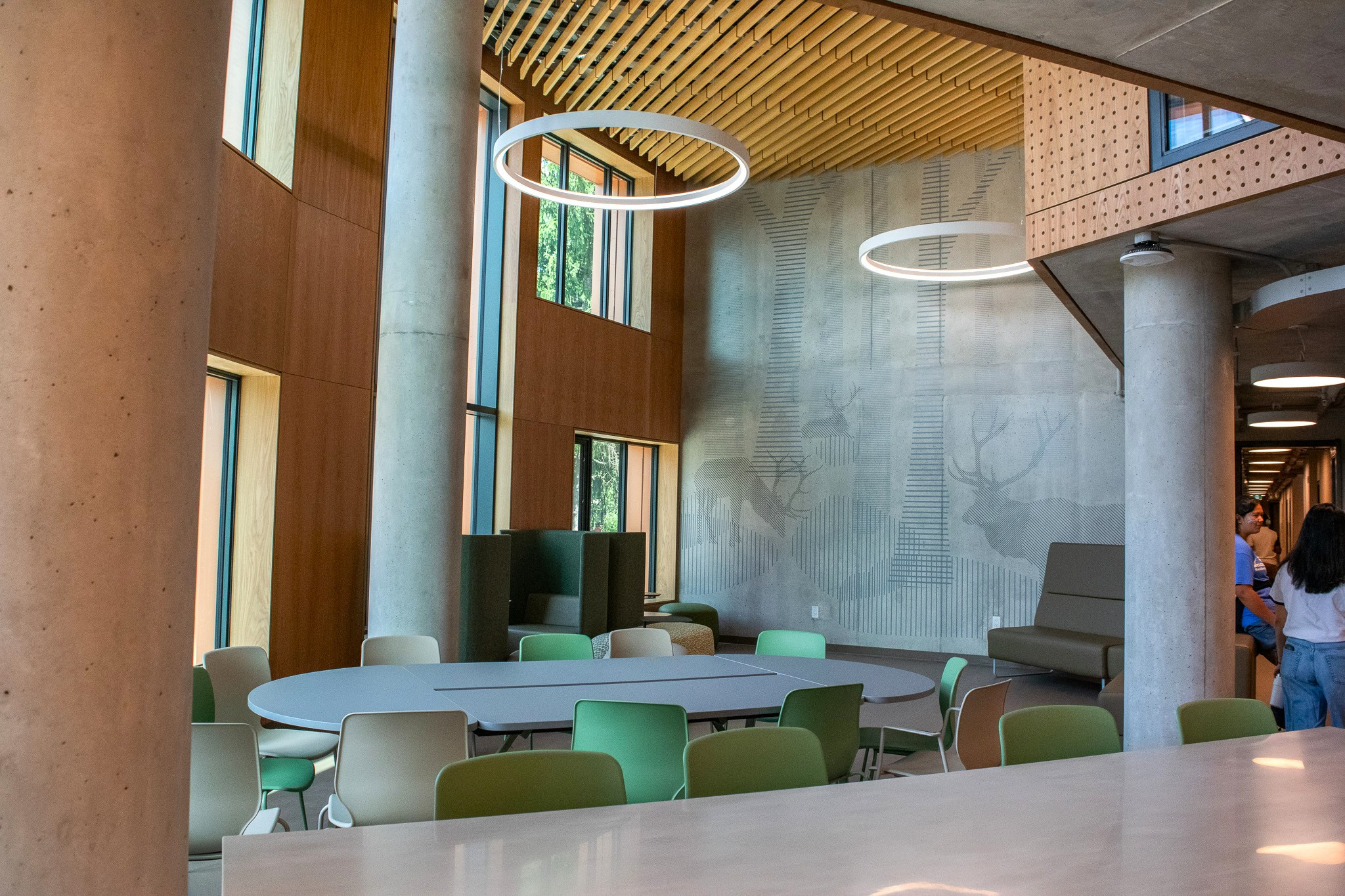
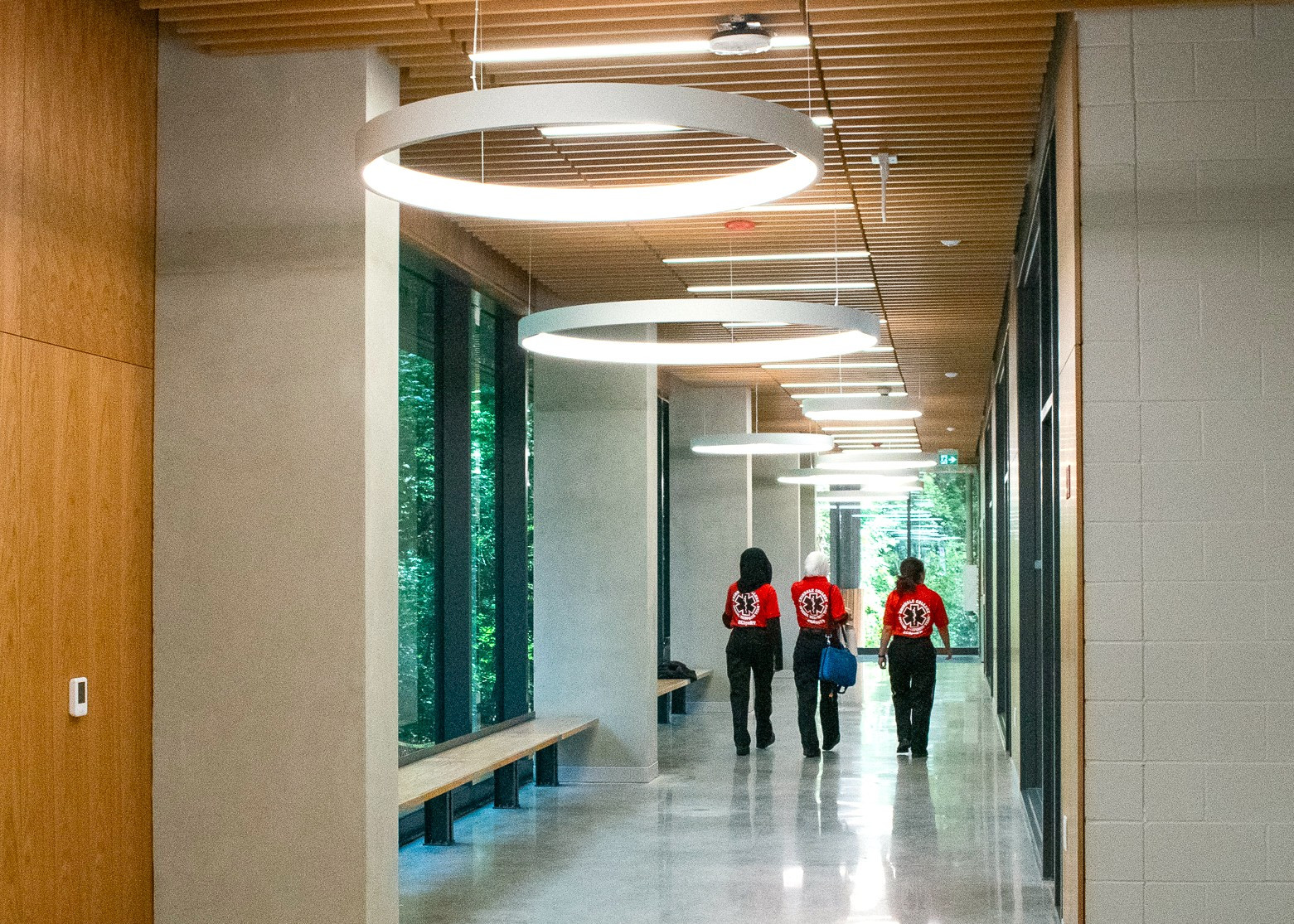
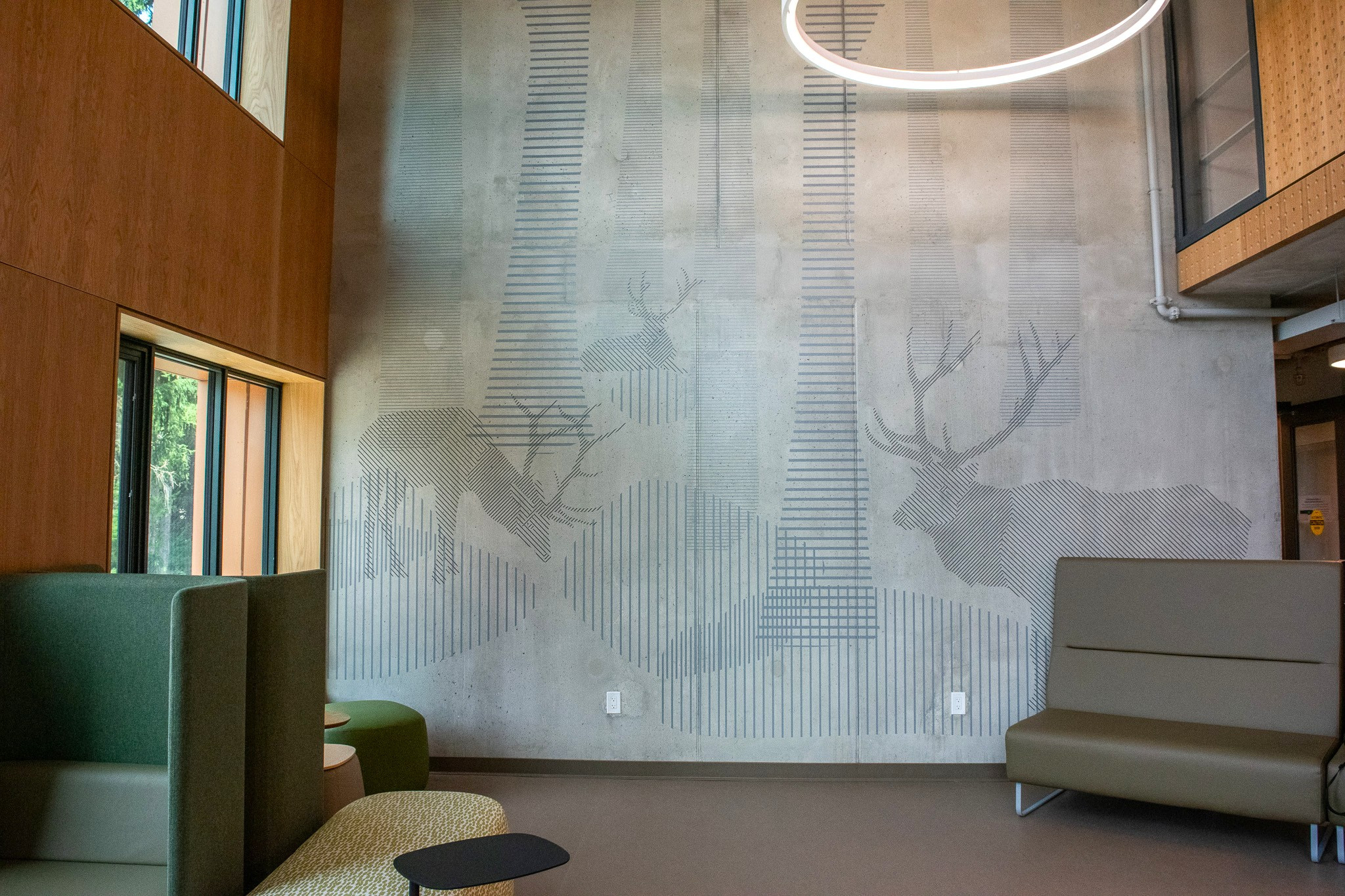
(Alexis Wright/The Pointer)
“This is a new take on an old model. I think the lounges, the washrooms, the benches in the hallways, these are new ways to think about that style of living.”
Not often seen in post-secondary communal spaces, the washrooms are fully enclosed and non-gender-specific, another feature incorporated into the design of the building. The building’s community-focused design is also visible in the artwork spread throughout its six floors. Each floor has its own animal mural featuring a species native to the territory, including elks, racoons, grey squirrels, monarch butterflies and bumblebees. The murals give each level its own visual identity while tying the residence back to the natural environment surrounding the campus.
For students living in the building, community is not necessarily created by the architecture alone. Residence staff and student leaders are also expected to help create an environment where students can meet people, find support and adjust to university life and are referred to as Don’s.
Semilore Olafare, a third-year neuroscience student, is returning for her second year as a Don at the new residence. She was previously a Don last year but was extremely eager to continue in the role as the new building welcomes another group of students.
Stationed on every level of the building are two Dons with each responsible for a section and able to establish their own theme. Olafare’s section is based around social media, while other Dons have used themes involving bugs, Spider-Man and other animals.
For Olafare, some of the most meaningful moments of residence life during her first year happened spontaneously, rather than through formally organized events.
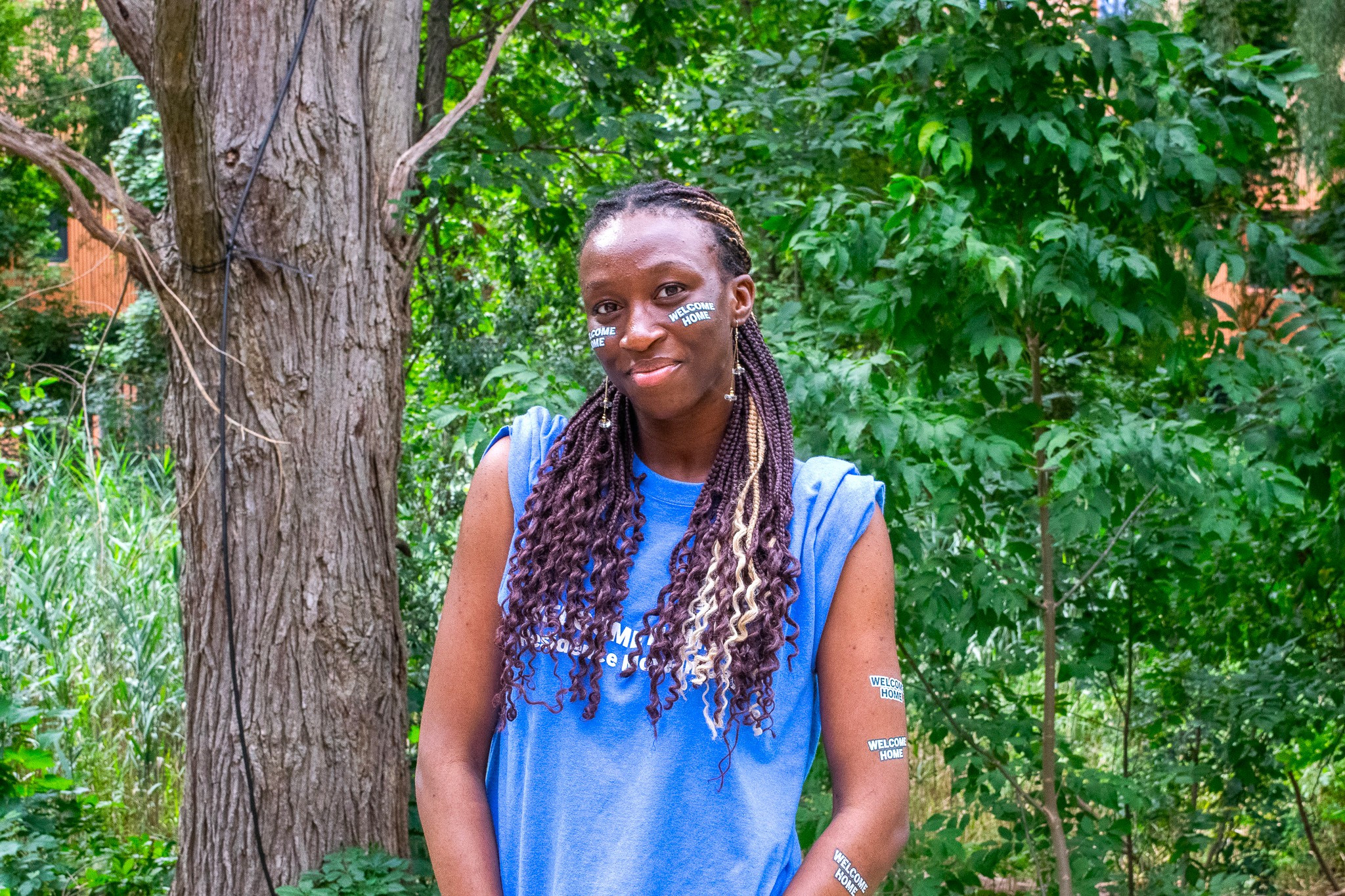
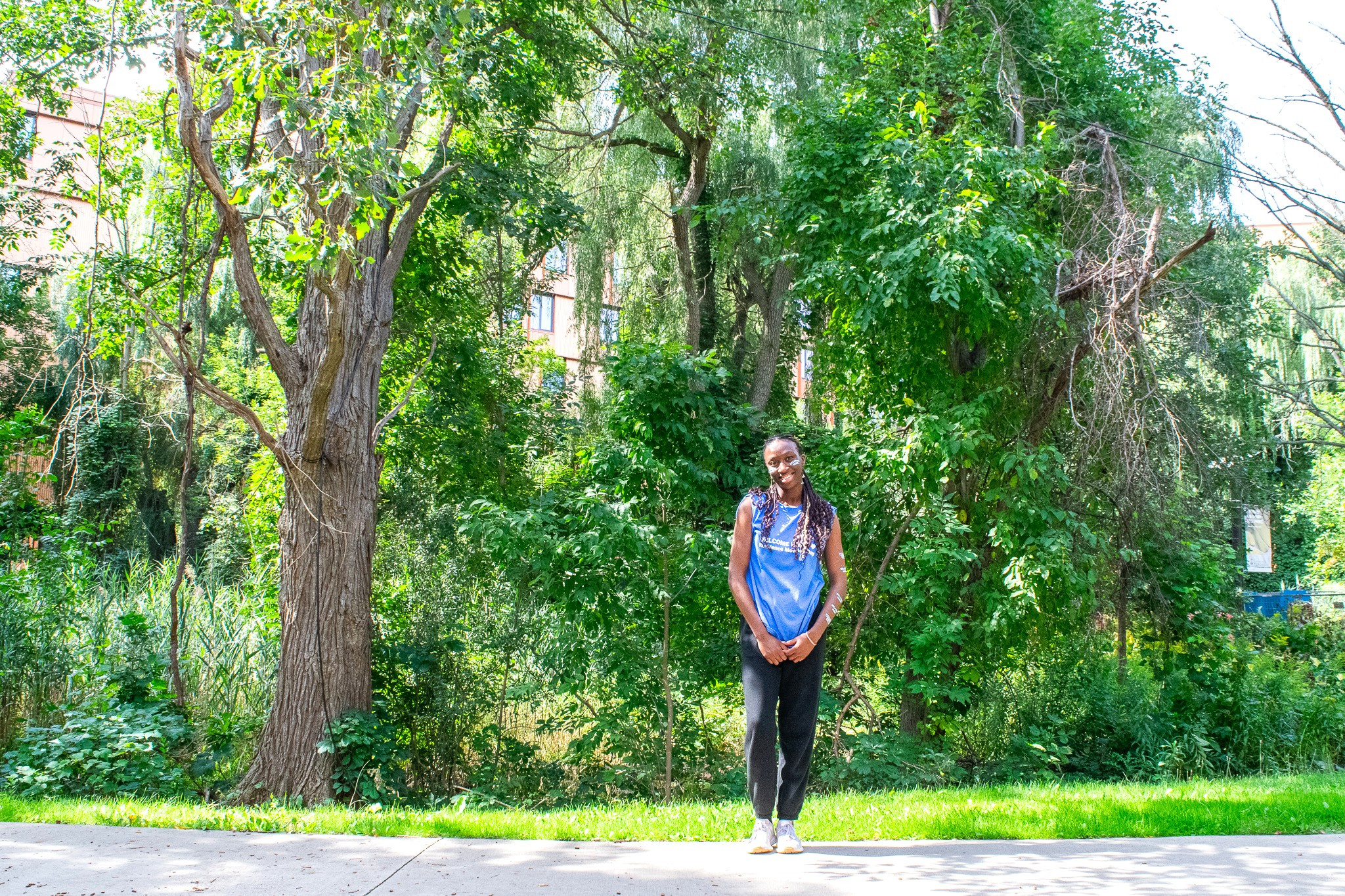
Third-year neuroscience student Semilore Olafare is helping new students living in the just-opened dorm adjust to campus life in a setting that creates a sense of community. (Alexis Wright/The Pointer)
“My peak experience was hearing people in the hallway and then peeking my head out of the bedroom to kind of see what was going on, then we would all congregate in the hallway.”
Those interactions reflect the type of community the building was designed to encourage. Instead of students remaining separated inside their rooms, shared spaces and hallway interactions can create opportunities for students to meet the people living around them.
Olafare said her interest in the Don role comes partly from her own experience as a first-year student and her desire to support students navigating a transition that can be difficult.
“I really like talking, and I love mentorship and being able to support people. My first year was a little challenging, so I kind of understand the highs and lows of being [in] first year, especially at this university that has like a big reputation towards it.”
Her role places her in a position where she can help students build relationships while also providing a point of contact for anyone who may be adjusting to living away from home or beginning university.
That emphasis on relationships is particularly relevant; research published by Toronto Metropolitan University in August explored the relationship between where students live and their university experience.
Conducted by Kiana Basiri, Cynthia Holmes, Shelagh McCartney and Ximena Rosenvasser, the four-person team of researchers examined more than 750,000 student records from four Toronto universities: Toronto Metropolitan University, York University, the University of Toronto and OCAD University. The research found an association between living in university residence and higher academic performance and greater educational satisfaction.
The researchers found that only between seven and nine per cent of Toronto University students live in on-campus housing in a given year, suggesting that students living off campus can experience academic disadvantages, with the effect increasing alongside the amount of time spent commuting.
According to their research, students who spend 10 or more hours each week commuting experience the steepest declines in academic performance. The researchers also found that living close to campus in private housing does not necessarily reproduce all of the advantages associated with university residence.
Their findings attribute some of those differences to the social and institutional infrastructure available in university residences, including residence staff, peer programming and shared environments that encourage students to participate in campus life. Earlier research by members of the research team also found that corridor-style residence designs with shared common areas can encourage more socialization than private studio-style arrangements.
(Alexis Wright/The Pointer)
Those specific findings directly support UTM’s decision to place community at the centre of the new building. "The residence is not simply intended to reduce the distance between students and their classrooms, but to provide an environment where students can develop connections with their peers and access university support with the direct goal to create life-long connections”.
According to Le, students living in campus housing tend to perform better academically, develop stronger social connections and report greater satisfaction with their university experience. The building additionally provides wraparound supports intended to make students’ transition to UTM easier including mental health programming during exam periods, education facilitators who can help students develop effective note-taking strategies, assistance with laundry and access to on-call residence services around the clock.
According to Olafare, those opportunities to interact with other students are a central part of what makes residence meaningful.
“A lot of people know that I like saying my two favorite words are function and friendship. A function is like a gathering, a party, a get together, and I really like the fact that we have that kind of friendship building. We have that community, that togetherness that makes me really happy. People are kind of all I've got, they're like my life and my soul, so I really enjoy being able to talk to people and being able to be around people and navigate things with people and let people know that they're not alone.”
The residence’s cost, however, is another consideration for students deciding where to live.
A single room in the new building is $17,120 for one year, while a double room costs $11,136. The double room is among the less expensive options available to students living on campus. For comparison, a double loft at Erindale Hall costs $9,606 per year, while a single four-bedroom classic townhouse at Schreiberwood costs $11,477 per year.
A recent article in Canadian Affairs, published shortly after the university year began, examined the connection between student housing, commuting and academic performance. It also found a correlation between long commute times and poorer academic outcomes. Just over seven percent of students in the study lived on campus during university, with most of those in residence during their first year.
While the new building is intended to help increase the number of students who live on campus, co-executive director and co-founder of House Canada, a non-profit that operates more affordable student housing co-ops organized by student unions, Micheal Jodah, had to inform many students there was no room in their HOUSE buildings which can only accommodate up to 30 students near York University. It's a reminder that student housing isn't an option for many who simply can't afford typical dorm life.
For those fortunate enough to live on campus, both research articles suggest a greater emphasis should be placed on the overall environment surrounding students rather than simply prioritizing the physical distance between a residence and a classroom.
For Fricker the social dimension remains one of the most significant aspects of the building. He hopes the community-oriented space will help students develop friendships and connections that continue beyond their university years. The idea is that a residence can become more than a collection of rooms, with shared spaces creating repeated opportunities for students to meet and form relationships.
That concept is reflected in Olafare’s experiences when her strongest memories were not necessarily tied to a particular building feature or formal program, but to students hearing one another in the hallway and gathering together.
For students moving into the building, the experience will ultimately be shaped by what happens inside those spaces: the people they meet, the support they receive and the relationships they build throughout the year.
For Olafare, that is the purpose behind the role she has chosen to return to for another year.
“I really enjoy being able to talk to people and being able to be around people and navigate things with people and let people know that they're not alone.”
Email: [email protected]
At a time when vital public information is needed by everyone, The Pointer has taken down our paywall on all stories to ensure every resident of Brampton, Mississauga and Niagara has access to the facts. For those who are able, we encourage you to consider a subscription. This will help us report on important public interest issues the community needs to know about now more than ever. You can register for a 30-day free trial HERE. Thereafter, The Pointer will charge $10 a month and you can cancel any time right on the website. Thank you
Submit a correction about this story

