

Mississauga mayoral candidate Dipika Damerla spent $31K of taxpayer money on social media: she says it’s a key to democratic engagement
A decade ago, it was somewhat simple for taxpayers to call out city council members who mailed out publicly funded flyers and newsletters that functioned as promotional campaign material.
Today, when council members spend tens of thousands of dollars of the taxpayers’ money on social media, it’s much harder to tell if the posts are legitimate public information efforts, or little more than a tool to keep the politician’s name in the public eye.
One councillor spent more than $31,000 on social media over the current four-year term, while others reported thousands in expenses. The public records reviewed by The Pointer identify the nature of the spending without naming the vendor.
Councillors say social media is essential to reaching residents in a city where traditional forms of communication are becoming less effective, particularly among younger residents. As the October 26 municipal election approaches, questions about transparency and accountability inside city hall are tied to many of the biggest issues voters are struggling with.
City councillors are always looking for new ways to connect with constituents on these issues, but the way they do this crosses the line when taxpayer-funded communication also serves as an effective self-promotional tool.
While residents previously relied on communications from their elected officials through physical hardcopy newsletters delivered to their doorstep, social media has created a new opportunity.
Mississauga councillors are increasingly turning to Instagram, Facebook, TikTok, X and other digital platforms to communicate with constituents, but the practice raises concerns about transparency and the use of taxpayer dollars.
Trevor Isaac, a resident and vice chair of the umbrella ratepayer group in Mississauga, MIRANET, said residents need more information about how councillors are specifically using social media to communicate with their constituents and how that public money is being used.
“A lot of communication that should be going out to residents is kind of missed. I don't think the city does a very good job,” he said. “Our councillors in general, a lot of them don't do a very good job informing residents of upcoming plans for development for all kinds of different issues around the city. We're kind of the last ones to know.”
He said social media itself can be an effective tool for reaching people but “it depends on what you're trying to reach people for.” When asked about the opaquely described use of taxpayer dollars for social media, he said, “They should be much more transparent because at the end of the day, it's not their money. If you think social media is a means of communicating with residents, it should be solely based on communications for and to residents.
“I feel that there's a lack of transparency. When it comes to how you spend money, I think that should be an open book.”
The City of Mississauga's expense disclosures identify the nature of a councillor's spending, with descriptions such as “social media” and “Facebook” to explain the expenditures, but do not identify the specific vendor or person who received the money. According to the City’s communications team, the approach is in line with policy.
“Policy requires elected officials to submit expense claims and proof of payment in accordance with procedures established by the Finance Division. Through these procedures, information related to the expense, including the source of the expense, is provided,” a spokesperson explained.
That means taxpayers can see how much a councillor spent, and in some cases what the expense was for generally, but they cannot determine from the public disclosure who was paid for the service.
The Pointer examined the expenses of several council members who spent the most on social media between 2022 and 2026.
Ward 7 Councillor Dipika Damerla, who is currently campaigning to be the mayor in the upcoming election, had by far the highest social media expenses compared to the rest of her fellow council members.

Mayoral Candidate and Ward 7 Councillor Dipika Damerla told The Pointer the main way she informs residents of events or council decisions is through social media advertisements that are managed by an external social media contractor. She did not identify the individual.
(Alexis Wright/The Pointer)
In 2023, Damerla spent $5,506.50 on combined social media expenses; in 2024 the figure dropped to $2,031.78; and in 2025, her spending jumped significantly to $16,893.33, the largest out of all the years looked at. In 2026, she spent $7,045.87 up to the end of June. It’s unclear why she has spent so much more this year and also spent so much more last year, compared to the first two years of the term.
Looking specifically at the detailed 2025 expenses, the spending was concentrated heavily toward the second half of the year. Based on the expenses specifically identified as “Advertising Social Media”, “Facebook Ad”, “Social Media”, or “Social Media Management”, Damerla's first six months included $6,063.42 in social media spending, while she spent $11,337.51 on social media over the final six months of last year, about 65 percent of the total in 2025.
Last December, her social media expenses came to $3,369.80, the second highest amount, including $1,729.92 for Social Media Management and another $1,221.12 under the same description, along with two other smaller accrued Facebook advertising expenses.
November was the month when she spent the most on social media in 2025, $3,973.11. That included two separate $1,729.92 charges listed as “Social Media,” as well as three smaller Facebook advertising expenses totalling $513.27.
She spent $1,436.32 in June and $1,170.65 in August, $1,296.80 in October and $1,274.66 in May.
According to Damerla, social media is an increasingly important part of her consistent communication with residents in her ward.
“One of the biggest challenges we have in Mississauga obviously is we have local media, but we don't have that old style where everybody got something at their door. So we kind of rely on our own channel.”
Damerla said she primarily uses Instagram and Facebook as her main social media channels, but also uses TikTok as a means to connect with younger constituents. Her social media expenses, she said, cover a range of public engagement efforts and different services that are provided.
“A lot of it is obviously content creation, then advice on things like which platform to use [and] what's the best time to post these things.
“It's time to reach younger residents, getting them engaged, and we know that the younger they are, the less likely they are to pick up something that's a newspaper, a hard copy newsletter, or even email.”
Damerla said the spending is intended to help her communicate with residents and ensure they are aware of what's happening at City Hall.
“Sometimes we do a video, and it's really, really useful. When we have town halls, we will often do social media posts saying there's a town hall, and it's creating awareness.”
She said the growing use of social media by residents means council members need to adapt how they communicate and maintain their relationships.
“We live in a world where people more and more use social media as a means to getting their information. So it's moving with the times and using it as effectively as we can.”
She said someone manages her social media outside of her office, but did not provide the name of the individual. Damerla said she is not familiar with the City’s guidelines on listing social media expenses.
In an email to The Pointer she provided a further explanation of what her office's social media spending covers.
“Our social media investment supports a range of digital communications needs, including social media training and support for staff, content development, video editing, email marketing, audience management, website management and updates, and other related digital communications services.
"For me, this is about more than simply sharing information. It is about making local government accessible to the next generation. Young people are getting their news and information on digital platforms, and if we want them to be engaged in their communities, we need to meet them where they are. When residents can see, understand and engage with the decisions being made at Council, we are helping build a more informed and participatory democracy.”
Damerla has been the most progressive council member regarding the need for a detailed external audit to carefully examine all spending by City Hall, which would include exactly how council members are spending the taxpayers’ money.
She has called for an external audit and earlier this year supported an auditor general role for the city, which was almost unanimously supported by dozens of residents who went to City Hall to advocate for better accountability over spending.
Damerla used social media extensively to engage residents about the need for an auditor general. In the end Mayor Carolyn Parrish led an effort to defeat the idea and was criticized for disrespecting the residents who advocated for more oversight, claiming she trusted staff to do their job more than a few hundred residents “complaining” about the need for an auditor general.
For the vast majority of social media expenditures listed for all members of council, they do not include the individual service purchased or identify who provided the service and received the funding.
The City of Mississauga says finance staff receive information about the source of an expense and review claims for compliance with the Elected Officials Expense Policy.
“Finance staff then review the claims to ensure compliance with the Elected Officials Expense Policy. Finance then prepares the Elected Official Expense report, including descriptions of expenses. The nature of expenses are disclosed as the description rather than the specific vendor which is in line with our policy.”
Isaac also questioned, as a resident of Ward 2, whether constituents are seeing enough direct benefit from the social media spending.
“Do I feel that the amount of money used on social media is to benefit us or am I seeing enough of that that is actually a benefit to me as a resident? No, I don't. Because a lot of it is self-promotion.”
His concern raises another question about the role of social media for elected officials. Councillors use their platforms to share information about council decisions, community events, town halls and local issues, but those same platforms can also increase the councillor's own public profile.
When public money is used for communication, the distinction between communicating government information and promoting an elected official becomes important to residents evaluating the spending, something Isaac says the expense records should provide more detail about.
“I think they should be itemized. I spent X amount on this, and I spent X amount on this.”
The issue is particularly relevant when the public records contain large differences between councillors.
Ward 5 Councillor Natalie Hart, who has only had two years in office and is running for re-election this October, spent $2,033.50 on social media in 2025 and $1,781.25 up to the end of June this year.
Ward 9 Councillor Martin Reid spent $375.02 in 2023, $405.91 in 2024, $841.44 in 2025 and $353.75 in 2026.
The Pointer reached out to Reid's office for an interview to discuss how little he spends on social media, but did not receive a response.
Hart's explanation of her social media use provides another example of how councillors use the platforms to communicate with residents, as she represents the largest ward in the city.
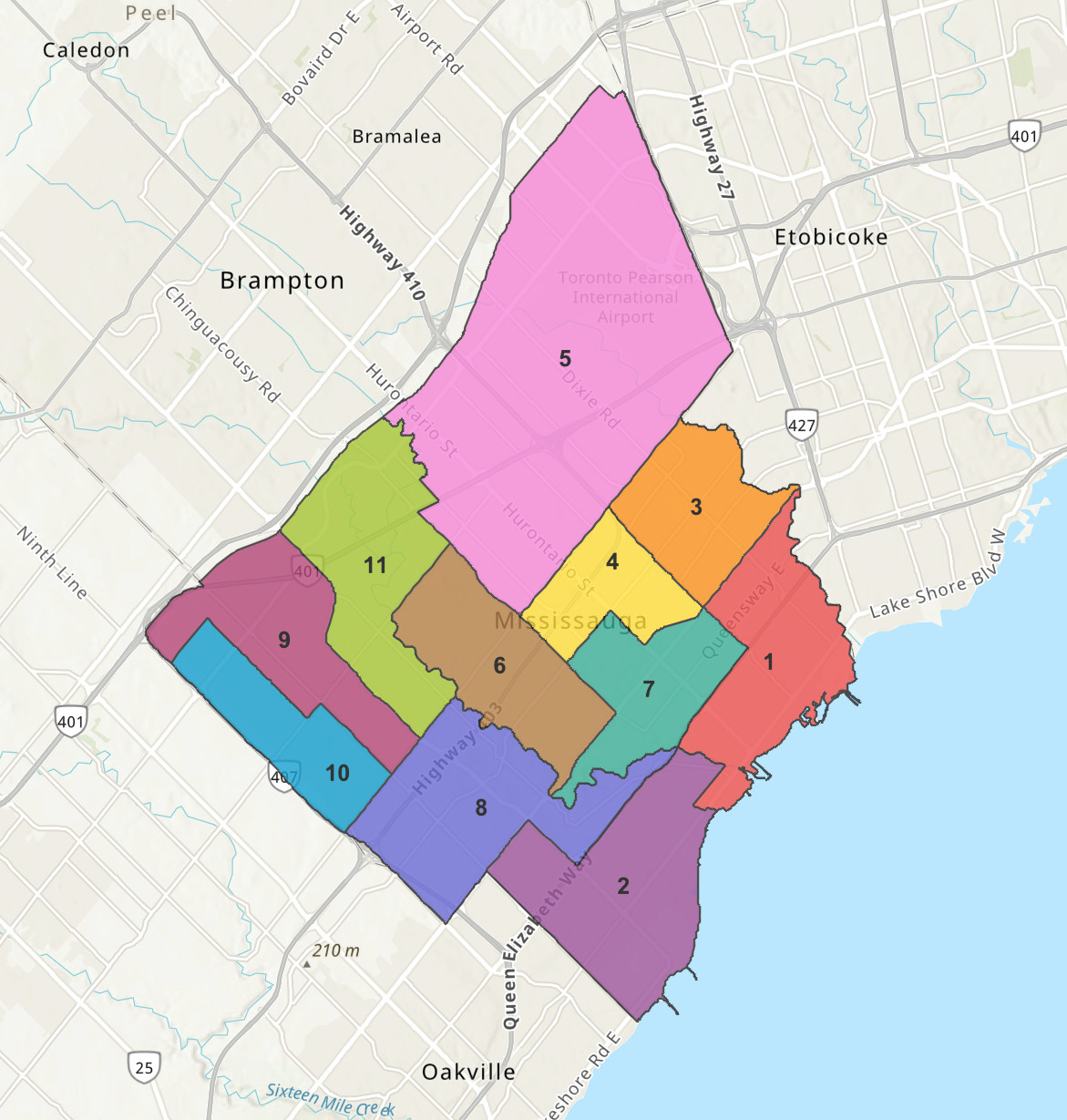
Overseeing the largest ward in Mississauga, Ward 5 Councillor Natalie Hart says she relies on social media as a way to connect with her residents.
(City of Mississauga)
Hart says she primarily relies on Instagram, Facebook and X as her social media channels with residents to bridge what she described as “significant geography challenges.”
Pearson Airport and highways 401, 403 and 410 create barriers she said, making it difficult for residents to travel from one part of the ward to another.
While Damerla shared that she relies on an external team to control her social media platforms, Hart uses one of her office staff to help manage her socials, and noted the work could become much more complicated if outsourced to a third party.
“The staff at the City are rather limited, so we cannot hire an individual social media manager. We have an EA (Executive Assistant), and in my case, my EA looks after a lot of my social media content on my behalf in terms of posting and all of that kind of work.
“I think the opportunity to use external is limited in our particular setup, because we can do things on a contract basis or invoice for service, but we can't hire somebody. So from a consistency basis, it would be very difficult”
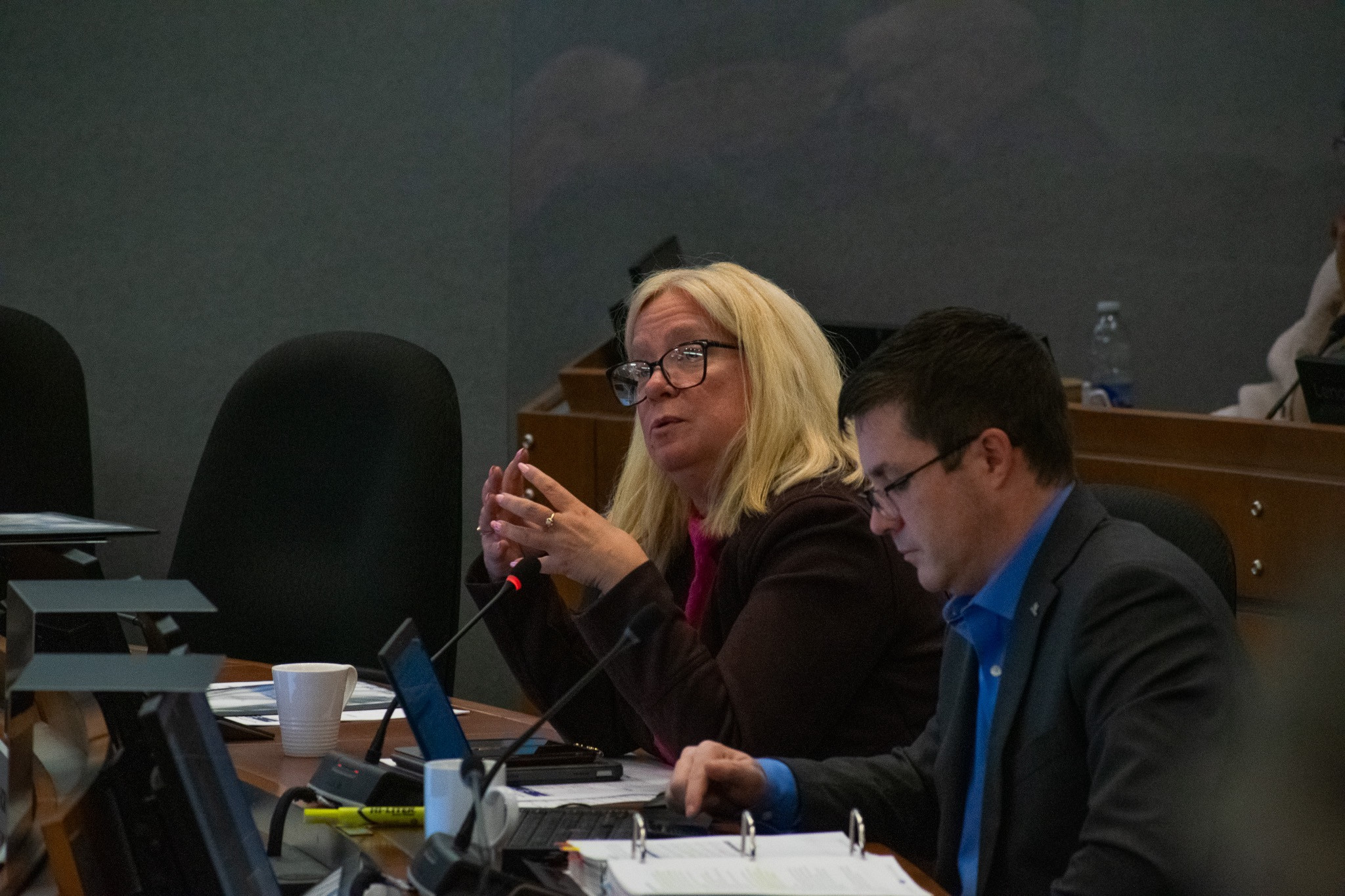
Natalie Hart said she does not directly control how much money her office spends on her social media posts. Her expenses show she did not spend nearly as much as some of her colleagues.
(Alexis Wright/The Pointer)
Hart said her executive assistant handles the majority of her social media posting and spending and she does not herself approve her executive assistant's spending because it is approved by the City's audit team.
“We do try to be very active on it and posting things that are critical,” for example the Ward 5 Be a Good Neighbour pilot program, or “my park events coming up or family skates or town halls…we try to make sure that that information is out there,” Hart said.
“When we're posting about our ice cream socials that we do in the park, which gives people a chance to meet me and other city services, we get a lot of direct RSVPs through those posts in the hundreds, which is a great response.”
This is the kind of use of taxpayer dollars that blurs the line between self-promotion and effective democratic engagement at the local government level.
Hart said social media allows city councillors to communicate more quickly than traditional methods like newsletters that rely on door-to-door mailing.
“It's about timeliness. When we think about the more traditional methods of communication, like newsletters, etc, there's a lag time with those in terms of developing them, printing them and then mailing them out.”
She said using social media, especially for female politicians, becomes very complicated.
“Social media is a double-edged sword. It's an incredible tool to make sure that you're providing information, letting people know about an event that's coming up, or information about the budget, or anything else like that. You're also going to expose yourself to a lot of commentary that can often be personal in nature and judgmental in ways that don't necessarily have anything to do with the topic at hand, and that can be really difficult.”
Damerla similarly described social media as part of her responsibility as an elected official to engage the public on issues effectively.
“As councillor, my biggest job is to stay in touch with my residents, communicate to them what's happening at city council and make it as easy as possible for them to reach out to me. I get questions from my residents on Instagram, on Facebook, on TikTok, they'll direct message me. So we try and provide them as many avenues as possible and make it as easy as possible.”
The move toward social media, she says, has also meant reducing some traditional forms of communication.
“We as an office make the decision to reduce our reliance on the hard copy. We still do one for the region and one for the city, but we only do one a year. And that's because we know that there's some people who are not on social media.”
She noted that while her office has shifted toward digital platforms, she acknowledged that older members of her ward may not be on social media as frequently or at all and continues to try to reach those residents.
“We want to do our best to reach out to them. But we really reduced our emphasis on printing paper to communicate with our residents and moved as much of it as possible online.
“In all the years that I've been a councillor, maybe two or three times, someone takes the time to send me an email saying, ‘hey, I got your hard copy newsletter’.”
Based on her time on council she says the elevated exposure she has received from social media is directly correlated with the shift away from physical newsletters.
“The power of social media is the immediacy.”
For Isaac, that means there should be an added layer of responsibility.
“The City is always talking about transparency, low voter turnout and all of these sorts of things. If people don't trust you because you're not transparent, you're not giving us the full story of the details, and you're telling us things at the last minute, or you're telling us things after things have already been done, then why do you think that there's so much apathy? There's so much apathy because a lot of people think it's not going to change anything.”
Isaac also connected the lack of transparency to the council decision—after Parrish argued against what residents clearly wanted—to vote down an independent auditor general.
“When that was proposed, my feeling was why did you say no? If you truly want to be transparent and you want to regain the trust of voters and residents and taxpayers, why would you say no? That doesn't make any sense.”
Damerla was the main council voice in support of an auditor general and the only member who voted to introduce the role to city hall.
Isaac said his central concern is whether the actions of elected local officials match their statements about transparency.
Both Hart and Damerla recognized that social media spending involves public money and said it is necessary to communicate with constituents in a changing media environment.
Isaac just wants more transparency when taxpayer money is used by council members for social media.
“On one hand you say one thing, and on the other hand your actions show something completely different. You want people to say ‘we're behind you, we trust you,’ and no we don't.”
Email: [email protected]
At a time when vital public information is needed by everyone, The Pointer has taken down our paywall on all stories to ensure every resident of Brampton, Mississauga and Niagara has access to the facts. For those who are able, we encourage you to consider a subscription. This will help us report on important public interest issues the community needs to know about now more than ever. You can register for a 30-day free trial HERE. Thereafter, The Pointer will charge $10 a month and you can cancel any time right on the website. Thank you
Submit a correction about this story

