
PCs continue to underfund critical mental health and addictions support as municipalities grapple with the consequences
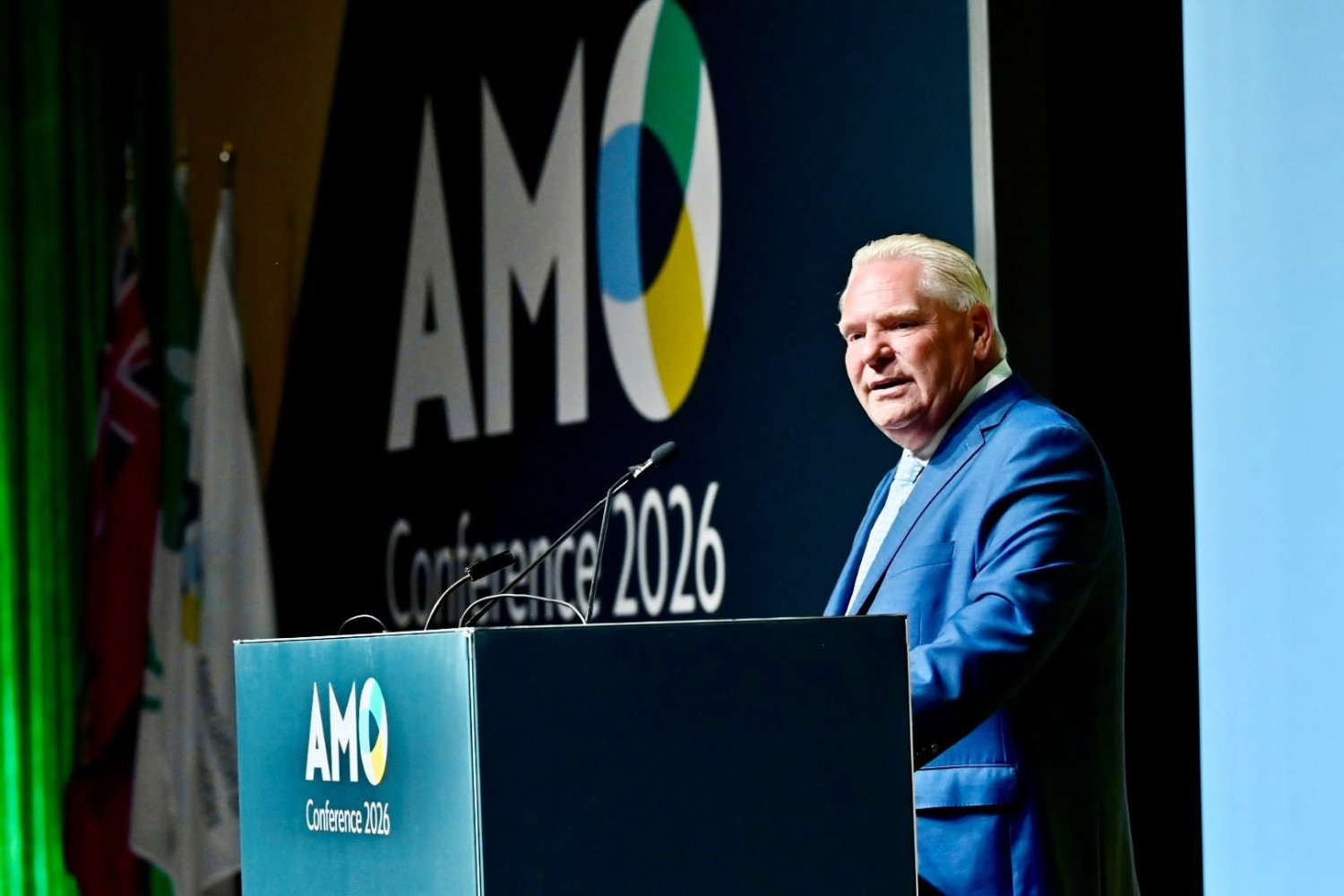
Speaking at the Association of Municipalities of Ontario (AMO) conference in August, Premier Doug Ford continued to show how out of touch his PC government has become with the reality on the ground in many municipalities as those experiencing mental health and addiction issues see services they rely on eliminated by Queen’s Park.
According to Ford, his government is “cleaning up our streets, cracking down on crime, so people can feel safe again in their own communities. We're shutting down drug injection sites, clearing encampments out of parks, and fixing the broken bail system to keep violent, repeat criminals behind bars where they belong.”
Yet, only the day before, the Ontario Big City Mayors Caucus were demanding the PC government declare a state of emergency to address the growing mental health and addiction crisis. Despite Ford’s claims of cleaner, safer streets free of safe consumption sites, people are being put at risk and service providers are forced to treat more and more people with less and less funding.
“[The] crisis is getting worse in communities across the province, and the status quo is not an option,” said Marianne Meed Ward, Mayor of Burlington and chair of the Ontario Big City Mayors (OBCM) in a press release.
There is a clear disconnect between what government press releases and speeches claim and what municipalities, care providers and reports are saying.
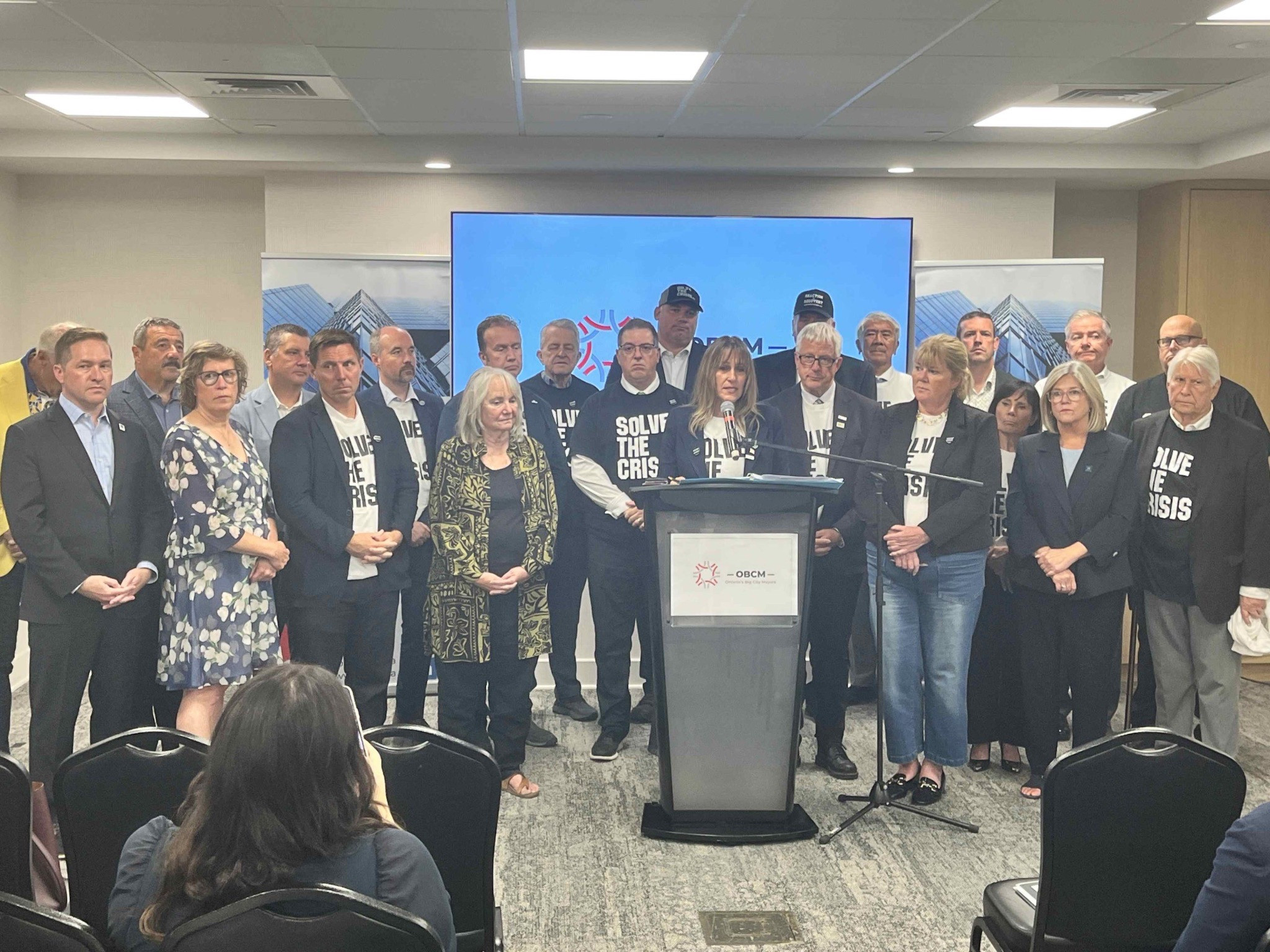
Marianne Meed Ward speaks during a press conference last month demanding increased investment from the Ontario government into mental health and addictions treatment.
(Ontario Big City Mayors Caucus)
While Sylvia Jones, Deputy Premier and Minister of Health repeatedly touted the Ontario Government’s “record investments in mental health to break the cycle of addiction,” at the AMO Conference, her declarations fail to mention that they won’t keep pace with inflation or demand.
Jones also emphasized that the PCs have created “over 500” new addiction recovery beds. If those were evenly spread across Ontario, that would be just over one for each municipality in the province.
With a source of federal funding set to expire in 2027, there will also be less overall funding for support services and municipalities to rely on. Waitlists in Peel Region are continuing to grow and they’re already facing “historical funding gaps and additional system pressures.”
Chronic underfunding of Peel by the Province has led to continually growing waitlists, an issue that’s been brought up by community organizations and the Region itself for years.
However, while the OBCM are advocating for five main actions in their campaign, including investment in voluntary treatment, expanding addictions treatment and rehabilitation programs and establishing a full ministry for addictions and mental health, their request for a review of the Mental Health Act and Healthcare Consent Act, with a focus on establishing a “compassionate care and intervention model for Ontario”, also known as involuntary treatment, is more complicated.
In Alberta and Saskatchewan, this specific wording has been used in acts allowing for involuntary addictions treatment by request of a family member or police officer.
In a joint statement released by the Canadian Mental Health Association (CMHA) , Addictions and Mental Health Ontario (AMHO) and the Centre for Addiction and Mental Health (CAMH), they urge caution regarding involuntary treatment.
There is limited evidence that involuntary addiction treatment reliably leads to better outcomes, with some studies suggesting the reverse; higher risk of post-treatment deaths related to substance use and distrust in healthcare providers.
When Brampton Mayor Patrick Brown requested in October 2024 that the Province allow Peel to pursue involuntary treatment for those with “severe addictions, brain injuries, and mental illness,” also using the “compassionate intervention” language, the government response zig-zagged.
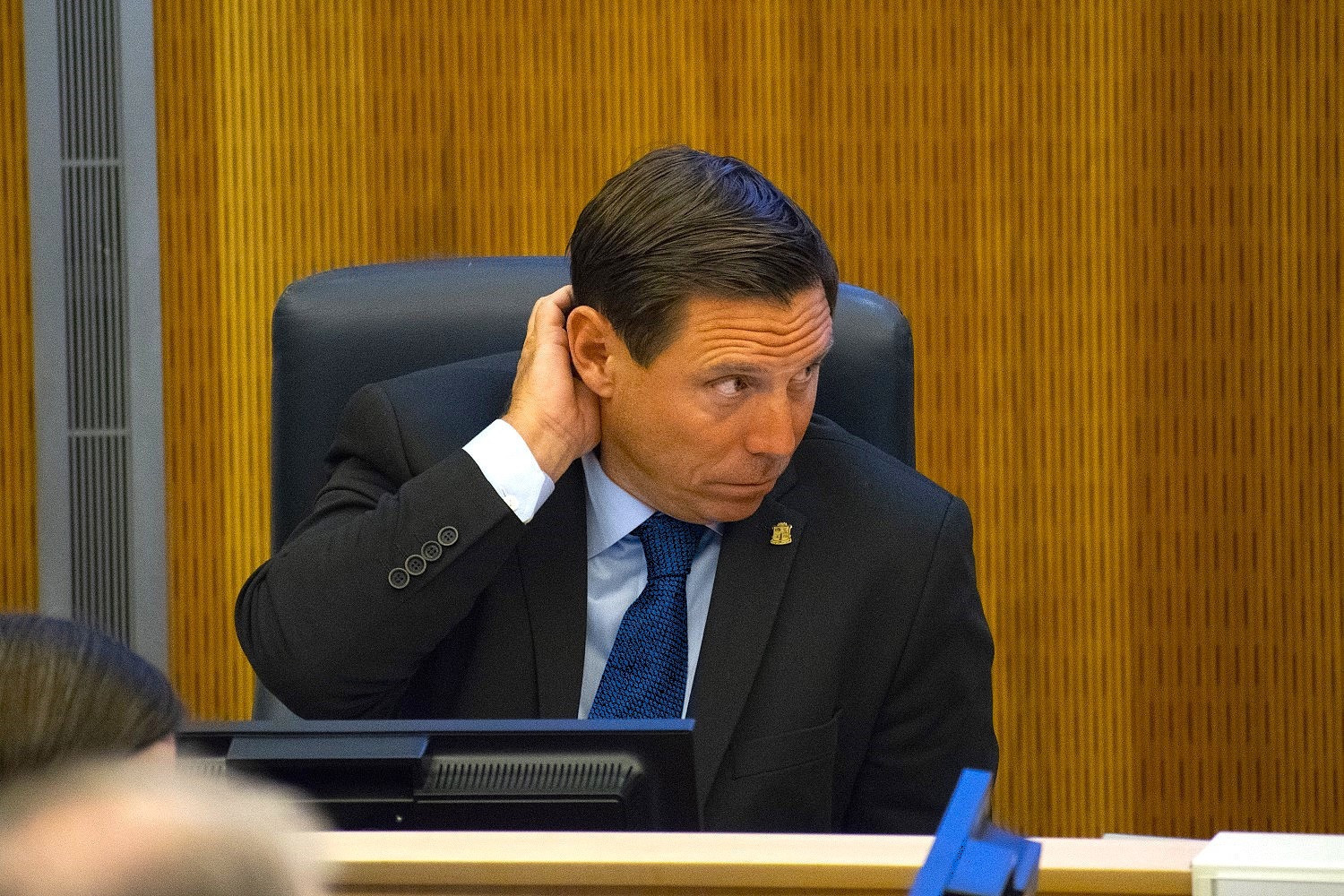
Brampton Mayor Patrick Brown attempted to obtain permission from the Province for an involuntary treatment program in Peel, despite limited evidence to show the controversial treatment pathway actually works.
(The Pointer files)
Premier Ford initially indicated that the then-Associate Minister for Mental Health and Addictions, Michael Tibollo was a “big fan” of the possibility of involuntary treatment, though Tibollo himself said it needed to be studied and looked at.
In March 2025, shortly before the cabinet shuffle that saw him leave the role, Tibollo reportedly said the system wasn’t ready for involuntary treatment and was already not meeting demand.
According to CMHA, involuntary addictions treatment is also typically time-limited. When addiction treatment is considered a lifelong process, voluntary care leads to better long-term adherence to recovery management.
At present, that voluntary care is not reliably available and the struggle to help those managing addiction do not exist in a legislative void.
The PC policies praised by Ford and Jones can be broken down into two key items of legislation, Bill 223 and Bill 6. This legislation shut down most supervised consumption sites in Ontario, ended funding for the few that remained, and further criminalized both public drug consumption and encampments. These are defended under the ideas of public safety and “enabling addiction,” but overlook many realities of the crisis.
The SCS in Peel Region, operated by Moyo Health and Community Services was ordered to shut down in March 2025 by the PC government. The site had opened only a year prior, a direct response by the region to address opioid toxicity deaths. Peel Regional Council unanimously endorsed the creation of a supervised consumption site in 2022.
The site, and others in the province, allowed for trained workers to issue naloxone and to provide rapid first-aid in overdose situations.
As reported in 2023, nearly half of opioid toxicity deaths in Peel occurred when the person was alone. On the Government of Canada opioid overdose fact page, the first risk reduction tip is to “never use alone.”
Bill 223 and Bill 6 work together against that advice.
The closures mean that some users are pushed to choose between public spaces where they may be risking fines of up to $10,000 or six-month imprisonment under Bill 6 or using alone, where risk of dying as the result of an overdose or tainted drug supply is higher.
It is not recommended for someone already using opioids to suddenly stop taking them due to the risk of life-threatening withdrawal symptoms. Addiction is not something that can be solved overnight. There is a biological component that often cannot be overcome by willpower alone. Supervised consumption sites were intended to help with that recovery process, meeting people where they were at.
The closed sites were meant to effectively be replaced by HART Hubs, which would offer support, but not supervised consumption, drug checking or sterile needles, services that have been shown to reduce overdose deaths and blood-borne infections.
“No one who takes illegal drugs can be sure of what's in them without proper drug checking services,” according to the Government of Canada. In Toronto, areas with supervised consumption sites saw fewer overdose deaths than neighbourhoods without them.
When the PC Government spoke about the transition to HART Hubs, Jones said “we are taking the next step in our plan to keep communities safe while improving access to mental health and addictions services.”
Yet, the 2024 audit of the Ontario opioid strategy plan found that the decision to close the sites was not made with proper consideration of the potential impacts on public health and health systems in Ontario, including overdose deaths. A separate government-initiated review of the South Riverdale Community Health Centre has also been used by Jones to justify the legislation. However, it did not recommend the closure of the sites but concluded that they are a “necessary public health service.”
Crime data in connection to these sites has also previously been misrepresented by the PC government. When the Somerset West Community Health Centre was closed, the government cited increased crime rates. However, the data the government used was ward-wide, while the freedom of information request made by CTV about the 200-meter area surrounding the site did not match the claims made by the government.
Other studies found that supervised consumption sites don’t increase nearby violence or crime. In some cases, reductions in homicides have been found near supervised consumption sites. More public use and discarded needles have been reported since the closure of the sites.
In contrast, while the Peel supervised consumption site was operating, “no discarded needles/drug equipment were found during needle sweeps conducted by staff, three times per day. There have been no reports of loitering in proximity to the site and no complaints from community members,” according to the report released by the Peel Region Commissioner of Health Services in February 2025.
At AMO, Jones said “We’ve done a lot in the province of Ontario,” and added that many delegations had asked for more HART hubs, which "tells [her] that we are on the right track.”
Peel has been requesting a second hub be established in Mississauga, which does not necessarily indicate support for other actions taken by the province, particularly when reports and strategies issued by the region have continued to say that "no single approach is sufficient. Prevention, harm reduction, and treatment are interconnected and mutually reinforcing.”
The same report indicates that a purely abstinence-based system, which is the model the HART Hubs follow, will not work for everyone at every stage of their recovery. While HART Hubs have a place in the larger system, they are not a full substitute for the services offered by supervised consumption sites.
Beyond the reduced scope, the one Peel HART Hub in Brampton didn’t begin offering services until January 2026, and did not formally open until April 2026. This meant there was a seven-month gap in service availability in Peel between the closure of the consumption site and opening of the hub.
When overall healthcare funding in Ontario is the lowest per-capita in Canada, it’s important to mention that supervised consumption sites are more cost-effective than emergency room visits. HART Hubs may also receive up to four times more provincial funding than supervised consumption sites while being a less-comprehensive model.
It’s unclear if the Ontario Government will be taking a different stance on involuntary treatment than in 2024 after the new request from OBCM. Vijay Thanigasalam, the Associate Minister for Mental Health and Addictions has not yet said anything on the topic and when ministers were directly questioned by Meed Ward at AMO about whether the Province would work to address their five priorities, including the review of the Mental Health Act, her question was dodged.
The renewed call to action by the OBCM on the worsening crisis is the symptom of a situation partially manufactured and fueled by the shutdown of the supervised consumption sites.
“There is an urgent need to help people struggling with chronic homelessness, mental health and addictions, but we need to focus on solutions that work,” said Jennifer Holmes Weier, CEO of AMHO in the joint statement. “Before expanding mandatory treatment, we need to make sure timely, voluntary care is available in every community to people who are already asking for help.”
At a time when vital public information is needed by everyone, The Pointer has taken down our paywall on all stories to ensure every resident of Brampton, Mississauga and Niagara has access to the facts. For those who are able, we encourage you to consider a subscription. This will help us report on important public interest issues the community needs to know about now more than ever. You can register for a 30-day free trial HERE. Thereafter, The Pointer will charge $10 a month and you can cancel any time right on the website. Thank you
Submit a correction about this story

