
Canada’s young people will feel the brunt of climate change, the Carney government is cutting them out of the process to help prevent it
Mississauga-born Bushra Asghar, Executive Director of the national campaign for Youth Climate Corps, thought years of advocacy had finally paid off when she stood before provincial leaders and climate activists at Queen's Park on Earth Day, celebrating Ottawa’s $40 million commitment to launch a national Youth Climate Corps.
Months after the promised summer rollout, the long-awaited pilot has yet to move beyond the announcement, and Asghar learned it wasn’t the only youth-led climate initiative losing momentum under the Mark Carney government.
“I've had dozens of email exchanges that have just gone unanswered, or I've been told there is no new information,” she told The Pointer. “I've never felt so thrown around within the bureaucracy.”
In November last year, the federal government signalled support for the Youth Climate Corps (YCC) through a $40 million commitment in Budget 2025—earmarking $20 million for each year to Employment and Social Development Canada (ESDC) beginning this summer.
It marked the “first big win” toward establishing a national, government-funded program designed to employ thousands of Canadians under 35 in two-year paid apprenticeships that combine training and fieldwork while supporting urgent climate action, community resilience and the transition to a green economy.
“We heard from youth climate organizations from across the country who have fought to see this program become a reality, and to hear their thoughts about what they want to see going forward and the work that still needs to be done,” environment minister Julie Dabrusin said in a statement.
That same month, the federal government reached out to local youth-led environmental groups and organizations including Climate Emergency Unity and Sustainable Youth Canada to organize an event celebrating the announcement. Within three days, the groups brought together 50 young Canadians in Montreal.
“Since that moment, we really haven't heard anything,” Sustainable Youth Canada Co-Director Katia Forgues told The Pointer.
“The silence and lack of transparency is really disappointing and hurtful.”
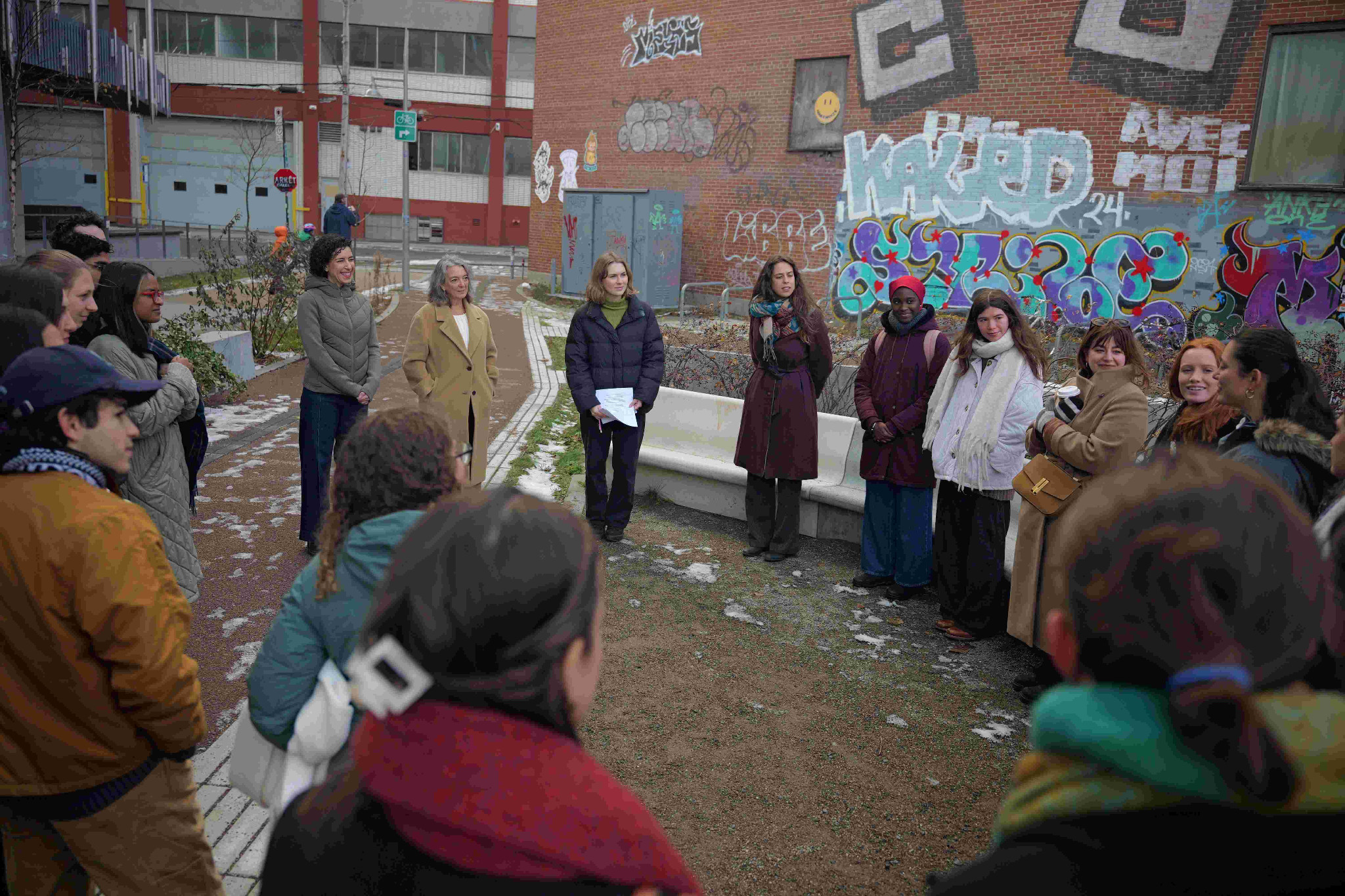
Canada’s environment minister Julie Dabrusin (centre, wearing a tan jacket) attending the Montreal event supporting Youth Climate Corps in November, which was organized by local, youth-led environmental and sustainability organizations.
Years of advocacy had finally led Parliament Hill to consider the youth-centric proposal in 2023 when then-NDP Critic for the Environment and Climate Change Laurel Collins introduced a motion calling on the federal government to support the creation of the program.
The motion described an “ambitious” YCC as a “transformative public program” that could signal Canada was treating the climate crisis with urgency while also addressing some of the country’s “gravest” challenges such as youth unemployment, mental health challenges, inequality, reconciliation with Indigenous communities, the housing crisis and skilled labour shortages.
In the 2024 budget, the Justin Trudeau government signalled the beginning of consultations for the program.
One of the first groups invited to help shape what a Youth Climate Corps could look like was the Environment and Climate Change Youth Council, which was established on July 21, 2021 and made up of young Canadians selected through an application process to provide advice to the federal government on national climate and environmental policies.
Forgues was part of the council’s first cohort that was heavily engaged in more than 20 different public policies between 2022 and 2024, including biodiversity, electric vehicles, climate communications and major international events such as COP28 and the COP15 biodiversity conference in Montreal.
“We had hopes that it would continue forward,” she said.
A second cohort was selected and slated to begin its term in winter 2025 when the transition in federal leadership following Justin Trudeau’s resignation as prime minister and the subsequent election period brought the process to a halt.
“Since Carney came about, there’s just been radio silence on that end,” Forgues noted.
Former council members including Forgues sought answers about the future of the group while discussions around the YCC announcement were underway.
In March, when she finally met with government representatives, the same day the second cohort received an email informing them the council was being dissolved effective immediately.
Forgues said the process seemed like the government was hoping the issue would quietly disappear with little to no information provided to the candidates.
“I had more communication with the government than the second cohort did about what was happening with their youth council, and I think that's because we were being loud in the media,” she added.
In June, after a media report brought to light the program’s stalled progress, Asghar received a call from Rachel Bendayan, Parliamentary Secretary to the Prime Minister, who acknowledged the lack of movement on the file and asked for names of people who should be kept informed about the program’s development.
Bendayan also informed Asghar the file had reached the Prime Minister’s Office.
Asghar took the opportunity to push for safeguards she considered imperative for the program to be meaningful including an implementation plan and a governance structure that would include youth representatives, climate experts, Indigenous communities, public utilities and higher education leaders to ensure funded projects deliver measurable climate benefits and meaningful training. But she was told inculcating those elements could further delay the program.
By July 15, when Asghar spoke with an official from ESDC, she was again notified the government was close to implementation but could not provide a launch date or further details. She was asked to reconnect “in early fall” when officials would be in a position to discuss the program further.
That same month, it was revealed the Carney government had shut down the Environment and Climate Change Youth Council as part of broader government spending cuts and advisory body efficiencies.
It wasn’t the only youth council that was disbanded to never make the headlines.
The Natural Resources Canada (NRCan) Youth Council, a federal advisory group that brought together young leaders to provide input to the Minister of Energy and Natural Resources and senior officials on climate action, clean energy and sustainable resource management, was also disbanded.
Shir Gruber, who served on the NRCan Youth Council from 2022 to 2024, joined the advisory body after years of working at the intersection of climate science, community advocacy and environmental research — tangible experiences that shaped the ideas she hoped to bring to the table.
She had studied hydrology at McGill University at the time, exploring how nature-based solutions such as wetlands could strengthen climate resilience and improve water quality; she also worked in the environmental sector on issues ranging from mining standards to biodiversity assessments.
Gruber had already seen up close both the urgency of the climate crisis and the challenges communities faced in adapting to it.
Before joining the council, she used her voice as a youth delegate during Canada’s National Adaptation Strategy Visioning Forum in 2021, pushing for a concrete strategy to mobilize young people in responding to climate change. The following year, she brought similar concerns to a 2030 Emissions Reduction Plan roundtable with then-environment minister Steven Guilbeault in Montreal, questioning the lack of a dedicated youth strategy.
In the creation of youth councils, Gruber, also the National Director for Sustainable Youth Canada, saw a meaningful “response” beyond consultation and to give young people like her a direct path into decision-making.
“The youth council could have been an amazing opportunity for a bridge between young Canadians and the future of Canada's different sectors, climate change and an opportunity to strengthen relationships for real with Indigenous partners and Indigenous youth,” she told The Pointer.
“In disbanding it, that's one less pathway to reach those goals.”
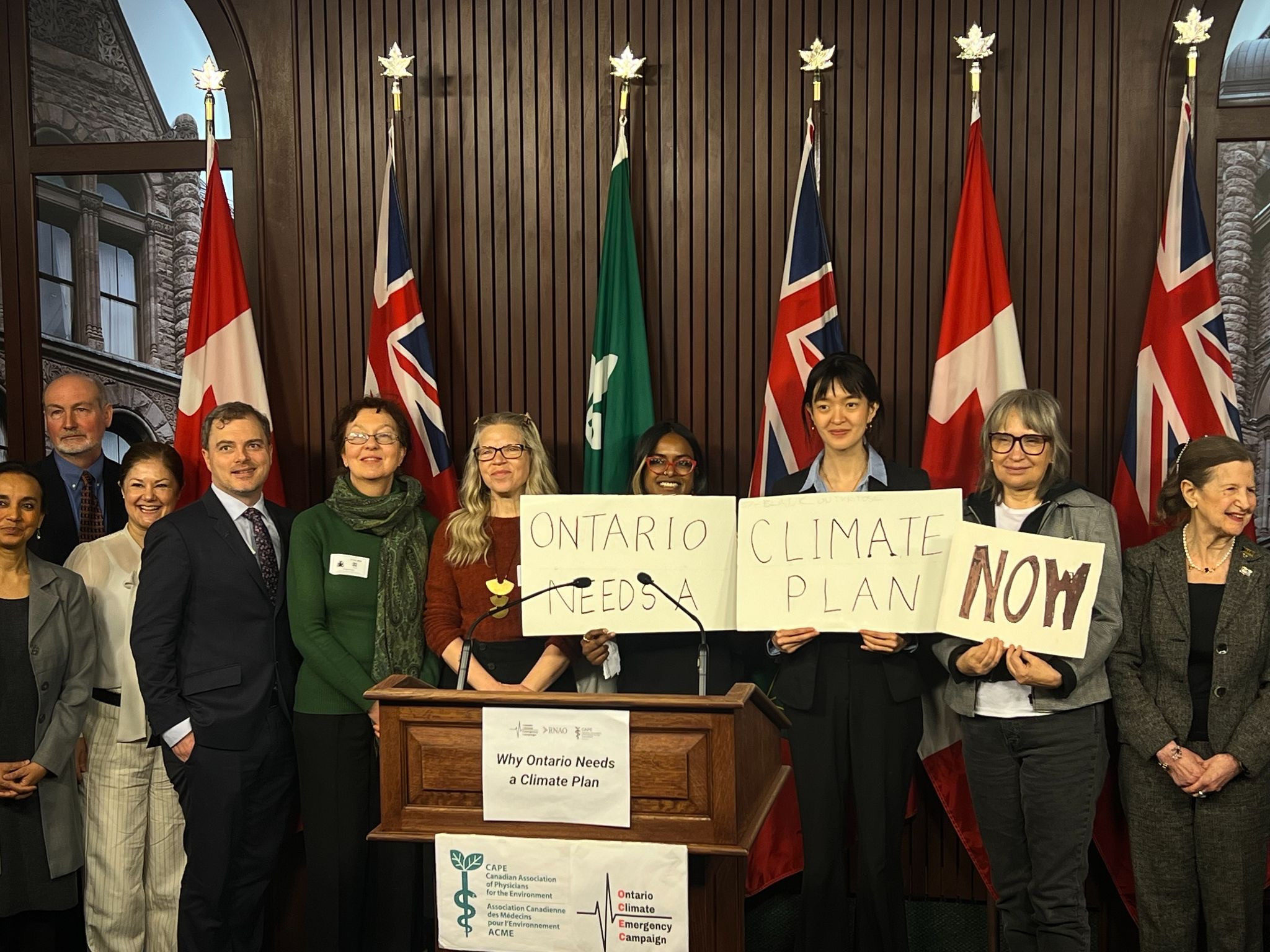
In April, Bushra Asghar (center) joined a group of environmental organizations calling on the Ontario government to reinstate a climate plan.
(Anushka Yadav/The Pointer)
Gruber, Forgues and Asghar all believe the federal government may be presenting the Youth Climate Corps as a replacement for youth advisory councils—a “problematic” distinction they emphasized is inaccurate, especially as the program itself remains stalled.
“It's one thing to give employment to youth in sustainable careers but it's not the same function at all as having a youth voice in government to bring perspectives from across Canada on different policies that are ongoing,” Forgues explained.
“The Youth Climate Corps would have just been one of the policies that, as a Youth Council, I would have expected to be able to participate in—they're two different mechanisms, in my opinion; they're not really fulfilling the same function.”
With the YCC pilot funding period set to run across the 2026–27 and 2027–28 fiscal years, advocates are questioning whether Ottawa can move the program from announcement to implementation before the funding window closes on March 31, 2028.
The Pointer reached out to ESDC, the department overseeing the program, seeking an update on its status, expected launch timeline, discussions with the Prime Minister’s Office and what would happen if implementation is delayed.
“Young Canadians are at the heart of a cleaner tomorrow, and we are focused on our plan that puts Canada on a credible path to a cleaner future, not just on paper, but in practice,” an ESDC statement noted without answering the questions.
The three climate advocates contend whether the same level of uncertainty and lack of transparency would be extended to fossil fuel lobbyists. Under Carney’s first year of leadership, the federal government was lobbied by the fossil fuel industry 1,318 times — an average of five times per working day — between May 2025 and April 2026, a new Environmental Defence report unearthed.
The future of YCC hanging in the air puzzles Asghar on whether the Carney government is using the November announcement “as a way to greenwash their record and demonstrate that they actually care about young people”.
“You can't be a climate leader, and then not follow through on your climate investments,” Gruber added.
“We're constantly told that young people are the future and that the government wants to invest in us but they're not doing that.”
Email: [email protected]
At a time when vital public information is needed by everyone, The Pointer has taken down our paywall on all stories to ensure every resident of Brampton, Mississauga and Niagara has access to the facts. For those who are able, we encourage you to consider a subscription. This will help us report on important public interest issues the community needs to know about now more than ever. You can register for a 30-day free trial HERE. Thereafter, The Pointer will charge $10 a month and you can cancel any time right on the website. Thank you
Submit a correction about this story

