
After sweeping US charges linked to Nijjar assassination, Sikh Canadians ask what happened to evidence of Indian government involvement
In May 2023, an Indian government employee identified in U.S. court filings only as “CC-1” reached out over encrypted messaging to Nikhil Gupta, an Indian national with a history in narcotics and weapons trafficking, and made him an offer: help arrange the assassination of a New York-based Sikh rights leader with dual Canadian-American citizenship, and CC-1 would make Gupta’s criminal case in Gujarat disappear.
Gupta agreed. Within weeks, CC-1 had promised nobody would “ever bother” Gupta again after the “boss” made his criminal matter disappear. Gupta then searched for a hitman to carry out the Indian government agent’s directions, unknowingly pitching the job to a confidential U.S. law enforcement source and then an undercover U.S. law enforcement officer working for the DEA.
The cloak and dagger details were part of a bombshell, unsealed U.S. Department of Justice indictment released on November 29, 2023. It includes transcribed wiretap and surveillance recordings that prove the Indian government was behind the assassination of Canadian Sikh leader Hardeep Singh Nijjar outside a Surrey, B.C. Gurdwara in June of 2023.
The plot moved fast and left a paper trail. CC-1 fed Gupta the target's home address, phone numbers and daily movements, all of which Gupta passed along to the men he believed were hired killers. On June 9, 2023, an associate delivered $15,000 in cash to the undercover officer in a Manhattan car as a down payment on the $100,000 CC-1 had agreed to pay for the killing. But there was one instruction CC-1 and Gupta repeated more than once: don't do it around an upcoming state visit. Indian Prime Minister Narendra Modi was due in Washington later that June, and CC-1 didn't want the murder to collide with "high-level" diplomatic engagements between the two governments. Gupta warned his own contact to "calm down everything 10 days."
On or about June 12, 2023, while talking with the undercover source, Gupta said there was a “big target” in Canada. Then, on or about June 14, 2023, Gupta sent a message to the undercover U.S. law enforcement source telling him, “we will be needing one good team in Canada also, [t]omorrow I will share you the details.” About two days later, around June 16, 2023, Gupta told the undercover source that, “we are doing their job, brother. We are doing their New York [and] Canada job,” referring to the officials directing the assassination plots from India.
Then, on June 18, 2023, masked gunmen shot Hardeep Singh Nijjar dead outside a Gurdwara in Surrey, B.C. Hours later, providing footage taken before Canadian authorities had arrived at the murder scene, CC-1 sent Gupta a video of Nijjar's bloodied body slumped in his vehicle. Gupta's reaction, laid out verbatim in the indictment’s transcribed wire tap recordings, was to ask CC-1 for permission to personally join "the field." CC-1 told him secrecy mattered more: "It's better you do not get involved in action." The next message CC-1 sent was the New York street address of the man Gupta's network was still hunting. Gupta told his contacts that the New York target was "also the target", one of "so many," and that Nijjar's death meant "now no need to wait."
Gupta had forwarded the video showing Mr. Nijjar's bloody body to the undercover operatives “minutes after receiving it from CC-1”. On or about June 19, 2023, Gupta called the undercover source and said Mr. Nijjar “was also the target" explaining that he was third or fourth on the list, and “not to worry [because] we have so many targets”. Gupta confirmed Mr. Nijjar was the target he had previously mentioned as the Canadian "job": "This is the guy, I send you the video .... We didn't give to [the undercover source] this job, so some other guy did this job ... in Canada.”
Two assassination plots, on two sides of the border, run through the same phone.
Gupta was arrested in the Czech Republic on June 30, 2023, and extradited to New York in mid-2024, where he pleaded not guilty. For almost a year, CC-1 remained unnamed in public court filings. That changed on October 17, 2024, when the U.S. unsealed a second indictment identifying CC-1 as Vikash Yadav — an officer with the Research and Analysis Wing, RAW, (India’s central foreign intelligence agency) who had also served in India's Central Reserve Police Force, operating under the alias "Amanat". FBI Director Christopher Wray called it an act of "transnational repression." Attorney General Merrick Garland said the department would be "relentless in holding accountable any person — regardless of their position or proximity to power."
The highest ranking U.S. law enforcement officials, including the attorney general at the time, who oversaw the country’s entire law enforcement system, pointed the blame directly at the Indian government in New Delhi.
“DEA foiled this assassination attempt last year and has continued to trace this case back to an employee of the Indian government whom we charge was an orchestrator of this intricate murder-for-hire scheme,” Anne Milgram of the Drug Enforcement Administration (DEA), said. “DEA did not relent, and today’s indictment names Vikash Yadav as an alleged mastermind. We charge that Yadav, an employee of the Indian government, used his position of authority and access to confidential information to direct the attempted assassination of an outspoken critic of the Indian government here on U.S. soil.”
The target, a dual Canadian-American citizen and lawyer with deep ties to the GTA, raised his family in the Oakville area before moving to New York. Gurpatwant Singh Pannun has been an outspoken critic of the Indian government and the Hindu-nationalist administration under Prime Minister Narendra Modi and his controversial Bharatiya Janata Party, which rose to power using openly violent, divisive tactics to shore up support among the majority Hindu population by marginalizing religious minorities, including Sikhs.
India's foreign ministry response to the damning U.S. evidence was to distance itself: spokesperson Randhir Jaiswal eventually claimed Yadav was "no longer an employee of the Government of India." Yadav has never been arrested and remains at large, believed to be in India still.
Reporting cited in The Pointer and done by The Washington Post, suggests he was not acting alone, and that the assassination of Mr. Nijjar was ordered from the very top of the Indian government. According to the Post, unnamed senior Canadian officials reported that the command chain for the assassination plots in Canada and the U.S. reached Indian Home Minister Amit Shah, the second highest ranking politician, only behind Prime Minister Modi, who oversees India's national security apparatus; one Canadian official, connecting Shah, told the Post, "We know they are involved in the Nijjar killing, in other murders and in ongoing violence — actual violence — in Canada." The Post reported that Canadian officials briefed India's National Security Advisor, Ajit Doval, directly on the evidence linking Shah and other Indian government officials at a secret meeting in Singapore on October 12, 2024 — a meeting that included former prime minister Justin Trudeau's national security adviser, Nathalie Drouin, and deputy foreign minister at the time, David Morrison.
Two days later, RCMP Commissioner Michael Duheme and Assistant Commissioner Brigitte Gauvin said in a widely covered public press conference that the Bishnoi organized crime group — used in Mr. Nijjar's killing — was "connected to agents of the government of India”, attributing the operation to them.
In September of 2023, Trudeau said in the House of Commons that, “Canadian security agencies have been actively pursuing credible allegations of a potential link between agents of the Government of India and the killing of a Canadian citizen, Hardeep Singh Nijjar.”
"Any involvement of a foreign government in the killing of a Canadian citizen on Canadian soil is an unacceptable violation of our sovereignty. It is contrary to the fundamental rules by which free, open and democratic societies conduct themselves.”
More recently, reporting since November by Global News and the Globe and Mail has directly connected the Indian government and Shah to Mr. Nijjar’s assassination.
For nearly three years, Canadian and American officials said the killing of Hardeep Singh Nijjar was orchestrated by the Indian government.
On Tuesday, the U.S. finally charged the men accused of ordering the assassination—with one glaring omission.
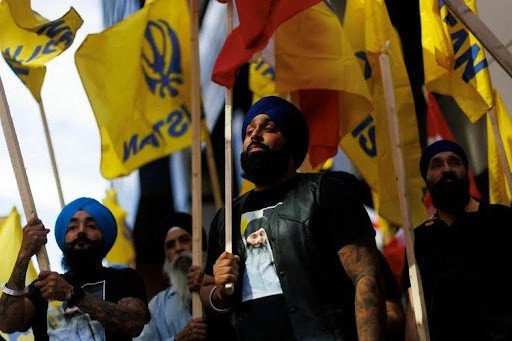
Following the assassination of Hardeep Singh Nijjar in B.C. Brampton resident Inderjeet Singh Gosal, centre, was one of several individuals informed by police under an RCMP duty to warn mandate that the Indian government might be targeting him due to his Sikh activism.
(Sikhs for Justice)
On July 7, the United States Department of Justice (DOJ) released a statement on the results of a federal investigation into crime syndicates originating from India operating in countries including the U.S. and Canada. The law enforcement action, called “Operation Hard Ball”, investigated transnational criminal activities “that engage in racketeering, targeted killings, shootings, extortion, the trafficking of bulk quantities of narcotics across international borders, and other crimes around the world whose impact is especially felt in the Indian diaspora.”
The evidence was accompanied by charging details outlining that 37 defendants were indicted, and 24 arrests were made. Additionally, the statement also said that law enforcement officials had seized narcotics, cash and firearms.
Bill Essayli, First Assistant United States Attorney, said “Transnational criminal gangs who spread fear, drugs, and violence will face the full force of justice and the weight of the federal government.”
Patrick Grandy, Assistant Director of the FBI’s Los Angeles Field Office, said that the operations targeted “three brutal transnational organizations that have terrorized families, exploited communities, and stolen lives through ruthless acts of violence in the U.S. and abroad.”
RCMP Commissioner Mike Duheme, who was at the announcement last week in L.A., said of the operation that international partnerships are important to “target criminals where they operate.”
The public disclosures in particular detailed the activities of the notorious Lawrence Bishnoi gang, and the criminal violence it had allegedly committed in North America. This includes the infamous assassination of Hardeep Singh Nijjar in Surrey, British Columbia on June 18, 2023.
What all of the public statements did not include was the connection between the violent acts—including at least one murder—and the Indian government. Everything that linked Mr. Nijjar’s organized killing, the assassination plot that targeted Canadian-American citizen Gurpatwant Singh Pannun and some of the other crimes to Indian officials was set aside. None of it was mentioned in Tuesday’s announcement.
The RCMP stated in October 2024 that its investigations had uncovered evidence of links between agents of the Government of India and violent criminal activity occurring in Canada. The statement outlined activities including connections to homicides, threats and other forms of intimidation, and alleged that organized crime networks were being used to target members of the South Asian community in Canada. The RCMP said the findings represented a serious national security concern and reflected a broader effort by foreign actors to interfere with and threaten individuals in Canada.
The public safety minister at the time, Dominic LeBlanc, said in October 2024 that the RCMP’s findings raised significant concerns about criminal activity in Canada connected to agents of the Government of India. He said the alleged activities posed risks to Canadians, particularly members of affected communities, and emphasized that federal agencies would continue working to investigate threats involving foreign interference, intimidation and violence.
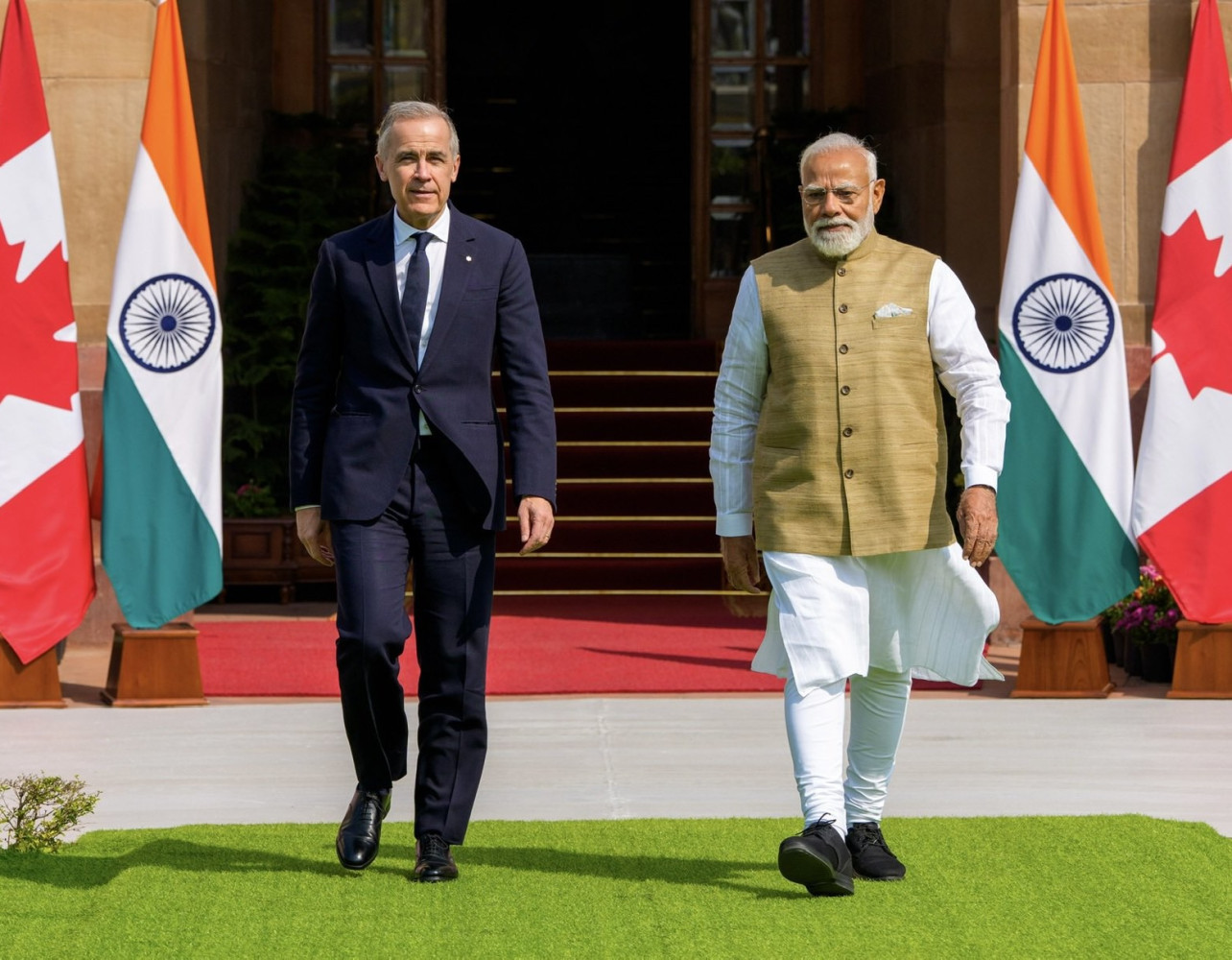
Suddenly, with Prime Minister Mark Carney in charge and following his meeting with Prime Minister Modi in India in March and another meeting between the two last month as part of efforts to repair the economic relationship between Canada and India due to the allegations, the government in New Delhi is no longer being connected with the killings and violence.
Asked directly about the missing Indian government connection, Deputy Commissioner of the RCMP Lisa Moreland told CBC News on July 7 that, “There’s no evidence to suggest through this organized crime investigation and the charges and the indictment laid forward that Indian officials were charged or involved.”
Global News reported in November that intelligence intercepted by Canadian and British agencies linked senior Indian government officials to the June 2023 killing of Mr. Nijjar. According to the report, British intelligence first alerted Canada after intercepting communications believed to connect individuals working on behalf of the Indian government to the assassination. Canadian investigators later obtained their own intercepted communications that reportedly corroborated those findings, which Global News said formed part of the evidence underpinning Ottawa's allegation that India orchestrated the killing—an accusation New Delhi has consistently denied.
“Canadian authorities later obtained their own intercept corroborating the involvement of Indian officials, among them Prime Minister Narendra Modi’s right-hand man, Amit Shah,” Global News reported.
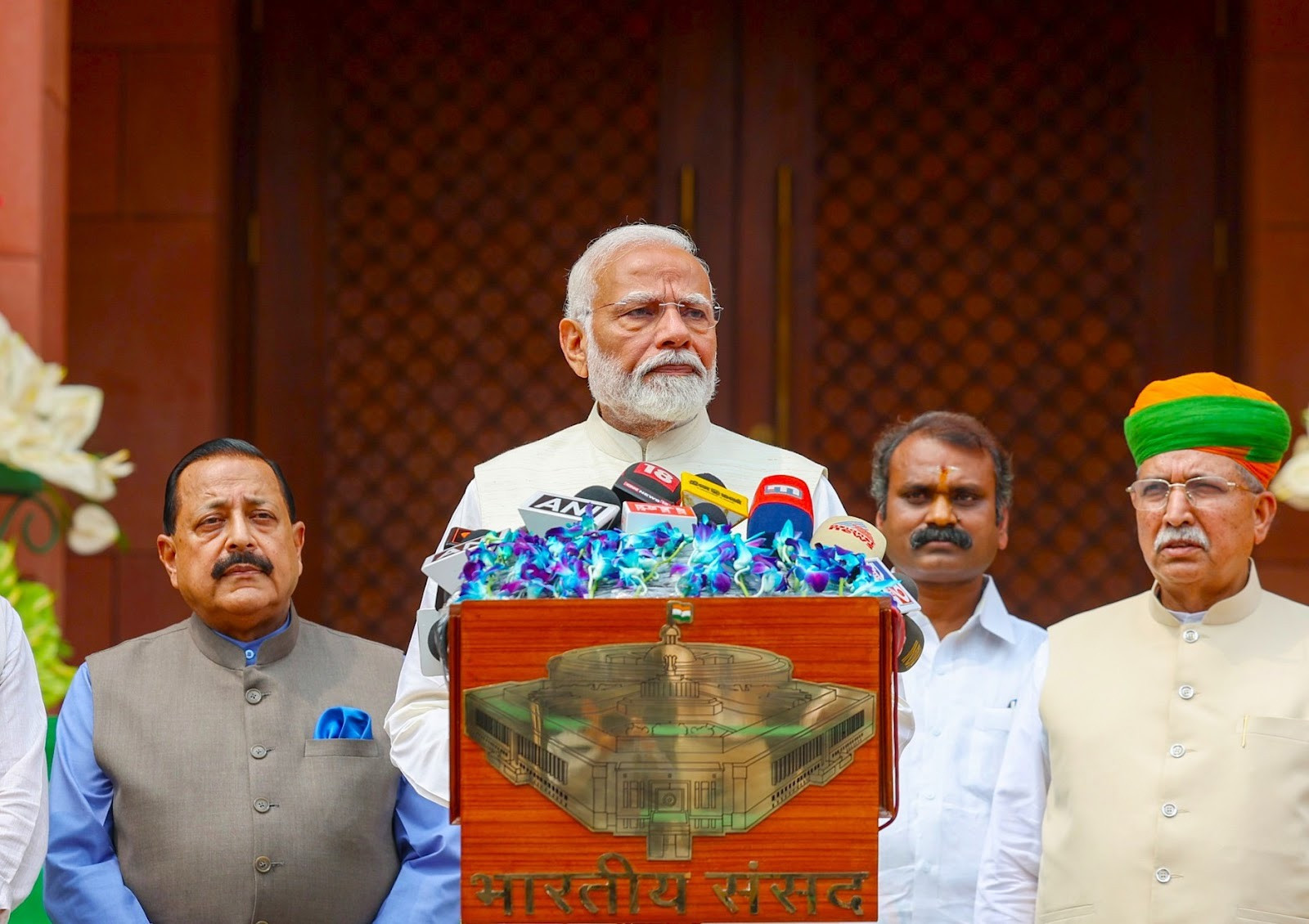
Indian Prime Minister Narendra Modi has denied any Indian government involvement in the 2023 assassination of Hardeep Singh Nijjar in Canada.
(Wikicommons)
The Global report, which confirmed earlier reporting by Bloomberg, said the intelligence included alleged links to senior Indian officials and was supported by additional evidence gathered by Canadian authorities. Former Canadian Security Intelligence Service (CSIS) official Dan Stanton told Global News that intelligence originating from the Five Eyes alliance carries significant weight, particularly when independently corroborated by Canadian agencies. The revelations emerged as the federal government, and Carney specifically, sought to rebuild diplomatic ties with India despite the ongoing investigation into Nijjar's killing.
Global News also reported in January this year that an internal RCMP national security briefing obtained through the Access to Information Act showed the Lawrence Bishnoi crime group had been operating in Canada while "acting on behalf of the Indian government." According to the report, the three-page assessment repeatedly referenced the alleged relationship, describing the gang as a transnational criminal organization involved in extortion, drug trafficking, money laundering and contract killings, while noting its growing presence in Canada.
The report emerged as Canada pursued renewed diplomatic and trade engagement with India. World Sikh Organization of Canada spokesperson Balpreet Singh argued the RCMP document demonstrated that Canadian authorities were aware of the alleged coordination between the Bishnoi gang and the Indian government, but said those concerns were being overshadowed by broader political and economic priorities.
The Globe and Mail also reported the connection in March, detailing that Canadian law enforcement and national security sources said investigators had obtained evidence alleging Indian consular officials in Vancouver gathered intelligence that was used to facilitate the June 2023 killing of Mr. Nijjar. According to the report, one official, identified by a source as visa officer Kanwaljit Singh, was believed to be an undercover operative with India's Research and Analysis Wing (RAW) who collected information on Nijjar through contacts in the Lower Mainland.
Citing two unnamed sources, the report said the RCMP and CSIS gathered evidence that information about Nijjar was obtained through coercion, bribery and community intermediaries before being transmitted to India and federal government officials there. The Globe also reported that Canadian authorities later received intelligence from domestic and allied agencies, including intercepted communications, that they believed corroborated the alleged role of Indian state actors in the plot to kill Mr. Nijjar. The allegations surfaced alongside Prime Minister Carney’s trip to India when he sought to repair diplomatic relations and met with Modi, while the criminal investigation into Nijjar's assassination and related foreign interference allegations remained ongoing.
In February, The Pointer reported that Nikhil Gupta's guilty plea in the United States over a murder-for-hire plot targeting Sikh activist Gurpatwant Singh Pannun intensified scrutiny of allegations that Indian state actors directed a broader campaign of transnational repression in North America. U.S. prosecutors alleged Gupta acted at the direction of Indian intelligence officer Vikash Yadav, and that court filings linked the failed plot against Pannun to the 2023 killing of Mr. Nijjar in Surrey. Indian government officials consistently denied directing assassination plots abroad.
The Pointer also reported on criticism of the Canadian government's effort to withhold undisclosed national security evidence from the upcoming Nijjar murder trial. Sikh advocacy organizations, including the World Sikh Organization, argued that keeping such information confidential could undermine public accountability if it relates to allegations of foreign state involvement in the case. The debate unfolded as Carney continued his efforts to rebuild diplomatic and economic ties with India and other nations despite the ongoing criminal proceedings and foreign interference investigations.
Regarding his recent meetings with officials in Saudi Arabia, Carney said last week that, “lecturing countries from afar is an ineffective strategy,” which sparked widespread concern that human rights and public safety issues have taken a backseat for the PM, in favour of trade opportunities. The language regarding Mr. Nijjar’s murder suggests Canadian officials are no longer willing to make public connections to the Indian government’s involvement.
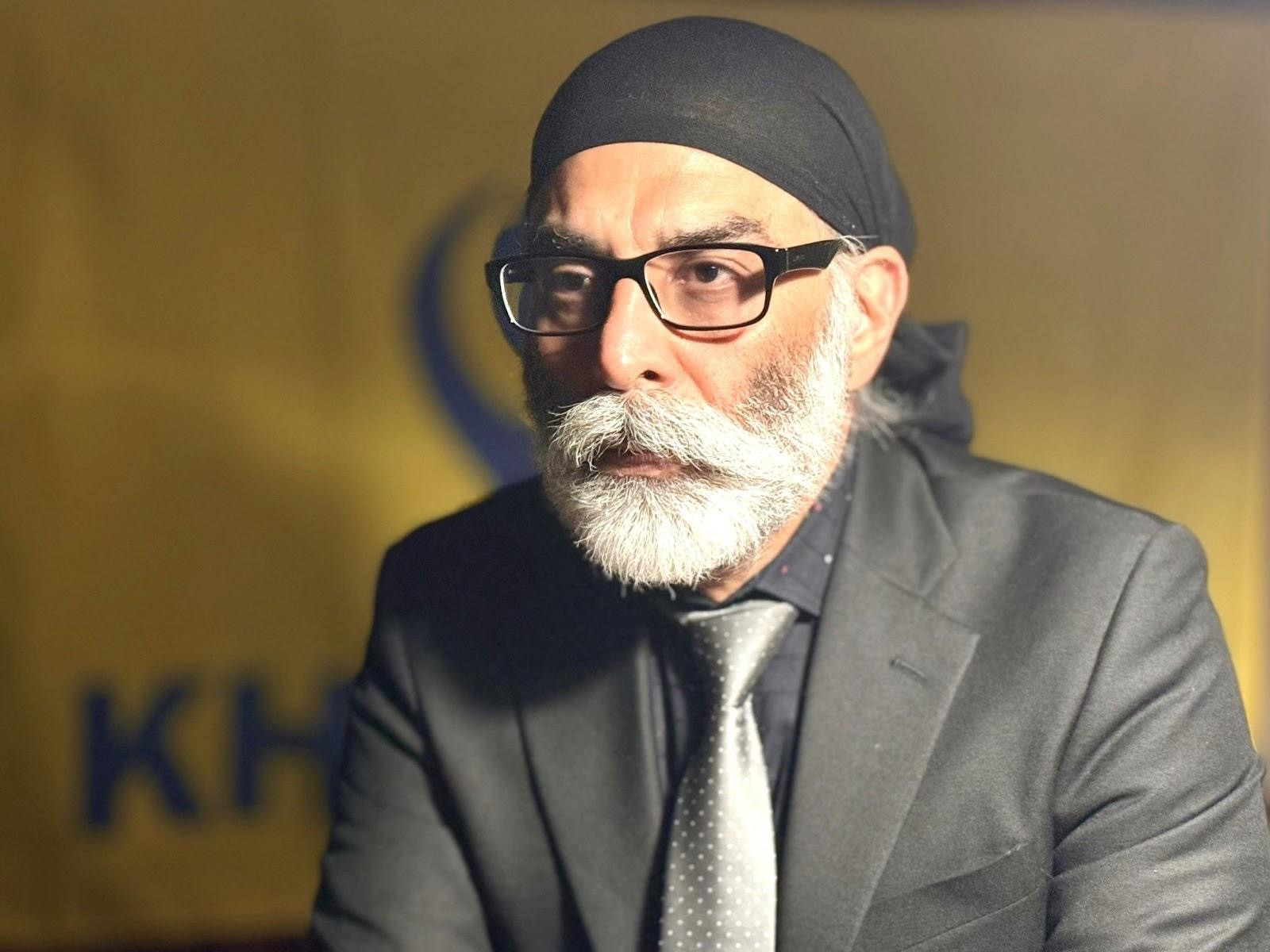
Sikh rights activist and dual Canadian-American citizen Gurpatwant Singh Pannun was the target of an assassination plot allegedly orchestrated by the Indian government.
(Supplied)
In March of 2024, The Pointer reported on allegations that the killing of Mr. Nijjar and the murder-for-hire plot targeting Sikh activist Gurpatwant Singh Pannun were part of a broader campaign of transnational repression linked to the Indian government.
At the time, the Indian government blocked access within the country to CBC's documentary by The Fifth Estate on Nijjar's killing. Pannun and other advocates told The Pointer the censorship reflected a broader pattern of suppressing criticism and dissent, particularly relating to the movement for a separate Sikh state and allegations of foreign interference by New Delhi.
Canadian law enforcement, meanwhile, was continuing to investigate credible evidence linking Indian government agents to Nijjar's assassination and growing violence against Sikh community members across the country including in Brampton which has the largest Sikh population of any city outside India.
Brampton resident Inderjeet Singh Gosal, who is the leader of the city’s chapter of Sikhs For Justice, which Mr. Pannun and Mr. Nijjar spearheaded, was one of about a dozen individuals across Canada informed by police under an RCMP duty to warn mandate that the Indian government might be targeting him due to his Sikh activism. He told The Pointer last year the RCMP warned him of an “imminent” threat to his life and that the Indian government was believed to be behind a plot to harm him. He said the construction site where the company he owns was working, had recently been shot at.
Balpreet Singh, spokesperson for the World Sikh Organization, which is based in Canada, alleges last week’s announcement in the U.S. did not reference the Indian government’s connection to the transnational criminal activities because the Canadian government is currently in trade talks with India.
“We've seen Canadian officials call out the Indian government,” he said. “On the American side, the indictment of the Pannun murder conspiracy, that also clearly shows that members of the Indian government were involved. So the only thing that I can think of is that in light of increased trade talks with India, by Canada, there's an attempt at not rocking the boat.”
He said that while trade is important between the countries, accountability also matters.
“If we're going to try and erase or ignore past wrongdoings and not hold India accountable, that doesn't seem principled. It seems very weak.
“Canada has tried to make trade the priority, but in doing so, is weakening the rule of law, is weakening Canadian safety.”
Canada’s “silence is weakness” and other foreign governments might exploit such apathy in the future.
He also said numerous high level Indian government officials have been named in connection to conspiracies and assassinations.
“That genie can’t be put back in the bottle.”
“You cannot pretend it didn't happen. You cannot try and rework history so that India is expunged. We need to see accountability so trade can move forward, but at the same time, we need to make sure that India knows that it cannot target sovereign countries in this way.”
He called for transparency and commitments from India that all individuals will be held responsible for their actions.
Moninder Singh, spokesperson for the Sikh Federation of Canada, in an interview with CTV news said Canada is courting India and violating the human rights of Canadians in the process.
He called this shift a “complete U-turn.”
“So we had all this evidence and all these statements from Canadian officials, elected officials that were all kind of saying that this is what’s happening. Now we’re kind of seeing the complete U-turn, which is that it’s these two gangsters that carried out this assassination and Mr. Carney’s government in the last year courting Mr. Modi and the Indian side, basically for trade and economic relationships.”
Gurpatwant Singh Pannun, the target of the foiled New York assassination plot carried out at the direction of the Indian government, according to the overwhelming evidence in the DOJ’s unsealed indictments, released a statement after last week’s announcement of sweeping criminal charges. He is the General Counsel for Sikhs for Justice (SFJ). The organization praised the latest coordinated efforts of the RCMP, FBI and DEA that “shattered India’s diplomatic camouflage, exposing a brutal campaign of state-sponsored transnational terrorism” directed against supporters of Sikh rights and a separate Sikh homeland.
The SFJ statement called on the governments of the United States, Canada and the Five Eyes alliance to stop providing “diplomatic immunity to shield state-sponsored killers.”
“Justice cannot stop with the jailed gangsters, the triggermen, or the intermediaries,” Pannun wrote. “The trail of evidence leads directly to the highest echelons of the Indian government.”
He continued. “The combined weight of American and Canadian evidence warrants immediate international sanctions against the Indian state apparatus and the full dismantling of its global command structure.”
The Carney government has not commented or released a statement regarding Operation Hard Ball or the indictment of the defendants. Last week the Globe and Mail reported that Canada’s public safety minister, Gary Anandasangaree, declined to comment after the announcement of the recent charges and arrests by U.S. officials, when he was asked about all the evidence implicating the Indian government.
A spokesperson for Mr. Anandasangaree said, “At this stage, it would be inappropriate to speculate or comment on investigative theories while the RCMP’s work continues. The focus remains on ensuring accountability for those responsible for Nijjar’s death and supporting a thorough and independent process,” he said. “Canadian law enforcement continues to pursue this investigation with great care and diligence.”
The SFJ was more clear in its statement last week.
“SFJ highlights that while the Canadian operation relied on the Bishnoi proxy network, the parallel U.S. murder-for-hire case proves that an active-duty Indian RAW officer, Vikash Yadav, was the direct handler directing the plot to assassinate Pannun in New York. According to unsealed U.S. federal court filings, internal communications within Vikash Yadav’s network explicitly referenced Shaheed Hardeep Singh Nijjar as a ‘target’ before his murder, proving that the assassination in Canada and the attempted assassination in the United States were not isolated incidents, but synchronized operations flowing from the same command structure in New Delhi.”
Email: [email protected]
At a time when vital public information is needed by everyone, The Pointer has taken down our paywall on all stories to ensure every resident of Brampton, Mississauga and Niagara has access to the facts. For those who are able, we encourage you to consider a subscription. This will help us report on important public interest issues the community needs to know about now more than ever. You can register for a 30-day free trial HERE. Thereafter, The Pointer will charge $10 a month and you can cancel any time right on the website. Thank you
Submit a correction about this story

