
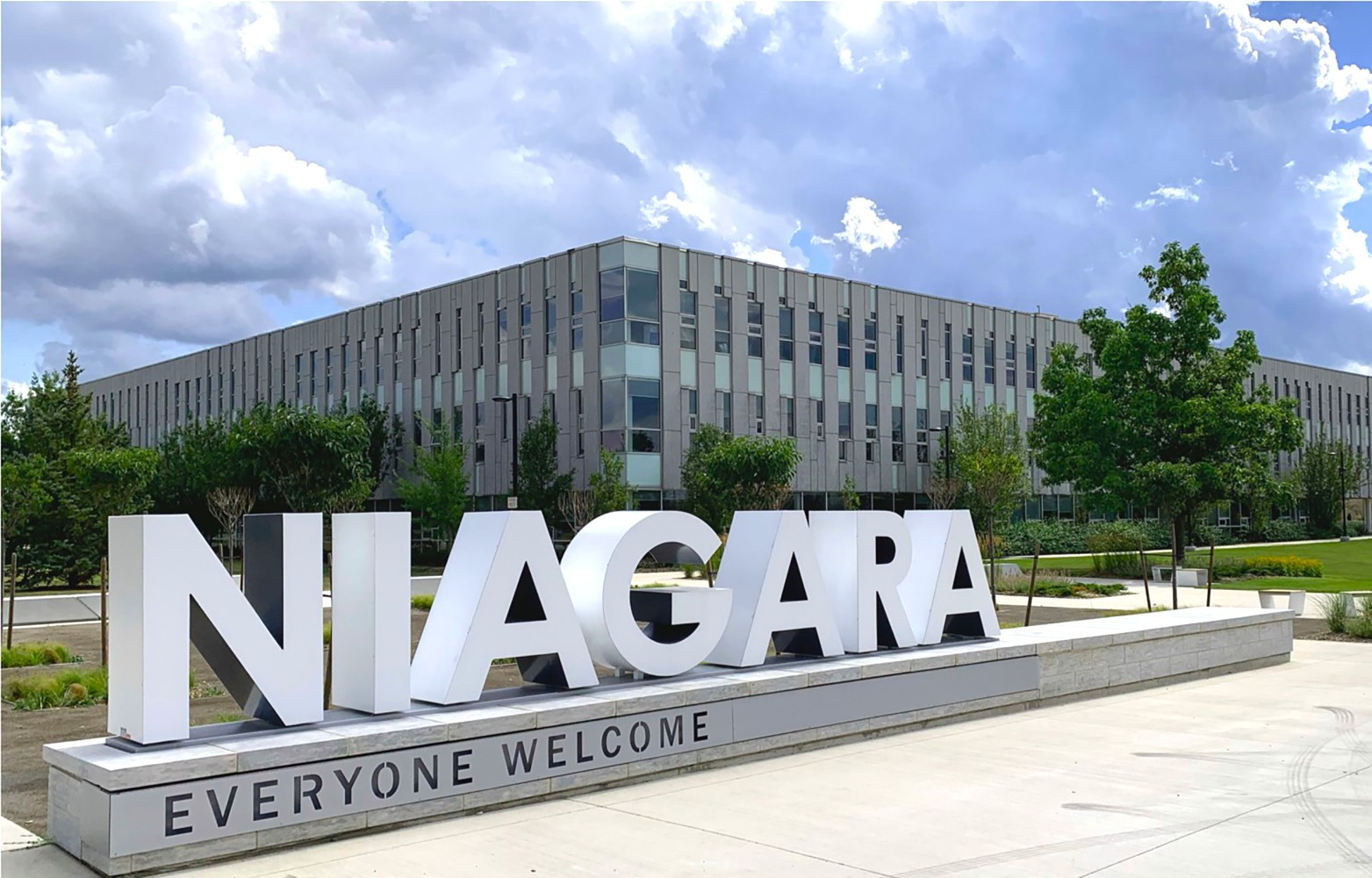
Province hangs out the help wanted sign in search for a Regional Chair
In what appears to be an unprecedented public recruitment process the provincial government has begun advertising for a full-time Regional Chair for Niagara Region, one of eight upper-tier municipalities where Queen's Park has stripped away the traditional selection process and assumed the authority to appoint the head of regional government.
The posting, published June 29 and closing July 13, reads much like an executive recruitment advertisement. Applicants are invited to apply for a four-year term beginning November 15, 2026, with responsibilities ranging from presiding over Regional Council meetings to advancing economic development and ensuring regional priorities align with those of the provincial government.
Yet behind what appears to be a routine job posting lies one of the most controversial municipal governance reforms in Ontario's recent history.
The recruitment process stems directly from Bill 100, the Better Municipal Governance Act, legislation introduced by Premier Doug Ford's government that removed the selection of regional chairs from local control in eight municipalities. Instead of being chosen by voters or elected regional councillors, the chairs will now be appointed by the Province.
The municipalities affected are Niagara Region, Durham Region, Halton Region, Peel Region, Waterloo Region, York Region, Simcoe County and the District Municipality of Muskoka.
Each municipality is advertising the position using virtually identical language, marking the transition of the Ford government's controversial regional governance reforms from legislation to implementation.
When Bill 100 was introduced, it immediately drew criticism from municipal leaders, governance experts and opposition politicians who argued the legislation represented a significant erosion of local democracy.
In Niagara, Regional Council voted 18-9 in favour of a resolution opposing the legislation after Fort Erie Mayor Wayne Redekop warned colleagues they were "being asked to get on a boat that's heading into undemocratic waters."
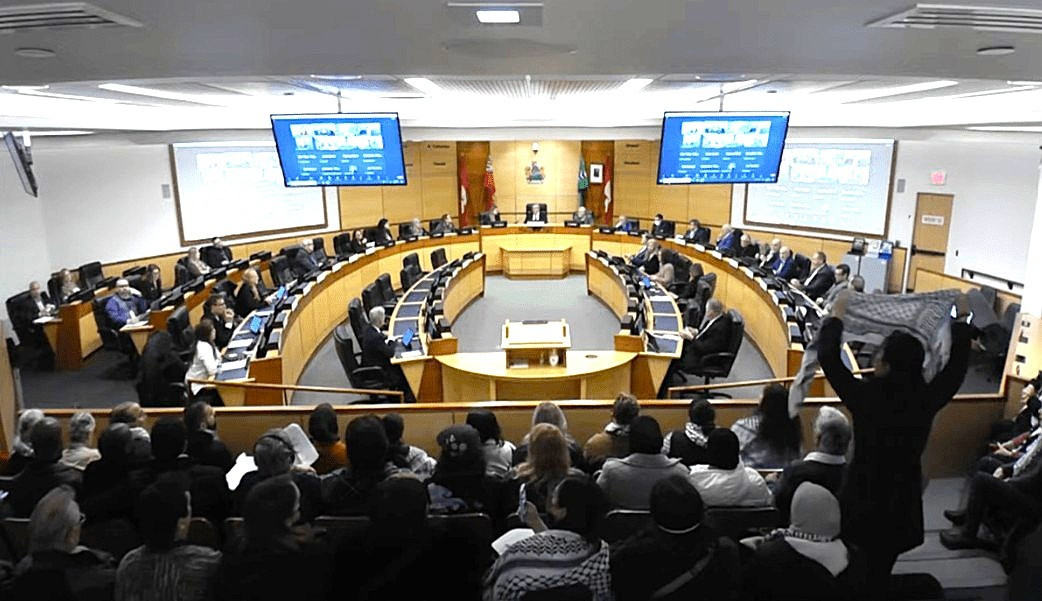
Niagara Council Chambers will see a new chair presiding over meetings after the provincial government decides who will fill the role.
(YouTube)
Despite those objections, the Ford government proceeded with the legislation, arguing that appointed chairs with expanded leadership authority would improve coordination between municipalities and Queen's Park, help accelerate housing and infrastructure projects and strengthen economic development.
The new job posting reflects those priorities.
In addition to the statutory duties outlined in Ontario's Municipal Act, applicants are expected to "ensure effective alignment between regional decision-making and shared provincial-regional priorities," "protect Ontario's economy and support economic growth," and identify governance and service delivery efficiencies.
Candidates are also expected to possess previous elected political experience, demonstrate a strong understanding of provincial and regional priorities, and have experience leading major organizational change.
Opposition to Bill 100 extended well beyond Niagara.
In a strongly worded June 10 letter to Municipal Affairs and Housing Minister Rob Flack, Association of Municipalities of Ontario President Robin Jones urged the Province to reverse course.
"Municipal leaders should be elected by their communities," Jones wrote. "This keeps heads of council directly accountable to local voters."
Jones argued Bill 100 "continues to remove authority from local officials and the voters they serve in favour of concentrating decision making at Queen's Park," warning that the changes weaken democratic accountability while eroding public trust.
AMO also questioned combining provincially appointed regional chairs with expanded strong-chair powers.
The organization warned that appointed officials, who have not received a mandate from local voters, could exercise sweeping executive authority while remaining accountable primarily to the provincial government rather than the communities they serve.
Perhaps most pointedly, Jones rejected the notion that regional chair should resemble an executive recruitment process.
"Simply put, regional chair is not an entry level job," she wrote. "The test is standing for election... and it's the electors who decide if they are qualified."
AMO concluded its letter by urging the government to restore the democratic election of regional chairs or, at minimum, allow regional councils to elect a chair from among their own members rather than having Queen's Park make the appointment.
The public advertisement itself raises a series of unanswered questions.
Although applications close July 13, the posting provides no indication of when appointments will be announced.
The successful candidate will not begin serving until November 15, approximately three weeks after Ontario's municipal elections on October 26.
The posting is also silent on how candidates will be evaluated, who will review applications, whether interviews will be conducted, whether applicants' names will be made public, or how much weight, if any, will be given to recommendations from local municipalities.
Those unanswered questions have added to the debate surrounding the appointment process itself.
Critics are questioning whether a public recruitment process can meaningfully replace a democratic election, while others have asked whether advertising the position suggests an open competition or merely fulfills an administrative requirement before appointments are made.
The Ministry of Municipal Affairs and Housing has not publicly outlined the selection process beyond inviting applications.
The timing of the recruitment has already generated considerable political discussion in Niagara.
Neither St. Catharines Mayor Mat Siscoe nor Welland Mayor Frank Campion has publicly announced whether they intend to seek another term as mayor in October's municipal election or whether they plan to apply for the Regional Chair position, leaving the uncertainty surrounding their political futures to fuel local speculation about who may ultimately seek the appointment.
Both mayors have cultivated close working relationships with the Ford government and, during the 2025 provincial election campaign, took the unusual step of publicly endorsing Premier Doug Ford. Along with Niagara Falls Mayor Jim Diodati, their endorsements drew criticism because Ontario municipal politics has traditionally been non-partisan and prompted ethics complaints that received widespread attention.
Opposition politicians have also questioned the credibility of the recruitment process. St. Catharines MPP Jennie Stevens stated in a social media post that the new system removes one of Niagara's most important democratic choices by allowing Premier Doug Ford, rather than local voters, to select the Region's political leader. Stevens also criticized the decision to combine a provincially appointed Regional Chair with expanded strong mayor powers, saying the successful candidate "will become the most powerful politician in Niagara."
"The applications are open” she added, “but I'll save everyone some time. I have a feeling the successful applicant is probably already on Doug Ford's Christmas list."
The controversy has also generated concern among local residents and civic groups. Tia De Agazio, who operates the Welland Citizens & Friends Watch Group, a Facebook community focused on municipal affairs and civic engagement, said many residents feel the province's decision to appoint a Regional Chair represents a loss of local democratic control.
"We have seen a marked erosion of democratic principles with the Ford Government's interference with municipal affairs," De Agazio said.
She further questioned whether the public recruitment process will result in a genuinely open competition, arguing that some residents view the advertisement as an attempt to create the appearance of a fair selection process rather than allowing residents to choose their regional leader.
"The appointment posting does not require any educational qualifications, for one thing, and gives clear advantage to those candidates already waiting in the wings," she said, adding that some residents believe candidates who have publicly supported the Ford government may have an advantage.
As a form of protest and civic engagement, De Agazio said some residents are encouraging citizens to apply for the position themselves.
"Many of us are feeling helpless and overwhelmed," she said, arguing that the removal of an elected Regional Chair has increased frustration among residents who want a greater say in decisions affecting their communities.
The comments reflect broader concerns raised by critics of Bill 100, who argue that replacing an elected regional leader with a provincial appointment weakens the connection between municipal leadership and local voters.
The recruitment comes as Niagara continues without a permanent Regional Chair.
The position has been vacant since Bob Gale resigned earlier this year amid controversy surrounding his ownership of a signed copy of Adolf Hitler's Mein Kampf. Gale had been appointed by the Ford government following the death of longtime Regional Chair Jim Bradley but stepped down after anti-racism organizations called for his resignation. The successful applicant under the new recruitment process will become the first person appointed to serve a full four-year term under Ontario's new regional governance model.
While the advertisement outlines the qualifications, responsibilities and expectations of the role, it provides little detail about how applicants will be evaluated or how the final appointment decision will be reached.
Applicants must be Canadian citizens, at least 18 years old and eligible to vote within one of Niagara's lower-tier municipalities. Certain public officials, including judges, Members of Provincial Parliament, Members of Parliament and municipal employees, are ineligible.
The successful candidate will be paid by Niagara Region, with compensation established by Regional Council, and will be expected to attend weekly meetings while frequently working evenings, weekends and statutory holidays.
But unlike almost any other senior municipal position, the Regional Chair serves as the political leader of an entire regional government. Historically, that authority flowed from some measure of a democratic mandate. Beginning this fall it will instead come from an appointment made by the ruling party.
Whether the public recruitment process convinces Ontarians that the appointments are open, transparent and merit-based remains to be seen.
For now, the Province is accepting applications, but many of the most important questions remain unanswered. Who will decide, when will the decision be made and how transparent will it be? Just a few of the questions the province has yet to answer.
Email: [email protected]
At a time when vital public information is needed by everyone, The Pointer has taken down our paywall on all stories to ensure every resident of Brampton, Mississauga and Niagara has access to the facts. For those who are able, we encourage you to consider a subscription. This will help us report on important public interest issues the community needs to know about now more than ever. You can register for a 30-day free trial HERE. Thereafter, The Pointer will charge $10 a month and you can cancel any time right on the website. Thank you
Submit a correction about this story

