
The closure of Niagara’s safe consumption and treatment site causes immediate impacts, increased overdoses and EMS calls
The fallout from the closure of the St. Catharines Consumption and Treatment Services site last month is already taking a toll on the community.
On March 13, Positive Living Niagara, the non-profit which ran the Niagara site, received notice that Doug Ford’s PC government would no longer fund their life-saving activities. On Friday, June 12, the site closed. All but 3 of the 8 safe consumption sites in Ontario were closed after the government order.
The most recent closures follow 9 other CTS site shutdown orders in March 2025. Those orders fell under Ontario’s 2024 Community Care and Recovery Act (CCRA). According to the Act, “no person shall establish or operate a supervised consumption site at a location that is less than 200 metres” from a school or child care centre.
The move had affected four sites in Toronto, as well as sites in Ottawa, Thunder Bay, Guelph, Kitchener-Waterloo and Hamilton. Municipalities are prohibited under a provision in the Act to support CTS sites with their own funding, leaving facilities like the one on Queenston Street in St. Catharines, and others across the province with no alternative source of funding.
The closures came after a 2024 Ontario Auditor General’s performance audit on the implementation and oversight of the province’s opioid strategy. The report found the province’s strategy was outdated and “failed to meet increased risks and needs.” It also highlighted a lack of accountability and poor data tracking. Regarding changes imposed on CTS sites, the report found the decision to impose new guidelines for supervised consumption services was made without proper planning, impact analysis or consultation. The AG found the PC government did not follow protocol in consulting members of the public who access these services.
The Pointer arrived at Positive Living Niagara on the day of the closure and watched an emotional end to what many locals consider a life-saving service. Two residents in the Queenston area gave comments, but due to the stigma surrounding CTS sites, they both requested to remain anonymous. One who does not use the site, but lives in the community, said the closure would “implode the neighbourhood.”
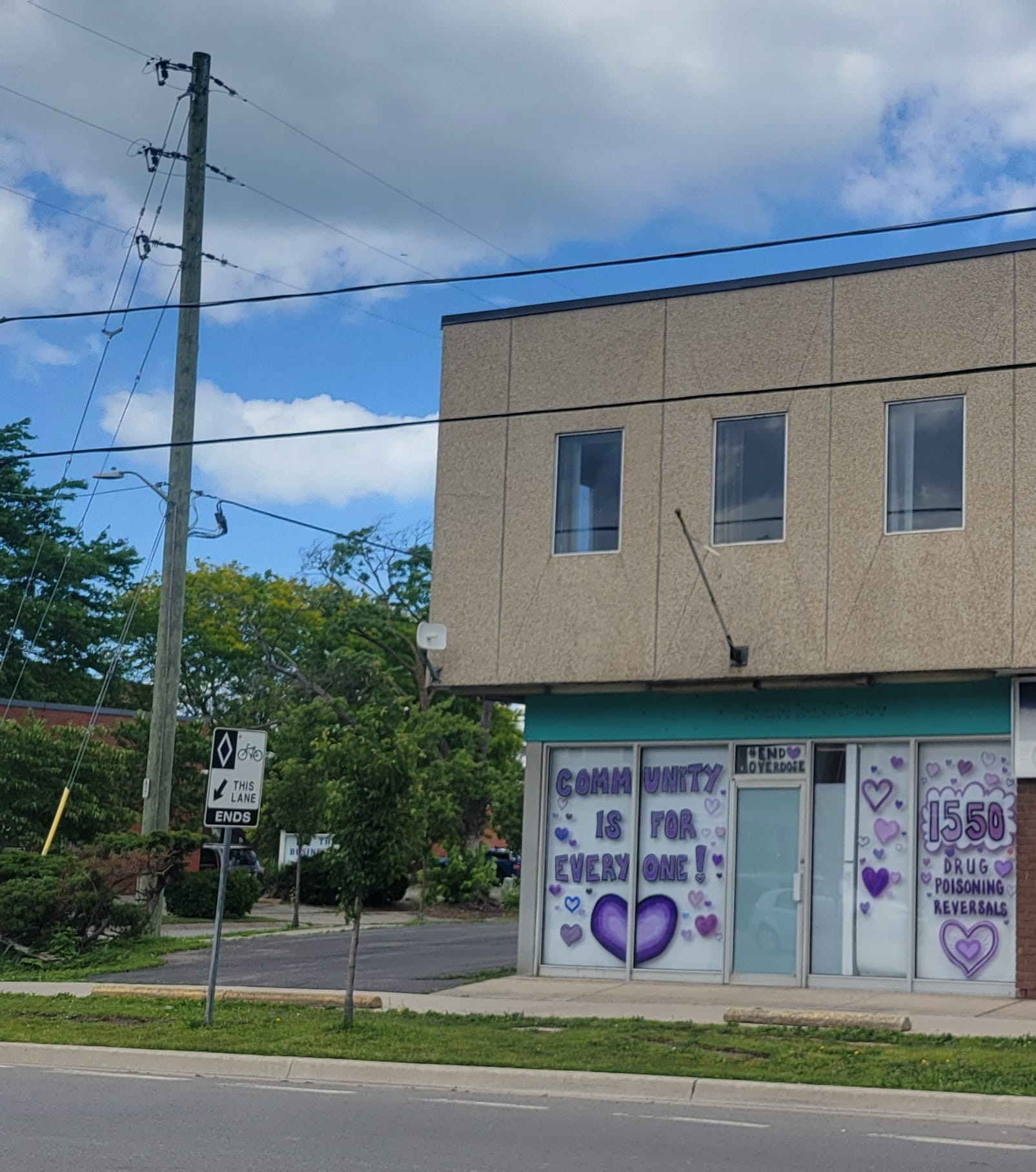
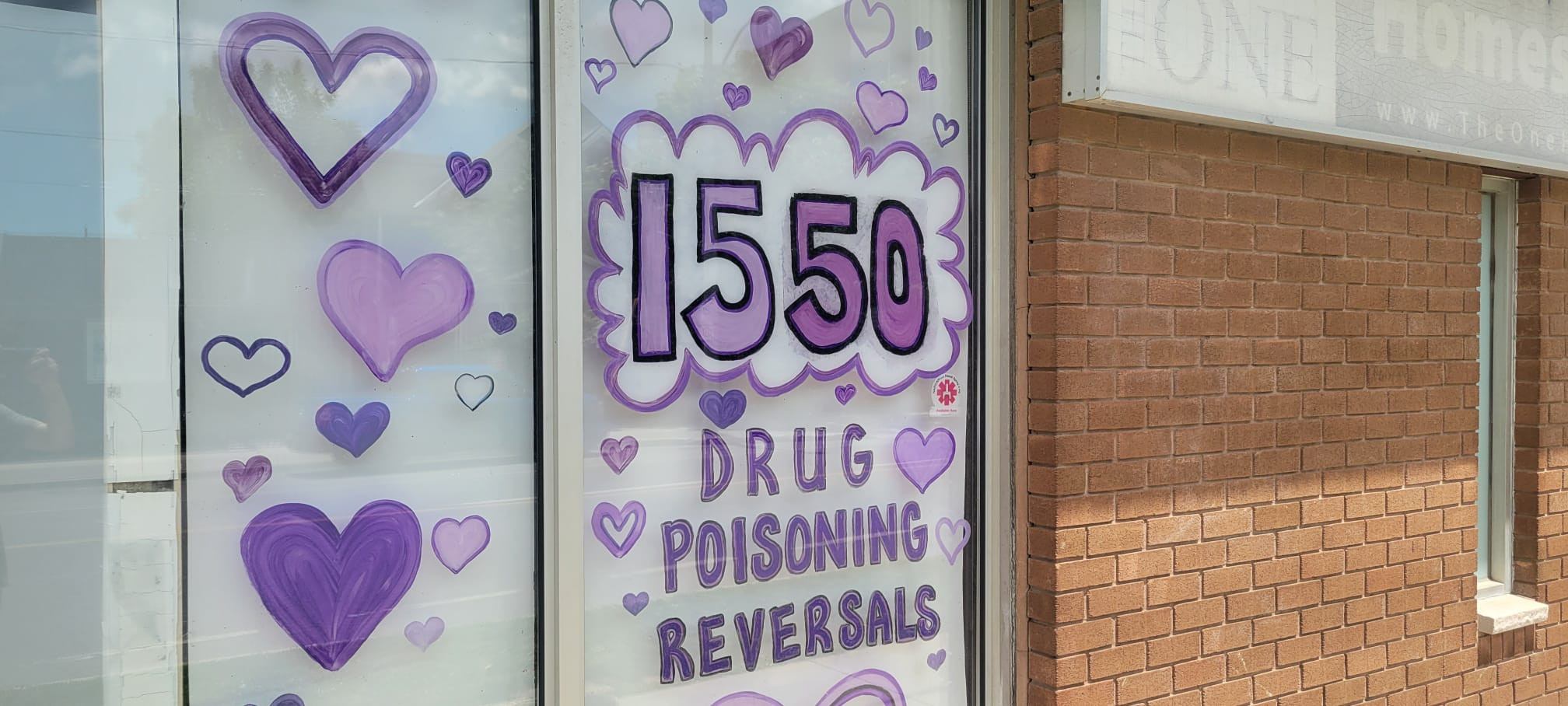
The former St. Catharines safe drug consumption site a week after its last day of operations in June.
(Matt Ellis/The Pointer)
“Everything is going to be a mess,” he said, “people will start dying very soon.”
Another resident commented outside the site while a barbeque send-off was happening in the background. She said the broader community might not understand that the site is not just a place to get treatment for addiction or drug testing, “It’s a community,” she said. “I’m 5 years sober now, but I still visit the site to see the people who helped me with recovery. It’s a community fixture, and now the future of the community is so dark.”
Since March 13, service users have been telling staff they are afraid of what would happen to them after the closure.
Supervised consumption sites across Ontario have offered a variety of services. Clients can access wound care, referrals to treatment, harm reduction supplies, and connections to community partners that provide housing support and food security.
Two other Queenston area residents spoke with The Pointer and expressed their concern over the closure of the site. “More people will be going to the ER when they could have just been treated here.”
Evidence gathered by University of Toronto researchers after the March 2025 closures shows the impacts. Calls to EMS for opioid toxicities rose from 604 in quarter 1 to 739 in Q2, to 1024 in Q3, with a 69.5 percent rise in toxicology calls after April 2025.
The Hamilton site that closed in 2025 foreshadowed the impact of site closures, with devastating statistics that illustrate the fallout. Hamilton experienced 199 overdose calls in February. Paramedics in Hamilton are now responding to at least 7 opioid-related calls a day.
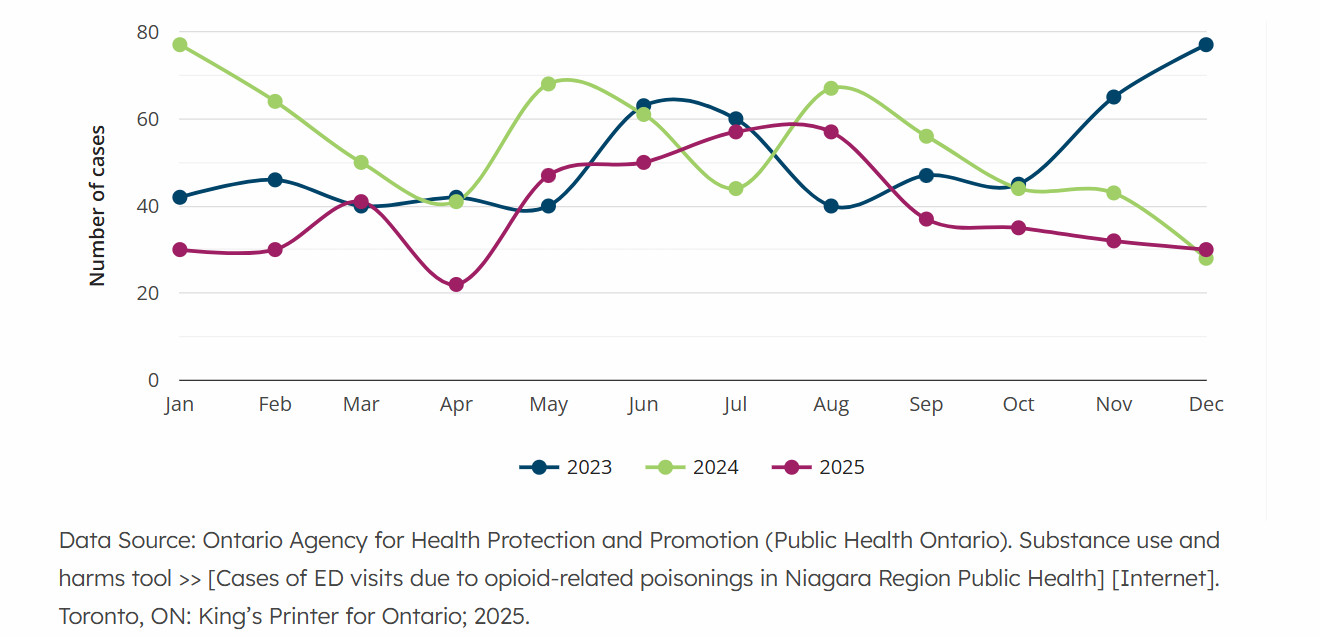
In Niagara, there is already preliminary evidence that even before the closure of the site, opioid-related EMS calls were already on the rise.
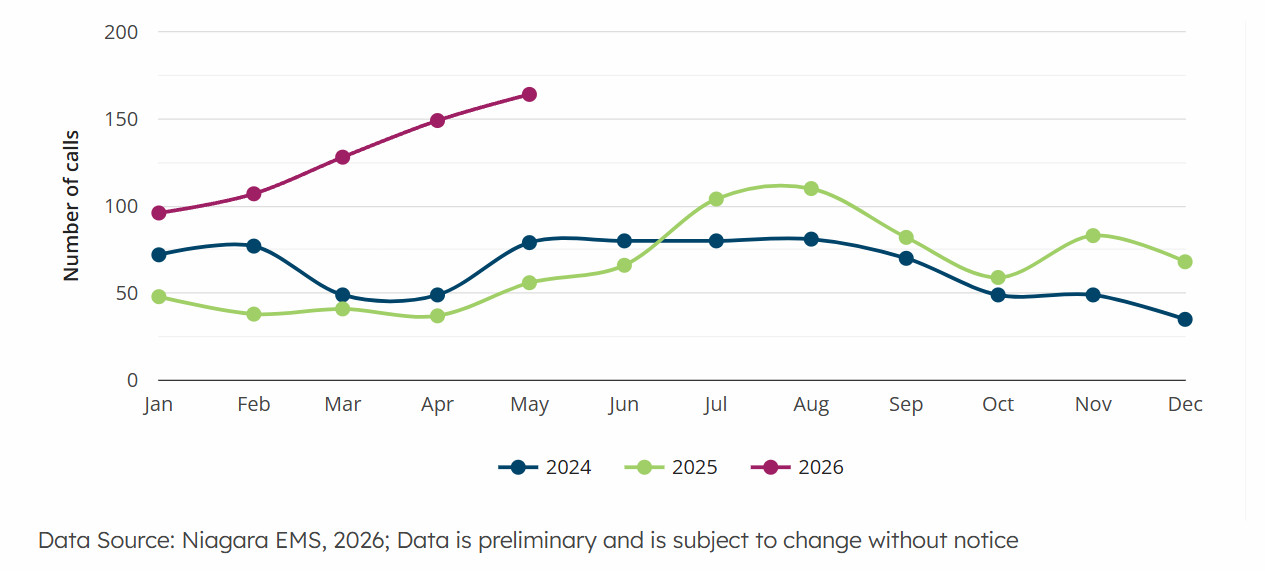
Talia Storm, Director of StreetWorks Services at Positive Living Niagara, explained that the increase was due to a change in the supply, as many users are switching to inhalable substances rather than injectables. Some drugs are becoming harder to reverse with Narcan (Naloxalone). Inhalation support was not available to the site due to new provincial regulations.
Emergency room visits caused by opioids also ticked upward around March of 2025, when the first closures across the province happened. According to data from the Ontario Agency for Health Protection and Promotion, Toronto experienced 22 ER visits in April 2025. The number increased to 47 ER visits by May; July and August saw further increases as those months saw the year’s peak of 57 ER visits in each.
The number of ER visits related to opioids in December 2025 was higher than the year before as well. “The numbers are ticking back up again after they had been decreasing because of the work of sites like ours across the province,” Storm said.
Despite increasing overdose cases caused by inhalable drugs, the only CTS site in Ontario that offers inhalation services is the Casey House in Toronto. It can do so because it operates independently from provincial funding. The recent increase in EMS calls for overdoses only underscores the importance of the work of CTS sites, Storm said.
“Many are turning to inhalable substances because they are less likely to transmit HIV and Hepatitis C.”
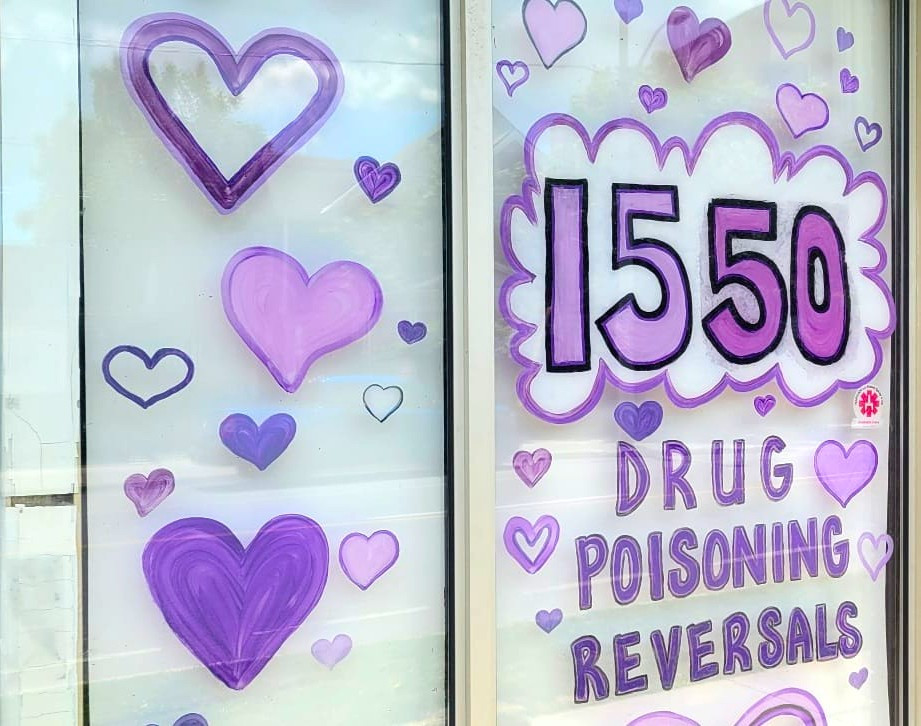
On the day of the St. Catharines closure, the outside of the consumption site had been painted with one of the many achievements the service saw since opening in 2018: “1550 overdoses reversed.”
Storm talked about the immediate effects of the closure on the community a week later. “Overdoses are happening already.” She recounted a particularly bad overdose she had to address on the streets the morning of our interview in June. “This individual had to be rushed to hospital.”
She says these kinds of events were expected. “Public substance abuse, deaths and overdoses have all increased since last year’s closures.” Since many sites closed back in 2025, the data on the impacts of the closure of these services are already well documented.
While EMS calls for opioid toxicity cases increase, emergency department visits for opioid toxicity rose in tandem. A 67 percent increase reversed a previous trend of decreasing ER visits nine months before the site closures last year.
Opioid-related deaths also rose by 19.4 percent according to recent data from the Office of the Chief Coroner, reversing another decreasing trend from April 2024 to March 2025; before the closure, opioid-related deaths had experienced a 38.7 percent decrease in confirmed or probable opioid toxicity deaths.
Frontline workers and clients of CTS sites are also experiencing worsening conditions since the closures. The closure of the CTS site in St. Catharines cut 13 full-and part-time jobs. Storm told The Pointer staff had a deep devotion to their work. “Every single staff member stayed until the last day, despite knowing they would be out of a job since March.”
Client-care provider relationships established over years were destroyed overnight. Those relationships had been successful since 2018 in connecting people in need of care and treatment to addiction counselling, community services and food access.
“We built a community of trust,” Storm said, “and I’m so proud of everyone who worked up to the last day. It was Yohan Hari who once said that ‘the opposite of addiction is community.’ Community, that’s what we were built and were building here. I don’t know a time when shame has ever recovered anyone.”
Part of that community outreach was teaming with Queenston Neighbours, the local community neighbourhood association. Former Principal of Connaught School, Kelly Diiorio, was a part of the association when Storm gave information sessions about the role of CTS sites in the community. “Through that forum, she was able to address any concerns that the neighbourhood might have,” Diiorio told the Pointer, “and so we, as a community, supported the work of the CTS and the help that their staff could give to improve safety in the neighbourhood.”
Under Provincial regulation, CTS sites are not permitted within 200 metres of a school property. The Pointer asked whether during her time as principal, Diiorio ever felt concerned about the presence of the CTS site, which was located only 600 metres away from the school.
“The CTS site opened up when I was in about year three of my eight years as principal at Connaught. Not once did I ever feel that the community was more at risk because of its presence. In fact, the opposite was true, it made me feel we were safer. The CTS staff was exceptional in their diligence in managing the comings and goings at the site.”
Diiorio explained how Positive Living Niagara worked in partnership with the school to help make the students safe. “Talia and her team did a walk through of the playground with my staff at one point, showing us how to properly search for needles, etcetera, and although we thought we did a pretty good job of it each morning, we discovered some additional ways of spotting items we perhaps didn't know before.”
At times, Diiorio noticed the impact the site had on community welfare.
“I am well aware that drug users are not just those who are unhoused. Those with addictions can be our family, friends, neighbours, etcetera, and that is no different in our school family.”
“Many of our students and even some staff had loved ones who were battling addictions and so the CTS, to me, is a necessary 'first stop' on the way to recovery as it first and foremost saves lives so that when those folks are ready, they can seek help. I think this is why I am an advocate. I have seen the effects of addiction on not only the addicted, but on their family members and friends as well.”
An evidence brief on supervised consumption sites illuminates how closures have not been successful in ending the drug crisis. According to it, closure policies have only displaced “drug use into hidden areas like public washrooms and alleys, where people are using drugs alone and overdose risk is substantially higher.”
“All this closure has done is move substance abuse elsewhere, into unpredictable spaces,” Storm told The Pointer.
On the closure of the site, Diiorio said, “It can destroy families. The CTS was the beginning of hope for them.”
The impact of the recovery work can be slow and frustrating to those who are on the outside of these services, which is why Storm understands some of the misconceptions about CTS sites.
“Many people who started the program in 2018 haven’t used drugs in years.”
Diiorio had also witnessed a decrease in public substance use near her former workplace since the program had started: “Much of the drug use that might have previously been out in the open and risky was now indoors and much, much safer. I am certain that parents of children at my school were saved and perhaps even placed on the road to recovery because of the CTS.”
Despite their track record of successes, Storm acknowledges that there persists public confusion about what takes place at a CTS facility. “Some people don’t understand that we don’t actually provide drugs to clients. We only test what is brought into us so that our clients can be informed about what they are consuming.” Public education has always been a part of Positive Living Niagara’s efforts.
This public misinformation is fuelled by politicians like Pierre Poilievre who called safe consumption sites “drug dens” in a press conference back in July 2024, despite knowing the facilities do not supply substances themselves. Poilievre claimed there are safety concerns around CTS sites, fuelling negative perceptions, despite data from facilities across Canada and in other parts of the world that overwhelmingly point to their positive impact. Preliminary data from Ottawa show crime either decreases around CTS sites or stays the same. A systematic review published in The Science of Prevention journal found the presence of supervised consumption sites increases public order and decreases drug-related crimes.
Diiorio said much of the negative public discourse on CTS sites and their services does not match her experiences. “I am severely disappointed at the government for kowtowing to some public opinion and misconceptions rather than acting on irrefutable evidence that CTS save lives and save government funds as well.” She added, “Our already overburdened healthcare system is now going to suffer even more because of the choices of our government.”
Two years ago, Positive Living Niagara partnered with SCATR, and a project out of Western University in London Ontario. SCATR is a drug testing machine that can find impurities in substances. It takes only 15 minutes to process results, and Storm says those 15 minutes are vital opportunities to have one-on-one conversations with clients and connect them to services.

SCATR box used for testing the components of substances.
(from scatr.ca)
“31 percent of people choose to either reduce their substance of choice or throw it out entirely when we present them with the results.”
SCATR can inform CTS supervisors of what impurities are popping up in the market. This information can be passed on to police and public health agencies to provide better insight into how substance abuse trends evolve day-to-day. For example, Storm explained how metaromidine is a recent impurity that has appeared in substances like cocaine. This particular drug causes major withdrawal symptoms that can require ICU admission to treat.
“Drug trends change rapidly, and we have always believed that knowledge is power,” Storm said. Positive Living Niagara has submitted an application to Health Canada to expand drug testing services.
Prior to the closure of CTS sites across Ontario last month, the St. Catharines site had faced challenges and a threat of closure due to other provincial legislation. A private Montessori school that planned to operate 90 metres away from Niagara’s only CTS nearly caused the facility to close earlier.
Beyond Montessori, founded by current executive director Natasha Secord, reportedly did not know that plans to operate the school so close to the CTS was a violation of the current provincial regulations. Secord did not explain why she was moving a school with a yearly $10,000 tuition fee for the kindergarten program to a street location that is dense in services aimed toward lower-income residents.
According to Storm, Beyond Montessori has now found a new location near Old Glenridge. She said some of the biggest defenders of the CTS were parents of children attending Beyond Montessori. Storm said other schools like Beyond Montessori found alternative locations to avoid closing down the CTS when they understood the important role in healthcare the site played in the community.
Storm said that despite the Ontario government’s preexisting regulations regarding CTS locations in close proximity to school grounds, students, parents, teachers, and principals like Diiorio have been some of their strongest allies.
“The closure of the site is just heartbreaking,” Diiorio said. “Once, I was on a bus trip with a primary group of students. As we left the school, we drove past the CTS. I was sitting with a little one, and she proudly turned to me, after pointing to the CTS, and said ‘that's where my Mummy goes to help her get better.’ I have never forgotten that moment.”
At this year’s Ford Fest earlier this month, the yearly free community barbecue, held at Thompson Memorial Park in Scarborough, Premier Ford framed drug injection sites as “failed experiments” over the sound of Ontario Public Service Employees Union members protesting the event. OPSEU represents workers who support some of the province's most vulnerable communities, and are currently striking in support of public services that the Ford government has slashed.
Ford Fest has since drawn widespread controversy over an allegedly doctored photo of the event that appears to have used a colour filter over the purple shirts of the OPSEU protestors to make them appear blue, the colour of the Ontario PC party. Ford has so far denied any accusations of intentionally altering the picture.
A couple weeks earlier, the closure of the Niagara CTS in St. Catharines happened despite Niagara EMS having to respond to more than 120 suspected overdose calls per month. Since 2018, the site has had more than 89,000 visits, reversed 1,550 overdoses, provided drug checking and drug market support and facilitated thousands of referrals and connections to healthcare, housing, treatment and social services.
“I often said that you don’t have to like what we’re doing, but you can acknowledge that it works,” Storm said. “We can all agree that the war on drugs was a failure,” and that “stigma is alive and well.”
Email: [email protected]
At a time when vital public information is needed by everyone, The Pointer has taken down our paywall on all stories to ensure every resident of Brampton, Mississauga and Niagara has access to the facts. For those who are able, we encourage you to consider a subscription. This will help us report on important public interest issues the community needs to know about now more than ever. You can register for a 30-day free trial HERE. Thereafter, The Pointer will charge $10 a month and you can cancel any time right on the website. Thank you
Submit a correction about this story

