
10 days, 10 provinces, 100K trees: Canadian world-record-holder who turned climate action into epic road trip
As Quebec-native Antoine Moses drove from Manitoba to Ontario on his mission to plant 100,000 trees across Canada in ten days, he remembered the first time he “fell in love”.
In 2016, when 17-year-old Antoine first heard about a summer job planting trees with Baie-des-Chaleurs Forestry Group, he knew he had to give it a try. But his first week on the job quickly pushed him to the edge of his formidable limits.
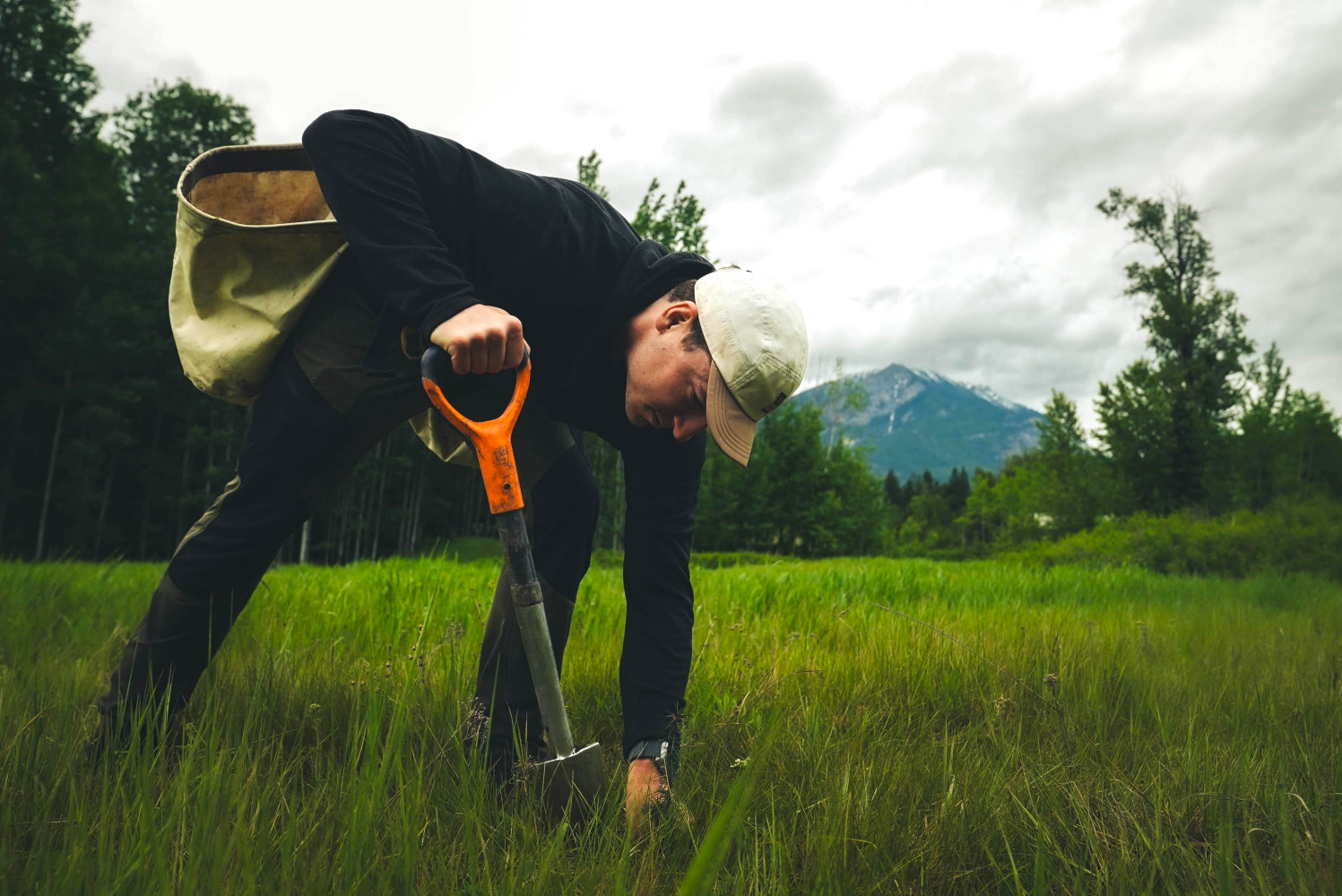
On a Sunday, he had run his first marathon, and the next morning, he was in the planting area by 4 a.m. For the next ten hours, still recovering from the “brutal” fatigue of the race, he trekked through the terrain, shovel in hand, seedlings strapped to his waist, planting sapling after sapling as he worked to bring new forests to life.
“It was just instant love,” he told The Pointer with a smile that refused to lose its shape.
“I just wanted to plant as many trees as possible…it's hard to describe in words what I actually experienced.”
Like running, planting trees demanded endurance, rhythm and the ability to keep going long after the body wanted to stop. It gave him the luxury to “disconnect” his thoughts from the noise of the world outside and “flow with nature”.
“It's like meditation, I just go into a state where time flies,” he added. “I just know how painful it will get, but I'll want to do it again.”
He returned to the job every summer while studying accounting. While accounting never became a career, he became pretty good at counting the number of trees he was planting.
Soon after, he knew it was time to trade spreadsheets for seedlings.
“I just decided to commit my life to tree planting,” he reminisced.
Little did he realize he was sowing the seeds of a passion that would one day lead him to break two world records, making the planet greener “one tree at a time”.
He moved to the West Coast and started working with British Columbia-based Blue Collar Silviculture. There, his focus was on speed and technique—learning the “best techniques” of planting and moving at a faster pace.
Each season became part of a steady progression, a process of refining his skills and pushing his limits further than the year before.
In five years, he blossomed into a runner and planter with “a lot of endurance and mental spirit” that gave him the strength to envision challenging the world record long considered untouchable.
In 2001, Saskatchewan planter Kenny Chaplin established a Guinness World Record by planting 15,170 trees in a single day near Prince Albert, averaging one tree every 4.5 seconds for 19 hours, costing him multiple toenails and tendinitis.
Two decades later, in a world still grappling with the aftermath of the pandemic, Antoine stepped into one of the most punishing summers on record for Canada’s forests when 4,078,895 hectares were burned by the end of the wildfire season.
On July 17 2021, in the northern Alberta hamlet of La Crete, Antoine set out to break the world record with a simple piece of advice from Kenny: “figure it out”.
Starting at first light on a berm, Antoine did just that and planted up to 850 trees within an hour in the opening stretch.
By 9 hours and 20 minutes, he had already placed 10,000 seedlings into the ground. As the day wore on, he maintained a relentless rhythm of roughly a thousand trees an hour, planting a tree every five seconds through heat, exhaustion and swarms of insects as darkness fell around 3:30 a.m.
At 14 hours and 51 minutes, he surpassed the existing record of 15,170 trees and took a few seconds to hug his friends and crewmates. But then continued, refusing to stop until around 4:20 a.m. when he had officially planted a total of 23,060 trees in 24 hours, etching his name into the book of Guinness World Records.
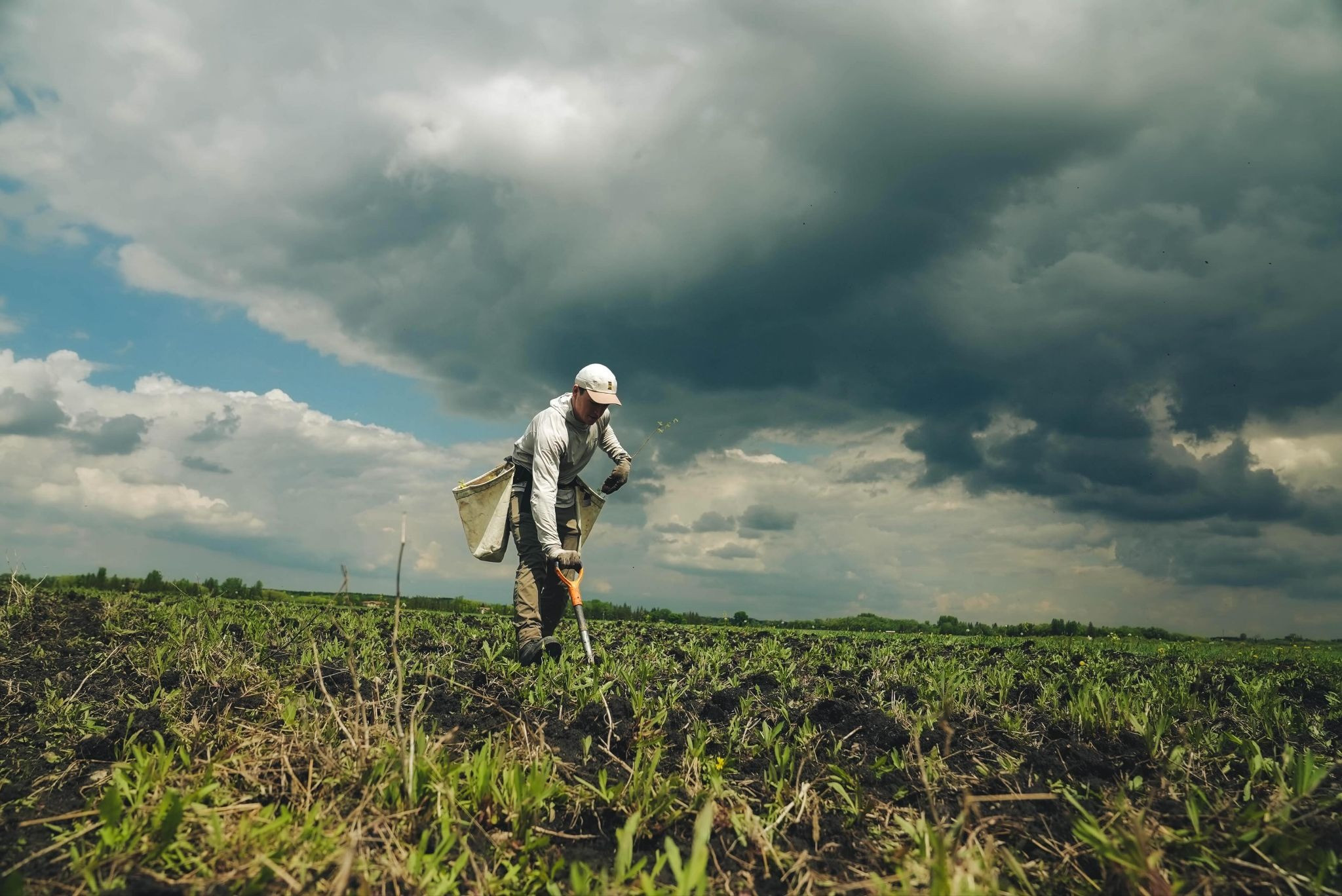
Antoine Moses shattered the world record by planting 23,060 trees in a single 24-hour period, setting a new benchmark for endurance and large-scale reforestation efforts in 2021.
(Guinness World Records)
Antoine originally intended to break the record in 2020 but the tragic loss of a fellow young planter during a stormy day in the field prompted him to step away from tree planting to reflect on its meaning. He returned with renewed purpose the following year, dedicating his record attempt to her memory and helping raise funds for a memorial scholarship in her honour.
After the tremendous feat, something still lingered afterwards: the realization that tree planting was no longer about volume alone but the purpose behind the act.
“Now, it was more about what's the best impact I can have with every tree,” Antoine shared.
That epiphany took him to Mirarani village on the coast of Mombasa County in Kenya, to attempt an even more gruelling challenge this April: the most mangroves planted by an individual in 24 hours.
Mangroves are widely recognized as a nature-based solution to climate change, using natural ecosystems to help absorb and store carbon while adapting to environmental pressures. Their muddy, organic-rich soils trap and lock away carbon over time; mangrove forests store up to four times more carbon than other tropical forests—“making these coastal forests extremely valuable in the fight against climate change”, according to the World Wildlife Fund.
With its tidal waters, soft sediments and sheltered shoreline supported by science-led species selection and strong community and conservation partnerships, Mirarani along Tudor Creek made the ideal location for planting mangroves.
After spending two weeks learning about planting and cultural practices from the community, Antoine waded through thick, tidal mud, bending repeatedly over rows of mangrove propagules and pressing them into the shoreline under the heat of the sun and the weight of exhaustion, supported by a team of locals.
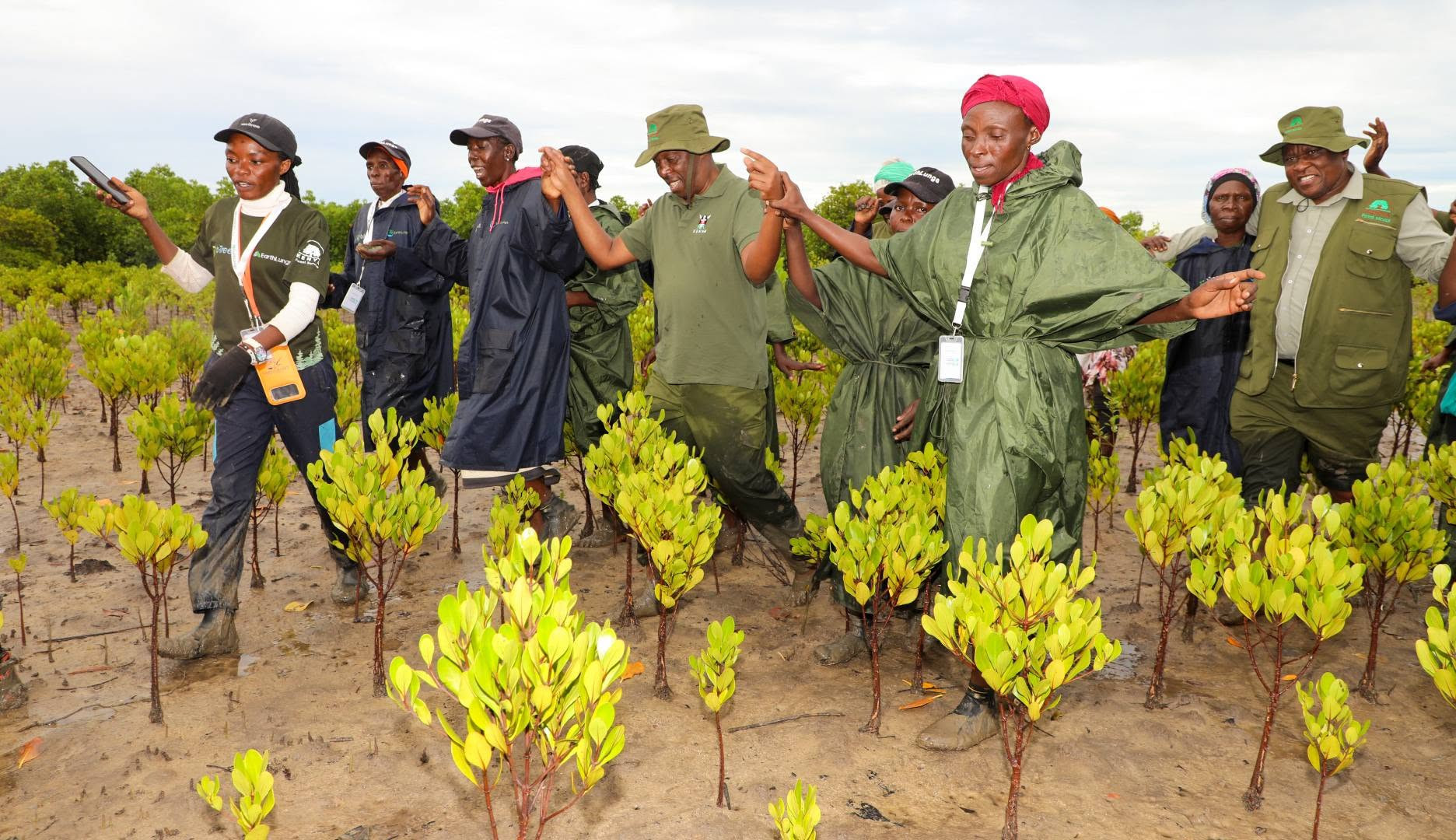
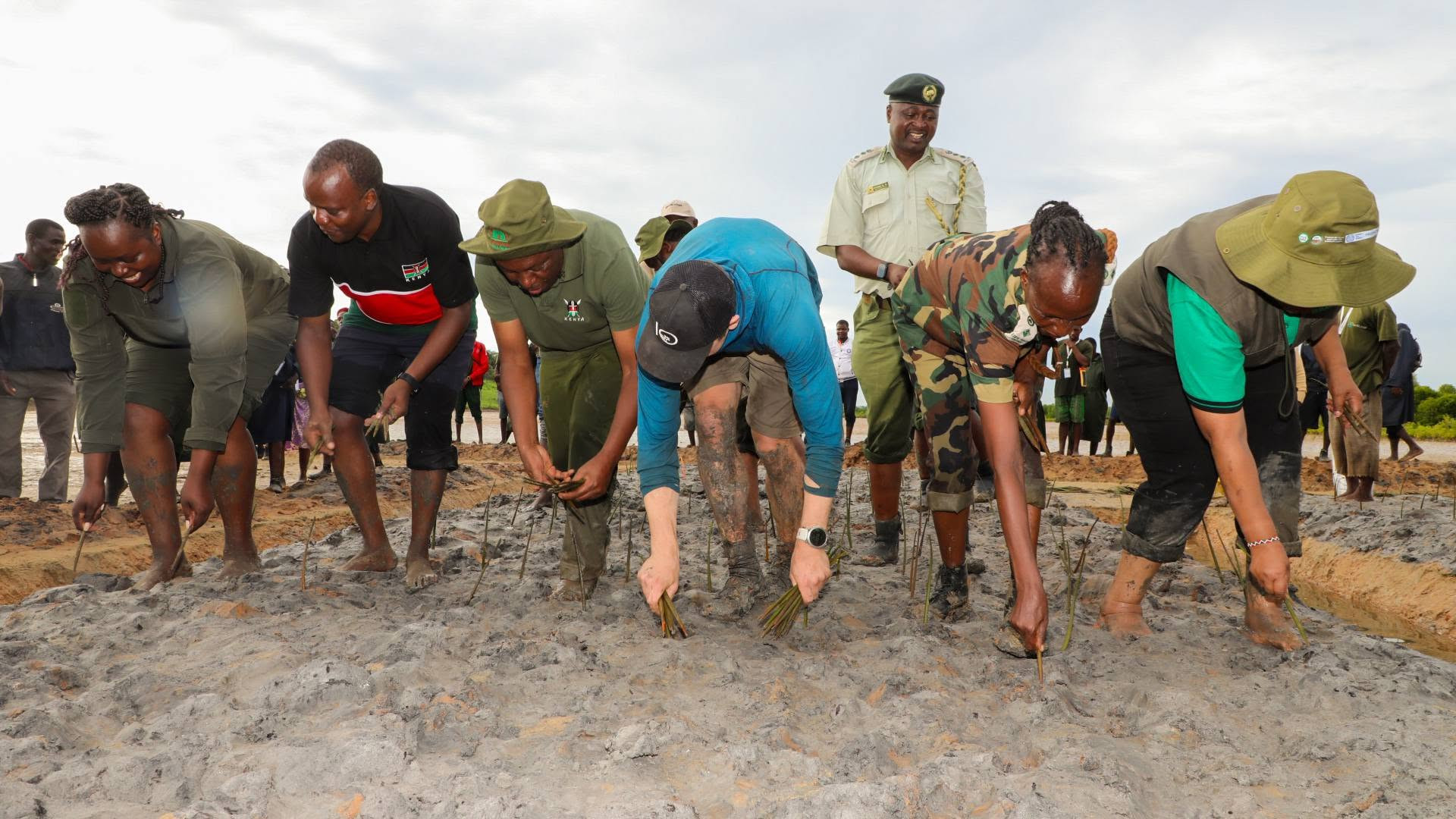
Canadian tree planter Antoine Moses set a Guinness World Record by planting 47,460 mangrove trees in 24 hours, averaging 32 trees per minute, along the coastline of Mombasa, Kenya.
(Kenya Forest Services/Facebook)
His pace was insurmountable: 2,850 mangroves in just an hour—one tree every 1.3 seconds.
By the ninth hour, he had pushed past 19,100. And as the day stretched into night, his rhythm never broke. At 14 hours and 34 minutes, more than 30,500 mangroves had been planted, securing a new world record.
Did Antoine stop?
Not really.
The runner in him kept him going. After drinking 24 litres of water — one litre for every hour — on April 30, 27-year-old Antoine had officially planted 47,460 mangroves as a rainbow arced across the sky at approximately 8 a.m.
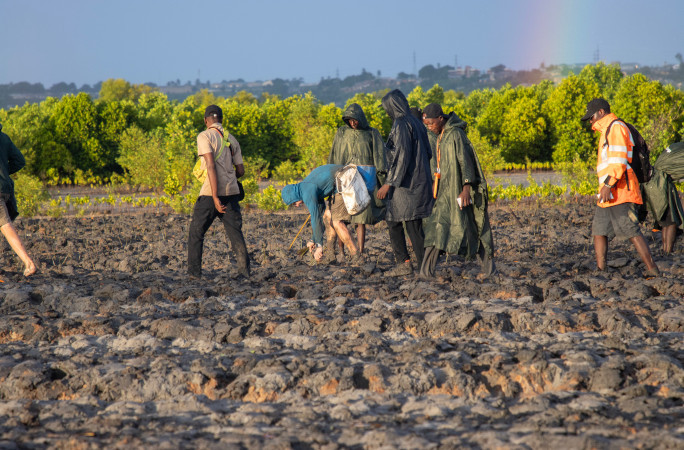
Antoine Moses took a second tree planting record after planting over 45,000 mangroves in one day in Kenya.
(Guinness World Record)
“It was almost life-changing in the sense that in every project I do now, I want to have that type of impact, and I want to make sure the trees I'm planting will have a greater impact,” he said.
On June 1, Antoine set off on a 10-day cross-Canada road trip in his van, driving from British Columbia to Newfoundland to plant trees in all provinces to raise funds for 100,000 trees and restore damaged forests.
“We do need to take care of our country. We have one of the biggest countries in the world and one of the biggest forests but they’re also burning really fast,” he said.
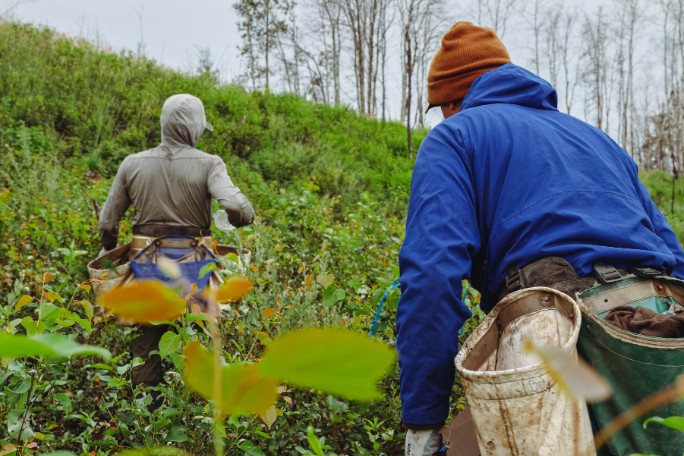
On Day 4, Antoine was joined by his father Mario, who had flown in to help shoulder the long stretch of driving across the country. Together, the pair planted trembling aspen just outside Winnipeg near Birds Hill Provincial Park in Manitoba.
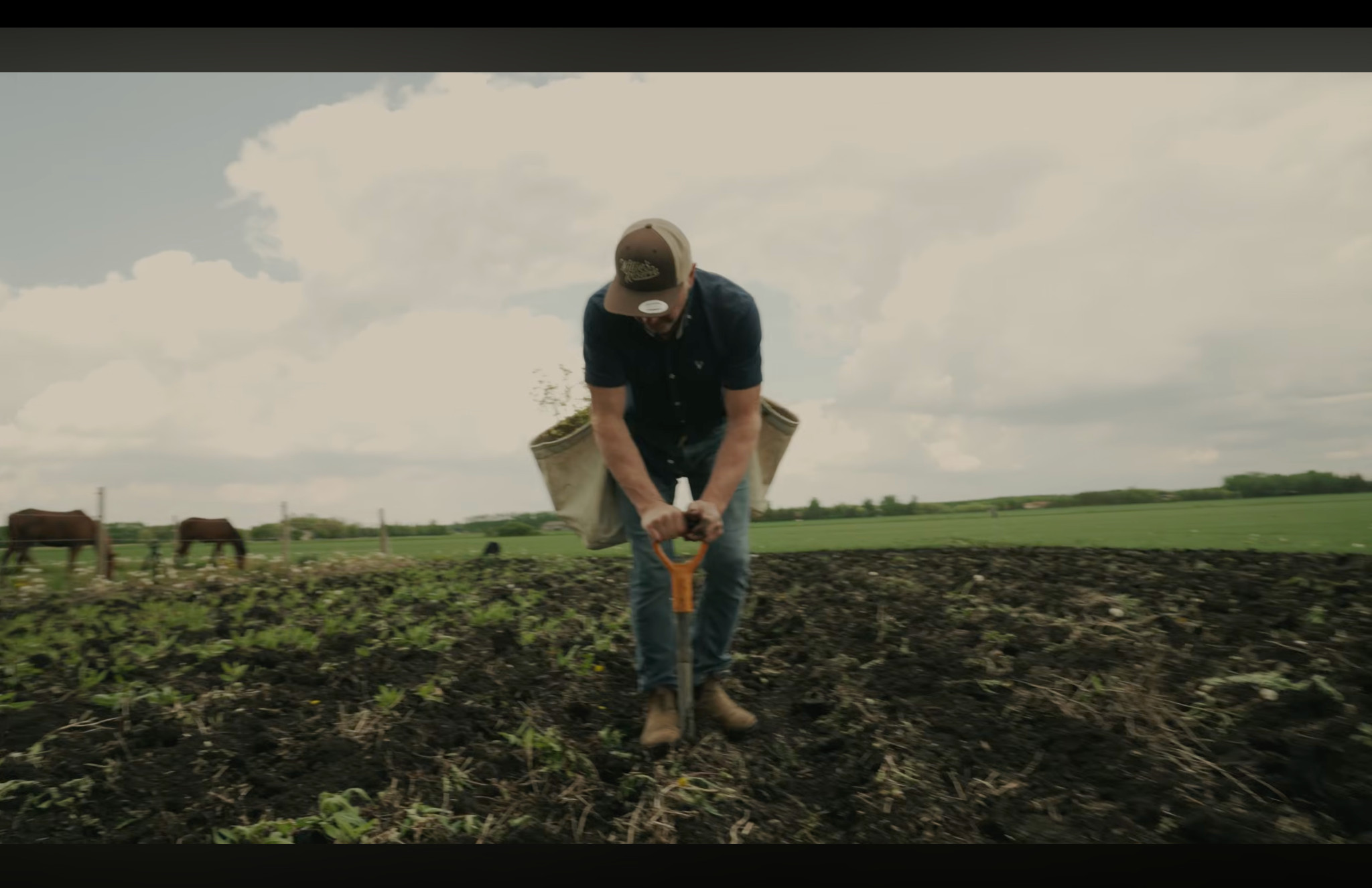
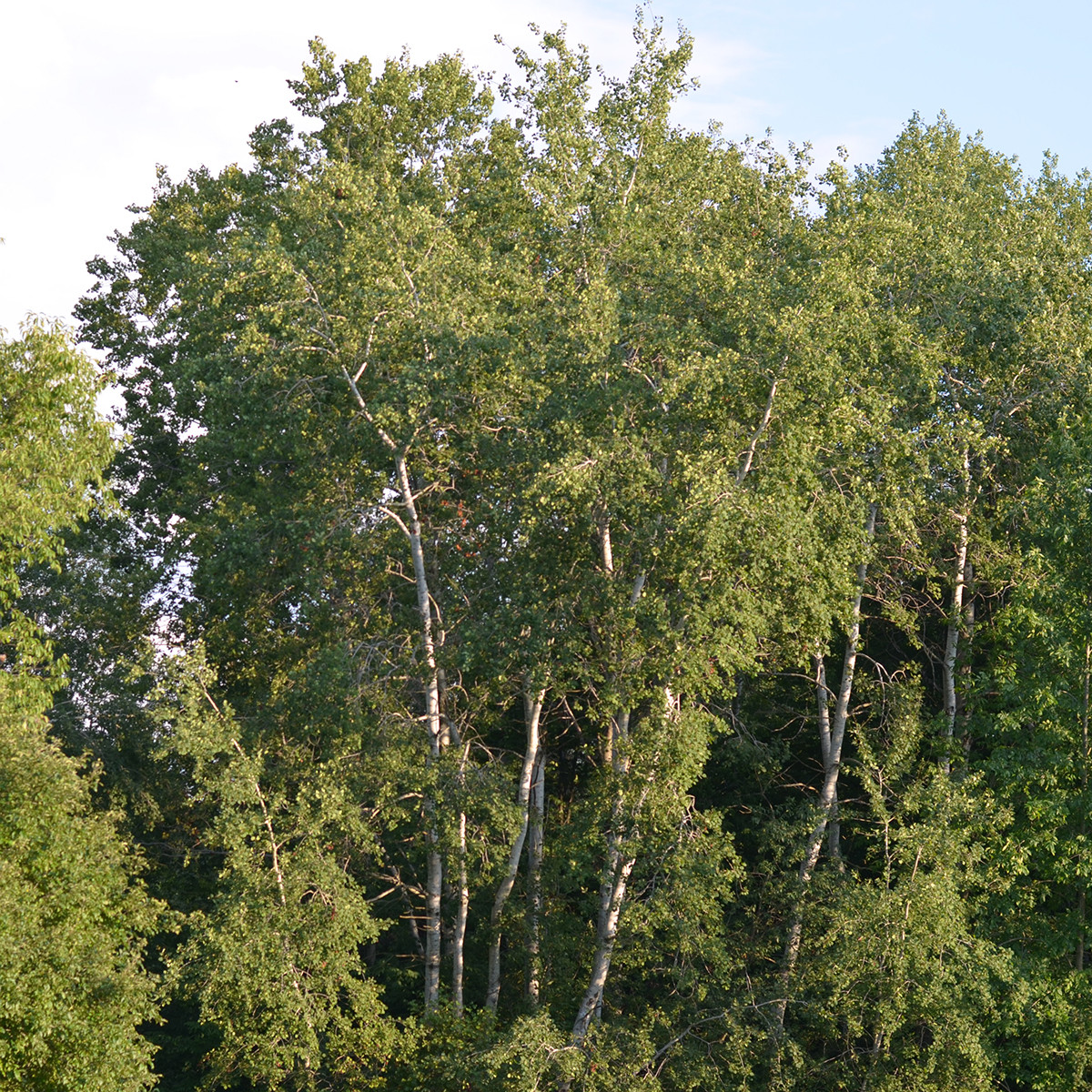
Trembling aspen (Populus tremuloides) is native to Manitoba and is the most abundant deciduous tree across the province, thriving in the Aspen Parkland and extending into the boreal forest where it plays a vital ecological role. Its success comes from its remarkable adaptability and unique biology: aspens spread through vast interconnected root systems, forming clonal colonies where what appears to be many individual trees is often a single living organism. As a pioneer species, it is among the first to regenerate after disturbance, quickly colonizing open areas and helping restore damaged landscapes while supporting biodiversity. The tree is also known for its distinctive fluttering leaves, caused by flattened leaf stems that make the canopy shimmer and tremble in the slightest breeze. IN PHOTO: Mario Moses planting trembling aspen in Manitoba.
(Top: Antomos/YouTube, Below: Government of Ontario)
Between stretches of highway and roadside stops, the team’s schedule was dominated by immense pressure: they needed to reach Montreal in 36 hours, with about 20 hours of driving ahead from Winnipeg, leaving only limited time for rest and planting.
But that’s what Mario was there for.
He has long been his son’s biggest cheerleader; from the years of ultramarathons to the demanding tree-planting seasons, he knew he would be there for his son once again.
“I’m really proud of all the projects Antoine is doing,” Mario said. [translated from French, Mario’s mother tongue]
“My contribution is a drop of water in the bucket…it's nothing compared to what Antoine’s trying to do, and create, so it's a no-brainer for me to come and help him out.”
He wanted to continue but found himself getting emotional.
Antoine stepped in for him: “he's always been there…he's saying he's doing like an easy job but he's been a great part of what I've done.”

Antoine Moses’ father Mario Moses has been an integral part of his feats over the years.
(Antomos/YouTube)
Thanks to Mario’s driving skills, Antoine reached Kapuskasing in Ontario, where he went door to door asking residents for permission to plant trees on their property after the team had to improvise to save time and keep moving rather than detour to a pre-arranged site in Dryden.
After a few attempts, the owners of Jim Farm welcomed the idea and he completed Day 5 in the province by planting 100 poplar trees on their farm.
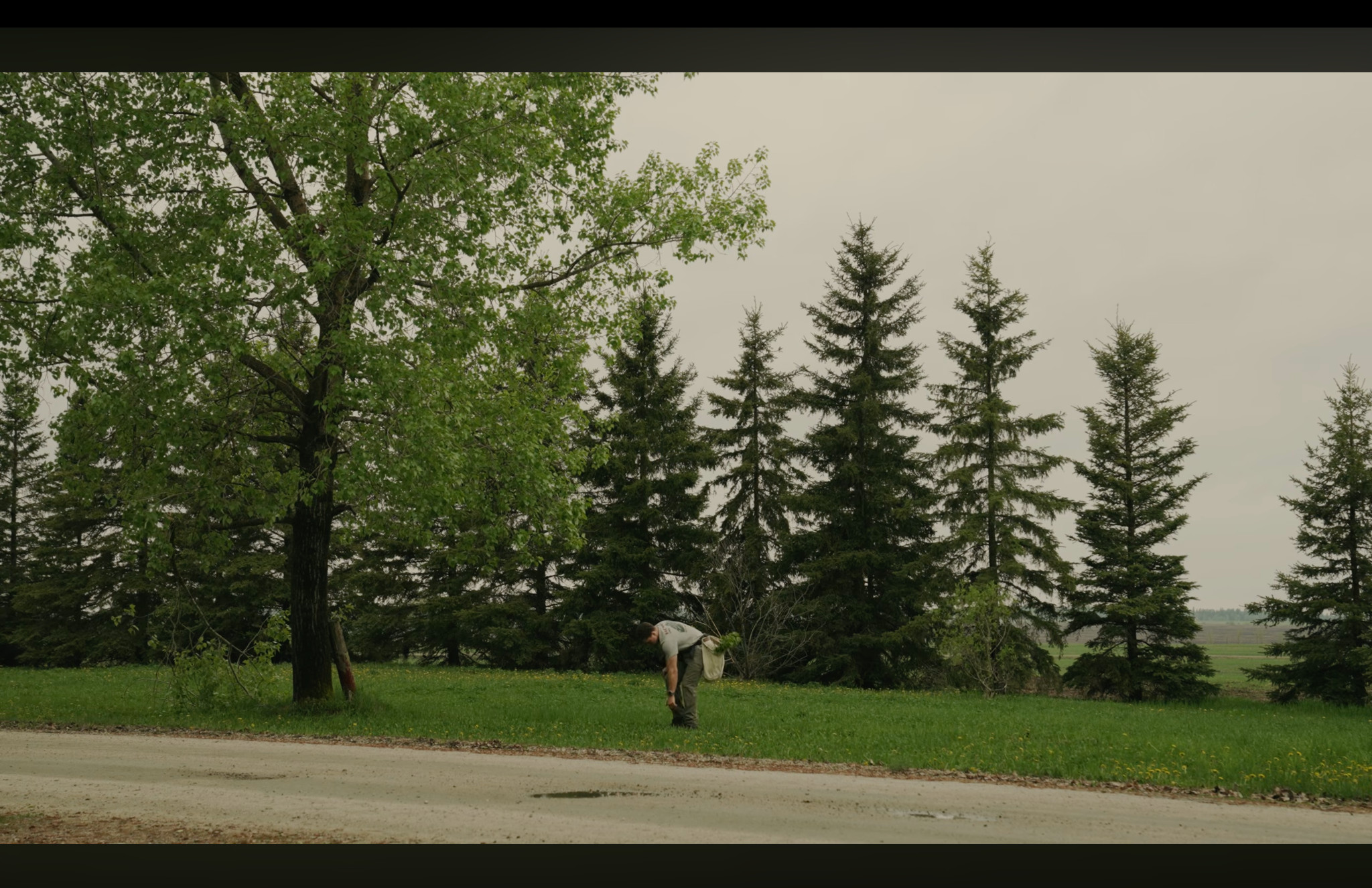
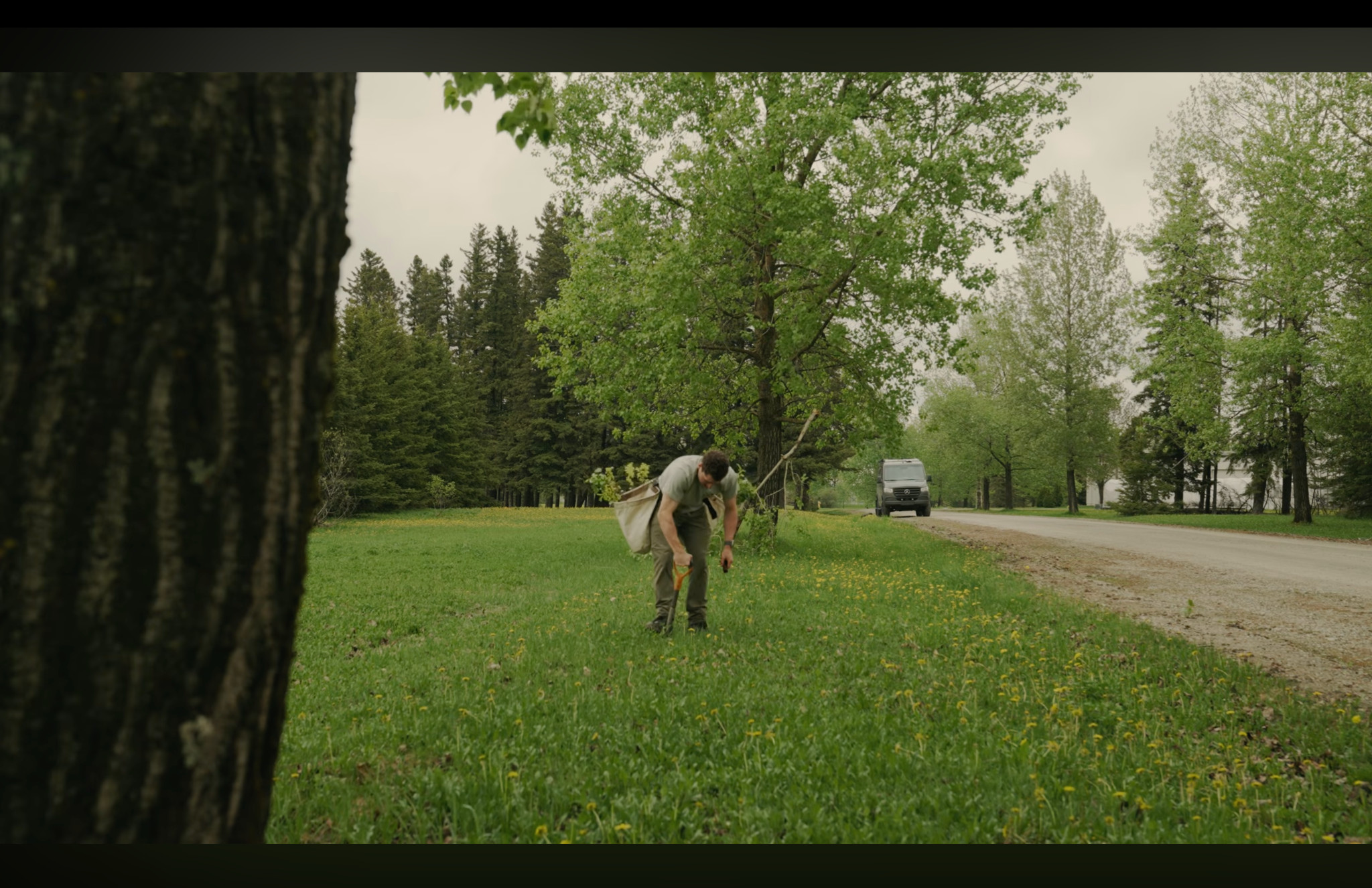
Poplars are fast-growing trees that can reach up to 40 metres in height and live up to 400 years. They are fast-growing northern temperate hardwoods known for their rapid biomass production, striking form, and distinctive quaking leaves, where flat leaf stalks cause them to shimmer and rustle even in the slightest breeze. Beyond their visual beauty, they act as natural soil filters that can absorb excess water and draw out pollutants such as heavy metals and industrial toxins, making them invaluable for ecological cleanup and restoration. Many species reproduce through vast underground root systems, forming clonal colonies that can spread across large areas while their cotton-like seed dispersal allows them to travel long distances on the wind.
(Antomos/YouTube)
After successfully planting 100,000 trees across Canada, Antoine alone has planted over two million trees across the globe and aims to reach a 25 million mark.
“Tree planting is putting life back into earth and for it to grow forever. That’s legacy, that will outlast us,” he said.
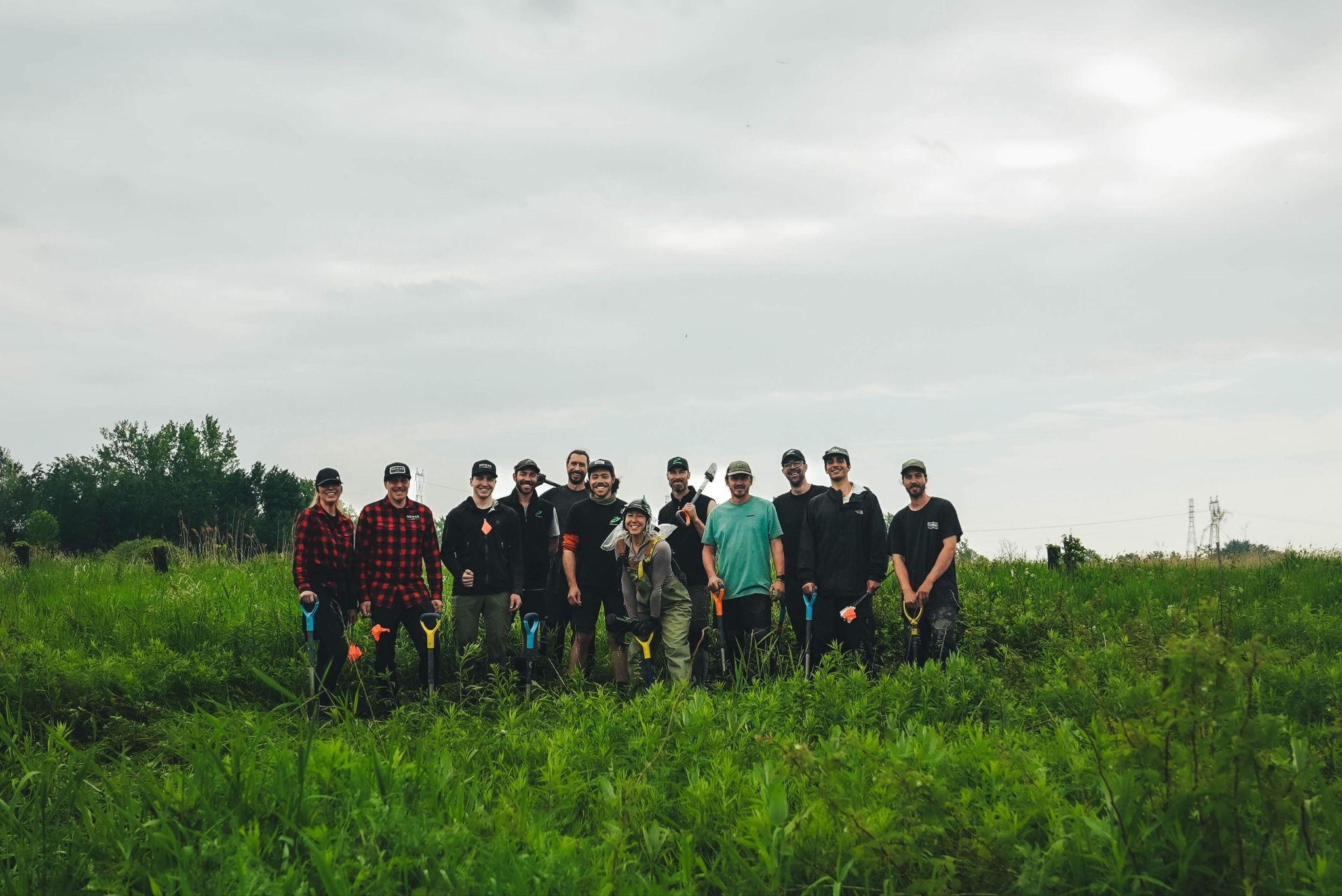
Antoine Moses says he has made many friends along the way who have joined him in his journey to plant trees across Canada.
(Supplied: Antoine Moses)
He does not plan to stop anytime soon, especially with wildfires wiping out millions of acres of land across the country every year.
“I'd rather actually plant some trees and make some impact than not doing it and give up, because some trees are better than no trees,” he said.
“You don't need to buy hundreds of dollars of trees every month to make an impact, to compensate for monthly emission…If you're flying somewhere or driving every day, planting even one tree a month can make a difference. It's a pretty cool impact to have.”
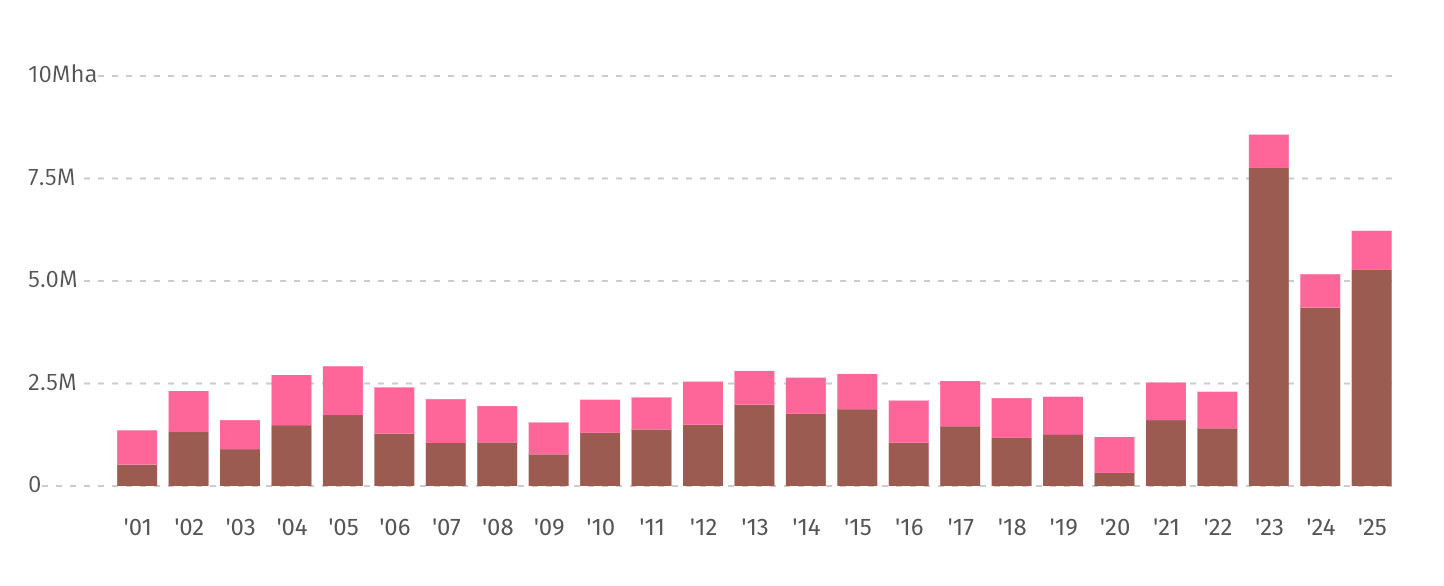
Between 2001 and 2025, Canada lost 46 Million Hectares (Mha) of tree cover from fires. 2023 was the year with the most tree cover loss due to fires during this period with 7.8 Mha lost to fires, 91 percent of all tree cover loss for that year.
(Global Forest Watch)
It is a message he wants to spread with his next tree-planting road trip across all 50 U.S. states in 50 days. For now, that ambition remains just out of reach, requiring the kind of sponsorship and logistical support that would make such an undertaking financially and physically possible: “I need support to actually make a change and do what I do.”
But he has learned not to wait for perfect conditions before taking action.
“If you dream of something, you go and try it. I could have waited three months more to actually being ready to do this trip but I’d rather make mistakes and make it happen,” Antoine said.
“There’s a whole ecosystem of things to do to create a better planet.”
Email: [email protected]
At a time when vital public information is needed by everyone, The Pointer has taken down our paywall on all stories to ensure every resident of Brampton, Mississauga and Niagara has access to the facts. For those who are able, we encourage you to consider a subscription. This will help us report on important public interest issues the community needs to know about now more than ever. You can register for a 30-day free trial HERE. Thereafter, The Pointer will charge $10 a month and you can cancel any time right on the website. Thank you
Submit a correction about this story

