
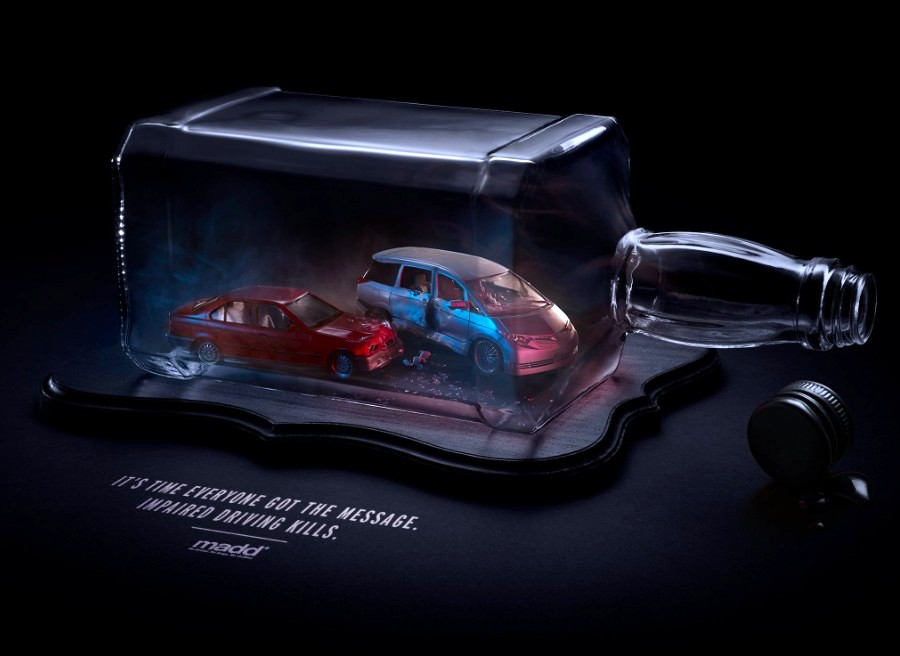
‘She saw the man behind the wheel coming, she screamed for me, and I could do nothing’
Car collisions and minor fender benders are common wherever automobiles are used. Drivers exit their vehicle, assess the damage, exchange insurance information and deal with the repairs.
Carly Charlebois and Rama Pirakala were involved in a typical mishap on June 16, 2022.
After slowing down on an outside lane of the QEW, Charlebois, from Hamilton who was 20 at the time, and 42-year-old Pirakala from Oakville stepped out of their vehicles which they had brought to a stop on the highway near Cawthra Road where there is no shoulder next to the left lane.
While Charlebois went into the back seat of her car to make a phone call, Pirakala remained outside.
Then, out of nowhere, like a stray missile hurtling toward its unintended target, Adel Al-Busaidy slammed his vehicle with such force, travelling 135 kilometres an hour, into the back of Charlebois' car that she would lose all signs of life and die shortly after. Pirakala's body was thrown onto the guardrail and he died at the scene.
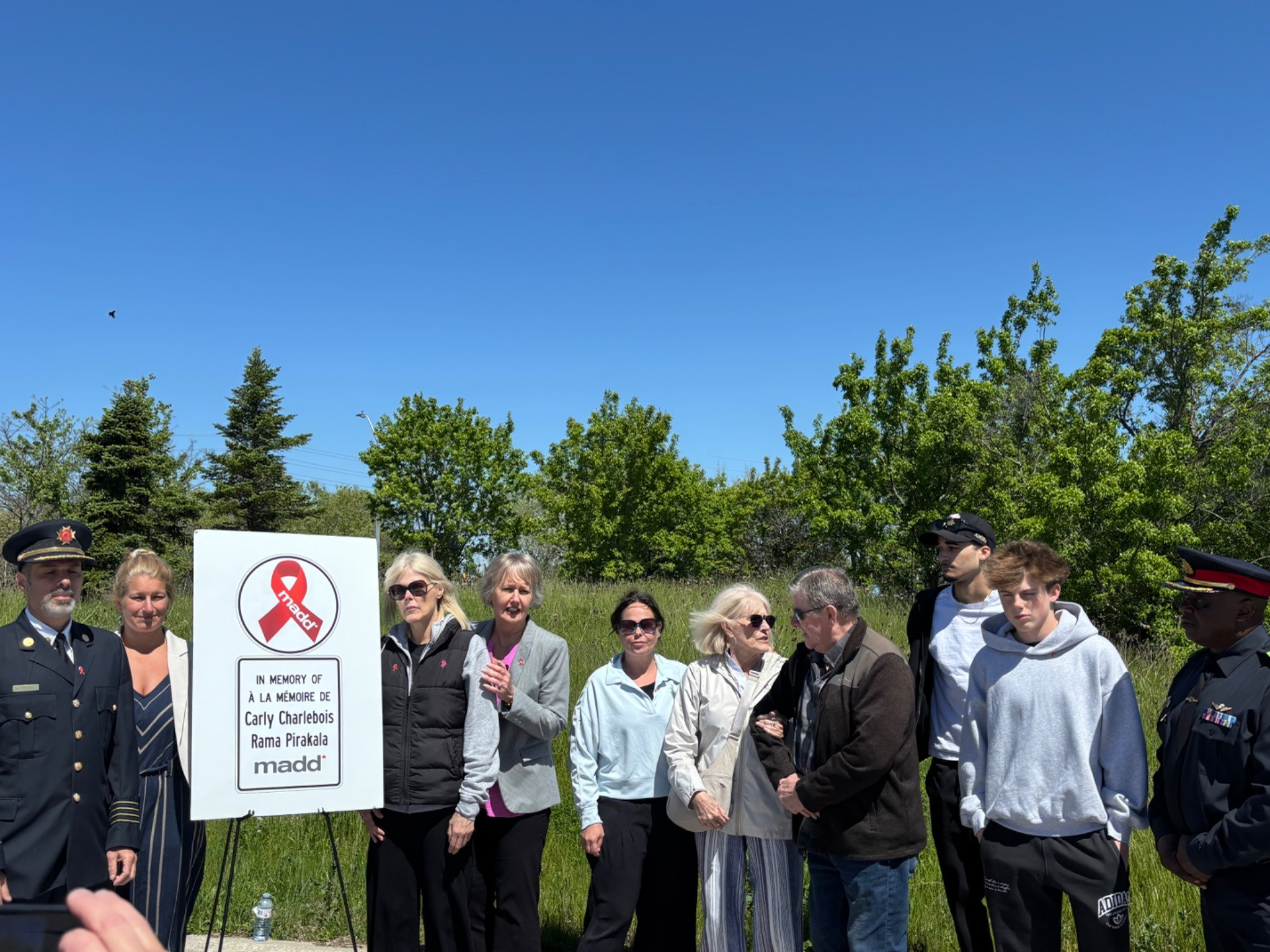
Family and friends of Carly Charlebois stand next to her and Rama Pirakala’s memorial sign after both were killed by an impaired driver.
(Benjamin Steeves)
Cheryl Lewis was on the phone with her daughter after the fender bender, then heard the horror of what followed moments later.
“She saw the man behind the wheel coming. He was doing 135 kilometers an hour. She screamed for me, and I could do nothing. There was nothing after a bit of silence,” Lewis said, her voice trembling as tears covered her face in front of a somber crowd on May 21. She spoke at MADD Canada’s Roadside Memorial Sign Unveiling Ceremony at the Erin Mills Parkway carpool lot, near the spot where Charlebois and Pirakala lost their lives.
The grief caused by their deaths continues to be deeply felt by their family and friends.
“I will forever miss her. My whole body screams for her. My soul, my heart, my brain. And I still have trouble comprehending she's not coming home,” Lewis said.
She was horrified and disgusted to find out the impaired driver who killed her daughter was later released on day parole, one year after beginning to serve his ten-year sentence in jail.
“Every roadside memorial sign tells a story that should never have been written,” said Tanya Hansen Pratt, National President of MADD Canada. “Carly’s family is grieving a young life just beginning, and Rama’s family is grieving a father who will never come home. This is the devastating reality of impaired driving, an entirely preventable crime, and it is why we must always drive sober.”
Alcohol impaired driving accounted for roughly a quarter of all road deaths in Canada in 2020 according to the Canadian Association of Chiefs of Police.
In 2017, according to statistics MADD reported, alcohol was involved in 25 percent of vehicular crash fatalities of 16 to 19-year-olds; and 45 percent of crash fatalities of 20 to 25-year-olds.
More recent data shows the problem is still common, with 78,480 police stops in 2021 that involved impaired drivers. In 2022, 521 Canadians were killed in crashes that involved alcohol and in 2021, 496 died in collisions that involved drug use.
MADD Canada also reported that in 2022 more than 50 percent of deaths caused by road collisions where 15 to 24-year-olds were killed involved alcohol and/or drugs.
In 2025, Peel Police reported 1,002 impaired driving related charges, but Deputy Chief Marc Andrews said the actual number was higher than what was reported on the Peel Police website.
“Since the start of this year, officers have laid over 633 impaired driving charges. It boggles my mind how we're still in this day and age having to respond to this incredibly reckless act on such a frequent basis,” Andrews said at MADD Canada’s roadside memorial sign unveiling ceremony. “Just over this past (May) long-weekend our PRP officers laid 37 impaired drinking and driving charges. One is too many, 37 is completely unacceptable.”
“In 2025 they laid over 1230 charges, five times as many as they laid in 2021 when the unit was started.”
As impaired driving plagues countries around the world, the United States has begun implementing vehicle impairment technologies. The Infrastructure Investment and Jobs Act of 2021 mandated that by November 2024, the U.S Department of Transportation establish a Federal Motor Vehicle Safety Standard, requiring impairment prevention systems in all new cars within three years.
Some of the preventative measures that could be rolled out are: speed limiters, cell phone blockers, speed warnings, seat belt interlocks, fatigue warnings and vehicle impairment prevention. MADD has reported that technology exists that can allow cabin cameras, breath and touch sensors, and sophisticated vehicle movement sensors to detect when a driver is impaired and safely bring the car to a stop while shutting down the ability to continue driving.
MADD Canada Chief Operating officer, Dawn Regan, called on the Canadian government during the unveiling ceremony, to follow suit and implement similar measures as the U.S.
“Experts in the U.S. predict that it will save up to 10,000 lives a year. We're calling on the Canadian government to commit to adopting a similar law and dedicating the resources necessary to ensure that we make Canadian roads the safest.”
For Lewis, her fight brings a simple message, in memory of her daughter.
“It's not just numbers or statistics. It's real life. Real lives. Think twice.”
Email: [email protected]
At a time when vital public information is needed by everyone, The Pointer has taken down our paywall on all stories to ensure every resident of Brampton, Mississauga and Niagara has access to the facts. For those who are able, we encourage you to consider a subscription. This will help us report on important public interest issues the community needs to know about now more than ever. You can register for a 30-day free trial HERE. Thereafter, The Pointer will charge $10 a month and you can cancel any time right on the website. Thank you
Submit a correction about this story

