
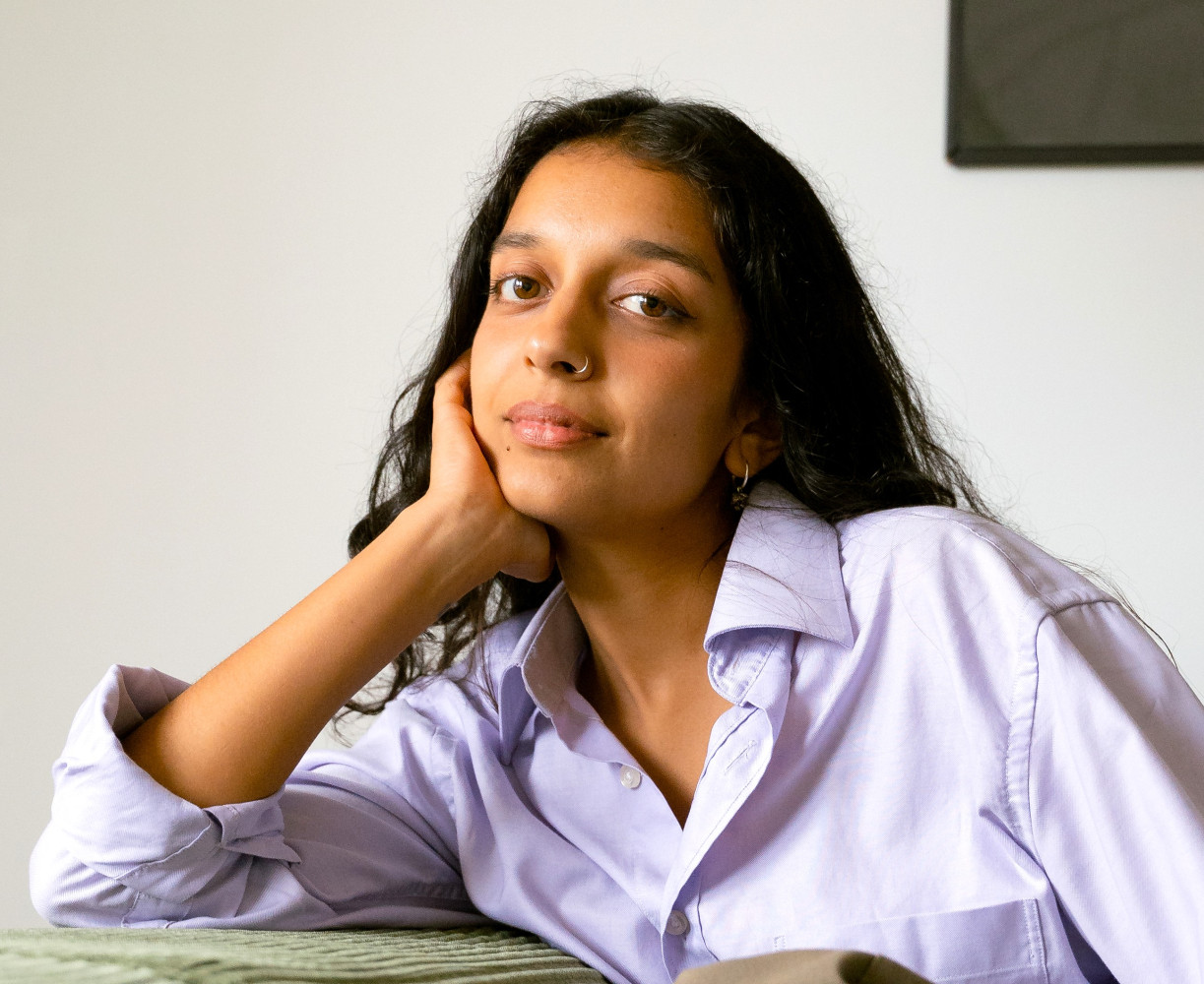
Mississauga author Jasmeen Siddiqui’s debut novel The First After explores themes of identity & place
“You’re my first interview,” Jasmeen Siddiqui tells me, laughing over our Zoom call.
It’s a fitting start to our conversation about firsts—first time travelling, first loves and her own debut novel, The First After.
The book moves through a liminal phase in the life of Anaa, a twenty-three-year-old poet in the ambiguous, exhilarating time so many emerging adults eagerly devour—the in-between world before full-blown adulthood inevitably arrives.
It’s an unsettling transition for many, especially for someone with such deeply curious impulses. Anaa struggles to find her footing in Portugal, where she has sailed off to, hoping to get lost… and found, aching for an actual place that lives up to her starry imagination, where her poetic passions have long been moored.
She is surrounded by new friends and a possible new love interest. But when her ex-boyfriend Ben shows up, she’s overcome by long dormant feelings she didn’t realize still lingered somewhere hiding within her. Anaa suddenly wonders if she is just passing through this period in her life, or is she finally ready to stay. Will she mature into a woman capable of putting roots down, that grow deeply into their place? (What is her place?) Is she destined to chase the aesthetic life of a wanderlust wanderer? Or is there a perfect balance for her, somewhere in between?
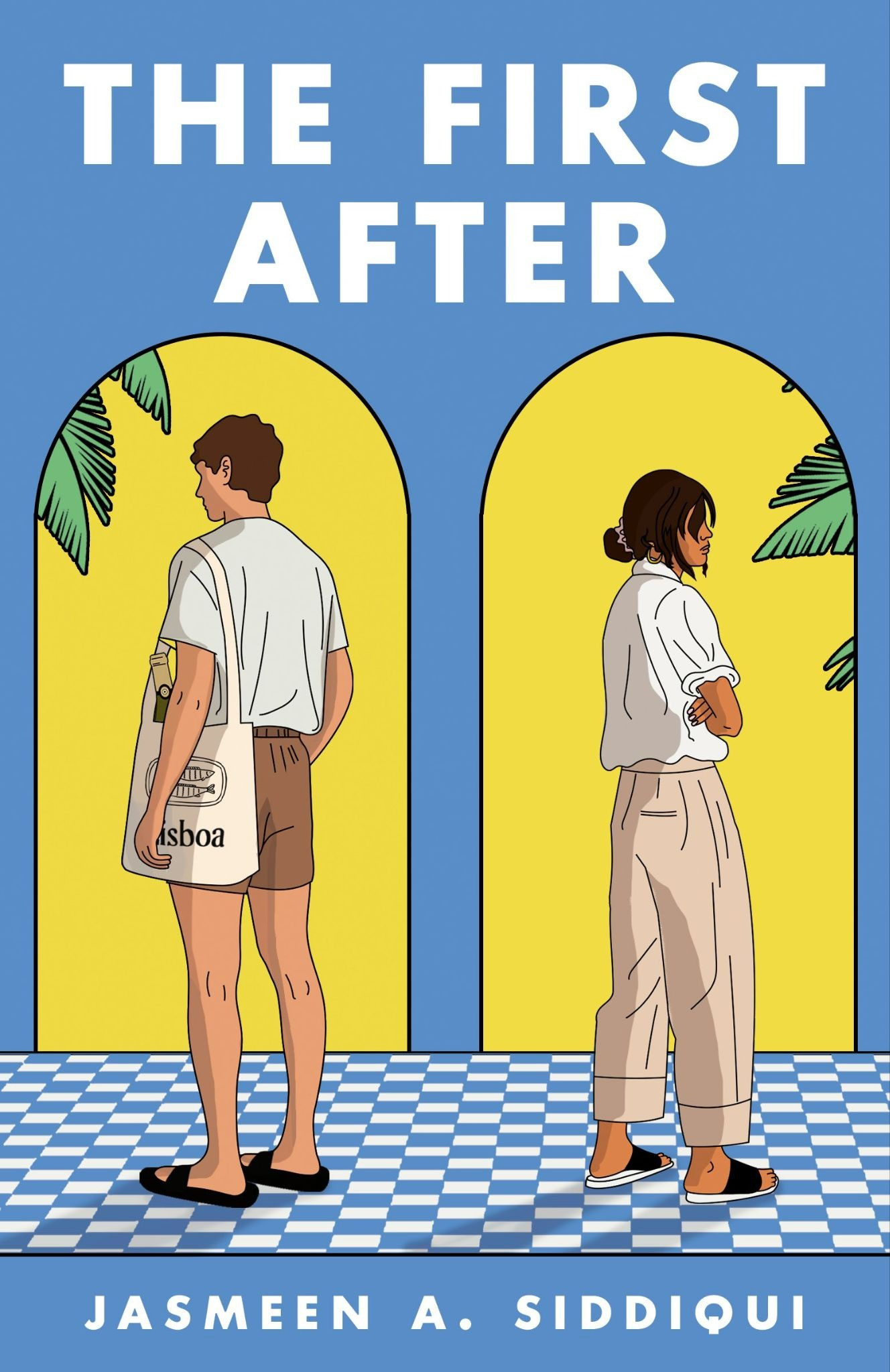
The new book by Mississauga’s Jasmeen Siddiqui, who moved to Portugal eight years ago, drawing on her upbringing which inspired the novel.
(Random House Canada)
Before moving to Lisbon, Siddiqui grew up in Mississauga.
“I owe so much to Mississauga. It's the foundation of the person I became,” she says during our video call. “Growing up in Mississauga was the perfect mix of cinematic and stifling as a teenager. I could romanticize my life, I could see people who looked like me carrying out my dreams; I had attentive teachers and a supportive family, but I also yearned to see more beyond parking lots and shopping malls, often slinking around with my friends to secret spots around the city, smoking weed and criticizing capitalism. It turned out to be a fantastic combination for writing and dreaming bigger,” she elaborates in a follow-up interview.
After pushing back on some of the city’s constraints, first leaving home for university and eventually moving to Portugal eight years ago, she began to realize some of the things that weren't so obvious.
“It's really important to grow up in a place where there are a lot of people that look like you and a lot of people who are going through the same experience as you.”
Mississauga’s rainbow culture and evolving comfort with what it continues to become have served her well, even if Siddiqui didn’t always appreciate certain complexities of her suburban city that lie far beneath the endless strip malls and gaping boulevards.
Siddiqui is a third-generation South Asian-Canadian, so she never felt particularly confined by the rigid expectations other families that look like hers impose on their children.
“My parents are deeply supportive, artistic people. They both love music, dance and theatre, and they’ve encouraged me across every medium I’ve ever tried, from piano lessons and ballet classes to musical and choir performances. They never pressured me down any particular path, and instead encouraged me to travel and try new things, things that even they hadn’t. I know I’m lucky to have parents like mine. My father introduced me to a lot of important films in my life… when I was at the pivotal age of about 13.”
She mentions one in particular that explores the beginning of an impromptu relationship between two young travellers, “except instead of the beginning of a relationship, I wanted to explore the end of one,” she explains, referring to the realization Anaa comes to.
Her upbringing put her in a “privileged” position, one that made her unused to entering a place not coloured by people who look and feel like her.
When Siddiqui moved to Portugal she often felt like the only brown woman in many rooms. There was a sense of isolation that reminded her of the feeling when she left Mississauga for a university not too far away—but a million miles apart from the culture she grew up in.
“[A]t the time, my university was a less diverse environment than Mississauga. There was a shade of racism that was a bit more potent, a bit more isolating. Queerness was something many people still hid. That said, it was during those years that people started paying attention to things like diversity in a meaningful way, so I was learning a lot of the vocabulary around the things that had made me uncomfortable even in Mississauga, things I may have just swallowed for lack of better judgement. Mississauga is not a monolith by any means—there are parts in which I feel at home and others where I don’t—but it was an important reminder on my lowest days that there were people who looked like me and were rooting for me just a few hours away.”
She has sometimes felt like needing to represent the “good immigrant” in Portugal, especially in our lurching political times.
“[There are] companies run by white expats who buy property, push out the local community, and it’s seen as normal. When a brown person is being an immigrant, it's instantly villainized. It definitely shaped my writing. It definitely shaped the comfort that I feel to address issues of race and to kind of like point out these differences… Anaa is reckoning with that feeling where nobody looks like [her] in these places.”
Anaa routinely corrects people on the pronunciation of her name (the ‘a’s are more like ‘u’s) and finds herself pushed to the background at parties, or is labelled as ‘exotic’. She tries to fit in, once again hoping to live up to the expectations for a ‘good immigrant’, even if it leaves a vacancy in her own vital growth.
Her novel, and its main character, draw heavily from Siddiqui’s lived experience.
“I knew that I would be verging into this territory where people would want to believe that it's me. I was in a very unique, privileged position to write about that experience, because it does make you reckon with your identity in ways that you maybe wouldn't have if you just stayed in a place where everyone knows you.”
She continues.
“I never intended to write a book about romance. I intended to write a book about identity.”
The two central relationships, one from her past already ended and one winding its way back from the end, provide hangers for Anaa to drape her desires, complexities and struggles on.
“You feel like you're in love with somebody, and that person is still not really grasping your entire identity—you start to question: is this love?”
Truthfully, I tell Siddiqui I found Anaa annoying, to say the least.
She grins.
“Some people who read it can't stand her, and others love her. I love both reactions because it is that kind of duality where you cringe so much thinking about your past self and yet you have so much tenderness for her because she was just figuring it out and she just didn't know any better.”
The book originally started as a screenplay.
Siddiqui wrote the version for film at twenty-three. It was an official selection of the Nostos Screenwriting Retreat. Afterward, she thought of transforming it into a book.
“It's very intimidating to try to write a novel. I didn't know if I could do it. I had the skeleton of the story as a screenplay and [filled it in], which is cool because you get to dive so much deeper into the character…the origins of the screenplay really helped that element of it.”
Readers don’t find out if Anaa and her old Canadian boyfriend who turns up in Lisbon— suddenly staining her not so new life with unexpected emotions and memories that have become more beguiling with time—will end up back together.
“How [readers] respond is their general attitude at the current moment, not forever. Are they a hopeless romantic? Do they like how you feel about their first love? Because if they never want to see their first love again, maybe the happy ending is that it’s over.”
Endings and beginnings have already defined so much of the 30-year-old’s life, just past the quarter turn.
“I was born in Mississauga, but my family moved soon after to Rexdale. I moved back when I was about 11,” before starting high school at Cawthra Park Secondary School, which has one of two arts focussed programs in Peel. She studied a range of vocal courses as part of her major.
She then graduated university in 2017 with a Bachelor of Arts, majoring in a new program called the School for Advanced Studies in the Arts & Humanities, with an Honours Specialization in Creative Writing and English Language and Literature.
She responds with a writer’s thoughtfulness to a question about Mississauga’s influence on her.
“I made some lifelong friendships in Mississauga that have seen me throughout various phases of angst, awkwardness, crisis, and growth. These are the people who I can come back to after months, even years, and it feels like I’d just gone to the bathroom, picking up the conversation right where we left off. And it’s not because we haven’t changed, but rather because we acknowledge each other as identities in flux, we give each other the luxury—and it is strangely a luxury—of receiving one another exactly as we are in that moment, accepting the inevitability of change. I like to think that that’s a consequence of growing up in a city like Mississauga that itself is always changing. Those friendships gave me the liberty to stretch out my identity with the comfort of knowing that I would still be accepted.”
Her time at university has also had a lasting, complex influence on the way her identity continues to be shaped.
“[I]n Mississauga I was younger and more naive to many things, whereas in university I developed a much more critical eye and became equipped with the terminology to point at things and call them what they are. In Mississauga, I was mostly concerned with fitting in, but in university I had to deal with the fact that, for some people, I never would. Luckily, I found a group of friends at university who were on the fringe for their own reasons, and though our pains were better articulated, so were our joys.”
She appreciates the contrasts of her experiences, which pour out over the pages of her new novel. It often feels like a hand from her past life is reaching out from those pages and shaking the reader out of their comfort zone.
“Anaa always had a feeling that she was just playing along in Canada, be it with her friends or her family, never truly able to be herself, never able to visualize the kind of life she wanted. While I’ve been fortunate enough to identify as a Sauga city girl at heart, I also empathize with the fact that for second-or third-gen immigrants in Canada, it can be hard to feel like you really belong anywhere, stuck in a kind of limbo between cultures. As a consequence, Anaa and I share a yearning for more, to experience the world and ourselves more deeply beyond the place where we grew up, beyond the usual prescriptive cultural texts.”
Is that ultimately why she left?
“It wasn’t so much a choice as it was a sudden instinct to turn off my location filters when I was looking for a job. I had been looking for jobs in the GTA before that and probably would’ve stayed if I’d gotten one. I actually hardly knew anything about Portugal but was eager to try something new…
“Of course, I wrote Anaa’s qualms so I understand them all, and I know Canada is far from a perfect place, but unlike her I’m a bit more careful not to idealize Europe as some sort of antidote. Everywhere has its problems. I do think it’s healthy to pursue beauty and authenticity, however, and I can attest to the fact that you really do learn a lot about yourself when you’re far from everything that once defined you.”
In the end, Siddiqui leaves readers with an idea of young romantic relationships, and the search for one’s identity within them, without pretending to know what lies ahead.
“I think it's a very loving thing to leave someone alone and let them grow.”
At a time when vital public information is needed by everyone, The Pointer has taken down our paywall on all stories to ensure every resident of Brampton, Mississauga and Niagara has access to the facts. For those who are able, we encourage you to consider a subscription. This will help us report on important public interest issues the community needs to know about now more than ever. You can register for a 30-day free trial HERE. Thereafter, The Pointer will charge $10 a month and you can cancel any time right on the website. Thank you
Submit a correction about this story

