
Peel's public schools record second and fourth-highest lead levels in Ontario drinking water
Children are sent to school every day without any thought of systemic and prolonged harm to their long-term well being.
But in more than half of Ontario schools, it’s not just bullying or the increasingly worrying fear of an active shooter in the hallways that students have to be wary of—the safety of the water they drink every day is a serious threat to their well being.
In its latest report, the Canadian Environmental Law Association (CELA) has given Ontario an ‘F for effort’ after falling behind in the protection of students against lead poisoning from drinking water — the “toxic heavy metal”, according to the World Health Organization experts, has no safe level of exposure.
Peel’s public Catholic school board has the second worst levels and Peel District School Board has the fourth worst in the province, each recording some of the highest levels detected.
Drinking water is a routine habit that children are encouraged to do every day at school.
(I-stock photos)
“Lead is more dangerous than we previously thought, especially for children. Other provinces and territories are responding to this science with the seriousness it demands, but Ontario has fallen behind,” Julie Mutis, Community Outreach worker with CELA, said.
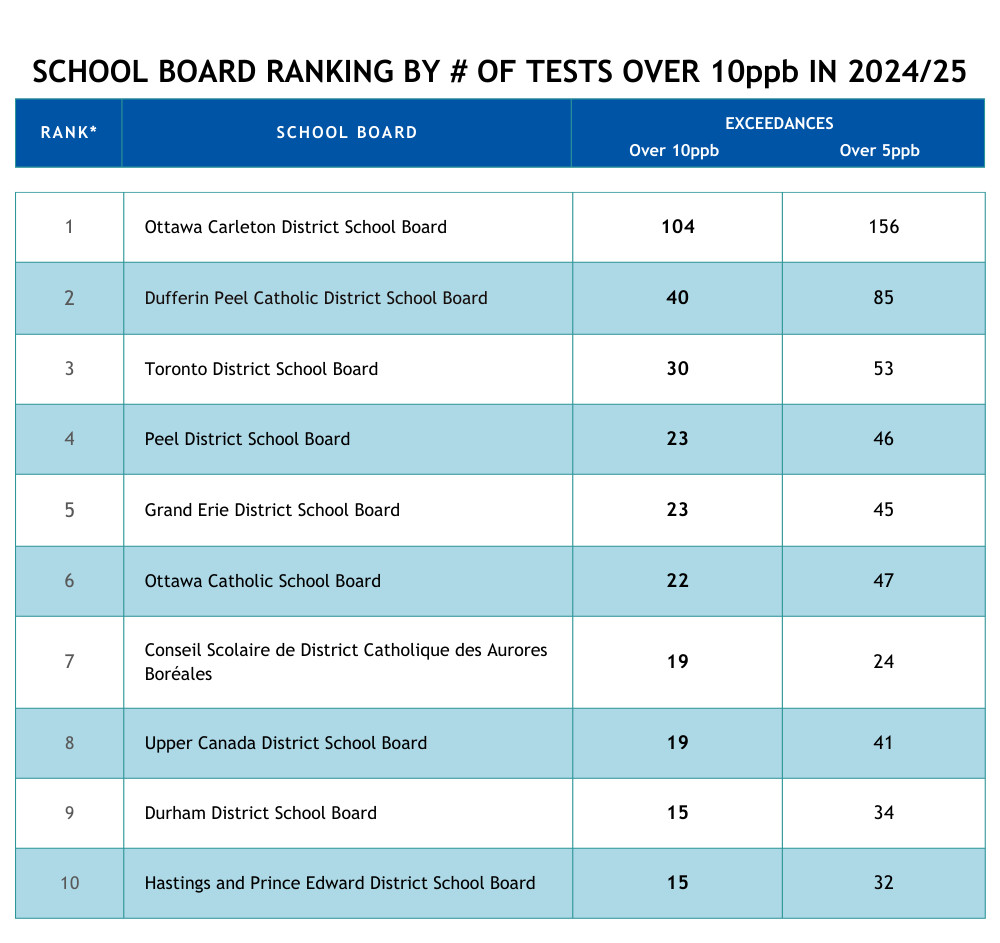
Top 10 school boards identified by the Canadian Environmental Law Association as having the highest toxic lead levels in drinking water in Ontario.
(Canadian Environmental Law Association)
Lead is not something young learners can see, taste or smell but it lingers invisibly: in aging plumbing systems installed decades ago, before stricter standards were introduced.
The National Plumbing Code (NPC) allowed lead service lines until 1975 and lead-based solder in drinking water systems until 1990, which means buildings constructed before, including many schools, are likely to have lead-contaminated drinking water as a result of these outdated materials.
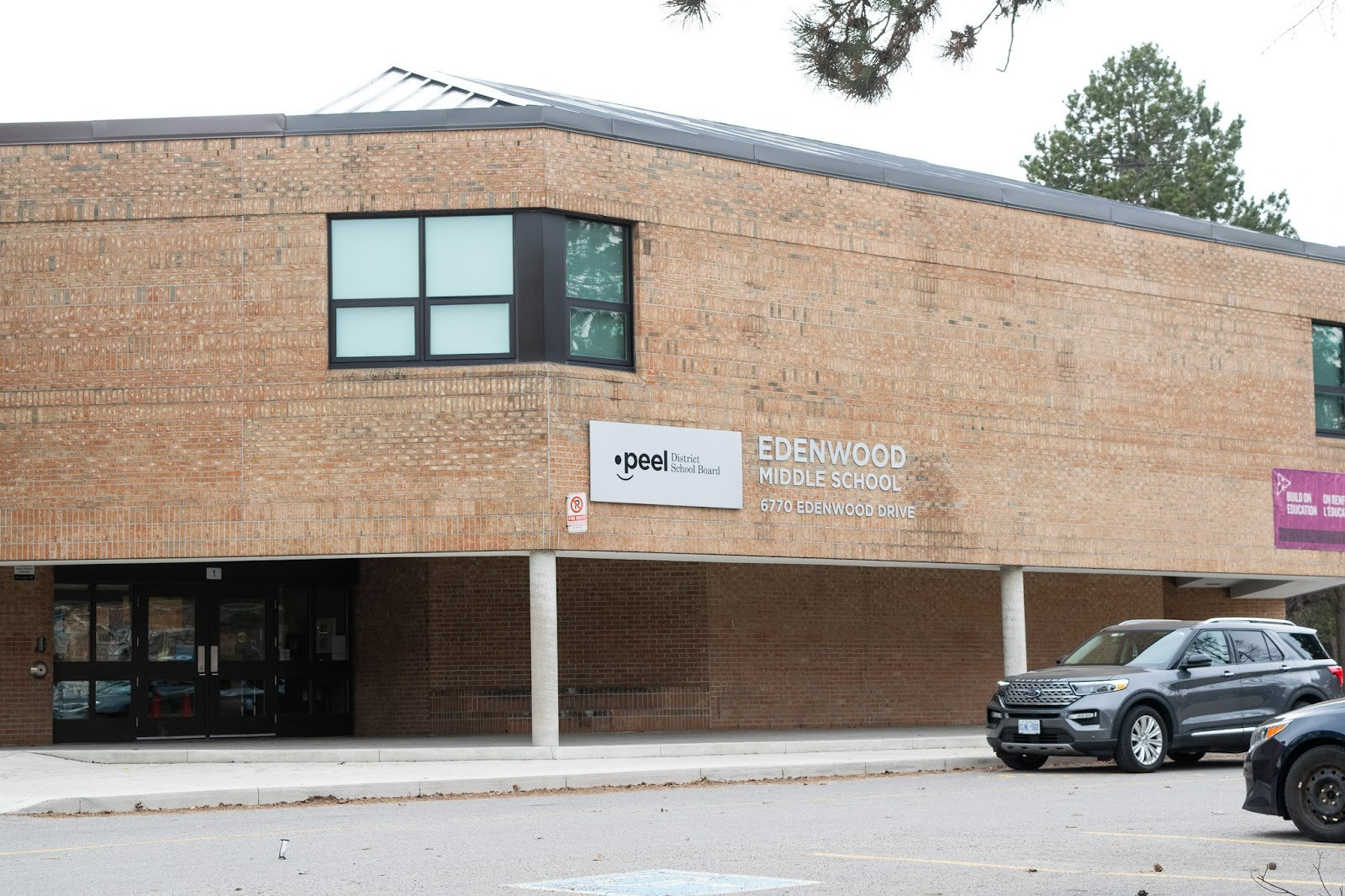
Edenwood Middle School in Mississauga was identified as one of the schools with high lead levels in drinking water.
(Alexis Wright/The Pointer)
In 2019, Health Canada lowered its recommended maximum level of lead in drinking water from 10 parts per billion (ppb) to 5 ppb, admitting that earlier standards underestimated the risks.
Ontario has failed to don the armour needed to protect kids and insists on sticking to a 20-year-old approach despite the cost of delayed action translating into life-altering health hazards.
In 2007, Ontario introduced a new regulation under the Safe Drinking Water Act, 2002, requiring schools and childcare centres to test, respond to and report lead levels in drinking water.
It mandated regularly flushing plumbing fixtures with frequency determined by factors such as system age, previous lead test results, fixture location and National Sanitation Foundation certification status. All fixtures in new facilities are required to be tested within five years of opening, followed by annual testing or every three years for sites eligible for reduced sampling.
“For future sampling, we recommend that you rotate where you take your sample. We suggest you start with the fixture that has gone the longest without being sampled or take a sample from a fixture where lead issues have been identified,” the province stated.
At the time, it was assumed that consuming water with lead at or below 10 parts per billion (ppb) did not pose an “undue risk to health”. On the ground, that meant schools that consistently tested below 10 ppb were exempt from annual testing and rotations were not mandatory.
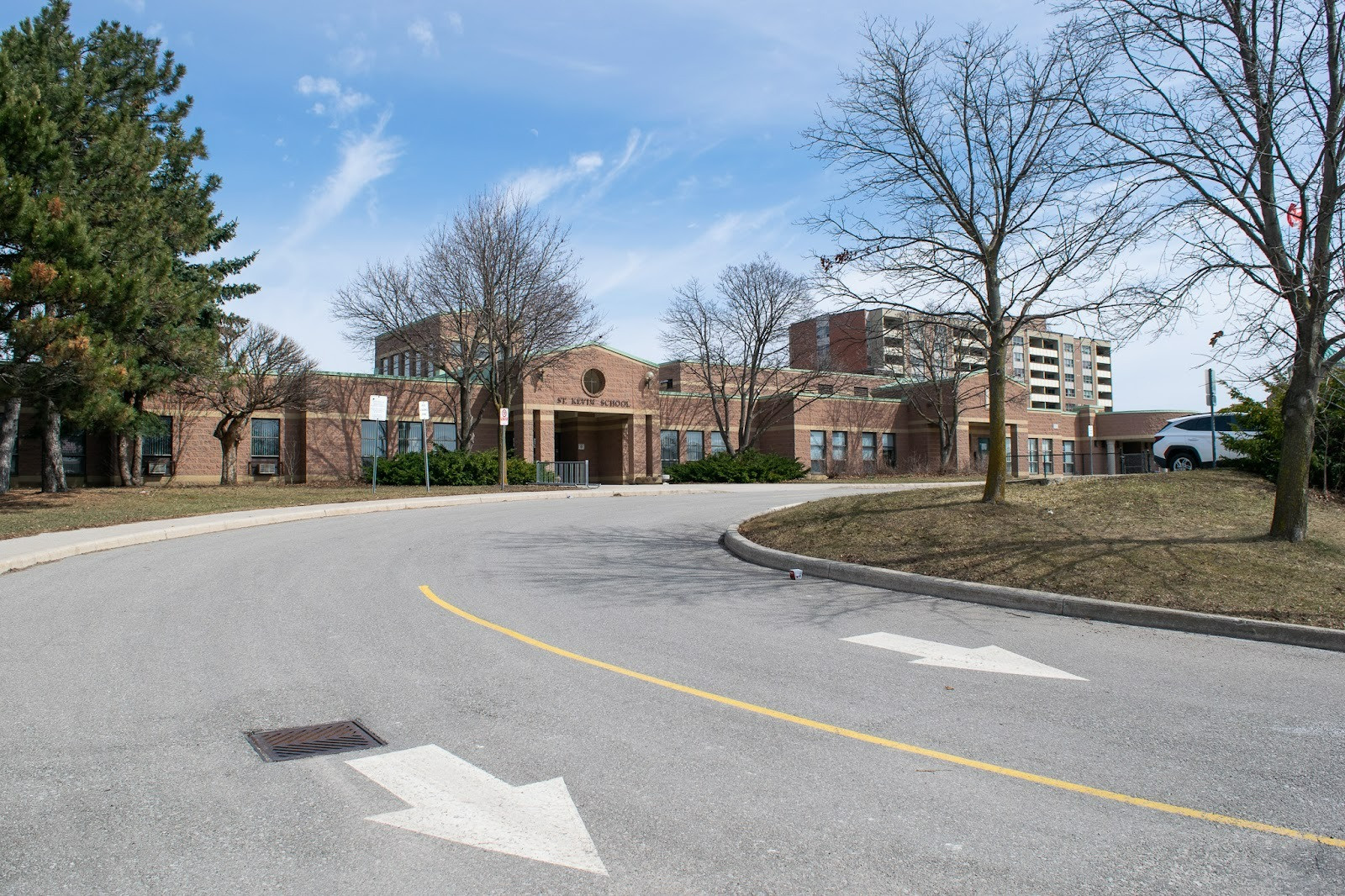
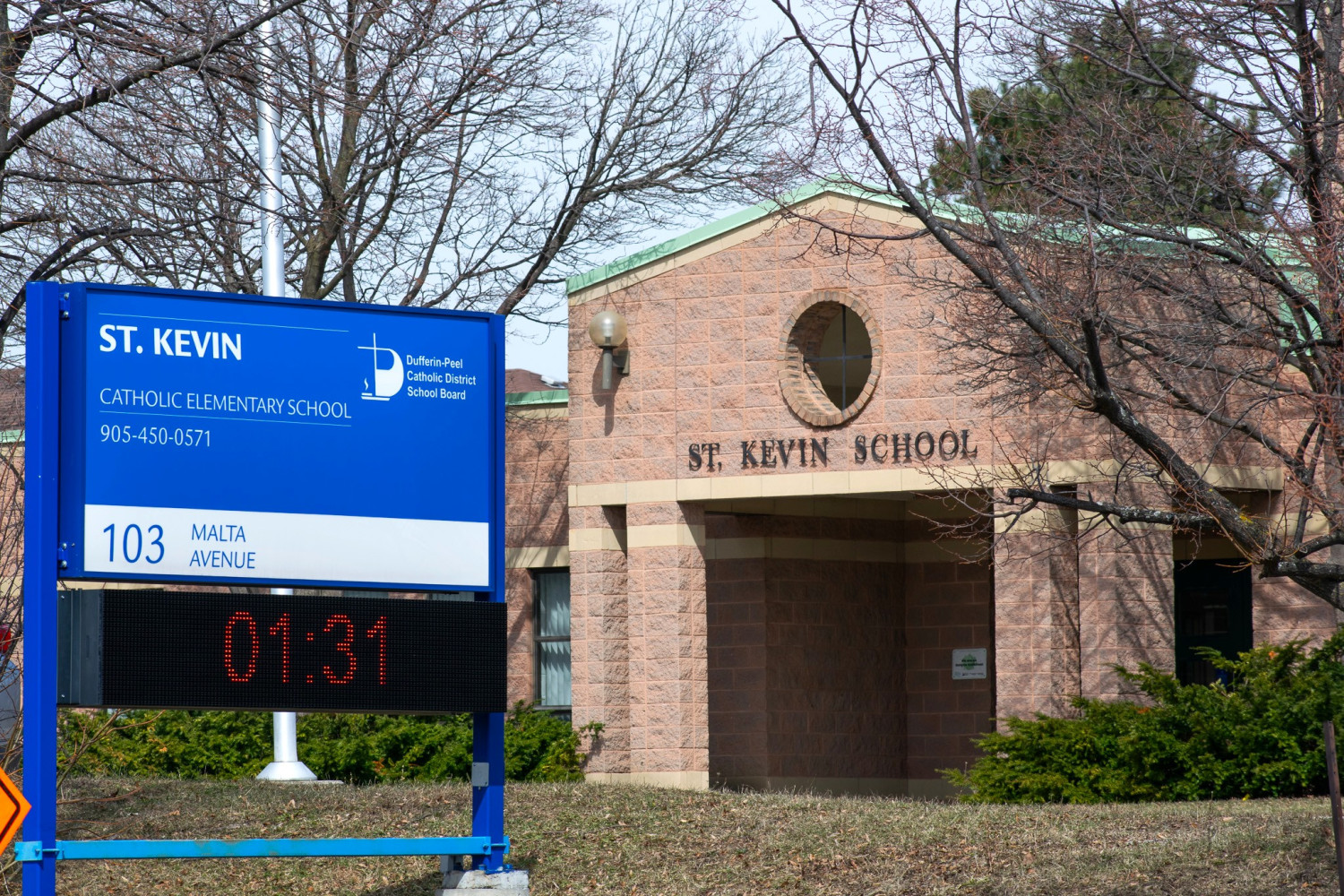
Lead levels above 10 ppb were found in drinking water at St. Kevin Catholic Elementary School in Mississauga.
(Alexis Wright/The Pointer)
The flexibility of working around these measures resulted in the same fixture, in many cases being located near the mainline, being tested repeatedly while fixtures at the ends of pipes that are more prone to stagnation, sediment buildup and spiked lead levels left unchecked.
In January last year, the province dedicated $1.3 billion to build 30 new schools and 15 school expansions but that funding remains inadequate when considering that Ontario is one of only two jurisdictions (Saskatchewan) in Canada still using the older, weaker 10 ppb threshold.
Internal documents, requested by CELA under the Freedom of Information and Protection of Privacy Act, revealed that although the province has internally acknowledged that there is no safe level of lead, it has not taken any action to remove exemptions based on levels now recognized as harmful.
Dr. Anna Gunz, chair for the Environmental Health Working Group at Canadian Paediatric Society, finds the presence of lead in school drinking water and childcare centres deeply “worrying”.
Young children, especially those below ages three, are uniquely vulnerable to environmental toxins because of how their bodies develop.
“They drink more water, eat more food and breathe more air per body mass than anyone at any other stage,” Gunz noted.
“While their organs and systems are still forming, it’s a perfect time to disrupt it and then, you can have really long term impacts.”
Even at low levels, lead exposure has been linked to decreased Intelligence Quotient (IQ), attention deficits, behavioural issues including antisocial behaviour and impaired motor skills in children.
Lead can also build up in bones and be released later in life, “during growth, stress or pregnancy, meaning exposure today can have consequences years down the line.
Some schools where the water would be considered unsafe to drink in most of the country are still allowed to test as few as one tap every three years — many fountains and taps that students use every day may never be tested at all, leaving the picture of risk incomplete.
“Ontario has gone from a leader in school drinking water safety to the bottom of the class,” Mutis noted.
In the Region of Peel, 23 Peel District School Boards (PDSB) and 40 Dufferin Peel Catholic District School Board (DPCDSB) schools reported lead tests exceeding 10 ppb and the majority tested only a single tap — one flushed and one standing.
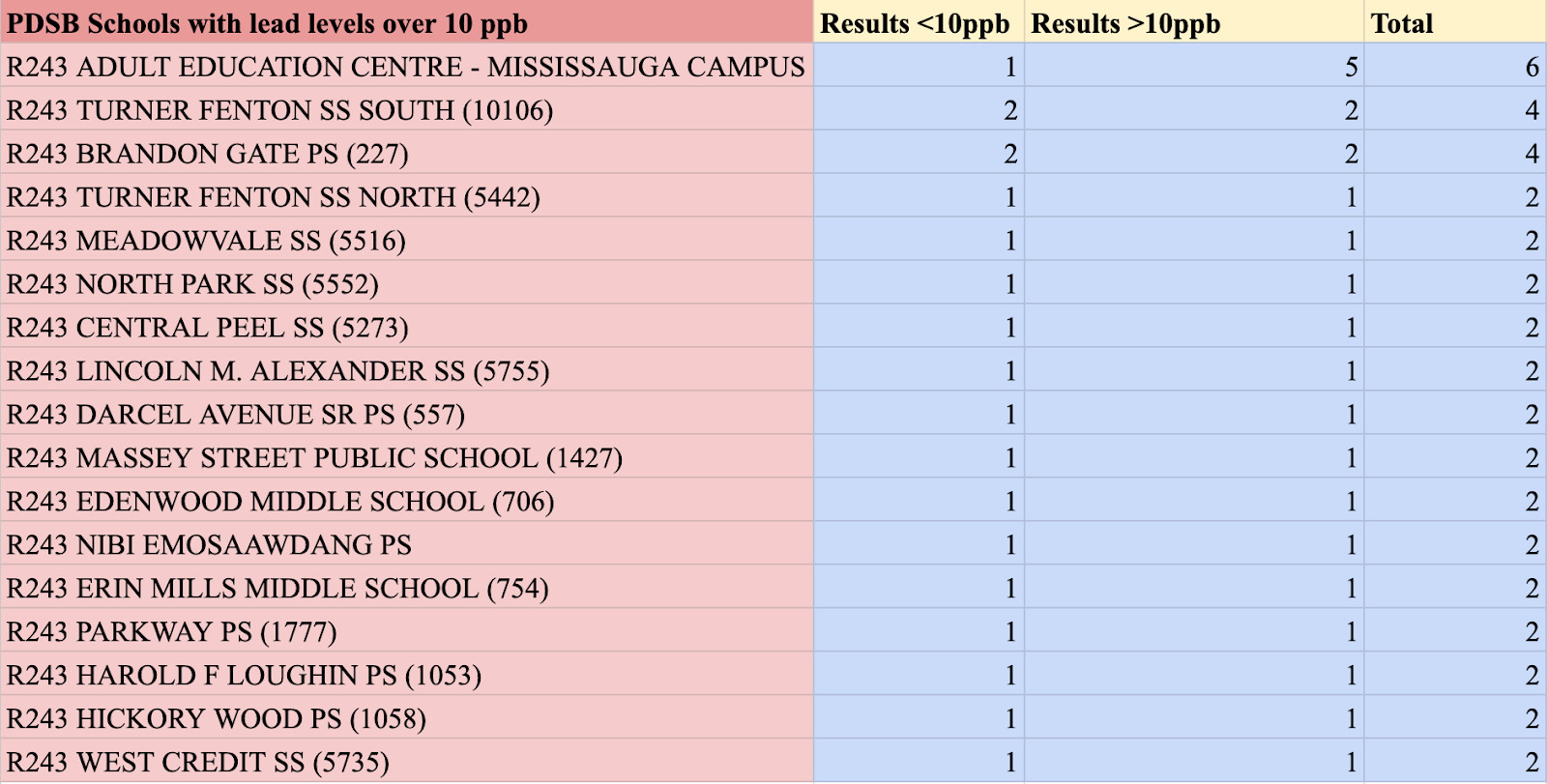
The Peel District School Boards (PDSB) institutions identified with lead levels over 10 ppb.
(Table: The Pointer/Data provided: CELA)
The Pointer reached out to PDSB, Ontario Ministry of Infrastructure and Education for a statement on what actions were being taken in light of the latest findings by CELA but did not receive a response by the time of publication.
Currently, Ontario schools use mitigation methods that only temporarily reduce lead exposure through flushing, a process that involves running water through pipes to clear out stagnant water that may have absorbed lead.
A 2018 study shows that lead can return to unsafe levels within hours, even after thorough flushing.
In large buildings such as schools, first-draw water collected after overnight stagnation often contains the highest lead concentrations, sometimes exceeding 200 micrograms per litre in corrosive systems without corrosion control.
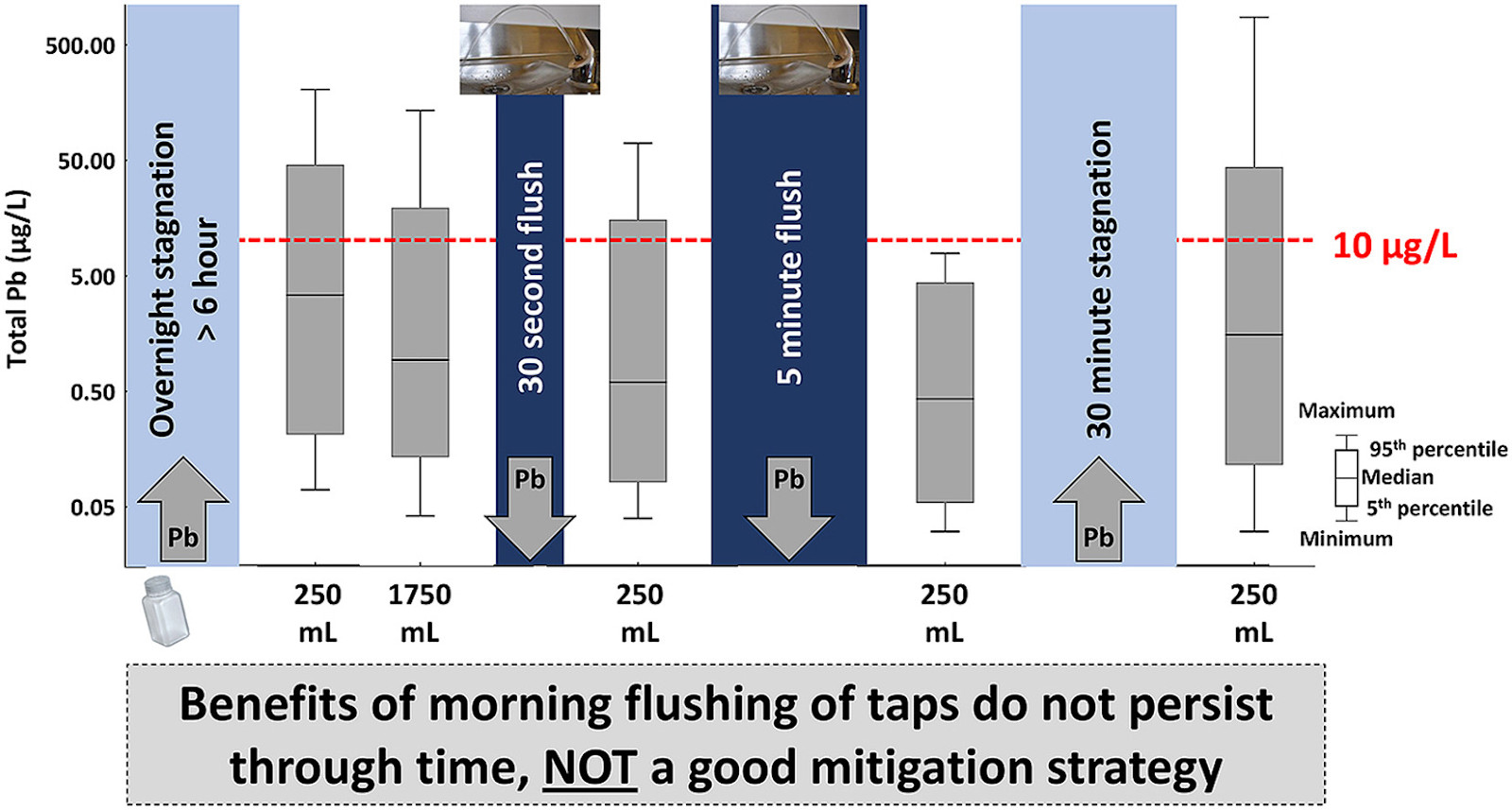
A 2018 piece of research found that particulate lead that is often released from brass fixtures or solder can cause extreme spikes in water, with concentrations that can vary up to a thousand times between taps within the same building. (Sampling in schools and large institutional buildings: Implications for regulations, exposure and management of lead and copper.)
While short (30 seconds) or extended (5 minutes) flushing can reduce these levels by more than 90 percent, the benefit is short-term; after just 30 minutes of stagnation, lead concentrations can rebound to more than 45 percent of their initial high values.
While Ontario schools continue to rely on flushing as a long-term solution, it is far from a permanent, proactive, system-wide fix.
In September 2020, at an Ottawa elementary school, a newly installed water bottle filling station tested at 136 ppb (standing test), more than 25 times the federal limit. The school’s response was shifting to daily flushing even when repeated tests continued to show elevated levels.
Eventually, after two lower readings of 8 ppb, the fountain was put back into use. Months later, lead levels jumped back up again — nothing changed, no ongoing tests were required and the school was not required to tell community members about the lead exceedances, meaning that students and staff cannot make an informed decision about using this water fixture.
The province has been aware of unhealthy lead levels in school drinking water for nearly a decade now. A 2019 joint investigation by the Toronto Star, Concordia University and Toronto Metropolitan University unveiled PDSB schools recorded the highest spike in lead in Ontario during 2016 and 2018 with 773 tests above federal guidelines. The DPCDSB ranked second with 550 schools going over the limit.
Not only has there been limited progress but tracking whether conditions have improved since then is also a hurdle.
Ontario continues to release school water testing results as large, raw datasets with little context, making it incomprehensible for parents and communities to determine whether their child’s school is affected.
“Due to the lack of strong reporting requirements from the province, it is also unclear what action has been taken to address the exceedances,” Mutis told The Pointer.
Critics note while Ontario represents a system struggling to keep up with science, Quebec has managed to emerge as a “national leader” in getting lead out of school drinking water.

Lincoln M. Alexander Secondary School was among the Mississauga schools where the water students have been drinking contained lead levels more than the federally recommended amount.
(Alexis Wright/The Pointer)
Following the 2019 federal guidance, François Legault moved swiftly to adopt the 5 ppb limit and launched a province-wide effort to test every school tap and fountain. Since completing screening of all taps and fountains in the summer of 2021, 61 percent of non-compliant taps in public schools were either removed, replaced or made safe to use — flushing was considered the last resort.
In British Columbia, the government upgraded school water systems with lead-free solutions in a span of three years. Older buildings with corroding copper and lead pipes and fittings were replaced by Chlorinated Polyvinyl Chloride (CPVC) piping systems that resist corrosion, prevent lead leaching and reduce biofilm buildup.
Experts at CELA are now urging the province to pave a clearer path forward for the health of children across the province by modernizing current standards, investing in permanent solutions like Quebec and British Columbia and improving transparency around school drinking water.
Mutis recommends lowering the provincial lenient threshold for lead from 10 ppb to 5 ppb in line with the national guidance and eliminating exemptions that allow some institutions to test less frequently; instead, every tap and fountain needs to be retested under stricter standards to better reflect the real level of threat.
“[The province] must create and annually report on an inventory of all school water fixtures in order to demonstrate the scope of the problem and progress made towards a lead-free future,” she added.
But making these changes will require strong support from the province, which has been shrinking funding for school boards every year even as student needs, driven by increasing demands for special education, mental health support and technology infrastructure, rise.
The province ties funding to enrolment numbers in schools, meaning fewer students result in lower funding. Both Peel and Dufferin-Peel boards have been trying to balance their budgets after facing years of declining enrolment: over 156,000 students in 2018-19 to 146,605 students in 2024-25 in PDSB, and 79,813 in 2018-19 and 68,859 in 2026-27 in DPCDSB.
In March, 331 permanent teachers at PDSB received notices of layoffs, three months after the Ford government placed the school board under provincial supervision.

A PDSB teacher took to social media to share she was among the educators who received a layoff notice.
(Catherine Coghlan/Facebook)
For Gunz, schools are just one piece of a larger puzzle — “there are other sources we have to think about too” like aging pipes, older housing, soil, air pollution and even certain foods as potential contributors to cumulative exposure — leaving kids belonging to low-socio-economic communities particularly vulnerable.
“If you live in an area where your school is affected…it probably has to do with not only the age of the building, but also the piping in the community,” she said, urging families to consider testing water at home and consulting local public health units.
The Canadian Paediatric Society underscores the importance of prevention and early identification: since symptoms of low-level exposure are often subtle or delayed, routine monitoring and environmental assessments are critical.
Gunz points to the Indigenous connection of “mind-body-environment” — “what we breathe, what we eat, what we drink…those things become part of ourselves”.
Critics highlight without decisive provincial action and adequate funding, students across Ontario will continue to face daily exposure to a preventable neurotoxin that will jeopardize their health and future.
“If you don’t have healthy people, you won’t have a healthy economy,” Gunz emphasized.
“Protecting children’s environments whether it’s the water they drink or the air they breathe should be a fundamental responsibility.”
Email: [email protected]
At a time when vital public information is needed by everyone, The Pointer has taken down our paywall on all stories to ensure every resident of Brampton, Mississauga and Niagara has access to the facts. For those who are able, we encourage you to consider a subscription. This will help us report on important public interest issues the community needs to know about now more than ever. You can register for a 30-day free trial HERE. Thereafter, The Pointer will charge $10 a month and you can cancel any time right on the website. Thank you
Submit a correction about this story

