
‘Turn off the tap on plastic pollution’: Canada wins court battle on single-use plastics as lobbying continues
“If your bathtub is leaking and water is everywhere, do you start mopping the floor or do you first turn off the tap?”
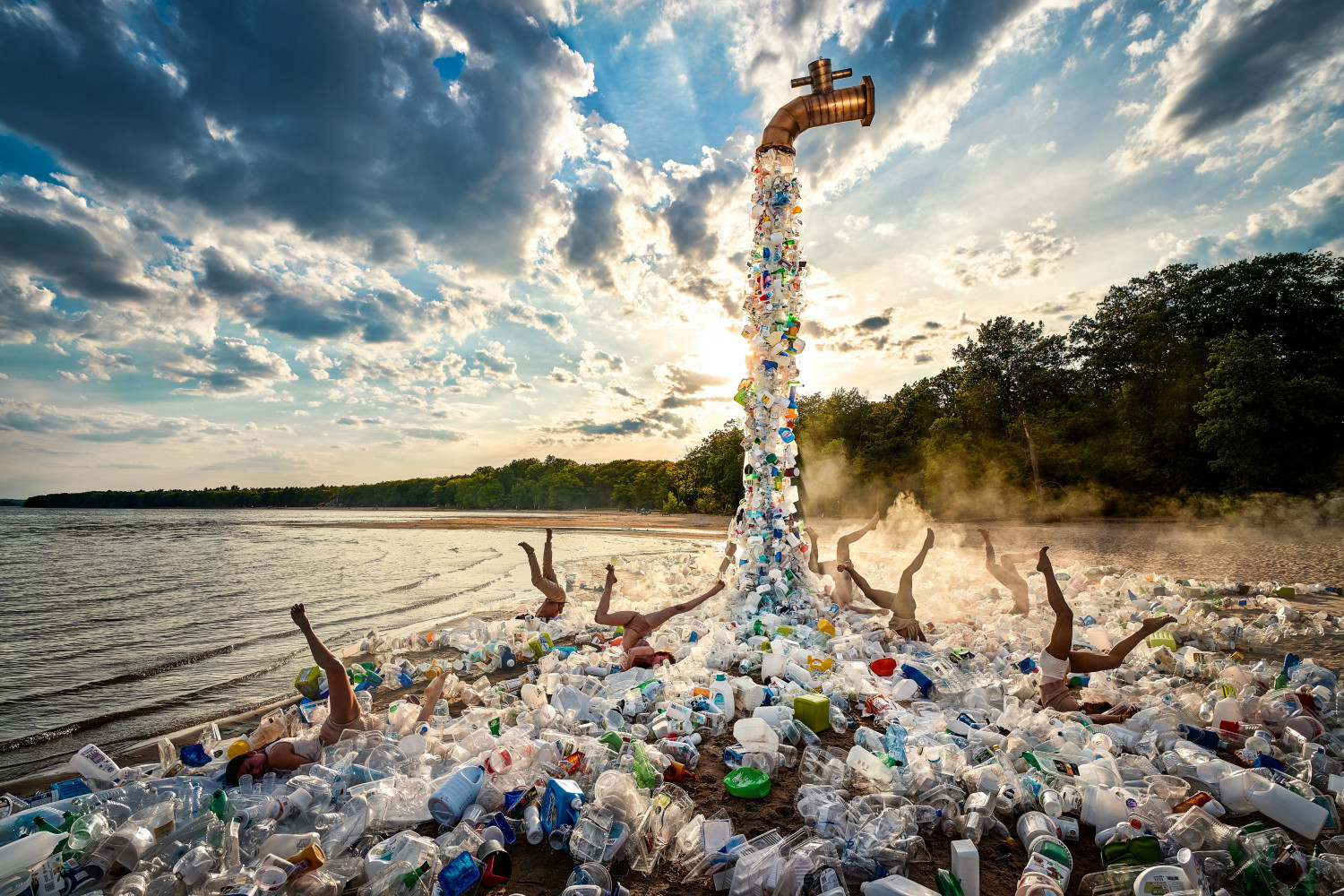
That’s the question Toronto-born “artivist” Benjamin Von Wong poses through his towering three-storey installation Turn Off The Plastic Tap.
Welcoming observers at Arcadia Earth inside The Well, the giant faucet suspended mid-air, pouring a torrent of plastic waste instead of water, is impossible to ignore.
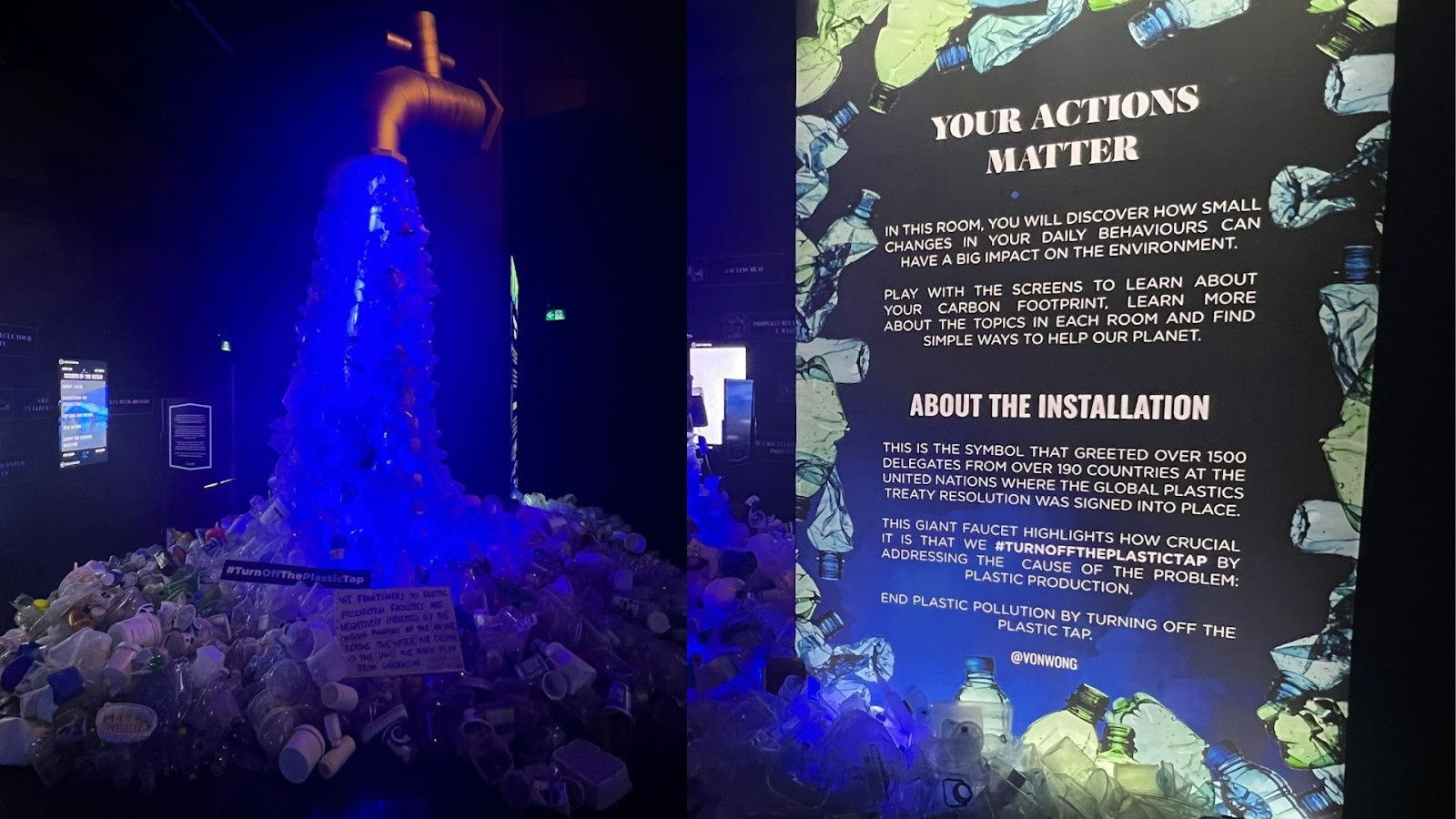
Brooklyn-based artist Benjamin Von Wong did not set out to become an environmental activist. Trained as a hard rock mining engineer working with gold, silver and copper extraction, he says sustainability wasn’t front of mind in his early career, despite his parents’ efforts to instill environmental values since his early years. Around 2015, while building a following as a photographer, he began questioning the purpose behind his work. “I wanted it to mean something,” he told The Pointer. After immersing himself in documentaries and experimenting with awareness campaigns on various issues, it was his environmental projects that resonated most. The now-iconic faucet was first commissioned by the Government of Canada and has since been recreated more than 30 times for global events. For Von Wong, the message remains simple: the world must stop managing the spill and start turning off the tap.
(Art: #TurnOffThePlasticTap © Benjamin Von Wong www.vonwong.com, Photos: Anushka Yadav/The Pointer)
It’s unsettling. But it floods the mind with reality.
Every year, Canadians discard over five million tonnes of plastic (130 kilograms per person).
Plastic packaging accounts for nearly half of all plastic waste. Only about nine percent is recycled, the remaining 91 percent is sent to landfills, incinerated or leaks into the environment as pollution.
In 2021 (the most recent data), 40,262 tonnes of plastic leaked into the environment, according to Statistics Canada.
“We need to turn off the tap on plastic pollution,” Von Wong told The Pointer.
Before landing in Toronto, his artwork was displayed at the fourth session of the Intergovernmental Negotiating Committee (INC-4) in Ottawa in April 2024, where countries gathered to hammer out a global treaty to end plastic pollution.
In 2022, the United Nations Environment Assembly unanimously adopted a historic resolution to develop a new, legally binding agreement on plastic pollution by the end of 2024.
The negotiations continued in Geneva, Switzerland, until August last year (INC-5.2). Despite 10 days of intense negotiations and pressure from 183 countries, it ended without an agreement, as nations remained divided over limits on plastic production and toxic chemicals.
But the sun might be coming out of the clouds here in Canada.
In a unanimous ruling on January 30, the Federal Court of Appeal upheld Ottawa’s decision to list plastic-manufactured items as “toxic” under the Canadian Environmental Protection Act (CEPA), clearing the way for bans on certain single-use plastics after over two years of battle.
“Canadians are concerned about the health and environmental impacts of plastics, and they expect governments to take action to address plastic pollution,” environment minister Julie Dabrusin said in a statement.
“Improving how plastics are made, used and managed is important to prevent plastic pollution and waste.”
In October 2020, under former environment minister Steven Guilbeault, Environment and Climate Change Canada and Health Canada released a report that found plastic pollution poses a significant threat to the environment, particularly to wildlife and ecosystems.
It revealed macroplastics (plastics greater than five millimetres (mm) in size) like plastic bags and packaging can cause physical harm to animals through entanglement and ingestion while microplastics (plastics less than or equal to five mm in size) are pervasive in water, soil and air.
While the report noted uncertainty around direct human health impacts due to limited data, it determined that plastic pollution meets CEPA’s criteria for toxicity because it is entering the environment in quantities or under conditions that may have immediate or long-term harmful effects.
Following the report, the federal government listed plastic-manufactured items as toxic under Schedule 1 of CEPA in 2021.
The listing was a precursor to enable the federal environment minister to proceed with regulations to ban single-use plastic items nationally on plastic checkout bags, cutlery, styrofoam containers, stir sticks and plastic straws.
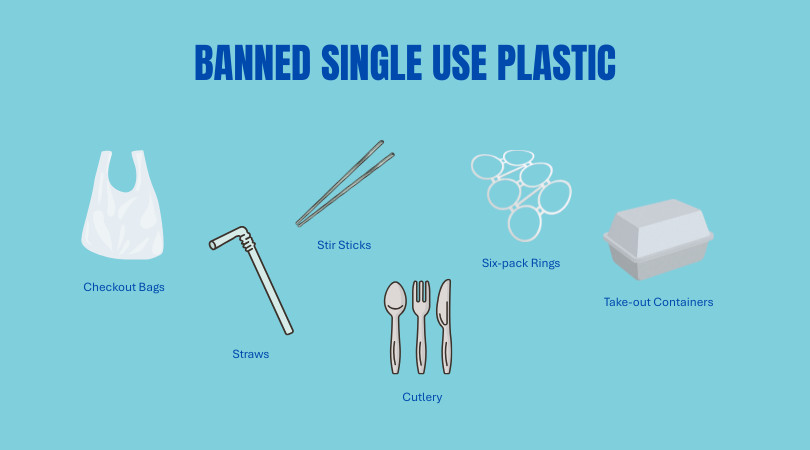
Ottawa implemented a nationwide ban on six categories of single-use plastics to reduce pollution with regulations targeting the manufacture, import and sale of checkout bags, cutlery, foodservice ware, ring carriers, stir sticks and certain straws. These bans have been phased in with most prohibitions active since December 2023.
(Alexis Wright/The Pointer)
In 2023, Federal Court Justice Angela Furlanetto struck down that ban.
In her ruling, the judge noted Ottawa's decision to classify all plastic-manufactured items (PMI) as toxic was “too broad”.
While acknowledging evidence that macroplastic pollution can cause environmental harm, the Court held that the Regulatory Impact Analysis Statement (RIAS) failed to bridge the gap between evidence of harm from specific plastic waste and the sweeping listing of all plastic-manufactured items.
The judgment emphasized that most plastic waste in Canada remains within managed waste streams such as landfills and recycling systems.
The government had also not demonstrated that every PMI met the toxicity threshold under Section 64 of CEPA, which states that a substance is considered toxic if it is entering or may enter the environment in quantities or under conditions that have, or may have, immediate or “long-term harmful effects on the environment or its biological diversity”; pose a “danger to the environment on which life depends”; or pose a “danger to human life or health in Canada”.
Justice Furlanetto also found the Order exceeded Parliament’s criminal law power, stating there was no reasonable apprehension that every item captured by the broad PMI category posed a risk of harm.
It was concluded that the federal government did not demonstrate all plastics cause harm to humans and the environment, and that it was trespassing on provincial jurisdiction.
The April 2021 ban was retroactively quashed and declared “invalid” and “unconstitutional”.
Ottawa appealed the decision immediately and received a stay from the Federal Court of Appeal, allowing the ban to continue.
The recent ruling of the three-judge panel rejected the lower court’s reasoning and clarified that CEPA operates as a two-stage scheme.
First, a substance may be listed if it has the potential to cause harm. Second, specific regulations can target particular products. The Court found the Federal Court had effectively collapsed those two steps into one by requiring item-by-item precision at the listing stage.
The Appeal Court also held that “plastic manufactured items” fall within CEPA’s definition of “substance”, rejecting the argument that the plural wording rendered the listing invalid. It emphasized that CEPA is preventative and risk-based. And the government needs to establish only potential harm, not prove that every plastic product is toxic in all circumstances.
“As stated in the Science Assessment, ‘[s]ince plastics degrade very slowly and are persistent in the environment, the frequency of occurrence of plastic pollution in the environment is expected to increase.’,” the ruling outlined.
“They assert that the projected rise in plastic pollution needs to be considered. Environmental policies must anticipate and prevent environmental degradation and allow government to act in a preventative manner.”
With the victory, Dabrusin said Canada’s Single-use Plastics Prohibition Regulations remain in force.
One of the interveners in the case, Environmental Defence’s senior program manager for plastics, Karen Wirsig, said it is “excellent news for a planet awash in plastic pollution”.
Wirsig said the federal government must now “move quickly” to build on the court victory by strengthening and expanding regulations to curb plastics pollution.
What does that look like? Broadening bans on harmful and unnecessary single-use items, requiring accurate labelling so consumers know whether products are truly recyclable or compostable in practice, mandating recycled content in non-food packaging while working with food producers and retailers to reduce single-use plastic packaging in grocery stores.
“Every month of delay means another 3,400 tonnes of plastic dumped directly into the environment in Canada, on top of all of the other health and environmental harm that comes from its production, use and disposal,” she added.
A 2024 poll commissioned by Environmental Defence and conducted by Abacus Data found that 84 percent of Canadians want fewer single-use plastics in grocery stores and over 80 percent support additional federal measures to tackle plastic waste and pollution.
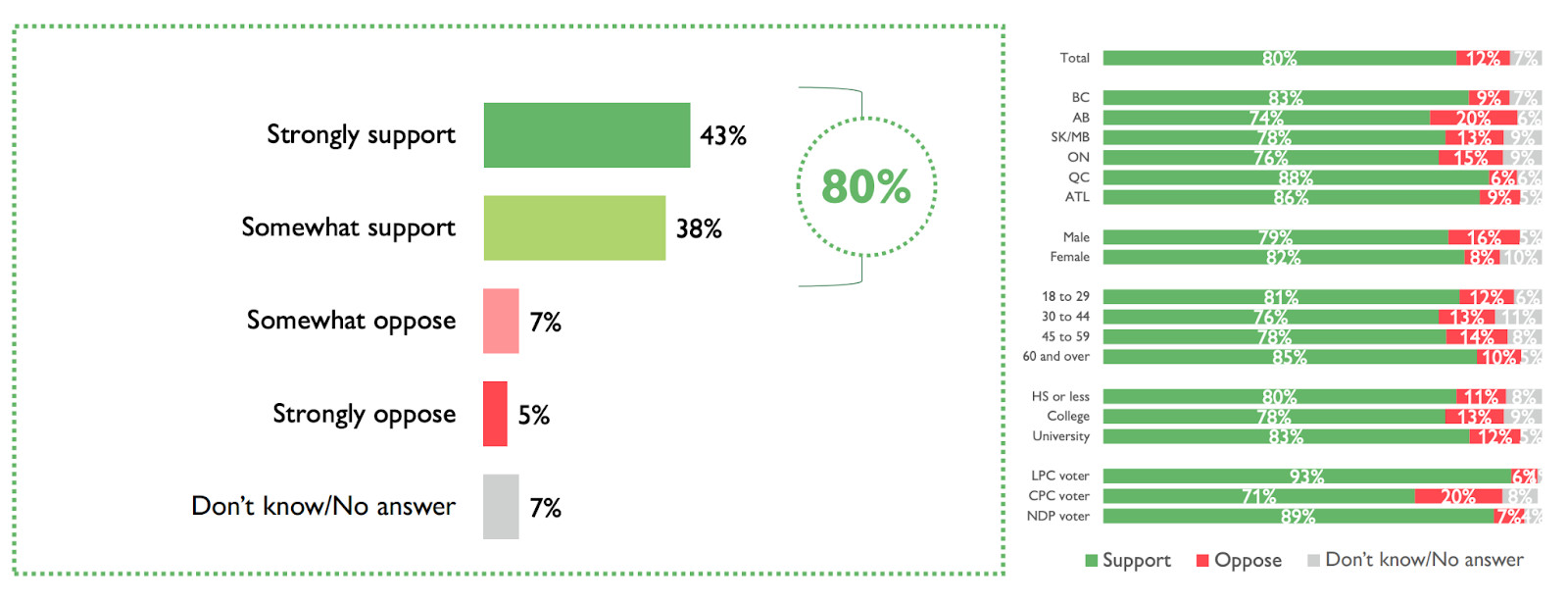
A July 2024 poll found eight in ten Canadians support stronger federal action to further address plastic waste and pollution.
(Abacus Data/Environmental Defence)
Knowing that food and beverage packaging can be a source of microplastics, more than 6 in 10 Canadians said they would prefer purchasing and consuming products in glass packaging.
Wirsig stressed the latest decision creates an opportunity for federal, provincial and territorial governments to listen to Canadians and work together to eliminate unnecessary and harmful plastics from the economy.
But the fight may not be over.
The case, brought forward by major industrial players closely tied to the fossil fuel and petrochemical sectors, including Dow Chemical, Imperial Oil and Nova Chemicals, could still head to the Supreme Court of Canada.
The Responsible Plastic Use Coalition (RPUC), a lobby group for the plastics industry, said the group is “reviewing the decision and considering legal options”.
“Plastics producers, grocers and their lobby groups have been trying hard to undermine the federal government’s action on plastics, from filing lawsuits to threatening price spikes for consumer goods,” Wirsig said.
“The plastic pollution crisis and climate change are two sides of the same polluting coin – at the root of both are fossil fuel interests,” a statement by Ecojustice noted. More than 99 percent of the world’s plastics are derived from fossil fuels. Extracted hydrocarbons like crude oil or natural gas are subjected to intense heat and pressure to create the building blocks of polymers (propane becomes propylene, which becomes polypropylene, used in countless everyday items from packaging to containers). The same companies that extract oil and gas also dominate plastics production, using the material as a way to sustain profits even as the world shifts toward renewable energy.
(Alexis Wright/The Pointer)
The 2022 single-use plastics ban stopped domestic sales immediately but companies were still allowed to manufacture those products for export, even though an export ban was expected to be put in place eventually.
On December 20 last year, the government announced it would not enforce the export ban and proposed to remove it entirely.
“The prohibition on export will not fulfil an environmental objective commensurate to its economic impact,” a Regulatory Impact Analysis Statement noted.
Wirsig said the move was “partly” influenced by industry lobbying.
“It's a way of chipping away at the ban right at regulations to stop plastic pollution. So, we can see that the lobby continues to be very effective,” she added.
Research commissioned in January 2024 by Greenpeace Canada found that lobbying by the oil and plastic industries surged ahead of and during Canada’s Plastics Treaty negotiations, mainly attributable to three actors: Dow Chemical, Imperial Oil and the Chemistry Industry Association of Canada, registering hundreds of lobbyists and spending the equivalent of a month in direct meetings with the federal government in 2023.
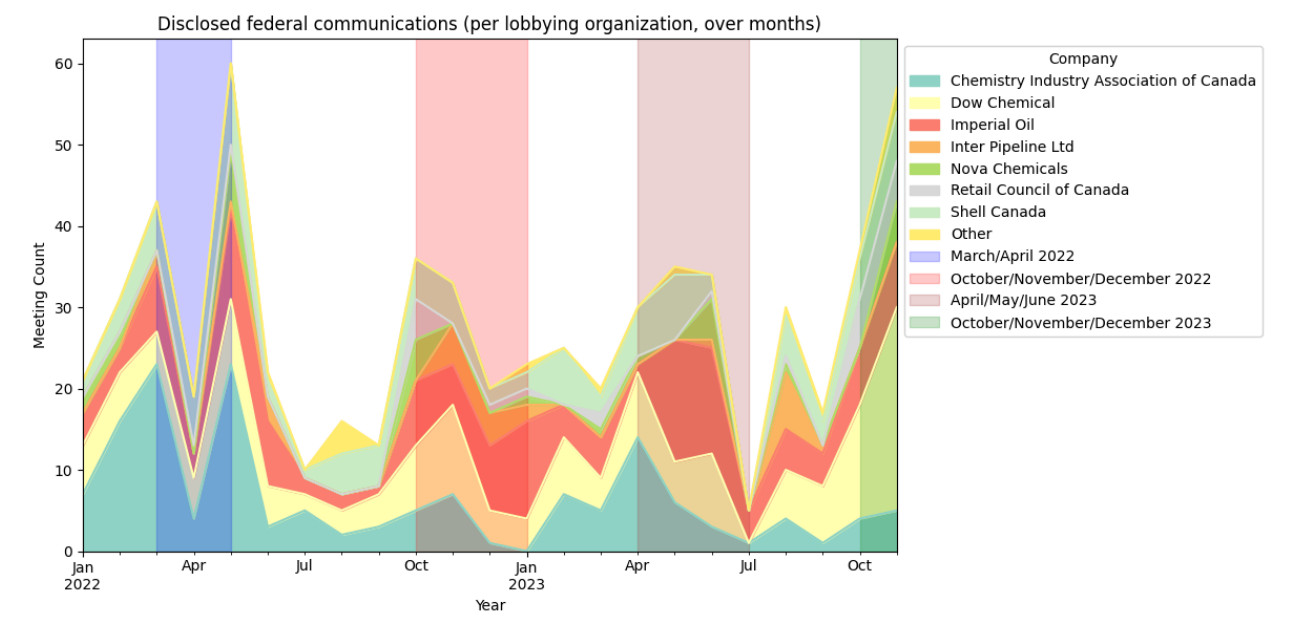
A 2024 report revealed the oil and plastic industries ramped up their influence on Canada’s Plastics Treaty negotiations.
(Greenpeace)
In 2023, Canada proposed regulations for strict plastic packaging rules, targeting minimum post-consumer recycled content, mandatory 80 percent access rules for using the chasing-arrows recycling symbol and strict limitations on compostable or degradable labels.
Under the Canadian Environmental Protection Act, a plastic item can only be labelled “recyclable” if it meets three 80 percent thresholds. First, it must be accepted in collection systems accessible to at least 80 percent of the population; second, it achieves at least an 80 percent sorting yield at facilities; third, it has an 80 percent re-processing rate into new plastic feedstock in North America.
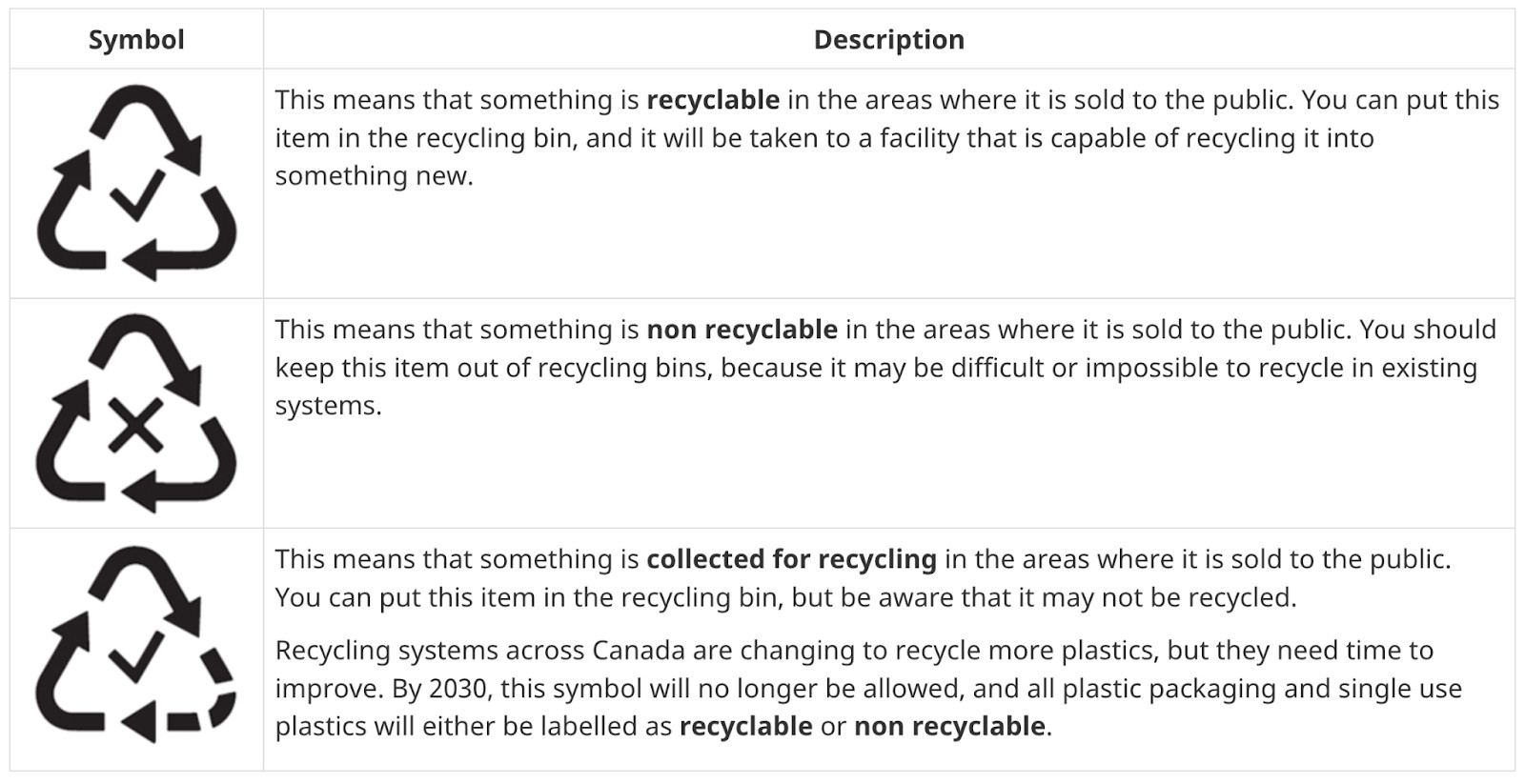
Canada uses three main recyclability labels for plastic packaging and single-use plastics. The first is the chasing arrows symbol (a triangle formed by three arrows in a clockwise loop) with a check mark in the center, indicating that the item is recyclable. The second is the same chasing arrows symbol with an X in the middle, signalling that the item is non-recyclable. The third features the chasing arrows symbol with three breaks in the second arrow and a check mark in the center, showing that the item is collected for recycling.
(Government of Canada)
Wirsig said sources have informed Environmental Defence that “the government does not intend to go forward with proposals it had for regulations for unlabelling and recycled content that had been planned”.
She is still hopeful that Ottawa will choose the right path forward, given the momentum the Global Plastics Treaty negotiations have gained.
On February 7, INC members elected Ambassador Julio Cordano of Chile as the new Chair. The previous chair, Ecuador’s ambassador, stepped down following failed negotiations last year, where at least 234 fossil fuel and chemical industry lobbyists were registered for the INC-5.2 negotiations in Geneva in August, a nearly 19 percent increase from the 196 lobbyists registered at INC-4.
“While the next formal negotiations are not yet confirmed, countries are continuing informal discussions. Even nations opposed to a strong treaty are talking, which keeps the issue on the agenda,” Wirsig said.
“Canada has an opportunity to lead, working with allies like the European Union and Mexico, to ensure an effective global plastics treaty.”
Email: [email protected]
At a time when vital public information is needed by everyone, The Pointer has taken down our paywall on all stories to ensure every resident of Brampton, Mississauga and Niagara has access to the facts. For those who are able, we encourage you to consider a subscription. This will help us report on important public interest issues the community needs to know about now more than ever. You can register for a 30-day free trial HERE. Thereafter, The Pointer will charge $10 a month and you can cancel any time right on the website. Thank you
Submit a correction about this story

