
We Need More Transportation Infrastructure: Transit and Highways
The Greater Toronto and Hamilton Area (GTHA) is one of the fastest growing regions in North America. Investment in all types of infrastructure will be essential to meet the needs of the rapidly expanding area. This includes the proposed Highway 413 and Bradford Bypass which will ease congestion, according to studies by construction engineering firm AECOM which was hired by the Ministry of Transportation to do design work for both projects. They will grow Ontario’s highway capacity as part of the more expansive transportation network.
In our politics, there are some who try to frame the public debate to be a choice between highways or transit. The reality is our province needs more of both and that is particularly true when it comes to Highway 413.
Critics focusing their attention on trying to stop highways are ignoring the record investments the province is making in public transit, which includes the further build out of the GO Rail network and increased two-way, all-day service across the expanding network, along with other local projects across the region such as the Hurontario and Finch LRTs.
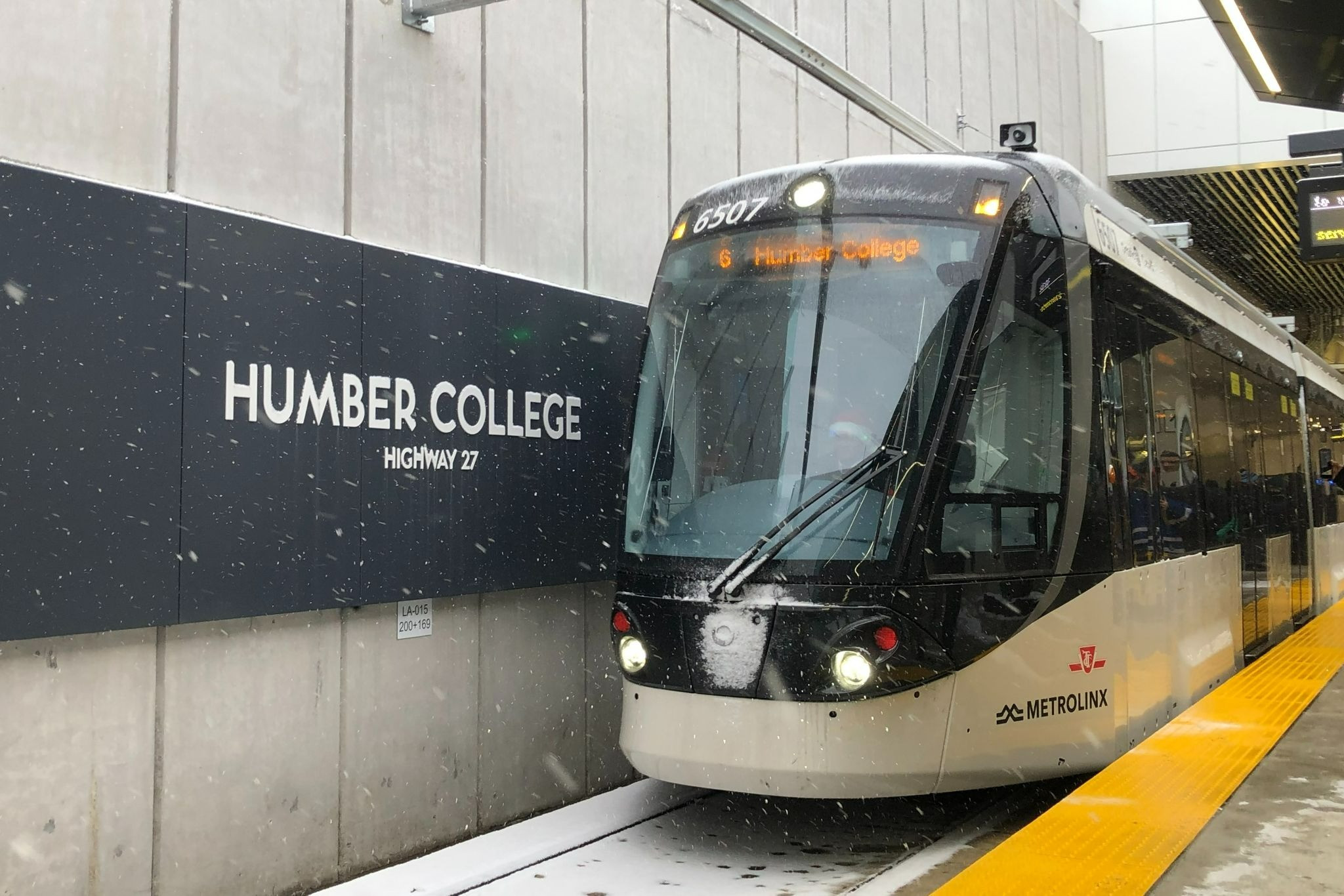
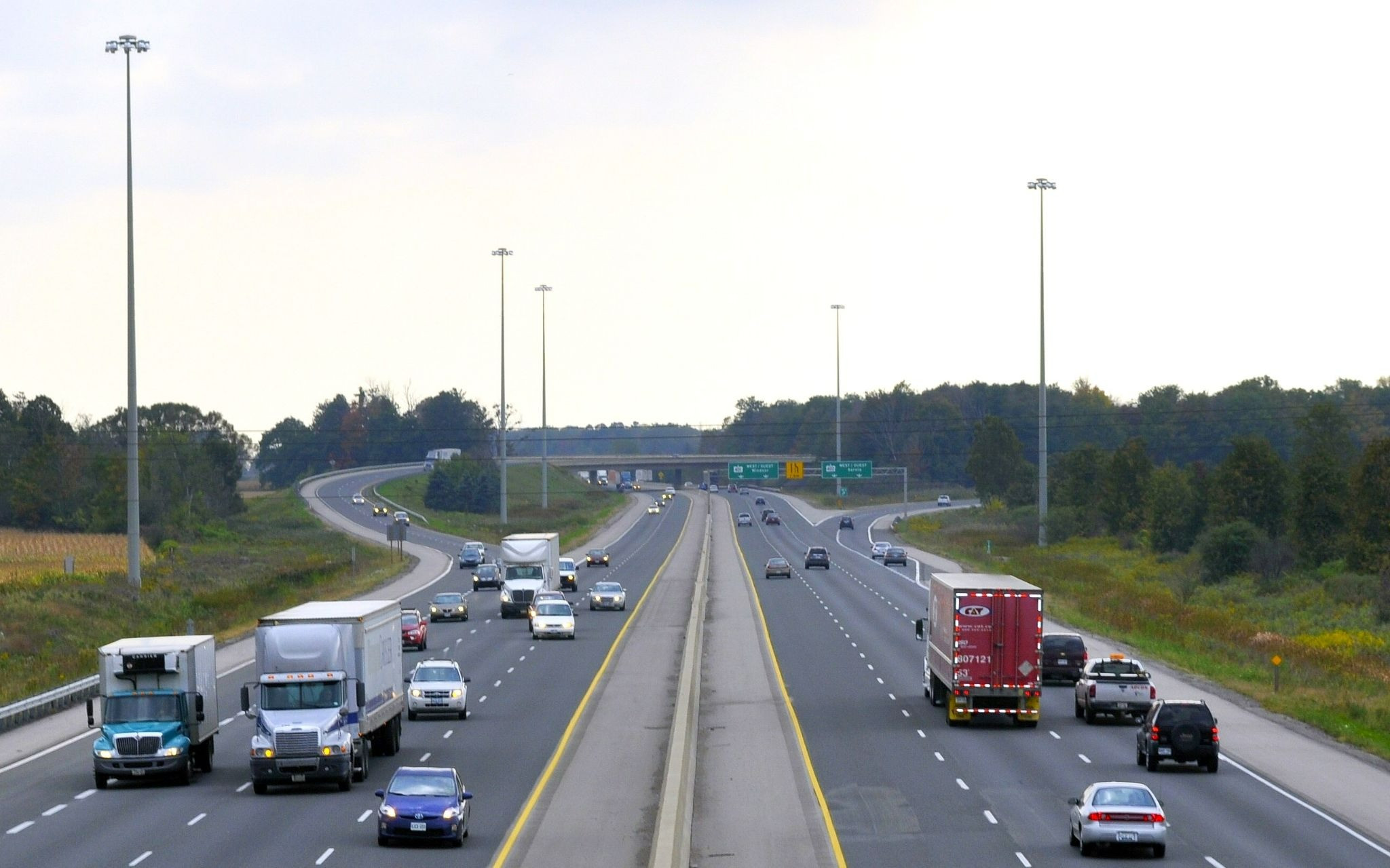
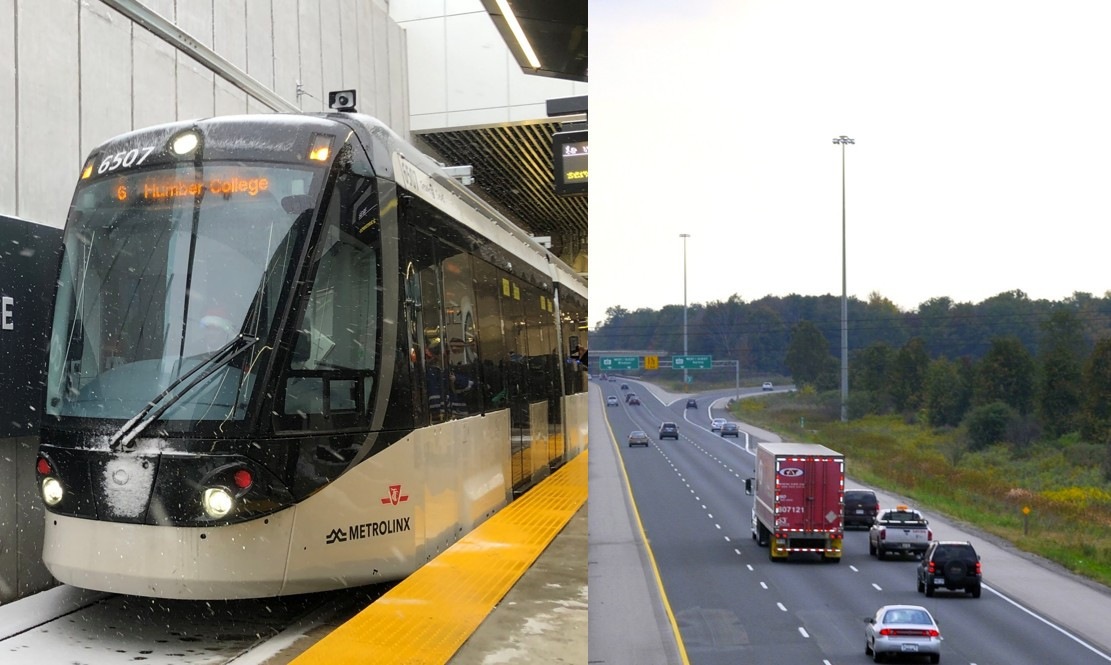
Higher-order transit such as the new Finch LRT makes sense in more dense areas of the province, while the head of a construction groups says highways are still needed to connect vast areas that simply cannot support transit.
(Top: Wikimedia Commons; Metrolinx. Bottom: Wikimedia Commons By Ryan Stubbs)
The Greater Toronto Area expects to welcome an additional 2.8 million people over the next 25 years, with 58 percent of that population growth destined for York, Halton, and Peel Regions. Public infrastructure of all types has struggled to keep pace with demand over the past thirty years.
Ontario needs more transit, roads, water infrastructure, housing, and indeed highways to address long-term challenges and build for Ontario’s future.
In the regions the proposed Highway 413 will serve, 80 percent of people commute by car. With the addition of this 400-series highway, the region will also get a parallel right-of-way to expand public transit capacity to serve the region long-term.
This is very much a “yes and yes,” not an either, or choice to invest in critical infrastructure, rather than choosing one mode over another for ideological reasons.
What often gets lost in calls for transit-only solutions is the sheer scale of the place we are talking about. Ontario is larger than France, Spain, Germany, Italy and the United Kingdom. This is not a compact European jurisdiction where dense cities and countries sit a short train ride apart. The Greater Golden Horseshoe (GGH) spans vast suburban, exurban, rural and industrial landscapes, with employment lands and logistics hubs spread across hundreds of kilometres.
Transit must and will play a vital role along major corridors, but it cannot be the sole answer in a region built across such distance. Personal vehicles are not an ideological preference; they are a geographic reality.
Researchers have found that traffic gridlock in the GTHA negatively impacts the region by $44.7 billion per year due to lost economic productivity, 88,000 fewer jobs and the reduction of quality of life for commuters due to stress, health issues and time lost. The study warns that without increased infrastructure investment, congestion could surge by 59 percent over the next 20 years.
When she was minister of transportation, Caroline Mulroney released the “Connecting the GGH: A Transportation Plan for the Greater Golden Horseshoe” in 2022. This plan laid out a comprehensive transportation network that would see a record amount of investment in roads and transit to serve the entire region. The northwestern part of the GTA’s infrastructure has not kept pace with current or projected growth, and the province’s current investments are working to correct this.
The interconnected network laid out in the plan detailed further development of transit oriented communities and the need for additional highway capacity with new routes that give the network more resiliency. Even with a greater percentage of trips shifting to public transit, as new expansion projects and lines such as the Eglinton LRT launch, research by the Ministry of Transportation shows the fastest growing region of the GTA needs more highway and road infrastructure.
This is necessary given the integrated reality of our economy and communities across the GTA.
York, Halton and Peel regions already serve as massive logistic hubs for so much of our economy. Trucking infrastructure for the movement of commercial and industrial goods our society demands must keep pace with growth. Additionally, trucking and consumer vehicles, whether traditional gas, electric or hydrogen, will need roads and highways that complement local transportation dynamics that incorporate foot, bike, transit, and vehicle use.
Ontario cannot afford to get bogged down in the debates of past decades. It is clear gridlock across the GTA is a multi-faceted problem that will require multi-faceted solutions.
Ontario’s critical infrastructure has not kept pace with growth the past 30 years. The province’s committed investments toward both transit and highway infrastructure is exactly what is required to address these challenges. Choosing one over the other is a recipe to repeat the mistakes of the past.
Nadia Todorova is Executive Director of the Residential and Civil Construction Alliance of Ontario (RCCAO).
Submit a correction about this story

