
Part 1: The ‘Big Bet’ on Carbon Sequestration—scientist warns Carney’s gamble might be ‘too risky’
Seven years after the 2015 Paris Agreement came into effect, Mark Carney said Canada should make a “big bet” on carbon capture to meet its emissions reduction goals.
“For Canada as a whole, we need to make a big bet, or I should say investment rather than a bet, in carbon capture in Western Canada to address the 25 percent of our emissions that come from the oil and gas sector,” Carney remarked in 2022 at a conference in Montreal.
That year, the oil and gas industry had emitted 216.7 megatonnes (Mt) of carbon, accounting for 31 percent of Canada’s total emissions.
Three years later, as Prime Minister, Carney included Pathways Plus, a carbon capture, utilization and storage (CCUS) proposal in Alberta on the first list submitted to the federal Major Projects Office, as one of his first-wave cornerstone infrastructure projects to turbocharge the economy.
The move has since drawn applause from the fossil fuel industry and alarm among climate experts. For decades, the project has been pushed by the Pathways Alliance, a consortium of five major oil and gas companies operating in Alberta (CNRL, Cenovus, ConocoPhillips, Imperial and Suncor; MEG no longer appears as a member on the group’s website).
What Carney has committed to is a boiling the water before you can get the tea scenario. He has supported the Pathways project, a 400-kilometre pipeline that will transport captured carbon from major Alberta oilfield operations to a huge storage facility. Oil and gas production can only be expanded viably (meeting future emissions reduction targets and reducing industrial carbon taxation) if the carbon capture and storage project is operationalized.
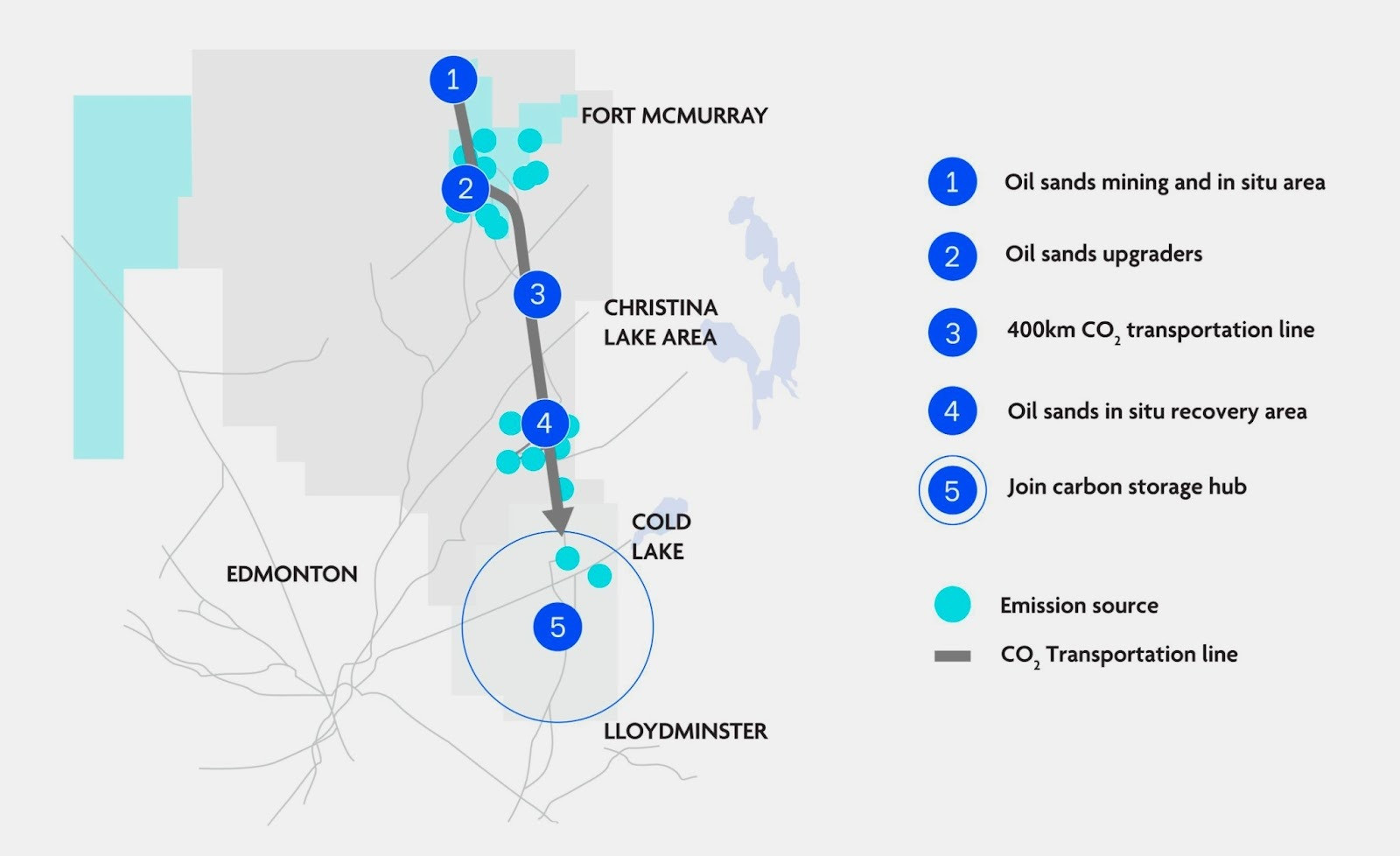
A map of the proposed Pathways Carbon Capture and Storage project.
(Canadian Energy Centre)
In his 2021 book Value(s): Building a Better World for All, Carney wrote that stabilizing the climate would require not only transforming how energy is produced and used but also “increasing the amount of carbon we remove from the atmosphere”. Critics have pointed out two central problems with carbon capture and storage: it does not remove carbon from the atmosphere; and it only prevents carbon release prior to the burning of fossil fuels, when more than 90 percent of the polluting activity occurs.
Researchers have also warned of a scenario where CCS is used as justification for oil and gas companies, such as those behind the Pathways Alliance, to increase production, wiping out any potential benefits of carbon capture.
But perhaps the biggest question is—does carbon capture even work at a large scale?
The International Energy Agency acknowledges that to reduce emissions substantially, the world needs to adopt renewables as well as other low-emissions technologies. But Swedish scientist Kenneth Möllersten warns, “there is an over-reliance on carbon capture and storage in general”.
“While all the components of the CCS value chain, different capture technologies, transportation methods, and geological storage, have been proven, there are still very few projects in the world,” Möllersten cautioned.
“Even fewer are truly commercial. Most receive significant government support, but it’s a value chain and an entire industry that would need to expand extremely fast and we just don’t know if we’re capable of doing this fast enough.”
There is an astonishing rate of failure of CCS projects across the globe. A 2024 study revealed that between 1972 and 2017, almost every fossil-fuel power plant proposed with carbon capture was either never built or made operational.
The State of the Carbon Dioxide Removal report showed that total carbon removal today is about two gigatonnes of carbon dioxide per year, almost all of it coming from conventional approaches such as forests and soils while novel, technology-based methods like direct air capture and Bioenergy with Carbon Capture and Storage (BECCS) contribute only a sliver: roughly 1.3 million tonnes annually.
That’s “nothing,” Möllersten said.
“By 2040, to attain the 1.5-degree target, this would need to scale to several billion tons per year.” Or as The State of the Carbon Dioxide Removal report acknowledges: “Around 7-9 billion tonnes of carbon dioxide per year will need to be removed by mid-century from the atmosphere if the world is to meet the 1.5 degrees Celsius Paris Agreement target.”
It is, however, not talked about enough that CCUS has its roots in the fossil fuel industry rather than climate policy.
The earliest, large-scale use of captured carbon dioxide in North America began in the 1960s, when carbon was injected into oil reservoirs to enhance production through enhanced oil recovery (EOR), a 2022 study noted. In other words, these early initiatives were designed to increase oil production, not to reduce greenhouse gas emissions.
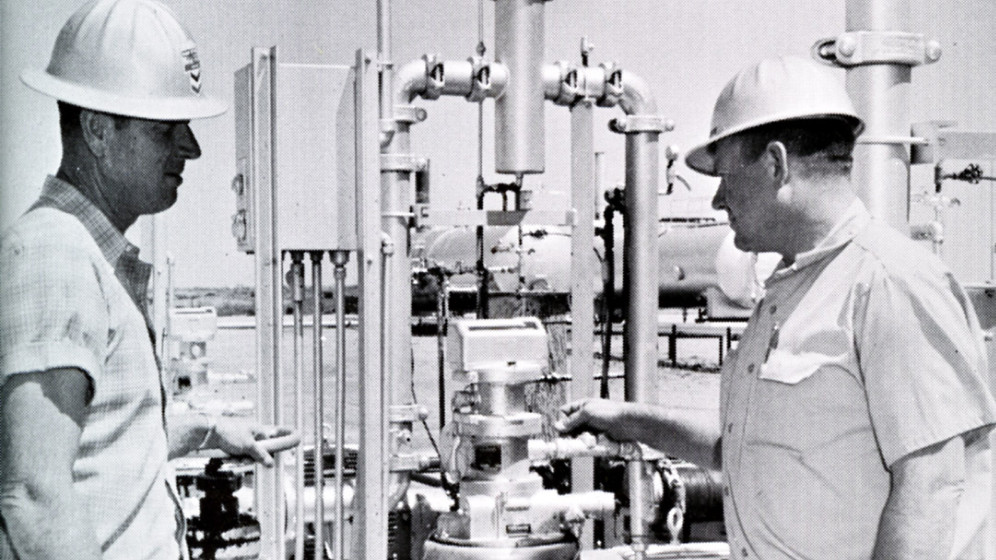
The first major project, Chevron’s SACROC operation in Texas, began injecting carbon in 1972.
(Chevron)
The modern concept of CCUS as a climate mitigation tool emerged later, when in the 1970s, Italian scientist Cesare Marchetti first proposed capturing carbon from industrial sources and storing it underground to limit atmospheric accumulation. The idea gained practical traction in the 1990s, driven by growing scientific consensus on climate change and the introduction of carbon pricing policies in parts of Europe.
In the late 1990s and early 2000s, Sweden’s pulp and paper mills, which burn large amounts of biomass and fossil fuels to generate energy, producing significant carbon emissions, were among the country’s largest industrial polluters and under the Kyoto Protocol they were under pressure to cut emissions.
At the Royal Institute of Technology in Stockholm, a PhD student was studying how to do that until he began to suspect the problem itself might be the solution.
The student, Möllersten, initially examined familiar options such as energy efficiency improvements and fuel switching to cut fossil fuel use but soon realized there was something unique about these plants.
That realization came to him when in 2000, he went to a conference in Australia to present his first academic paper at a conference on greenhouse gas control technologies, an event dominated by discussions of carbon capture and storage or CCS.
CCS was fairly new to Möllersten at the time. “I hadn't thought about it so much,” he told The Pointer.
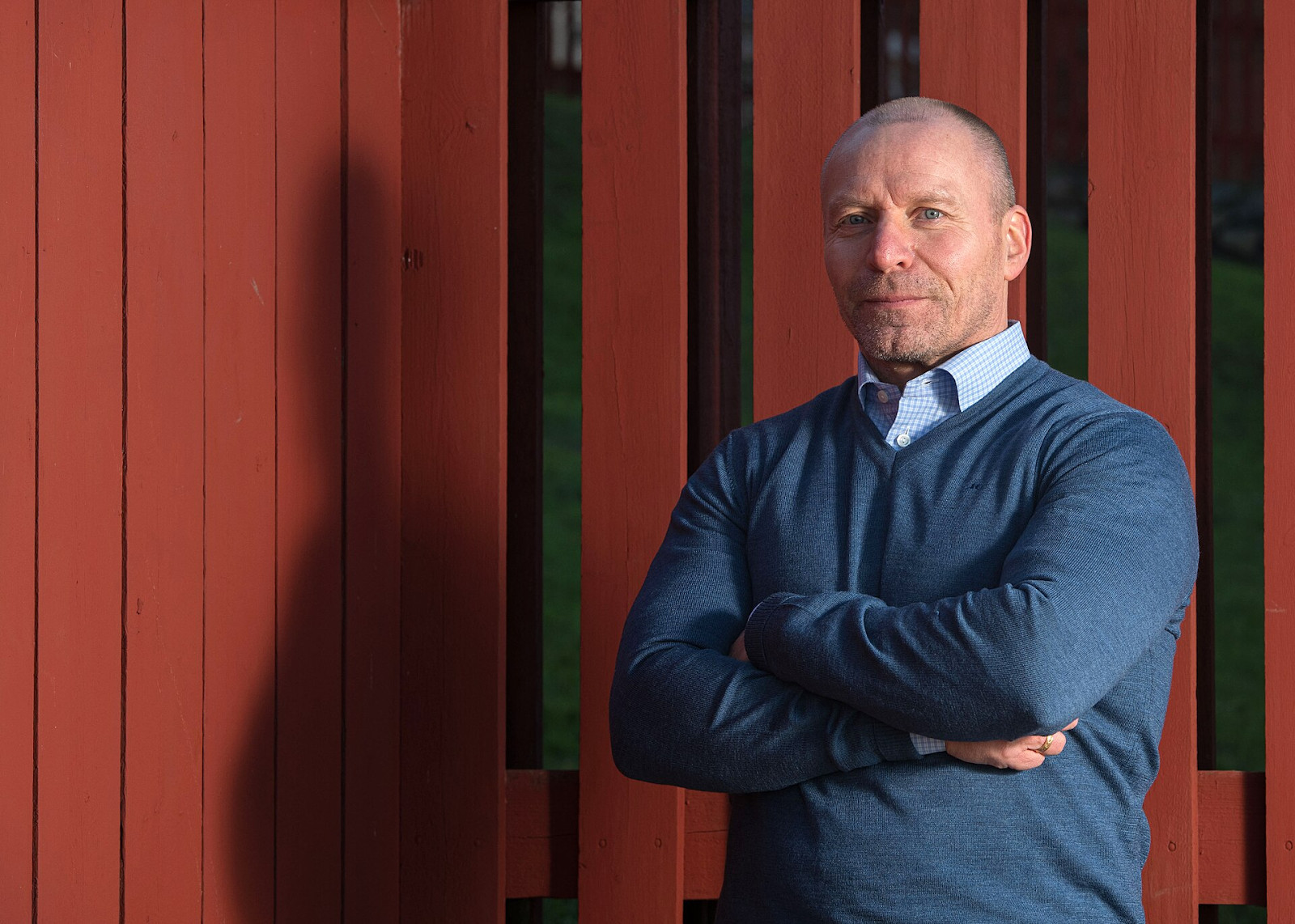
Kenneth Möllersten was among the first researchers globally to lay the groundwork for large-scale engineered negative emission technologies, after realizing two decades ago that combining bioenergy with carbon capture and storage could deliver net-negative emissions while studying CCS in Sweden’s pulp and paper sector. Möllersten is now a senior researcher at IVL Swedish Environmental Research Institute and an adjunct professor at KTH Royal Institute of Technology.
But as he listened closely to speakers at workshops and presentations, he realized the extensive work that was being carried out among energy and fossil fuel extraction companies on carbon capture and storage at a time when both wind and solar power were “very expensive”.
“They were discussing the cost of coal power or natural gas power with CCS, and saying that in their projections, fossil fuel with CCS could be competitive with renewable electricity,” he recalled.
“That made me concerned.”
It meant a future where fossil fuels survived not by being phased out, but by being rebranded as low-carbon through a technology that had yet to be proven at scale.
When he returned to Sweden, a conversation with his supervisor reframed the idea entirely. His professor had previously studied CCS in a Swedish context, not applied to fossil fuels but to biomass at a pulp mill. Capturing carbon from biogenic sources rather than coal or gas opened the door to something fossil fuels could never deliver.
Paper mills rely on trees grown specifically for production; trees that would not otherwise exist and that spend decades pulling carbon dioxide from the atmosphere. The mills then burn residual biomass from the pulped wood to generate electricity, releasing that stored carbon back into the air.
Möllersten saw the loop and the opening within it.
If those emissions were captured at the smokestack and stored underground, the mill would add no new carbon to the atmosphere. And because the trees had already absorbed carbon while growing, the system could go further, creating net negative emissions.
At the time, climate policy globally focused on cutting emissions, not reversing them.
In 2001, Möllersten presented his research at a climate conference in Cambridge, England, where a researcher in the audience was moved by his idea.
It was Michael Obersteiner, who was the Director of the Ecosystems Services and Management (ESM) Program at the International Institute for Applied Systems Analysis (IIASA). At the time, he was preoccupied with what might happen if governments that were starting to take climate change seriously, failed—tipping points, abrupt shifts and a world where emissions cuts arrived too late.
He was searching for a contingency plan.
Together, they took the concept beyond paper mills. Forests would absorb carbon, biomass would produce power and carbon capture would store the emissions underground, yielding energy that didn’t just reduce emissions but removed carbon dioxide from the air.
“I thought about it and realized that this is a negative emission technology (NET) that would make large scale carbon sequestration way more effective and efficient than large-scale afforestation only,” Obersteiner, Director of the Environmental Change Institute, University of Oxford, said.
They called it Bioenergy with Carbon Capture and Storage (BECCS).
“If you combine aggressive decarbonization or de-fossilization with negative emissions, it would be possible to attain climate targets, targets that are more ambitious than what we have had ever discussed before, than if you work exclusively with de-fossilization,” Möllersten explained.
They presented the idea in a paper published in 2001 where they argued the first priority still had to be cutting emissions by expanding renewable energy and improving energy efficiency across the board. But they warned even this might not be enough.
“We cannot just press a button and all the emissions are gone. There's inertia in the system and it takes time,” Möllersten said.
“So, even with very aggressive or ambitious climate policy, there would be a certain degree of warming.”
At the time, there was no clear temperature target. The guiding principle under the UN climate convention was simply to avoid dangerous interference with the climate system, a goal Möllersten described as “very vague or unspecific.” That uncertainty raised the risk of overshooting critical thresholds.
“In the worst-case scenario, then a tipping point is reached,” he said, and there was no existing strategy to deal with that outcome.
“We were saying that with the added option of creating negative emissions, it's possible to mitigate that risk.”
They said BECCS could serve as a form of insurance. The proposal was to first pursue deep decarbonization, then build capacity to use negative emissions and if necessary, deploy them to reduce climate risk.
“But then, obviously, if you would have asked me then, do you think there's going to be a sufficiently emission-ambitious climate policy, I would have said no, because the world works the way it does, and what has happened then is that emissions kept rising.”
When the Paris Agreement finally introduced a temperature target in 2015, it came, in his view, “too late,” after much of the carbon budget had already been spent.
With that target came a new realization: meeting it would require “quite extraordinary amounts of negative emissions,” not only from BECCS but from other carbon-removal approaches as well. Whether the promise of future removals has weakened the urgency to cut emissions is hard to judge, Möllersten said. “It’s impossible to say.”
Before the agreement, he doubted negative emissions played much role in political decision-making because “most people in the world didn’t know they exist.” That changed after the Intergovernmental Panel on Climate Change’s (IPCC) 1.5-degree report put carbon dioxide removal on the policy map.
Policymakers have since become more aware of the idea that “even if we emit more today, we can remove it later”.
“Maybe that has had an influence on strategies, but it's very hard to say how much,” Möllersten noted.
“But if you look at where investments are going in the world, there are no signs that oil companies or fossil companies are planning to reduce extraction.”
In 2025, oil and gas companies were awarded an area the size of Türkiye to explore, the largest acreage granted since the COVID-19 pandemic.
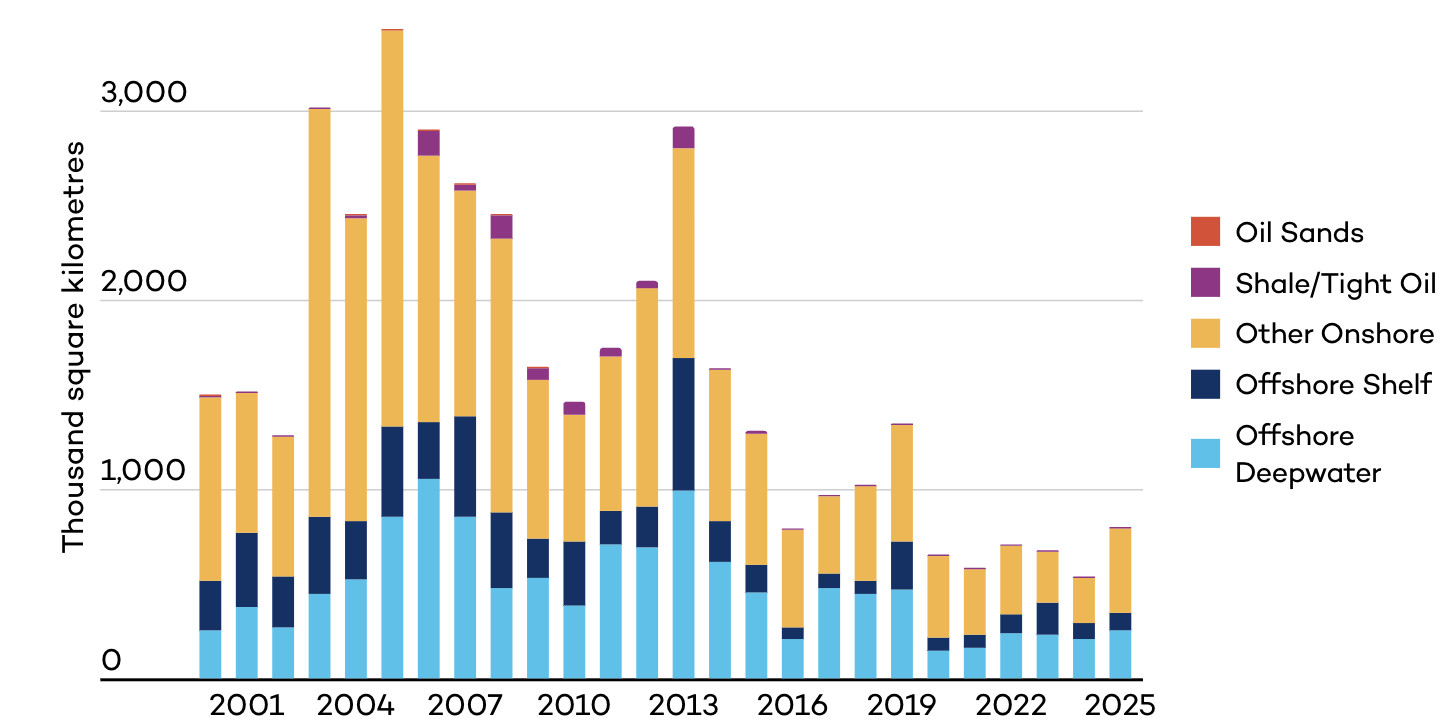
A recent report by the International Institute for Sustainable Development (IISD) highlighted Egypt lead the world in embodied emissions from newly licensed oil and gas areas in 2025 followed by Brazil, which is aiming to become the globe’s fourth-largest oil producer, with the Brazilian National Agency of Petroleum, Natural Gas and Biofuels awarding vast new offshore areas including sensitive zones in the Amazon River Basin’s Block 59 between June and October. Large exporters such as the United States, Norway and Russia are also expanding aggressively: 271 blocks were awarded in Alaska by U.S. President Donald Trump in November as federal offshore leasing grows, Norway is forecast to reach production highs not seen since 2004 while Russia plans continued growth over the next decade, increasingly relying on Chinese markets to offset losses from Europe.
(IISD)
In Canada, oil and gas extraction accounted for the biggest share of energy sector investment, with capital expenditures reaching $43 billion in 2024 out of a total $89 billion for the entire energy sector, according to the Canadian Centre for Energy Information.
The International Energy Agency (IEA) reported that oil production in Canada was 6.1 million barrels per day (mb/d). In 2024, Canadian banks provided $134.9 billion to fossil fuel companies, lagging behind global peers that are increasingly financing new clean renewable energy.
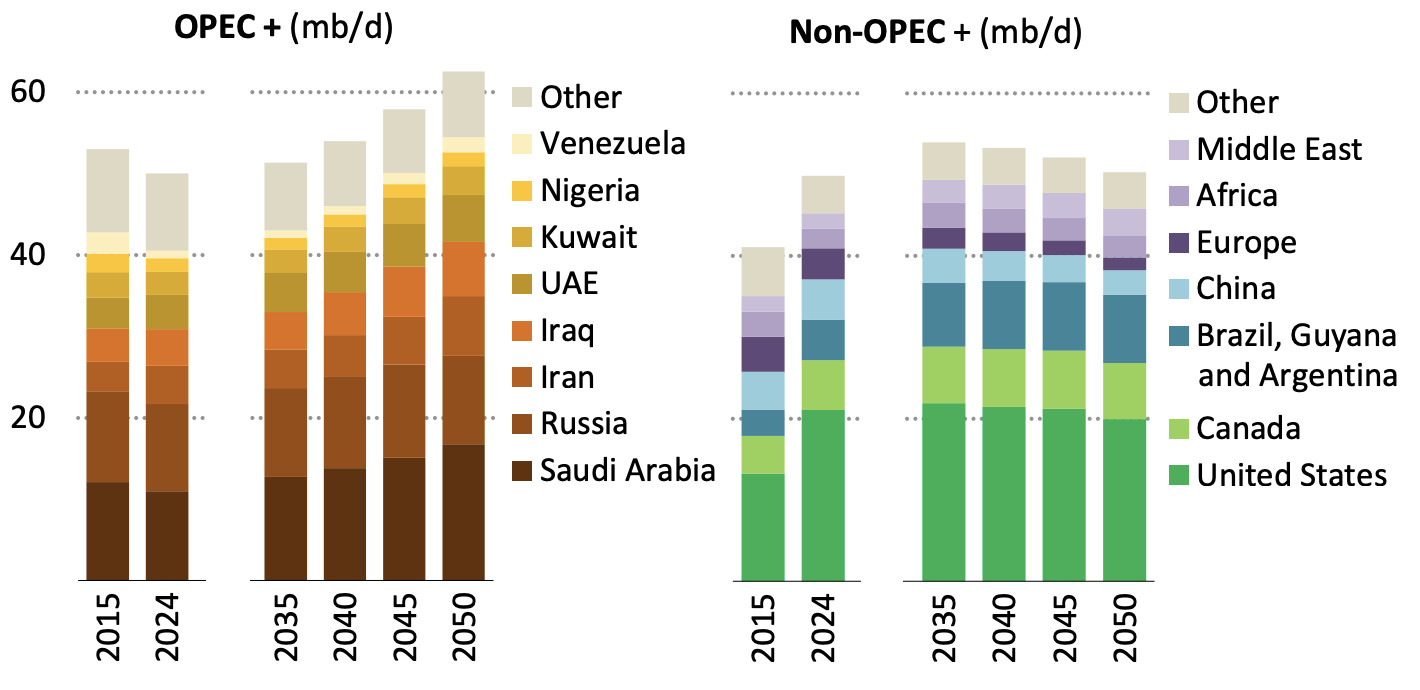
Canada alongside the U.S., Brazil, Guyana and Argentina is increasing oil production while OPEC+ is also expanding, and by 2050 it is expected to produce 15 percent more than its previous record levels.
(International Energy Agency)
There are no signs of a slowdown. In its World Energy Outlook 2025 report, the Canadian oil and gas industry is projected to grow by 0.8 mb/d by 2035, mainly because existing oil sands operations are becoming more efficient and shale plays, which are hard-to-access oil and gas reserves, are producing more natural gas liquids (NGLs).
On November 13, Carney announced that the Ksi Lisims LNG project in northern British Columbia would be fast-tracked as a “nation-building” initiative, with two floating platforms set to process 22.4 billion cubic metres of gas per year, producing 12 million tonnes of liquid natural gas (LNG), nearly matching the first phase of LNG Canada (14-million-tonne) in Kitimat.
Filings with B.C.’s Environmental Assessment Office, dated back to November 2024, indicate that Ksi Lisims LNG is a “wholly owned” subsidiary of Houston, Texas-based Western LNG and is supported by U.S. investment firm Blackstone.
The IEA predicts after 2035, higher oil prices and more pipeline access to the United States will further support new large-scale projects in Canada including mining and in-situ extraction of extra-heavy oil and bitumen.
On November 27, Carney signed a Canada-Alberta Memorandum of Understanding (MOU), committing to enable privately financed pipelines carrying Alberta bitumen for export to Asian markets after suspending the planned federal oil and gas emissions cap as part of his first budget and undermining the protections of the Oil Tanker Moratorium Act.
While Alberta Premier Danielle Smith described it as “a great day for Albertans”, Carney envisioned the deal as a way to “make Canada stronger, more independent, more resilient, more sustainable”.
The announcement was made just over two months after including Pathways Alliance’s CCUS project as “strategies” Canada could benefit from if approved by the Major Projects Office.
Between 2021 and 2028, Ottawa will be investing $320 million in CCUS research, development and demonstration through its Energy Innovation Program. Eligible technologies include direct air capture (DAC), though as of May 2024, the final projects had not yet been selected, leaving the portion of funding dedicated specifically to carbon dioxide removal unclear.
Beyond this program, Canada has also funded several carbon dioxide removal demonstration projects. The Hinton Bioenergy Carbon Capture and Storage Project received $2.5 million in public funding from Emissions Reduction Alberta, supported by Alberta’s Technology Innovation Emissions Reduction Fund.
In British Columbia, Carbon Engineering received $2 million from the Innovative Clean Energy Fund for engineering and design work on a DAC facility, although this project does not meet the storage requirement for carbon dioxide removal because the captured carbon is used to produce fuels.
In Quebec, the CARBONITY biochar facility, where biomass like food or crop waste is processed into a carbon-based material, is being developed with $11 million in public funding from Natural Resources Canada’s Investments in Forest Industry Transformation Program and Canada Economic Development for Quebec Regions. Once operational, it is expected to be the largest biochar plant in North America and larger than any currently operating in Europe.
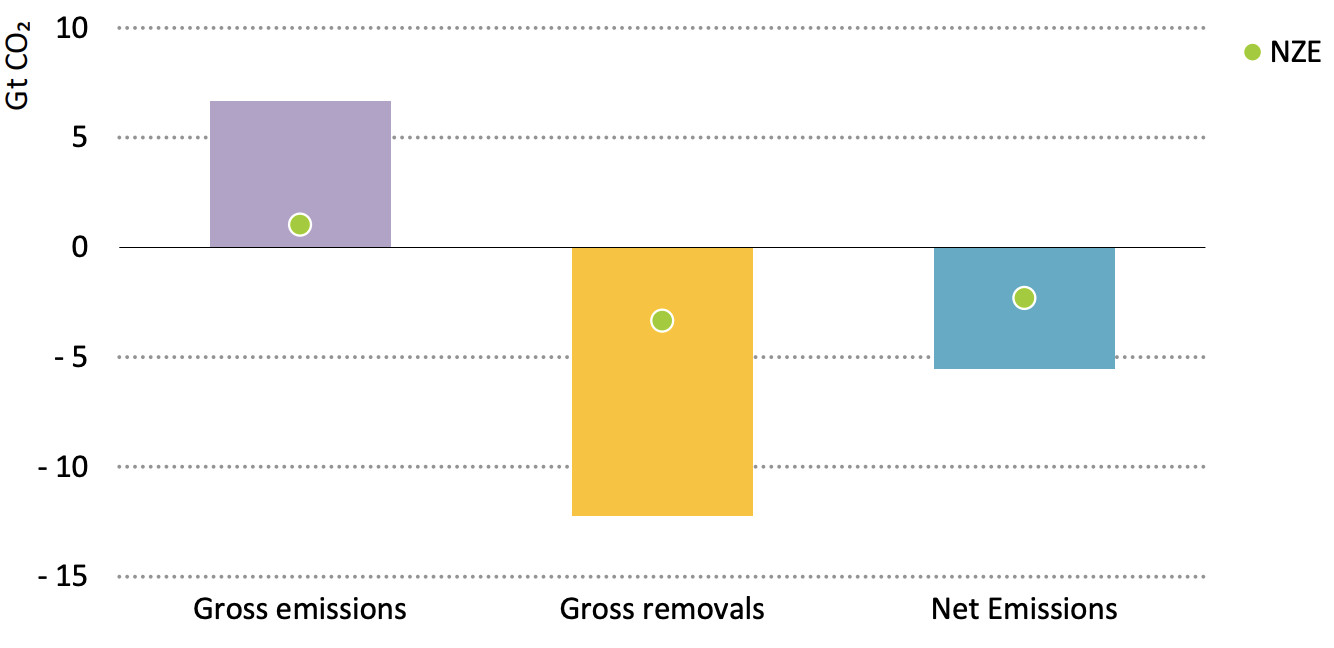
“In scenarios assessed by the IPCC, continued high levels of gross emissions lead to a large reliance on removal technologies which are unproven at scale today,” the International Energy Agency (IEA) noted in its recent report.
(IEA)
Do climate targets make sense? Are they achievable?
Möllersten says he has been thinking about this question for decades, and the pondering often takes him back to 2015.
“The day after the Paris Agreement was adopted, everyone was cheering—it was a great victory. But I was left thinking, okay, we have a beautiful target, but there’s no way we’re going to make it,” he said.
“In the years after that, until only a couple of years ago, very few people wanted to talk about the target the same way.”
He believes excessive optimism about meeting climate targets can dull the urgency to prepare for the impacts already locked in. The more policymakers assume mitigation will succeed, the easier it becomes to overlook the scale of adaptation that will be needed.
Given today’s emissions and the slow pace of phasing out fossil fuels and governments still not being able to agree on language committing to a phase-out as evident not only at COP30 but also at the G7 meeting of environment and energy ministers in Toronto, he doubts the math behind many 1.5-degree pathways adds up.
He points out that those scenarios often assume steep emissions cuts by 2030, yet there is little evidence that emissions are actually falling, even as global energy demand continues to rise. In 2024, the energy demand increased by 2.2 percent and is expected to increase even further by 3.7 percent this year.
The result is a growing reliance on vast amounts of carbon removal later in the century, far beyond what seems realistically achievable.
“I think that we will overshoot the 1.5 degree target more than what is being discussed today…but it will still be possible to get down to 1.5 but that is going to take even longer from the peak temperature,” he said.
Möllersten warns that CCUS projects need a lot of planning, investment, and typically face delays. On the other hand, he noted that energy efficiency and renewable energy technologies are already commercialized.
“We know how to implement them,” he said.
“We can also change lifestyles. We can consume less meat. There’s no technological uncertainty. Betting too much on CCS and carbon dioxide removal in the future is a risky game. That’s quite certain.”
It’s a game Carney seems willing to bet on.
The Pointer will explore more on this in Part II.
Email: [email protected]
At a time when vital public information is needed by everyone, The Pointer has taken down our paywall on all stories to ensure every resident of Brampton, Mississauga and Niagara has access to the facts. For those who are able, we encourage you to consider a subscription. This will help us report on important public interest issues the community needs to know about now more than ever. You can register for a 30-day free trial HERE. Thereafter, The Pointer will charge $10 a month and you can cancel any time right on the website. Thank you
Submit a correction about this story


