
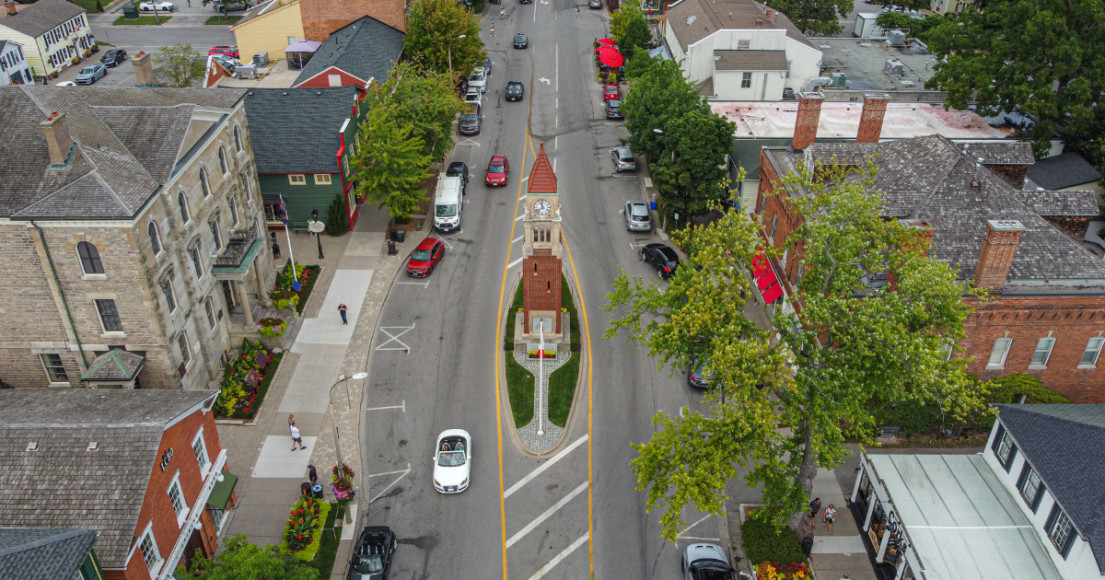
Waiving of $900K in development fees to help builder of five-star hotel raises questions in Niagara
Niagara Regional Council’s narrow 14–11 vote on November 20, to grant a $900,000 development charge waiver to a private developer building a five-star hotel in Niagara-on-the-Lake, has sparked criticism among councillors, residents and some legal observers.
The builder, Two Sisters Resorts, had previously been asked by the Town to construct a second level of underground parking while eliminating most of the surface parking at the future Parliament Oak Hotel. This would protect much of the natural heritage at the site and potentially help provide more parking which the Town had been hoping to do. Two Sisters agreed, but eventually asked that the development fee for the second level of parking, $900,000, be waived since it would not have had to pay that amount if the original plan had been followed.
What began as a request framed as a “one-time exception” in return for the builder’s good faith gesture, has raised broader questions about legality, fairness, precedent, and whether the Region is prepared to absorb another financial burden at a time of steeply rising taxes and a multibillion-dollar infrastructure deficit.
The development charge issue first surfaced publicly on July 15, when officials with the developer, Two Sisters Resorts, appeared before Niagara-on-the-Lake’s Committee of the Whole seeking the Town’s support for a regional DC waiver. During the presentation, the Two Sisters’ representative indicated a request had already been submitted directly to Niagara Region staff and it had been denied. After the refusal at the regional level, the proponent sought the Town’s support to approach the Region a second time.
The Two Sisters’ Developments’ proposal for the upscale 129-room hotel in the middle of a residential neighbourhood within the historic district and near the main commercial corridor was met with local opposition before ultimately receiving council approval in June 2024, as elected officials and staff supported the need for more hotel space in the popular tourist destination. Town officials have for more than a decade also made clear that more commercial tax revenue is needed to balance out what residential property owners have had to increasingly cover for the growing municipal budget.
Attracting private investment has also been an important economic development strategy for the Town, which hosts hundreds of thousands of visitors annually, but often has to burden local residents to pay for many of the services and infrastructure costs that need to be covered.
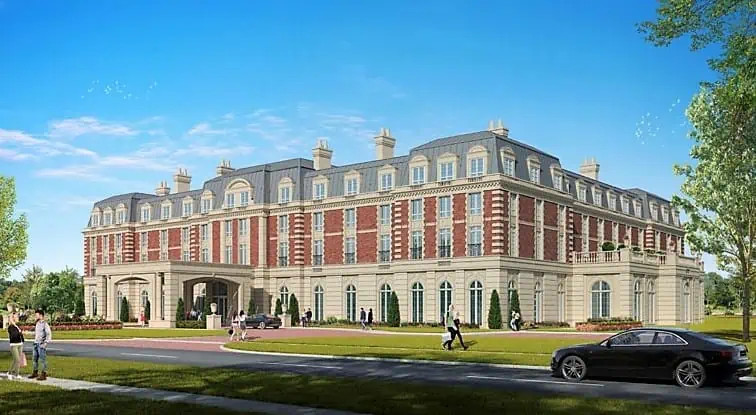
A rendering of the hotel project in Niagara-on-the-Lake.
(Niagara-on-the-Lake)
Meanwhile, critics and many local residents have routinely opposed initiatives to attract investment and help generate more revenue for the Town’s growth.
The latest issue of the waiver of development charges was discussed by town councillors without the benefit of a staff report to guide them on the complex issues of development charges, process, or legality. No expert advice or analysis was provided, for example, to help decision makers weigh the significant increase in revenues the hotel will generate against the cost of waiving the fees for the extra parking level.
When one councillor asked about the legal or financial implications of supporting the waiver, the Town’s CAO said staff were “not in a position to respond.” No explanation of the statutory limitations governing development charges or the Region’s legal framework was provided.
The Town voted 5–3 to endorse the request and opened a political door for the developer to re-apply for the waiver at the upper-tier Regional municipality. One councillor remarked he was satisfied to support this at the Town level and “leave it up to the 33 councillors there (at Niagara Region) to decide.”
With the endorsement of the Town of Niagara-on-the-Lake locked down, Mayor Gary Zalepa assumed a supporting role in navigating the issue through the Region’s political processes. The matter was brought before the Corporate Services Committee on November 5, where it met resistance from committee members.
Councillor Haley Bateman warned that the decision would set a harmful precedent.
“In moments like this, when we’re literally about to add a million to the tax levy, I find it shocking that we are sitting here saying it's no big deal, meanwhile we will nickel and dime small programs just to allow for this,” she said. “We leave ourselves open to any and all developers who may ask for similar special treatments.”
Bateman further highlighted the financial realities of trying to pay for the request.
“Council is very aware of what it means to waive development fees for a commercial development. We rely on development fees to pay for growth and our only source of revenue is to increase the tax base.”
She expressed concern that endorsing the process would send the wrong message to other developers looking to build in Niagara.
“Mayors across Niagara have just given developers the option to come to Council, leverage their relationships to advocate for development fees exemptions. This has set an awful precedent that will increase taxes for residents. There is no other option.”
Her comment highlighted the fact that of the 11 regional mayors present, 10 supported the waiver; Mayor Sandra Easton of Lincoln was chairing the meeting and did not vote, while Grimsby’s mayor was absent.
Supporters of the exemption underscored the need to work with private investors, or risk losing large amounts of revenue from commercial property taxes and all the other money generated by a range of business activities municipalities need to attract jobs, residents and continue growing successfully.
Councillor Brian Heit highlighted that wherever the money is drawn from, it will fall on the back of taxpayers.
“The taxpayer will be paying this money… therefore I’ll be voting against it,” he said. “Can I make the recommendation that we ask the Town of NOTL to pay it? Or can we plant a money tree, because we already know we don't have enough money put aside for the infrastructure that we need, we are billions of dollars short.”
The opposition did not prevent the request from proceeding to Regional Council. It arrived there on November 20 where it ultimately received final approval. It could cost taxpayers more than $900,000.
The Pointer reached out to the developer for comment. No response was received.
On November 27th, retired lawyer Stuart McCormack submitted a letter to the Region expressing concern that Council’s decision may violate the Development Charges Act, 1997 and the Region’s bylaw governing DCs. His letter emphasizes that municipalities cannot waive development charges solely because a project is considered desirable. Any DC exemptions, he notes, must be “clear, consistent, and non-discretionary.” Although his letter arrived after council had decided the issue, it could appear on the January 29 Council agenda. It remains unclear whether council will take any action since the waiver has already been provisionally approved.
McCormack’s letter highlighted several key concerns:
- Exemptions or reductions to DCs must be explicitly authorized by bylaw.
- The Region’s DC bylaw does not contain an exemption that could apply to a private commercial hotel project.
- Granting the waiver without bylaw authorization may constitute an ultra vires action (beyond Council’s legal authority), an issue established in precedent by the Supreme Court of Canada as illegal.
- Ad-hoc exemptions risk undermining fairness, transparency, and the integrity of the DC regime.
- Any future incentive program should involve a formal DC bylaw amendment with clear eligibility criteria.
The Corporate Services Committee, which discussed the matter two weeks prior to the Council meeting, framed the $900,000 waiver as a “one-time exception.” The council motion instructed staff to “determine a source for funding for this exception,” but that it not fall on taxpayers.
Critics argue that this language underscores the legal risk: if a development qualifies for a DC exemption under the bylaw, no exception is needed; conversely, providing relief where no bylaw provision exists could constitute “bonusing”, which is explicitly prohibited under Ontario law.
Although municipalities have the authority to provide grants or financial assistance, that authority is subject to strict statutory limits and must be exercised in accordance with approved municipal policy. These restrictions remove council’s ability to award financial assistance outside of established frameworks.
The Municipal Act specifically states that “a municipality shall not assist, directly or indirectly, any manufacturing business or other industrial or commercial enterprise through the granting of bonuses.” The Act further prohibits municipalities from providing assistance by “giving a total or partial exemption from any levy, charge or fee.”
The attempt to distance the payment from the levy does not remove the fact that any funding ultimately comes from taxpayers, raising further questions about transparency, accountability, and precedent. As St Catharines Councillor Bateman stressed in comments to The Pointer, “The motion that passed gives the public the perception that we have other funding sources, when we do not.”
McCormack warned that waivers outside the bylaw could erode fairness, transparency and the integrity of the DC system. By framing the payment as an exception rather than a statutory exemption, council risks creating both legal vulnerability and precedent for other developers, he wrote.
In response to questions from The Pointer, McCormack explained his motivation to write the letter arose from his level of surprise that the Town of Niagara-on-the-Lake had asked for the waiver, but even more so that the Region agreed to it.
“Development charges are there for a reason, to ensure that a developer pays his fair share of infrastructure costs so existing taxpayers are not unfairly burdened,” he said. “I was shocked when the Region said yes.”
He warned of broader consequences if the decision stands.
“There could be adverse consequences in terms of other developers seeking similar ad hoc relief, and potential litigation from people who paid the DC fees for similar projects and now feel they have received unequal treatment. It’s a little disingenuous (for council) to say ‘don’t raise property taxes because of this decision’, since if they don’t raise them, some other project will lose the money.”
Adding to the legal uncertainty, council received a confidential staff memo related to the waiver. Because the document was not shared publicly, it is unknown whether staff advised councillors about the legality of granting the exemption or the risk of bonusing. The memo’s confidential status prevented open discussion, leaving the public in the dark.
Local residents have been critical of the decision. Liz Benneian, a prominent advocate for municipal accountability and community improvement condemned the waiver as both unfair and financially irresponsible.
She highlighted that politicians, including mayors Mat Siscoe (St. Catharines), Jim Diodati (Niagara Falls), Gary Zalepa (Niagara-on-the-Lake) and Patrick Brown (Brampton) attended a lavish, invite-only October ribbon-cutting at the developer’s Stone Eagle/Two Sisters Winery, raising concerns about influence. The event was one month before the developer sought the $904,000 waiver through political channels.
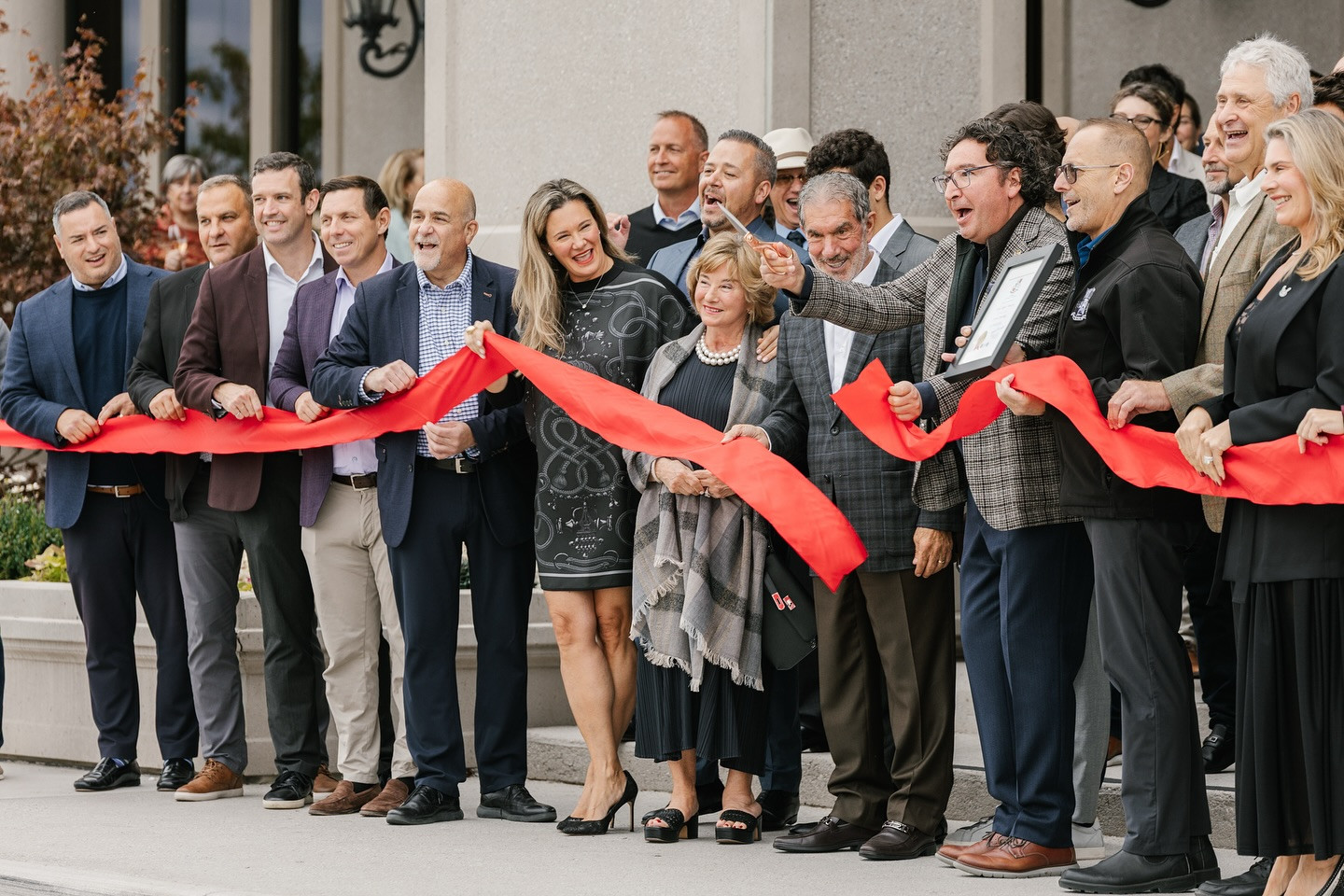
The ribbon cutting for the Stone Eagle/Two Sisters Winery in October 2025. Also in attendance are Niagara Falls Mayor Jim Diodati (third from right); Niagara-on-the-Lake Mayor Gary Zalepa (fourth from right); Brampton Councillor Martin Medeiros (far left); St. Catharines Mayor Mat Siscoe (third from left); and Brampton Mayor Patrick Brown (fourth from left).
(Facebook)
Benneian also placed the waiver in the context of rising regional costs:
- Niagara’s capital infrastructure backlog to 2035 is $2.76 billion.
- The Regional tax increase in 2025 was 9.6 percent, which followed a 7.02 percent in 2024 and 7.58 percent in 2023.
“Every time our politicians give developers a break… the taxpayers pay: we pay in higher taxes, we pay in lack of new and maintained infrastructure, we pay in lack of low-income housing,” she said. “How much can you expect us to take?”
Supporters of the waiver, including the developer, argued that the parking redesign that triggered the development charges was requested by the Town and was intended to keep all parking underground. On that basis, they maintained that the project warrants exceptional consideration.
Supporters argued that the circumstances in this case were “unique”, noting that the Town had requested the redesign. They warned that denying the relief could strain the Region’s relationship with private partners, while emphasizing the long-term benefits such a significant investment could bring to Niagara-on-the-Lake’s tourism sector.
Email: [email protected]
At a time when vital public information is needed by everyone, The Pointer has taken down our paywall on all stories to ensure every resident of Brampton, Mississauga and Niagara has access to the facts. For those who are able, we encourage you to consider a subscription. This will help us report on important public interest issues the community needs to know about now more than ever. You can register for a 30-day free trial HERE. Thereafter, The Pointer will charge $10 a month and you can cancel any time right on the website. Thank you
Submit a correction about this story

