
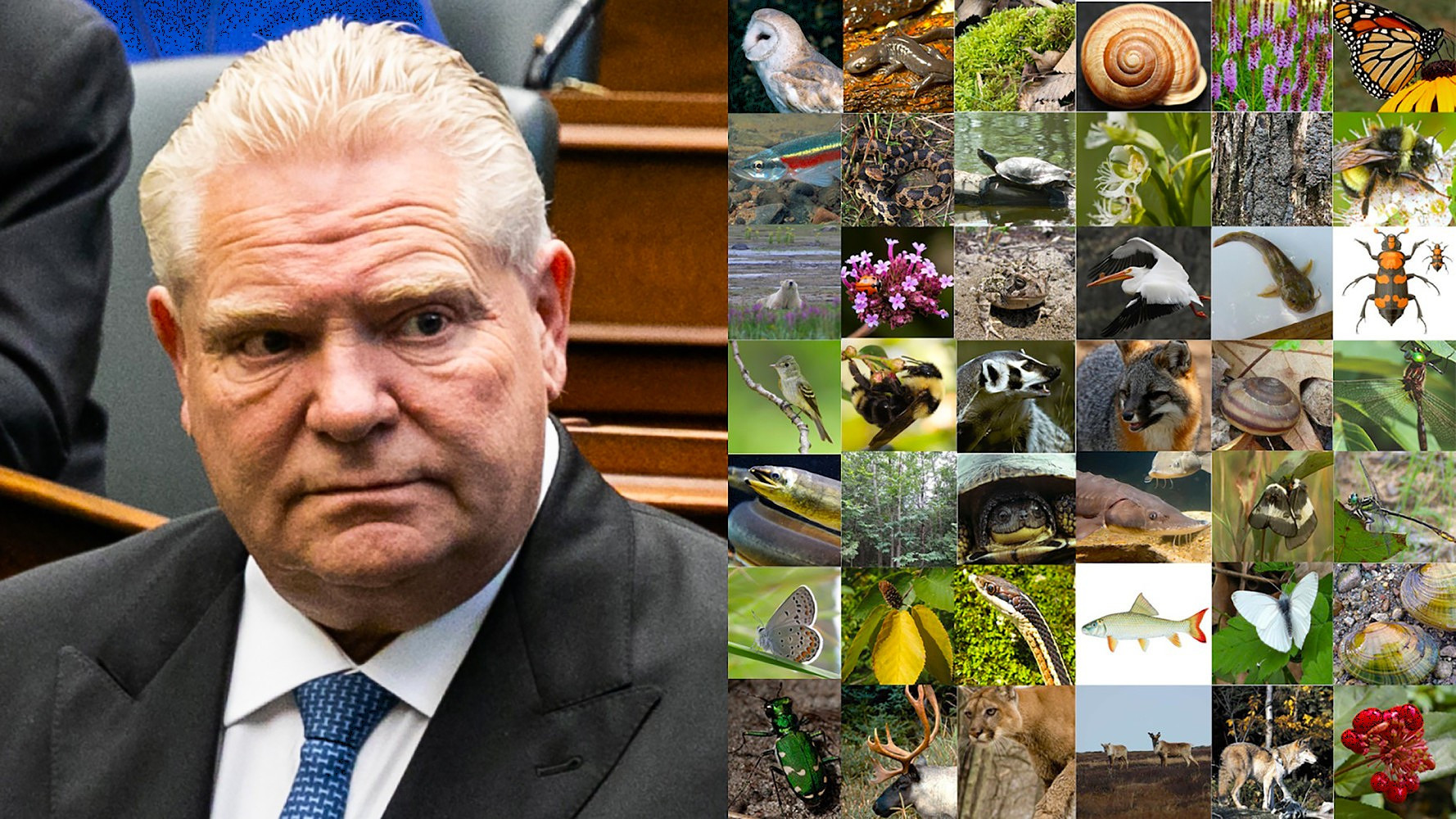
'A disregard for the public's rights': Auditor General slams Doug Ford’s record on environmental rights in latest report
“I've lately been reflecting quite a lot that I began my own personal activism as a volunteer because I care about the waterfront and the future of the province, but I really feel like I'm now becoming a democracy activist,” Ontario Place for All co-chair Ann-Elisabeth Samson said, shortly after the Office of the Auditor General of Ontario’s latest report highlighted, once again, the blatant disregard by the Doug Ford government which continues to ignore the Environmental Bill of Rights.
“The government is using all kinds of tools to eliminate public input and public engagement in our shared public assets.”
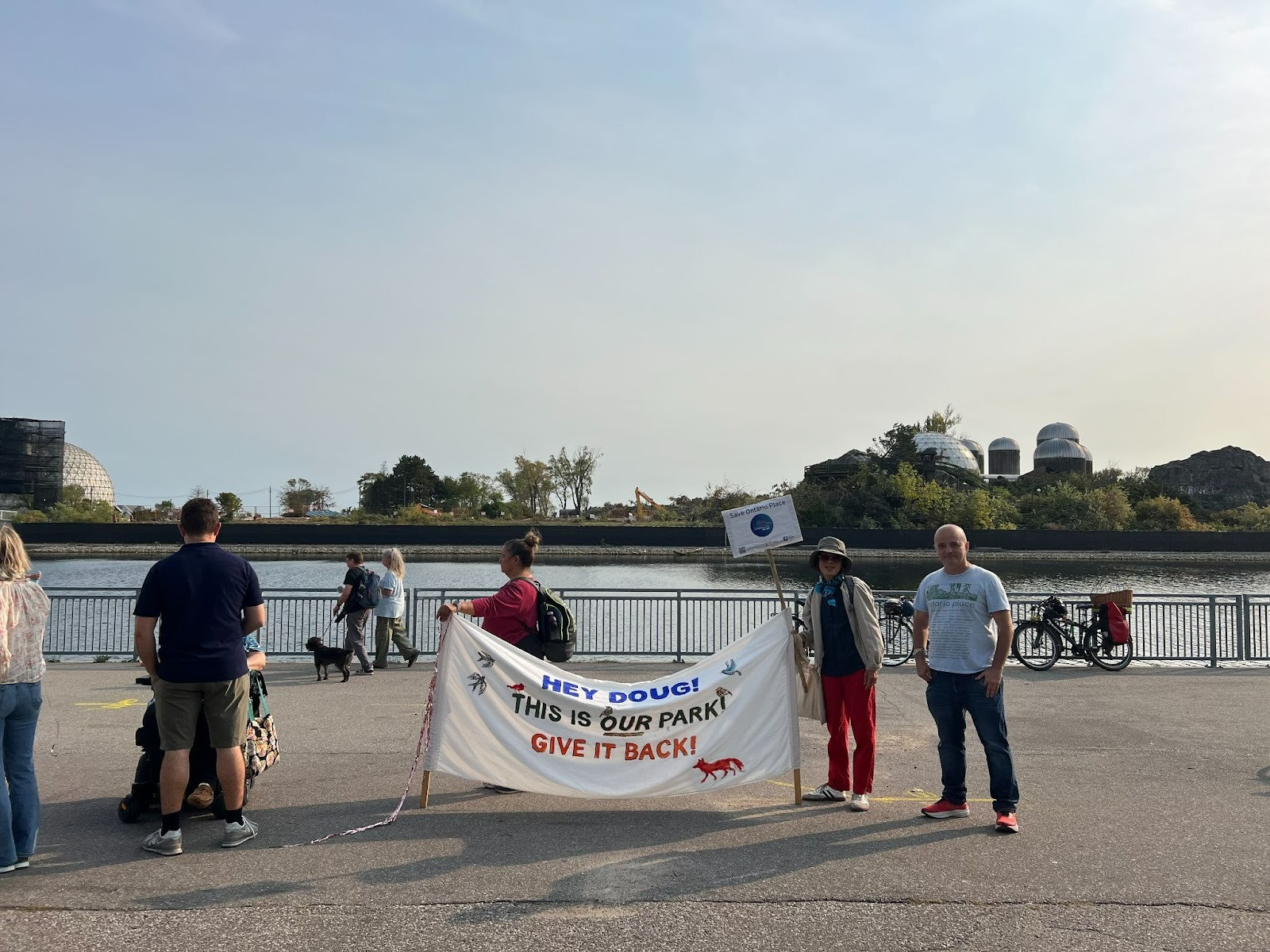
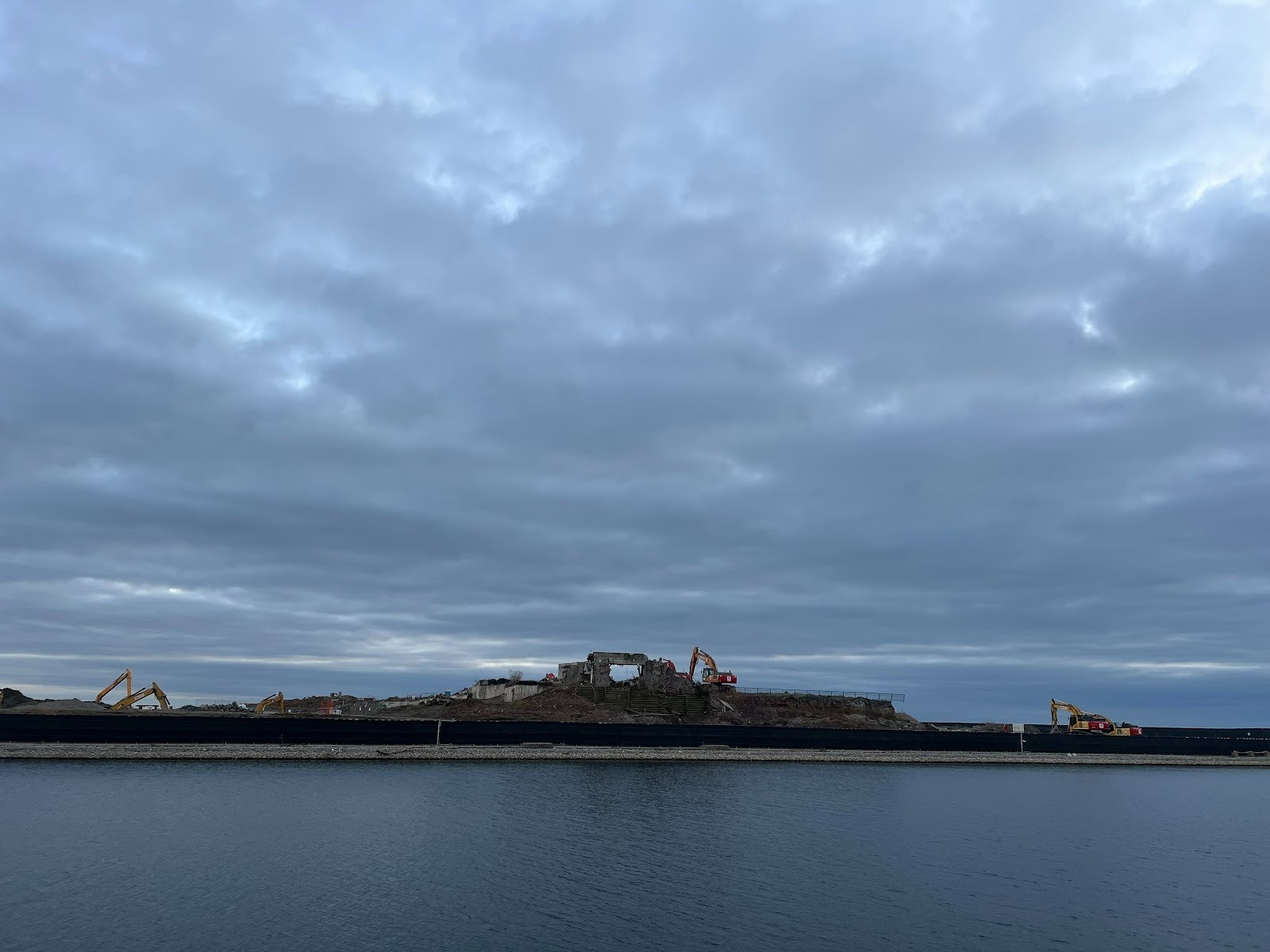
On October 2, 2024, protestors outside Ontario Place were devastated while witnessing the lush forest on the island being destroyed.
(Anushka Yadav/The Pointer)
For decades, the Environmental Bill of Rights (EBR) has been the shoreline barrier standing between Ontarians like Samson and the rising flood of decisions that threaten their land, water, climate and communities.
Designed as a democratic breakwater, it is a legal structure meant to absorb the force of powerful interests and prevent environmental harm from washing unchallenged into public life.
The Auditor General’s latest findings show the retaining wall is cracking under the weight of political pressure.
On December 2, Auditor General Shelley Spence outlined in her report a troubling but not surprising pattern of the Doug Ford government, “consistent with past reports”, repeatedly making decisions before finishing consultations, offering little support to help the public understand or participate in environmental processes despite the Environmental Bill of Rights requiring the province to notify Ontarians of environmentally significant decisions, consider their feedback, and, when warranted, launch investigations.
Spence highlighted that since taking office, the PCs have “been taking actions that had rarely or never been taken” since the EBR was first introduced in 1993.
Both Ecojustice’s Managing Lawyer Ian Miron and Phil Pothen, Ontario Environment Program Manager at Environmental Defence, agreed that the report confirms what environmental advocates have observed for years.
“We’re losing, we’re losing a lot,” Miron told The Pointer.
“The Environmental Bill of Rights is one of Ontario’s most important environmental laws. Continued non-compliance signals a lack of respect for the rule of law. There is blatant and ongoing disregard for these legal obligations, and that’s a big concern.”
Widespread shortcomings in how ministries apply the Statement of Environmental Values (SEVs), a key component of the Environmental Bill of Rights requiring environmental considerations in every decision, were also identified in the damning report.
Many ministries failed to “adequately document or demonstrate” how their SEVs influenced decision-making, and some could not provide any evidence that SEVs were reviewed at all when approving environmentally significant actions.
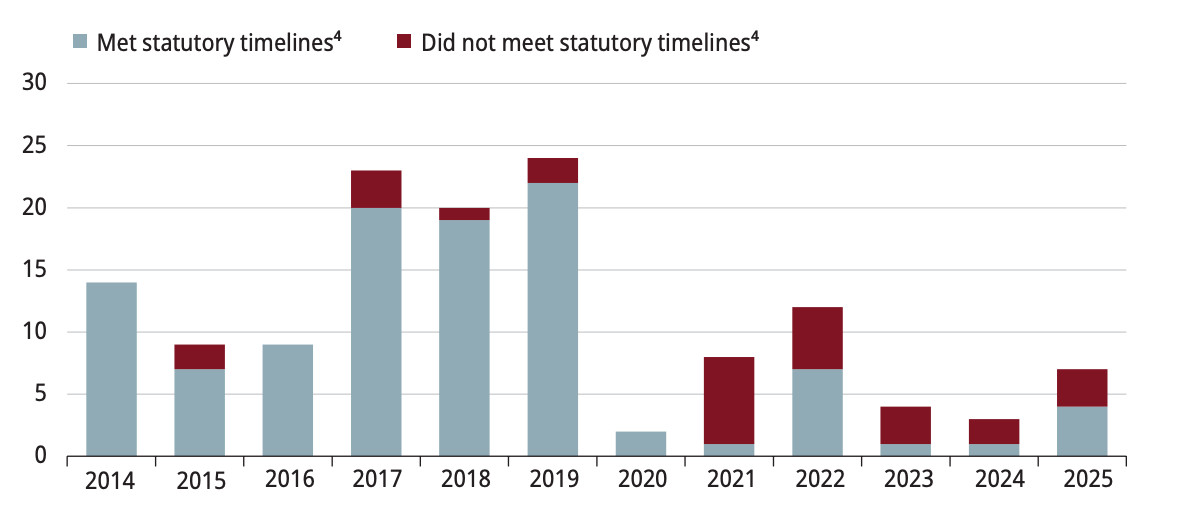
The Auditor General’s latest report revealed that both the environment and natural resources ministries repeatedly failed to meet the legally mandated timelines for handling applications submitted under the Environmental Bill of Rights since 2019, even as the number of applications has fallen, despite having no discretion to extend the deadlines except when formally prolonging an investigation. Of the 12 applications for review or with active investigation, or completed in 2024-25, the ministries missed statutory timelines in half of the cases.
(Auditor General of Ontario)
Several ministries have also not updated their SEVs to reflect current mandates and priorities, including the environment ministry (last updated 2008), the energy and mining ministry (last updated 2019, pre-merger) and the municipal affairs ministry (last updated 2020).
In cases where SEVs were in place, compliance remained inconsistent: In the 2024-25 audit, 23 percent of sampled decisions lacked documentation showing SEV consideration.
In 14 percent of cases from the energy and mines minister Stephen Lecce’s ministry, the documentation did not show all applicable SEV principles were applied.
All four ministeries mentioned each had at least one decision where proof of SEV consideration could not be provided, mirroring similar findings from previous years despite internal guidance requiring ministries to review and document SEVs before approving environmentally significant actions.
This interferes with Ontarians’ rights to exercise their EBR rights who, despite the shortcomings, requested six reviews and investigations, prompting the Environment Ministry to take action in some cases and used the legislation to challenge four environmentally significant permits and approvals that they otherwise would have had no right to contest.
Pothen observed that the “most dangerous attacks on environmental protection” are now “almost always buried in omnibus laws” that distract from or hide environmental impact or mix it with so many other things that no one is able to pay attention to the environmental impact.
“Even when those bills are rushed through the legislature too quickly for voters to have, through the legislative process, an opportunity to find out what's in them before they're already lost,” he explained.
“The government has a consistent habit of politically excusing or justifying harmful laws by misrepresenting the expert advice that they've received.”
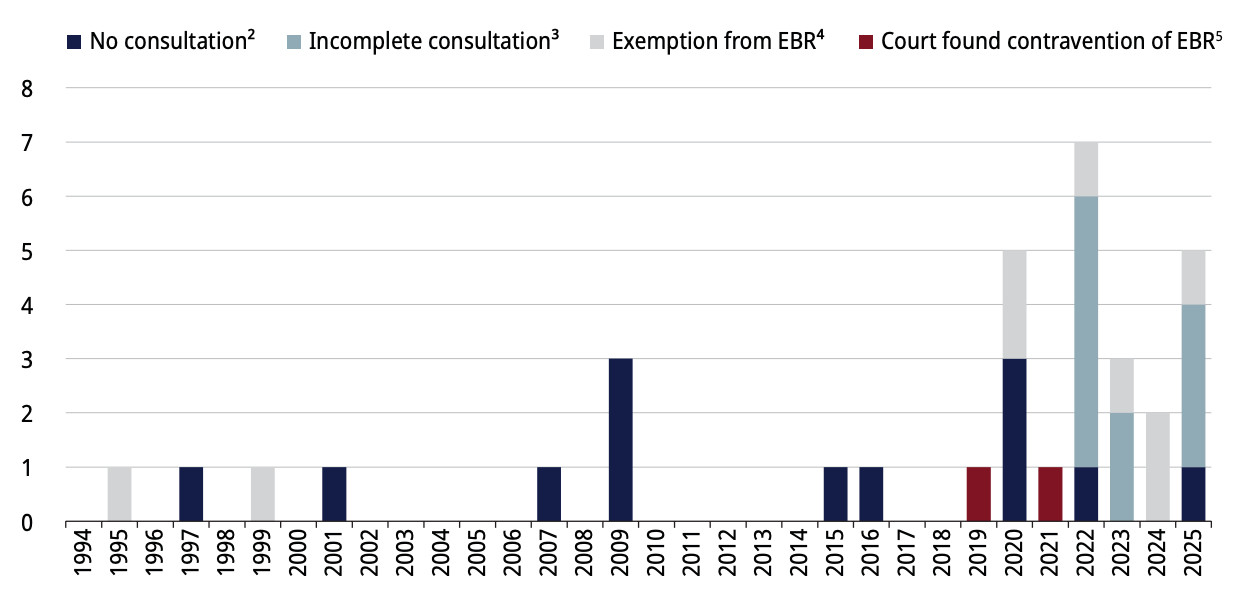
Since 2019, the province has increasingly bypassed the Environmental Bill of Rights, passing environmentally significant bills without consultation, approving projects before consultations ended, granting broad exemptions, and even being twice found by the Divisional Court to have violated the Act including in 2019 when the Court ruled Ontario broke the law by failing to consult the public on Planning Act changes that enabled rapid rezoning for fast-tracked development. The trend has only worsened, with 2025 marking the second-highest year on record for incomplete consultations after 2022.
(Auditor General of Ontario)
The report found not only did the Ministry of the Environment, Conservation and Parks (MECP) fail to educate Ontarians about the EBR, but two of the major infrastructure projects were exempted entirely from EBR consultation, including the Ontario Place Redevelopment Project in June 2025 and Highway 413 in November 2024, despite both projects having a “huge environmental impact”.
Pothen said exempting Highway 413 and Ontario Place, two development projects impacting the health of the Great Lakes and put several species at risk, from the EBR puts every subsequent planning decision stemming from those exemptions at risk.
“There is no reason for Ontarians to trust that the government is properly considering the advice and factors required when making these decisions,” he explained.
“Without the transparency the EBR provides, any permits or approvals granted are more vulnerable and may need to be reversed. The process itself is what gives some confidence in the merits of these decisions. Absent EBR postings — those decisions are much more vulnerable.”
The report noted even when the Ford government does comply with the EBR’s basic posting requirements, ministries often provide incomplete or insufficient information.
The Environmental Registry is meant to disclose all evidence and public input before a decision is made, allowing citizens to compare the government’s actions with the advice it received.
Based on the Auditor General’s findings, the government has used the Registry in ways that “frustrate that purpose”, Pothen noted.
First, legislation has been introduced and passed before the Registry comment period is even closed, denying the public sufficient time to organize and undermining the EBR’s intent.
For nearly 15 years, the public had the right under the EBR to be consulted on permits and agreements under the Endangered Species Act (ESA) affecting at-risk plants and animals. In June this year, the ESA was replaced by the Species Conservation Act (SCA) under Bill 5 and in September, the environment ministry proposed a blanket EBR exemption for all SCA permits and orders, allowing them to be issued without public input, even if they could have significant environmental impacts.
The auditor general noted that at the time of the audit, the SCA had not yet come into effect, and the proposed exemption was still under consideration.
In addition, the registry was not functioning for six days in April (between April 17 and 23), resulting in a loss of consultation on more than 180 proposals (19 of which closed during the outage) and shortening the 15-day appeal window for 23 posted decision notices.
Second, postings often contain vague assertions that obscure the true environmental impact. The report revealed more than one-fifth of Environmental Registry proposal notices reviewed by Spence’s office failed to explain the potential environmental impacts of the proposals. Nearly one-fifth of decision notices for approvals did not include links to the final instruments, leaving the public unable to see what the government actually approved.
She also observed that decisions are sometimes made before public and expert responses are shared, preventing Ontarians from assessing whether the government followed the advice received.
“When the ministries follow the EBR requirements, it can lead to transparent, accountable and informed environmental decision making,” Spence said in a press conference during the release of the report.
But “the province continues to disregard public participation rights.”
A clear example unfolded on December 1, when the transportation ministry released the Draft Environmental Impact Assessment Report (EIAR) for Highway 413 and announced a webinar with less than 48 hours’ notice, set for Wednesday afternoon.
In one of her key recommendations, Spence asked that the Ministry of Infrastructure and the Ministry of Transportation consistently consult the public on environmentally significant proposals in line with the Environmental Bill of Rights (EBR) and “refrain from proposing exemptions for specific projects or legislative proposals from the EBR”.
The Ministry of Transportation agreed with only the first recommendation, committing to consistent public consultation on environmentally significant proposals and making “reasonable efforts” to avoid proposing exemptions to the EBR. The ministry, however, did not agree with the second recommendation, noting that in cases where an exemption is provided, it will strive to allow public consultation and consider environmental significance outside of the EBR timelines and processes.
The Ministry of Infrastructure rejected both recommendations: “By advancing priority projects quickly through new streamlined processes, including exemptions from EBR public consultation, we will be able to build priority projects faster.”
One area where the PCs have excelled is in managing public perception, prioritizing efforts that helped secure their hold on Queen’s Park.
The Auditor General noted the Ford government spent a record-breaking $111.9 million on taxpayer-funded advertising in 2024-25, the highest ever in the province’s history, with nearly 40 percent of the ads designed to leave Ontarians with a “positive impression” of the government right before calling for an early election.
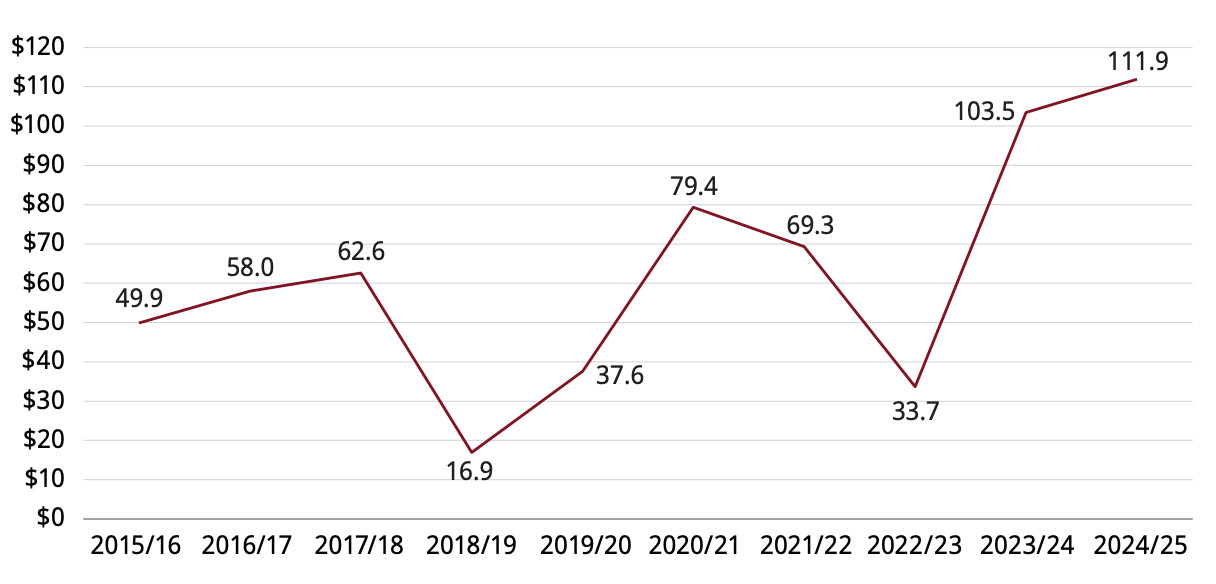
In 2024-25, the Ontario government set a new record for advertising spending, shelling out approximately $112 million, $8.4 million more than the previous year, according to the Auditor General’s annual review of government advertising since the 2005 implementation of the Government Advertising Act.
(Auditor General of Ontario)
“When I look at value for money for those ads we look at: is it telling me anything I didn't know as a person in Ontario?,” Spence explained.
“Some of the ads are quite promotional for the governing party. They aren't really providing good, solid information to the citizens of Ontario…there's numbers that are sometimes in the ads, and we don't have support for those numbers quite often. They're future-oriented numbers as well.”
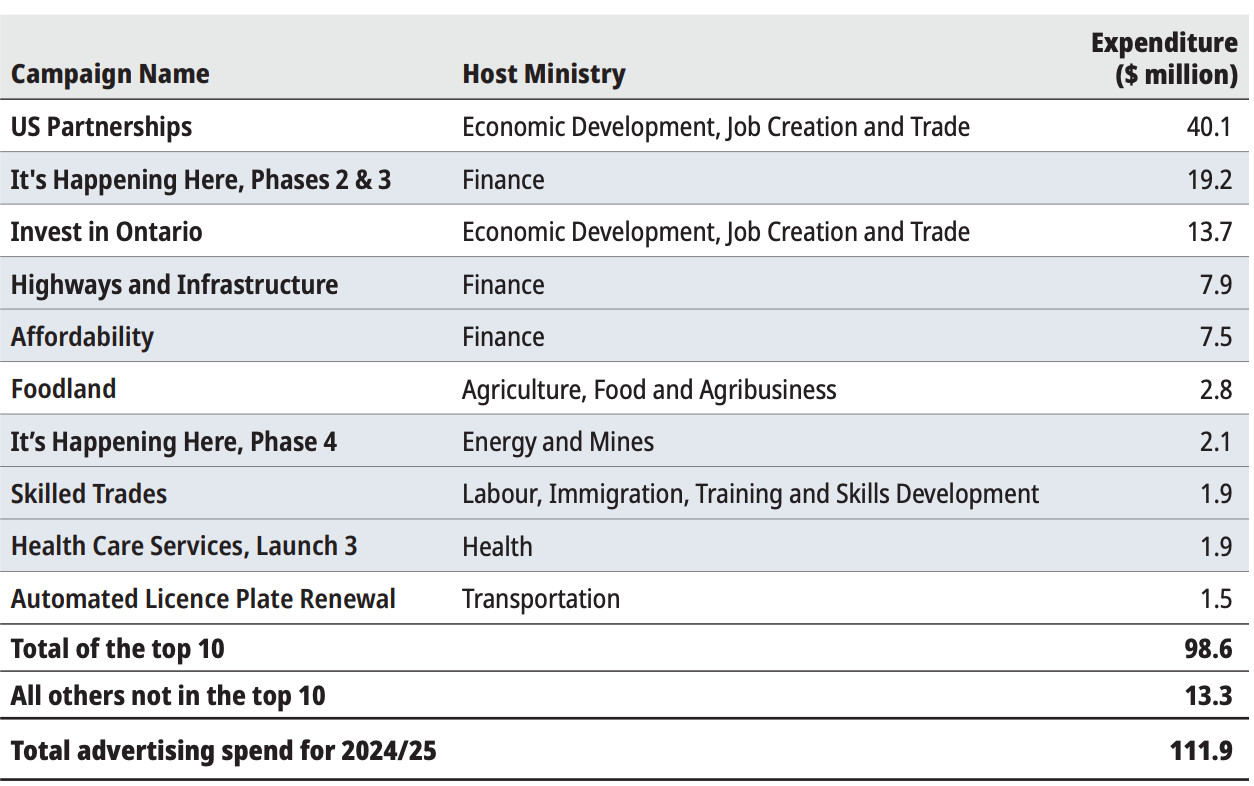
“The two largest campaigns, “US Partnerships” and “It’s Happening Here, Phases 2 & 3,” accounted for $59.3 million, or 53 percent of government advertising spending in 2024/25,” the Auditor General’s latest report noted.
(Auditor General of Ontario)
The audit flagged nine major campaigns, worth a combined $43 million, that were either overtly promotional or lacked evidence to support the government’s claims, including the $19.1-million “It’s Happening Here” campaign and an $8-million “Highways and Infrastructure” blitz that touted reducing gridlock through projects like the Bradford Bypass and Highway 413 without providing proof.
“The advertisements did not provide context or evidence to support the claims. We noted that the projects mentioned in the advertising and on the website were proposed but not yet undertaken,” the report highlighted.
Since taking power in 2018, the Ford government has spent roughly $452 million on government advertising, a level of spending made possible after the party abandoned its promise to restore stricter rules banning partisan ads.
The news didn’t surprise Pothen, who not long ago used to work as a government lawyer, reviewing advertising requests for compliance with the old Act. He believes the government should restore the former restrictions and guidelines, as it is currently using public funds to “effectively subsidize propaganda for the sprawl development industry”, a misuse of taxpayer money.
The scathing report came just a week after the province passed Bill 68, the Plan to Protect Ontario Act (Budget Measures) with minimal debate, repealing sections 3 to 5 of the Cap and Trade Cancellation Act, 2018, the province’s only legal requirements to set greenhouse-gas-reduction targets and to create and publicly report on a provincial climate plan, potentially to avoid accountability ahead of the long-anticipated Mathur hearing on December 1 and 2 at the Ontario Superior Court of Justice, where the Ford government would have had to answer to seven youth demanding a healthy future through stronger, Charter-accountable climate action.
Instead of curbing emissions or bringing a stronger climate plan to the table, Ontario contributed to its emissions by burning 780 million pieces of expired personal protective equipment (PPE) through its Supply Ontario program, converting the gear into heat energy rather than recycling it like other provinces such as British Columbia.
The report found much of this PPE was purchased during the pandemic under long-term contracts, 188 million surgical masks annually between 2020 and 2021 and 25 million N95 masks in 2024 and 25 but only a fraction was ever distributed, leaving the majority to be incinerated.
Experts have criticized claims that burning garbage provides a “clean” source of electricity as inaccurate, misleading and false but the Ford government has been pushing for Canada’s largest of its kind waste incinerator in Brampton.
The privately owned Emerald Energy From Waste (EEFW) facility is planning to build a new incineration system on the same site to increase its capacity from 182,000 to up to 900,000 tonnes per year, drive a ‘six-fold increase’ in greenhouse gas emissions, posing a major setback for the Region of Peel’s climate targets.
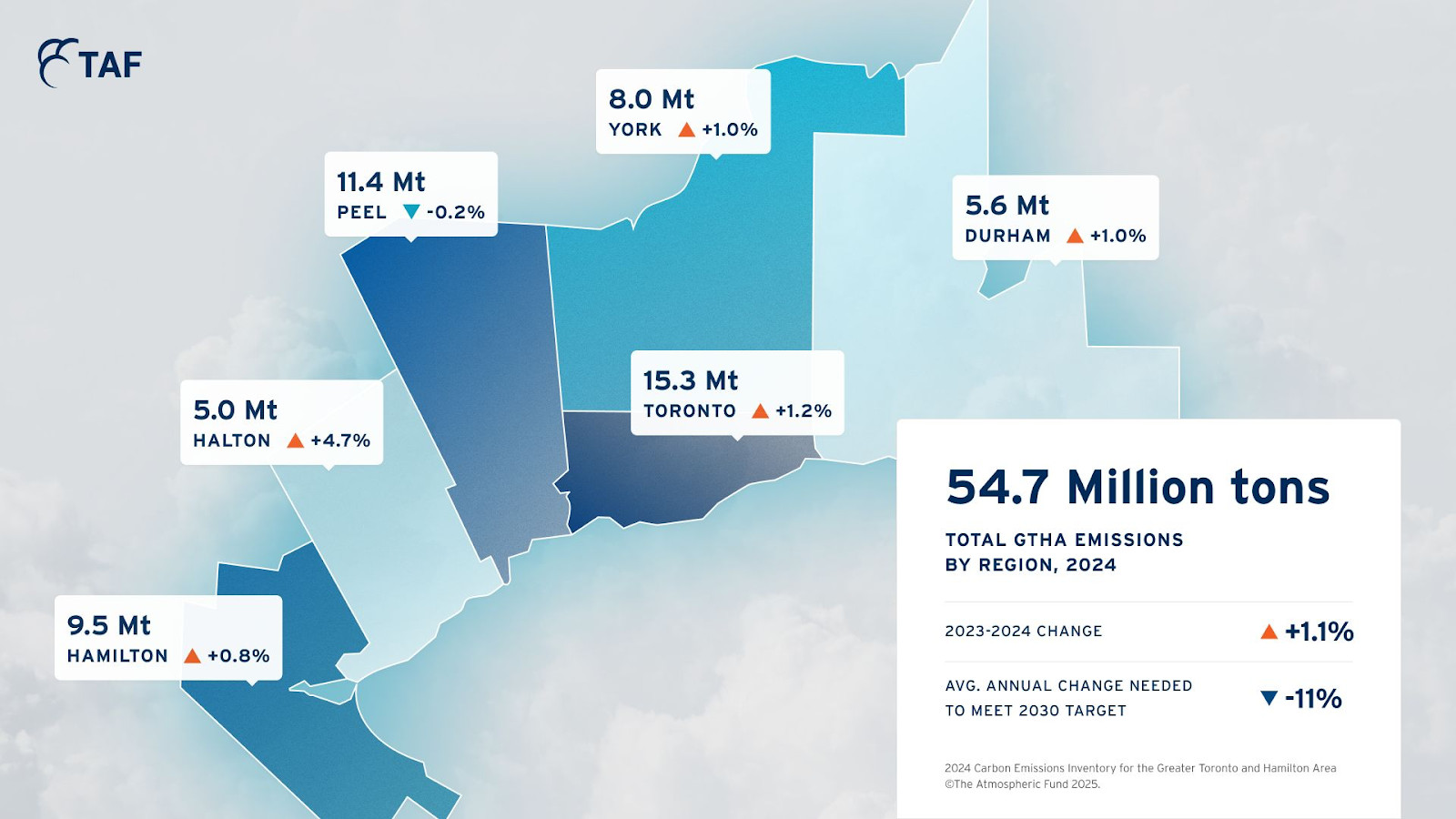

Emissions in the Greater Toronto Hamilton Area rose for the fourth consecutive year, with buildings and transportation continuing to be the biggest sources of emissions, leaving the region behind its 11 percent annual emissions reduction needed to reach the 2030 target. Electricity emissions also rose sharply by 28 percent due to greater use of gas-fired generation as the province shifts to nuclear. “Municipal climate action is gaining ground, but recent provincial and federal policy and funding rollbacks risk eroding hard-won progress,” The Atmospheric Fund chief executive officer Julia Langer said.
(The Atmospheric Fund)
Public health officials at the Region of Peel warn that increased emissions may worsen air and soil pollution, raising the risk of cancer, respiratory diseases and heart conditions among nearby residents.
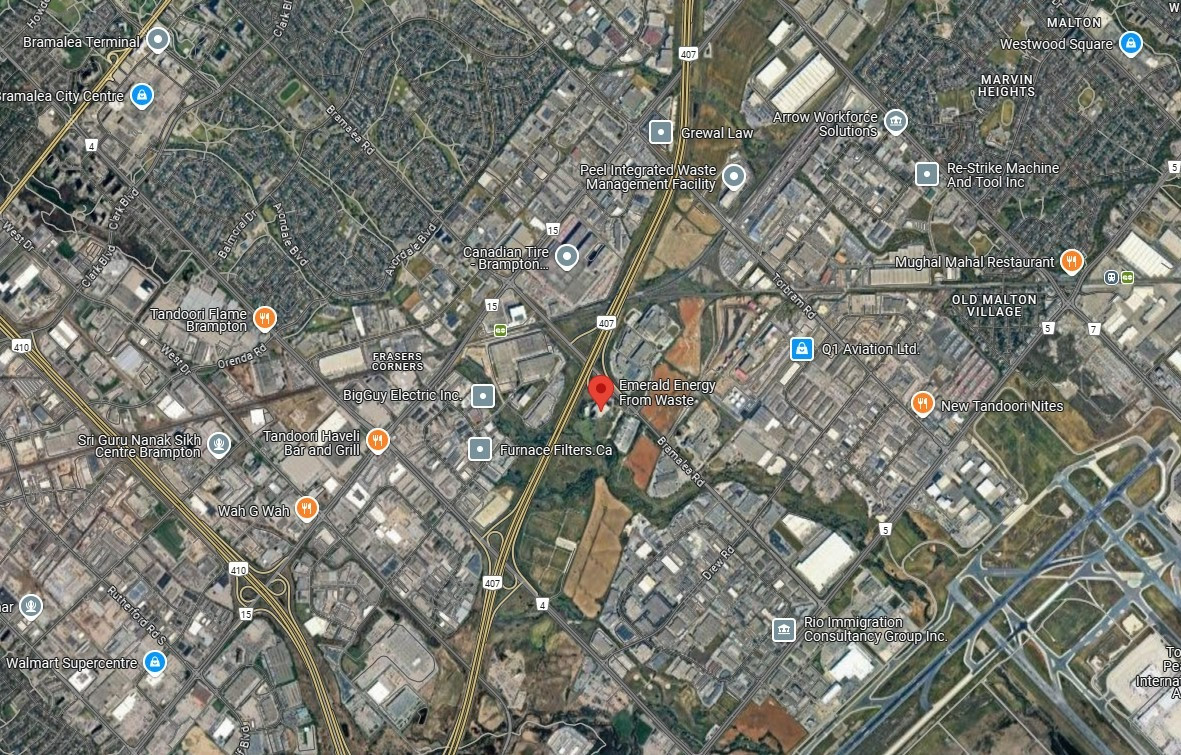
The Emerald Incinerator, marked by the red pin, is located beside Highway 407 and sits in close proximity to commercial businesses, health centres, and residential subdivisions.
(Google Satellite)
It also means “the plant would need to truck in garbage from all over the Province in order to support its business model,” Environmental Defence’s Senior Program Manager for Plastics, Karen Wirsig, said during a Brampton Environmental Alliance meeting on the incinerator in October 2024.
On December 3, Wirsig told The Pointer in an email that the province had denied their request to review the Guideline for permitting waste incinerators (A7), claiming it can adequately protect the environment through the existing permitting process.
“We've asked for a meeting with permitting staff to outline what we believe is necessary in the permit to protect the environment but have not heard back from them,” she said, noting the MECP’s permissions branch is likely negotiating privately with Emerald on the terms of the “Compliance Approval” certificate, raising concerns the permit may not fully account for emissions from the expanded facility.
A June report by the Toronto Environmental Alliance found that the province’s incinerators already emit over ten times more greenhouse gases than any other source of electricity in the province including fossil gas and at levels comparable to coal.
Spence made 12 recommendations to the Ford government based on her findings, out of which three were rejected.
When asked if bypassing consultations could lead to more court challenges, she said she was “not sure” but if the Ford government continued to violate the EBR, it “could be the case in the future”.
Pothen warns the province is not only opening itself up to legal challenges but also increasing risk for Ontarians who rely on its decisions.
“Many of these decisions may have to be reversed in the future to remove the appearance of corruption,” he said.
“Anyone investing in land affected by settlement area boundary expansions should expect the same issues that arose with Greenbelt land…approvals may be rolled back, and those who relied on them will share in the harm. It’s not just the government exposing itself, everyone who depends on these approvals faces the consequences.”
But for Samson, the issue is that the AG reports “don’t actually have a lot of teeth.”
If the Auditor General takes the time and resources to investigate government actions and identifies problems in a report, the government should be required to implement the recommendations and change its practices, she explained. Instead, the government often rejects these recommendations, leaving accountability primarily to elections.
“We just had an election with very low voter turnout,” she noted.
“The government gets away with this because people have too much else to pay attention to. It would be far better if there were stronger requirements for the government to follow up on recommendations and report on their progress.”
Miron echoed the frustration, noting year after year the same issues reappear, and earlier reports from the former independent Environmental Commissioner were far more substantive and detailed about core environmental concerns and compliance failures.
Samson explained the government’s approach often aims to overwhelm opponents with a barrage of proposals, and “see which ones stick”.
“Look at housing and rent changes, they pushed multiple controversial measures. People rallied against one, so they walked that back, but kept the rest. It’s designed to tire us out and make us feel hopeless. I refuse to fall into that trap,” she said.
Some of her colleagues, who have worked on these issues for years, are burnt out and frustrated with the growing apathy on part of the government.
“It’s demoralizing to watch the government squash public engagement,” she added.
“There was a time in Ontario when mounting a strong opposition to an unpopular project could make the government back down. Doug Ford has done that before, but now it seems the government simply doesn’t care.”
Samson says that as her fight increasingly becomes a fight for democracy, there are moments when she feels tired and hopeless as well, but she believes the future of the city and the province is “worth fighting for”.
“In the face of despair, the best thing I can do is take action and engage with the community.”
Email: [email protected]
At a time when vital public information is needed by everyone, The Pointer has taken down our paywall on all stories to ensure every resident of Brampton, Mississauga and Niagara has access to the facts. For those who are able, we encourage you to consider a subscription. This will help us report on important public interest issues the community needs to know about now more than ever. You can register for a 30-day free trial HERE. Thereafter, The Pointer will charge $10 a month and you can cancel any time right on the website. Thank you
Submit a correction about this story

