
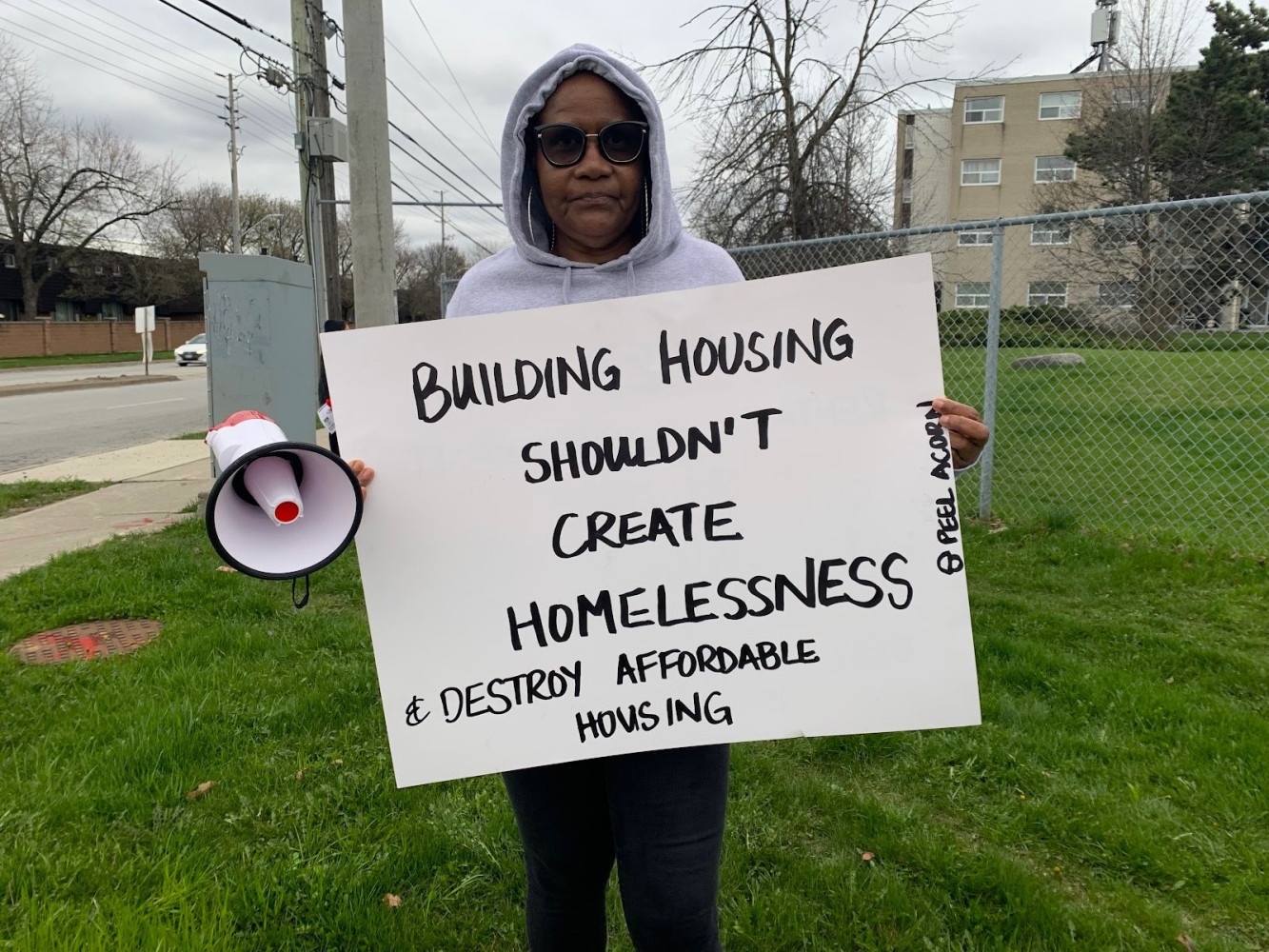
Brampton tenants plead for tougher municipal rules to prevent more homelessness
Kicked out of their homes by corporate landlords seeking to redevelop aging rental units, some Ontario seniors are contemplating medical assistance to end their own life.
“In Toronto, I've seen this closely. Elderly tenants terrified of losing their homes, who've told us that they're now exploring medical assistance in dying because they can't imagine starting over at their age,” Lindsay Blackwell told the City of Brampton’s Planning and Development Committee last month. Blackwell was speaking on behalf of No Demovictions, a coalition that supports tenants across Ontario facing displacement due to the demolition of their rental apartments. "When older, more affordable rental buildings are demolished, it doesn't just remove units from the market; it destroys homes, communities, and lives."
This eviction of tenants to renovate or redevelop existing apartments has become known as “demoviction” or “renoviction”.
Tenants are forced out of their units while the work is carried out, but when their previous home is put back on the market for rent, it’s at a cost they simply cannot afford.
The practice has led many municipalities—under sustained pressure by tenant groups like ACORN—to create safeguards that protect tenants facing the dire reality of losing their home.
The City of Brampton is currently in the process of developing such legal protections for renters. Work on the Residential Rental Conversion and Demolition By-law began in 2021, but was put on hold the following year when Premier Doug Ford’s PC government introduced its sweeping, heavily criticized, housing legislation, Bill 23, which put limitations and conditions on a city’s ability to create such rules. After determining the implications of Bill 23, the work resumed in 2024 and a public meeting was held in July of this year. On November 3, staff recommended approving the draft bylaw and for its critical stipulations to go into effect starting immediately in the new year.
The new rules will force landlords to ensure the affordable units being removed are replaced in the redevelopment; to provide the first right of return to the previous tenants; and to ensure that the rent remains at a “comparable affordability” for 10 years. The bylaw defines this as the rent offered before the renovation, along with the 2.5 percent annual rate increases allowed by the Ministry of Municipal Affairs and Housing.
“This is absolutely a win,” Tanya Burkhart with Peel ACORN told the committee on November 3.
Michelle Bilek with the Peel Poverty Action Group called it a "progressive step”.
Ahead of the meeting, advocates rallied outside City Hall requesting the bylaw be approved.
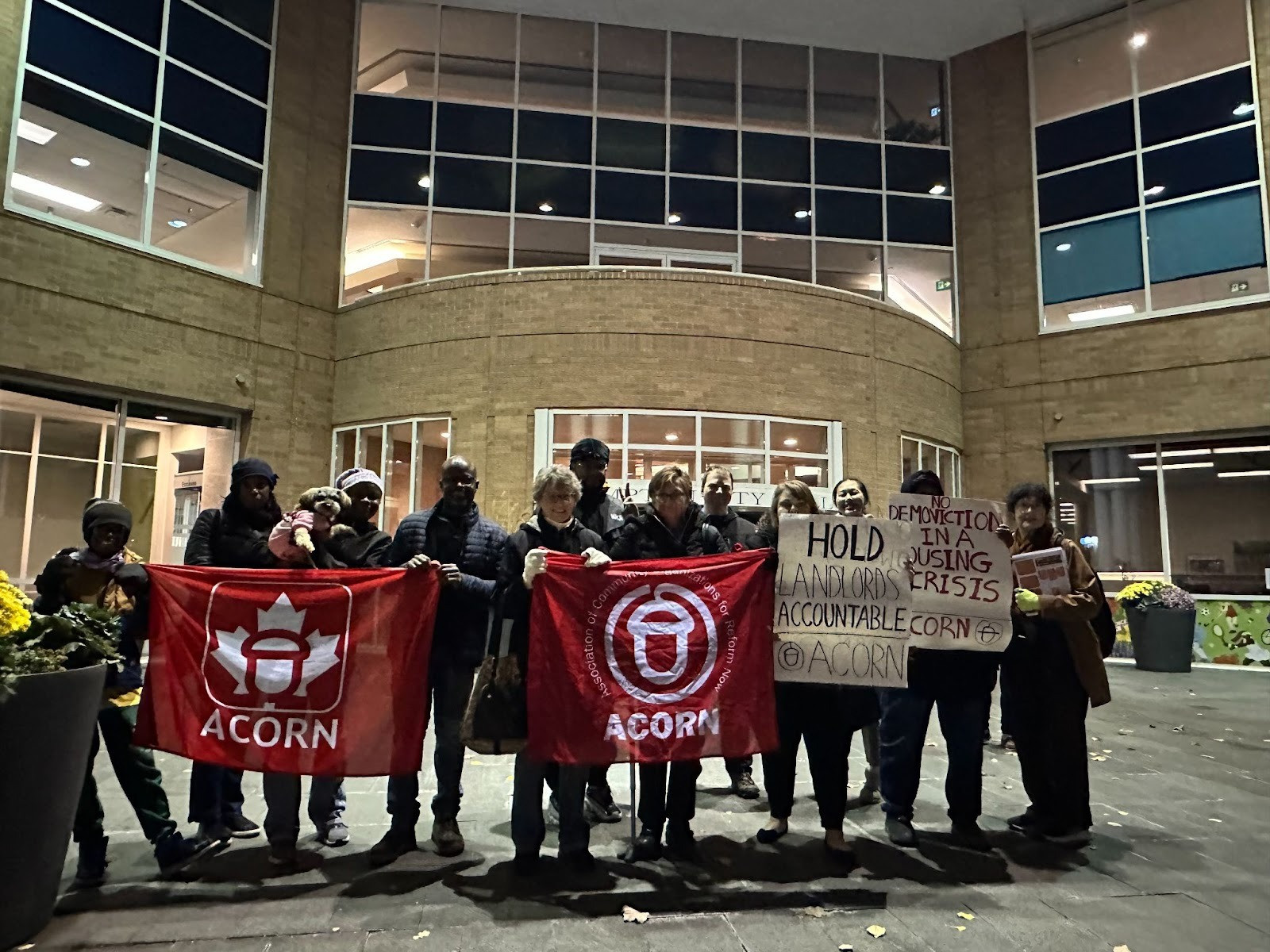
Tenants outside Brampton City Hall on November 3 pushing for the City’s Rental Replacement and Demolition Bylaw to be approved.
(Peel ACORN)
But not everyone was happy with the proposal.
Benjamin Charlebois, a lawyer with Cohen Highley LLP, spoke on behalf of “various landlords and multi-residential housing providers” criticizing the bylaw for its “ambiguities” and “wonky” wording.
He claimed in its current form it would deter investment and not create further rental housing stock.
“Full rental replacement as it is currently envisioned is prohibitively costly, and that’s why we say it’s tantamount to a freeze on redevelopment,” he told the committee. “Good intentions don’t always make good policy.”
He urged the committee to not approve the bylaw and instead create a sub-committee to carry out further consultations with all stakeholders and find a middle ground with tenant groups and City staff.
“Ambiguity like this, in our perspective, creates legal risk, which invites appeals and discourages reinvestment in the community, especially in older, rent-protected buildings that already need reinvestment,” he said. “We’re not opposing the regulation, we’re not opposing affordable housing. What we’re asking is that it be clear, consistent and workable because, like it or not, it’s a small community of builders who are putting up housing in the City of Brampton and there’s only so much land on which to build it.”
It was advice the committee took. Councillor Michael Palleschi, who has legislated in favour of developers since joining council in 2014, chairs the committee and referred the proposed bylaw back to staff without any indication of when it will come back, or if a committee would be struck to iron out the issues raised by the delegate.
While the delay could be frustrating for tenants hoping for protections from their municipal leaders, by doing so, Brampton council will possibly avoid a controversy like the one that erupted with its previous efforts to enforce regulations on landlords in the city. In January last year, the City’s Residential Rental Licensing program was paused less than a month after it launched following criticisms that it was poorly thought out and lacked proper consultation with those impacted. It was relaunched in April 2024. The City has since announced an expansion of that program (which covers landlords renting four or fewer units) following a deadly house fire at a rental home last month.
The delay also offers tenant advocates a chance to push for the additional protections they say are missing from the proposed bylaw.
Crucially, Burkhart says assistance with moving costs from the landlord and rent compensation during the renovation are critical to support displaced low income tenants. There are currently no provisions for such assistance in the City’s bylaw.
“Financial ruin and homelessness will occur, while developers are not held responsible, and make millions,” she told committee members.
Currently, tenants at 507 Balmoral Drive are facing that very possibility as the owner is looking to demolish the building to redevelop the site. The development application to replace the existing structure with three other apartment buildings was filed by Pulis/Lankin Investments and is currently under review by City staff.
Cheryl Craig, a long-time resident of the building is deeply worried about losing the home she has lived in for two decades. She said Brampton’s proposed bylaw needs to be strengthened to create supports for seniors during the redevelopment phase.
She briefed the council members about the deterioration of the current building, such as the dysfunctional elevator, which has been plagued with breakdowns for two months.
“They've already been fined. I think it's a little bit of a slap on the wrist, $250 to $500 from the City, which is peanuts," Craig said. "We've had issues with no hot water. We’ve gone for days with no water.”
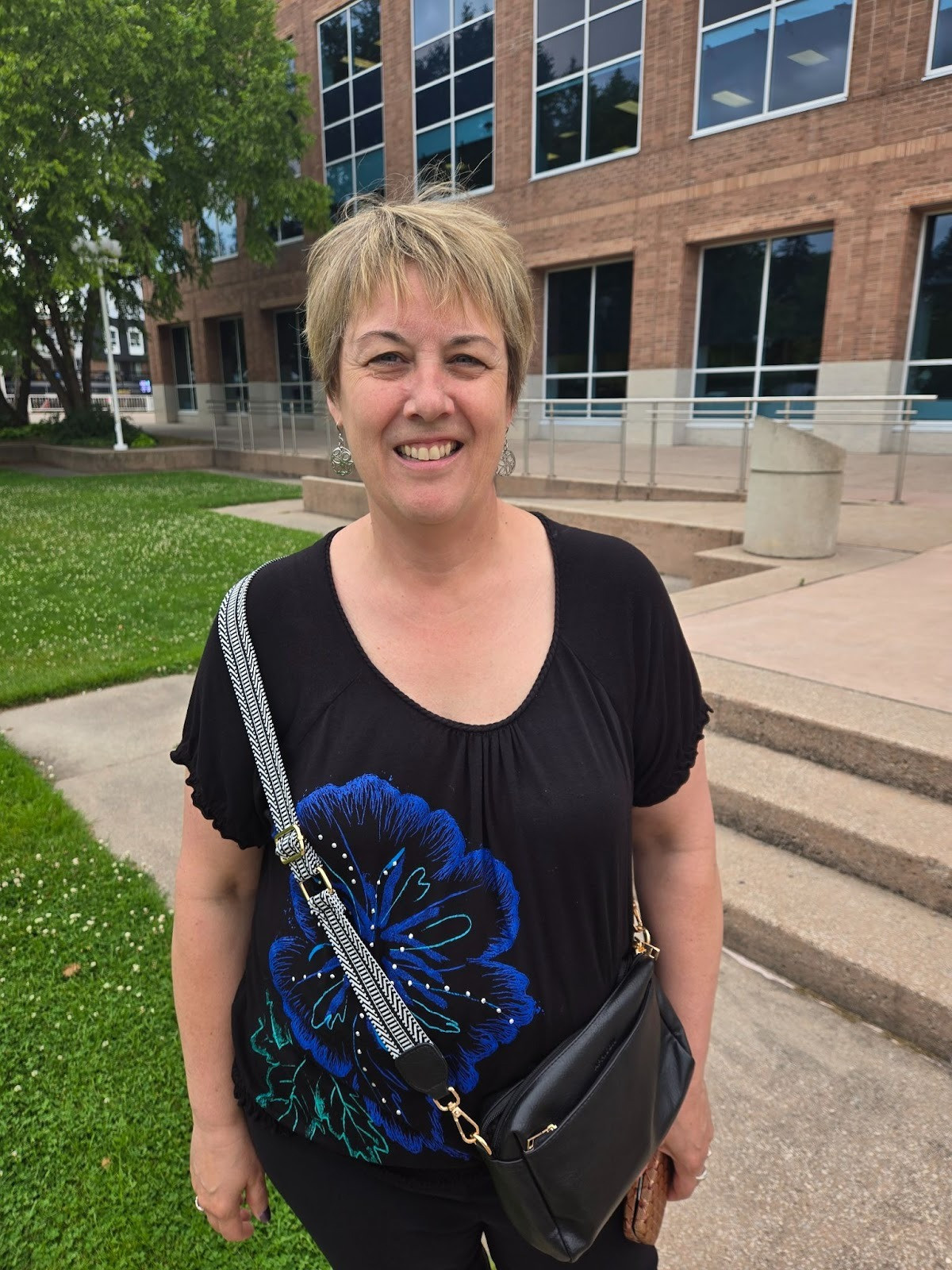
Cheryl Craig is fighting for affordable housing and protections for seniors in Brampton while standing against the potential displacement from her longtime home at 507 Balmoral Drive.
(Muhammad Hamza/The Pointer files)
Blackwell, with the No Demovictions group, echoed the concern about the lack of support for displaced tenants under the proposed bylaw, telling councillors the bill for the impact from these missing protections will eventually fall to them and the taxpayers they represent.
“When protections aren’t there it’s municipalities that pay the price,” she said. “Every tenant displaced without adequate compensation or relocation support is at risk of homelessness. The cost of emergency shelter, housing programs and crisis healthcare fall directly to the cities. A weak bylaw doesn’t save money, it shifts costs from developers to taxpayers while pushing families and seniors into instability in their housing.”
With the City’s bylaw not in force, any tenant displaced by a renovation or demolition in Brampton will have few places to turn.
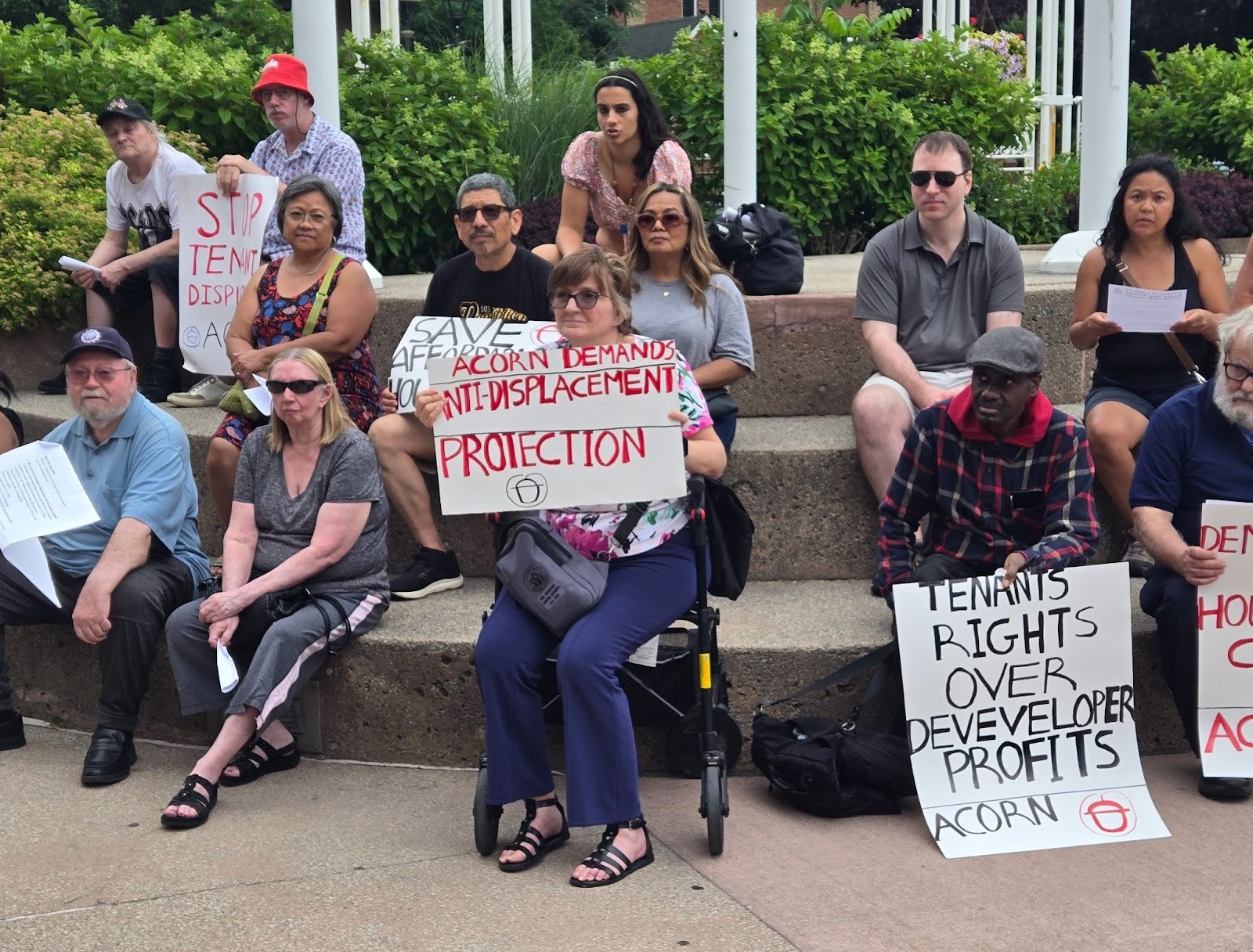
In July, Brampton residents protested outside City Hall, holding placards, demanding enhanced protections for renters.
(Muhammad Hamza / The Pointer files)
In a city where the housing stock has long been dictated by developers, placing profit over diverse built forms, Brampton’s rental housing supply is limited and rapidly eroding. Despite Brampton council’s recent efforts to incentivize purpose-built rental units by offering rebates on the fees charged to developers—known as development charges (DCs)—which began in September, the move came after years of ignoring the city’s housing crisis and rubber stamping massive subdivisions. This addiction to sprawl recently cost the City of Brampton approximately $25 million in funding from the provincial government for failing to meet its mandated housing targets.
A staff report presented at the July 7 Planning and Development Committee meeting highlighted that since 2014, only 744 new rental units have been created over the last decade, bringing the total to 11,457 purpose-built rental units in the city, according to the Canada Mortgage and Housing Corporation (CMHC). During that meeting, advocates also recommended strengthening the proposed bylaw, but many of their requested rules remain absent from the draft legislation.
The lack of new units constructed has led to chronically low vacancy rates for rental units, which in turn has caused the rental prices in Brampton to skyrocket. In 2024, the average rental price for a 2-bedroom unit was nearly $2,700 a month, with many of these in condos or other non-purpose-built rental accommodations. For similarly sized purpose-built rentals (which have the benefit of rate stabilization protected by provincial rental laws), the price was considerably lower, at an average of $1,922. The cost of a 3-bedroom unit in purpose-built buildings last year was an average of $2,046—$1,024 cheaper than the condo and house rental market.
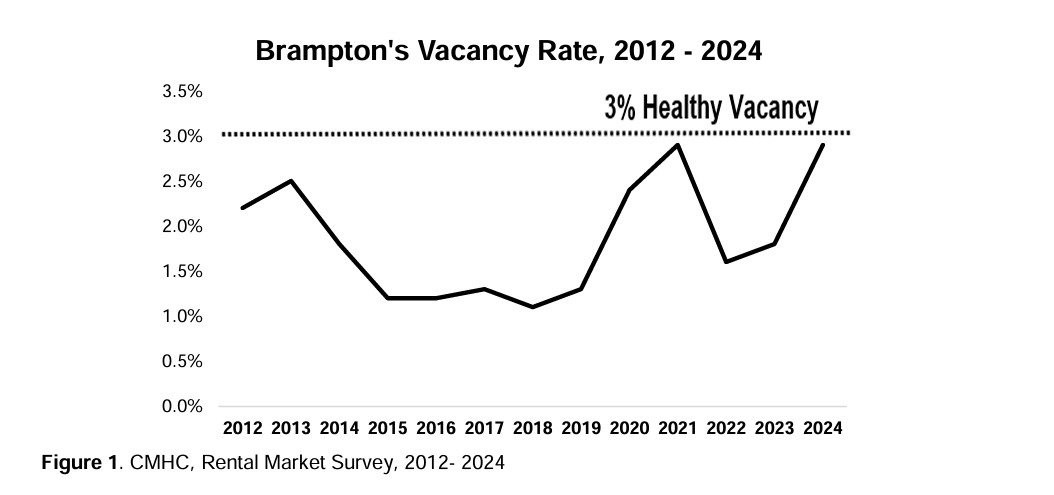
The number of available rental units in Brampton has been below “healthy” standards since at least 2012.
(City of Brampton)
The lack of affordable rentals in a city with a booming population has allowed a secondary rental market to proliferate, with many homeowners converting basements and additional bedrooms into “secondary suites” and putting them online for rent. While the City of Brampton has attempted to regulate these units and create an inspection regime to ensure they meet proper building and safety standards, there is still a large illegal market in the city.
The tight rental market forces tenants like those at 99 Kennedy Road, to live in unsuitable, unsanitary and at times unsafe conditions because there are simply no other affordable housing options. A survey completed earlier this year by tenant advocacy organization ACORN Canada found 1 in 3 Peel renters are dealing with deplorable living conditions, including pest infestations, moldy living spaces, poor ventilation, broken ceilings and unsanitized carpets.
Email: [email protected]
At a time when vital public information is needed by everyone, The Pointer has taken down our paywall on all stories to ensure every resident of Brampton, Mississauga and Niagara has access to the facts. For those who are able, we encourage you to consider a subscription. This will help us report on important public interest issues the community needs to know about now more than ever. You can register for a 30-day free trial HERE. Thereafter, The Pointer will charge $10 a month and you can cancel any time right on the website. Thank you
Submit a correction about this story

